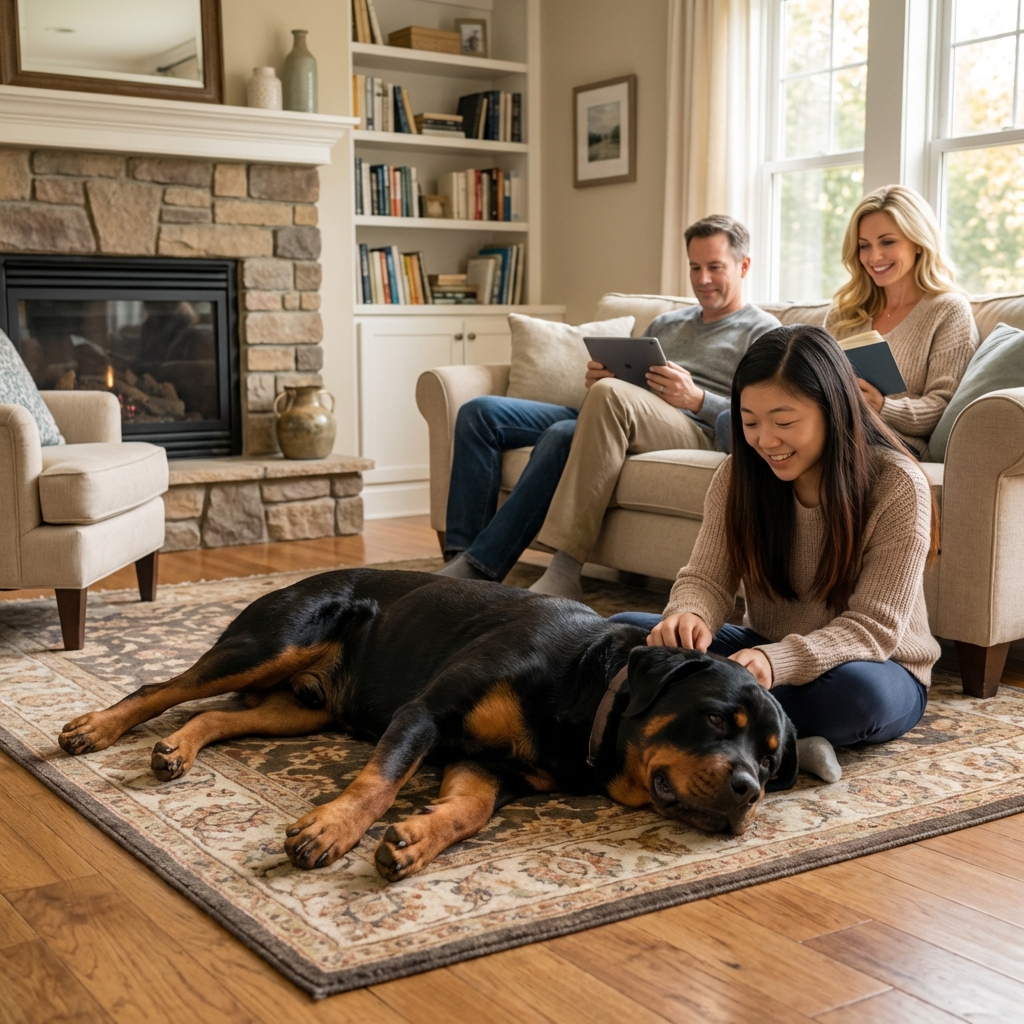
Learn practical English Mastiff care from daily routines and home setup to nutrition, exercise, grooming, training, and key health risks like bloat (GDV), jo...
Article
•
Designer Mixes
Cane Corso Dog Breed: Temperament, Size, and Care Guide

Shari Shidate
Designer Mixes contributor
Powerful, devoted, and quietly confident, the Cane Corso is a guardian breed that tends to bond deeply with its people. This is not a “set it and forget it” dog. When you pair the right home with consistent training, thoughtful socialization, and a steady daily rhythm, the Cane Corso can be a calm, affectionate companion with impressive self-control.
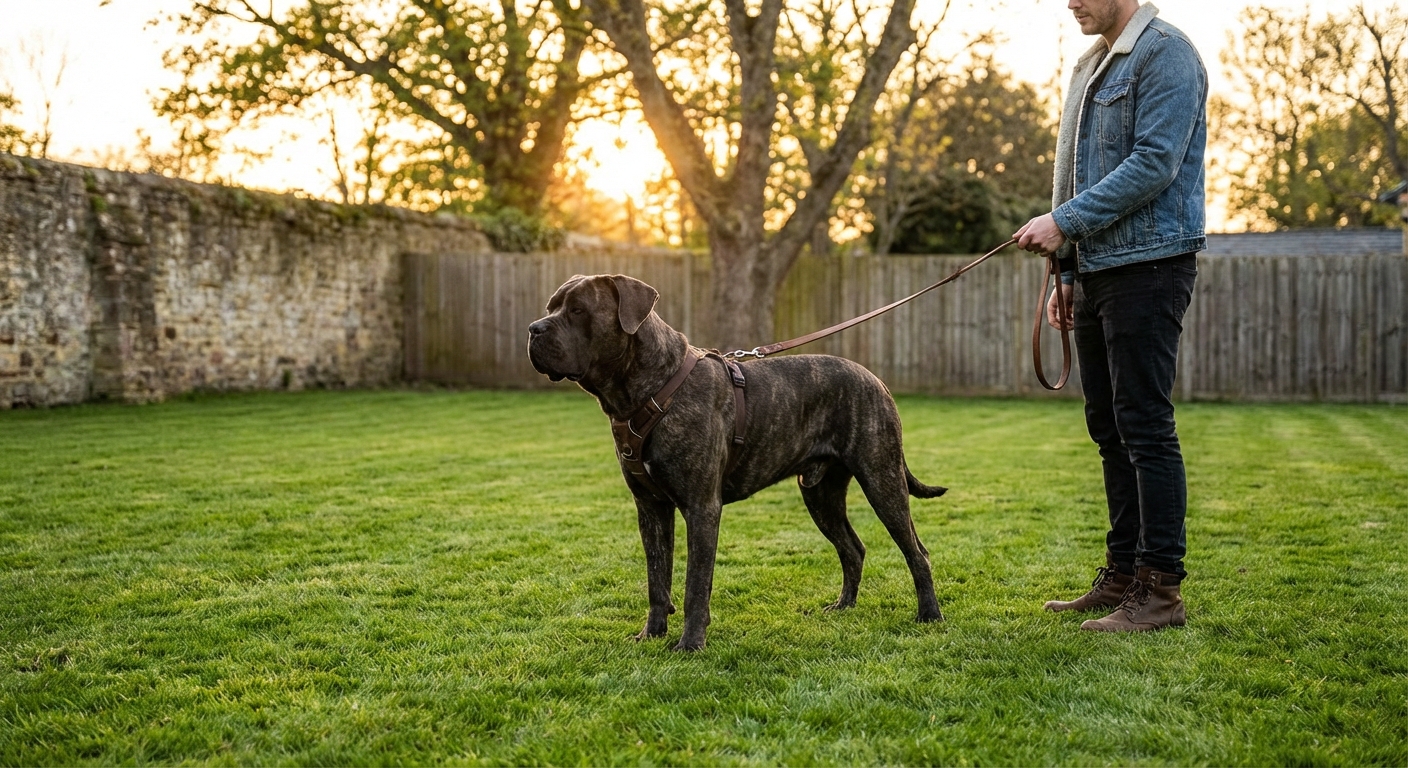
Below is a practical guide to Cane Corso temperament, adult size, daily care, and what to consider before bringing one home.
Quick breed overview
- Breed type: Italian Mastiff, guardian and working dog
- Temperament: Loyal, protective, intelligent, sensitive to handling
- Energy level: Moderate to moderately high, especially as a young adult
- Life expectancy: about 9 to 12 years (varies by genetics and care)
- Best fit: Experienced, consistent owners who enjoy training and structure
- Common colors: Black, gray/blue, fawn, red, brindle
Temperament
Cane Corsos are often described as “serious” dogs, and that is usually accurate. They are attentive, quick to notice changes in the environment, and naturally inclined to protect their home and family. A well-raised Corso is not constantly reactive. Instead, they tend to be observant and composed, stepping in only when they believe something is truly off.
Loyal and people-focused
Many Cane Corsos prefer to keep tabs on their humans, following you from room to room and settling nearby. With their family, they can be surprisingly affectionate and even goofy, especially in calm, familiar settings.
Protective by nature
Protection is baked into the breed’s history. That is a strength and a responsibility. The goal is not to “teach” guarding. It is to teach discernment and excellent manners so the dog can relax when you tell them things are safe.
Confidence is built early
Like many guardian breeds, Cane Corsos are highly shaped by early socialization. Without it, some individuals can become wary, suspicious, or overly territorial. With it, they are far more likely to remain stable in everyday life, like seeing visitors, passing dogs on walks, or hearing noisy delivery trucks.
Adolescence is a real phase
Many Corsos hit a challenging adolescent period (often around 8 to 24 months) where impulse control dips and guarding instincts can intensify. This is where consistency matters most, not just when the dog is a cute puppy.
Helpful mindset: The Cane Corso does best when your home runs on clear routines. For example: a scheduled morning walk, a short training session before meals, enrichment midday, and an enforced rest period so the dog learns an off-switch.
Kids, dogs, and strangers
- With kids: Often gentle with their own family’s children when raised together and supervised. Because of their size and strength, supervision and teaching kids respectful dog boundaries is non-negotiable.
- With other dogs: Many do best with careful introductions and ongoing training. Same-sex dog intolerance can occur. Early social experiences help, but management may still be needed.
- With strangers: Typically reserved. Expect a “watch first, decide later” approach. A well-socialized Corso should be controllable and neutral, not lunging or frantic.
Size and physical traits
The Cane Corso is large, athletic, and densely muscled. They are built for work, not just looks, which is why daily movement and training matter so much.
Typical adult size
- Height: roughly 23.5 to 27.5 inches at the shoulder (females often smaller, males often larger; standards vary slightly by organization)
- Weight: commonly 85 to 120 pounds in many pets, with some fit adult males exceeding this depending on lines and conditioning
Healthy weight is about more than the number on a scale. You want a visible waist from above, an abdominal tuck from the side, and you should be able to feel ribs with light pressure.
Exercise and mental work
A Cane Corso that does not get enough purposeful activity often creates its own job, which can look like excessive barking, guarding windows, chewing, or pestering the household. The most successful homes treat exercise as both physical and mental.
Daily needs
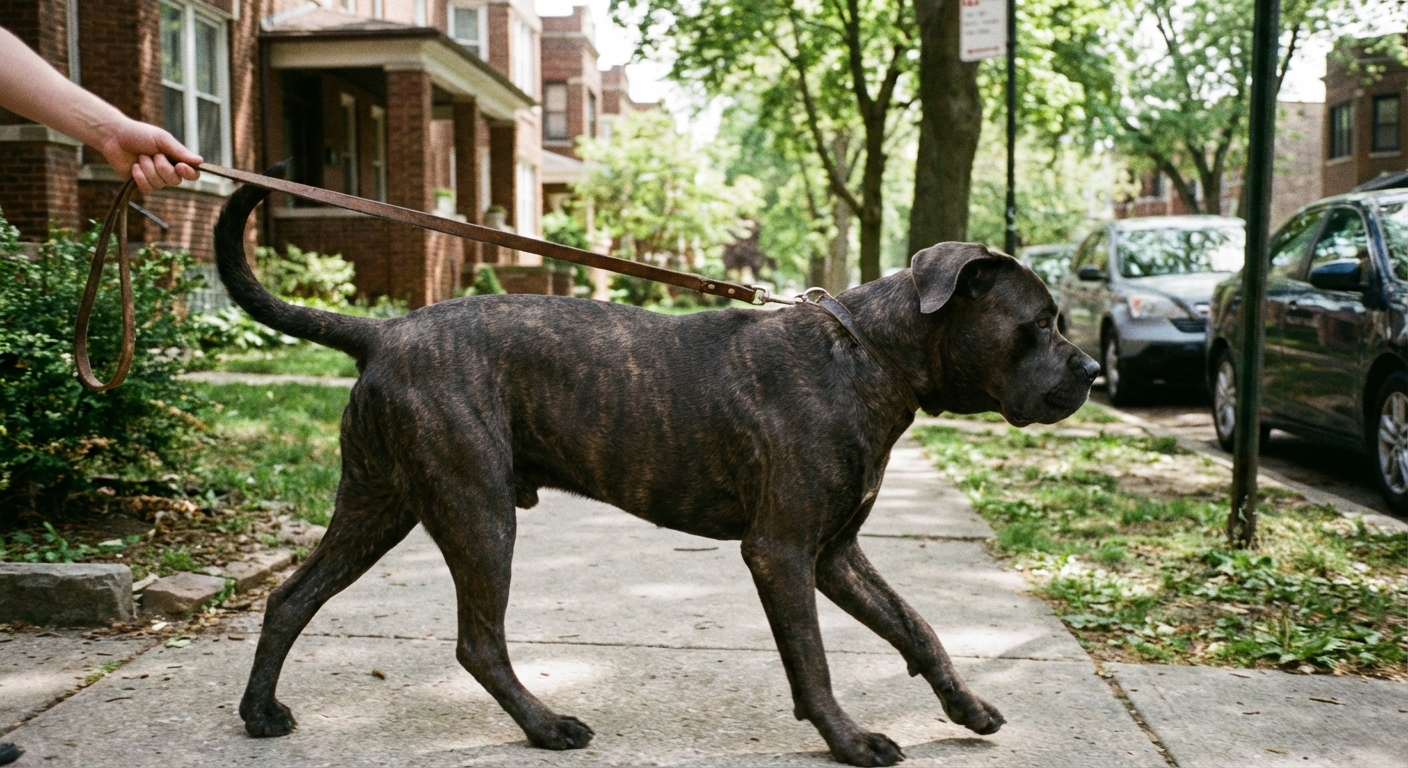
- Brisk walks: 45 to 90 minutes total per day for many adults, split into sessions
- Training time: 10 to 20 minutes daily, ideally in short, upbeat sessions
- Enrichment: food puzzles, scent games, basic obedience drills, and controlled social exposure
Great activities
- Structured leash walks with frequent check-ins and calm greetings
- Scent work such as “find it” games around the home
- Obedience and impulse control like sit-stays, place, and polite door manners
- Low-impact conditioning like hill walking for fit adults
Avoid heavy jumping or intense repetitive impact during puppyhood. Large breeds mature slowly, and protecting developing joints early pays off long-term.
Heat and weather
Corsos can overheat faster than people expect, especially in humid weather or during intense exercise. Prioritize shade, fresh water, and cooler walk times. In cold weather, many do fine with movement, but some appreciate a coat for longer outings.
Training and socialization
Training is not about control for its own sake. It is about safety, confidence, and freedom. For a powerful breed like the Cane Corso, good training is what makes daily life smooth and relaxed.
Start with these core skills
- Name response and quick check-ins
- Loose-leash walking with consistent rules
- Place/settle to build an off-switch
- Drop it and leave it for safety
- Calm greetings so visitors and kids are not knocked over
Sensitivity to handling
Many Cane Corsos respond poorly to harsh corrections or inconsistent rules. They tend to do best with reward-based training, fair boundaries, and calm, consistent follow-through.
Socialization that works
Socialization is not just meeting lots of people and dogs. It is learning to stay calm and neutral around everyday life. Aim for positive, controlled exposures: people in hats, kids at a distance, delivery sounds, bicycles, and new locations. Reward calm observation and disengagement.
Because of the breed’s guarding instincts, many owners benefit from working with a qualified positive-reinforcement trainer who has experience with guardian breeds.
Grooming, shedding, and drool
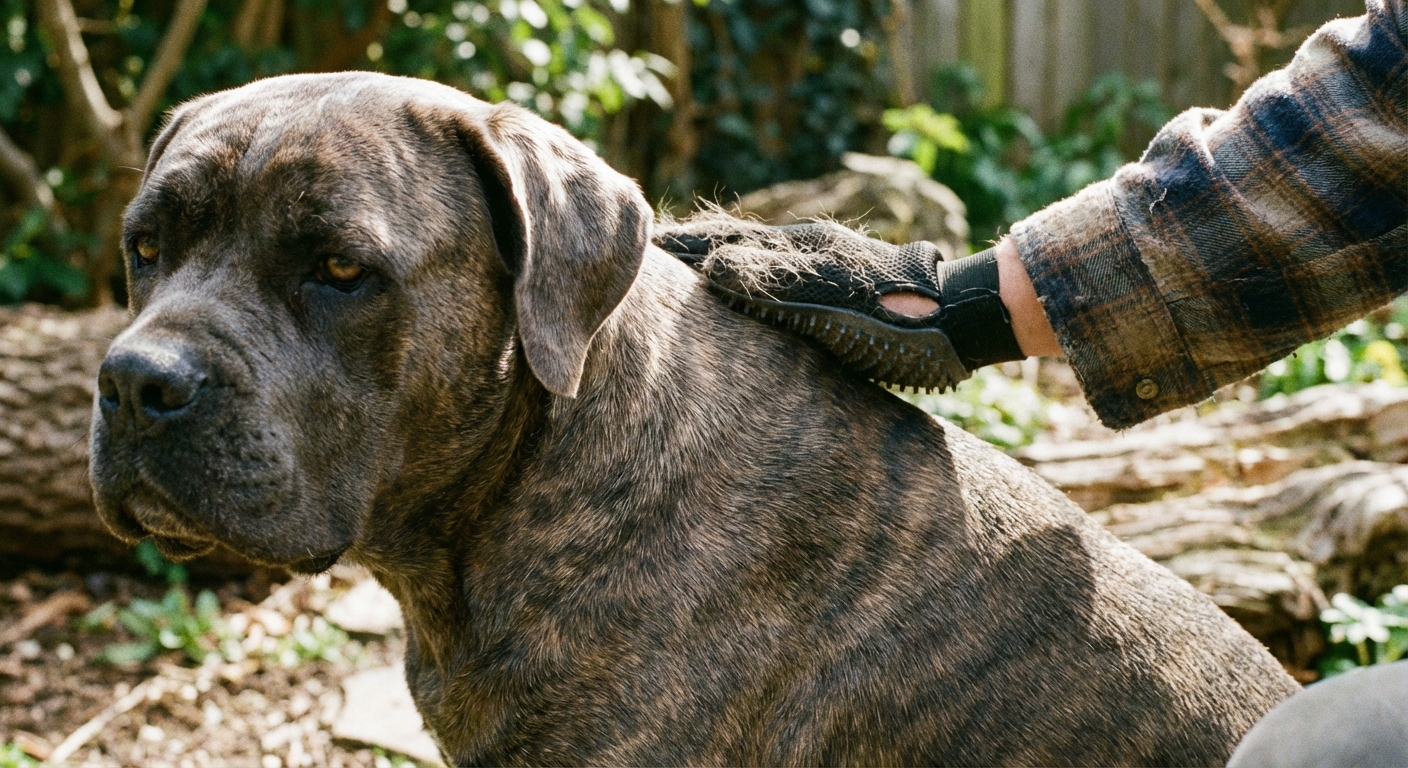
The Cane Corso’s short coat is relatively low maintenance, but they still shed. Routine grooming also gives you a built-in health check.
- Brushing: 1 to 2 times per week, more during seasonal shedding
- Bathing: as needed (often every 6 to 12 weeks, depending on lifestyle)
- Nails: trim every 2 to 4 weeks
- Ears: check weekly for odor, redness, or debris
- Teeth: brush several times per week if possible
Also, be realistic about slobber. Many Corsos drool, especially after eating, drinking, or during hot weather. Keep a towel handy if that would bother you.
Feeding and nutrition
Large, fast-growing breeds benefit from steady, controlled growth. Overfeeding in puppyhood can increase stress on developing joints. Your veterinarian can help you choose an appropriate large-breed puppy diet and adjust portions based on body condition.
Practical tips
- Choose a high-quality diet appropriate for life stage and size
- Measure meals rather than free-feeding, especially for easy keepers
- Limit high-calorie treats during training by using small pieces or part of the daily kibble
- Fresh water available at all times
If you are considering a raw or home-cooked diet, work with a board-certified veterinary nutritionist. Big dogs have big nutritional margins for error.
Health considerations
No breed is “problem-free,” and responsible ownership includes planning for preventive care and potential health costs. While individual risk varies, Cane Corsos are commonly associated with several large-breed and mastiff-type issues.
Concerns to discuss with your veterinarian
- Hip and elbow dysplasia
- Bloat (GDV), a life-threatening emergency more common in deep-chested breeds
- Eye conditions such as entropion or ectropion in some lines
- Heart conditions that may occur in mastiff-type breeds
- Skin issues including allergies and demodectic mange in some individuals
- Thyroid disease seen in some lines
- Epilepsy reported in some lines
- Orthopedic injuries such as CCL tears, especially in large athletic dogs
Ask breeders about health testing and documentation, and consider pet insurance early if it fits your budget. Preventive care, especially weight management and appropriate exercise, goes a long way.
Home setup and safety
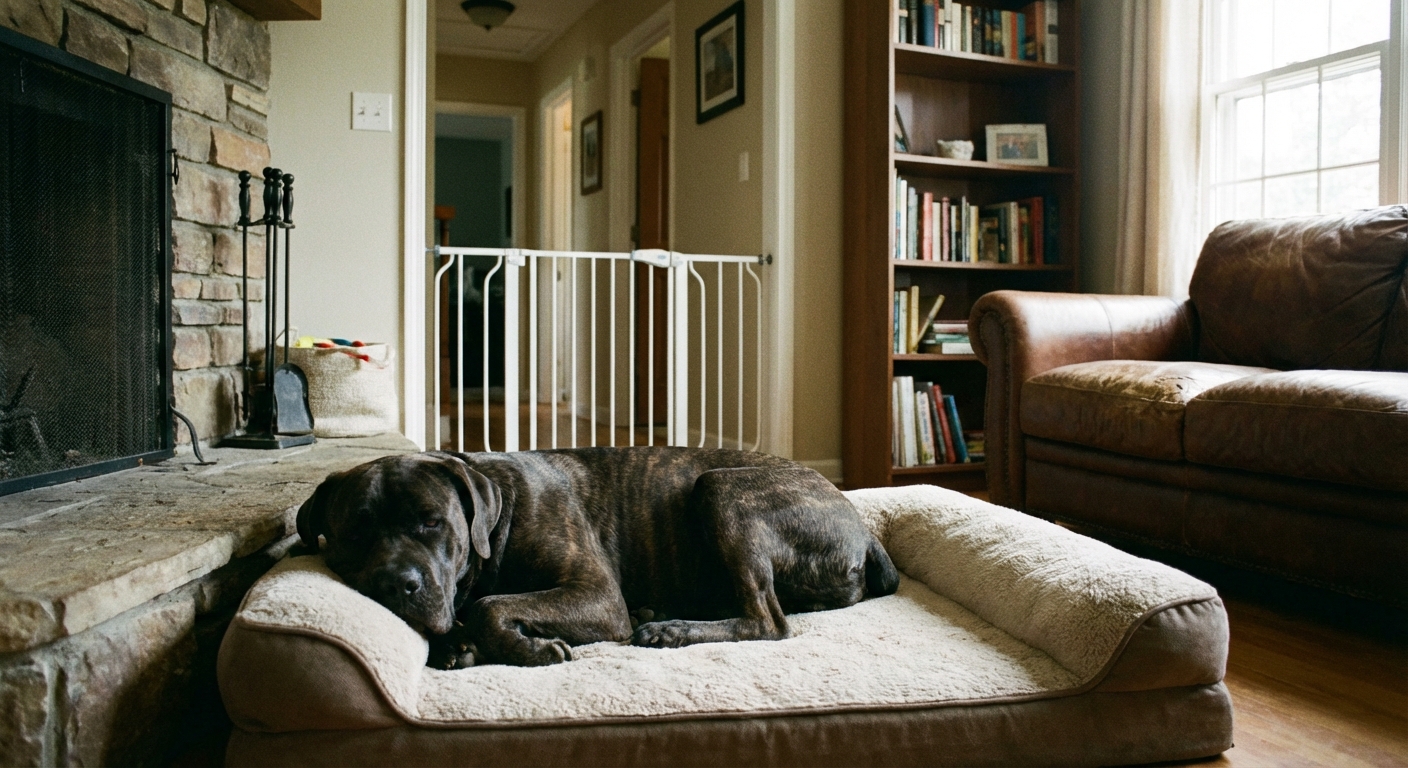
A Cane Corso is strong enough to move furniture, pull an adult off balance, and open poorly latched doors. Setting up your environment reduces stress for everyone.
- Secure fencing: sturdy and tall enough for a large athletic dog
- Leash and gear: a well-fitted harness or sturdy collar, plus a strong leash
- Crate training: helpful for management, travel, and giving the dog a quiet rest space
- Visitor plan: use baby gates or a “place” cue so greetings stay calm
- Enrichment station: chews and food puzzles to promote relaxation
- Slobber plan: water bowls, towels, and easy-clean surfaces can make life simpler
Also do a quick reality check before you commit: some cities, HOAs, landlords, and insurance companies restrict or scrutinize guardian and mastiff-type breeds. Confirm local rules and your coverage in advance.
Is a Cane Corso right for you?
This breed can be a wonderful match for the right person, and a tough experience for the wrong one. Before committing, take an honest look at your time, training interest, and comfort managing a large protective dog.
Good fit if you:
- Want a devoted companion who prefers being close to family
- Enjoy ongoing training and clear household routines
- Can commit to daily exercise and mental work
- Are comfortable advocating for your dog in public and setting boundaries
Reconsider if you:
- Prefer a highly social dog that loves greeting everyone
- Have limited time for training and structured activity
- Are not prepared for firm management around guests, deliveries, and neighborhood distractions
- Need a low-risk, low-liability breed for your housing situation
Choosing a puppy or rescue
Temperament starts with genetics and is shaped by early handling. If you are buying from a breeder, look for transparency, documented health testing, and puppies raised with thoughtful early social experiences in a home environment. If you are adopting, ask about behavior assessments, history with other pets, and any training support offered by the rescue.
Whichever route you choose, prioritize stability and sound temperament over extreme size or a certain “look.” For this breed, that decision matters every single day.
Takeaway
The Cane Corso is a loyal, capable guardian with a big heart and an even bigger need for guidance. When you provide consistent training, calm leadership, and daily enrichment, you are far more likely to see the best of the breed: steady confidence, affectionate companionship, and a dog that can relax because they trust you to handle the world.