Yes, many cats can learn to fetch. Follow this vet-assistant-approved, step-by-step method: pick the right toy, reward returns, add a cue, and troubleshoot s...
Article
•
Designer Mixes
Can You Teach a Cat to Fetch?

Shari Shidate
Designer Mixes contributor
Yes, you really can teach many cats to fetch, and it can be a wonderful little wellness habit for indoor cats who need more movement and mental stimulation. As a veterinary assistant, I love fetch because it is low-cost, low-space, and easy to tailor to your cat’s personality. The key is to think like a cat: keep sessions short, use rewards wisely, and stop before your cat gets bored.
Quick note: This is general enrichment advice. If your cat has pain, breathing issues, or a history of intense overstimulation, your veterinarian can help you tailor a plan.
Why Fetch Helps Wellness
Cats are natural hunters. Fetch can tap into elements of the hunting sequence, such as noticing movement, stalking, pouncing, grabbing, and carrying. When we turn that into a safe indoor game, we can support:
- Healthy weight through short bursts of activity that mimic hunting-style play.
- Stress relief by giving your cat an appropriate outlet for energy.
- Mental enrichment through problem-solving and novelty.
- Bonding because your cat gets a predictable, positive interaction with you.
If your cat is prone to midnight zoomies, fetch earlier in the evening may help shift some of that energy into a structured routine.
Which Cats Learn Fetch?
Some cats take to fetch quickly, others prefer different games. Cats often do well with fetch when they already:
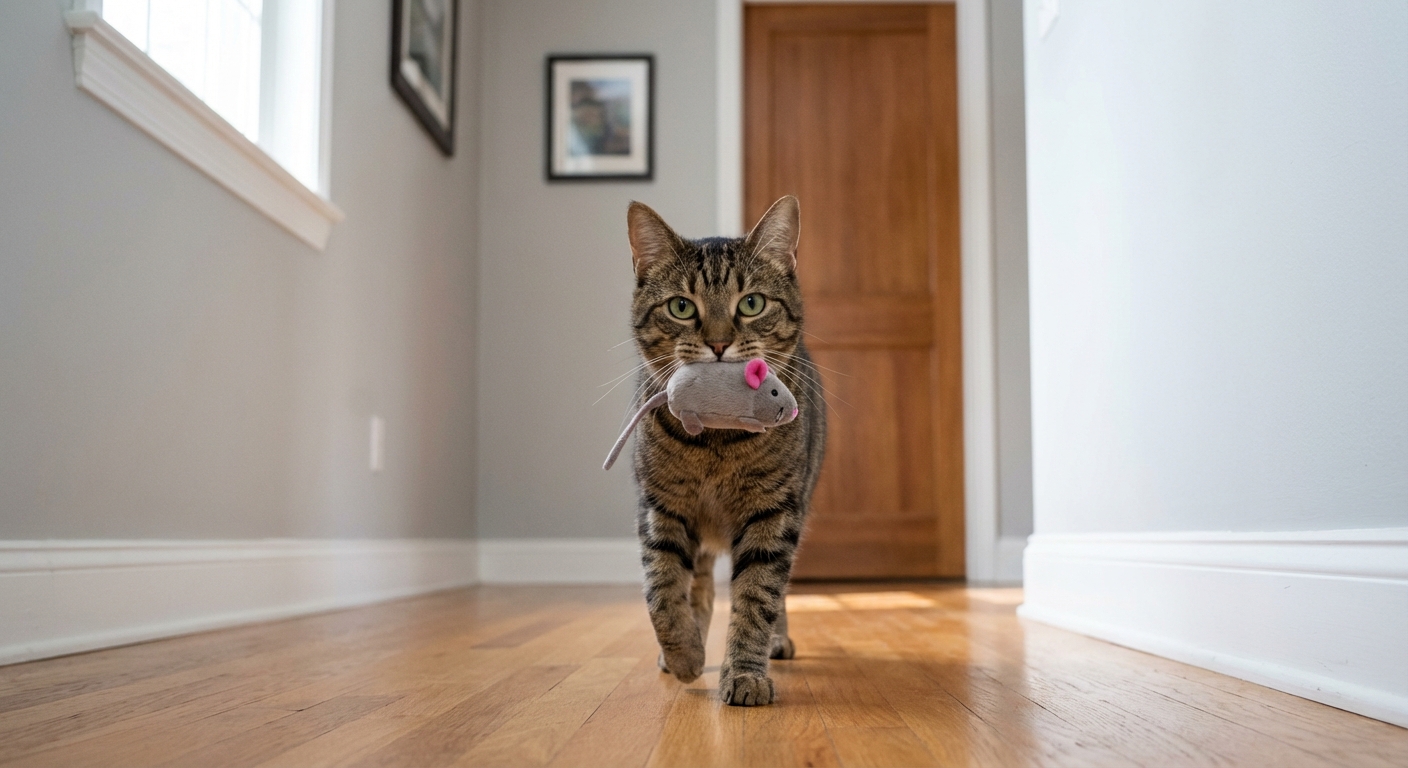
- Carry toys around the house
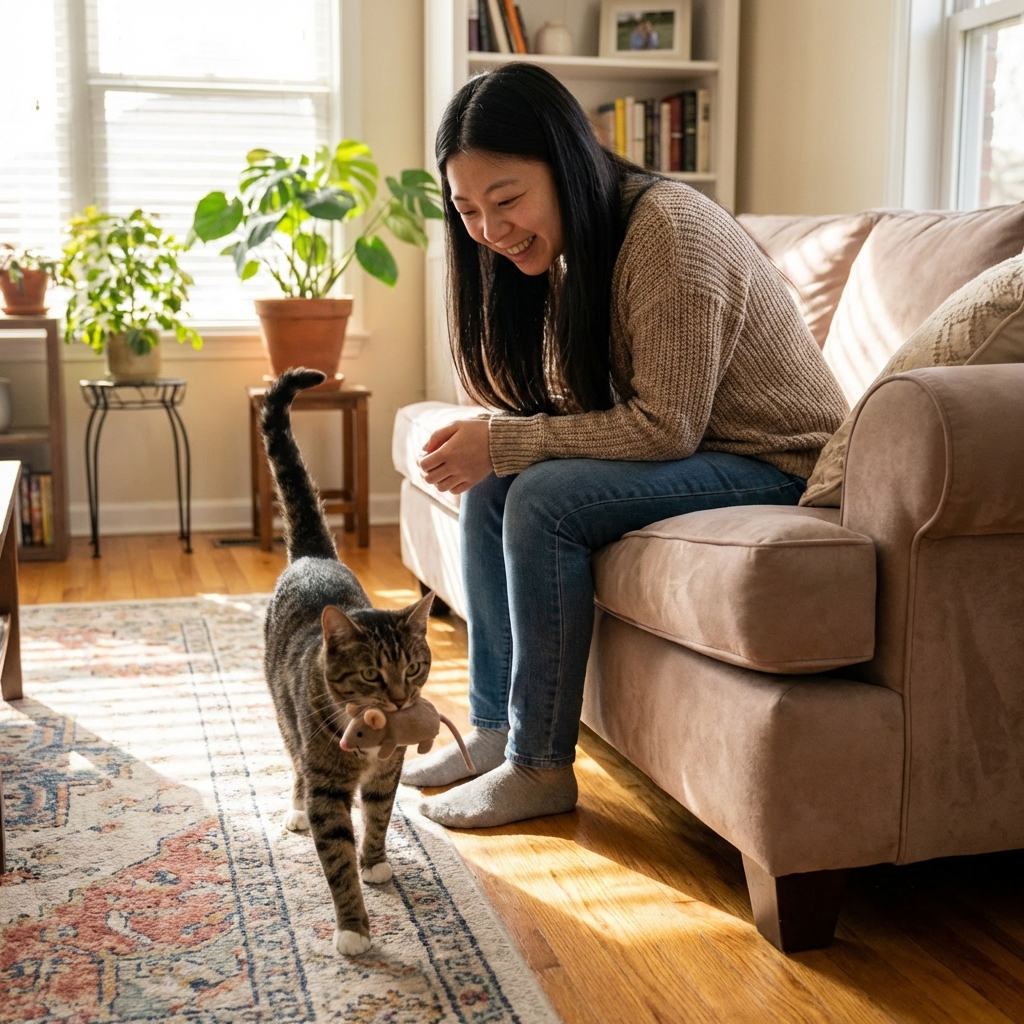
- Bring you “gifts” (toys, socks)
- Love chasing moving objects
- Enjoy food treats or clicker training
Safety note: Hair ties are a high-risk foreign body hazard. Even if your cat proudly delivers them, do not use hair ties as toys and keep them picked up.
Age is not a deal-breaker. Kittens may learn faster, but adult cats can learn too. The main factors are motivation and comfort.
What You Need
A safe fetch toy
Choose something easy to grab and carry. Great beginner options include:
- Small plush mice
- Soft pom-pom balls that cannot unravel
- Lightweight foam balls made for pets
Avoid items that can be swallowed, splinter, or shred into strings. If your cat likes stringy toys, use them only with supervision and put them away afterward.
A reward your cat cares about
Use tiny treats, lickable puree, or even a favorite kibble. The reward should be quick to deliver so the learning stays clear.
A marker (optional, very helpful)
A clicker or a simple marker word like “yes!” helps with timing. You mark the exact moment your cat does the right thing, then you treat.
A good setup
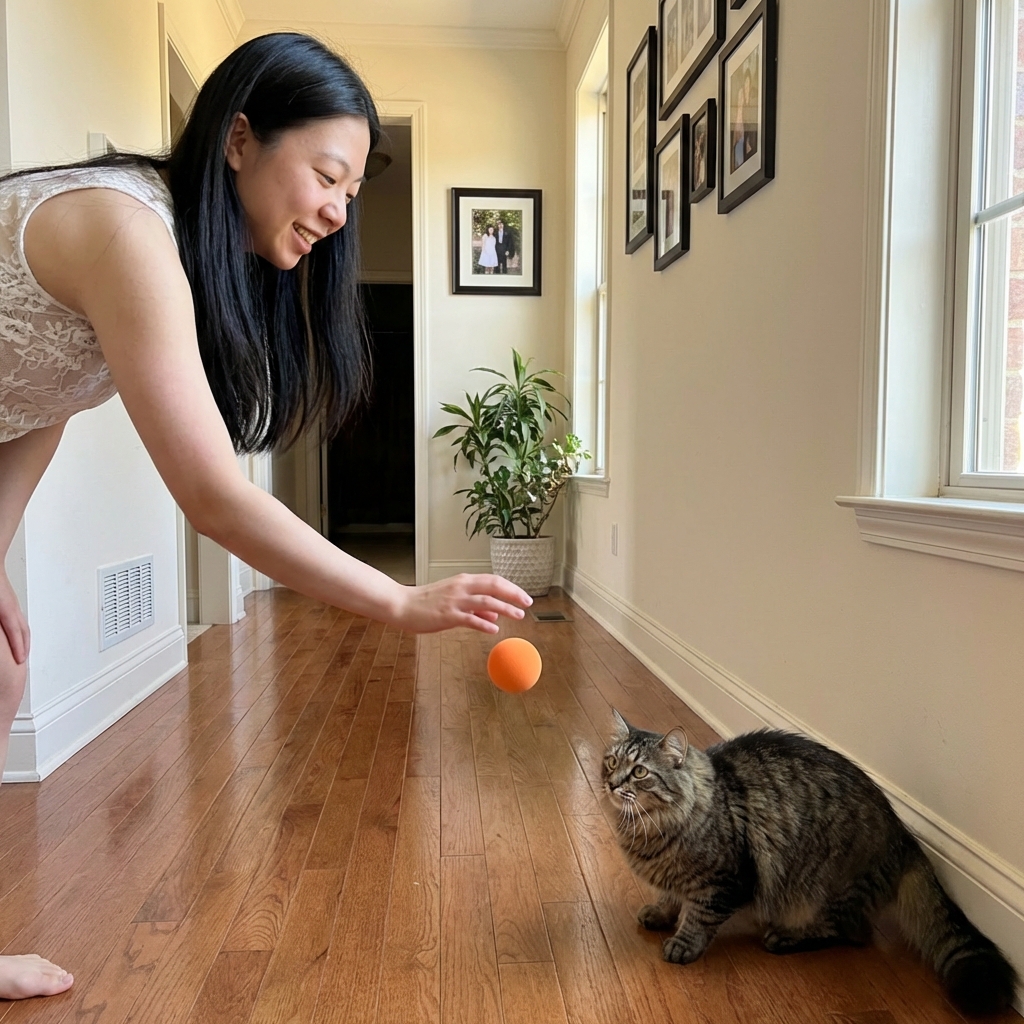
Start in a hallway or small room so the toy does not disappear under furniture and your cat does not get distracted. Choose good footing: rugs or a yoga mat can help prevent slipping. Avoid throwing toward stairs or onto slick floors.
Teach Fetch Step by Step
Think of fetch as a chain of small skills. We build each piece, then connect them. This is called shaping, which means rewarding tiny steps toward the final behavior.
Step 1: Make the toy valuable
Show the toy and let your cat investigate. Mark and treat for calm interest (sniffing, looking, a gentle paw touch). Repeat a few times so your cat learns the toy predicts good things.
Step 2: Encourage a chase
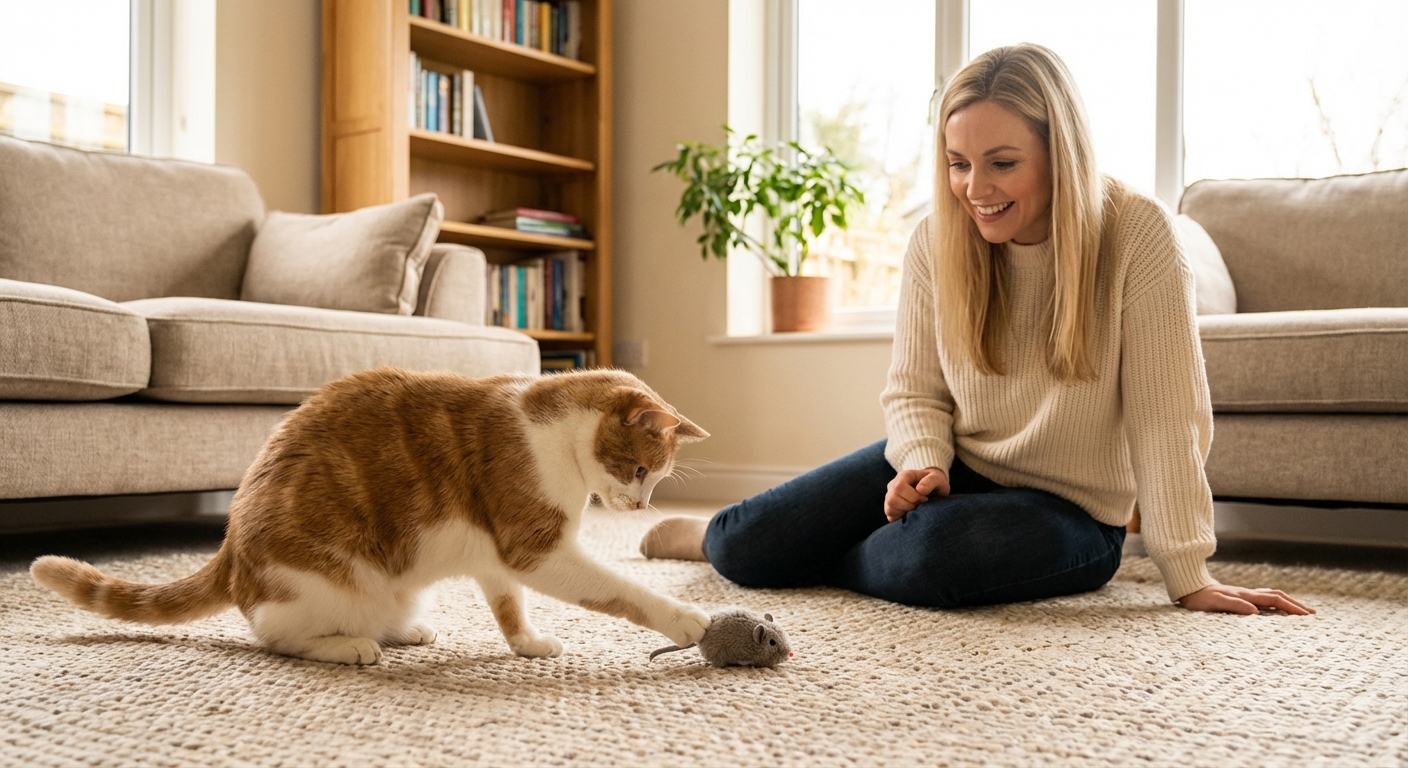
Toss the toy just a few feet. If your cat looks at it, moves toward it, or pounces, mark and treat immediately.
Step 3: Reinforce the pick-up
Many cats will bat a toy but not pick it up. If your cat mouths it or lifts it, mark and treat. This is real progress.
Step 4: Reinforce the return (even halfway)
If your cat picks up the toy and turns toward you, mark and treat. If your cat takes one step toward you, mark and treat. We are building momentum in tiny increments.
Step 5: Add a drop cue
When your cat comes near you with the toy, place a treat right at your cat’s nose so they naturally drop the toy to eat. Say a simple cue like “drop.” Then toss the toy again.
Step 6: Keep it short and end on a win
Do 3 to 8 throws, then stop. Ending early keeps the game exciting and reduces frustration. For some cats, putting the toy away between sessions also preserves novelty.
Pro tip: If your cat runs off with the toy, do not chase. Chasing can turn it into a keep-away game. Instead, lure your cat back with a treat, reinforce, and try a shorter toss next time.
If your cat will not pick up toys: Try a bigger, softer toy that is easier to grip, or teach a simple “touch” (nose target) to your hand, then build toward touching the toy and returning to you. Some cats also do better retrieving to a mat near you, rather than directly to your lap.
How Often to Play
For wellness, consistency matters more than long sessions. Many cats do best with:
- 1 to 3 mini-sessions per day
- 1 to 5 minutes per session
- Play before meals if possible, since hunting and then eating fits natural feline behavior
If your cat starts panting, flopping, or getting cranky, that is your cue to stop and let them rest. A brief pant after an intense sprint can happen in some cats, but panting that persists or seems labored is a bigger concern.
Common Problems
“My cat chases but will not bring it back.”
Reinforce any movement toward you with the toy. Use a hallway. Toss shorter distances. You can also toss a second identical toy as your cat returns, then pick up the first.
“My cat gets overstimulated and bites.”
Keep sessions shorter, use calmer tosses, and stop at the first sign of tail thrashing or skin rippling. Provide a kicker toy for solo play afterward.
“My cat is not treat-motivated.”
Try a higher-value reward like freeze-dried meat treats or a tiny dab of lickable puree. Some cats prefer praise and petting, but many respond best to food.
“My cat loses interest fast.”
That is normal. Rotate toys, play at the same time daily, and stop before your cat checks out. Boredom usually means the session went a little too long.
Safety and Vet Check
Fetch should look fun and relaxed, not frantic or painful. Check with your veterinarian if you notice:
- Limping, stiffness, or trouble jumping
- Heavy panting that does not settle quickly
- Sudden behavior changes like hiding after play
- Repeated coughing or wheezing with activity
If your cat is overweight or has arthritis, fetch can still be possible, but you may need gentler throws, softer landings, better traction, and fewer repetitions.
Bottom Line
Teaching a cat to fetch is absolutely possible, and when you keep it positive and low-pressure, it can become a simple wellness routine that supports weight control, confidence, and connection. Start small, reinforce tiny wins, and let your cat set the pace. A few joyful minutes a day can make a real difference.