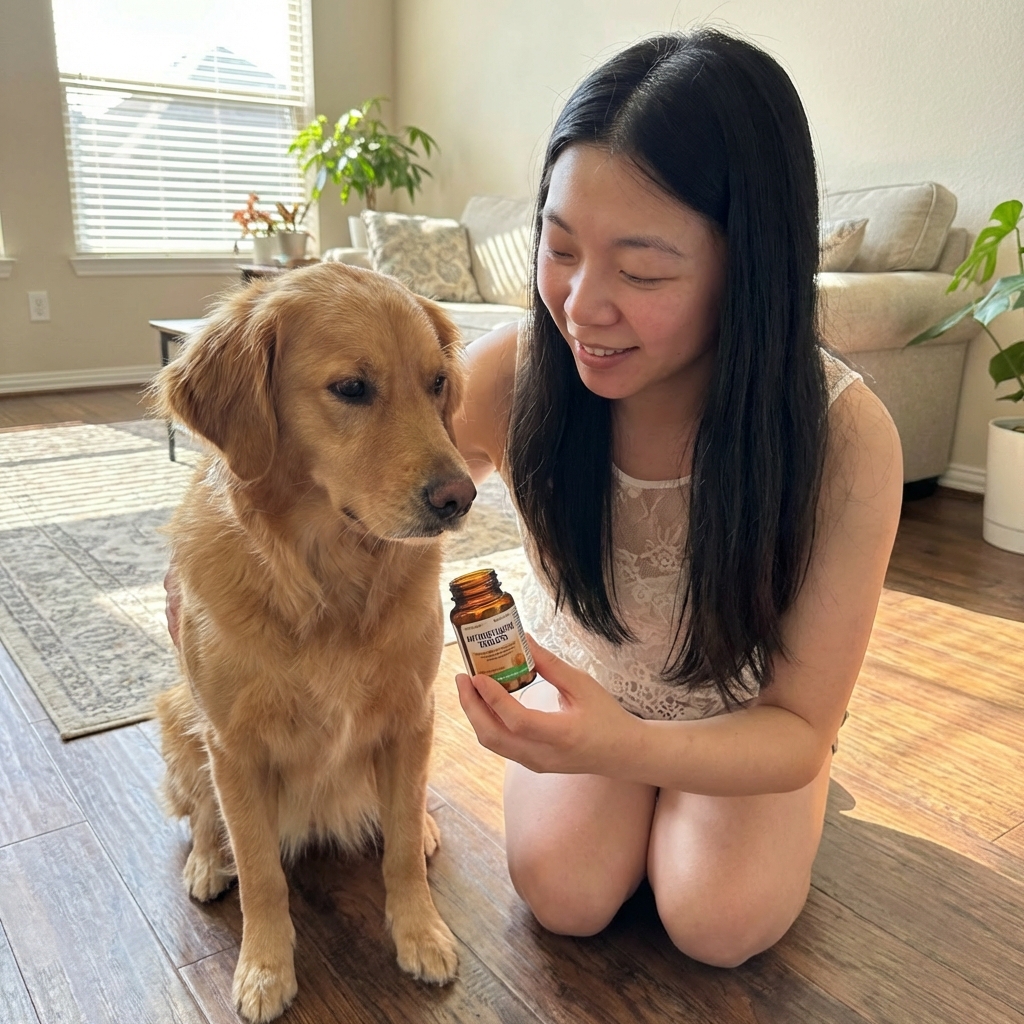
Veterinary assistant guidance on giving dogs Benadryl (diphenhydramine): when it can help, correct dose by weight, safe products, side effects, and emergency...
Article
•
Designer Mixes
Can You Give a Dog Allergy Medicine?

Shari Shidate
Designer Mixes contributor
As a veterinary assistant here in Frisco, Texas, I get this question all the time: “Can I give my dog allergy medicine?” Sometimes the answer is yes, but only with the right product, the right dose, and the right reason. Dogs are not just small humans, and some common human allergy medications can be dangerous for pets, especially if they include added ingredients like decongestants.
This step-by-step guide will help you understand what is generally considered safe, what to avoid, and when it is time to call your veterinarian.

What kind of allergy is it?
Most itchy dogs are dealing with one (or a mix) of these issues:
- Environmental allergies (atopy): pollen, grasses, dust mites, molds.
- Flea allergy dermatitis: one bite can trigger days of intense itching in sensitive dogs.
- Food allergies or sensitivities: often shows up as skin issues, ear infections, and sometimes GI upset.
- Contact irritation: shampoos, lawn products, certain fabrics, cleaning sprays.
- Infections: yeast and bacterial skin infections can look like “allergies” but need different treatment.
- Parasites: ear mites and other parasites can cause intense itch and irritation.
Why does this matter? Because allergy medicine can sometimes reduce itch and hives, but it does not treat the underlying cause if the trigger is fleas, mites, an infection, or a food issue that is still active. In other words, symptoms may improve while the real problem keeps going.
Before you give allergy medicine
Step 1: Check emergency signs
Skip home treatment and seek urgent veterinary care if you notice:
- Facial swelling, swollen muzzle, or puffy eyes
- Hives spreading quickly
- Vomiting, collapse, weakness, or pale gums
- Difficulty breathing, noisy breathing, or excessive drooling
- A sting or bite and your dog is getting worse by the minute
These signs can indicate anaphylaxis or a serious reaction.
Step 2: Make sure it is appropriate
Even medications that are commonly used in dogs can be risky if your dog has certain conditions. Check with your veterinarian before dosing if your dog is:
- On other medications (especially sedatives, seizure meds, pain meds, or behavior meds)
- Pregnant or nursing
- Very young, very small, or a senior
- Diagnosed with glaucoma, heart disease, high blood pressure, liver disease, kidney disease, or seizure disorders
Step 3: Know your dog’s weight
Dosing is weight-based. Guessing can lead to underdosing (no relief) or overdosing (side effects). If you are not sure, weigh your dog or check a recent vet visit record.
Common allergy meds for dogs
Important: Prefer single-ingredient products unless your veterinarian directs otherwise. Many “allergy” and “cold” products marketed for humans contain extra drugs that are unsafe for dogs.
Antihistamines
For mild itch, hives, or bug bites, veterinarians sometimes use antihistamines. Results can be limited and inconsistent for canine environmental allergies, so think of these as a “maybe it helps” option, not a guaranteed fix. Your veterinarian should confirm whether one is appropriate for your dog and provide a weight-based dose.
- Diphenhydramine (commonly known as Benadryl): often used for mild allergic reactions and itching, but it can cause sleepiness or, in some dogs, agitation.
- Cetirizine (commonly known as Zyrtec): tends to be less sedating for many dogs, used for environmental allergies.
- Loratadine (commonly known as Claritin): another option some vets recommend for certain dogs.
Response varies widely. Some dogs do great, and others get minimal relief. If your dog is constantly chewing paws or having repeat ear infections, you may need more targeted allergy support.
Prescription options
If over-the-counter antihistamines are not enough, your veterinarian may discuss:
- Apoquel (oclacitinib)
- Cytopoint (monoclonal antibody injection)
- Prescription allergy diets for suspected food allergies
- Immunotherapy (allergy testing and customized drops or injections)
These are often more effective for chronic itch than antihistamines, and they can reduce the cycle of scratching, infections, and inflammation.
What not to give
This is where owners accidentally get into trouble. Avoid the following unless your veterinarian explicitly instructs otherwise:
- Combination cold and flu products: Many contain decongestants (like pseudoephedrine or phenylephrine) that can be toxic to dogs.
- Products labeled “D” or “multi-symptom”: “D” often means a decongestant was added. Multi-symptom formulas may include decongestants, cough suppressants like dextromethorphan (often shown as “DM”), pain relievers, or other added drugs that are not dog-safe by default.
- Acetaminophen (Tylenol): can be dangerous, especially to cats, and still risky in dogs without veterinary guidance.
- Ibuprofen or naproxen (Advil, Motrin, Aleve): can cause ulcers, kidney injury, and serious toxicity.
- Essential oils as an “allergy cure”: many can irritate skin or be harmful if licked or inhaled. Tea tree oil is a common example that can cause serious toxicity if misused.
If your dog already received something questionable, call your veterinarian or a poison control resource right away. The sooner you act, the better.
- ASPCA Animal Poison Control: 1-888-426-4435
- Pet Poison Helpline: 1-855-764-7661
Dosing safety checklist
I cannot safely give a one-size-fits-all dose online because dose depends on your dog’s weight, medical history, and the exact product. But here is a safe framework to follow so you avoid the most common errors:
- Step 1: Verify the active ingredient and that it is a single-ingredient product (unless your vet told you otherwise).
- Step 2: Check the label for added decongestants, pain relievers, caffeine, xylitol, or alcohol.
- Step 3: Be extra careful with children’s liquids and flavored or orally disintegrating tablets. These are more likely to contain xylitol or other sweeteners.
- Step 4: Confirm the tablet strength (mg per tablet) and your dog’s current weight.
- Step 5: Ask your veterinarian for the exact mg dose and how often to give it.
- Step 6: Give with food if your dog has a sensitive stomach (unless your vet says otherwise).
- Step 7: Watch for side effects for the next 6 to 12 hours.
How long to try it
For simple itch or seasonal sniffles, you usually know within 24 to 48 hours if an antihistamine is helping. If there is no clear improvement after a couple of days, or if symptoms are getting worse, stop guessing and call your veterinarian for the next step.
Side effects to watch for
- Sleepiness or grogginess
- Dry mouth, mild constipation, or urinary retention
- Restlessness or panting
- Vomiting or diarrhea (less common, but possible)
If you see severe lethargy, tremors, rapid heart rate, trouble walking, or collapse, contact a veterinarian immediately.
When meds are not enough
If your dog has any of these patterns, an OTC antihistamine alone is usually not enough:
- Recurring ear infections or head shaking
- “Frito feet” smell (corn-chip odor) or greasy, red paws (often yeast)
- Hot spots or oozing skin
- Itching that is seasonal and returns every year
- Itching that is year-round (often needs a deeper plan)
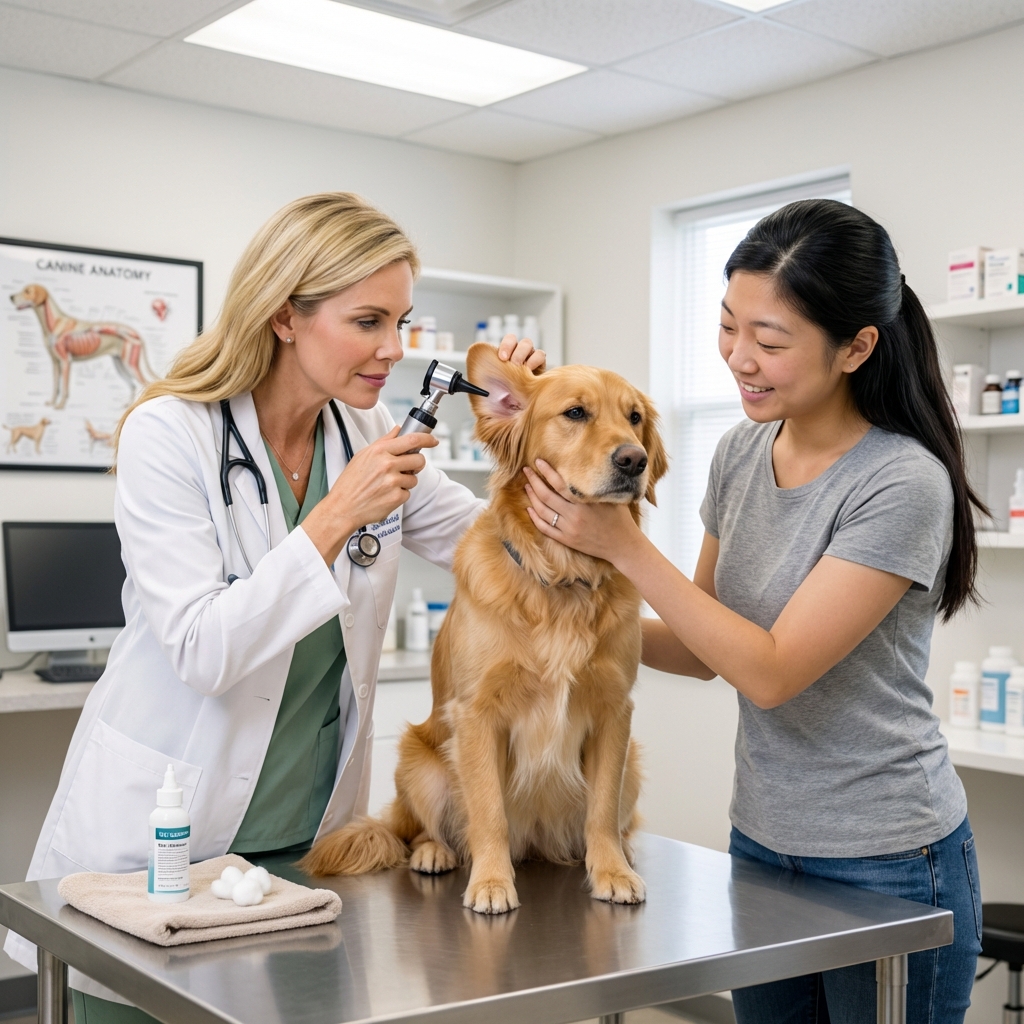
In these cases, the best next step is a vet visit for a skin and ear check. Many itchy dogs have a treatable infection on top of allergies, and they feel better fast once that piece is addressed.
Simple home support
Alongside vet-approved medication, these basics can make a big difference:
- Flea prevention: even indoor dogs can get exposed. Flea allergy is one of the most common itch triggers.
- Paw rinses after walks: wipe or rinse feet and belly to remove pollen and grass residue.
- Bathing with a vet-recommended shampoo: helps remove allergens and soothe skin. Frequency depends on your dog’s coat and skin condition.
- Wash bedding weekly: fragrance-free detergent is ideal for sensitive dogs.
- Omega-3s (vet-approved): can support skin barrier health over time.

Quick FAQ
Can I give my dog Benadryl?
Sometimes, yes, but only if it is a plain diphenhydramine product and your veterinarian confirms it is appropriate for your dog’s health profile and gives you a dose based on weight. Keep in mind that antihistamines can be hit-or-miss for environmental allergies in dogs.
What if my dog is still itchy?
If there is no clear improvement within 48 hours, or if your dog has ear issues, hot spots, or constant paw chewing, it is time for a veterinary exam. Your dog may need prescription allergy control, treatment for infection, a diet trial, or stronger flea protection.
Is “natural” always safer?
No. “Natural” products can still cause reactions, interact with medications, or worsen skin irritation. Evidence-based and vet-guided is the safest route.
Bottom line
You can sometimes give a dog allergy medicine, but safety depends on the exact drug, the product formulation, your dog’s weight, and your dog’s medical history. If you are unsure, call your veterinarian and ask what they recommend for your specific dog. It is a quick call that can prevent a scary mistake.
If your dog is itchy often, think bigger than a pill. The goal is calmer skin, fewer infections, and a comfortable dog who can finally relax.