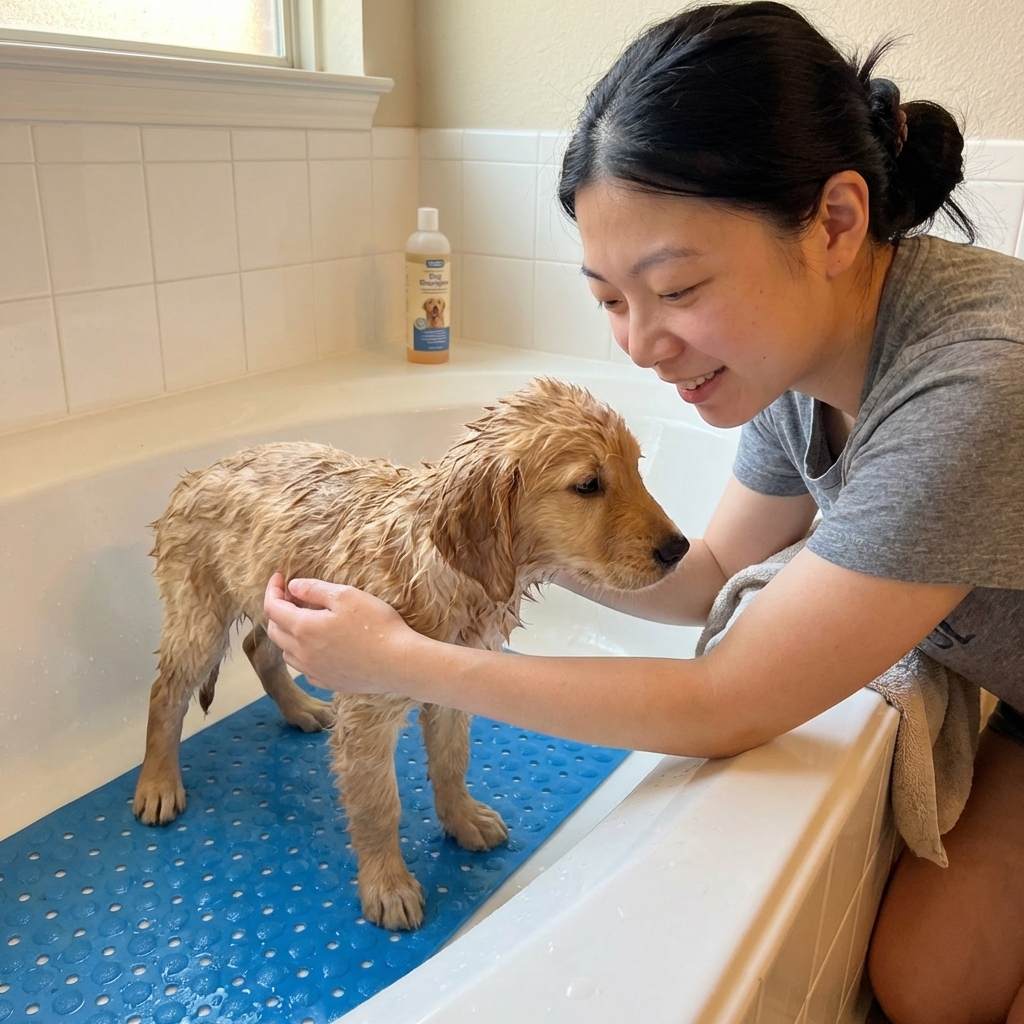
Wondering what age you can bathe a puppy? Get a vet-assistant guide by age: when to avoid full baths, how to spot-clean, and safe 8-week+ bath steps and sche...
Article
•
Designer Mixes
Can You Bathe Puppies

Shari Shidate
Designer Mixes contributor
Yes, you can bathe puppies, but timing and technique matter. As a veterinary assistant, I see two common problems: well-meaning baths that leave a puppy chilled or irritated, and owners waiting so long that the coat becomes a mess and skin issues sneak in. The goal is simple: keep your puppy clean without stressing their skin, immune system, or comfort.
Quick note: This guidance is general. If your puppy has a medical condition, parasites, or skin disease, your veterinarian may recommend a different plan.
When is it safe to bathe a puppy?
Most puppies can handle an occasional bath once they are sturdy enough to stay warm, tolerate handling, and you can dry them thoroughly. Many vets suggest waiting until around 8 weeks old for a full bath when possible. That said, an earlier bath is sometimes fine if you can keep the puppy warm and dry, or if your vet recommends it for a hygiene or medical reason.
If your puppy is younger, it is often better to do a spot clean with a warm damp cloth, or use pet-safe wipes, instead of a full soak.
When a bath makes sense right away
- They rolled in something smelly or sticky and a wipe is not enough.
- Feces or urine on the coat (common with fluffy breeds and very young pups).
- Fleas, but only with the right approach (more below).
When to avoid bathing and call your vet
- Very young puppies that cannot regulate body temperature well.
- Lethargy, vomiting, diarrhea, coughing, or fever.
- Open sores, severe itching, pustules, or hair loss.
- Recent surgery or healing incisions.
How often should puppies be bathed?
For most puppies, less is more. Over-bathing can strip oils from the skin and lead to dryness, itchiness, and a dull coat.
- Typical range: every 3 to 6 weeks, depending on coat type and lifestyle.
- Muddy adventures: rinse paws and belly, then do a full bath only when truly needed.
- Skin-prone puppies: follow your veterinarian’s schedule and shampoo choice.
Between baths, brushing, wiping paws, and quick “butt baths” after potty accidents go a long way.
What you need before you start
Having everything ready helps the bath go faster, which helps your puppy stay calm and warm. For many puppies, the whole routine can be 10 to 15 minutes once you have a system.
- Puppy-safe shampoo (fragrance-free is ideal for sensitive skin)
- 2 towels (one for initial wrap, one for drying)
- Non-slip mat for the sink or tub
- Cup or handheld sprayer for rinsing
- Comb or brush appropriate for your puppy’s coat
- High-value treats (tiny pieces)
- Cotton balls to place loosely in ears (optional, never push into the ear canal)
Skip human shampoos. They are formulated for human skin and are often not pH-balanced for dogs, which can contribute to dryness or irritation.
About “tearless” shampoos: That label is mostly marketing. Even puppy shampoos can sting, so keep soap out of the eyes.
Step-by-step puppy bath
1) Prep the room and water
Warm the bathroom and use lukewarm water. If it feels hot to your wrist, it is too hot for a puppy. Keep the water shallow, especially for anxious pups. Place a non-slip mat down so your puppy feels secure.
2) Brush first
Brush out tangles and loose hair before water hits the coat. Water can tighten mats and make them harder to remove.
3) Wet slowly, then shampoo gently
Wet from the neck down first. Use a small amount of shampoo and massage gently. Avoid getting soap in the eyes, ears, and nose.
4) Rinse longer than you think
Leftover shampoo is a top cause of post-bath itch. Rinse until the water runs free of suds and the coat no longer feels slippery, then rinse once more.
5) Dry fast, but avoid overheating
Wrap your puppy in a towel right away and blot. If you use a blow dryer, use low heat and low airflow, keep it moving, and stop if your puppy seems stressed. Puppies can get chilled quickly, but they can also overheat in a hot bathroom or with a dryer held too close.
6) Reward and keep it positive
Offer treats throughout, speak calmly, and end with a cozy cuddle. You are not just cleaning your puppy, you are teaching them that grooming is safe.
Vet assistant tip: The biggest safety risk I see is puppies getting cold. If your puppy is shivering after a bath, warm them up right away with towels and body warmth, and call your veterinarian if they remain chilled or act unusually sleepy.
Puppies and fleas
If you suspect fleas, a bath can help remove some fleas and flea dirt, but it rarely solves the problem by itself. Fleas live in the environment too.
Safer first steps
- Use a flea comb daily and dip it in soapy water.
- Wash bedding in hot water and dry on high heat.
- Vacuum frequently, especially along edges and under furniture.
Be cautious with flea shampoos and “natural” remedies
Many flea shampoos and dips are not appropriate for young puppies. Always check the label for minimum age and weight, and when in doubt, call your vet.
Avoid using products not labeled for puppies. In particular, do not use permethrin or pyrethroid products unless your veterinarian confirms they are safe for your puppy’s age, weight, and species in the home (some are dangerous for cats). Also be careful with essential oils. Some “natural” flea remedies can be toxic to pets.
For many puppies, veterinarian-recommended flea preventatives are safer and more effective than harsh shampoos.
Face, ears, and eye safety
Face
Use a warm damp cloth for the face instead of pouring water over the head. Wipe gently around the eyes and muzzle.
Ears
Do not pour water into ears. Routine ear cleaning is not always necessary, and the right cleaner depends on the puppy. If your puppy has floppy ears, swims, or is prone to ear issues, ask your veterinarian whether an ear drying solution or cleaner is appropriate. Avoid cotton swabs inside the ear canal.
Eyes
If shampoo gets into the eyes, rinse immediately with lukewarm water. If you notice redness, squinting, or discharge afterward, contact your vet.
Coat-specific tips
Curly and doodle coats
These coats mat easily. Brush thoroughly before the bath, and consider using a puppy-safe conditioner if your groomer or vet recommends it. Drying and brushing after the bath helps prevent mats.
Double coats
Rinse extremely well and dry thoroughly down to the skin. Damp undercoat can lead to odor and hot spots.
Short coats
They often need fewer baths. A wipe-down and brushing can keep them looking great between baths.
Common mistakes to avoid
- Bathing too often, leading to dry, flaky skin.
- Using human shampoo or strongly scented products.
- Not rinsing enough, which can cause itching.
- Letting a puppy air-dry and get chilled.
- Bathing when your puppy feels unwell or stressed. After vaccines, some puppies feel tired or sore. If that is your pup, consider postponing the bath for comfort, and ask your vet if you are unsure.
- Forcing the process and creating lifelong bath anxiety. Short and positive wins.
Quick spot-clean options
Sometimes the best puppy bath is not a bath at all.
- Warm washcloth for paws, belly, and face
- Pet-safe wipes for quick cleanups
- Rinse-only paw wash after muddy walks
- Sanitary trim from a groomer for puppies that get messy around the rear
When to call the vet
Reach out if you notice any of the following after bathing:
- Persistent shivering or trouble warming up
- Hives, facial swelling, or sudden intense itching
- Red, wet, painful skin or a foul odor
- Head shaking or ear pain
- Eye redness or squinting that does not improve
Your puppy’s skin is their protective barrier, and early support can prevent small issues from becoming big ones.
Make baths easier over time
If you want a puppy who tolerates grooming well as an adult dog, start small:
- Handle paws, ears, and tail daily for 10 to 20 seconds.
- Introduce the tub or sink with treats, no water at first.
- Do “practice baths” where you wet a paw, towel-dry, and reward.
- Keep the first real bath short and calm.
With consistency, bathing becomes just another normal life skill, and that is a gift you give your dog for years.