
Is your dog licking paws or getting a red belly in spring or fall? Learn common symptoms, top triggers (pollen, grass, mold), easy home relief steps, and whe...
Article
•
Designer Mixes
Can I Give My Dog Zyrtec for Itching?

Shari Shidate
Designer Mixes contributor
When your dog is itchy, it can take over the whole household. Everyone loses sleep, your pup is uncomfortable, and you are left staring at the medicine cabinet wondering if a human antihistamine could help. One of the most common questions I hear as a veterinary assistant is: Can I give my dog Zyrtec for itching?
The evidence-based answer is: sometimes, yes, but only when it is the right itch, at the right dose, with the right safety checks. Itching is a symptom, not a diagnosis, and many itchy dogs need more than an antihistamine to truly feel better.
Quick note: This article is general education and not a substitute for veterinary advice. Always confirm the right product and dose with your veterinarian for your specific dog.

What Zyrtec is and why it might help
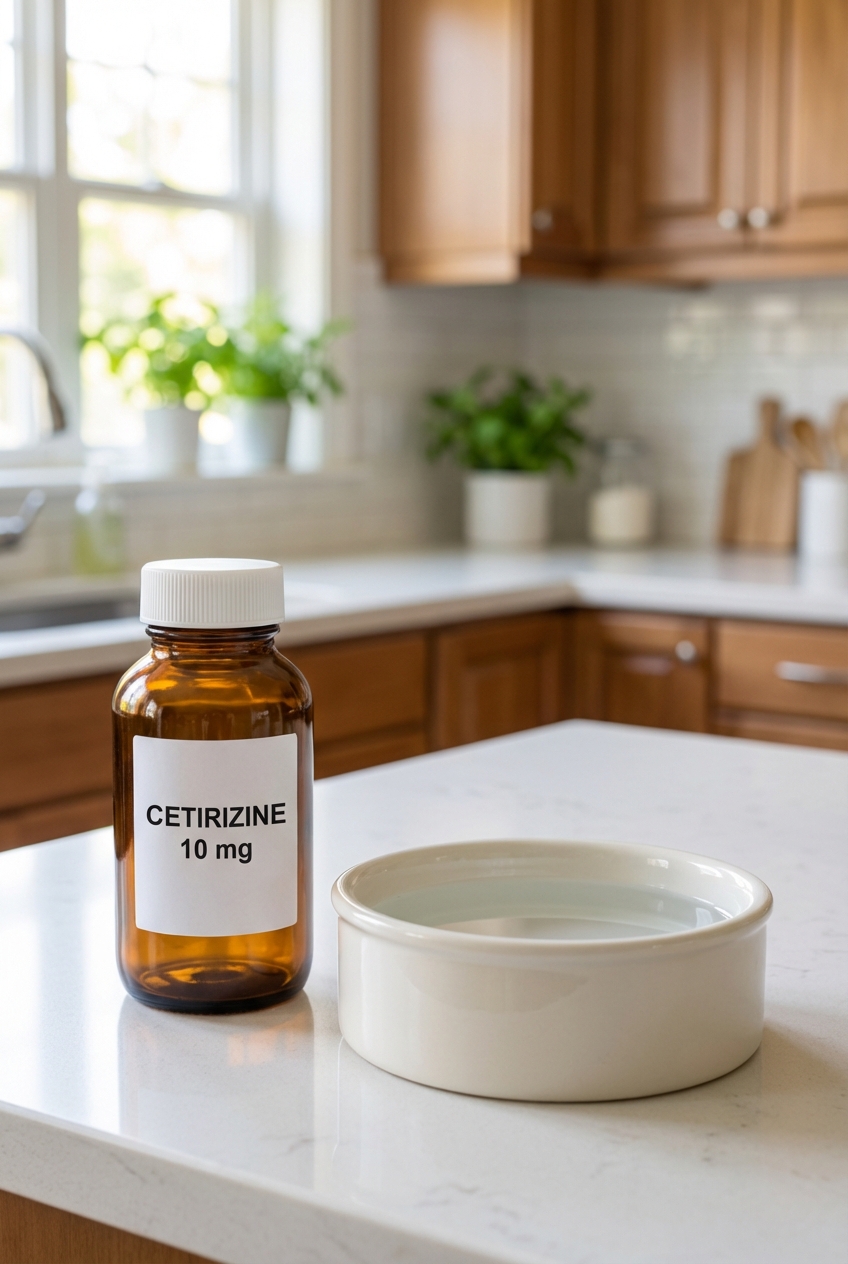
Zyrtec is the brand name for cetirizine, a second-generation antihistamine. In dogs, it is sometimes used off-label (common in veterinary medicine) for allergy-related itching, especially when histamine plays a role.
It tends to work best for:
- Environmental allergies (seasonal pollen, grasses, dust mites)
- Mild hives or bug-bite reactions
- Allergy-driven itch without an active infection
It tends to work poorly for:
- Itching from fleas (you still need fast, effective flea control)
- Yeast or bacterial skin infections (these usually need veterinary treatment)
- Mange mites (needs a proper diagnosis and prescription therapy)
- Food allergy itching (often requires a diet trial and a plan)
One more honest note: antihistamines help some dogs, but not all. Clinical studies show variable, often limited benefit, and your vet may recommend other allergy tools if cetirizine is not enough.
Quick safety checklist
Before giving any medication, consider these safety points and call your veterinarian if you are unsure:
- Use plain cetirizine only. Avoid combo products such as “Zyrtec-D” because pseudoephedrine can be dangerous for dogs.
- Check for other ingredients. Some allergy products include decongestants or added pain relievers that are not safe.
- Be careful with liquids. Some liquid formulations may contain ingredients your dog should not have (for example, certain sweeteners or alcohol). Read labels closely and ask your vet or pharmacist to help you choose a pet-safe option.
- Confirm your dog’s current meds. Always ask about interactions if your dog takes sedatives, seizure meds, anxiety meds, or other allergy prescriptions.
- Use extra caution with underlying disease. Dogs with kidney or liver disease, glaucoma, urinary retention issues, or heart disease may need special guidance. These cautions are more commonly emphasized with older antihistamines, but it is still smart to get vet input for any chronic condition.
- Do not rely on Zyrtec if your dog looks sick. Lethargy, fever, vomiting, ear pain, or a strong odor from skin often points to infection or something more than allergies.
How much Zyrtec can dogs take?
Dosing should come from your veterinarian because your dog’s size, health conditions, and symptoms matter. That said, many vets commonly use a guideline of:
Cetirizine (plain): about 1 mg per kg of body weight once daily
That is roughly 0.5 mg per pound once daily in many cases.
Some veterinarians instead use a more fixed, practical approach (for example, 10 mg once daily for many medium and large dogs), or adjust frequency based on response. In other words, there is not one perfect dose for every dog, and you should not increase or exceed dosing unless your veterinarian directs you to.
Because tablets come in fixed sizes, it is easy to accidentally over or under dose. 10 mg tablets are common, and that can be too much for a very small dog and not enough for a very large dog. Your veterinarian can help you match the right tablet strength to your dog’s weight and create a plan you can repeat safely.
How fast does it work?
If cetirizine helps your dog, you might notice some improvement within hours, but itch relief with allergic skin disease can be variable. A fair way to judge it is to give it consistently and reassess over several days.
When to stop and call your vet
Call your veterinarian if:
- Your dog is not meaningfully better after 3 to 5 days, or itching rebounds immediately
- You see worsening redness, scabs, oozing, hair loss, or a new odor
- Your dog has recurrent ear scratching, head shaking, or ear smell (ear infections are common in allergy dogs)
Possible side effects
Most dogs tolerate cetirizine well, but side effects can happen.
- Drowsiness (usually mild, but some dogs get quite sleepy)
- Dry mouth (less common)
- Upset stomach (rare, but can occur)
- Excitability (uncommon, but some dogs react this way to antihistamines)
If you see vomiting, diarrhea that does not resolve, extreme sedation, agitation, or anything that feels off, stop the medication and call your veterinarian.
When itching is an emergency
Some allergic reactions are more than itchy skin. Get urgent veterinary help if you notice:
- Facial swelling (puffy muzzle, eyelids)
- Hives spreading quickly
- Difficulty breathing, noisy breathing, or excessive drooling
- Collapse or severe weakness
- Repeated vomiting after a sting, bite, or new medication
Zyrtec is not a substitute for emergency care when breathing trouble or swelling are involved.
Why your dog is itching
In Frisco and across Texas, I see a lot of allergy dogs, but I also see plenty of itchy pups who actually have something else going on. Common causes include:
- Fleas (even one bite can trigger intense itch in sensitive dogs)
- Environmental allergies (pollen, mold, dust mites)
- Food allergies or intolerances
- Yeast or bacterial infections (often with odor, greasy skin, or redness)
- Ear infections (head shaking, ear scratching, odor)
- Dry skin from bathing too often or harsh shampoos
- Contact irritation (new detergent, lawn chemicals)
If the itch is constant, intense, or paired with hair loss, scabs, or recurring ear issues, it is worth a vet visit. You will save time and money by treating the true cause instead of guessing.
Simple itch relief today
If your dog is mildly itchy and otherwise acting normal, these steps are safe, practical, and help you gather clues for your vet.
1) Check fleas
- Use a flea comb and look for “flea dirt” (black specks that turn reddish when wet)
- Make sure all pets in the home are on effective flea prevention
2) Rinse off allergens
During heavy pollen seasons, a quick rinse of paws and belly after outside time can reduce itching. Even a damp washcloth helps.
3) Use a gentle dog shampoo
Oatmeal or veterinary anti-itch shampoos can soothe skin. Avoid human shampoos, which can disrupt your dog’s skin barrier.
4) Stop the lick cycle
Constant licking makes inflammation worse. An e-collar or soft cone for a few days can be a kindness, not a punishment.
5) Track patterns
Write down when itching is worse, what your dog ate, any new treats, and what parts of the body are affected. This helps your vet narrow down allergies versus infection.

Zyrtec vs other options
Zyrtec is one tool, but it is not the only one, and sometimes it is not the best one.
- Prescription itch control (often more effective for moderate to severe allergies): your vet might discuss options like Apoquel or Cytopoint depending on your dog’s needs.
- Fatty acids (omega-3s): can support skin barrier and reduce inflammation over time.
- Medicated wipes or shampoos: helpful when yeast or bacteria are part of the problem.
- Allergy testing and immunotherapy: for chronic environmental allergies.
The best plan is usually a combination approach: reduce triggers, protect the skin barrier, prevent infections, and use medications strategically.
FAQs
Can I give my dog Zyrtec every day?
Some dogs do take cetirizine daily during allergy season, but long-term plans should be guided by your veterinarian. If your dog needs daily itch control year-round, that is a clue that you may need a bigger allergy strategy.
Is Zyrtec safe for puppies?
Puppies can be more sensitive, and dosing must be exact. Always check with your veterinarian first for young dogs.
What if my dog is itching but has no rash?
Itching without obvious rash can still be allergies, fleas, or early infection. Pay attention to paws, ears, and belly, and watch for licking, head shaking, and subtle redness.
Can I use Zyrtec-D?
No. Avoid Zyrtec-D for dogs because it contains a decongestant that can be harmful.
The bottom line
Yes, many dogs can take plain Zyrtec for itching, but it is not a cure-all, and it is not the right choice for every cause of itch. If your dog is mildly itchy from suspected allergies and otherwise healthy, your vet may recommend cetirizine at an appropriate dose.
If the itching is intense, persistent, or paired with ear trouble, odor, redness, hair loss, or sores, get your dog checked. Infections, parasites, and food allergies often need a different plan.
If you want, share your dog’s weight, age, symptoms, and any current medications, and I can help you prepare a list of questions to ask your veterinarian so you feel confident and informed.