
Wondering if Zyrtec can help your dog’s itching? Learn when plain cetirizine may work, what to avoid (Zyrtec-D), dosing basics, side effects, and red-flag ...
Article
•
Designer Mixes
Can Dogs Take Benadryl?

Shari Shidate
Designer Mixes contributor
As a veterinary assistant here in Frisco, Texas, I hear this question all the time: “Can I give my dog Benadryl?” Sometimes the answer is yes, but only when you match the dose to your dog’s weight, choose the right product, and know what symptoms are safe to treat at home versus what needs urgent veterinary care.
Benadryl is the brand name for diphenhydramine, an antihistamine commonly used in people. In dogs, it is most often used for mild allergy symptoms and mild itching. It is not a cure-all, and it is not the best choice for every dog or every “allergy-looking” problem.

Red flags first
If you see any of the signs below, skip Benadryl and get urgent veterinary care. Benadryl can delay needed treatment in serious reactions.
- Trouble breathing, noisy breathing, or swelling around the throat
- Rapidly worsening facial swelling or hives
- Collapse, weakness, extreme lethargy, or unresponsiveness
- Pale or blue-tinged gums
- Repeated vomiting or vomiting plus weakness
- Sudden diarrhea with lethargy
- Tremors or seizures
When Benadryl can help
Benadryl may be helpful for some dogs when symptoms are mild and your dog is otherwise acting normal.
When vets may recommend it
- Seasonal allergies: mild sneezing, watery eyes, mild itchiness
- Mild skin itch from environmental triggers (pollen, grass, dust)
- Minor hives or mild facial puffiness from an insect bite or contact allergy
- Motion sickness in some dogs (effectiveness is inconsistent, and many vets prefer other options, so ask first)
When not to use it
There are situations where diphenhydramine is risky or simply not the right tool.
Skip it and call your vet if your dog has
- Glaucoma (it can worsen eye pressure)
- Urinary retention or difficulty urinating
- Seizure history (ask your vet first)
- Heart disease or high blood pressure (ask your vet first)
- Pregnancy or nursing (only under veterinary guidance)
- Significant chronic disease, or your dog is on prescription meds where interactions are possible (including thyroid medication)
Also avoid giving Benadryl if your dog is already on other meds that may cause sleepiness, such as certain pain medications or anxiety medications, unless your veterinarian has specifically told you it is okay.
Benadryl dose for dogs
Veterinary references often list diphenhydramine as a range. A commonly used guideline is around:
2 to 4 mg/kg (about 0.9 to 1.8 mg per pound) every 8 to 12 hours.
The exact dose and frequency can vary based on your dog’s age, health conditions, and why you are using it. If this is your dog’s first time, if your dog has other medical problems, or if you are unsure, call your vet and confirm the dose.
Example doses
These examples use the 1 mg per pound end of the common range, since that is where many vets start for mild issues.
- 10 lb dog: 10 mg
- 25 lb dog: 25 mg
- 50 lb dog: 50 mg
How to measure safely
- Check the label for mg and calculate the dose in mg, not “number of tablets.”
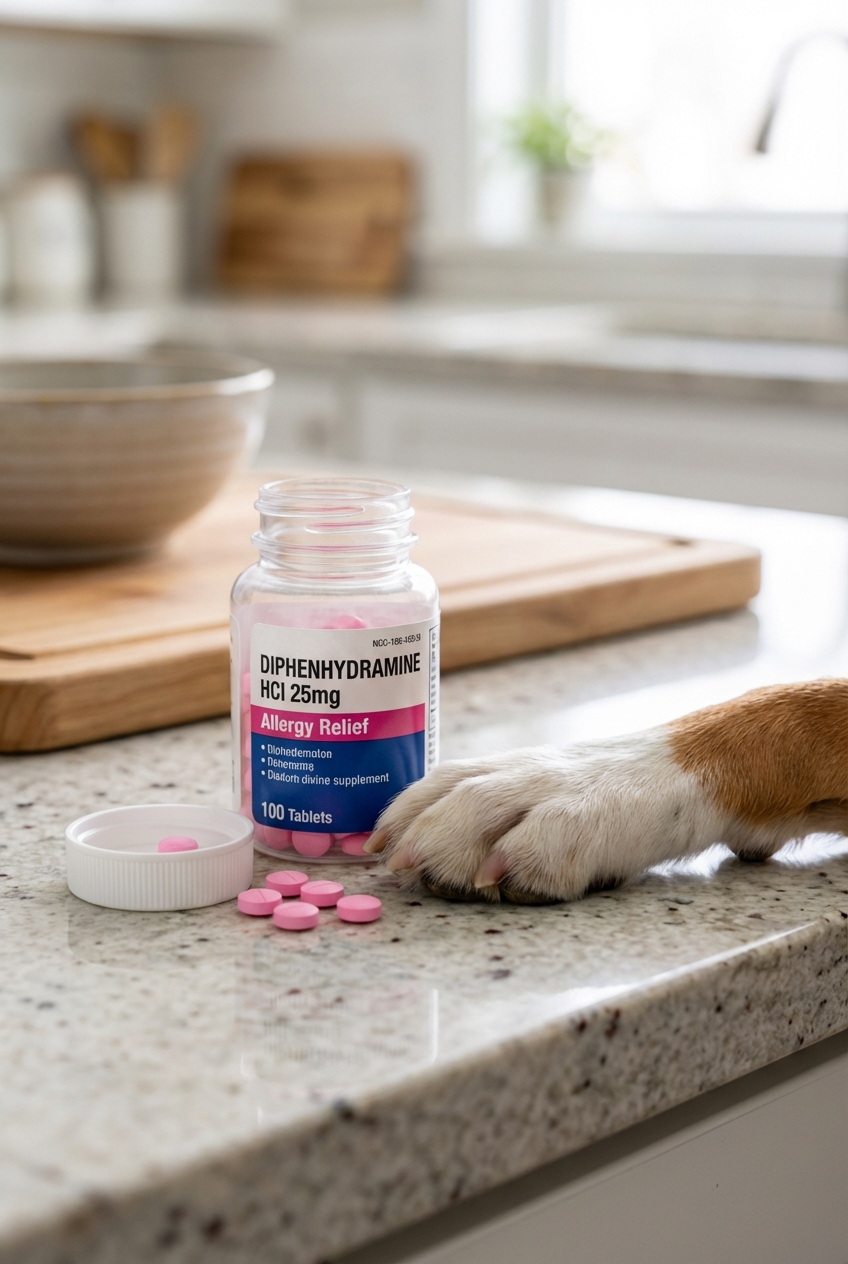
- Many tablets are 25 mg. For small dogs, that can mean splitting tablets, which can be imprecise. When in doubt, ask your clinic for a product and dose that is easier to measure.
- Do not use extended-release products unless your vet specifically instructs you.
- Do not crush or split extended-release tablets.
Style note: Many people accidentally overdose or underdose small dogs by guessing.
Which Benadryl is safe?
If your veterinarian says Benadryl is appropriate, choose a product with only diphenhydramine as the active ingredient.
Choose
- Plain diphenhydramine tablets or capsules
Avoid
- Benadryl-D or any product containing pseudoephedrine (dangerous for dogs)
- Combination cold, cough, flu, or “multi-symptom” products (these may contain other drugs like decongestants or pain relievers)
- Extended-release formulas unless your vet specifically instructs you
- Liquids unless your vet approves the exact product and concentration (some contain xylitol, alcohol, or additional active ingredients)
If you are not sure what you have at home, check the active ingredients panel and call your veterinary clinic before you give it.
What to expect
The most common effect is sleepiness. Some dogs get noticeably drowsy. Others barely act different.
Common side effects
- Drowsiness or sedation
- Dry mouth
- Mild digestive upset
- Occasionally, paradoxical excitement (restlessness, pacing), especially in younger dogs
Overdose or bad reaction
- Severe lethargy or unresponsiveness
- Agitation, tremors, or seizures
- Rapid heart rate
- Vomiting that will not stop
- Difficulty breathing
If any of these occur, contact your veterinarian or an emergency clinic right away. You can also call ASPCA Animal Poison Control (fee may apply): (888) 426-4435.
Itching: what it can and cannot do
Many pet parents reach for Benadryl because their dog is scratching. Here is the honest truth: it helps some dogs with mild environmental allergies, but it often does not touch moderate to severe itch.
Itching that needs a vet visit
- Ear infections: head shaking, ear odor, dark discharge, ear redness
- Flea allergy dermatitis: intense itching near tail base, scabs, hair loss
- Skin infections: pimples, pustules, crusts, hot spots, oozing
- Food allergy: chronic itching, recurrent ear infections, licking paws, GI upset
If your dog is chewing their paws daily, has repeated ear issues, or has recurrent hot spots, it is worth asking your vet about longer-term solutions such as prescription allergy medications, parasite prevention, medicated shampoos, or a food trial.
Allergic reactions: when it is not enough
For mild hives or mild swelling from a bug bite, Benadryl may be part of a plan. But anaphylaxis is life-threatening and needs urgent medical care.
If symptoms are worsening quickly, do not wait it out at home.
A quick checklist
If you are standing in your kitchen right now wondering what to do, walk through this quick checklist.
- Is this a mild issue (mild itch, a few hives) and is my dog breathing normally?
- Do I have plain diphenhydramine only (not Benadryl-D or combo products)?
- Do I know my dog’s current weight?
- Do I know the dose in mg, not just “one tablet”?
- Has my dog taken it before without problems?
- Is my dog free of health conditions that could make Benadryl risky?
If any answer is “no” or “I’m not sure,” call your vet. Most clinics would rather answer a quick medication question than treat a preventable complication later.

What not to use it for
- Not a substitute for treating ear infections, skin infections, or fleas
- Not reliable for moderate to severe allergies or chronic itch
- Not for sedation or behavior control without veterinary guidance
Beyond Benadryl
Benadryl can be a short-term tool, but long-term wellness usually comes from identifying triggers and supporting the body.
Simple steps that often help
- Year-round parasite prevention: flea allergies can look like “random itching”
- Rinse and wipe paws after outdoor time during high pollen days
- Regular bathing with a vet-recommended shampoo if allergies are suspected
- Nutrition support: ask your veterinarian about omega-3 fatty acids for skin health
- Vet-directed allergy plan: for chronic itch, prescription options can be safer and more effective than frequent antihistamine use
You do not have to solve it all in one day. Start with the safest next step, observe closely, and partner with your veterinary team. Your dog’s comfort is worth it.
Quick FAQs
How long does it take to work?
Often within 30 to 60 minutes. In some dogs, the full effect can take longer. If symptoms are worsening quickly, do not wait it out.
Can I give it every day?
Do not make it a daily routine without guidance. If your dog needs frequent relief, that is a sign you need a more targeted plan with your vet.
Is it safe for puppies?
Puppies are more sensitive to dosing errors. Always confirm with your veterinarian first.
Medical note: This article is educational and not a substitute for veterinary diagnosis. Always contact your veterinarian for dosing advice tailored to your dog’s health history and current symptoms.