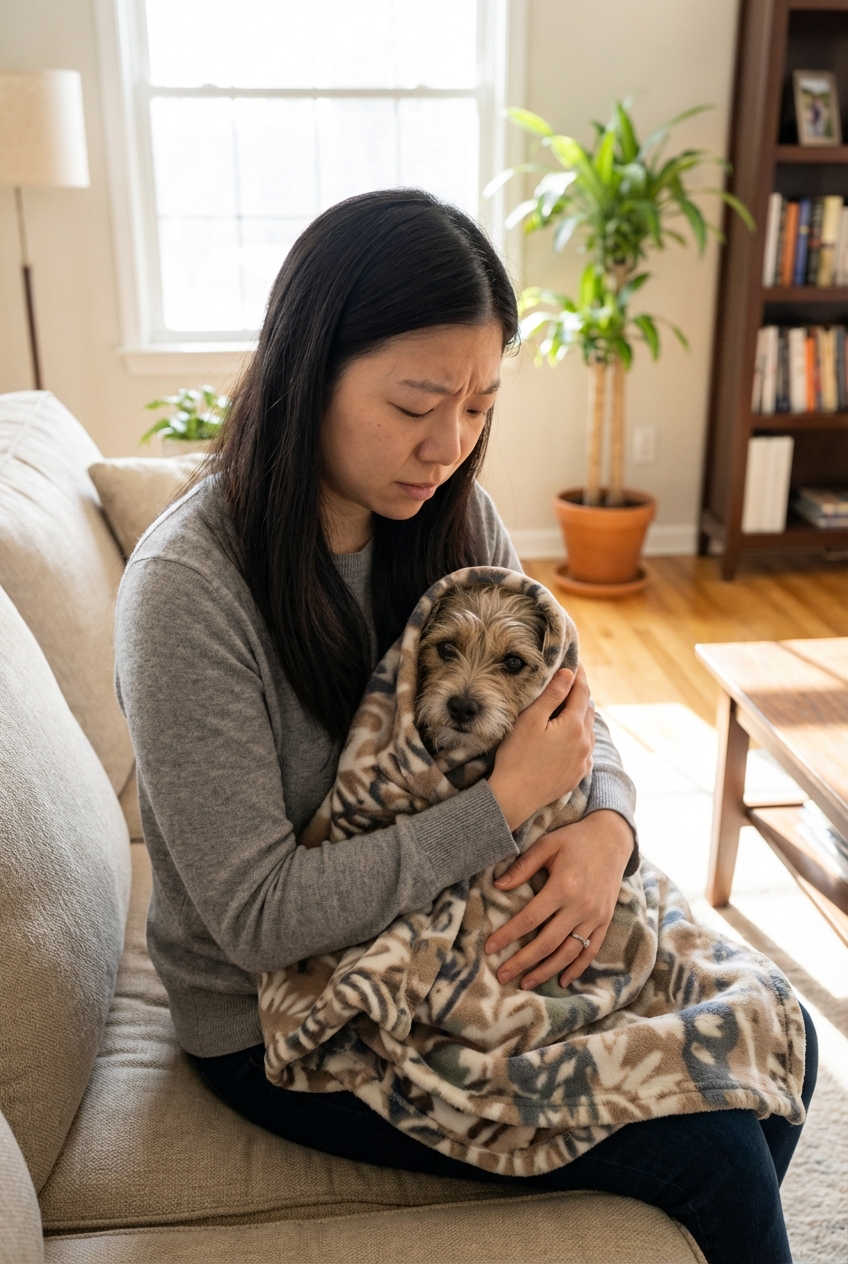
A calm, family-friendly guide to stroke-like symptoms in dogs: warning signs, what to do right away, what to avoid, safe transport tips, and how to help kids...
Article
•
Designer Mixes
Can Dogs Have Strokes?

Shari Shidate
Designer Mixes contributor
Yes, dogs can have strokes, and it can be scary to witness. The encouraging news is that some dogs recover well, especially when you recognize the signs quickly and get veterinary care right away. As a veterinary assistant in Frisco, Texas, I have seen how fast action and supportive home care can make a real difference in outcomes.
In this article, I will walk you through what a stroke is, what it can look like in real life, what to do in the moment, and a few practical ways to reduce risk over time.
Quick note: This is educational information and not a substitute for an exam and diagnosis by your veterinarian.
What a stroke means in dogs
A stroke happens when part of the brain suddenly loses its normal blood supply, or when bleeding occurs in the brain. Without enough oxygen and nutrients, brain cells can be injured within minutes. Veterinarians may call this a cerebrovascular accident (CVA).
- Ischemic stroke: a blockage (like a clot) reduces blood flow to the brain.
- Hemorrhagic stroke: a blood vessel breaks and bleeding damages brain tissue.
In dogs, true strokes are considered relatively uncommon compared with other causes of sudden “neurologic” signs, but they do happen. They can appear suddenly and may be linked to underlying conditions such as kidney disease, heart disease, high blood pressure, diabetes, Cushing’s disease, clotting disorders, or exposure to certain toxins. Some conditions, like hypothyroidism, may be associated in certain cases (often indirectly), so your veterinarian may look at the whole health picture instead of focusing on one single label.
Important: A stroke is often suspected based on signs and exam, but a confirmed diagnosis typically requires advanced imaging like MRI or CT.
Stroke vs vestibular disease
Many owners rush in saying, “My dog is having a stroke,” when the problem is actually vestibular disease, which affects balance. Vestibular episodes can look dramatic, but they are often treatable and many dogs improve within days.
Both stroke and vestibular disease can cause head tilt, stumbling, and abnormal eye movements. The difference is that vestibular disease is usually related to the inner ear or balance centers, while a stroke is a sudden brain event. Your veterinarian may recommend bloodwork, blood pressure checks, and sometimes advanced imaging (MRI or CT) to sort it out.
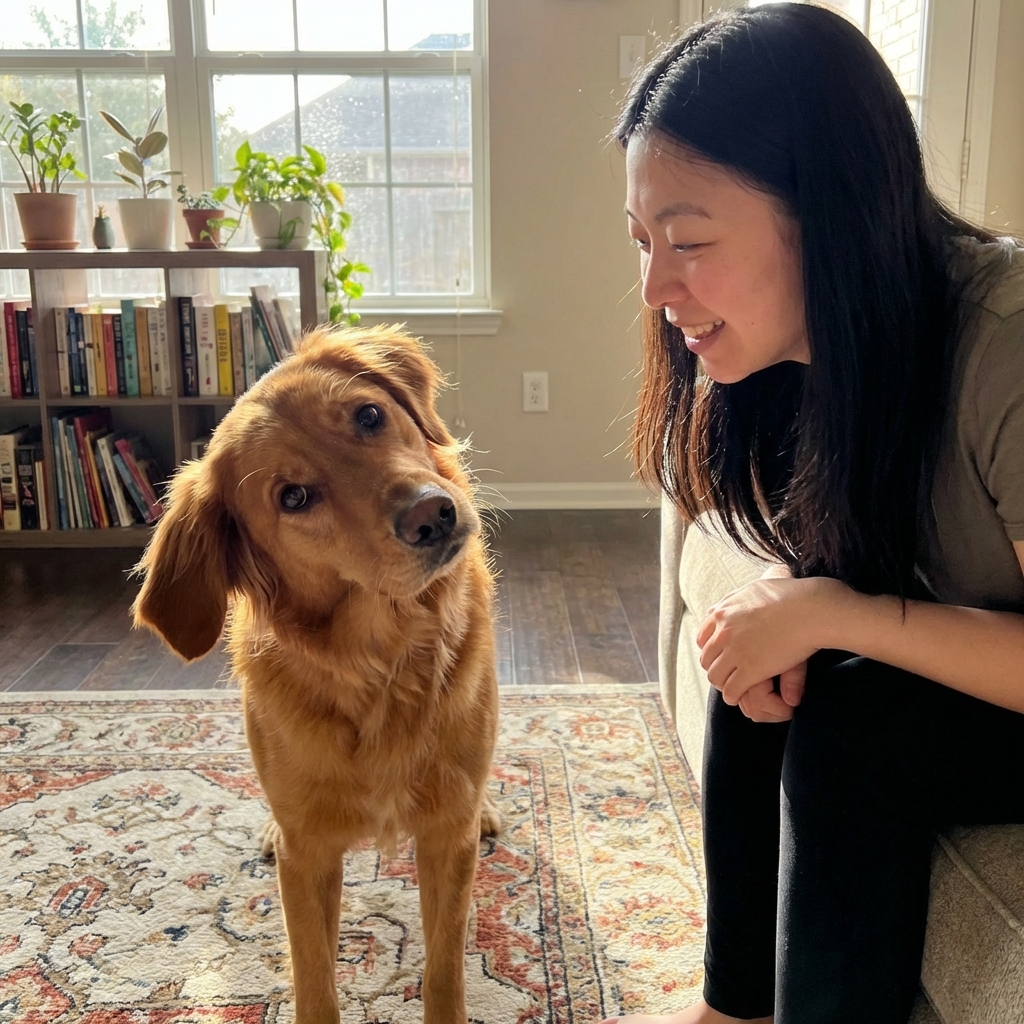
If your dog has sudden balance issues, do not try to diagnose at home. Treat it as an emergency until a veterinarian tells you otherwise.
Common signs of stroke in dogs
Symptoms depend on which part of the brain is affected. A stroke is often sudden and out of the blue, not gradual.
Red-flag signs
- Sudden loss of balance or falling to one side
- Head tilt that appears quickly
- Weakness or paralysis on one side of the body
- Walking in circles, disorientation, or seeming “not themselves”
- Abnormal eye movements (rapid side-to-side or up-and-down)
- Sudden vision changes, bumping into objects
- Seizures (can occur with brain events)
- Collapse or inability to stand
Tip: If you can safely do it, take a short video on your phone. That quick clip can help your veterinarian see exactly what is happening, especially if symptoms improve during the drive.
What to do now
If you suspect a stroke or any sudden neurological event, treat it as urgent.
- Call your veterinarian or the nearest emergency clinic and tell them you are on the way.
- Keep your dog safe and as still as possible. Use a blanket like a stretcher for larger dogs if needed.
- Do not give human medications (including aspirin) unless a veterinarian specifically directs you.
- Prevent falls by blocking stairs and using a leash or towel support under the chest and abdomen as needed.
- Keep the environment calm. Dim lights if your dog seems panicked or disoriented.
- Do not offer food or water if swallowing seems off, your dog is very nauseated, or they cannot sit up well. Aspiration is a real risk.
Even if your dog seems to “snap out of it,” that does not mean everything is fine. Some episodes are temporary but still need evaluation, and many underlying causes need treatment to prevent recurrence.
Other conditions that can look similar
Vestibular disease is a big one, but it is not the only mimic. Other problems that can look “stroke-like” include:
- Seizure activity or the post-seizure (post-ictal) period
- Low blood sugar (hypoglycemia)
- Toxin ingestion
- Brain tumors or other masses
- Inflammatory or infectious brain disease
- Severe metabolic issues (for example, liver or kidney-related toxin buildup)
This is another reason I recommend treating sudden neurologic signs as urgent and letting your veterinarian work through the possibilities.
How vets diagnose a stroke
Because other conditions can mimic strokes, diagnosis is often a process of combining history, physical exam, and targeted testing. Many dogs are treated as a suspected stroke at first, and confirmation may or may not be pursued depending on severity, response to treatment, and what your veterinarian finds.
Common evaluation steps
- Full neurological exam
- Bloodwork and urinalysis to screen for metabolic or infectious causes
- Blood pressure measurement (high blood pressure is a big one)
- Sometimes chest X-rays or ultrasound depending on suspected underlying disease
- MRI or CT to confirm a stroke and identify type and location
Not every dog needs an MRI to be treated supportively, but imaging can be very helpful, especially if symptoms are severe, unusual, not improving as expected, or if your veterinarian is concerned about a tumor, inflammation, or bleeding.
Treatment and recovery
There is no single “stroke pill” for dogs. Treatment usually focuses on stabilizing your dog and addressing the underlying cause.
Supportive care may include
- IV fluids if dehydrated or unstable
- Medications for nausea, dizziness, or anxiety
- Seizure control if seizures occur
- Blood pressure management if hypertension is present
- Oxygen support in serious cases
- Physical rehab exercises when appropriate
Recovery varies a lot. Some dogs improve noticeably within days to weeks, while others may have lasting deficits such as a head tilt or weakness. Prognosis depends on the cause, the location in the brain, severity, and overall health. Many dogs can still have a very happy, comfortable life with a few home adjustments.

At-home help: Use non-slip rugs, keep pathways clear, consider a harness for support, and help your dog eat and drink safely if coordination is off. If rehab is recommended, follow a plan guided by your veterinarian or a veterinary rehab professional, since the wrong exercises at the wrong time can backfire.
Key takeaways
- Stroke-like signs are not always a stroke. Vestibular disease is a common mimic and can improve quickly with supportive care.
- Brain location matters. Small events in certain areas can cause big balance changes, while other areas may show subtler signs.
- High blood pressure can be silent. Routine checks can be a lifesaver, especially for senior dogs and dogs with kidney or endocrine disease.
- Video evidence helps. A 10 second clip can speed up decision-making and reduce guesswork.
Risk reduction tips
You cannot prevent every stroke, but you can reduce risk by supporting overall cardiovascular and metabolic health.
- Schedule senior wellness exams (typically every 6 months for older dogs).
- Ask about blood pressure screening, especially if your dog has kidney disease, heart disease, diabetes, or Cushing’s disease.
- Keep weight in a healthy range. Extra weight raises strain on the heart and can worsen inflammation.
- Prioritize a consistent, balanced diet. If you feed homemade, work with your veterinarian or a veterinary nutritionist so it is complete and balanced.
- Keep toxins out of reach, including rodenticides and certain human medications.
- Know your dog’s “normal” (gait, energy, appetite). When you know baseline behavior, you spot changes faster.
If you are interested in improving diet quality, start slowly and keep it simple. Even small changes, like adding veterinarian-approved whole foods to a balanced base diet, can support long-term health when done thoughtfully.
When it is an emergency
Go to an emergency vet immediately if your dog has sudden trouble standing, severe disorientation, repeated falling, seizures, collapse, breathing difficulty, or rapidly worsening symptoms. Neurologic issues move fast, and early supportive care is one of your best tools.
When in doubt, get your dog seen. It is always better to be told “this is treatable and not a stroke” than to wait through a true emergency.
Quick FAQ
Can a dog survive a stroke?
Many dogs do, especially when the underlying cause is found and managed. Prognosis depends on severity, location in the brain, and overall health.
Do strokes in dogs happen suddenly?
Often yes. Sudden onset is one of the clues that something neurological is happening.
Will my dog have another stroke?
It depends on the cause. That is why follow-up testing, blood pressure checks, and managing chronic disease are so important.