
Wondering if Zyrtec can help your dog’s itching? Learn when plain cetirizine may work, what to avoid (Zyrtec-D), dosing basics, side effects, and red-flag ...
Article
•
Designer Mixes
Can Dogs Have Benadryl for Allergies?

Shari Shidate
Designer Mixes contributor
If your dog is itchy, sneezing, or breaking out in hives, it is completely understandable to look for quick relief. One medication many pet owners have at home is Benadryl (diphenhydramine). The big question is: can dogs have Benadryl for allergies? Sometimes yes, but only when it is truly appropriate and when the dose, product, and timing are safe for dogs.
As a veterinary assistant here in Frisco, Texas, I have seen Benadryl help some dogs, and I have also seen it cause avoidable problems when the wrong product, strength, or dose was used. Let’s walk through what Benadryl can and cannot do, when to call your vet first, and how to use it more safely if your veterinarian says it is okay.
Quick note: This is general education, not a substitute for a veterinary exam or diagnosis. If you are unsure, call your clinic before giving any medication.
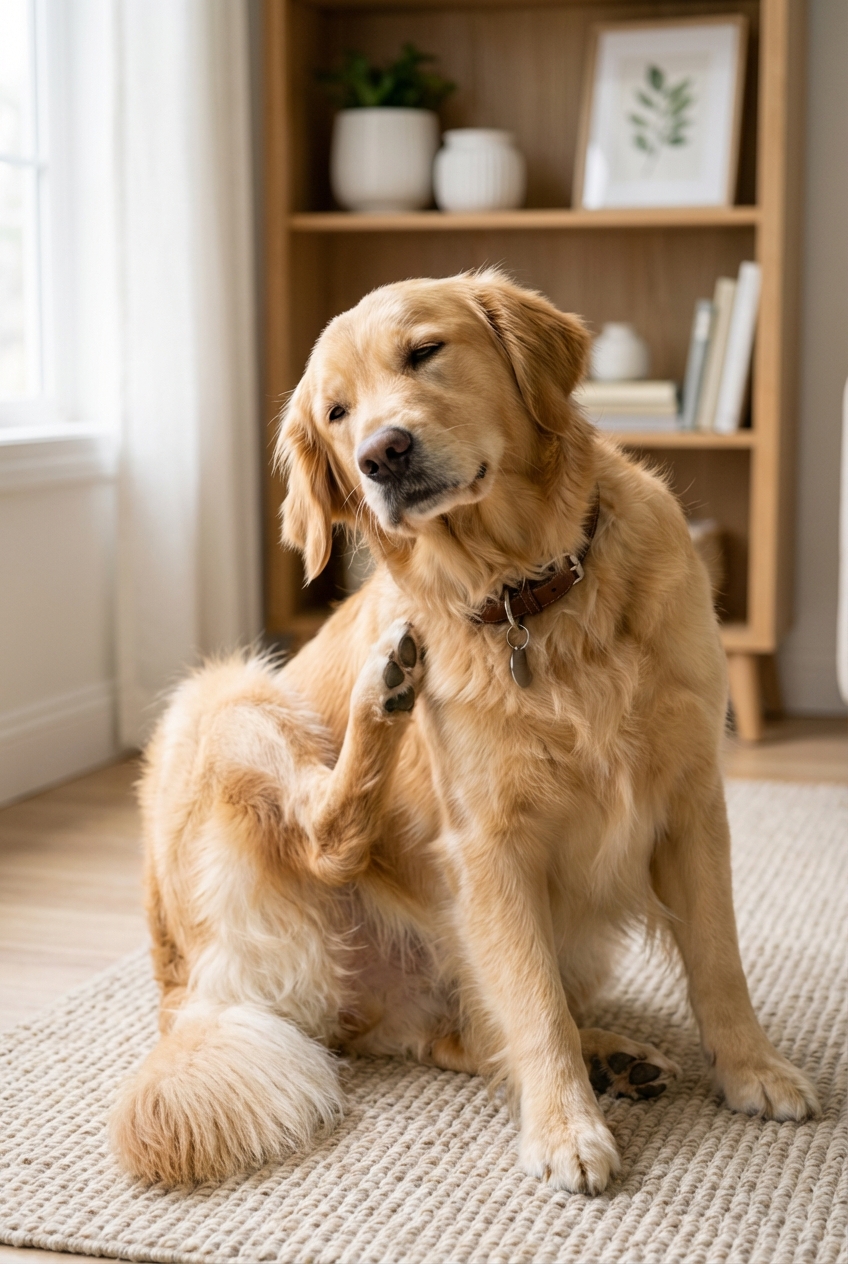
What Benadryl does for dogs
Benadryl is an antihistamine. In dogs, it can help with histamine-driven allergic reactions, especially sudden ones. It is most commonly used for:
- Mild allergic reactions such as hives, facial swelling, or itchy skin from a suspected bug bite or environmental trigger
- Occasional itching related to seasonal allergies in some dogs
- Motion sickness in some cases, though results vary and vet-approved alternatives may work better for some dogs
What Benadryl does not do well is fix many common causes of chronic itching in dogs such as skin infections, fleas, and food allergies. Many “allergy” dogs actually have yeast or bacterial overgrowth, ear infections, or flea allergy dermatitis. In those cases, Benadryl may barely touch the itch and can delay getting the right treatment.
Also, a helpful reminder: sleepiness is not the same as itch relief. A dog may seem “better” because they are drowsy, but the underlying skin problem is still there.
When Benadryl can help
Benadryl tends to work best for short-term, mild allergic reactions. If your dog got into the weeds on a walk and suddenly has a rash, or you notice a few hives after a bee sting, your veterinarian may recommend diphenhydramine as part of your home care plan.
For ongoing paw licking, recurrent ear infections, hot spots, or hair loss, your dog likely needs a full skin and allergy workup. Modern veterinary options can be far more effective than antihistamines, including prescription anti-itch medications and targeted plans for underlying infections.
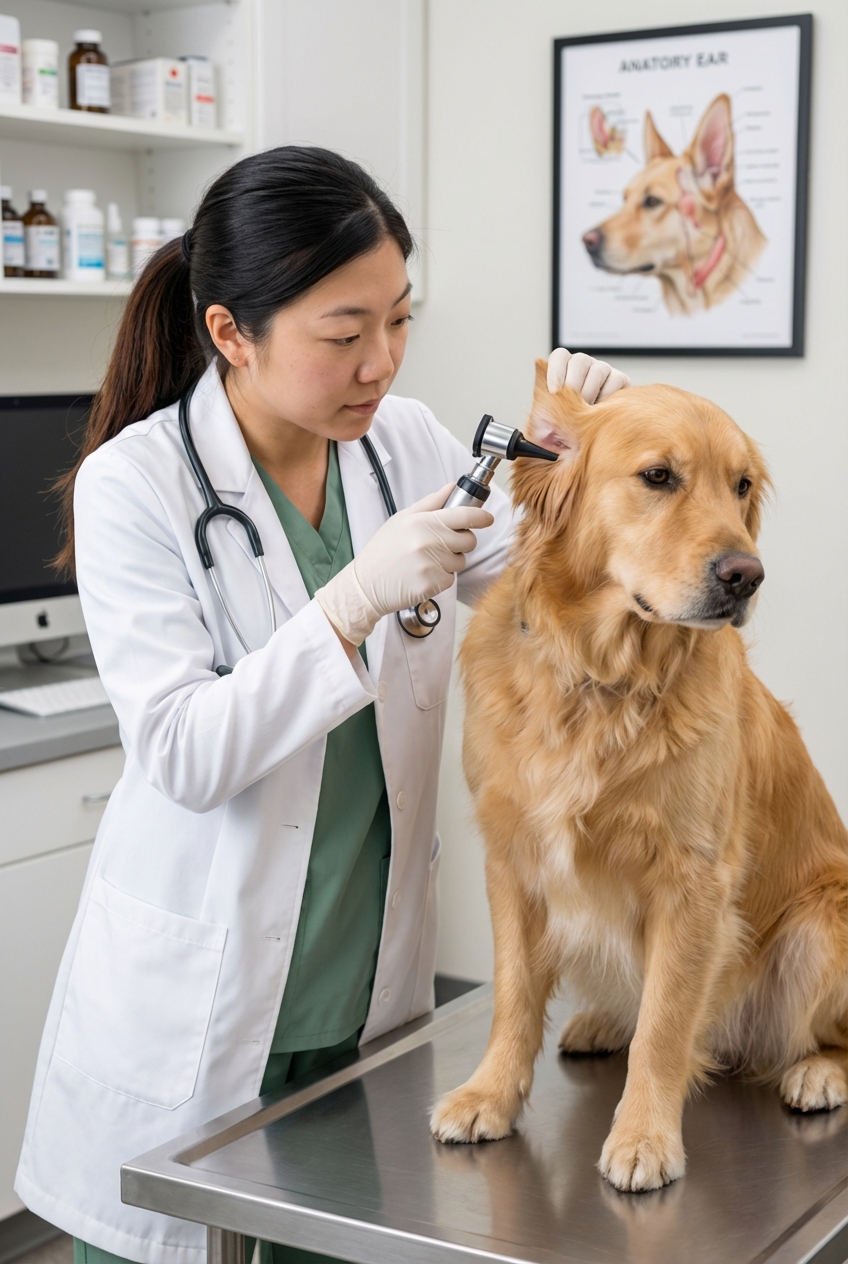
When not to give it
Skip the guesswork and contact your veterinarian or an emergency clinic right away if you notice any of the following:
- Trouble breathing, wheezing, repeated coughing, or blue or pale gums
- Severe facial swelling that is rapidly worsening
- Vomiting, collapse, extreme weakness, or your dog seems disoriented
- Known heart disease, glaucoma, seizure disorders, or serious medical conditions
- Urinary problems (straining to urinate, history of urinary obstruction) since diphenhydramine can worsen urinary retention
- Pregnant or nursing dogs
- Very young puppies or tiny dogs where dosing errors are easy
- Your dog is already on other medications and you are not sure about interactions (especially other sedatives)
Also, if you suspect the reaction is from a snake bite, toxic plant, or chemical exposure, Benadryl is not a substitute for urgent veterinary care.
Dosing basics (confirm with your vet)
Veterinarians commonly use diphenhydramine at a dose often summarized as about 1 mg per pound (about 2 to 4 mg/kg) per dose. Many dogs are dosed every 8 to 12 hours, depending on the situation and the dog’s health history. Do not exceed the schedule your veterinarian recommends.
The safest move is still to confirm the dose and timing with your own vet because:
- Some dogs are more sensitive to sedation or, less commonly, agitation
- Other medical conditions can change what is safe
- Product selection and tablet strength matters
Important: Many tablets are 25 mg, but some households have 50 mg tablets too. That means “home math” can go wrong fast, especially for small dogs.
Example (for illustration only): A 25 lb dog is often near 25 mg per dose. A 10 lb dog is often near 10 mg per dose, which is not an easy amount to measure accurately from a standard tablet. This is exactly why a quick call to your clinic helps.
Evidence-based tip: antihistamines help only a percentage of itchy dogs. If you try Benadryl exactly as directed and see no improvement after a couple of doses, it is time to shift gears and look for the true cause of the itch.
How long is reasonable? For a simple, mild, short-lived reaction like a few hives, your vet may have you use it for a day or two. If symptoms keep returning, or you find yourself reaching for Benadryl repeatedly, schedule an exam.
Choosing the right product
If your veterinarian says diphenhydramine is okay, use a product with diphenhydramine as the only active ingredient. Avoid multi-symptom formulas unless your vet specifically directs you.
Products to avoid unless your vet instructs
- Benadryl-D, which typically contains pseudoephedrine (a decongestant that can be dangerous for dogs). Always confirm by reading the active ingredients on your exact box or bottle.
- Combination cold and flu products that may contain acetaminophen, decongestants, or cough suppressants
- Extended-release or “timed release” diphenhydramine products, which can complicate safe dosing and increase overdose risk
- Liquids where ingredients vary widely. Some liquid formulations may contain xylitol or alcohol, and some have other additives that are not ideal for pets. Check inactive ingredients carefully.
When in doubt, snap a photo of the front and back label and ask your veterinarian to verify it.
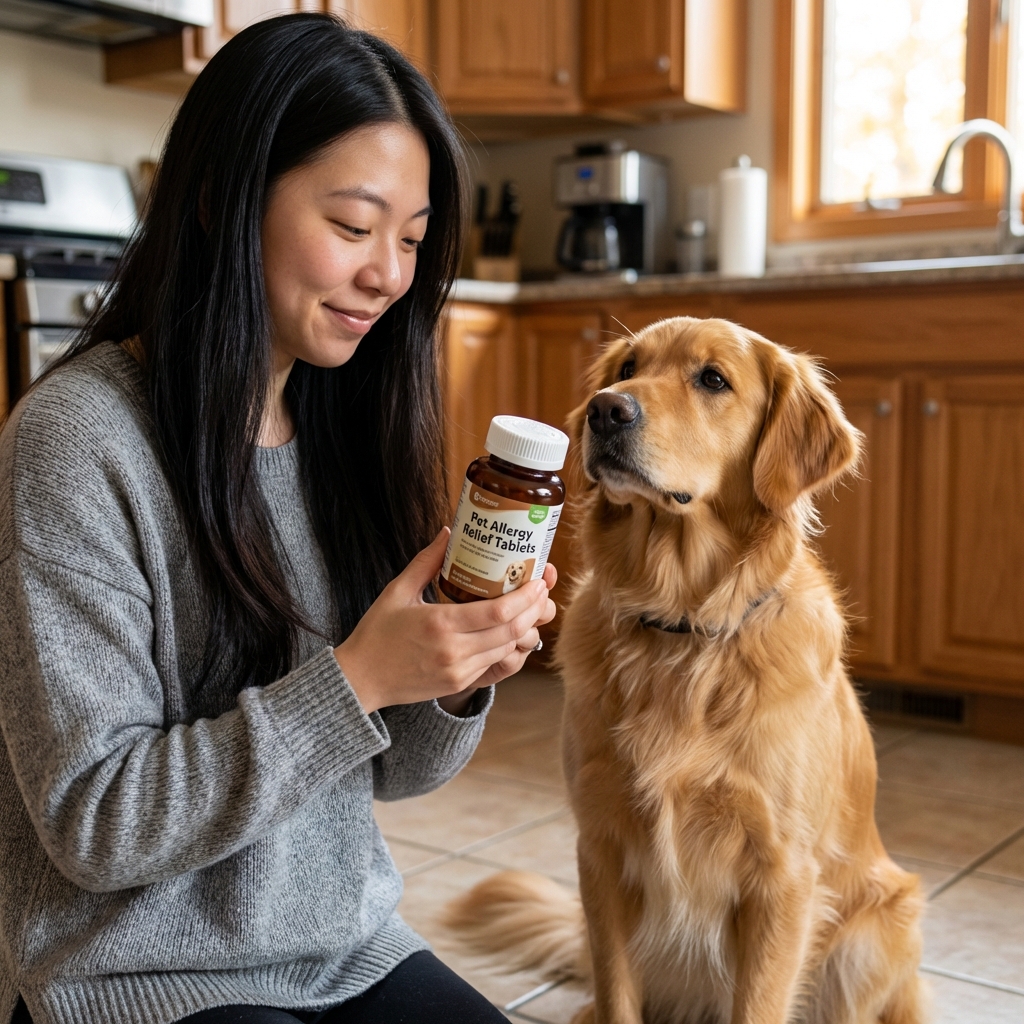
Possible side effects
Like any medication, Benadryl can cause side effects. The most common are:
- Drowsiness or a “sleepy” demeanor
- Dry mouth and mild thirst
- Urinary retention in some dogs
- Upset stomach occasionally
Less commonly, some dogs have the opposite reaction and become restless or hyper. If your dog seems unusually agitated, panting, or uncomfortable after a dose, contact your veterinarian.
Drug interactions matter: Diphenhydramine can increase sedation when combined with other medications that cause drowsiness. If your dog is on any prescription meds, do not guess. Call your clinic to confirm safety.
Hives, bee stings, and mild reactions
For mild hives or itch after an insect sting, Benadryl can be part of the plan. But keep your eyes on the big red flags:
- Swelling around the throat or difficulty swallowing
- Rapid progression of swelling
- Vomiting, diarrhea, weakness, or collapse
Those signs can indicate a more serious reaction that needs urgent medical support.
If you miss a dose or give too much
Missed dose
If your veterinarian has you giving Benadryl on a schedule and you miss a dose, do not double up unless your vet specifically tells you to. Call your clinic if you are unsure what to do next.
Possible overdose or wrong product
If you think your dog received too much Benadryl, got an extended-release product, or ate a combination product (like Benadryl-D), contact an emergency clinic or animal poison hotline right away.
- ASPCA Animal Poison Control: 1-888-426-4435
- Pet Poison Helpline: 1-855-764-7661
Fees may apply, but you get case-specific guidance fast, which can be critical.
What to do for chronic allergies
If your dog’s itching is frequent, seasonal, or year-round, your best results usually come from a layered approach that treats the skin and the immune triggers.
Options that often work better than Benadryl
- Prescription anti-itch medications that target allergy pathways more directly
- Medicated shampoos and topical therapy for yeast or bacterial skin issues
- Flea control that is truly consistent (flea allergy can look like “mystery itching”)
- Diet trials for suspected food allergy, done correctly and long enough
- Allergy testing and immunotherapy for some dogs
Actionable at-home help while you wait for your appointment: wipe paws after outdoor time, wash bedding weekly in fragrance-free detergent, keep nails trimmed to reduce skin trauma from scratching, and stay on vet-recommended parasite prevention.
Quick FAQ
Can I give my dog children’s Benadryl?
Sometimes, but it depends on the formulation. Liquid products can vary and may include ingredients you do not want in pets. Always have your vet confirm the exact product and dose.
How long does Benadryl take to work in dogs?
Many dogs show effects within 30 to 60 minutes. Itch relief can be inconsistent depending on the cause.
Will Benadryl stop my dog from itching all night?
It might make your dog sleepy, but it often does not fully address itch from infections, fleas, or food allergies. If night itching is persistent, schedule a vet exam.
The bottom line
Yes, some dogs can have Benadryl for allergies, but it is not a one-size-fits-all fix, and product choice, dosing, and timing are everything. If the reaction is mild and your veterinarian approves, diphenhydramine can be a helpful tool. If your dog is repeatedly itchy, getting ear infections, or losing fur, Benadryl is usually a sign it is time to dig deeper and treat the real cause.
If you are unsure, call your veterinary clinic with your dog’s weight, age, current medications, and the exact product you have at home. A two-minute phone call can prevent a very stressful night.