Wondering if your dog can take Benadryl daily? Get vet-guided safety tips, dosing basics, side effects to watch for, emergency signs, and long-term allergy o...
Article
•
Designer Mixes
Can Dogs Have Benadryl Daily for Itching?

Shari Shidate
Designer Mixes contributor

Benadryl for itching: helpful, but not a daily plan
If your dog is chewing their paws, rubbing their face on the carpet, or scratching nonstop, it is natural to reach for something familiar like Benadryl. I get it. I am a veterinary assistant in Frisco, Texas, and I have seen how miserable itchy pets can be.
Benadryl (diphenhydramine) can help some dogs with mild, occasional allergy symptoms. But using Benadryl every day for itching is usually not the best long-term solution. The bigger question is: why is your dog itchy? Treating the cause often brings better relief than repeating an antihistamine day after day.
What Benadryl does (and when it helps)
Benadryl is an antihistamine. It works best when histamine is a major driver of symptoms, such as:
- Mild seasonal allergies in some dogs (response can be variable)
- Hives or mild swelling after an insect bite or vaccine reaction (your vet should guide this)
- Occasional itch flare-ups that are not infected
It tends to be less helpful (or not enough on its own) when itching is caused by:
- Moderate-to-severe atopic dermatitis (many dogs need stronger, targeted meds)
- Food allergies (Benadryl usually does not fix this)
- Fleas or mites
- Yeast or bacterial skin infections
- Ear problems (itchy ears often involve infection or inflammation that needs an exam)

Can dogs take Benadryl every day?
Sometimes a veterinarian will approve short-term daily use, but daily Benadryl is not ideal for many dogs. Here is why:
- It may not control the real problem, especially if infection, fleas, or food allergy are involved.
- Side effects can build into quality-of-life issues (sleepiness, dry mouth, constipation, urinary retention).
- It can mask worsening skin disease and delay treatment, such as a small hot spot turning into a larger, infected sore.
If your dog needs itch relief most days of the week, that is your sign to schedule a vet visit and make an actual itch plan instead of relying on Benadryl alone.
Benadryl dosing basics (confirm with your vet)
Benadryl dosing should be confirmed by your veterinarian, especially for puppies, seniors, tiny dogs, brachycephalic breeds, dogs with chronic disease, or dogs on other medications. Sedation and other side effects can hit these pets harder.
A commonly referenced guideline is about 1 mg per pound of body weight given every 8 to 12 hours. That said, dosing is not one-size-fits-all. The safest approach is to ask your vet for a dose and schedule for your dog, and do not exceed it.
Extra safety note: Doses vary by formulation, and liquids are especially easy to mis-measure. If your vet recommends a liquid, confirm the concentration (mg/mL) and the exact mL amount to give. Keep all human medications out of reach, and call your veterinarian, ASPCA Animal Poison Control, or an emergency clinic right away if you suspect an overdose.
Which Benadryl is safest?
- Use plain diphenhydramine only.
- Avoid combination products (like “Benadryl-D” with pseudoephedrine), which can be dangerous for dogs.
- Be cautious with liquid Benadryl, which may contain alcohol or sweeteners. Specifically avoid xylitol (sometimes listed as birch sugar), which is highly toxic and can be rapidly fatal to dogs. Read labels carefully and ask your vet which product is best.
Also avoid stacking sedating medications unless your veterinarian specifically tells you it is safe. For example, do not combine Benadryl with other antihistamines or sedatives without guidance.
Side effects and red flags
Benadryl can be sedating, but it can also do the opposite in some dogs.
Common side effects
- Sleepiness or lethargy
- Dry mouth
- Upset stomach
- Constipation
Call your vet promptly if you notice
- Extreme sedation, wobbliness, or confusion
- Agitation, pacing, or rapid heart rate
- Vomiting that will not stop
- Straining to urinate or not producing urine
Benadryl is not a substitute for emergency care. If your dog has facial swelling, breathing trouble, or collapse, seek emergency veterinary help immediately.
When Benadryl is the wrong move
Skip Benadryl and talk to your veterinarian first if your dog has any of the following:
- Glaucoma
- Certain heart conditions (including rhythm issues) or if your vet has warned you about blood pressure concerns
- Prostate issues or trouble urinating
- Seizure history
- Pregnancy or nursing
- They are taking other medications that can interact (your vet can check)
If your dog is itchy daily, do this instead
Daily itching usually means there is an ongoing trigger. These steps help you and your vet narrow it down faster.
1) Rule out parasites first
Fleas can cause intense itching even if you never see a flea. Make sure your dog is on an effective, vet-recommended flea prevention.
2) Check for infection
Yeast and bacteria love inflamed skin. Signs include a musty odor, greasy coat, redness, scabs, or recurrent ear problems. These often need prescription treatment, not antihistamines.
3) Consider allergy-specific medications
Many dogs do better with modern itch control options prescribed by a veterinarian (for example, targeted anti-itch medications or allergy immunotherapy). These are designed for chronic allergic itch and can be safer and more effective than daily Benadryl.
4) Use soothing skin support at home
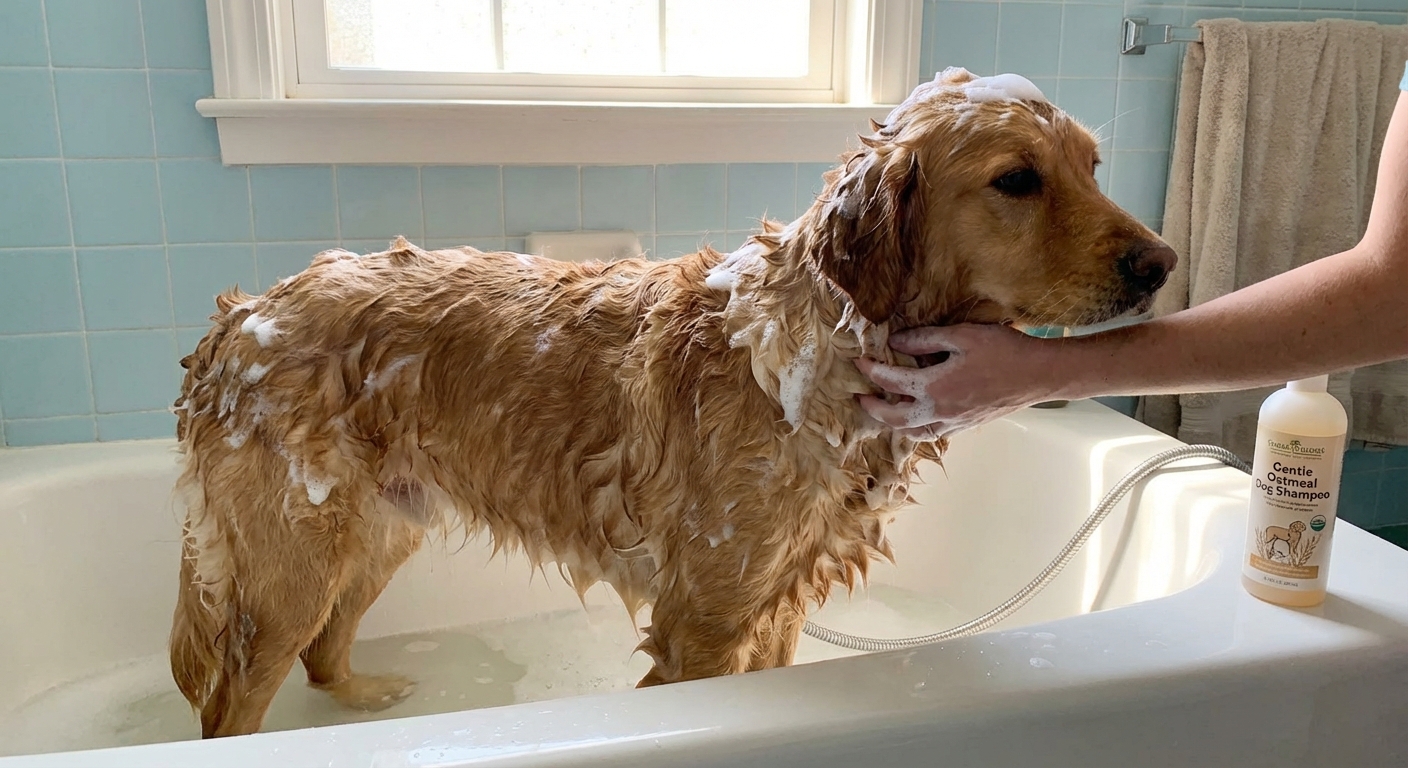
- Bathing with a vet-recommended medicated or gentle hypoallergenic shampoo can remove allergens and calm skin.
- Paw rinses after walks can reduce pollen contact, especially in spring and fall.
- Omega-3 fatty acids (vet-approved) may help support skin barrier function over time.
5) Talk food, but do it the evidence-based way
If food allergy is suspected, your veterinarian may recommend a strict elimination diet trial. This is not the same as switching brands randomly. It takes consistency and time, but the results are much clearer.
Quick checklist before Benadryl
- Is it plain diphenhydramine with no added decongestants?
- Does the label list xylitol (birch sugar) or any other risky additives, especially in liquids?
- Do you know your dog’s current weight?
- Do you know the exact strength of the product (mg per tablet or mg/mL for liquids)?
- Is your dog on any other meds or has any medical conditions that could interact?
- Is there any sign of infection: odor, oozing, scabs, ear debris, hot spots?
- Is the itch happening most days (a sign you need a vet plan)?
If you are unsure on any of these, call your veterinarian. It is one of those quick phone calls that can prevent a long week of discomfort for your pup.
Bottom line
Benadryl can be a useful tool for occasional mild itching, but it is rarely the best answer for daily itch. If your dog is itchy day after day, your best next step is to identify the trigger (parasites, infection, environmental allergies, or food) and build a treatment plan with your veterinarian. Your dog deserves real relief, not just a temporary cover-up.