Make meals more tempting and nutritious with simple dog food toppers: bone broth, cooked eggs, sardines, pumpkin, and steamed veggies—plus portions, storag...
Article
•
Designer Mixes
Can Dogs Eat Sweet Potatoes Safely Cooked?

Shari Shidate
Designer Mixes contributor
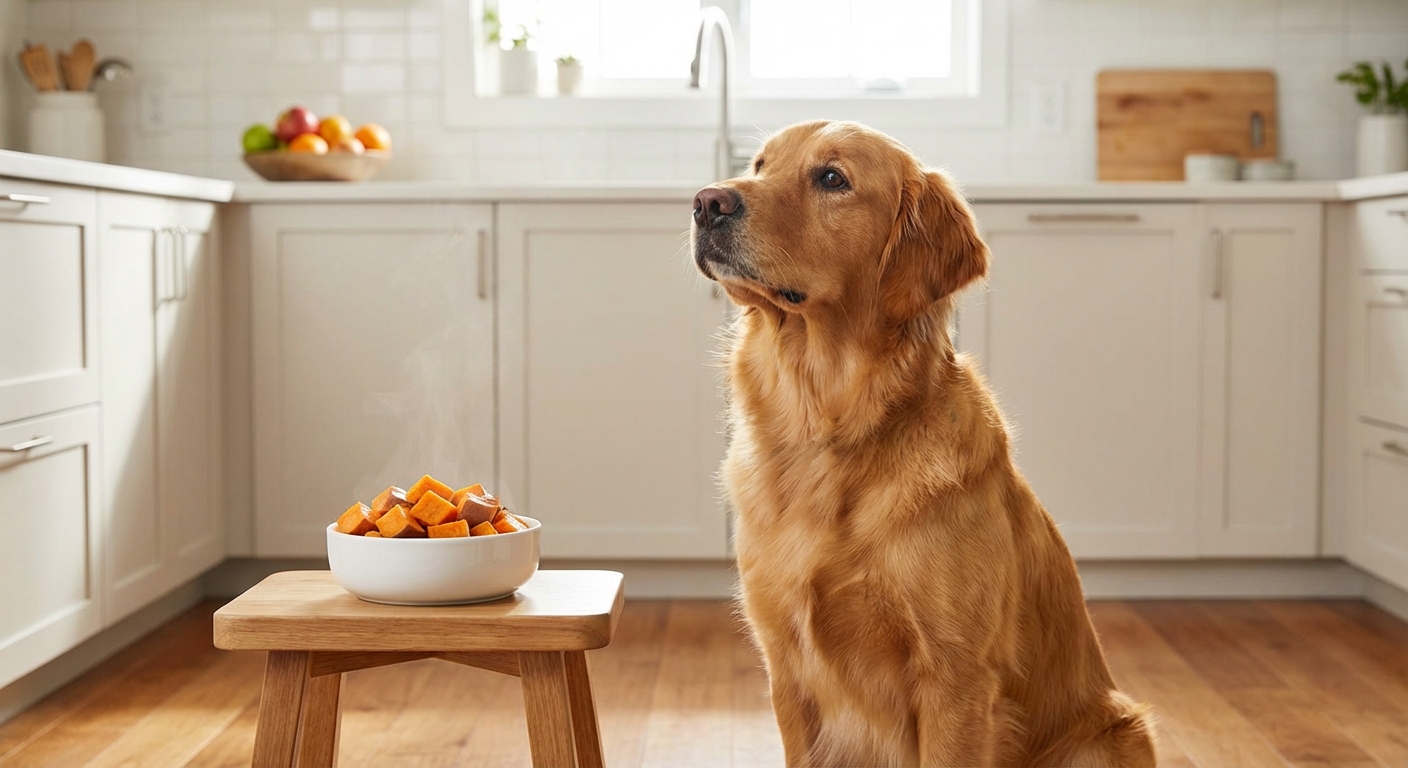
Yes, most dogs can eat sweet potatoes that are safely cooked in reasonable portions. Sweet potato is commonly recommended as a gentle, nutritious add-on because it is often easy to digest when cooked, naturally tasty, and full of helpful nutrients. The key is how it’s prepared and how much you serve.
Why sweet potatoes can be a healthy choice
Sweet potatoes are a starchy vegetable, so they are not “just a treat.” They bring real nutrition to the bowl when served plainly and in moderation.
- Fiber to support normal digestion and stool quality.
- Beta-carotene (the orange pigment) which the body can convert to vitamin A, supporting skin, coat, and immune function as part of an overall balanced diet.
- Potassium which plays a role in muscle and nerve function.
- Complex carbohydrates that can be useful for active dogs who tolerate carbs well.
One important nuance: sweet potatoes are nutrient-dense, but they are also calorie-dense compared to green vegetables. That’s why portions matter, especially for dogs who gain weight easily.
How to cook sweet potatoes safely for dogs
The safest preparation is plain, fully cooked sweet potato with no seasoning. Dogs do best with soft textures because raw sweet potato is hard to chew and digest, and firm chunks can be a choking risk, especially for dogs who eat fast.
Serve only after it has cooled completely to avoid mouth burns.
Best methods
- Boiled: Peel (optional), dice, boil until very soft, then drain, mash if you like, and cool.
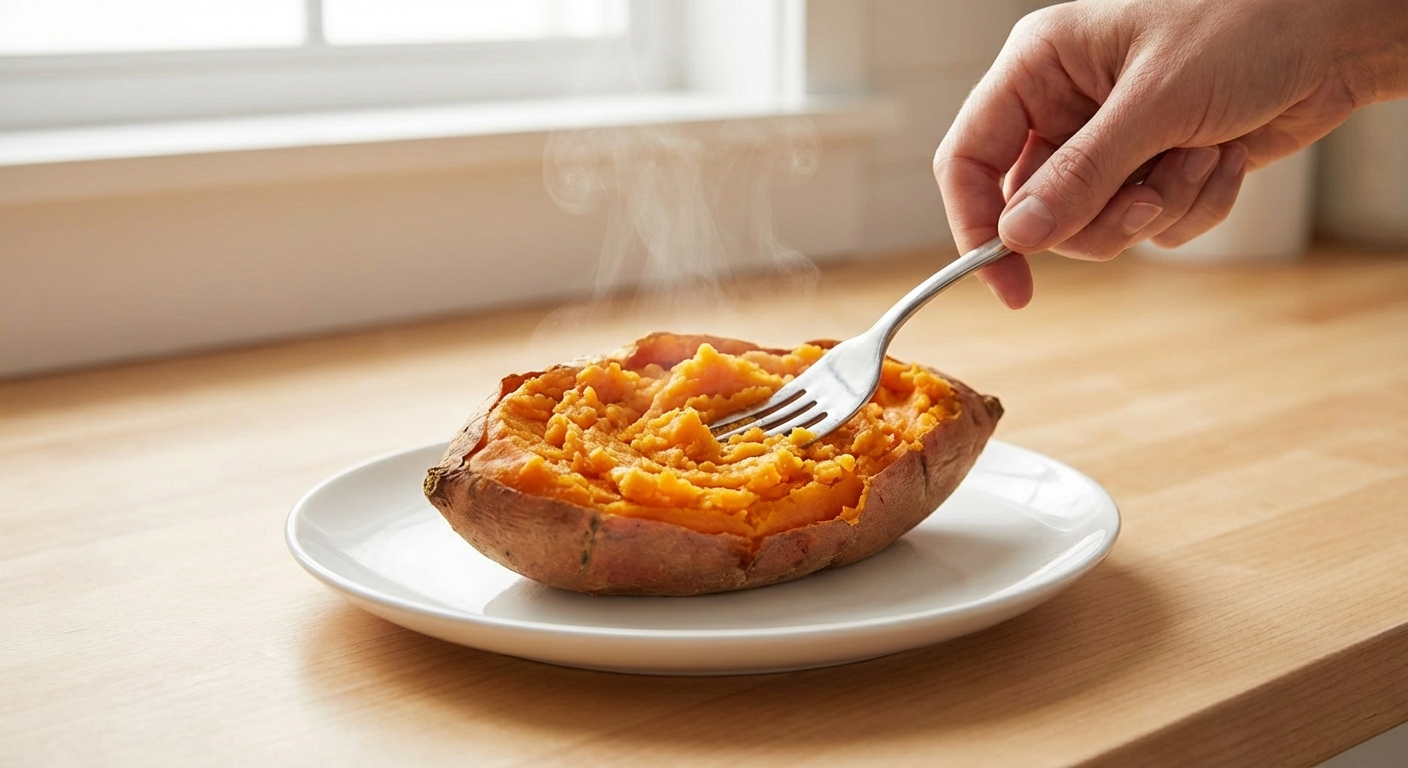
- Baked: Bake until completely soft, then scoop the flesh, mash if desired, and cool.
- Steamed: Steam cubes until they mash easily with a fork, then cool.
- Microwaved: Pierce the skin, microwave until fully soft all the way through, then split, scoop the flesh, and cool. Do not add butter or seasonings.
Skip these add-ins
- Butter, oils, bacon grease: can trigger stomach upset and can be risky for dogs prone to pancreatitis.
- Salt, garlic, onion powder: unnecessary and potentially harmful in larger amounts.
- Sugar, marshmallows, cinnamon sugar: turns a healthy food into a dessert.
- Spice blends (including nutmeg): best avoided for dogs.
- Artificial sweeteners: if a recipe contains xylitol, do not serve it.
Storage tip: Refrigerate plain cooked sweet potato promptly, use within a few days, and toss anything that smells off or shows signs of mold.
How much sweet potato can a dog have?
Think of sweet potato as a treat or topper, not the foundation of the diet. A practical guideline is to keep all treats and toppers at 10% or less of your dog’s daily calories, unless your veterinarian has you using sweet potato for a specific reason.
Simple portion starting points
- Small dogs (under 20 lb): 1 to 2 teaspoons of mashed sweet potato.
- Medium dogs (20 to 50 lb): 1 to 2 tablespoons.
- Large dogs (over 50 lb): 2 to 4 tablespoons.
If it’s your dog’s first time, start even smaller for 2 to 3 days and watch stool quality. Loose stool usually means “too much, too fast.”
When sweet potatoes might not be a good idea
Even healthy foods are not perfect for every dog. Talk with your veterinarian if your dog has any of these issues:
- Diabetes or blood sugar concerns: sweet potatoes are a carbohydrate and can affect glucose control.
- Weight management needs: portions must be carefully measured.
- History of pancreatitis: sweet potato itself is low fat, but rich toppers sometimes lead to “kitchen creep” with fatty add-ons.
- Urinary crystals or stones (especially calcium oxalate): sweet potatoes can be moderate-to-high in oxalates and may not be a good fit for dogs prone to these stones.
- Kidney disease or potassium restriction: ask your vet before adding higher-potassium foods regularly.
- Food allergies or sensitive GI tract: introduce slowly and keep it plain.
Signs your dog is not tolerating it
- Vomiting or diarrhea
- Excess gas or stomach gurgling
- Itching or new ear irritation after introducing new foods
- Refusing meals or acting uncomfortable
Skin, fries, and chews
Can dogs eat the skin?
Some dogs can handle well-cooked sweet potato skin, but it can be tougher to digest and may worsen stool for sensitive dogs. If you are just starting out, peel it first.
What about sweet potato fries?
Restaurant or frozen fries are usually cooked in oil and salted. That combination is the opposite of what we want for dog digestion. If you want a “fry” shape, bake thin slices at home with no oil and no seasoning, then cool completely.
Are dehydrated sweet potato chews safe?
Many dogs love them. Choose chews with one ingredient (sweet potato) when possible, and avoid added salt, sugar, sweeteners, and heavy flavorings. Some products use small amounts of vegetable glycerin to keep treats soft, which is not automatically dangerous, but simpler is usually better. Always supervise chewing, especially for dogs who gulp.

Easy ways to add it to meals
- Meal topper: Mix a spoonful of mashed sweet potato into the regular diet.
- Stuffed toy: Freeze a thin layer of mashed sweet potato inside a food toy for enrichment.
- Simple homemade bowl: Add a small portion of sweet potato to a balanced meal with a quality protein and dog-safe cooked vegetables. For long-term home cooking, work with your veterinarian or a veterinary nutritionist to make sure the diet is complete.
Plain, fully cooked sweet potato is usually safe for dogs, but portion size and preparation make all the difference.
Bottom line
Cooked sweet potatoes can be a safe, healthy addition for many dogs when served plain, soft, and in modest portions. Start small, keep it unseasoned, and let your dog’s digestion guide you. If your pup has diabetes, recurring GI issues, kidney disease, urinary stones, or a history of pancreatitis, check in with your veterinarian before making it a routine topper.