Discover what plain pumpkin can do for your dog’s digestion, how much to serve by weight, what to avoid, when to call the vet, and easy pumpkin meal ideas ...
Article
•
Designer Mixes
Can Dogs Eat Sweet Potato Skin? Safe Serving Sizes

Shari Shidate
Designer Mixes contributor
Sweet potatoes are one of my favorite “bridge foods” for dogs, meaning they are simple, whole-food add-ins that can help with transitions (like a picky phase, a new kibble, or hiding a supplement). They are often gentle and easy to digest when cooked, and they bring real nutrition to the bowl. But the skin brings up a very real question: can dogs eat sweet potato skin, and if so, how much is too much?
In many healthy dogs, yes, sweet potato skin can be safe when it is well-cooked, thoroughly cleaned, and served in small portions. The bigger issue is usually not toxicity, it is texture and fiber. Too much skin can tip some dogs into gas, soft stool, or vomiting. (And some dogs do not tolerate sweet potato at all, even without the skin.)
Note: This article is general nutrition guidance and is not a substitute for advice from your veterinarian, especially if your dog has a medical condition.
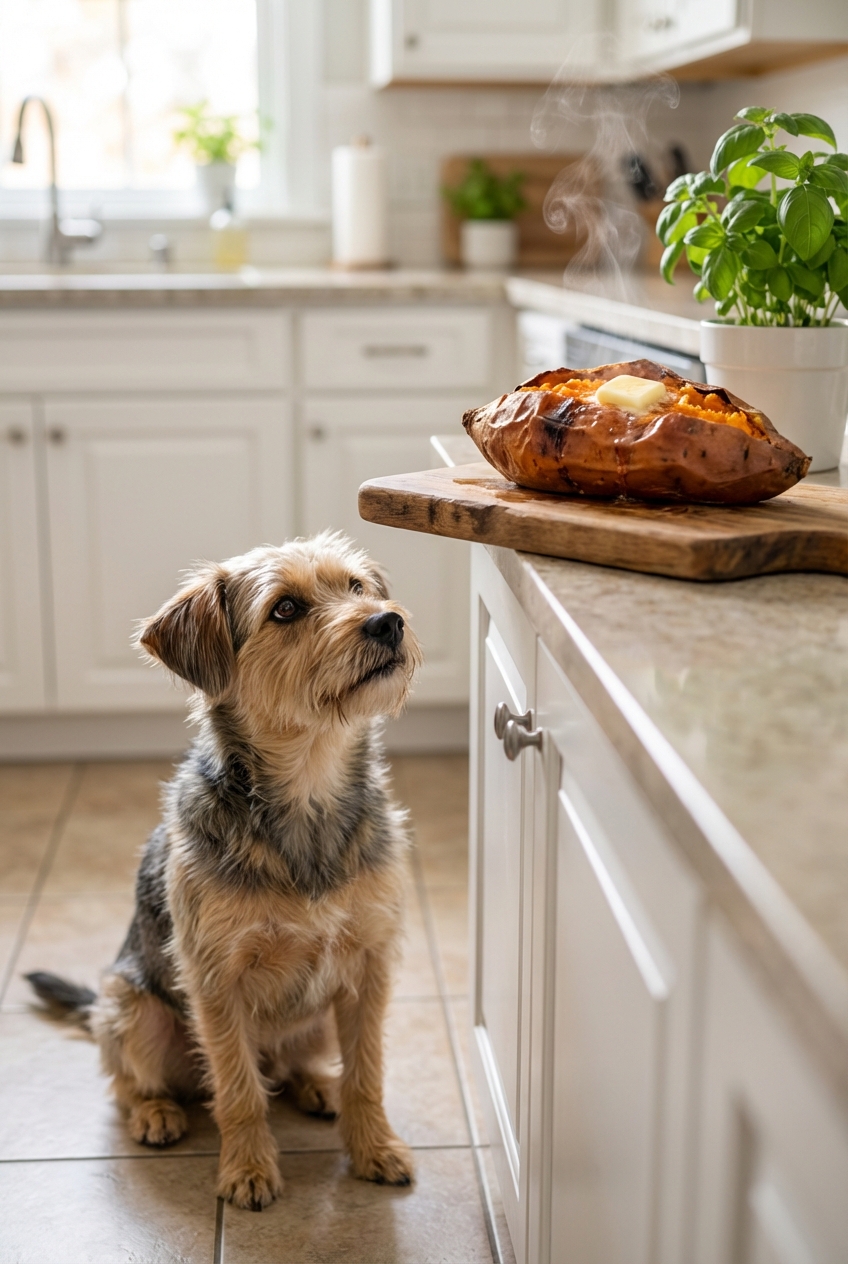
Is sweet potato skin safe for dogs?
Generally, yes. Sweet potato skin is not considered inherently toxic to dogs. The skin contains fiber and plant nutrients, but it is also the part most likely to cause tummy trouble if served the wrong way.
When it can cause problems
- Raw skin: Tough, harder to digest, and more likely to cause GI upset.
- Big chunks or slabs: Dogs may gulp them. This increases choking risk, and large peel pieces can be hard to break down.
- Fried or seasoned skin: Oils, butter, salty toppings, garlic powder, onion powder, spicy seasoning, and sweeteners are common human add-ons that do not belong in a dog bowl.
- Very sensitive stomachs: Dogs with a history of pancreatitis, inflammatory bowel disease, or frequent diarrhea may do better with peeled sweet potato only.
Best way to prepare sweet potato
If you want to include the skin, preparation matters. Here is the dog-friendly approach I recommend as a veterinary assistant and lifelong pet nutrition nerd.
Step-by-step
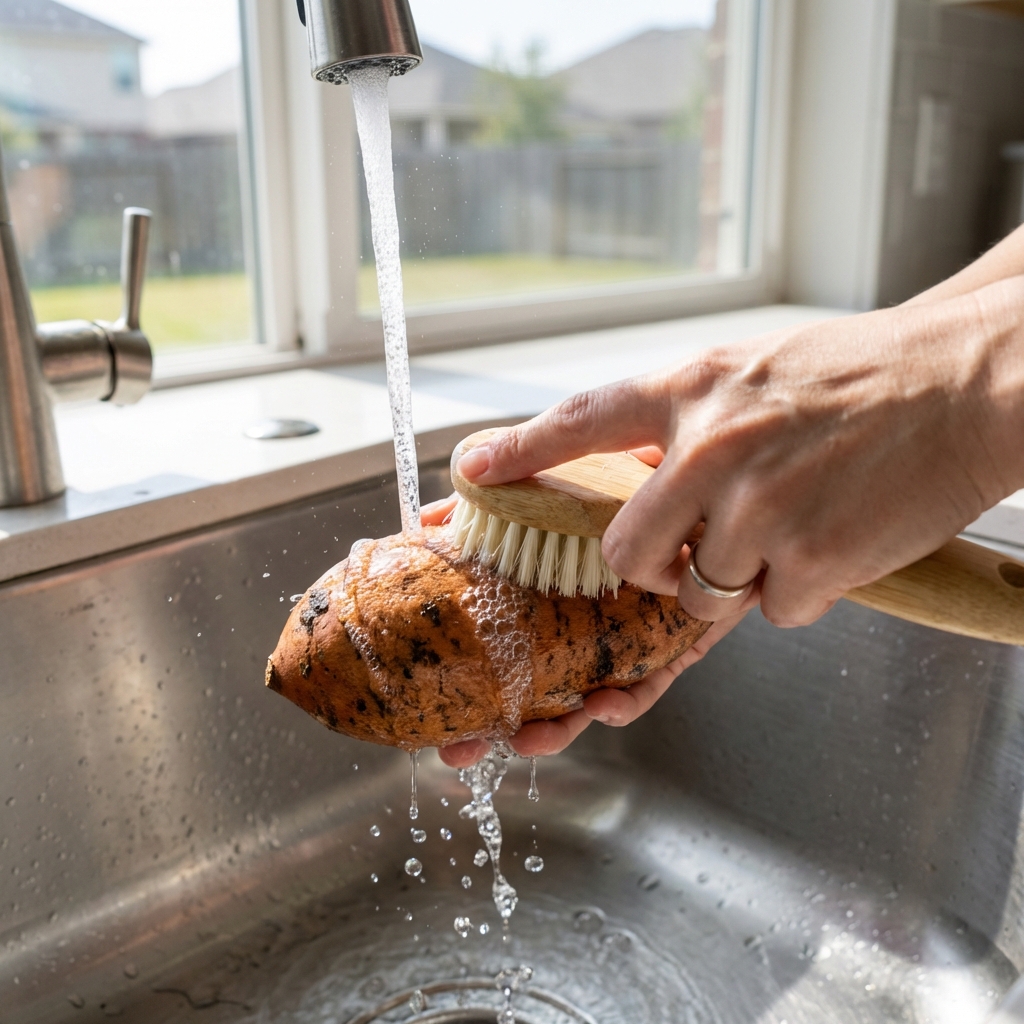
- Wash and scrub the sweet potato under running water. This helps remove dirt and surface residues.
- Cook it fully: Bake, steam, boil, or air-fry with no oil.
- Skip seasonings: Avoid garlic and onion (toxic), and avoid added salt and rich spices (can irritate the gut and add unnecessary sodium).
- Cut small: Serve as bite-sized cubes, thin strips, or a mash. If leaving skin on, keep pieces small and easy to chew.
- Supervise: Especially for fast eaters. If your dog tends to gulp, mashed is the safest format.
Baked vs boiled
Both can work. Baking often makes the texture naturally soft and a little drier, which some dogs do great with. Boiling can make a wetter mash, which is helpful if you want to mix a small amount into kibble or a homemade meal. Either way, aim for soft enough to mash with a fork.
Serving size
Sweet potato is healthy, but it is still a starchy carbohydrate. For most dogs, it should be a treat or topper, not the main event.
A helpful anchor is the general treat guideline: keep treats and toppers to 10% or less of daily calories. If your dog is on a therapeutic diet (weight loss, kidney, urinary, GI), ask your veterinarian before adding extras.
Portion guide (cooked)
These are conservative starter amounts for many dogs when introduced slowly.
- Extra-small dogs (under 10 lb): 1 to 2 teaspoons
- Small dogs (10 to 20 lb): 1 to 2 tablespoons
- Medium dogs (21 to 50 lb): 2 to 4 tablespoons (up to 1/4 cup)
- Large dogs (51 to 90 lb): 1/4 to 1/2 cup
- Giant dogs (over 90 lb): up to 1/2 cup
How often
For most healthy dogs, sweet potato is best as an occasional topper or a few times a week, not necessarily daily. If your dog is actively trying to lose weight, keep portions smaller and less frequent.
How much skin
If you include the skin, keep it to a small fraction of the serving. A good rule is: start with mostly orange flesh and just a little skin mixed in. If stools stay normal, you can continue. If you see gas, loose stool, or vomiting, go back to peeled (or skip sweet potato altogether).
Benefits
Cooked sweet potato is often a helpful whole-food addition for dogs. Here are the main perks:
- Fiber to support digestion and stool quality when served in the right amount.
- Beta-carotene, which dogs convert to vitamin A, supporting skin, coat, vision, and immune health.
- Potassium, an important mineral for normal muscle and nerve function. (Dogs with kidney disease may need guidance on potassium intake.)
- Skin adds extra fiber and plant compounds, but it is also the part most likely to cause gas or loose stool if overdone.
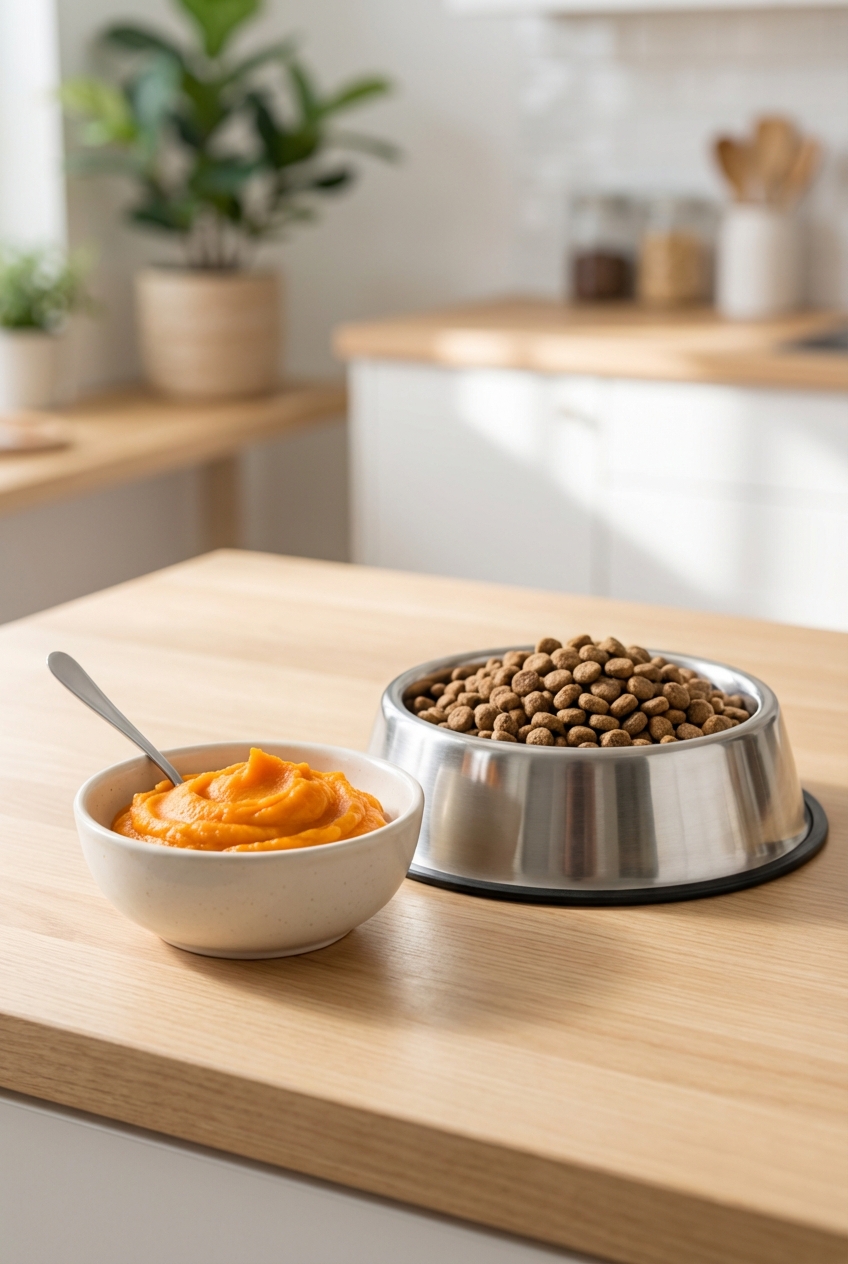
Simple is best: plain, cooked sweet potato in small amounts is a wonderful whole-food addition. The problems usually start with too much, too fast, or too fancy.
When to avoid the skin
Even though sweet potato skin is generally safe, I recommend skipping it in these cases:
- Puppies that tend to gulp food.
- Dogs with sensitive stomachs or a history of frequent diarrhea.
- Dogs prone to pancreatitis (and always avoid butter or oils).
- Dogs with diabetes or dogs needing strict carbohydrate control, unless your veterinarian has guided you on portions.
- Dogs with kidney disease or dogs on a kidney-support diet, unless your veterinarian says it is okay.
- Dogs with calcium oxalate bladder stones (or a history of them): sweet potatoes are relatively high in oxalates, and many vets recommend avoiding them for these dogs.
- Any dog on a prescription GI diet, unless your vet says it is okay.
Signs your dog had too much
If sweet potato skin is not agreeing with your dog, you will usually see it within 12 to 24 hours.
- Gas or stomach gurgling
- Soft stool or diarrhea
- Vomiting
- Decreased appetite
- Straining to poop, especially if they ate larger peel pieces
- Constipation or repeated, unproductive attempts to poop (possible blockage concern if big pieces were swallowed)
- Low energy or abdominal discomfort
Call your veterinarian if vomiting is repeated, diarrhea is severe, there is blood, your dog seems painful or bloated, your dog cannot keep water down, or you suspect they swallowed large, tough pieces of peel.
Quick FAQ
Can dogs eat sweet potato skin every day?
Most dogs do best with sweet potato as an occasional addition. Daily skin, especially in larger amounts, can be too much fiber for many dogs.
Can dogs eat dehydrated sweet potato skins?
Dehydrated chews can be very tough and easy to overfeed. They can also pose a risk of dental fractures in aggressive chewers and GI obstruction if a dog swallows large, hard pieces. If you use them, offer small pieces, supervise closely, and choose products with one ingredient and no seasoning.
Can dogs eat yams?
Many people say “yam” when they mean sweet potato. True yams are different and less common in U.S. grocery stores. If you are not sure, stick with plain sweet potato and keep it simple.
A safe way to try it
If your dog has never had sweet potato skin, start here:
- Bake or steam a sweet potato until very soft.
- Peel most of it, then mix in a small amount of finely chopped skin.
- Serve 1 teaspoon to 1 tablespoon depending on your dog’s size (and keep total treats at 10% or less of daily calories).
- Watch stool quality for the next day or two before offering more.
You do not have to be perfect. You just have to be consistent and thoughtful. Small portions of real, whole foods can add up to a meaningful difference over time.