Yes—most dogs can eat blueberries. Learn the health benefits, how many to feed by size, the best ways to serve fresh or frozen, and when to skip them.
Article
•
Designer Mixes
Can Dogs Eat Strawberries?

Shari Shidate
Designer Mixes contributor
Yes, most dogs can eat strawberries in moderation. As a veterinary assistant in Frisco, Texas, I love this question because strawberries are one of those simple, real foods that can be a healthy upgrade from highly processed treats.
That said, the best treat is the one that is safe for your dog. Portion size, prep, and your dog’s health history matter. Let’s walk through the benefits, serving size, and the few situations where strawberries are not a great idea.
Quick note: This is general guidance and not a substitute for advice from your veterinarian, especially if your dog has a medical condition.
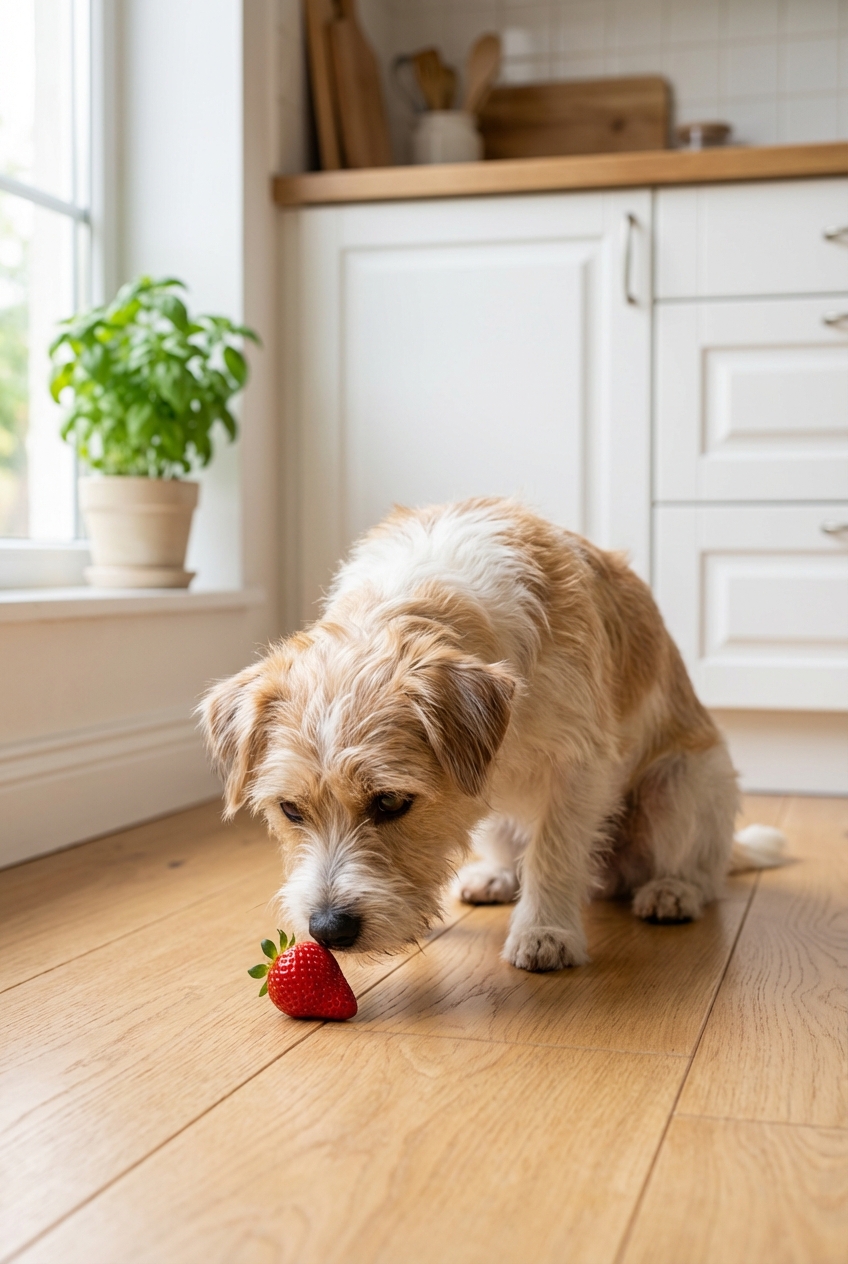
Are strawberries safe for dogs?
Fresh strawberries are generally safe for dogs when they are:
- Plain (no sugar, syrup, chocolate, or whipped topping)
- Washed well to reduce dirt and surface pesticide residue
- Served in small pieces to reduce choking risk
Strawberries are not toxic to dogs, but too much can still cause tummy upset. And like any new food, they can occasionally trigger mild digestive issues, especially in sensitive pups.
What about the green tops? Strawberry leaves and tops are not known to be toxic, but they can be tough and may cause stomach upset. I usually remove them for dogs who gulp treats.
Serving size: how many strawberries?
Think of strawberries as a treat, not a meal. Treats (including fruit) should make up no more than 10% of your dog’s daily calories. The rest should come from a balanced diet.
How the calories add up
Strawberries are fairly low calorie, but they still count toward your dog’s treat budget. For a rough idea, one medium strawberry is about 4 to 6 calories. For many dogs, that is small, but for toy breeds (or dogs on strict weight plans), it adds up faster than you think.
Simple starting portion guide
These are typical starting ranges for healthy dogs. If your dog is new to strawberries, start at the low end.
- Toy dogs (under 10 lb): 1 thin slice for the first try, then up to 1 small strawberry (cut up)
- Small dogs (10 to 25 lb): 1 small strawberry, then up to 2 (cut into bite-size pieces if they eat fast)
- Medium dogs (25 to 60 lb): 1 to 2 strawberries to start, then up to 3 to 4 if tolerated
- Large dogs (60+ lb): 2 strawberries to start, then up to 4 to 6 as an occasional treat if stools stay normal
Start smaller than you think, especially if strawberries are new. If stools stay normal and there is no vomiting or itching, you can keep it as an occasional treat.
How often?
For most healthy dogs, strawberries can be offered a few times per week in small portions. Some dogs do fine with fruit more often, and some do better with less. Frequency depends on your dog’s stomach sensitivity, total daily treats, and overall calorie needs.
Benefits of strawberries
Strawberries bring real nutritional value in a small package. They are not a “magic food,” but they can support overall wellness when used appropriately.
1) Antioxidants
Strawberries contain antioxidants that help combat oxidative stress in the body. For aging dogs or dogs under stress, antioxidant-rich foods can be a helpful part of a whole-food treat rotation.
2) Vitamin C and micronutrients
Dogs can make their own vitamin C, but small amounts from food can still be a nice bonus. Strawberries also provide small amounts of other vitamins and minerals that support normal body function.
3) Fiber for digestion
In small amounts, the fiber in strawberries may support healthy digestion and stool quality. In large amounts, fiber can backfire and cause gas or diarrhea, so portion control is key.
4) Hydration support
Strawberries have high water content. They can be a refreshing option during hot Texas summers, especially when used in frozen treats.
Best ways to serve them
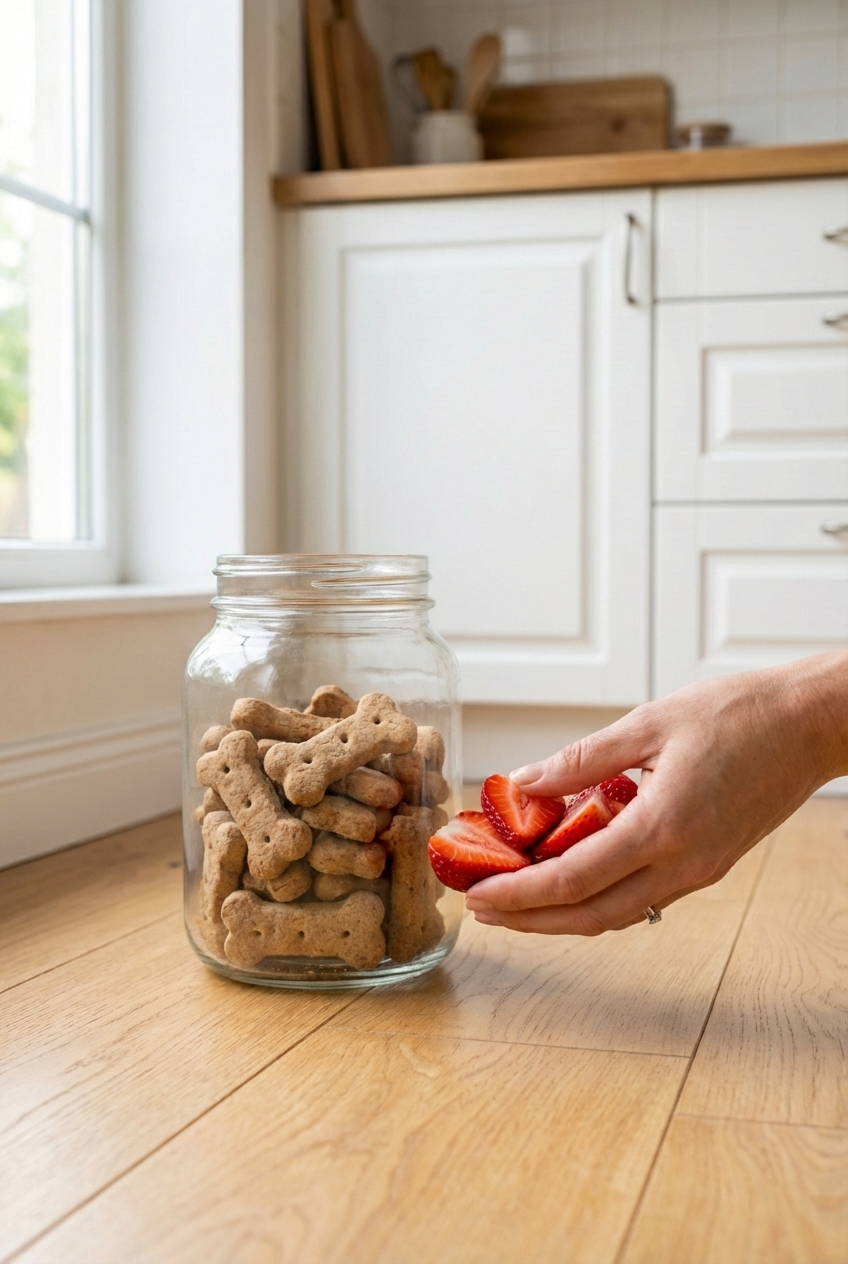
Keep it simple. The safest strawberry is plain and sized appropriately for your dog.
Prep tips
- Wash thoroughly under running water.
- Remove the green top if your dog tends to gulp treats.
- Slice or dice for small dogs or fast eaters.
- Introduce slowly, starting with one small piece (like a thin slice).
Serving ideas
- Fresh slices as a quick training treat.
- Frozen strawberry pieces for a summer snack. Use small pieces and skip this for dogs who gulp food, have dental issues, or struggle to chew well since frozen fruit can be a choking or tooth risk for some pups.
- Mashed strawberries mixed into plain, unsweetened yogurt (skip if dairy sensitive).
Rule of thumb: keep strawberries plain and unsweetened, and stick to foods that are known to be dog-safe.
Strawberry products to avoid
Many strawberry-flavored foods are not dog-safe because of added sugar, fats, or sweeteners.
- Strawberry ice cream (sugar and dairy can trigger GI upset)
- Strawberry syrup or jam (high sugar, sometimes sweeteners)
- Candy and baked goods (sugar, fat, and sometimes chocolate)
- Dried strawberries (concentrated sugar and often added sugar or oils)
- Anything with xylitol (birch sugar), which is dangerous for dogs
When strawberries are not a good idea
Even healthy foods are not a perfect fit for every dog. Talk with your veterinarian if your dog has a medical condition and you are unsure.
Use extra caution if your dog has:
- Diabetes or needs strict calorie control (fruit contains natural sugars)
- Pancreatitis history (strawberries are low-fat, but treat choices still matter overall)
- A sensitive stomach or chronic diarrhea
- Known food allergies (true strawberry allergy is uncommon, but possible)
Signs your dog did not tolerate them
- Vomiting or diarrhea
- Excessive gas or belly discomfort
- Itchy skin, face rubbing, ear redness, or hives
- Unusual lethargy after eating the new treat
If you notice facial swelling, breathing trouble, or repeated vomiting, treat it as urgent and contact your vet right away.
Quick safety checklist
- Choose fresh or frozen plain strawberries only
- Wash well
- Remove tops for gulpers
- Cut into bite-size pieces
- Start small and watch stool and skin for 24 hours
- Keep fruit treats under 10% of daily calories
When you use strawberries as an occasional whole-food treat, you are giving your dog something sweet that is also nutrient-rich. Small choices like this really do add up over time.