
Make meals more tempting and nutritious with simple dog food toppers: bone broth, cooked eggs, sardines, pumpkin, and steamed veggies—plus portions, storag...
Article
•
Designer Mixes
Can Dogs Eat Spinach? Oxalates and Safety

Shari Shidate
Designer Mixes contributor
Spinach is one of those “superfoods” that sounds automatically healthy, so it is totally normal to wonder if it belongs in your dog’s bowl too. The good news is that many healthy dogs can eat small amounts of cooked spinach as an occasional topper. The part you need to understand is oxalates, which are natural compounds in spinach that can matter for certain dogs, especially those prone to urinary issues.

Let’s break this down in a clear, vet-informed way so you can decide what is right for your individual dog.
Quick answer
- Yes, dogs can eat spinach, but keep it as a small, occasional add-on, not a daily “main vegetable.”
- Cook it (lightly steamed or boiled) and serve plain.
- Avoid or ask your vet first if your dog has a history of calcium oxalate bladder stones, recurrent urinary issues, kidney disease, or is on a prescription therapeutic diet.
Good rule: treats and toppers (including veggies) should make up less than 10% of your dog’s daily calories.
What are oxalates?
Oxalates (oxalic acid and related compounds) are naturally found in many plants, including spinach. In the body, oxalates can bind to minerals like calcium. In dogs who are predisposed to certain urinary problems, higher-oxalate foods may contribute to the formation of calcium oxalate crystals or stones as part of a bigger, multifactorial picture.
Here is the key point: oxalates are not automatically dangerous. For many dogs, the amount in a small serving of spinach is not a problem. The concern is higher if a dog is already predisposed to forming calcium oxalate stones or has specific urinary risk factors.
Which dogs should avoid spinach?
As a veterinary assistant, I always encourage owners to think “individual dog” instead of “one-size-fits-all.” Spinach is a “maybe” or a “no” for dogs in these groups:
- Dogs with a history of calcium oxalate bladder stones or calcium oxalate crystals
- Dogs with chronic or recurrent urinary issues (especially if your vet has discussed crystal risk)
- Dogs with kidney disease or dogs on a renal diet (renal plans often manage minerals like phosphorus and sodium, and some dogs need closer monitoring of potassium, so check before adding high-potassium greens)
- Dogs on prescription urinary diets (adding high-oxalate foods can work against the plan)
- Dogs with sensitive stomachs who do not tolerate leafy greens (gas or loose stool)
If you are unsure what type of stones your dog has had, your veterinarian can tell you based on lab results and stone analysis. That detail makes a big difference.
Benefits (in the right amount)
Spinach contains vitamins, minerals, and plant compounds that can support overall health when used appropriately. It is not a required food for dogs, but it can be a nutritious “bonus” ingredient.
- Vitamin K (important for normal blood clotting)
- Folate and other B vitamins
- Vitamin A precursors (from carotenoids)
- Fiber (can support stool quality in some dogs)
- Antioxidants (plant compounds that help protect cells from oxidative stress)
One note: dogs do best with vegetables as a smaller portion of the diet. Think of spinach as a topper, not a foundation.
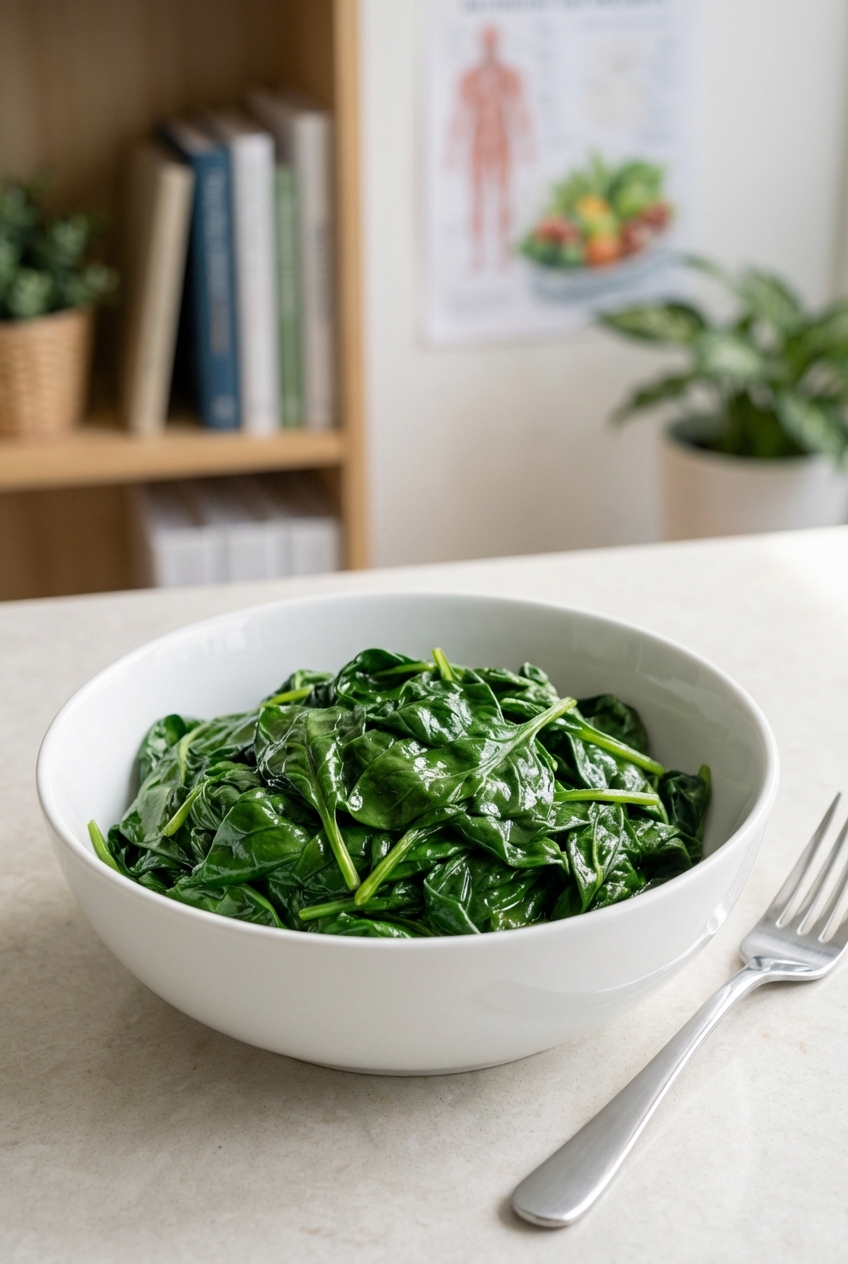
How to serve spinach
Cooked is usually easier
Dogs may digest raw leafy greens poorly, so light steaming or boiling can make spinach easier to chew and digest.
Important: cooking is mainly about digestibility and texture. It does not “cancel out” oxalates. (Boiling and discarding the water may reduce some soluble oxalates, but spinach is still considered a higher-oxalate green.)
Keep it plain
Avoid common add-ons that are unsafe for dogs or harder on their stomach:
- No garlic or onion (toxic to dogs)
- No butter, heavy oil, or cream sauces (unnecessary fat that can trigger GI upset, and can be risky for dogs prone to pancreatitis)
- No salt or seasoning blends
- Avoid prepared spinach like creamed spinach, seasoned frozen spinach, or anything with sauces
Chop it finely
Chopping helps your dog eat it more comfortably and lowers the chance of your dog spitting out long, slippery leaves.
How much can a dog have?
For most healthy dogs, keep spinach in the “small garnish” category. This is a conservative topper guideline, not a medically validated dose:
- Toy dogs: 1 teaspoon, occasionally
- Small dogs: 1 to 2 teaspoons
- Medium dogs: 1 tablespoon
- Large dogs: 1 to 2 tablespoons
If your dog has never had spinach, start with less than you think you need and watch stool quality for 24 to 48 hours. Soft stool means you should reduce the amount or choose a different veggie.
Spinach and bladder stones
Veterinary nutrition guidance commonly places spinach on the list of higher-oxalate foods. For a dog predisposed to calcium oxalate stones, limiting high-oxalate foods is often recommended as one piece of a broader prevention plan. That plan can also include:
- Encouraging higher water intake (more dilution of urine)
- Feeding a diet designed to support a urinary environment less favorable to crystal formation
- Managing other risk factors your vet identifies (breed predisposition, urine concentration, sodium intake, and more)
- Regular vet rechecks of urine, especially if there is a history of stones
So the “spinach question” is really a “urinary history question.” If your dog has no urinary issues, spinach in small servings is usually fine. If your dog has had calcium oxalate stones, spinach is typically not worth the risk.
Gentler veggie options
If you want the benefits of vegetables but would rather avoid higher-oxalate greens, these options are often easier choices for many dogs:
- Cooked zucchini
- Cooked green beans
- Cooked carrots
- Pumpkin (plain, not pie filling)
- Cooked broccoli (small amounts, some dogs get gas)

When spinach is not agreeing
Even safe foods can be “not right” for a particular dog. Stop spinach and check in with your vet if you notice:
- Vomiting or diarrhea
- Excess gas or belly discomfort
- Straining to urinate, frequent urination, or accidents
- Blood in urine
- Loss of appetite or lethargy after dietary changes
Bottom line
Spinach can be a healthy, occasional add-on for many dogs when cooked and served plain. The main caution is that spinach is higher in oxalates, so it is not a great choice for dogs with calcium oxalate stone risk or a urinary history. If you are building homemade meals, focus on variety, keep toppers modest, and tailor choices to your dog’s medical needs.
If your dog has any urinary or kidney history, or is on a prescription diet, ask your veterinarian which vegetables fit your dog best.