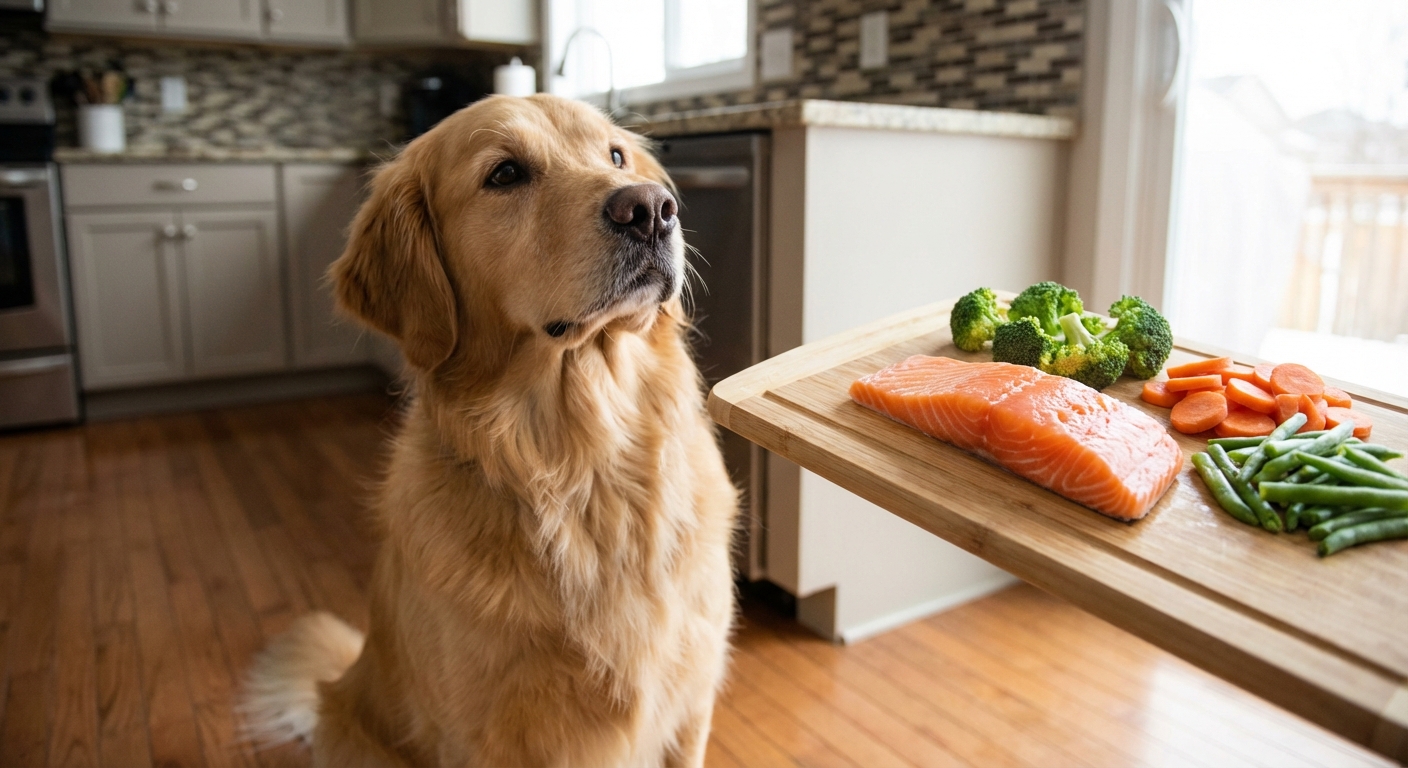
Itchy skin or a dull coat? Add fish safely with this vet-assistant guide: best low-mercury choices, cooked-only safety, calcium balancing, and two easy toppers.
Article
•
Designer Mixes
Can Dogs Eat Salmon?

Shari Shidate
Designer Mixes contributor
Yes, dogs can eat salmon, and it can be a wonderful, nourishing protein when it is fully cooked. The big safety issue is that raw (or undercooked) salmon can be dangerous for dogs in certain regions because it can carry a parasite linked to a potentially fatal illness called salmon poisoning disease.
Below, I will walk you through the benefits of cooked salmon, the risks of raw fish, exactly how to prepare salmon safely, and how much to serve so you can feel confident offering it as an occasional meal or topper.
Why cooked salmon is good
When salmon is cooked plainly and served in appropriate portions, it can support whole-body health. Here is what makes it special.
Omega-3s for skin and joints
Salmon is naturally rich in omega-3 fatty acids (EPA and DHA). These fats are evidence-based helpers for many dogs, especially those with:
- Dry, flaky skin
- Itchy allergies
- Dull coats
- Inflammation (including some joint discomfort)
Many veterinarians use omega-3s as part of skin and coat support plans because they can help calm inflammatory pathways.
Protein and key nutrients
Cooked salmon provides highly digestible protein plus nutrients like vitamin D, B vitamins, and selenium. This can be a nice change-up if your dog needs variety in their protein rotation.
Raw salmon risks
This is the part I want every dog parent to understand clearly: raw salmon can be risky, and not just because of the usual foodborne bacteria concerns.
Salmon poisoning disease (SPD)
In the U.S. Pacific Northwest and parts of the coastal Pacific region (including areas of northern California), raw wild salmonids like salmon, trout, and steelhead may carry a parasite called Nanophyetus salmincola that can also carry a bacterium (Neorickettsia helminthoeca). Together, this can lead to salmon poisoning disease, which can be fatal if not treated quickly.
Important: People sometimes assume “sushi-grade” fish is safe for dogs. “Sushi-grade” is a marketing term and does not guarantee protection from the parasite involved in SPD. While freezing practices can reduce some parasite risks in humans, it is not a reliable safeguard for SPD. The safest choice is still fully cooked fish.
Signs of SPD
Symptoms often start about 5 to 14 days after eating raw infected fish. Watch for:
- Vomiting
- Diarrhea (can be bloody)
- Fever
- Lethargy or weakness
- Loss of appetite
- Dehydration
- Swollen lymph nodes
If your dog ate raw salmon and shows any of these signs, call your vet or an emergency clinic immediately. SPD is treatable with prompt veterinary care, but time matters.
Other raw fish risks
- Bacteria and parasites: Raw fish can carry pathogens that cause GI illness.
- Thiaminase (mostly in other fish): Some raw fish contain enzymes that can contribute to thiamine (vitamin B1) deficiency. Salmon is not the classic culprit, but this is another reason cooked is best.
- Choking and obstruction: Bones, skin, and tough pieces can cause problems if not prepared carefully.
How to cook it safely
My rule of thumb as a veterinary assistant and a dog mom: cook it simply, cook it thoroughly, and keep it boring. Dogs do not need our seasonings to enjoy their food, and some seasonings can be harmful.
Best cooking methods
- Baking: Place salmon on a lined tray and bake until it flakes easily and is opaque throughout.
- Poaching: Simmer gently in water until fully cooked, then drain and cool.
- Steaming: A great option that keeps it moist without oils.
For maximum safety, aim for an internal temperature of 145°F (63°C).
Avoid: pan-frying in lots of oil, deep frying, or heavily sauced salmon.
Seasonings to skip
Keep salmon plain. Skip:
- Salt and salty rubs
- Garlic and onion powders
- Spicy seasoning blends
- Butter-heavy preparations
- Sugary glazes (like teriyaki)
Bones and skin
- Remove all bones. Even small pin bones can be a choking hazard or irritate the GI tract.
- Skin is optional. Salmon skin is fatty. A tiny amount may be fine for some dogs, but for sensitive stomachs or pancreatitis-prone dogs, remove it.
Smoked salmon?
Smoked salmon is usually too high in salt for dogs and may contain seasonings. It is best to avoid it or offer only a tiny taste on rare occasions if your veterinarian says your dog has no sodium-sensitive conditions.
Storage and leftovers
Refrigerate cooked salmon promptly and use it within 3 days. If anything smells “off,” discard it. You can also freeze plain cooked salmon in small portions for easy toppers later.
How much can dogs eat?
Salmon is best used as a treat, topper, or occasional protein, not an everyday free-for-all. Because it is rich and calorie-dense, too much can cause diarrhea or contribute to weight gain.
A helpful guideline: keep treats and toppers (including salmon) to 10% or less of your dog’s daily calories.
Conservative starting portions
For cooked, plain salmon, start small and adjust based on your dog’s stool and comfort:
- Small dogs (under 20 lb): 1 to 2 teaspoons to 1 tablespoon
- Medium dogs (20 to 50 lb): 1 to 3 tablespoons
- Large dogs (over 50 lb): 1/4 to 1/3 cup
For first-timers, start at the lowest end for two days. If stools stay firm and your dog feels great, you can slowly increase.
How often?
For most healthy dogs, salmon works well 1 to 2 times per week as part of a varied diet. If your dog has a history of pancreatitis, needs a low-fat diet, or has chronic GI issues, ask your veterinarian before offering fatty fish regularly. If you use salmon often, make sure the rest of the diet stays balanced and complete.
Canned salmon safety
Canned salmon can be a convenient option when you want an easy topper. It can be safe, but you have to choose the right can and watch the sodium.
What to look for
- Packed in water (not oil)
- No added salt (or as low as possible, since even “low sodium” can add up)
- No added flavors, spices, or sauces
Bones in canned salmon
Many canned salmon products include small, soft bones. These are typically pressure-cooked and may crumble easily, and they are often a calcium source. However, some dogs do not tolerate them well. If you are unsure, mash thoroughly and start with a small amount, or choose boneless canned salmon.
Mercury
Salmon is generally considered a lower-mercury fish compared with larger predatory fish like tuna. Still, variety matters. Rotating proteins and fish sources helps reduce the chance of accumulating too much of any one contaminant over time.
Farmed vs wild
Both farmed and wild salmon can be fine for dogs when cooked plain. The main practical difference for most dog parents is fat content. Farmed salmon is often fattier, which can be a little rich for sensitive stomachs or pancreatitis-prone dogs. When in doubt, choose a leaner cut, remove the skin, and keep portions modest.
When to skip salmon
Skip salmon, or speak to your veterinarian first, if your dog:
- Has had pancreatitis or needs a strict low-fat diet
- Has known fish allergies (itching, ear infections, GI signs after fish)
- Has kidney disease or needs sodium restriction (especially avoid smoked salmon and salty canned options)
- Just ate raw salmon and you live in or traveled to an area where SPD occurs
If you are using salmon specifically for omega-3 support, remember that fish oil supplements are not the same as feeding salmon. Supplement dosing can be very dog-specific, so check with your vet before combining frequent salmon meals with omega-3 products.
Quick safety checklist
When in doubt, choose fully cooked, plain salmon with no bones and small portions.
- Cook salmon thoroughly (aim for 145°F/63°C)
- Serve plain, no seasonings, no sauces
- Remove all bones
- Start with a small portion and watch stool
- Avoid raw salmon completely
- Call your vet quickly if raw salmon was eaten and symptoms appear
When to call the vet
Please contact your veterinarian or an emergency clinic right away if your dog:
- Ate raw salmon and you are in an SPD risk area
- Has vomiting or diarrhea that lasts more than 24 hours
- Shows lethargy, fever, dehydration, or bloody stool
- Seems painful, bloated, or cannot keep water down
It is always better to call early, especially with raw fish concerns. You are not overreacting. You are protecting your pup.