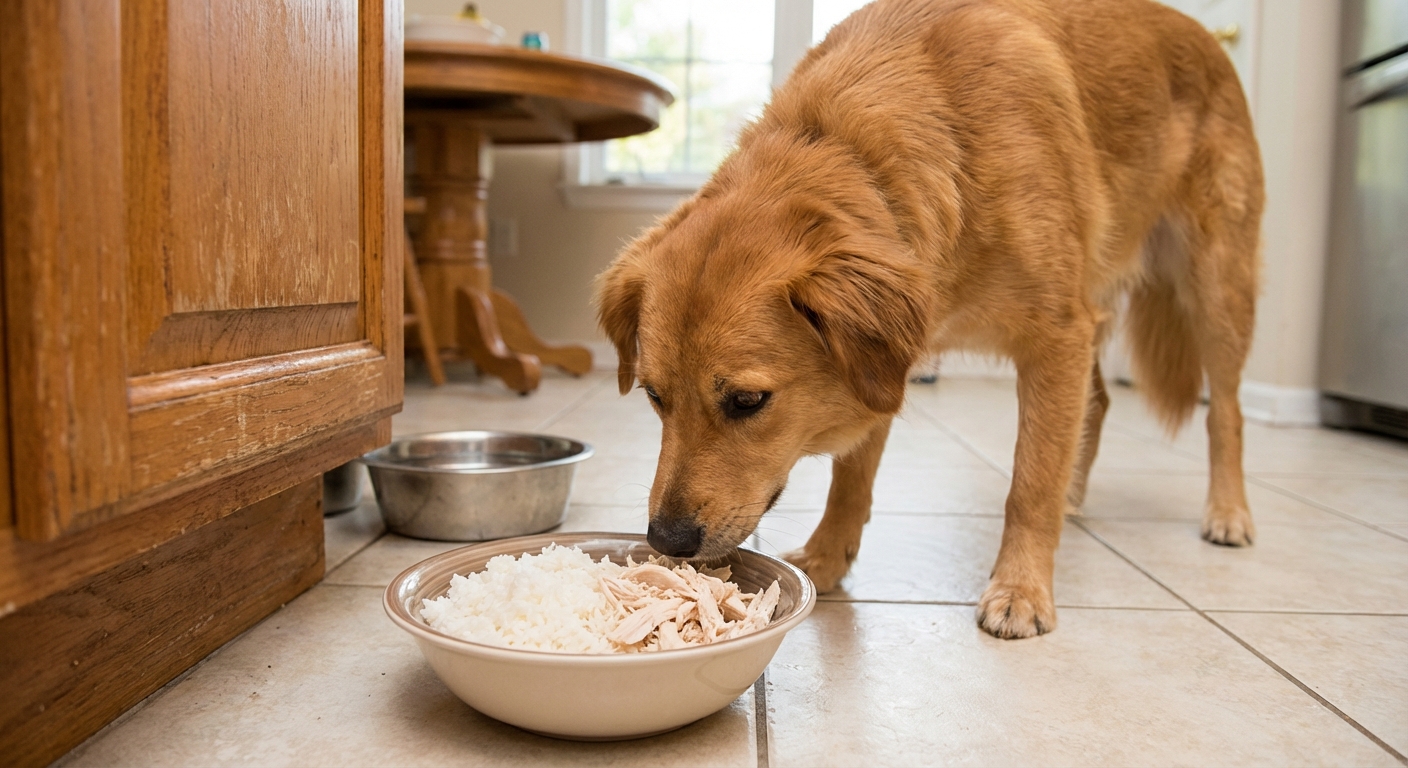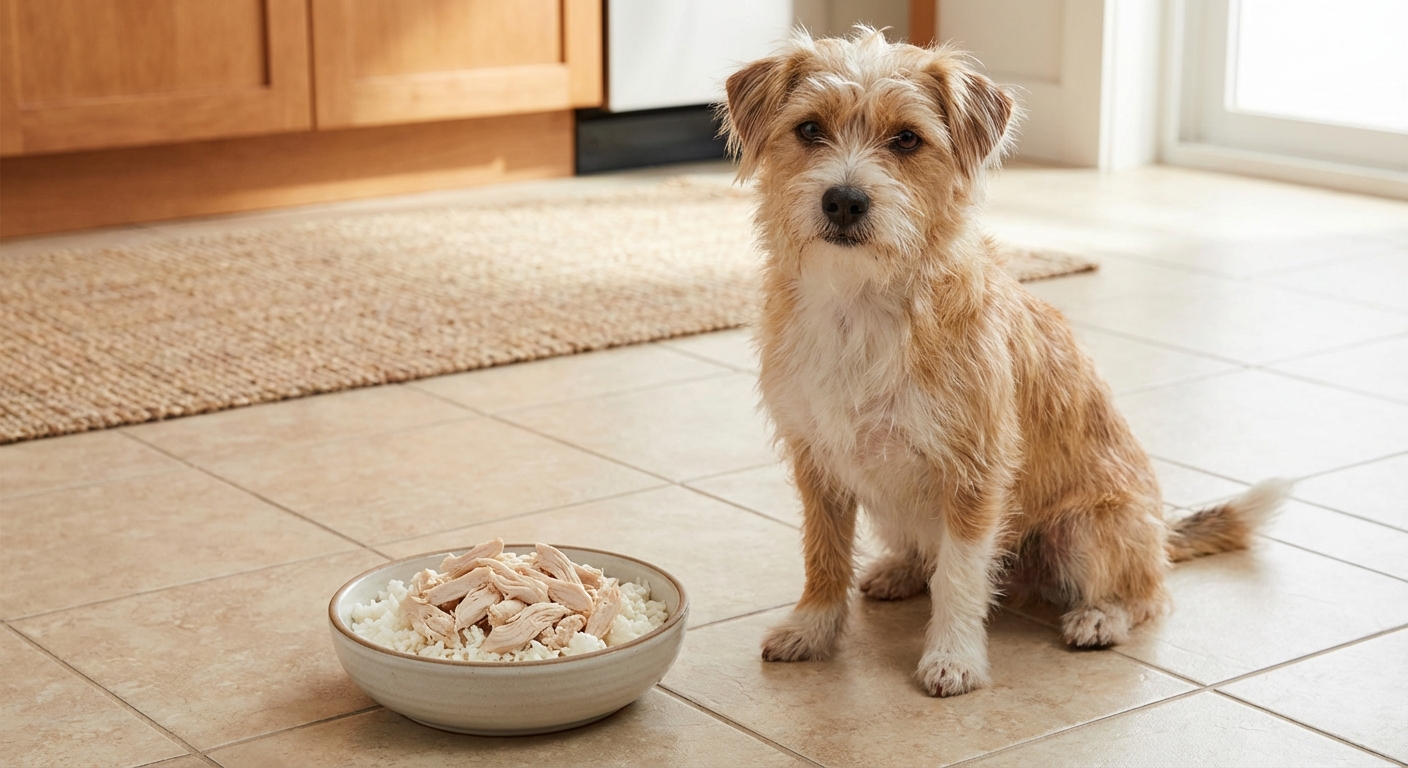
Chicken and rice can soothe mild stomach upset and help dogs transition back to normal food. Learn safe recipes, portions, how long to feed it, and when to c...
Article
•
Designer Mixes
Can Dogs Eat Rice? White vs. Brown and Safe Portions

Shari Shidate
Designer Mixes contributor
Yes, most dogs can eat rice, and it can be a helpful, gentle carb when used the right way. In my experience in a vet clinic, rice comes up constantly in real life, especially in the classic “chicken and rice” bland diet for mild tummy trouble. The key is choosing the right type of rice, cooking it plainly, and serving a portion that fits your dog’s size and health needs.

Is rice safe for dogs?
Plain, fully cooked rice is generally safe for healthy dogs in moderation. Rice is not toxic to dogs, and it is often used in home bland diets because it is easy to digest. That said, some veterinarians prefer a prescription gastrointestinal (GI) diet instead of a home-cooked bland diet, especially if signs are more than mild or last longer than a day or two.
Rice is still a carbohydrate. Too much can contribute to weight gain, raise blood sugar (especially in dogs with diabetes), and cause softer stools. Think of rice as a tool, not the foundation of the diet.
White rice vs. brown rice
Both white and brown rice can work, but they behave differently in your dog’s body.
White rice
- Best for upset stomachs: White rice is lower in fiber and easier to digest, which is why it is often recommended short term for diarrhea or mild GI upset.
- Gentler texture: It tends to be softer when cooked well, which helps many dogs tolerate it.
- Higher glycemic impact: It can raise blood sugar more quickly than brown rice, which matters for diabetic dogs.
Brown rice
- More fiber and nutrients: Brown rice keeps its bran and germ, so it has more fiber, magnesium, and some B vitamins.
- More filling: The fiber can help some dogs feel satisfied with slightly less food.
- Harder on sensitive stomachs: Because it is higher in fiber, it can worsen gas or loose stool in some dogs, especially during a flare-up.
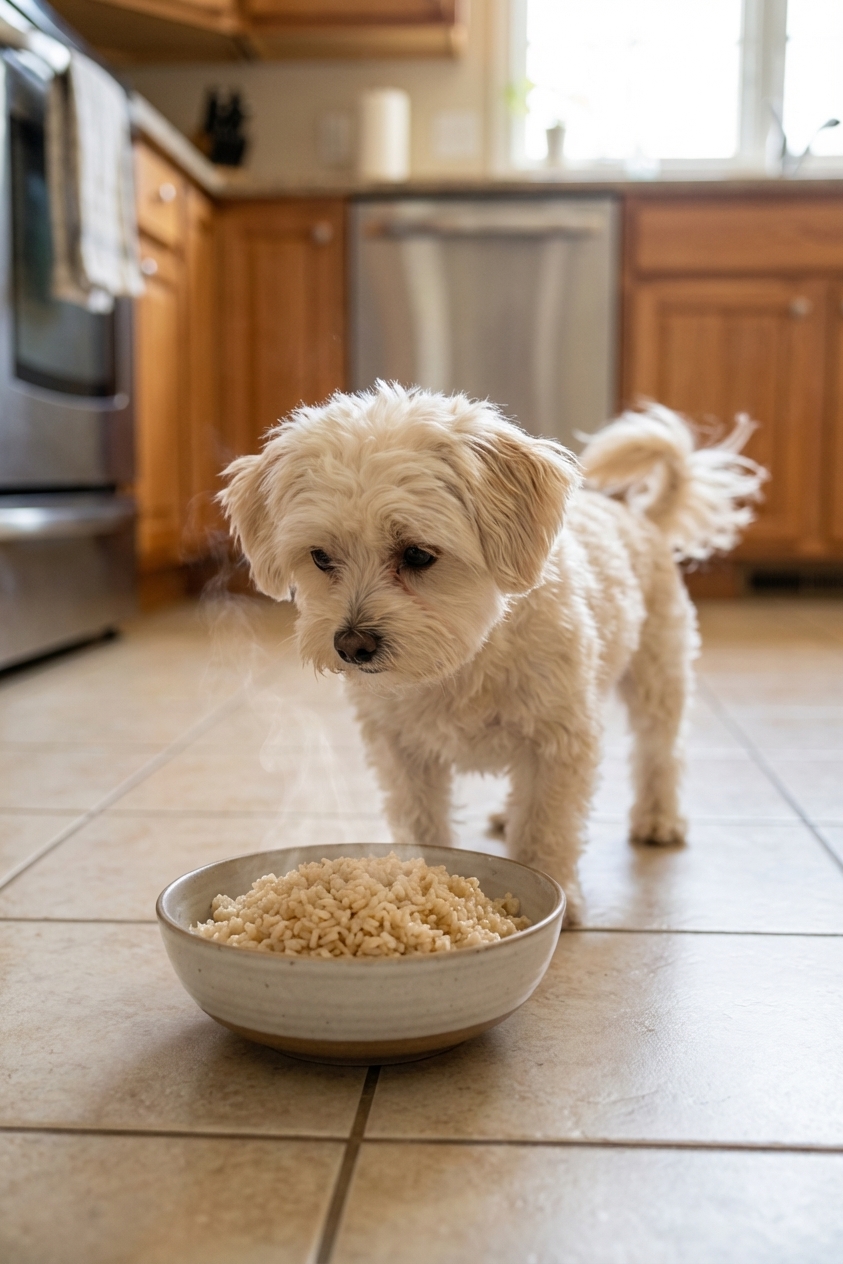
Simple rule: If your dog has an upset stomach, choose white rice. If your dog has a healthy gut and you are using rice as an occasional carb, brown rice can be a wholesome option.
Quick safety note on arsenic: Rice can contain trace amounts of arsenic (brown rice tends to be higher than white). This is not a reason to panic, but it is one more reason rice is best fed in moderation and as one option in a rotation of carbs, rather than an everyday staple long term.
When rice helps most
1) Upset stomach and diarrhea (short term)
Veterinarians sometimes recommend a bland diet for a day or two for mild GI upset. A common approach is plain cooked white rice plus a lean protein like boiled chicken or turkey. The goal is to give the intestines something easy to process while you watch for improvement. The exact ratio varies by clinician and by your dog’s symptoms, so follow your veterinarian’s instructions if you were given a specific plan.
Important: If your dog has vomiting that won’t stop, blood in the stool, black tarry stool, severe lethargy, abdominal pain, or cannot keep water down, skip the home bland diet and call your vet right away.
2) Transition food for sensitive dogs
If a dog is switching foods or recovering from a bout of tummy trouble, small amounts of rice can act as a “bridge” ingredient while the gut settles.
3) A gentle carb in a balanced homemade plan
Rice can be part of a balanced homemade diet, but it should not crowd out protein, healthy fats, and micronutrients. If you are feeding homemade long term, talk with your veterinarian or a board-certified veterinary nutritionist so the diet is complete and properly supplemented.
Safe portions
Portion depends on why you are feeding rice. For an upset stomach, rice is often used temporarily as a larger share of a bland meal. For normal snacking or adding variety, keep rice as a small add-on.
General portion guide (cooked rice)
These amounts are practical starting points for plain cooked rice added to an otherwise complete meal. Calorie needs vary widely by age, activity level, and medical status, so adjust based on your dog’s body condition and your vet’s advice.
- Extra small dogs (up to 10 lb): 1 to 2 teaspoons per meal
- Small dogs (11 to 20 lb): 1 to 2 tablespoons per meal
- Medium dogs (21 to 50 lb): 2 to 4 tablespoons per meal (up to 1/4 cup)
- Large dogs (51 to 90 lb): 1/4 to 1/2 cup per meal
- Giant dogs (over 90 lb): 1/2 to 3/4 cup per meal
Frequency tip: For healthy dogs, rice fits best as an occasional addition, not an everyday “filler.” If you find yourself leaning on rice daily to stretch meals, it is a sign the overall diet may need rebalancing.
For a bland diet (short term)
For mild diarrhea, many vets recommend a bland mix of lean protein and white rice, fed in small, frequent meals for 24 to 48 hours, then gradually transitioned back to the regular diet. Because individual cases vary a lot, follow your veterinarian’s guidance, especially for puppies and seniors.
How to prepare rice
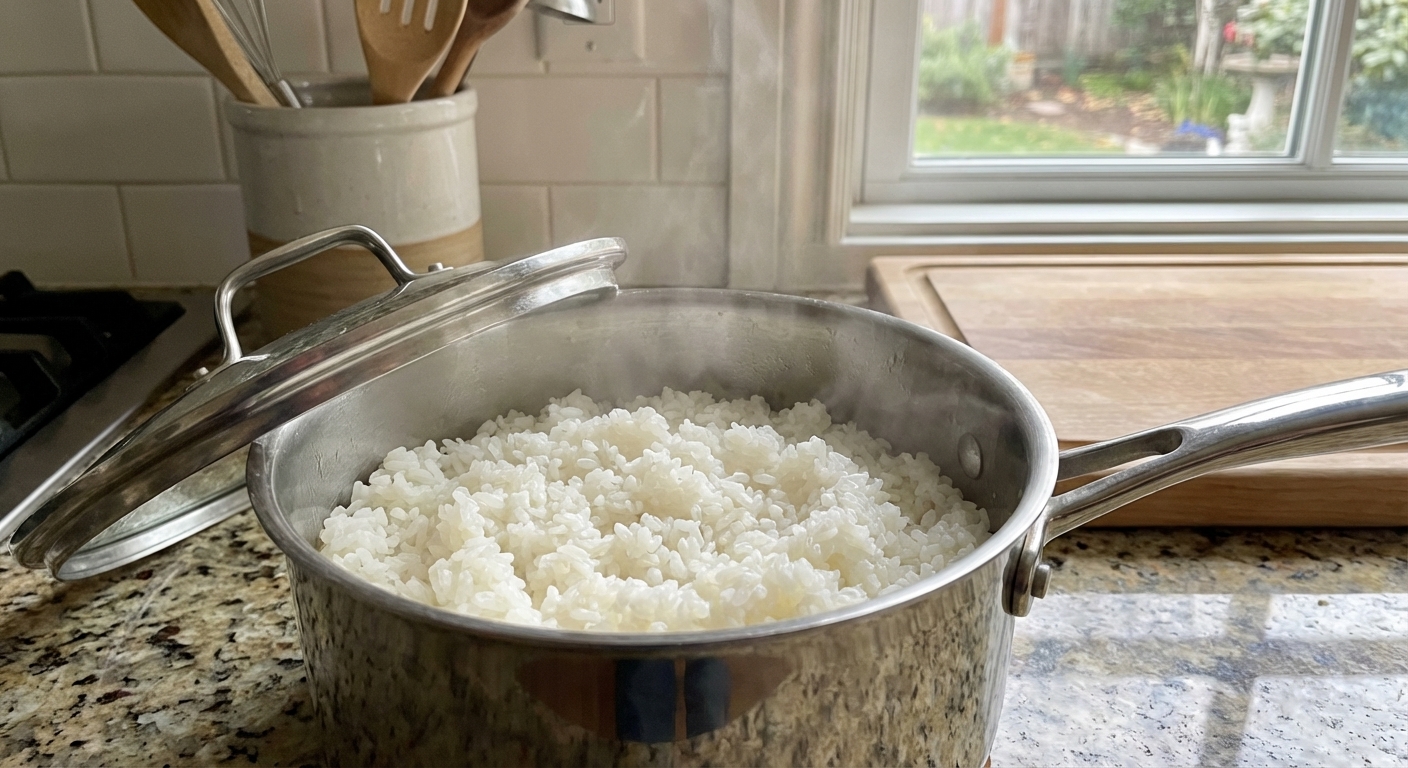
- Cook it fully: Soft, fully cooked rice is easier to digest.
- Do not feed it dry: Uncooked or dry rice can cause stomach upset and may be a choking risk for some dogs.
- Keep it plain: No butter, oil, salt, garlic, onion, broth, or seasoning blends.
- Avoid flavored packets: Many “instant” or pre-seasoned rice products are high in sodium and include ingredients dogs should not eat.
- Cool before serving: Prevent mouth burns.
- Store safely: Refrigerate leftovers promptly and use within a few days, or freeze portions.
When to avoid rice
Rice is not the right choice for every dog. Consider skipping it or using only very small amounts if your dog has any of the following:
- Diabetes or insulin resistance: Rice can raise blood sugar, especially white rice. Ask your vet before adding starchy carbs.
- Weight gain or obesity: Rice is calorie dense for its nutrient value, so it can quietly push calories too high.
- Food allergies, food trials, or suspected carb sensitivity: True rice allergy is not common, but it can happen. Also, if your dog is on a veterinarian-guided elimination diet, do not add rice unless your vet says it fits the trial.
- Chronic pancreatitis history: Rice is low fat, but many “rice meals” are not. The bigger issue is what people add, like fatty meats or oils. Use a vet-directed diet plan here.
- Recurring digestive issues: If your dog needs bland food frequently, rice is a band-aid. You need a diagnosis and a long term plan.
Common questions
Can dogs eat rice every day?
Most healthy dogs can tolerate rice often, but it is not ideal as a daily staple unless it is part of a balanced, complete diet plan. Too much rice can crowd out protein and key nutrients, and it can contribute to weight gain. Rotating carbs can also reduce overreliance on rice.
Can puppies eat rice?
Plain cooked rice is usually safe in small amounts, but puppies can dehydrate faster and get sicker faster with diarrhea. Call your vet sooner rather than later if a puppy has GI symptoms.
What about rice water?
Rice water is sometimes used as a gentle option for mild stomach upset, but it is not a treatment for dehydration. Make sure your dog has access to fresh water, and seek care if you notice signs like tacky gums, weakness, or ongoing vomiting or diarrhea.
Is jasmine or basmati rice okay?
Yes, as long as it is plain and fully cooked. Nutritionally, it behaves more like white rice.
Can dogs eat fried rice?
It is best to avoid it. The rice itself is not the main problem, but fried rice commonly contains onion, garlic, high-salt sauces, and a lot of oil, which can trigger GI upset and may be dangerous depending on ingredients.
The bottom line
Rice can be a safe, comforting food for dogs when it is plain, cooked, and portioned appropriately. Choose white rice for short term tummy trouble and brown rice for an occasional higher-fiber option in dogs with sturdy digestion. Because rice can contain trace arsenic and is easy to overfeed, it is best used in moderation rather than as an everyday staple.
Action step: If your dog has diabetes, weight issues, recurring GI problems, or is on an elimination diet, check with your veterinarian before adding rice. For healthy dogs, start with a small spoonful of plain cooked rice mixed into a meal and watch stools and energy for 24 hours.