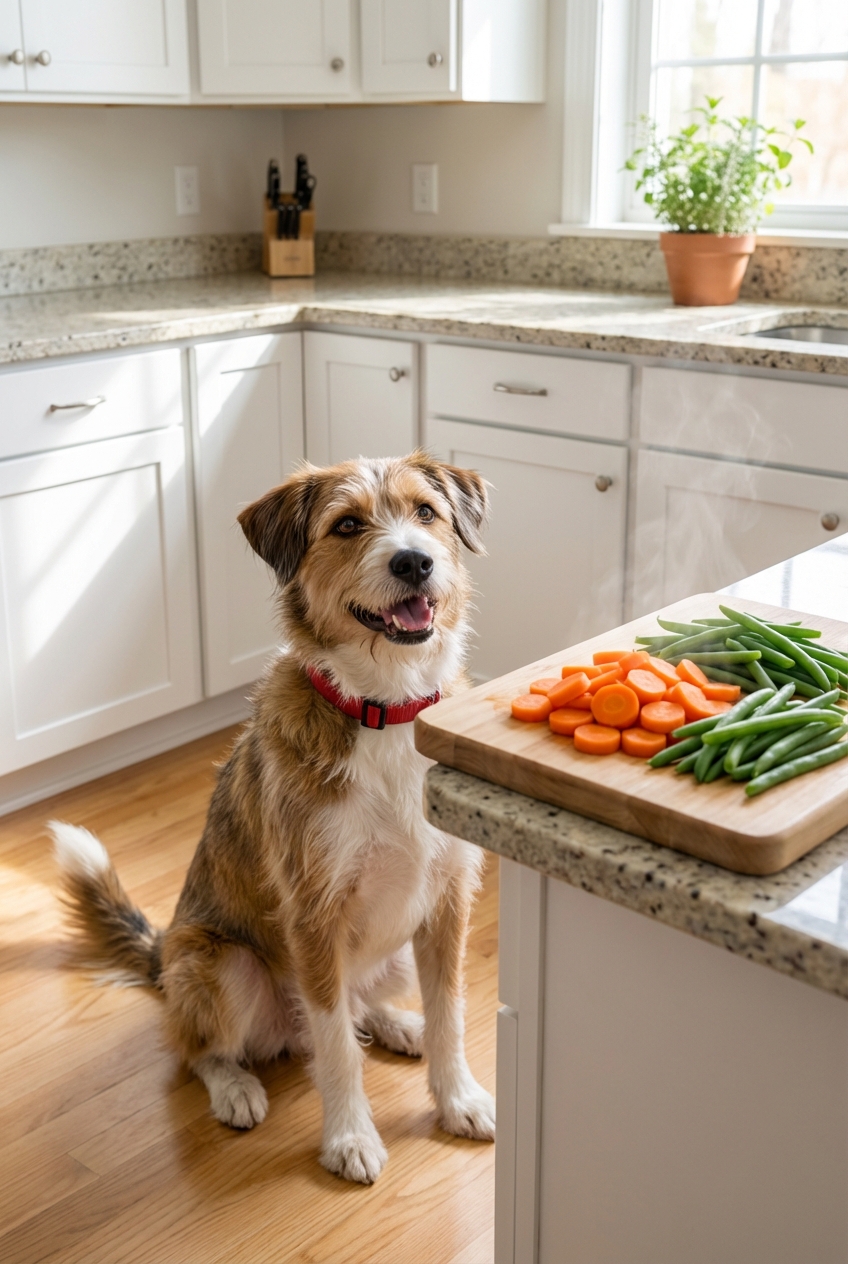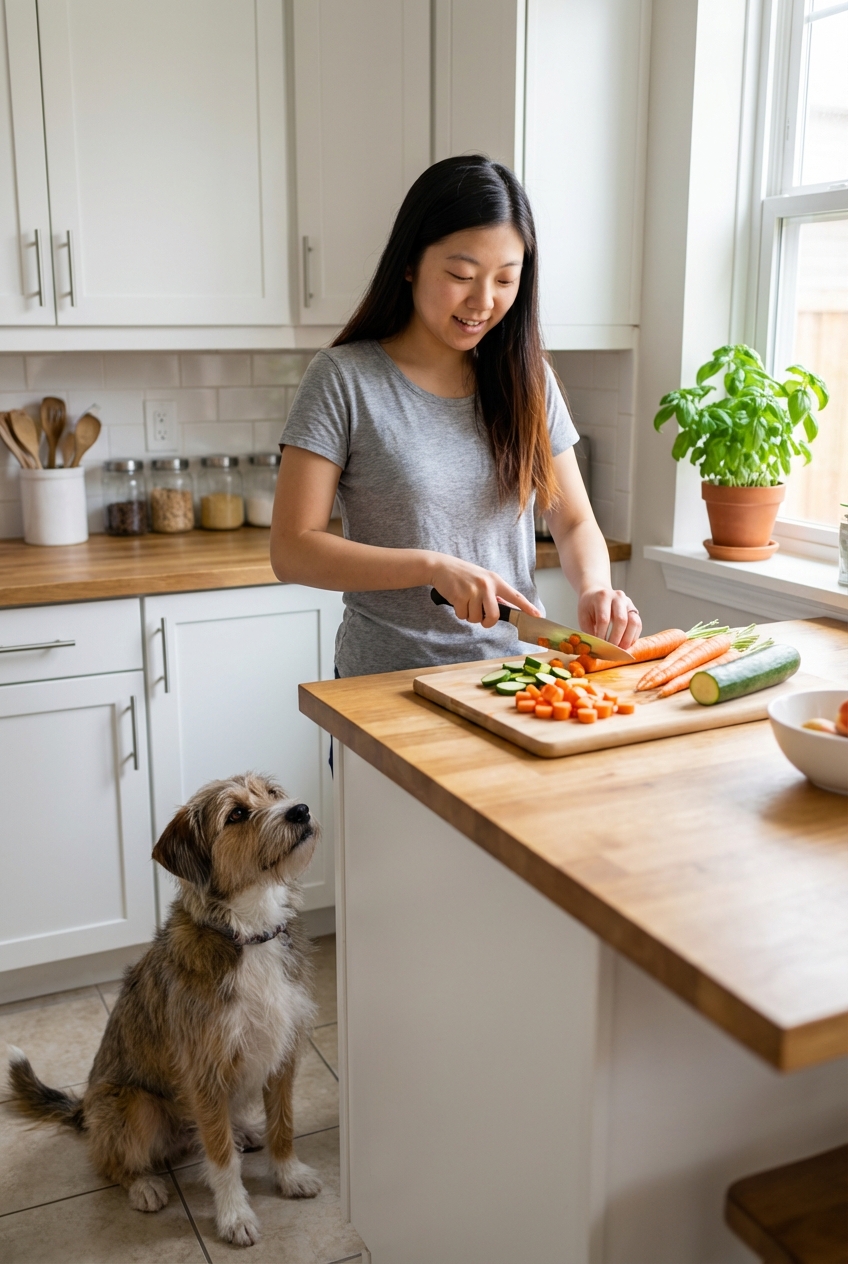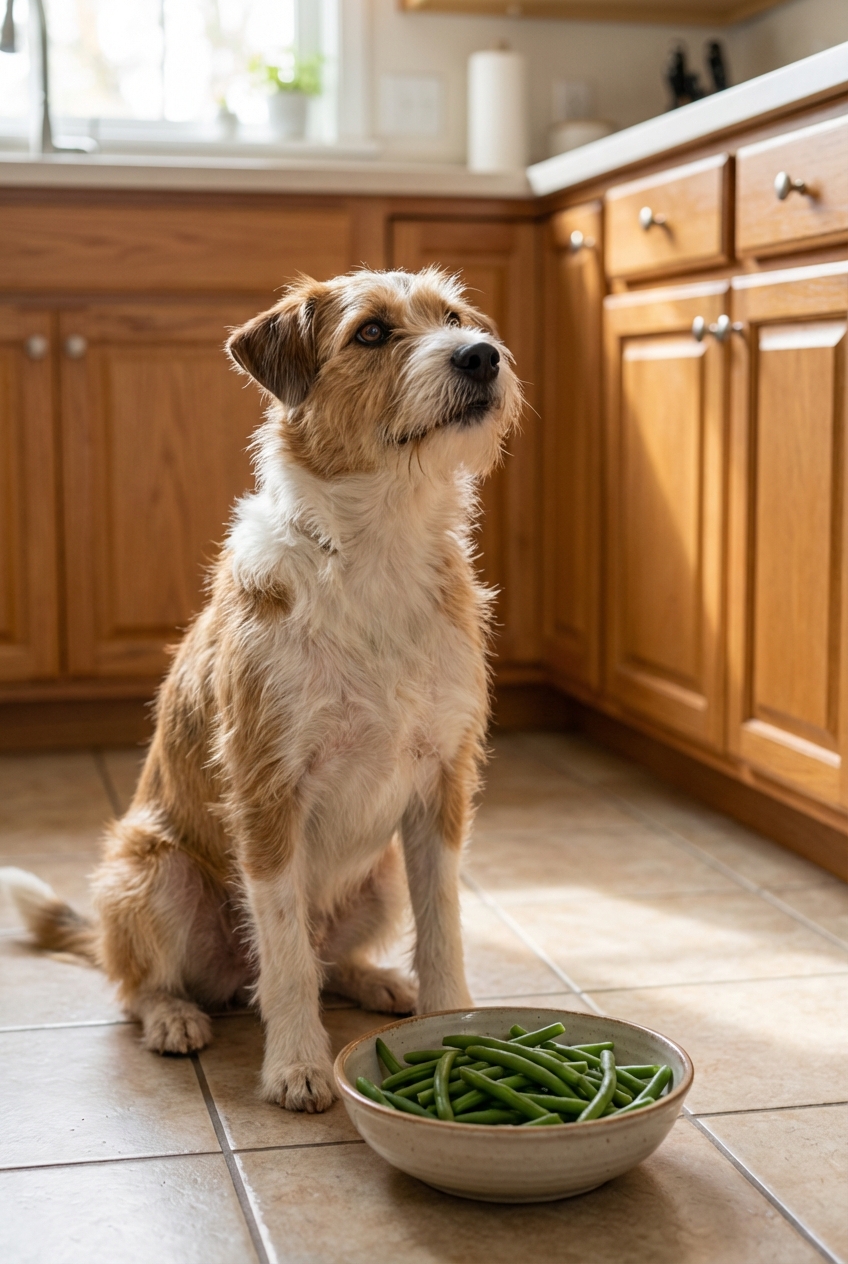
Green beans are a crunchy, low-calorie treat for many dogs when served plain. Learn safe prep, portions by size, and how to use them to replace higher-calori...
Article
•
Designer Mixes
Can Dogs Eat Green Beans Every Day?

Shari Shidate
Designer Mixes contributor
As a veterinary assistant here in Frisco, Texas, I hear this question a lot: Can dogs eat green beans daily? For most healthy dogs, the answer is yes. Green beans can be a safe everyday add-on when they are prepared simply, introduced gradually, and fed in the right portion.
Green beans are low in calories, provide fiber, and add a little crunch to meals, which can be especially helpful for dogs who act like they are always hungry. The key is to treat green beans as a supplement to a balanced diet, not a replacement for complete nutrition. And like anything in pet nutrition, individual dogs vary, so your veterinarian may recommend a different plan for your dog.
Are green beans safe for dogs?
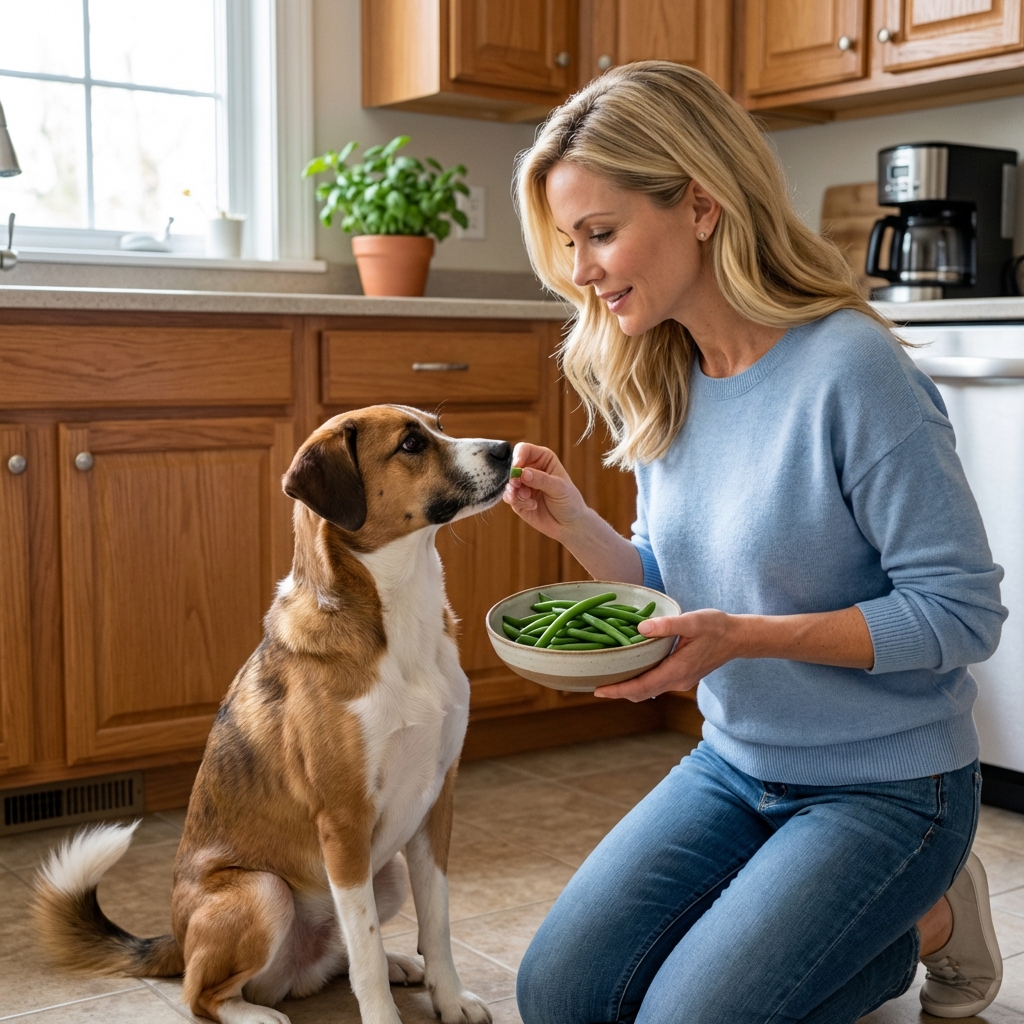
Green beans are generally safe for dogs and are not known to be toxic. They contain fiber and small amounts of vitamins and minerals.
What causes problems is usually not the green bean itself, but the extras people add. Dogs do best with:
- Fresh green beans (washed, chopped if needed, raw or lightly cooked)
- Frozen green beans (thawed and served, or steamed for easier digestion)
- Canned green beans only if they are no-salt-added and rinsed
Skip green beans that are prepared “human style” with butter, garlic, onion, heavy seasoning, or sauces.
Daily feeding: when it makes sense
Daily green beans can help if:
- Your dog needs a lower-calorie topper to support weight management.
- Your dog eats too fast and benefits from a bit more volume and fiber in the bowl.
- You are using them as a low-calorie treat instead of high-fat snacks.
Daily green beans may not fit if:
- Your dog has a history of GI sensitivity (easily gets gas, diarrhea, or vomiting).
- Your dog is a growing puppy who needs higher nutrient density rather than bulky add-ins.
- Your dog has a condition where sodium, potassium, or fiber should be monitored (this is common in some kidney and heart cases).
If your dog is on a prescription diet or has kidney disease, heart disease, pancreatitis, inflammatory bowel disease, or diabetes, check with your veterinarian before making daily add-ons a habit. Significant diet changes and sudden fiber increases can also worsen GI signs, so slow and steady is best.
How much per day?
A helpful rule for healthy dogs is that treats and extras should stay under 10% of daily calories. Green beans are low-calorie, but “too much of a good thing” can still crowd out balanced nutrition or cause digestive upset. Calorie needs also vary a lot by age, activity level, and whether your dog is trying to lose, gain, or maintain weight.
Here are practical, conservative starting portions for green beans (raw or cooked):
- Small dogs (under 20 lb): 1 to 2 tablespoons daily
- Medium dogs (20 to 50 lb): 2 to 4 tablespoons daily
- Large dogs (50 to 90 lb): 1/4 to 1/2 cup daily
- Giant dogs (over 90 lb): 1/2 to 3/4 cup daily
How to start: offer a few pieces (or 1 teaspoon) for 2 to 3 days, then slowly work up if stool stays normal. If your dog gets gassy or has loose stool, cut back and increase more gradually.
Best ways to serve
To keep green beans tummy-friendly and safe, focus on simple prep:
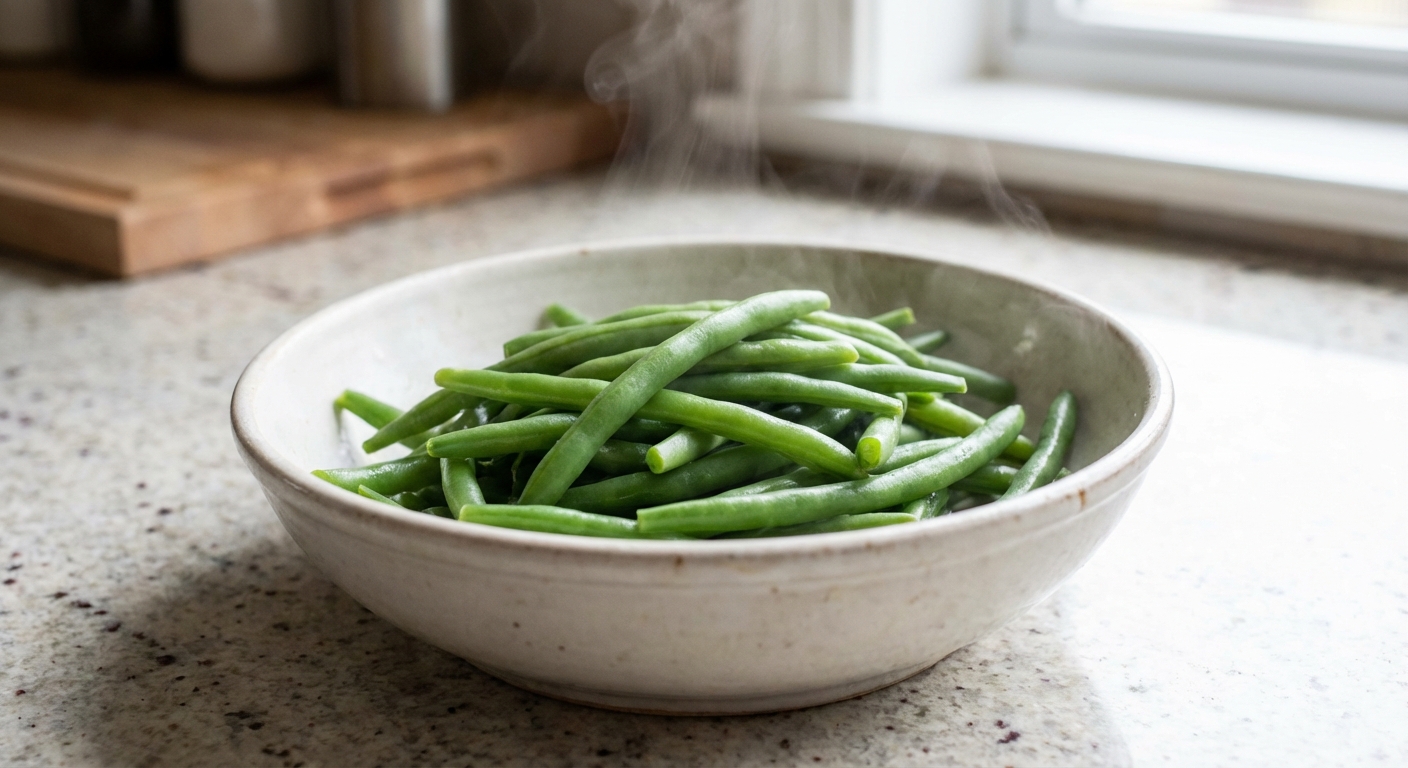
- Raw or cooked is fine: raw green beans should be washed well; steaming or boiling can make them easier to digest for some dogs.
- Steam or boil until tender-crisp, then cool (optional but helpful for sensitive stomachs).
- Chop for small dogs or dogs that gulp food to reduce choking risk.
- Serve plain with no oil, butter, salt, onion, garlic, or seasoning blends.
Fresh, frozen, or canned
- Fresh: Great option. Wash well and trim ends.
- Frozen: Convenient and usually very similar nutritionally to fresh. Thaw and serve, or steam.
- Canned: Choose no-salt-added. Regular canned versions can be too high in sodium. Rinse before serving.
Storage and food safety
- Refrigerate cooked green beans within 2 hours.
- Use within 3 to 4 days (sooner if they smell off or look slimy).
- Do not feed beans that seem spoiled or fermented.
Green beans and weight loss
Green beans can support weight management when used thoughtfully. Some people try the “green bean diet,” where green beans replace part of the kibble. The idea is to reduce calories while helping a dog feel full.
Here is the evidence-based caution: replacing too much of a complete diet can unbalance nutrients, especially protein, essential fatty acids, vitamins, and minerals. Any major diet change should be vet-guided.
If your dog needs to lose weight, consider this safer approach:
- Use green beans as a topper to replace a small portion of the meal, not a large amount.
- Ask your vet about the best calorie target and whether a weight-management food would be more appropriate.
- Track progress with monthly weigh-ins and body condition scoring.
Signs you are feeding too many
Even healthy vegetables can cause problems if portions jump too quickly. Reduce the amount or pause and talk to your vet if you notice:
- Loose stool or diarrhea
- Excess gas or belly gurgling
- Vomiting
- Decreased interest in their regular balanced food
Most mild issues improve by cutting back and reintroducing slowly.
Extra safety notes
Choking and size
Whole green beans are usually fine for larger dogs, but for small dogs or dogs that gulp food, chop them into bite-size pieces.
Add-ins to avoid
Avoid green beans made with:
- Onion or onion powder
- Garlic or garlic powder
- Heavy butter or cream sauces
- Lots of salt
- Spicy seasonings
Allergies
True green bean allergies are uncommon, but any food can cause sensitivity. Introduce slowly and watch for itching, ear redness, or digestive changes.
Simple daily routine
If you want to feed green beans daily, here is an easy method that works for many families:
- Steam a batch of fresh or frozen green beans 1 to 2 times per week (or thaw frozen beans as needed).
- Cool and store in the refrigerator in a sealed container.
- Add a measured spoonful on top of meals or use a few pieces as training treats.
Small, consistent habits usually beat big diet overhauls. If you keep the portions reasonable, follow the 10% extras guideline, and keep the preparation plain, green beans can be a wonderful everyday “bonus” food for many dogs.
Quick takeaway: For most healthy dogs, green beans can be fed daily in small portions, but they should not replace a balanced diet.
Quick FAQs
Can dogs eat green beans raw?
Yes, most dogs can eat raw green beans if they are washed well. Some dogs digest cooked beans more easily.
Can dogs eat canned green beans?
Yes, if they are no-salt-added and rinsed. Avoid seasoned canned beans.