Skip pricey processed treats with 5 easy homemade dog treat ideas—from frozen pumpkin yogurt bites to sweet potato chews. Includes vet safety tips, portion...
Article
•
Designer Mixes
Can Dogs Eat Cucumbers?

Shari Shidate
Designer Mixes contributor
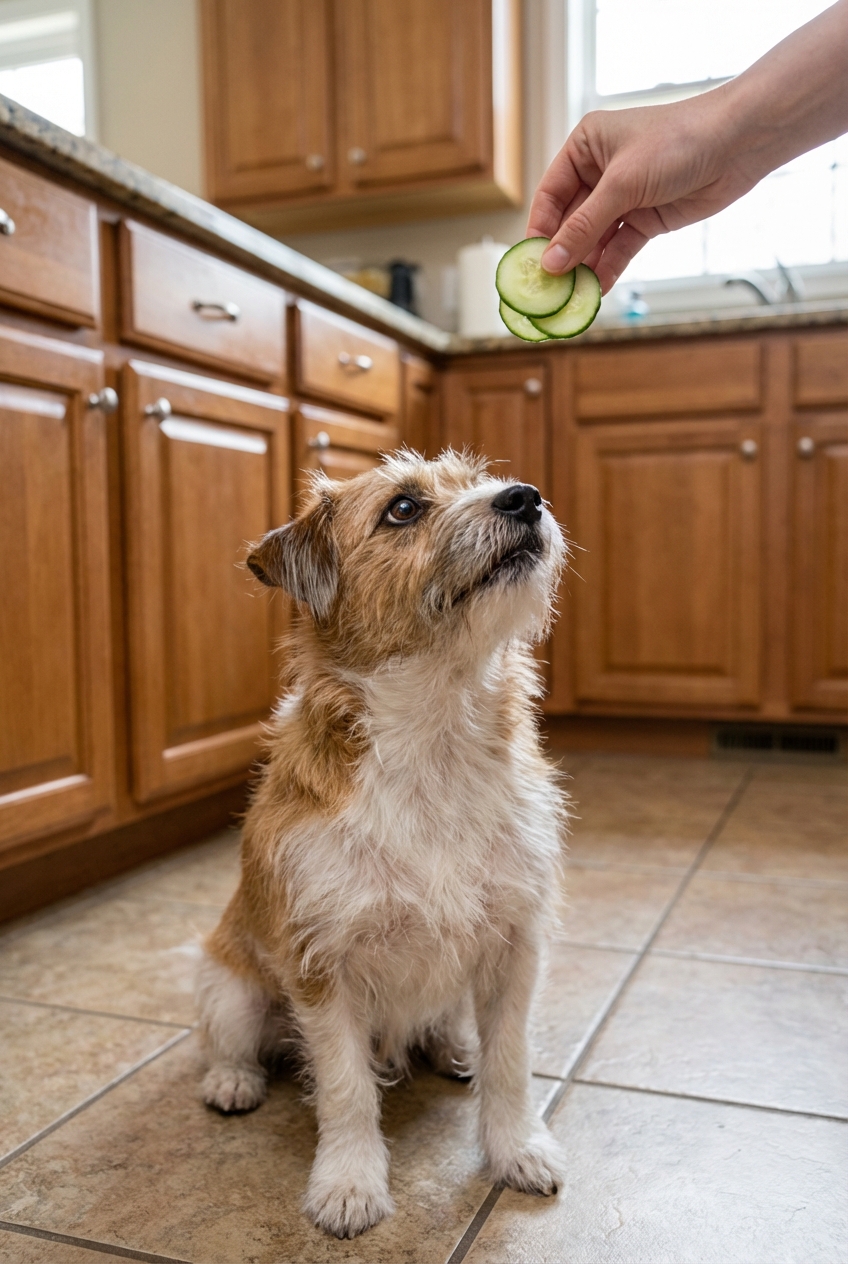
Yes, most dogs can eat cucumbers. They are one of my favorite “guilt-free” snacks to suggest in a clinic setting because they are crunchy, hydrating, and very low in calories.
Two quick caveats up front: any new food can cause stomach upset , and cucumber pieces can be a choking risk if they are cut too large for your dog. Below, I will walk you through the benefits, safe prep, realistic portion sizes, and the few situations where cucumber is not the best choice.
Why cucumbers work as a treat
Cucumbers are mostly water with a small amount of fiber and a modest mix of vitamins and minerals. They are not a miracle food, but they are a refreshing, low-calorie way to add crunch without loading your dog up with extra fat or sugar.
Possible benefits
- Low calorie: Helpful for dogs who gain weight easily, especially when you need lots of training rewards. (For a sense of scale, cucumber is roughly 8 to 16 calories per 1/2 cup, depending on the type and how it is cut.)
- Extra fluid intake: Cucumbers are water-rich, so they can add a little extra fluid on hot summer days. They do not replace a bowl of fresh water.
- Crunch factor: Many dogs love the crisp texture, which makes cucumber a nice swap for higher-calorie biscuits.
- Light fiber: A little fiber may help some dogs, but others get gas or loose stool from produce. Portion size matters.
Realistic expectation: Cucumbers are a treat, not a complete nutritional solution. The foundation of your dog’s diet should be a balanced, complete food (commercial or properly formulated homemade) .
How to serve cucumber safely
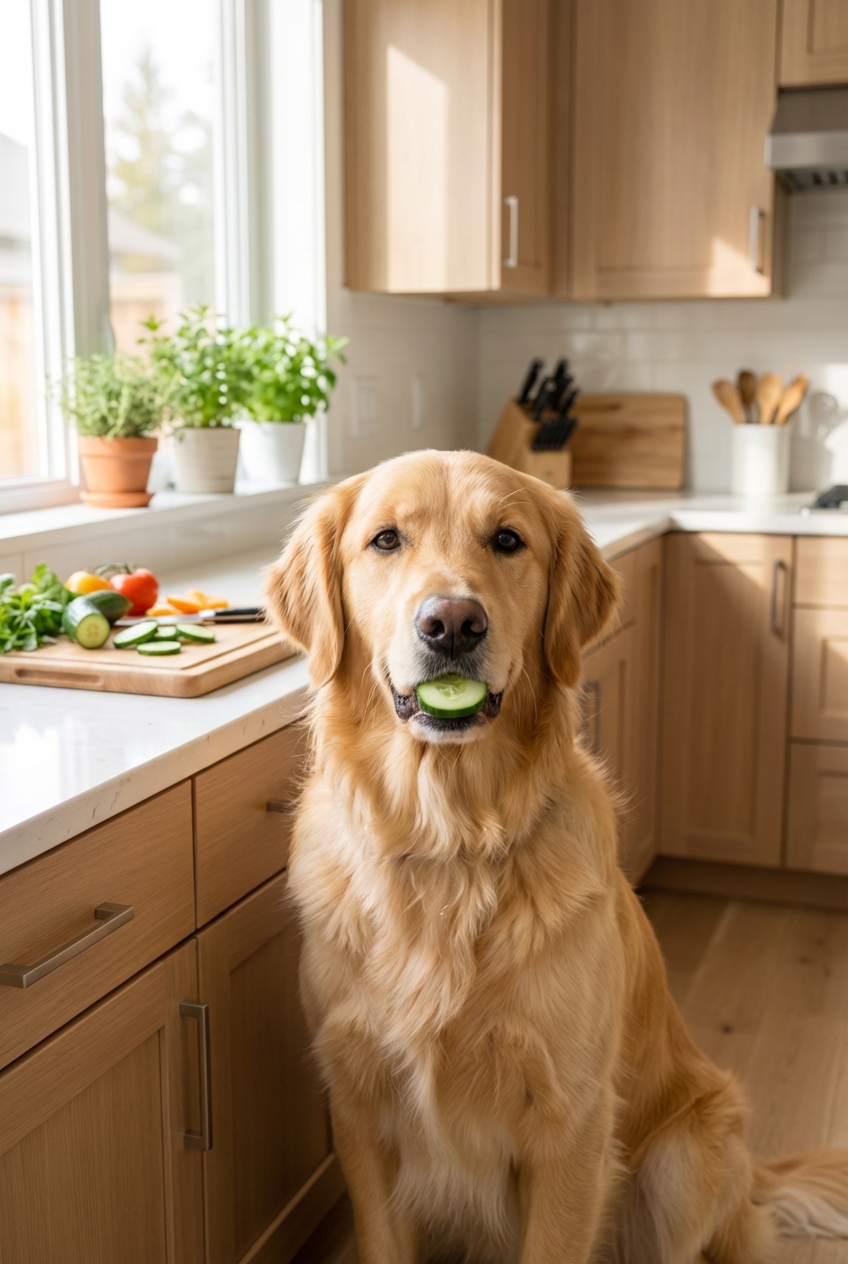
The safest way to serve cucumber is plain, washed, and cut into dog-appropriate pieces. Crunchy is great, but we want to avoid choking and tummy trouble.
Best prep
- Wash well: Rinse under running water and scrub the skin. If you are worried about residues, peel it after washing.
- Serve plain: No salt, no seasoning blends, and no sauces.
- Avoid onion and garlic: Skip onion or garlic in any form (including powders), since they can be toxic to dogs.
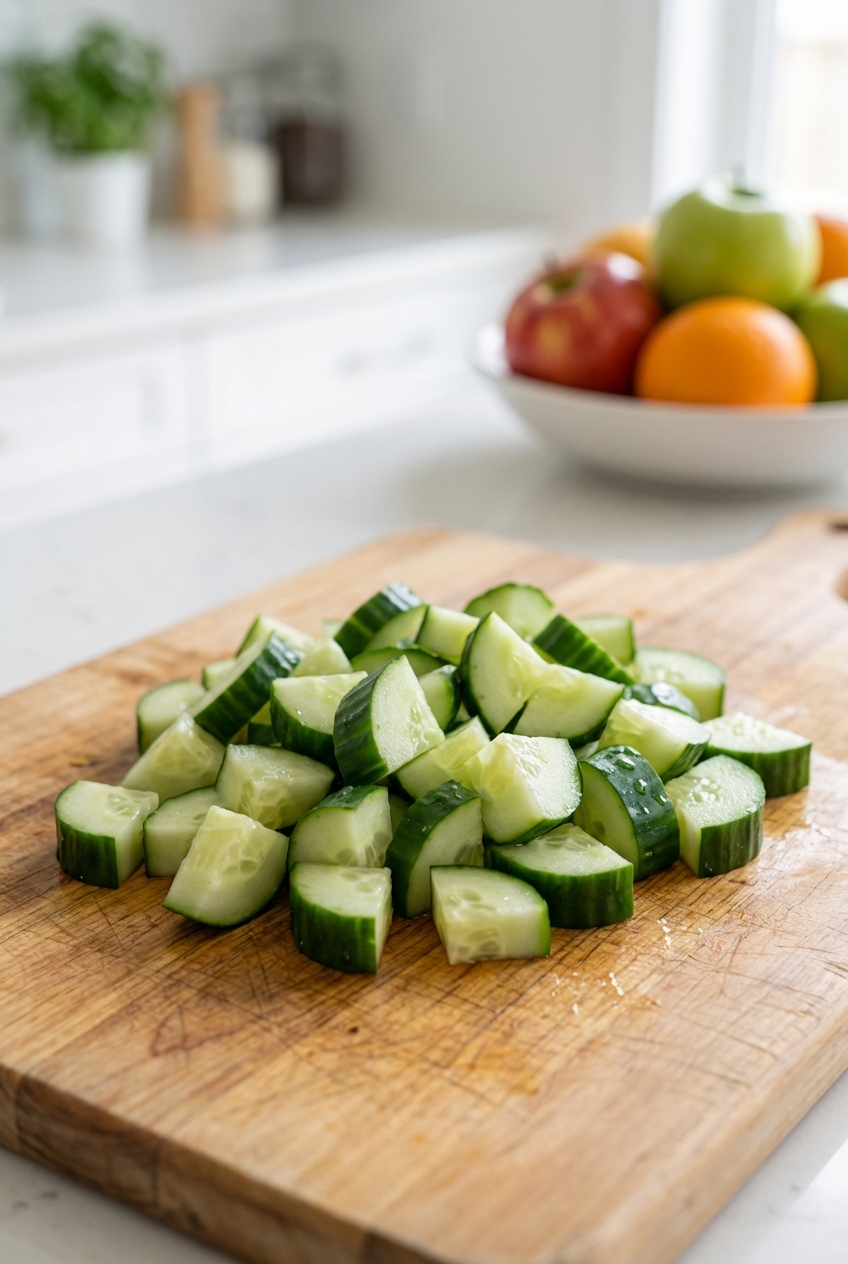
- Cut small: Thin coins, half-moons, or small cubes are easier to chew. For tiny dogs, go smaller than you think you need.
Good options
- Fresh cucumber slices
- Small diced cucumber as a meal topper (tiny amount)
- Frozen cucumber pieces for a hot-day crunchy treat (only if your dog chews well)
Skip these
- Pickles: Usually too high in sodium and may include spices, sugar, or sweeteners that can upset your dog’s stomach. Avoid any product with xylitol .
- Cucumber salads: Vinegar, oils, and seasonings can cause GI upset.
- Seasoned cucumber: Anything with spice blends, garlic, onion, or lots of salt is a no.
How much cucumber can a dog eat?
Think “treat portions,” not “side dish.” Even healthy snacks can cause diarrhea or gas if your dog eats a big amount quickly, especially if they are not used to fresh produce.
A good rule is to keep treats to 10% or less of your dog’s daily calories. Cucumbers are low-calorie, but the “10% rule” still helps keep the overall diet balanced.
Simple portion guide
- Extra-small dogs (under 10 lb): 1 to 3 small cubes or 1 to 2 thin slices
- Small dogs (10 to 25 lb): 3 to 6 small cubes or 3 to 5 thin slices
- Medium dogs (25 to 60 lb): about 1/8 to 1/4 cup total (often around 6 to 10 slices, depending on thickness)
- Large dogs (over 60 lb): about 1/4 to 1/2 cup total (often around 10 to 20 slices), still introduced slowly
Tip from the vet assistant side of life: When you introduce cucumbers (or any new treat), start with a tiny portion and watch the stool for the next day. If your dog does great, you can slowly increase to an appropriate treat amount.
Quick note: This is general guidance. Your veterinarian is the best source for advice that fits your dog’s medical history.
Can cucumber upset a dog’s stomach?
It can, especially if your dog eats too much too fast. The most common issues I see are mild gas, soft stool, or a bit of tummy gurgling. It is not usually dangerous, but it is uncomfortable.
Signs to cut back or stop
- Diarrhea or very soft stool
- Vomiting
- Excessive gas or belly discomfort
- Itching, hives, or facial swelling (rare, but possible with any food)
If mild stomach upset lasts longer than 24 to 48 hours, or if you see repeated vomiting, significant diarrhea, facial swelling, trouble breathing, weakness, or signs of pain, contact your veterinarian right away.
Choking risk and cutting tips
Cucumbers are firm and slippery, which can be a choking hazard if a dog tries to gulp a big chunk. This matters most for small dogs, seniors with dental problems, and enthusiastic eaters.
Safer cuts
- For small dogs: Dice into pea-sized pieces.
- For medium dogs: Thin half-moons or small chunks.
- For large dogs: Slices are often fine, but diced pieces are still safer for fast eaters.
- For dogs that gulp food: Hold one slice while they nibble, or offer diced pieces in a snuffle mat.
When cucumber is not a good idea
Most healthy dogs tolerate cucumber well, but there are a few situations where you should be more cautious.
- Dogs on a prescription diet: If your dog is on a therapeutic diet for kidney disease, urinary issues, pancreatitis, or food allergies, check with your vet first.
- Dogs with chronic GI sensitivity: If your dog gets diarrhea easily, even a “healthy” veggie can be too much.
- Very young puppies: Puppies can have sensitive stomachs. Tiny portions only, and focus primarily on a balanced puppy diet.
Easy ways to use cucumber
If your dog enjoys cucumber, you can make it part of a simple snack routine without overdoing it.
Simple ideas
- Crunchy training treats: Use tiny cucumber cubes for quick rewards.
- Texture topper: A few diced pieces on top of food for crunch and freshness.
- Hot-day snack: Chill cucumber slices in the fridge and offer a few after a walk.
Keep it simple, keep it plain, and let your dog’s digestion be your guide.
Warm reminder: The “best” treat is the one your dog tolerates well. Start small, watch the stool, and build from there.
What if my dog ate a lot?
Too much cucumber
If your dog ate a large amount of plain cucumber, the most common outcome is gas or diarrhea. Offer water, pause treats for a day, and feed their normal diet. Call your veterinarian if vomiting starts, diarrhea is frequent, there is blood, or signs last longer than 24 to 48 hours.
Pickles or seasoned cucumber
If your dog got into pickles or seasoned cucumber, watch for vomiting, diarrhea, increased thirst, or restlessness. Check the ingredient label for xylitol and call your vet right away if it is listed, or if your dog ate a lot.
Quick FAQ
Can dogs eat cucumber skin?
Usually yes. If your dog has a sensitive stomach, peeling may help (especially if you are concerned about residues).
Can dogs eat cucumber seeds?
Yes, in normal amounts. If seeds seem to trigger gas or loose stool, offer peeled slices and smaller portions.
Are pickles OK for dogs?
In general, no. Pickles are high in sodium and may contain spices, sugar, or sweeteners. Avoid any product with xylitol.
Can cucumbers help with dog breath?
The crunch can help mechanically remove a little debris for some dogs, but do not rely on cucumber for dental health. Brushing, vet-approved dental chews, and regular cleanings matter most.