Add dog-safe veggies the right way with simple portion guidelines by dog size, gentle cooking and chopping tips, and a clear list of vegetables to avoid.
Article
•
Designer Mixes
Can Dogs Eat Carrots Daily?

Shari Shidate
Designer Mixes contributor
Yes, most dogs can eat carrots daily, and it can be a wonderful, crunchy habit when the portion is right. As a veterinary assistant here in Frisco, Texas, I love carrots because they are simple, affordable, and often gentle on the stomach. But like any treat, the benefits depend on the dose, your dog’s size, and your dog’s individual health needs.
Quick note: This is general education, not a substitute for veterinary advice for your specific dog.
Why carrots are a smart add-on
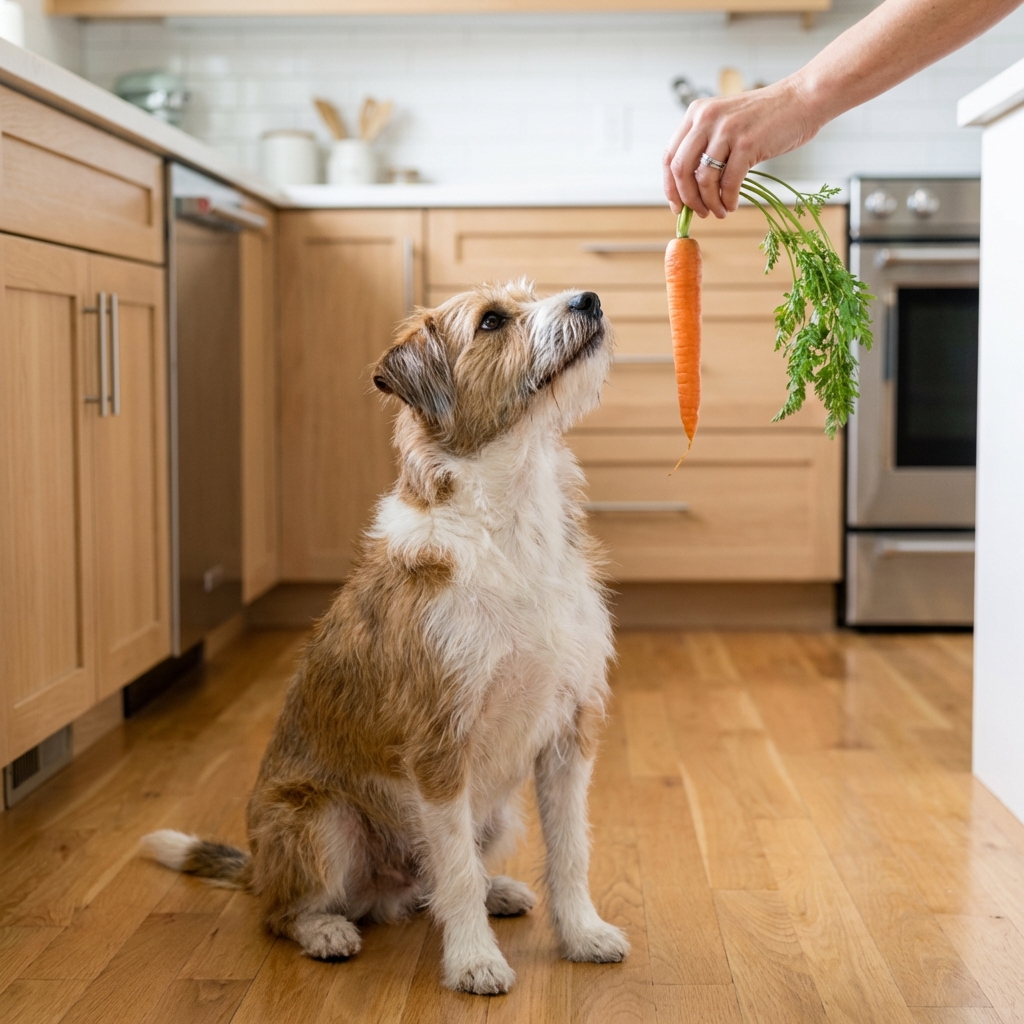
Carrots are a non-toxic vegetable for dogs and they provide nutrients that support everyday wellness. They also give many dogs that satisfying crunch they crave, which can help redirect chewing to something healthier.
- Low calorie treat option: Compared with many commercial treats, carrots are typically lower in calories, which is helpful for dogs who need weight management.
- Fiber for digestive support: The fiber in carrots can help with stool quality. Some dogs do better with a little added fiber, especially if their diet is otherwise low in plant matter.
- Beta-carotene and vitamin A support: Carrots contain beta-carotene, which the body can convert to vitamin A. Vitamin A plays a role in vision, immune function, and skin health.
- Hydration and satiety: Carrots have a high water content, so they can help your dog feel satisfied without a lot of calories.
- Chewing enrichment: Crunchy foods can provide gentle mental enrichment. Just remember that carrots are not a substitute for dental care.
Evidence-based note: Vegetables can be a healthy part of a balanced canine diet. What matters most is keeping treats, including veggies, to a modest portion so your dog’s main diet stays complete and balanced.
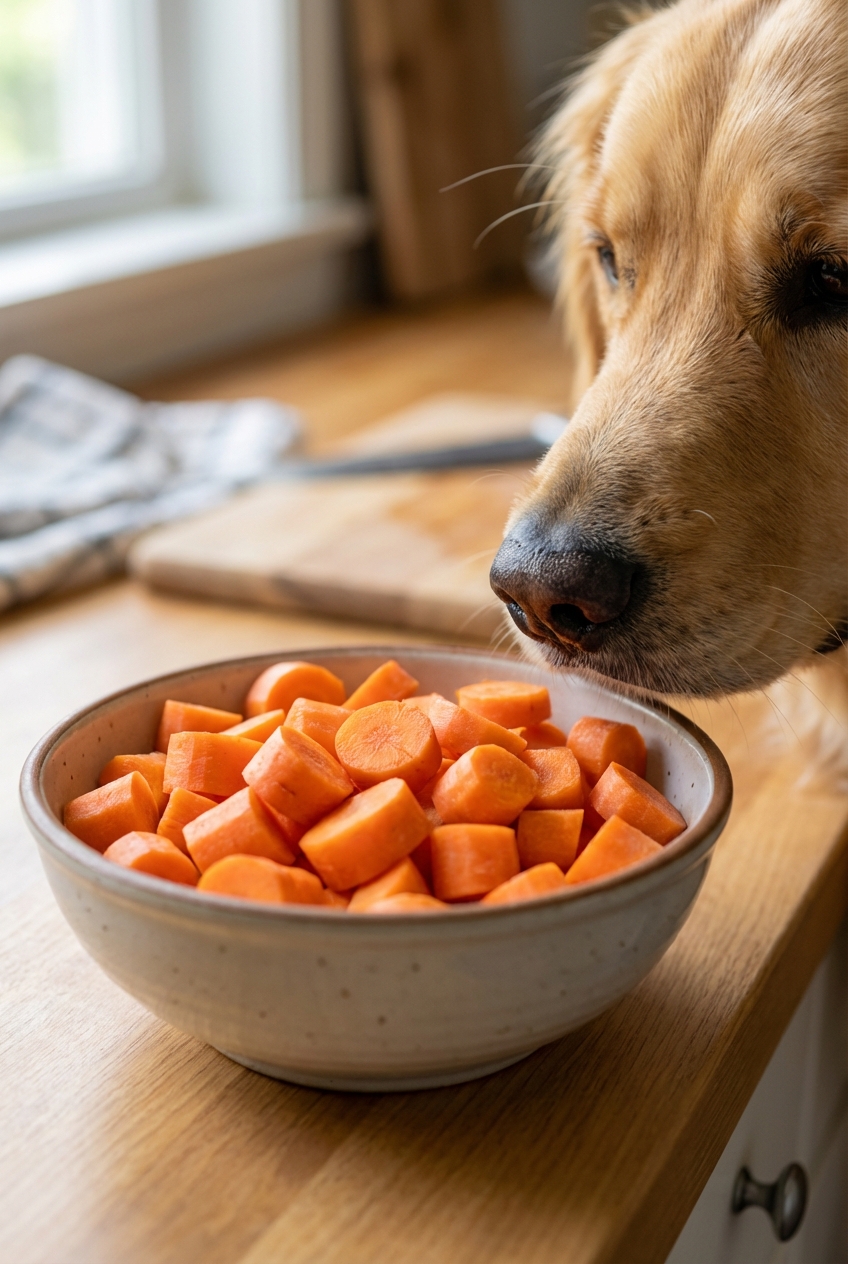
Daily limits: how much is too much?
The biggest “risk” with carrots is not toxicity. It is overfeeding. Too many carrots can add extra calories and extra fiber, which may trigger gas, loose stools, or constipation in some dogs.
Simple portion guide
- Tiny dogs (under 10 lb): 1 to 3 thin slices or 1 baby carrot cut into small pieces
- Small dogs (10 to 25 lb): a few slices to 1 small carrot
- Medium dogs (25 to 60 lb): 1 small to 1 medium carrot
- Large dogs (over 60 lb): 1 medium to 1 large carrot
These are general ranges and should be counted within your dog’s total treats for the day. Multiple treat types add up quickly. A very active dog may tolerate more treats than a low-activity dog. If your dog is gaining weight, the carrot portion is still “too much” even if it seems healthy.
The 10 percent treat rule
A good everyday guideline is to keep treats at 10 percent or less of your dog’s daily calories. Carrots can fit beautifully inside that limit, especially when you use them to replace higher-calorie snacks.
Calorie anchor: A raw carrot is about 40 calories per 100 grams. One baby carrot is often around 4 to 5 calories (size varies), which is why carrots can be a handy swap for higher-calorie treats.
Raw vs cooked: which is better?
Both raw and cooked carrots can be healthy. The best choice depends on your dog.
- Raw carrots: Crunchy and great for enrichment. They can be harder to chew, so they are best for dogs who chew well and do not gulp.
- Cooked carrots: Softer and may be easier to chew and digest for some dogs. Light steaming can be a good option for seniors, dogs with dental disease, or dogs with sensitive digestion.
Tip: If your dog is new to vegetables, start with a small amount of lightly steamed carrot and see how stools look over the next 24 to 48 hours.
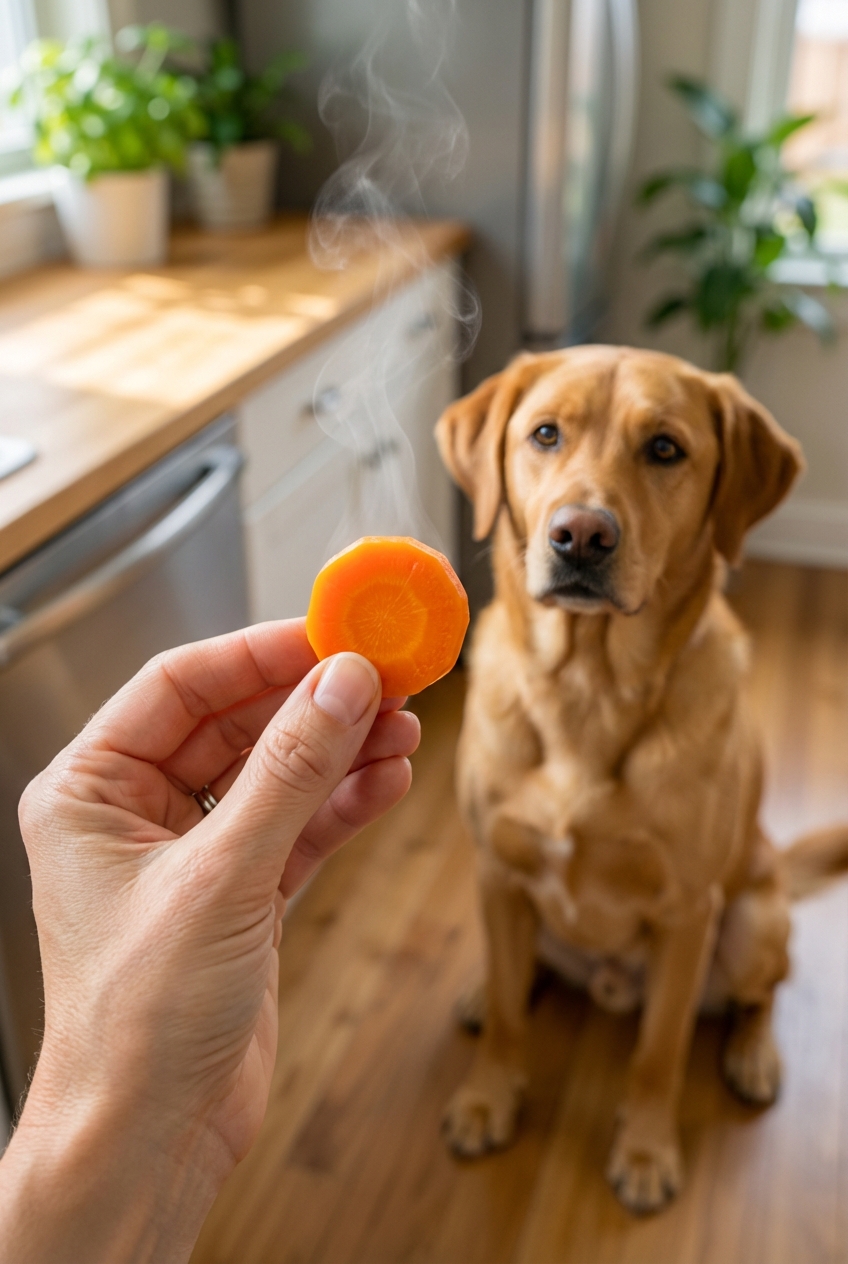
Serve carrots safely
Carrots are easy, but preparation matters. The main safety concern is choking, especially with baby carrots, thick chunks, or dogs who gulp.
- Cut to match your dog’s chewing style: Slice coins into halves or quarters for small dogs, and chop into bite-size pieces for dogs who tend to swallow quickly.
- Supervise crunchy treats: If your dog tries to swallow big pieces, offer grated carrot mixed into food or lightly steamed carrot instead.
- Try frozen carrot sticks for teething puppies: Frozen carrots can soothe gums, but always supervise.
- Skip dips and seasonings: No ranch, salt, butter, garlic powder, onion powder, or spicy seasonings.
- Avoid canned or pre-seasoned carrots: Choose fresh or frozen plain carrots. Canned carrots may have added sodium or sugar.
- Wash well: Rinse thoroughly to remove dirt and reduce pesticide residue.
- Introduce slowly: Start small, especially for dogs prone to soft stool.
Extra safety tip: Avoid offering whole large carrots to dogs that crack and swallow big chunks. Discard small leftover “end pieces” that could be gulped.
When carrots might not be ideal
Carrots are safe for many dogs, but daily treats are not ideal for every situation. Check with your veterinarian if your dog has a medical condition or is on a prescription diet.
- Diabetes or weight loss plans: Carrots are lower in calories than many treats, but they still contain natural sugars and calories. Portions may need to be smaller and more consistent.
- History of pancreatitis: Carrots are low fat, which is good, but treat changes should still be approved by your veterinarian.
- GI sensitivity: Some dogs react to increased fiber with gas or loose stool. Back down to a smaller amount or serve cooked.
- Urinary stone history: Diet recommendations depend on the type of stone and your dog’s full plan. Carrots are not a typical top trigger, but if your dog is on a stone-prevention diet, follow that plan and ask your vet before adding daily treats.
- Choking risk: Brachycephalic dogs, seniors with dental disease, and dogs who gulp should have carrots chopped small or cooked soft.
Call your vet promptly if you see repeated vomiting, diarrhea lasting more than a day, signs of abdominal pain, or choking or coughing after eating a carrot.
Quick questions
Do carrots clean teeth?
Crunchy foods can help scrape some surface debris, but carrots do not replace brushing, dental chews approved by your vet, or professional cleanings. Think of carrots as enrichment, not dentistry.
Can puppies have carrots daily?
Many puppies can, but keep pieces very small, supervise closely, and avoid letting carrots displace a balanced puppy food. Growing dogs need precise nutrition.
Are baby carrots safe?
They can be, but they can pose a choking risk because of their firm, smooth, rounded shape. I recommend slicing them lengthwise and then chopping into small pieces, especially for small dogs or dogs that gulp.
What about carrot tops?
Carrot greens are generally non-toxic, but they can upset some dogs’ stomachs. If you offer them, wash well and keep the amount small.
Bottom line
Carrots can be a healthy daily treat for many dogs, offering crunch, fiber, and helpful nutrients. Keep portions modest, serve them in a safe size, and let your dog’s stool, weight, and energy guide you. If you are ever unsure because your dog has a medical condition, your veterinarian is your best partner for tailoring the right treat routine.