A vet assistant’s guide to adding vegetables safely: best veggies for dogs, how much to feed using the 10% calorie rule, easy prep ideas, and produce to av...
Article
•
Designer Mixes
Can Dogs Eat Bell Peppers? Red vs Green Safety

Shari Shidate
Designer Mixes contributor
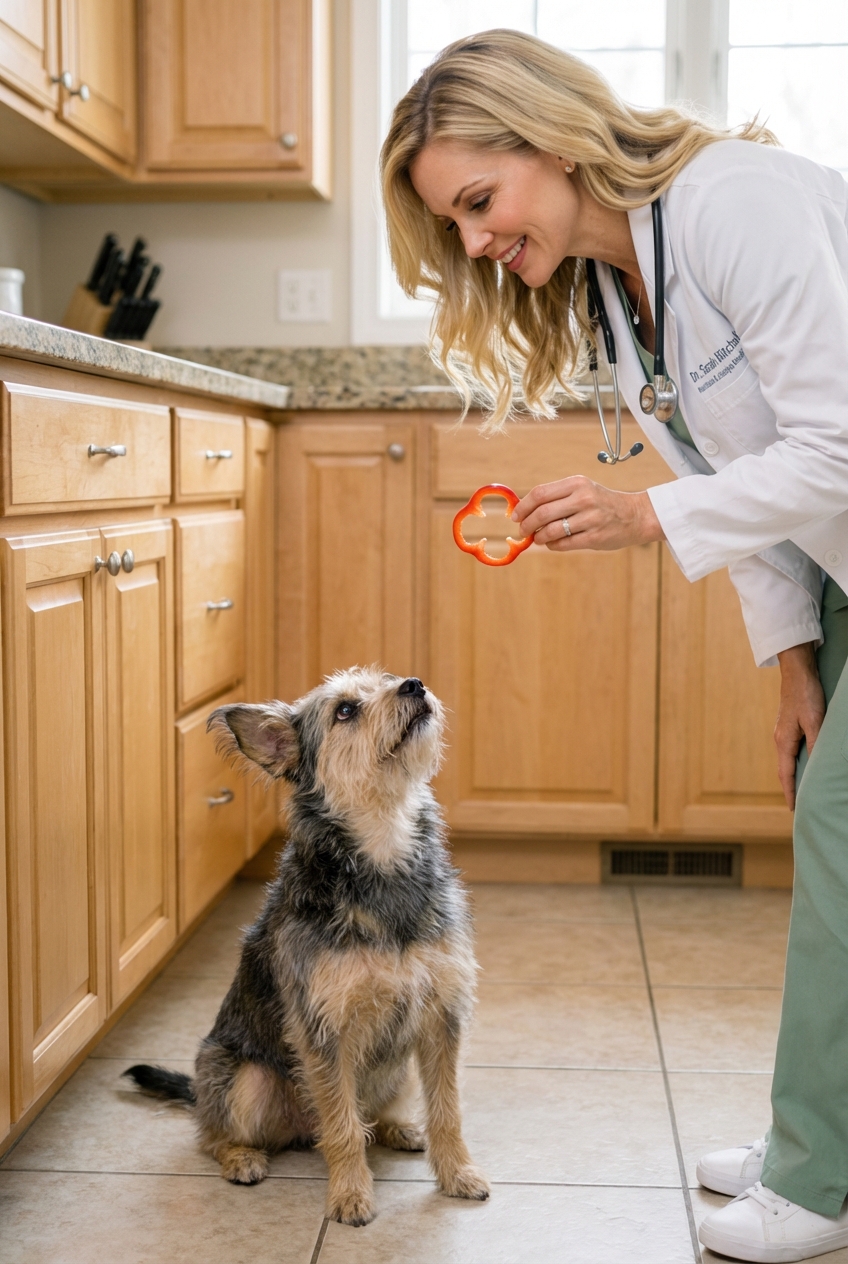
Yes, most dogs can eat bell peppers in moderation, and they can be a fun, crunchy way to add extra nutrients to your dog’s bowl. The big question I hear as a veterinary assistant is: Is red better than green? And are there any safety risks? Let’s break it down in a clear, practical way.
Red vs green: what’s different?
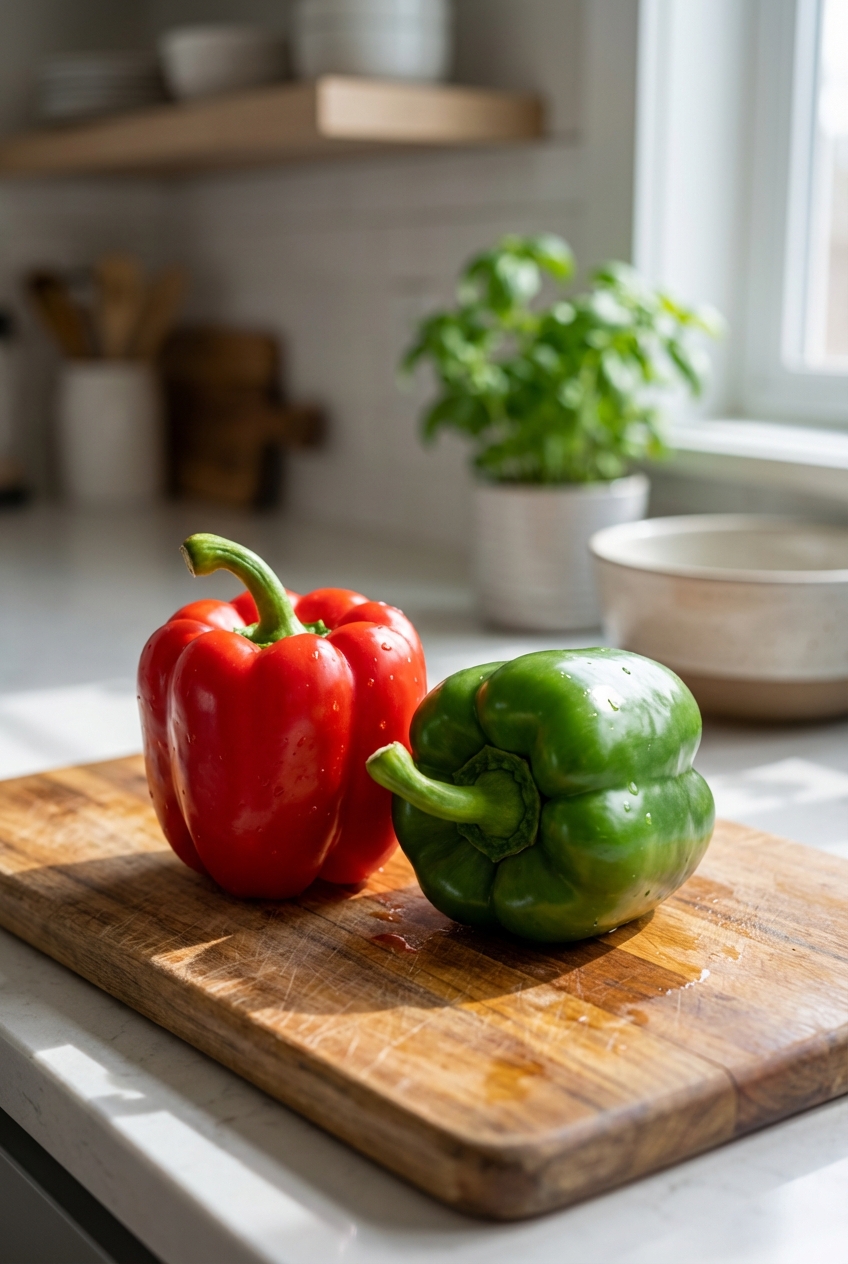
All bell peppers (red, green, yellow, orange) come from the same plant. The color mainly reflects ripeness:
- Green bell peppers are typically harvested earlier (less ripe). They tend to taste more bitter and have a firmer texture.
- Red bell peppers are more fully ripened. They’re usually sweeter and often have higher levels of certain antioxidants, including carotenoids like beta-carotene.
Bottom line: both red and green bell peppers are considered safe for most dogs when prepared correctly. If your dog has a sensitive stomach or is picky, red is often the easier sell, but individual tolerance varies.
Benefits for dogs
Bell peppers are mostly water with some fiber, which can make them a lighter snack option compared to many commercial treats. They also provide helpful nutrients.
- Vitamin C: dogs make their own vitamin C, so it’s usually unnecessary for healthy dogs, but small amounts from food may still offer antioxidant support.
- Vitamin A precursors (beta-carotene): supports skin, eyes, and immune health.
- Vitamin B6 and folate: involved in normal metabolism and cell function.
- Fiber: may support healthy digestion when given in small amounts.
That said, bell peppers are a bonus food, not a complete nutrition strategy. Your dog still needs a balanced diet built on quality protein, essential fats, and the right vitamins and minerals.
Are they safe for all dogs?
For most healthy adult dogs, bell peppers are safe. Dogs who may need extra caution include:
- Dogs with sensitive stomachs or a history of vomiting or diarrhea after new foods
- Dogs with pancreatitis or frequent GI flare-ups (peppers are low fat, but any new add-in or diet change can trigger symptoms in some dogs, and rich or seasoned preparations are the bigger concern)
- Dogs on prescription diets where extras could unbalance the plan
If your dog is medically complicated, it’s always worth checking with your veterinarian before adding new people foods, even “healthy” ones.
How to serve safely
Most bell pepper problems come from how they’re served, not the pepper itself. Here are the safest prep steps:
- Wash well to remove dirt and pesticide residue.
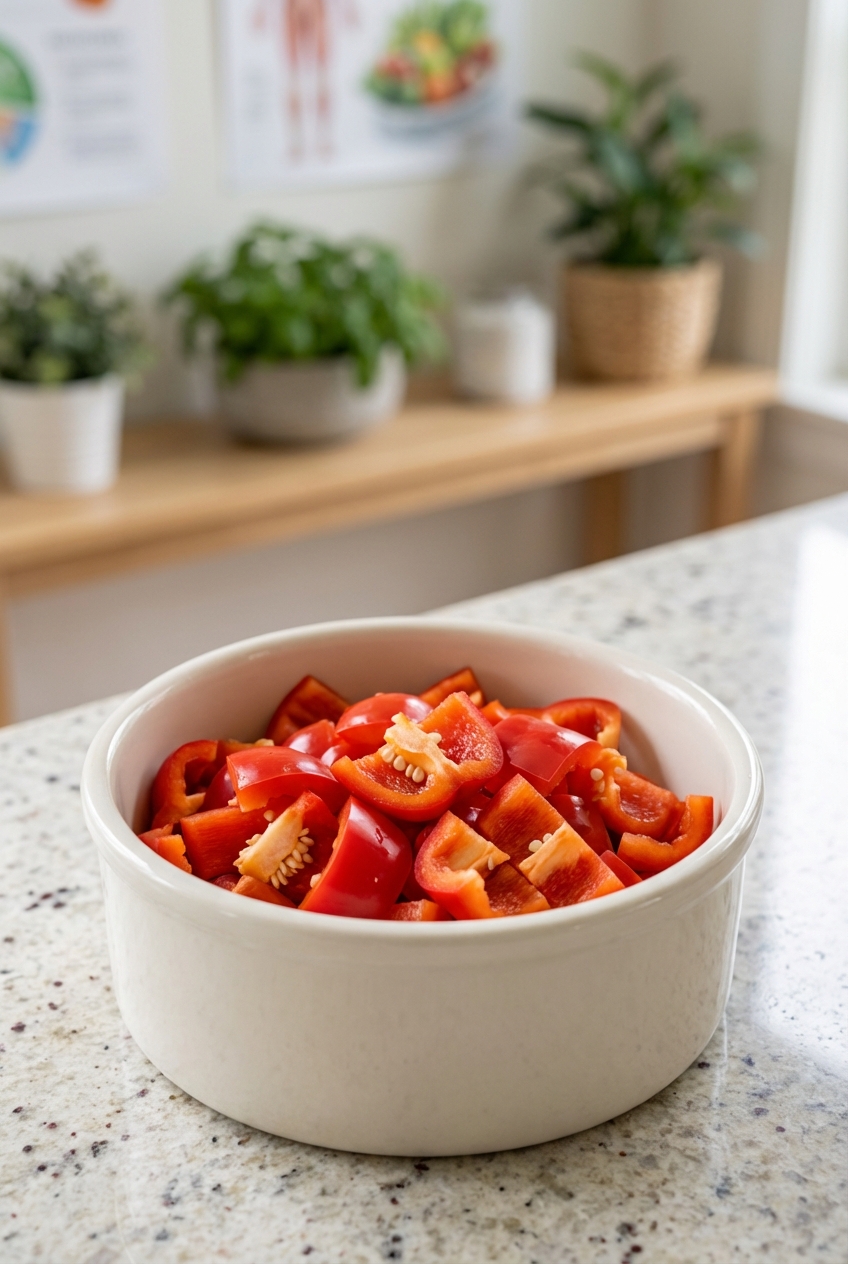
- Remove the stem and cut into bite-sized pieces appropriate for your dog’s size.
- Seeds: not considered toxic, but they can be irritating for some dogs and may be a choking risk, especially for small dogs. When in doubt, remove them.
- White inner ribs: not dangerous, but they’re tougher and more bitter. Removing them can improve palatability and may be easier on some dogs to chew.
- Start small, especially if your dog is new to vegetables.
Raw vs cooked
- Raw: crunchy and fun, but some dogs digest raw veggies poorly and any crunchy snack can be a choking risk if it’s not cut appropriately.
- Cooked (plain): steaming or microwaving until soft (no oil, butter, salt) can make peppers easier to digest. For some dogs, cooking also softens the skin, which they may otherwise spit out.
For tiny dogs, seniors, or dogs that gulp food: consider finely chopping, mashing, or pureeing a small amount and mixing it into their meal.
How much can a dog eat?
Keep treats and add-ins, including bell peppers, to 10% or less of your dog’s daily calories. In practical terms, bell peppers are best as a small topper or snack.
- Tiny dogs (under 10 lb): 1 to 2 small pieces, or about 1 teaspoon chopped
- Small to medium dogs (10 to 50 lb): 1 to 2 tablespoons chopped
- Large dogs (over 50 lb): 2 to 4 tablespoons chopped
Watch your dog’s stool over the next 24 hours. If you see loose stool or extra gassiness, reduce the amount or switch to cooked.
When to avoid bell peppers
Bell peppers themselves are not on the common toxic list for dogs, but there are a few important “no” situations:
- Seasoned peppers: avoid peppers cooked with onion, garlic, chives, or heavy spices. Onion and garlic are especially risky for dogs.
- Stuffed peppers: often contain ingredients like onions, high-fat meats, or salty cheeses.
- Spicy peppers are different: jalapeños, serranos, and other hot peppers can cause mouth irritation and GI upset. Stick with sweet bell peppers.
- Processed pepper products: skip jarred roasted peppers (often packed with salt, vinegar, or oil), pepper mixes, and anything marinated or stored in oil.
Signs your dog may not tolerate them
- Vomiting
- Diarrhea
- Excessive gas
- Drooling or pawing at the mouth (more likely with spicy foods or irritation)
When to call the vet now
- Repeated vomiting or diarrhea
- Blood in vomit or stool
- Marked lethargy, weakness, or signs of pain
- Swollen face, hives, or trouble breathing
- Possible choking, gagging that won’t stop, or trouble swallowing
If symptoms are mild, stop the peppers and offer a bland diet as advised by your vet. If you’re unsure, it’s always safer to call and check in.
Easy ways to add them
If you want to keep it simple, here are a few dog-friendly ideas:
- Crunchy snack: a couple of raw red pepper pieces after a walk
- Gentle topper: lightly steamed or microwaved peppers mixed into your dog’s meal
- Training treat alternative: tiny pepper cubes for dogs who love veggies
My favorite approach is to treat bell peppers like a nutrient boost, not a main dish. Rotate with other dog-safe vegetables like carrots, green beans, zucchini, or a little pumpkin so your dog gets variety.
Quick takeaway
- Yes, dogs can eat bell peppers.
- Red and green are both safe, but red is often sweeter and may offer more antioxidants.
- Serve plain, cut small, and start with tiny amounts. Seeds and ribs are optional to remove, but can help with chewing and tolerance.
- Avoid spicy, seasoned, or processed peppers, and skip recipes with onion or garlic.