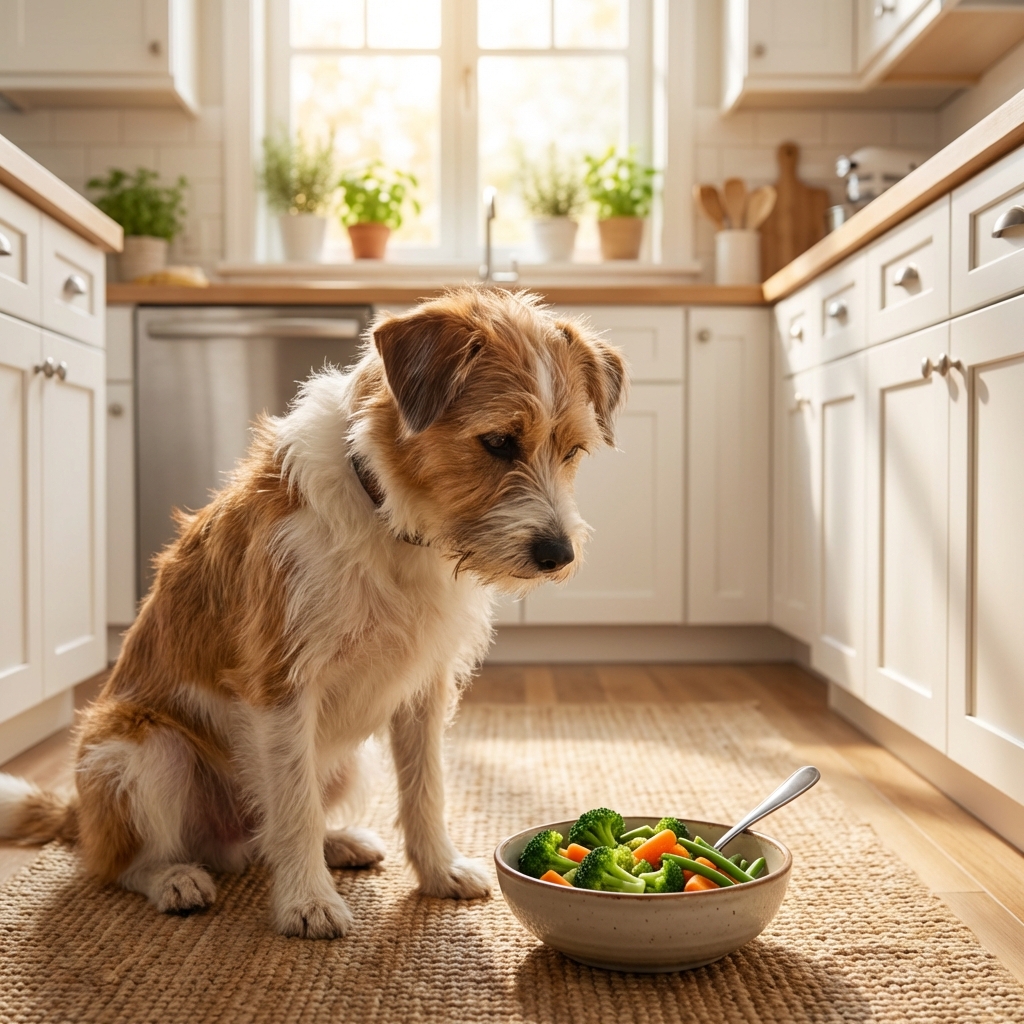
Broccoli is generally safe for dogs in small, plain portions. Get a practical portion guide by size, raw vs cooked tips, and warnings for GI upset, choking, ...
Article
•
Designer Mixes
Can Dogs Eat Asparagus?

Shari Shidate
Designer Mixes contributor
Yes, most dogs can eat asparagus in small amounts, as long as it is prepared safely. As a veterinary assistant here in Frisco, Texas, I like asparagus because it is a simple, real-food veggie you can add to a balanced diet. The key is how you serve it and how much you give. Tough, raw stalks and seasoned asparagus are where dogs tend to get into trouble.
Is asparagus safe for dogs?
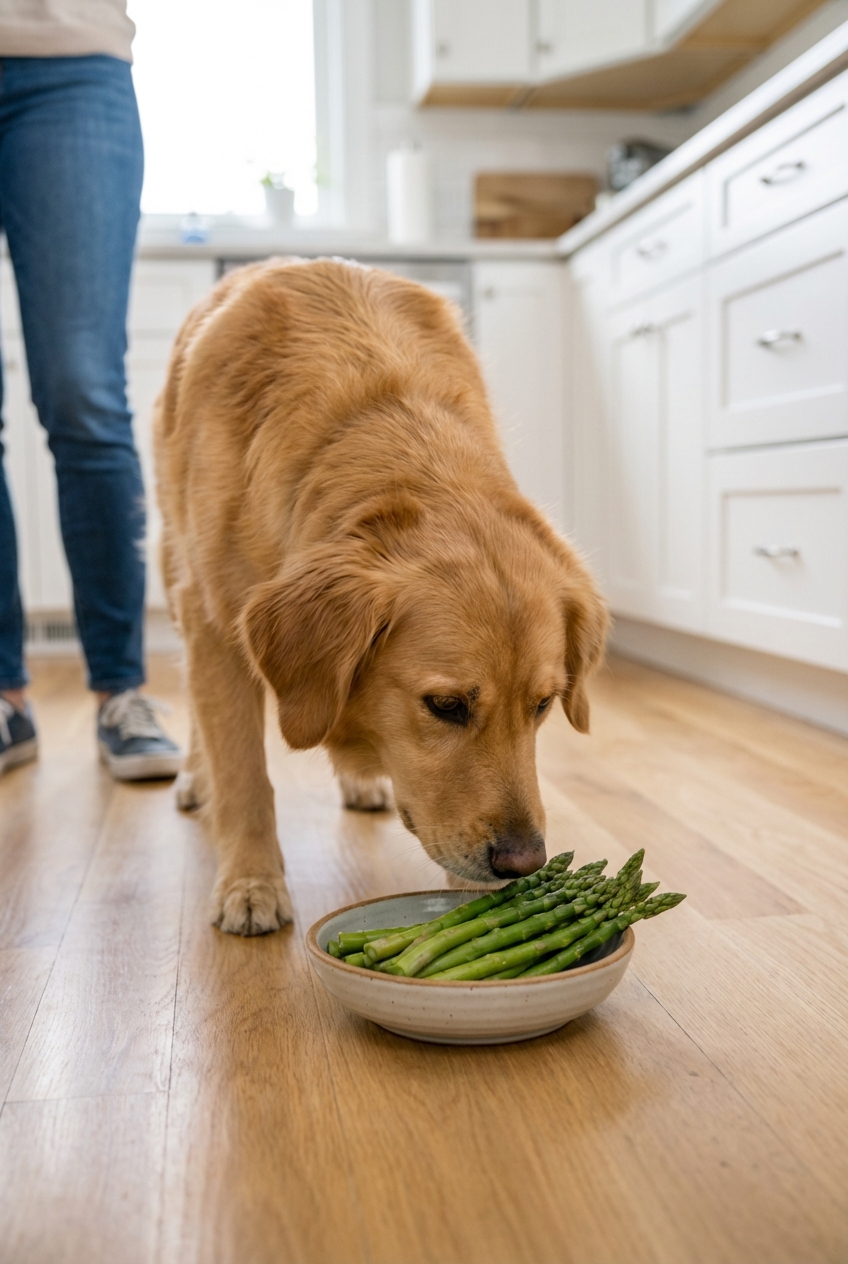
Plain asparagus is generally safe for healthy dogs. Cooking it makes it softer and easier to chew and digest, which helps reduce the most common issues: choking, gagging, and stomach upset.
That said, “safe” does not mean “free-for-all.” Dogs do not need asparagus nutritionally the way they need a complete and balanced diet, so think of it as an optional add-on, not a main ingredient.
Benefits: what it can add
Asparagus contains:
- Fiber to support normal digestion and stool quality
- Vitamin K which plays a role in normal blood clotting
- Folate and vitamins A, C, and E which support cells and immune function
- Antioxidants that help protect tissues from oxidative stress
Practical note: in the small treat amounts most dogs get, the health benefits are modest. The biggest “benefit” I see for many families is that asparagus can replace higher-calorie treats. A few soft pieces can be a satisfying topper without adding much extra energy.
How to prepare asparagus
Best cooking methods
Choose cooking methods that make asparagus soft and easy to chew:
- Steamed until tender
- Boiled until soft
- Roasted or baked with no oil, salt, garlic, onion, or seasoning
Trim the woody ends
The tough, fibrous base of the spear is the part most likely to cause gagging or to pass through only partially digested. Snap or cut off the woody ends and focus on the tender tips and upper stalk.
Cut it small
Even cooked asparagus can be stringy. Cut it into small pieces, especially for small dogs, seniors, and dogs that gulp their food. This lowers choking risk and makes digestion easier.
Serve it plain
Skip common add-ons that can upset a dog’s stomach or be toxic:
- No garlic or onion (including powders)
- No butter, heavy oils, or creamy sauces
- No salt, pepper, or spicy seasonings
- No bacon grease
Raw asparagus?
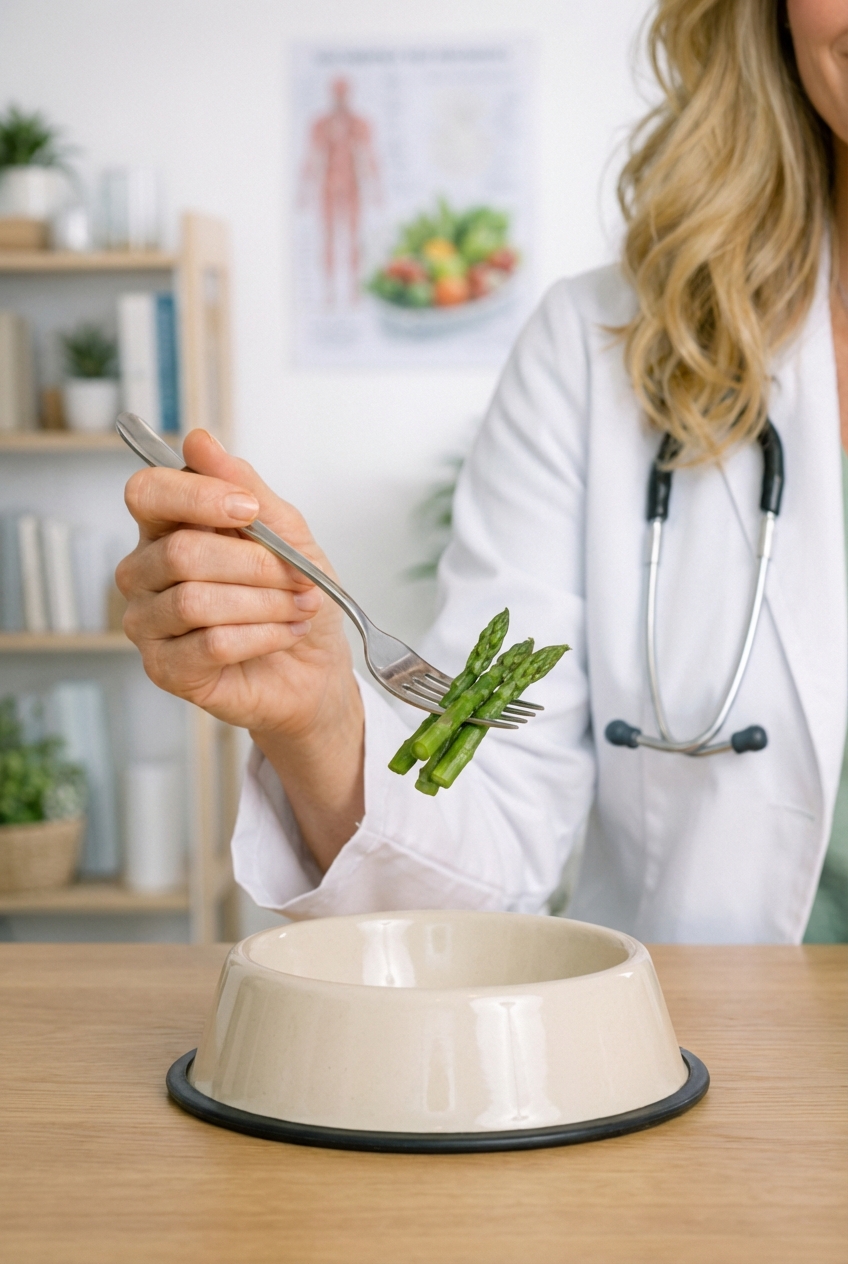
Raw asparagus is not known to be toxic, but it is often too tough and fibrous for dogs. It can lead to vomiting, gas, or diarrhea, and firm stalks are easier to choke on. If you want to share asparagus, cook it first and cut it into small pieces.
Canned or pickled asparagus?
Avoid it. These are often high in sodium and may include seasonings or additives that do not agree with dogs.
How much can dogs have?
Think of asparagus as a treat or topper. Treats and extras, including veggies, should stay around 10% or less of your dog’s daily calories to avoid unbalancing the diet.
Simple serving guidelines
- Small dogs (under 20 lb): 1 to 2 teaspoons of cooked, chopped asparagus
- Medium dogs (20 to 50 lb): 1 to 2 tablespoons
- Large dogs (over 50 lb): 2 to 4 tablespoons
Start with half of the amount above the first time, especially if your dog has a sensitive stomach. If stools stay normal, you can offer it a few times a week.
When it is not a good idea
Skip asparagus or ask your veterinarian first if your dog has any of these issues:
- History of pancreatitis (avoid any asparagus prepared with fats like butter or oils)
- Chronic GI disease or frequent diarrhea
- Food allergies or you are currently doing a strict elimination diet
- Kidney disease or a medically prescribed diet, where extra foods can interfere with a carefully managed plan
Also, if your dog tends to swallow long foods whole, asparagus spears are a poor choice. Chop it well or choose a softer veggie option. For many dogs, the biggest risk with asparagus is still the physical texture, not the vegetable itself.
Side effects and what is normal
Gas and softer stools
The most common side effects are gas, gurgly stomach, or loose stool, especially if your dog eats too much or is new to vegetables.
Urine odor changes
Some owners report a stronger urine odor after asparagus. If your dog is otherwise acting normal, it is often harmless. However, if odor changes persist or you see straining, frequent urination, accidents, or blood in the urine, contact your veterinarian since those signs can point to a urinary issue.
When to call your vet
Contact your veterinarian if you see:
- Repeated vomiting or diarrhea
- Blood in stool
- Abdominal pain, hunched posture, or refusal to eat
- Signs of choking or trouble swallowing
If they ate seasoned asparagus
If your dog grabbed asparagus cooked with butter, oil, or rich sauce, expect possible stomach upset and keep an eye out for vomiting or diarrhea.
If it was cooked with garlic or onion (or powders), call your veterinarian or a pet poison helpline promptly for guidance, even if your dog seems fine. Also reach out urgently if your dog ate a large amount, is a small dog, or is showing weakness, repeated vomiting, pale gums, or acting “off.”
Puppies and seniors
Puppies: Their digestive systems are still developing, so keep portions tiny and introduce one new food at a time. Cook it soft, trim woody ends, and chop it fine.
Seniors: Many older dogs do best with softer textures. Steamed asparagus tips chopped into very small pieces are the gentlest option.
Easy ways to serve it
- Food topper: Mix 1 to 2 tablespoons of chopped steamed asparagus into your dog’s regular meal.
- Training treat: Use tiny, soft pieces instead of calorie-dense treats.
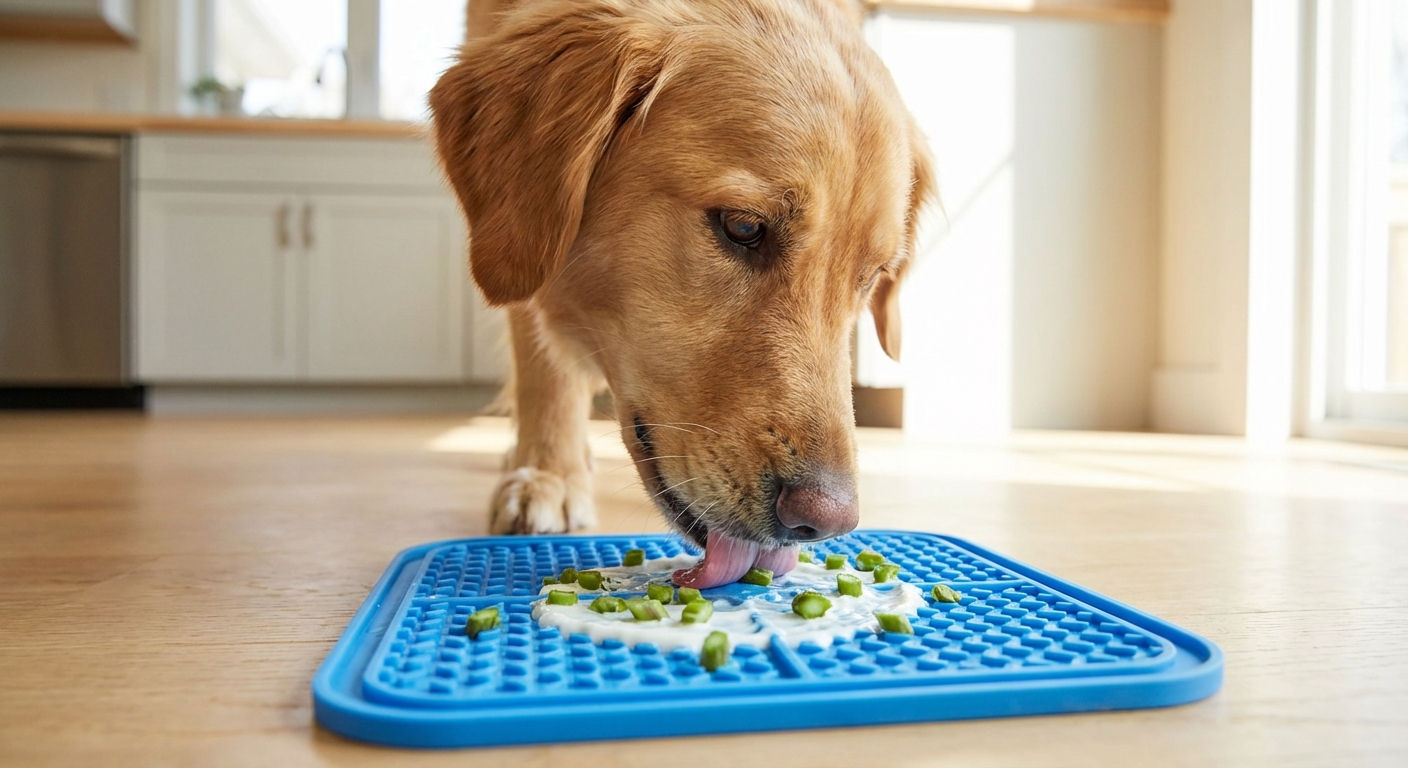
- Frozen enrichment: Stir a small amount into plain pumpkin or plain yogurt, then freeze in a lick mat.
Quick checklist
- Cooked until tender
- Woody ends trimmed off
- Chopped into bite-sized pieces
- Plain, with no garlic, onion, butter, or seasonings
- Small portions, offered occasionally
- Stop if you notice digestive upset
If you are building a more homemade-style routine, veggies like asparagus can be a nice add-on. Just remember, the foundation should always be a complete and balanced diet that fits your dog’s age, size, and health needs.