A vet assistant’s guide to safe fruit treats for dogs: 20 dog-friendly fruits, simple prep rules (no pits/seeds), portion tips by size, and a quick list of...
Article
•
Designer Mixes
Can Dogs Eat Apples? (Remove Seeds)

Shari Shidate
Designer Mixes contributor
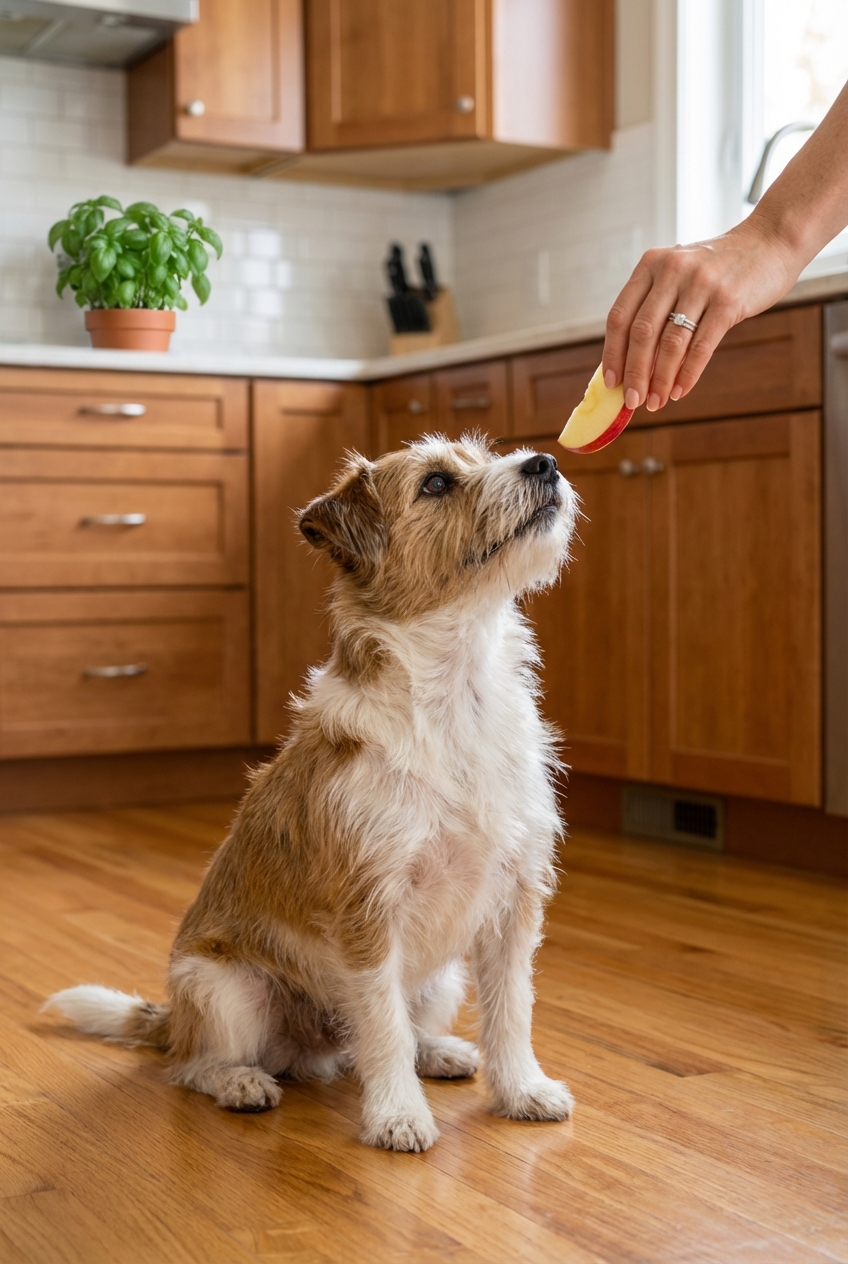
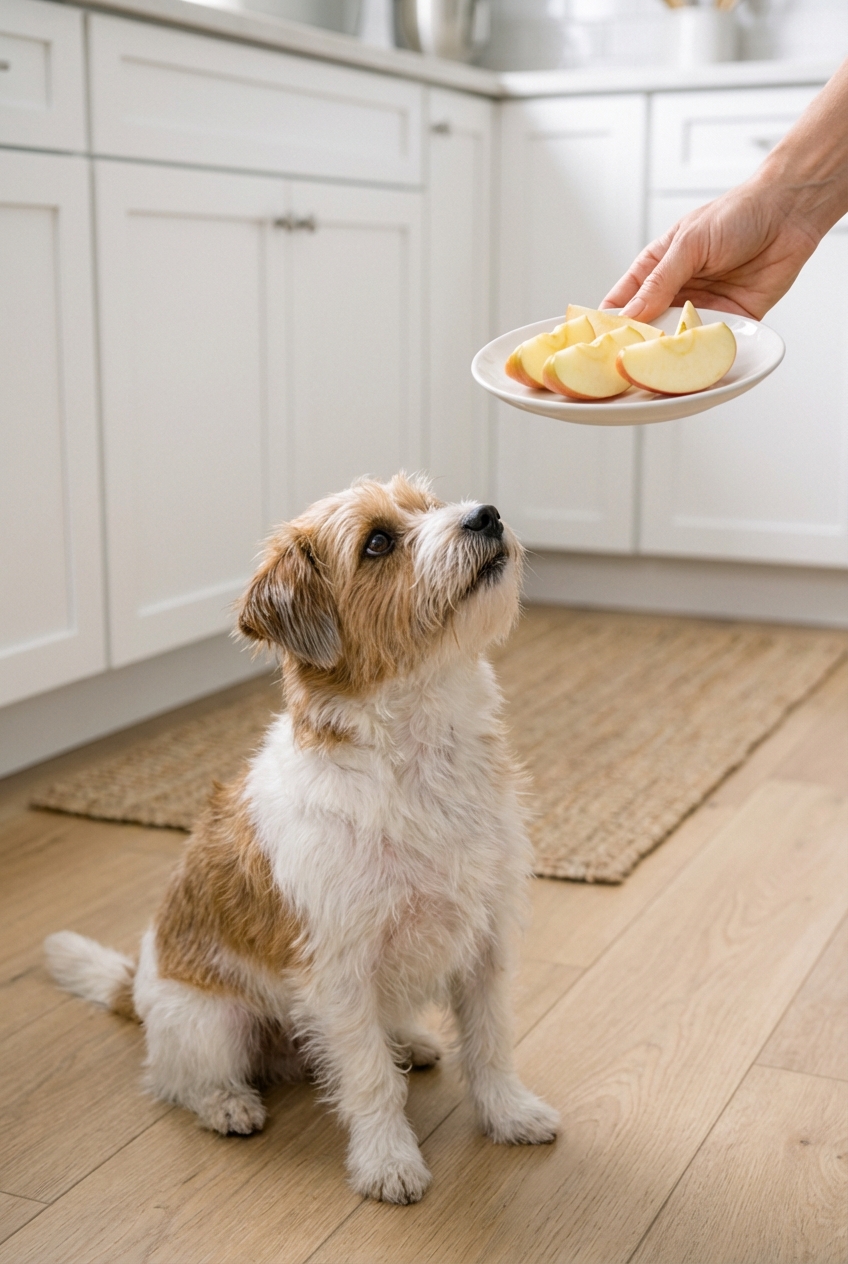
Yes, most dogs can eat apples, and they can be a wonderfully simple, crunchy treat. As a veterinary assistant, I often recommend apples as a “whole food” snack because they are easy to find, easy to portion, and most dogs truly enjoy the taste.
But there is one non-negotiable rule: always remove the core and seeds . Apple seeds contain a compound that can release cyanide when chewed and digested. Toxicity is dose-dependent, and a few seeds are unlikely to cause severe poisoning, but it is not worth the risk. The core can also be a choking hazard or cause a digestive blockage, especially in smaller dogs.
Why apples are a good treat
Apples are not a magic superfood, but they do offer real nutritional benefits when served the right way and in the right amount.
- Hydration and crunch: Apples have high water content, which makes them a refreshing snack.
- Fiber support: The flesh contains fiber that may help support normal digestion for many dogs.
- Vitamins and antioxidants: Apples contain vitamin C and other beneficial plant compounds.
- Lower-calorie treat option: Compared with many processed treats, a few apple slices can be a lighter alternative.
That said, apples are still a treat. They should support a balanced diet, not replace it.
Why seeds and core are risky
Apple seeds and cyanide
Apple seeds contain amygdalin, a naturally occurring compound that can release cyanide when the seed is crushed and digested. Cyanide interferes with the body’s ability to use oxygen properly. This is one reason veterinarians and poison control experts consistently advise against feeding apple seeds.
Most dogs would need to chew and swallow a significant amount of seeds for severe poisoning, but the safest approach is simple: do not allow access to seeds at all. Prevention is easy, treatment is not always easy.
Signs of cyanide poisoning are uncommon from apples, but any sudden trouble breathing, weakness, collapse, or bright red gums should be treated as urgent.
The core is a choking hazard
The apple core can be tough and slippery. Dogs can gulp it down, which increases the risk of:
- Choking, especially in dogs that eat very fast
- Gastrointestinal blockage, especially for small dogs or dogs with sensitive digestion
- Stomach upset if a large piece is swallowed
If your dog steals an apple core, watch closely and contact your veterinarian if you notice vomiting, repeated gagging, lethargy, refusal to eat, abdominal pain, or difficulty passing stool.
How to feed apples safely
Here is the safe, simple routine I recommend for most families.
Step-by-step
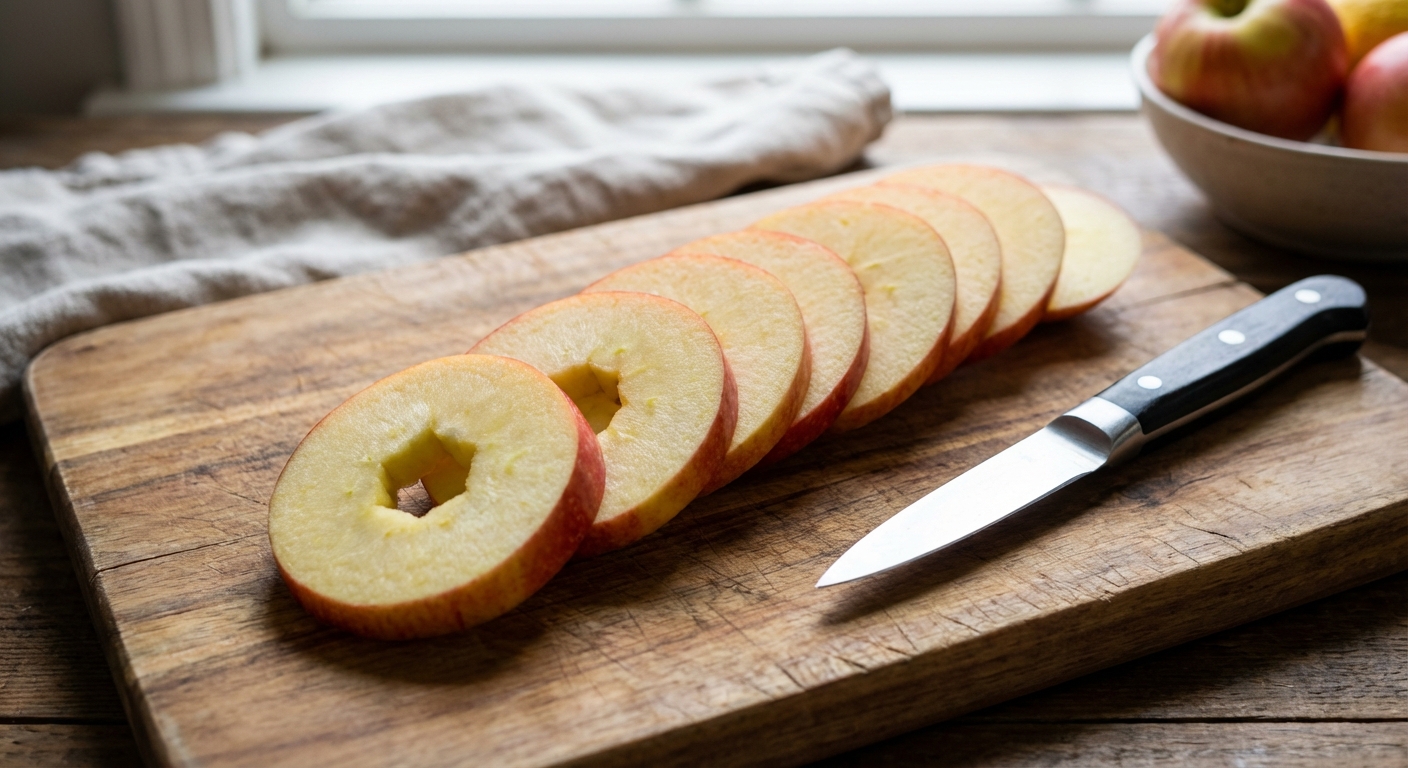
- Wash the apple to help reduce surface dirt, wax, and pesticide residue.
- Remove the core and all seeds before your dog gets any pieces.
- Cut into bite-size pieces based on your dog’s size. For very small dogs, thin slices or small cubes are safer than large chunks.
- Introduce slowly if apples are new to your dog, because too much fiber at once can cause loose stool.
- Supervise especially if your dog tends to gulp treats.
What about the skin?
For many dogs, apple skin is fine in small amounts and adds fiber. If your dog has a sensitive stomach, peels can sometimes be harder to digest. You can peel the apple and see if your dog does better.
Portion guidance
Every dog is different, but these are reasonable starting points:
- Small dogs: 1 to 2 thin slices or a few small cubes
- Medium dogs: 2 to 4 slices
- Large dogs: a small handful of slices
A good rule of thumb is to keep treats (including fruit) to about 10% or less of daily calories. Sweeter apple varieties can add up faster, so consider apples part of your dog’s overall treat budget. If your dog is overweight, has diabetes, or is on a prescription diet, ask your veterinarian what portion fits your plan.
Puppies and senior dogs
Puppies usually do best with tiny amounts at first since new foods can trigger diarrhea. Senior dogs or dogs with dental disease may prefer very thin slices (or peeled slices) to make chewing easier.
Easy apple ideas
If your dog likes variety, apples are easy to serve in fun ways without making them “too fancy.”
- Chilled apple slices straight from the refrigerator for a refreshing crunch.
- Frozen apple slices for a longer-lasting snack (great for some dogs, but always supervise).
- Apple with plain yogurt as an occasional topper for dogs that tolerate dairy. Choose unsweetened yogurt and check the label to avoid added sugars and any artificial sweeteners.
- Apple in a treat puzzle for enrichment and slower eating.
Avoid sugary coatings and avoid mixing apples with unsafe foods like raisins or xylitol-sweetened peanut butter.
When apples are not a good choice
Even healthy foods are not ideal for every dog. Apples may not be the best option if your dog:
- Has diabetes or needs tightly controlled carbohydrate intake
- Has a history of pancreatitis and is on a very strict diet (apples are low fat, but treats still add up)
- Gets diarrhea easily with new foods
- Has dental disease and struggles with crunchy foods
If you are unsure, start with a tiny piece and check stool quality over the next 24 hours, or ask your vet team. A quick phone call can prevent a long night of stomach upset.
Apple products to avoid
Whole, fresh apple slices are the safest. Be careful with these common apple products:
- Apple pie, apple crisp, pastries: too much sugar and fat, and sometimes ingredients that do not agree with dogs.
- Apple juice: high sugar with very little fiber.
- Applesauce: only use plain, unsweetened applesauce in small amounts. Many versions contain added sugar.
- Dried apples: more concentrated sugar and easy to overfeed.
Also, keep dogs away from rotting apples on the ground. Fermented fruit can cause serious stomach upset and can expose dogs to ethanol (alcohol).
Quick safety checklist
- Yes, dogs can eat apples in moderation.
- Remove seeds and core every time.
- Cut small enough to prevent choking, especially for small dogs.
- Start small to avoid digestive upset.
- Skip sugary apple products and juice.
- Call your veterinarian if your dog swallowed a core or shows concerning symptoms.
If you want a simple next step, wash an apple, slice it, remove the core, and offer one small piece. Watch how your dog does, and build from there. Small, consistent improvements add up to better health over time.