An easy, vet-informed guide to sharing food safely with your cat: what’s OK in tiny amounts, what to avoid (onion, garlic, grapes, chocolate, xylitol), and...
Article
•
Designer Mixes
Can Cats Taste Sweet Things?

Shari Shidate
Designer Mixes contributor
If you have ever offered your cat a tiny lick of ice cream (and then wondered why they looked unimpressed), you are not imagining it. Most cats do not experience “sweet” the way we do. And the reason is one of my favorite little pieces of pet science because it is simple, surprising, and it explains a lot of everyday cat behavior.
Let’s talk about what’s going on in your cat’s mouth, what they can taste instead, and how to use that knowledge to make smarter choices for treats, food, and training.
The short answer: cats can’t really taste sweet
In general, cats do not taste sweetness the way humans do because they are missing a key part of the sweet taste receptor. Humans (and many other animals) detect sweet flavors using a receptor made from two parts: T1R2 and T1R3 (often written as TAS1R2 and TAS1R3). In domestic cats, the TAS1R2 (T1R2) gene is nonfunctional, while T1R3 is present. Without a working pair, the receptor does not respond to sugars the way ours does.
That means sugary foods generally do not activate sweet taste receptors for cats the same way they do for us. Your cat may still lick or nibble a sweet item, but if they do, it is usually because of fat, texture, temperature, or smell, not because it tastes like dessert to them.
Why would cats lose the sweet receptor?
Cats are obligate carnivores. Their bodies are designed to get the vast majority of nutrients from animal tissue. Over evolutionary time, a working sweet receptor likely offered little benefit, so that pathway faded out. (This also shows up in some other obligate carnivores, although the details vary by species.)
So what can cats taste?
Cats still have taste buds and they absolutely use taste to make decisions. It is just a different priority list than ours.
- Umami (savory): This is the big one. Umami signals amino acids, which are abundant in meat and fish. Many cats strongly prefer foods rich in umami.
- Bitter: Cats can detect bitter compounds, and bitter often signals “potentially harmful.” This is one reason medications are so hard to give and why flavoring matters.
- Sour: Cats can detect sour, although preference varies. Extremely sour tastes are usually avoided.
- Salty: Cats can detect salt, but their salt preferences and needs differ from ours. Too much sodium is not a good thing, especially for cats with heart or kidney concerns.
One important detail: cats rely heavily on smell. If a cat’s nose is congested, appetite can drop quickly because food becomes far less appealing.
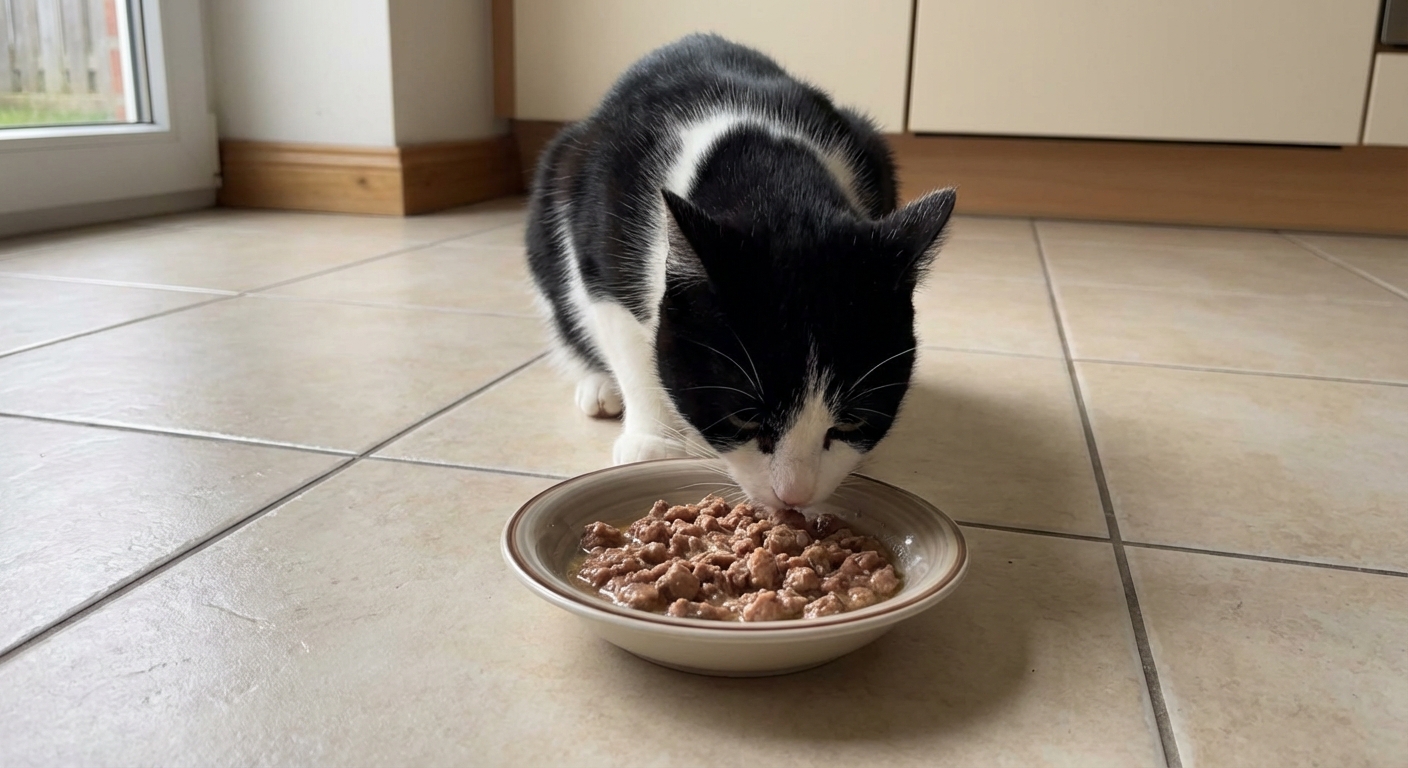
If cats can’t taste sweet, why do some seem to love pastries or ice cream?
I have seen plenty of cats show interest in baked goods or dairy. Usually, it comes down to everything besides sweetness:
- Fat and rich compounds: Many desserts and dairy products are high in fat. Cats may be drawn to certain fatty acids and rich aromas, even if they are not “tasting fat” the way people describe it.
- Texture: Soft, lickable foods can be enticing, especially for cats who prefer pâté textures.
- Temperature: Cold treats can feel interesting and soothing, even without sweet taste.
- Smell: Vanilla, butter, and cooked aromas can attract curious cats.
Also, cats are tiny opportunists. If they learned that approaching you while you eat gets them attention or a taste, that behavior can become a habit fast.
Is sugar bad for cats?
Cats do not have a nutritional requirement for added sugars. And while a small accidental lick is not usually an emergency, regular sugary foods are not a great idea.
Why added sugar can be a problem
- Weight gain: Extra calories add up quickly in cats.
- Diabetes risk: Obesity is a major risk factor for feline diabetes.
- Oral health and mess: Sticky, calorie-dense human snacks can cling around the mouth and teeth and do not do cats any favors for overall oral hygiene. (Feline dental disease is mostly driven by plaque and periodontal factors, but human sweets still are not a helpful “treat.”)
- Upset stomach: Many sweet treats contain ingredients that are simply not cat-friendly.
Extra caution with dairy
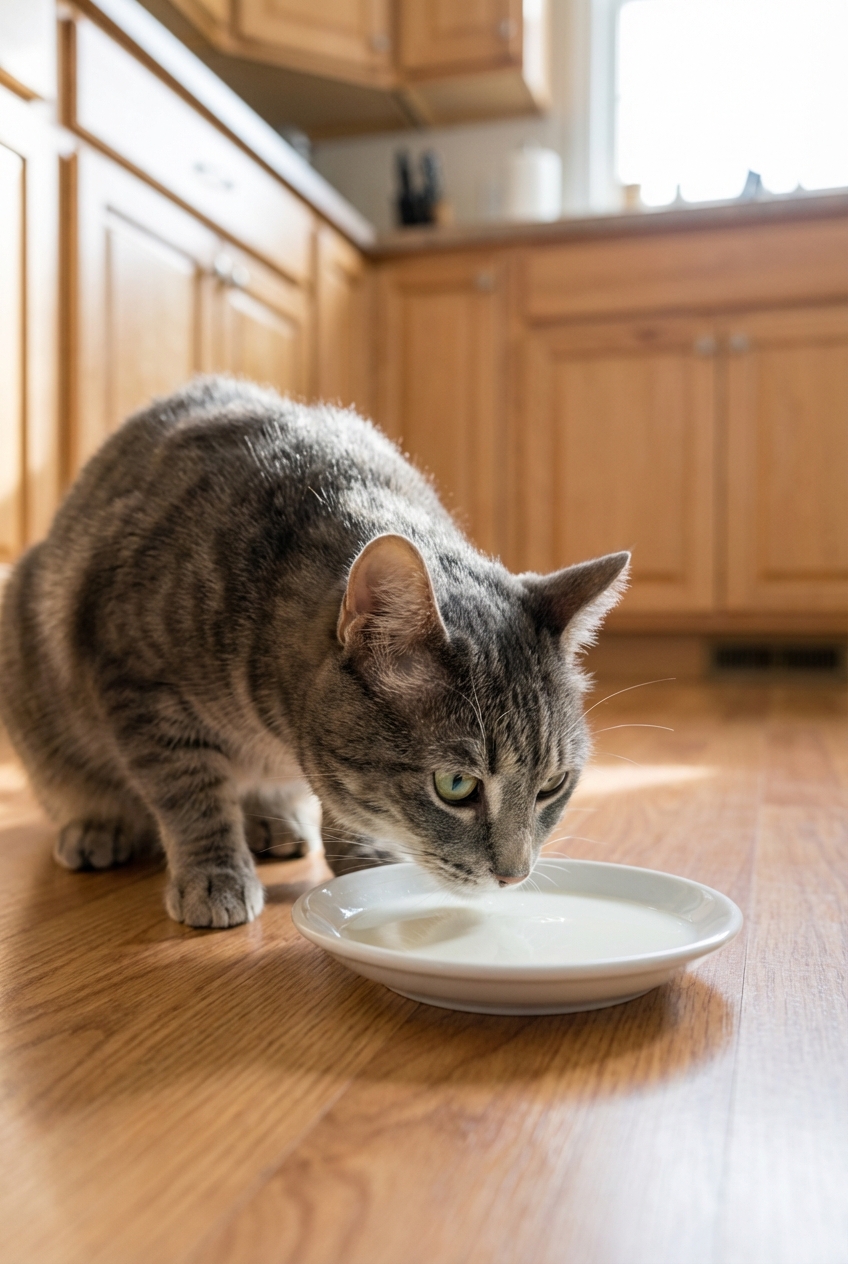
Many adult cats are lactose intolerant to some degree. Milk, ice cream, and whipped cream can cause diarrhea, gas, or vomiting. Even if your cat “likes” it, their gut may disagree.
Sweeteners: what to avoid
Some sweeteners and dessert ingredients are far more dangerous than sugar itself.
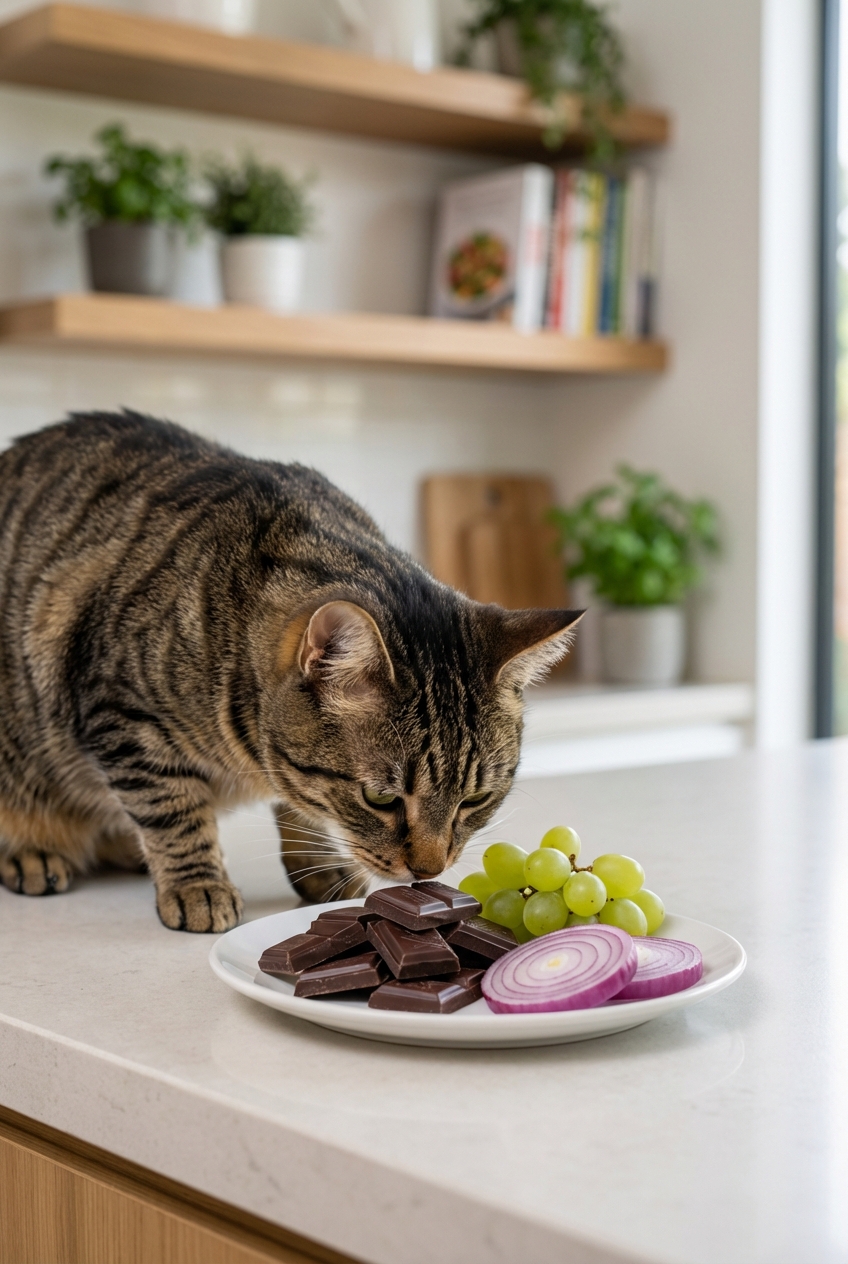
- Xylitol: In dogs, xylitol can cause life-threatening low blood sugar and liver injury. In cats, toxicity is less clearly defined and may not look the same, but safety is not well established. Many veterinary and poison control resources recommend treating it as unsafe, so it is best to avoid it completely. Keep gum, sugar-free baked goods, and some peanut butters far away.
- Chocolate: Toxic to cats (and dogs) due to methylxanthines like theobromine and caffeine. Even small amounts can be harmful depending on the type and amount.
- Raisins and grapes: Toxicity is well-documented in dogs and less clear in cats, but ingestion should be treated seriously.
One more practical warning: baked goods can hide other problem ingredients, too. Think chocolate chips, raisins, sugar-free sweeteners, and even savory additions like onion or garlic powders in some breads.
If your cat gets into a sweet product and you are unsure of the ingredients, call your veterinarian or a pet poison hotline right away.
What this means for treats and training
Once you accept that cats are not chasing “sweet,” it becomes much easier to choose rewards that actually work.
Better treat ideas
- Freeze-dried meat treats (single-ingredient chicken, salmon, etc.)
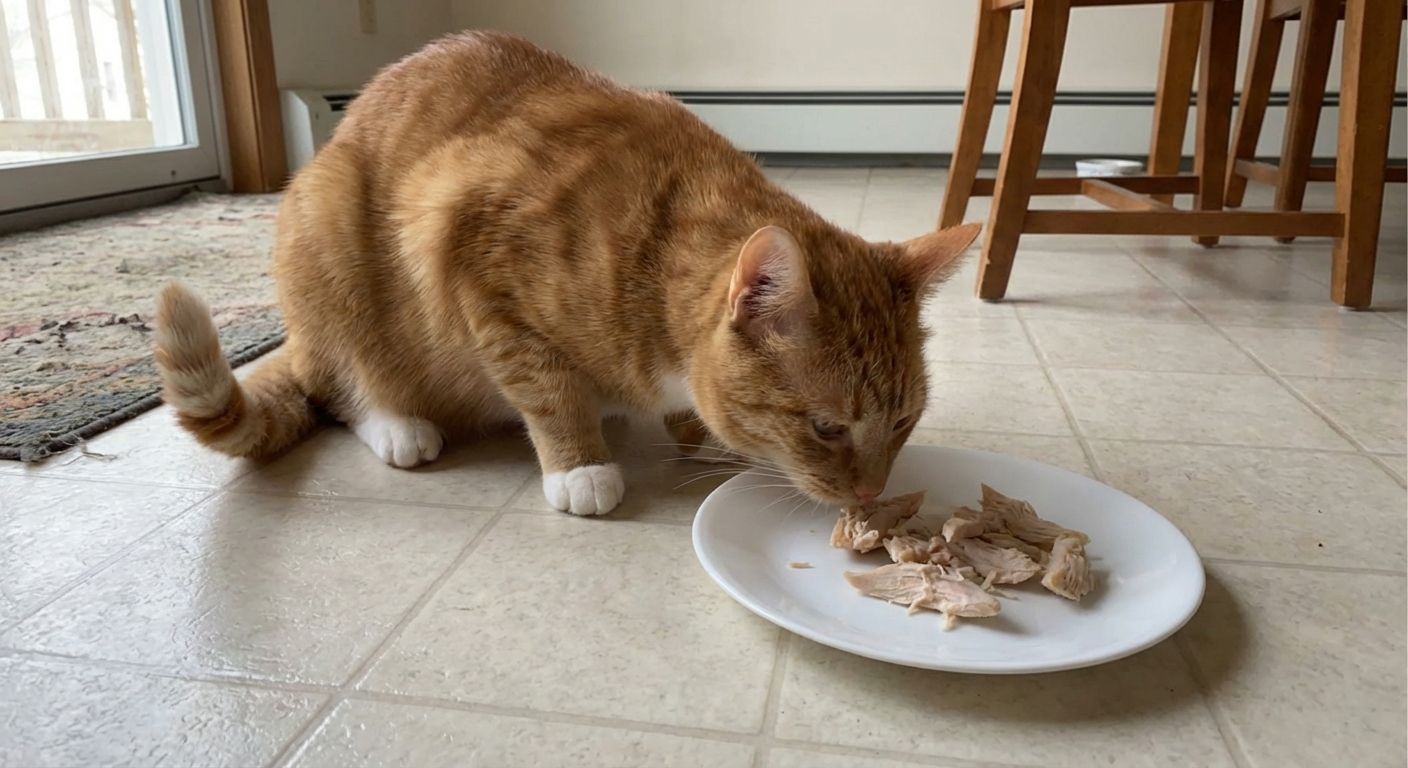
- Small bits of plain cooked meat (no seasoning, no onion or garlic powder)
- Commercial cat treats that are high-protein and fed in tiny portions
- Lickable cat treats used sparingly, especially for grooming or nail trims
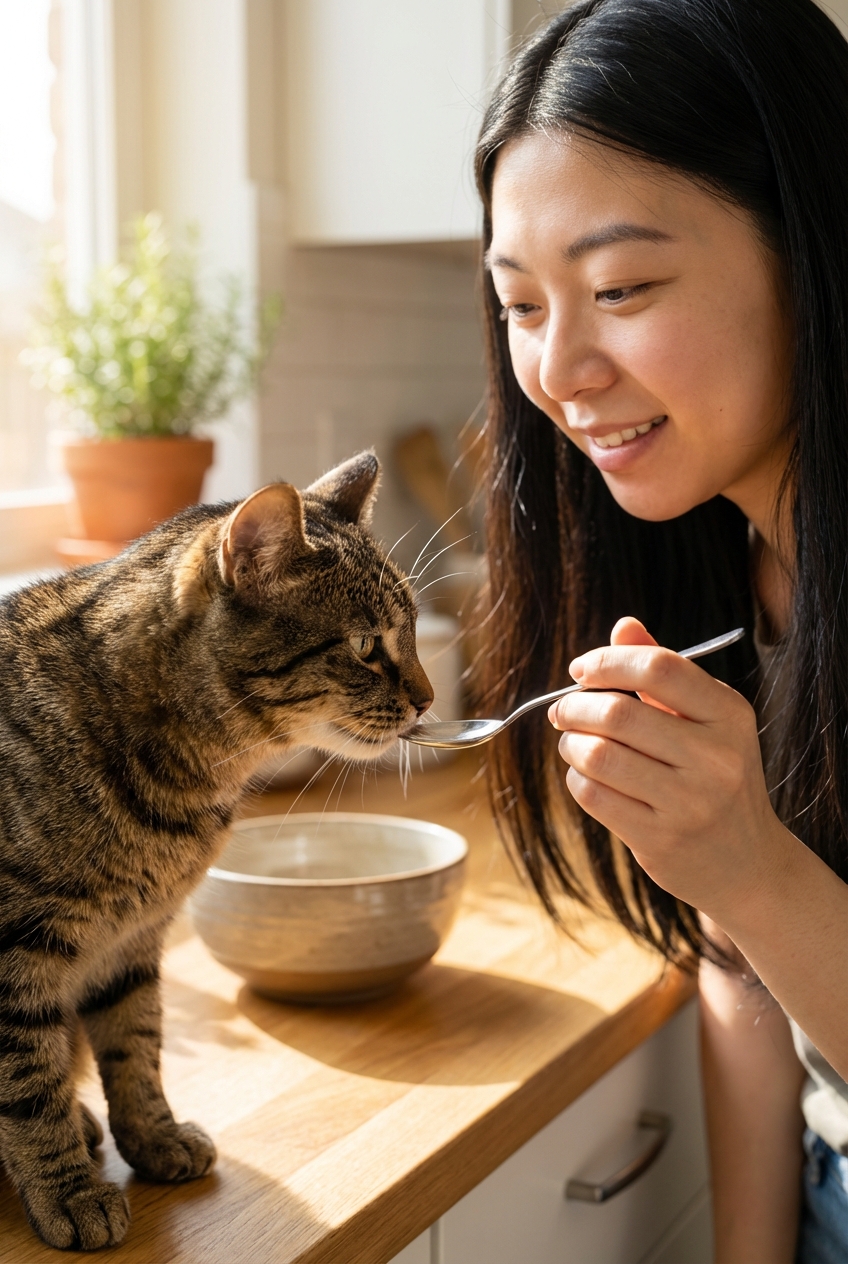
If you want a “special occasion” option that feels like sharing, go for something cat-appropriate instead of dessert: a spoon of their favorite wet food, a tiny bit of plain meat baby food (no onion or garlic), or a small amount of tuna water only if it is low sodium.
Pro tip from the vet-assistant side of my life: if you are using treats for training, go for pea-sized rewards. Cats respond better to frequent tiny wins than a few big bites.
How to read cat food labels
Pet food companies know cats follow aroma and savory flavor. Many formulas use “palatants” (flavor enhancers) and strong-smelling proteins to increase acceptance. That is not automatically bad, but it is a reminder to choose foods for nutrition first, not just “my cat is obsessed with it.”
If your cat is picky, try warming wet food slightly (just a few seconds) to boost aroma. Always check temperature before serving.
When appetite changes are a red flag
Because cats are driven so strongly by smell and comfort, refusing food can be more than a preference issue.
Contact your veterinarian promptly if your cat:
- Stops eating or eats dramatically less for more than 24 hours
- Seems nauseated, drools, or paws at the mouth
- Has vomiting, diarrhea, or noticeable weight loss
- Seems painful while chewing or has bad breath and gum redness
- Is hiding more than usual or acting “off”
Cats can develop hepatic lipidosis (fatty liver disease) when they go without adequate calories, especially overweight cats. It is one reason we take appetite changes seriously in clinics.
The bottom line
Cats are not tiny dessert lovers. They are meat-focused, scent-driven, obligate carnivores with taste buds that prioritize savory signals over sugar. Most cats cannot truly taste sweet, so when they beg for your treat, they are usually responding to fat, aroma, texture, temperature, or the simple joy of being involved in what you are doing.
If you want to spoil your cat in a way their body will thank you for, choose protein-forward treats, keep portions small, and let “sweet” be your thing, not theirs.