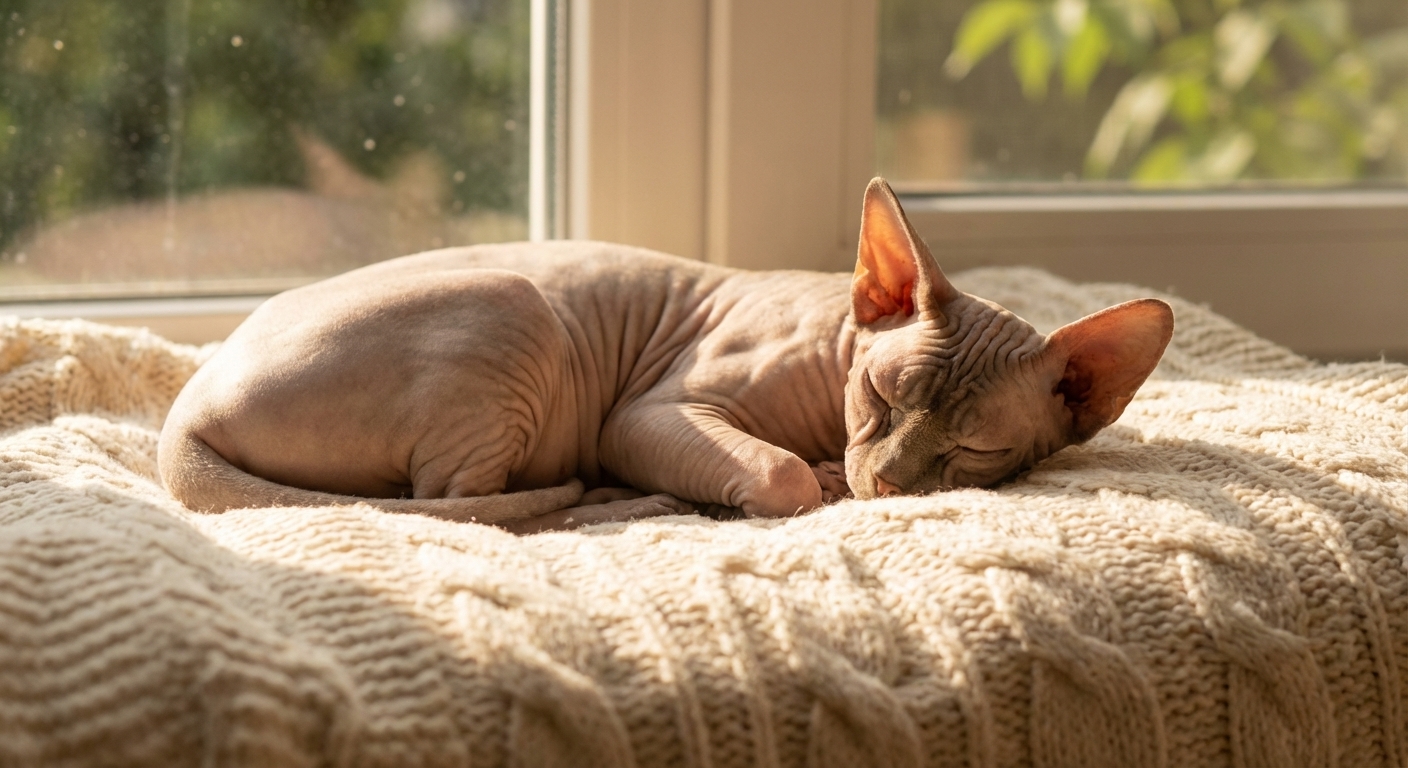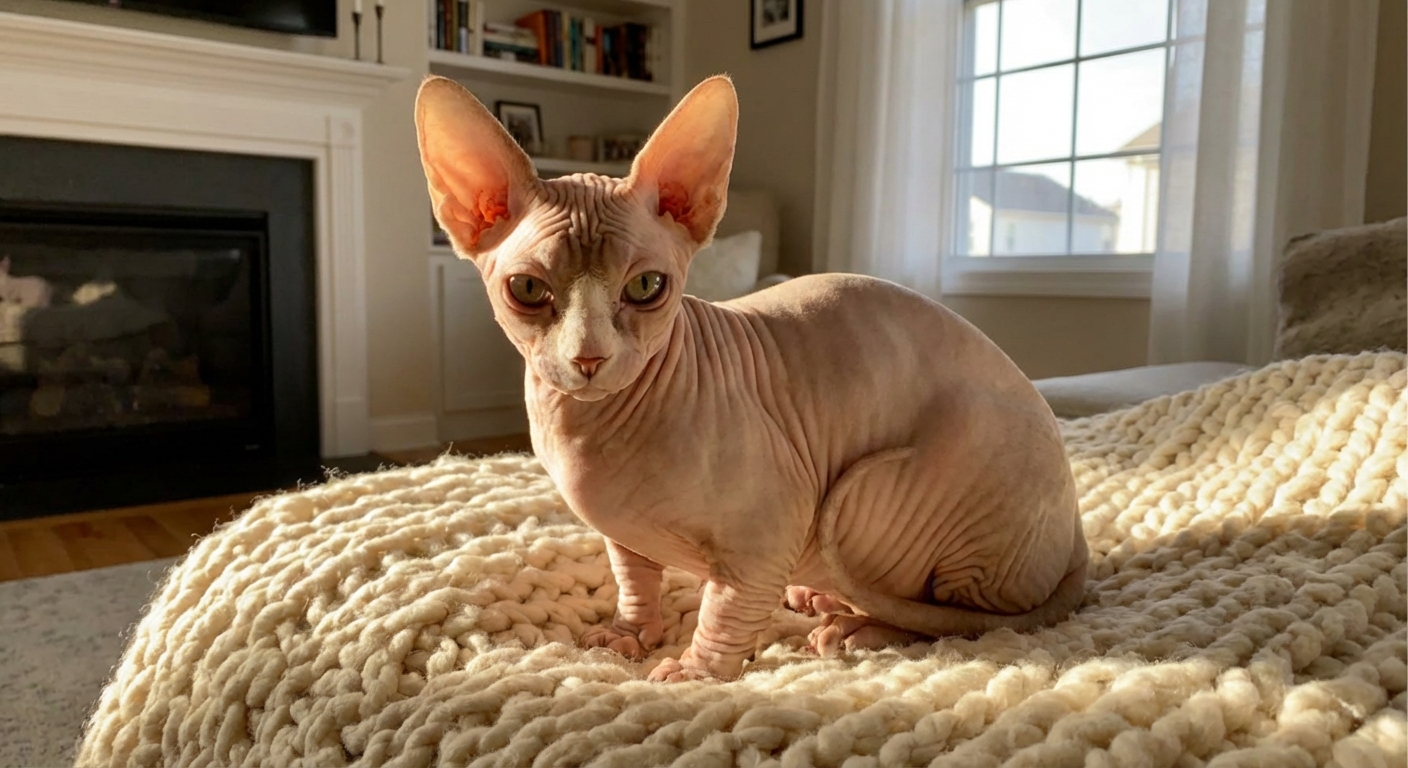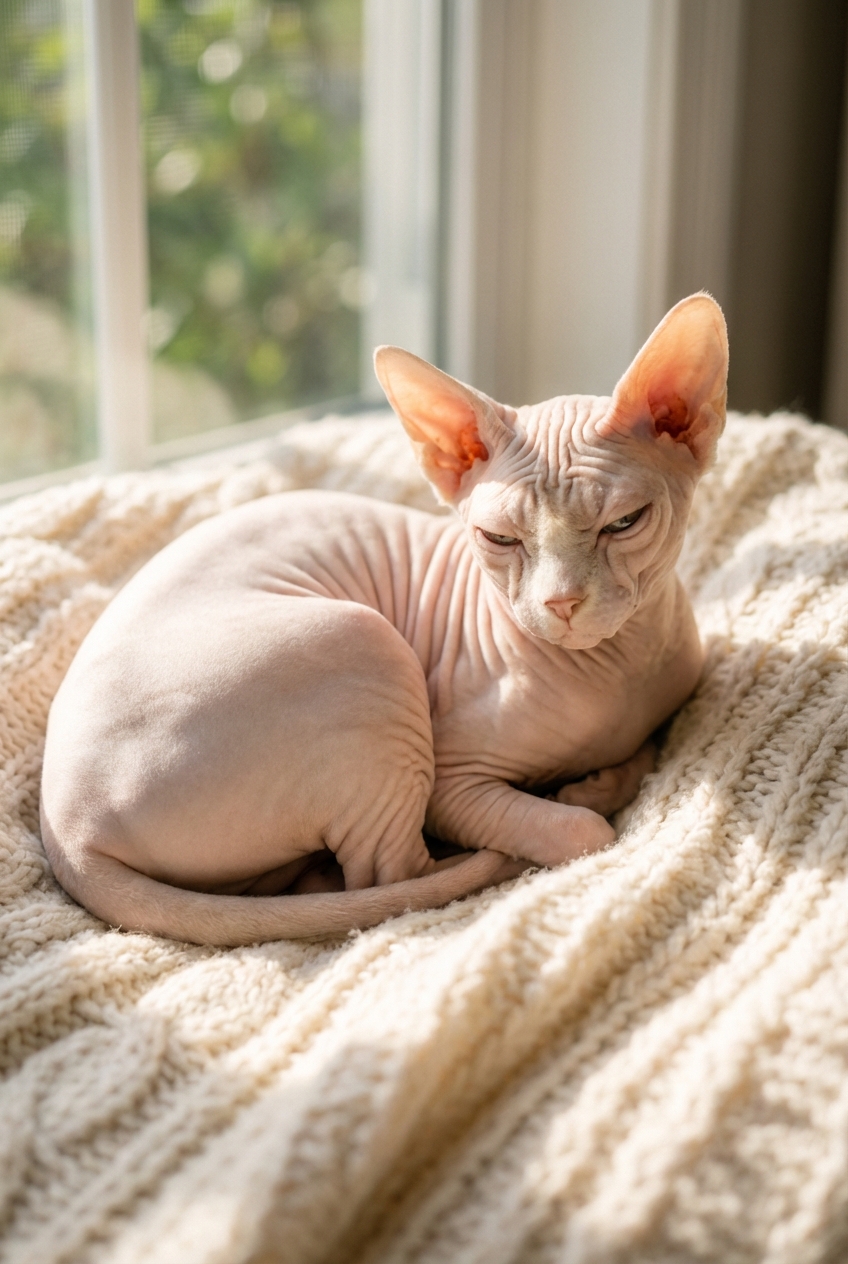
A practical guide to caring for hairless cats: skin checks, warming and bedding, wipe-downs, bathing routines, ear/nail/teeth care, sun safety, and when to c...
Article
•
Designer Mixes
Can Cats Get Sunburned?

Shari Shidate
Designer Mixes contributor
Yes, cats can absolutely get sunburned. As a veterinary assistant, I see it most often in light-colored cats, thin-coated cats, and hairless breeds. The tricky part is that cat sunburn often starts subtly, then turns into painful irritation, skin infection, or long-term skin damage if it keeps happening.
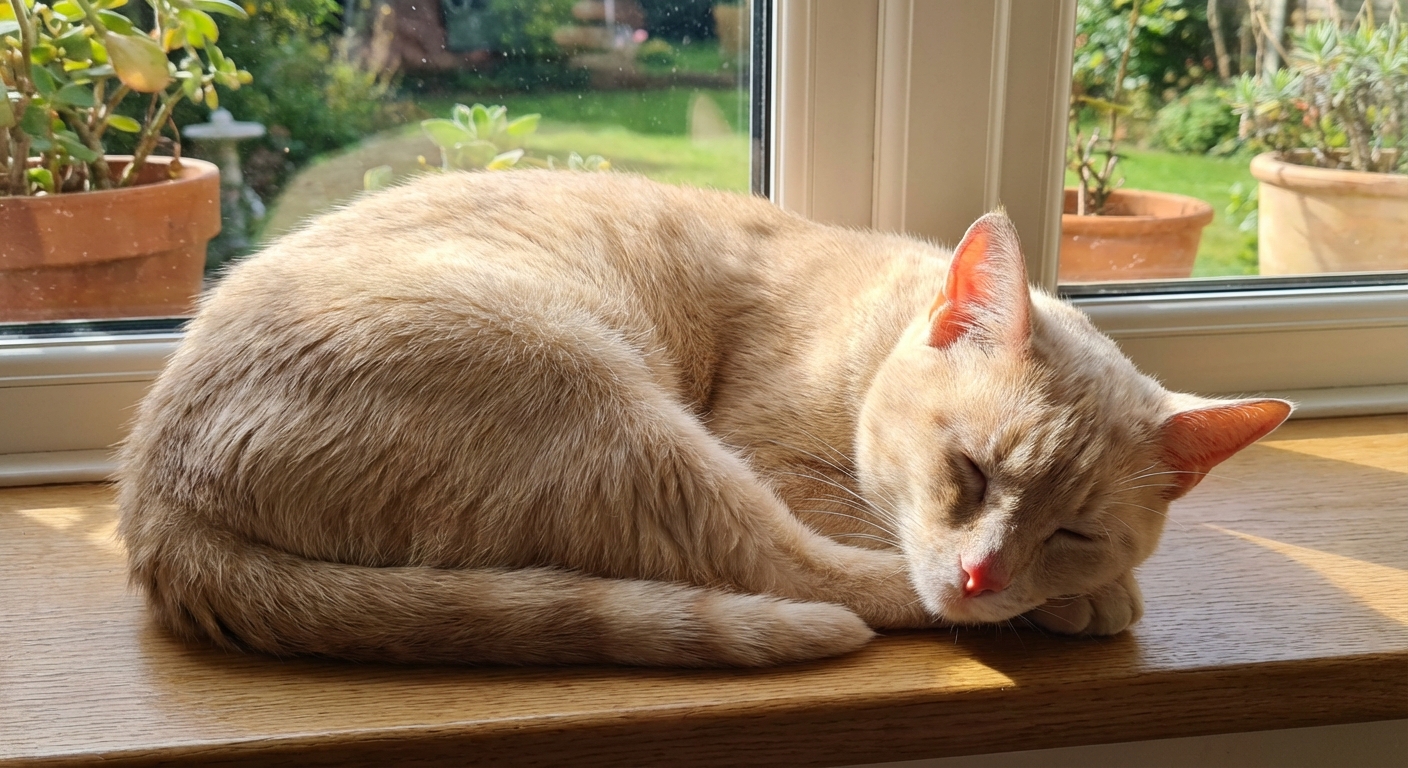
If your cat loves napping in sunny windows or exploring the backyard, a little prevention goes a long way, especially if their ears, nose, or belly are light pink and sparsely furred.
Which Cats Are Most at Risk?
Any cat can burn with enough UV exposure, but the highest-risk cats tend to have less natural protection in their coat and skin pigment.
Higher-risk cats include:
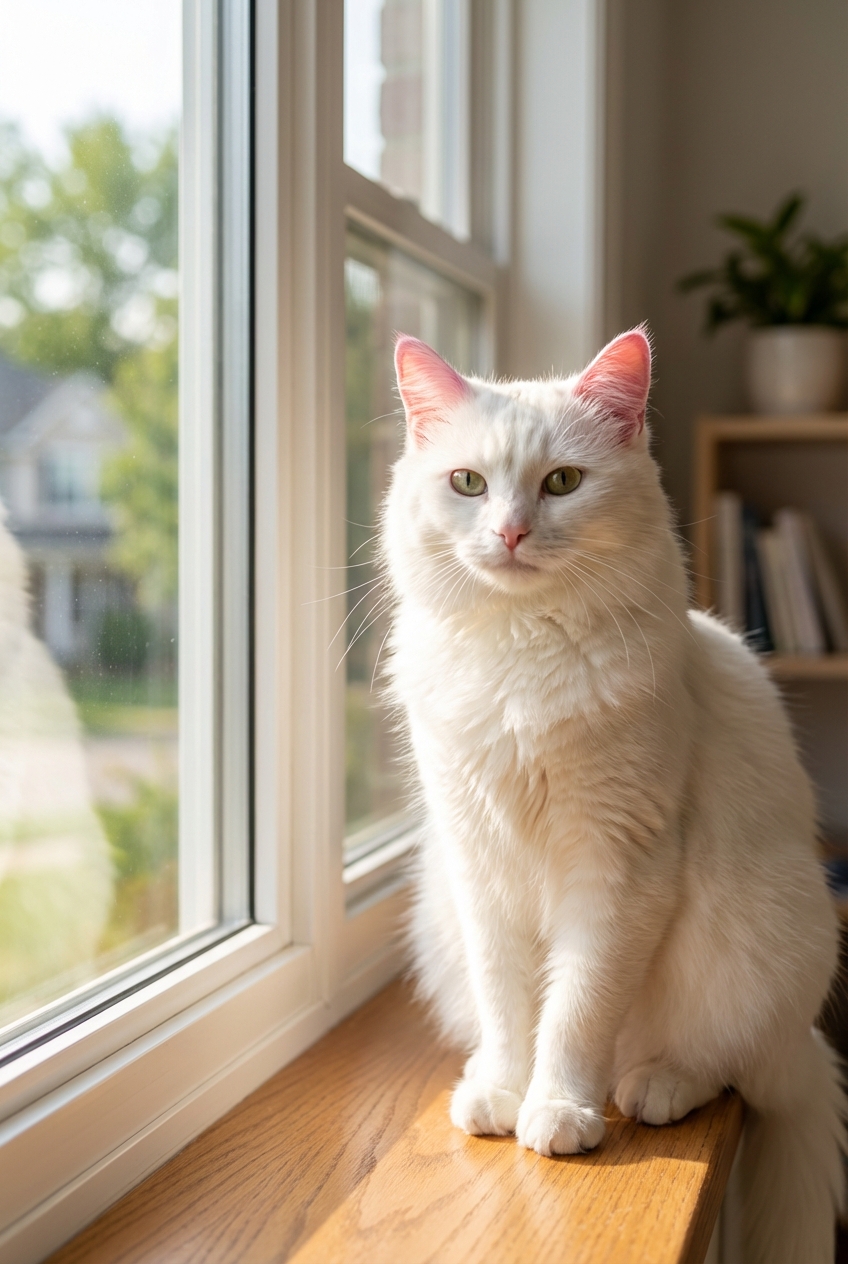
- White or light-colored cats, especially with pink skin on the ears and nose
- Hairless breeds (like Sphynx cats) or cats with very thin coats
- Cats with shaved areas from grooming, mats, or a medical procedure
- Outdoor cats or indoor-outdoor cats
- Cats who sunbathe daily in the same spot (more cumulative exposure over time)
Even indoor-only cats can be exposed through windows. Most standard window glass blocks most UVB but lets some UVA through. How much gets in depends on the glass type, tinting, coatings (like low-E), and whether the window is single- or double-pane. Cats also tend to spend hours in one sunny place day after day, which adds up.
Where Cats Get Sunburned
Cat sunburn usually shows up on areas with thin fur or exposed skin. These are also the areas that get direct sun when your cat is lounging.
- Ears (tips and outer edges are classic burn spots)
- Nose (especially a pink nose, also called the nose leather)
- Eyelids and the skin around the eyes
- Belly (in cats who sprawl belly-up near a sunny door or window)
- Any shaved patch
Sunburn Signs to Watch For
In the early stage, sunburn can look like mild irritation. Over time, repeated UV damage can change the skin more permanently.
Early signs:
- Redness or pinker-than-usual skin
- Warmth to the touch
- Flaking or dandruff-like scaling on the ears
- Tenderness or pulling away when you touch the area
More serious signs:
- Crusting, scabbing, or sores that do not heal
- Hair loss in a specific area
- Bleeding or oozing
- Persistent lesions on ear tips or nose
If you see recurring scabs or crusty ear tips on a light-colored cat, do not assume it is “just dry skin.” Chronic sun damage can progress to skin cancer, especially squamous cell carcinoma, and early veterinary care matters.
Also keep in mind that crusting and sores are not always sunburn. Ear and face lesions can also be caused by mites, allergies, ringworm, bacterial or yeast infections, and less commonly immune-related skin disease. That is another reason it is worth getting a vet’s eyes on it.
Why It Matters
Sunburn hurts. Cats may hide discomfort, but sun-damaged skin can sting, crack, and become infected. The bigger concern is cumulative UV damage.
Repeated exposure can cause actinic (solar) dermatitis, which is a chronic inflammatory skin condition. Over time, UV damage can also contribute to squamous cell carcinoma (SCC), a type of skin cancer that commonly affects white cats, especially on the ears, nose, and eyelids. In advanced cases, treatment may involve surgery (for example, removing part of the ear tip), so prevention and early care really do matter.
The good news is that prevention is very doable, and it is gentler than treating advanced skin disease later.
How to Protect Your Cat
You do not have to keep your cat in the dark. The goal is to reduce peak UV exposure and protect vulnerable skin.
1) Limit peak sun hours
If your cat goes outside, try to keep them indoors during the strongest sun, roughly 10 a.m. to 4 p.m., depending on season and location. If they are an indoor sunbather, consider closing blinds during peak hours or guiding them toward lower-UV spots.
2) Create safer sun spots
Cats love routine. Give them a cozy alternative that feels just as good.
- Move their favorite bed a few feet back from direct sun
- Offer shaded window perches
- Set up a covered “catio” area outdoors
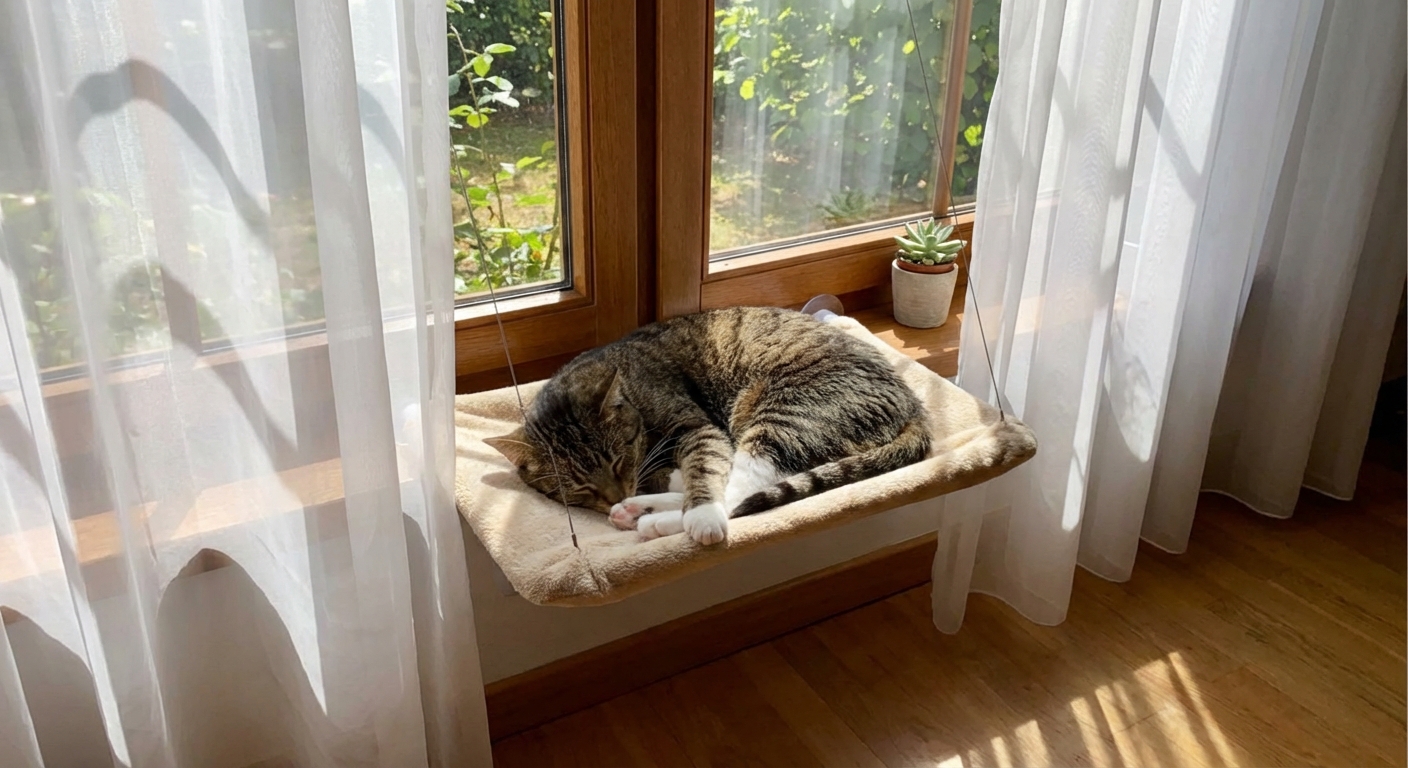
3) Use UV-blocking window film or shades
UV-filtering window film can reduce UVA transmission and is a great option for cats that spend hours at the same window. This is especially helpful for white cats with pink ears.
4) Consider protective clothing
For hairless cats or cats with shaved areas, a lightweight UV-protective pet shirt can help. Make sure it fits comfortably and does not restrict movement or cause overheating.
5) Ask your vet about cat-safe sunscreen
This is important: Do not use human sunscreen on your cat unless your veterinarian specifically approves it. Many human sunscreens contain ingredients that can be harmful if licked off. Cats groom, so anything applied to the skin is likely to be ingested. Ingredients commonly flagged as concerns include zinc oxide and salicylates.
If your veterinarian recommends a pet-safe product, apply a thin layer to vulnerable areas like ear tips. Try to keep your cat from grooming the area for a short time, but assume they may still lick it. That is exactly why sunscreen needs to be vet-directed and carefully chosen.
What to Do if You Suspect Sunburn
If you suspect mild sunburn, the safest first step is to remove further sun exposure and call your veterinarian for guidance. At home, avoid “DIY” creams unless your vet approves them.
Call your vet promptly if you notice:
- Blistering, open sores, bleeding, or significant swelling
- Scabs or crusts that keep coming back
- A sore on the ear or nose that does not heal within about a week
- Your cat seems painful, lethargic, or is not eating normally
Early treatment can prevent infection and can also rule out more serious causes of skin lesions.
Extra Care for White and Hairless Cats
If you have a white cat, a mostly white cat, or a hairless breed, I encourage you to think of sun protection as a routine part of care, just like nail trims or dental hygiene.
A simple weekly check can help you catch changes early:
- Look at ear tips for redness, scaling, or crust
- Check the nose for new rough patches or sores
- Notice if your cat avoids being touched in those areas
When in doubt, take a clear photo in good lighting and share it with your veterinarian. Skin changes can be easier to track when you can compare week to week.