Cats are obligate carnivores. Learn how protein, fat, and moisture affect weight, skin and coat, digestion, and urinary health—plus label tips and wet vs d...
Article
•
Designer Mixes
Can Cats Eat Dog Food?

Shari Shidate
Designer Mixes contributor
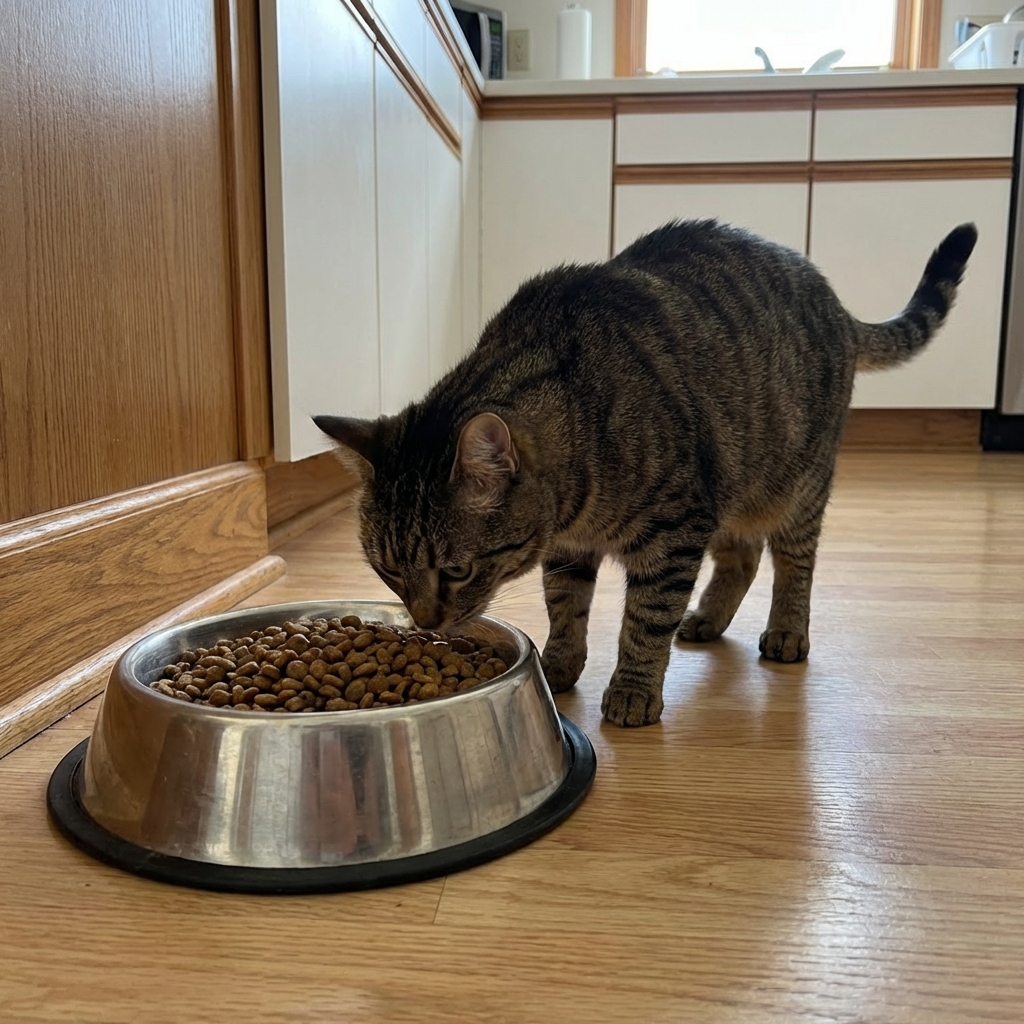
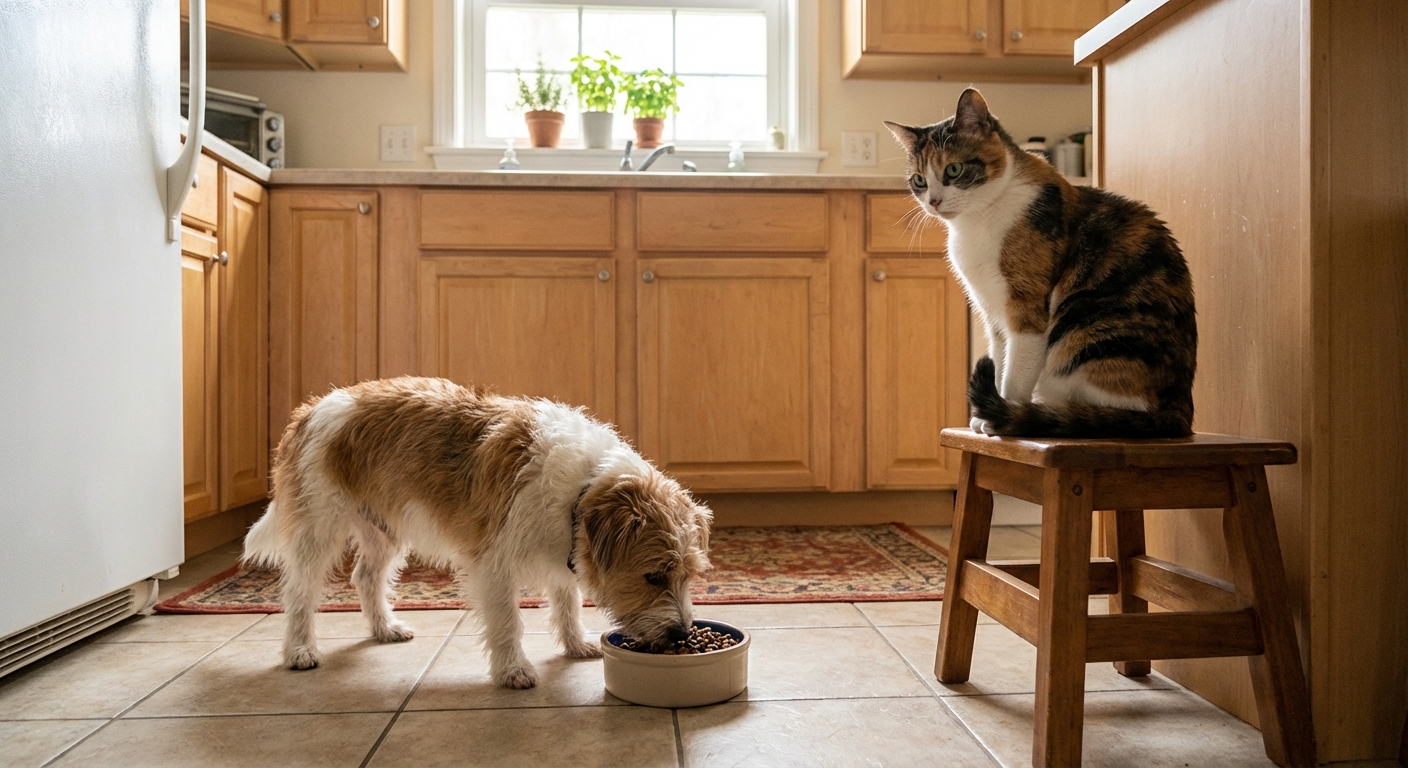
If you have both a dog and a cat, you have probably seen it happen: your cat strolls over and takes a few crunchy bites from the dog’s bowl. Most of the time, a small “taste test” is not an emergency. But as a veterinary assistant, I want you to know something important: dog food is not designed to meet a cat’s nutritional needs. When it becomes a habit, it can quietly create real health problems.
Quick answer
Can cats eat dog food? In small amounts, usually yes, meaning a bite or two is typically not toxic. But cats should not be fed dog food as a meal or long-term diet. Cats are obligate carnivores, meaning they require specific nutrients that dog food often does not provide in adequate amounts.
If your cat is consistently eating dog food, it is a sign you need a better feeding setup, a diet check, or sometimes a health check.
Why nutrition is not interchangeable
Dogs can thrive on a wider range of diets than cats. Cats have a higher requirement for certain animal-based nutrients, and they cannot make enough of some compounds that dogs can produce on their own. That is why cat food and dog food are formulated differently.
Key nutrients cats need
- Taurine: Essential for heart health, vision, and reproductive function. Cats cannot synthesize enough taurine on their own.
- Preformed vitamin A (retinol): Cats cannot efficiently convert beta-carotene into vitamin A the way many other animals can.
- Arachidonic acid: A fatty acid cats require from animal sources.
- Higher protein needs: Cats generally require more dietary protein than dogs.
- Specific B vitamins, including niacin: Cats have unique metabolic demands.
Most reputable commercial cat foods are formulated to meet AAFCO or FEDIAF nutrient profiles for cats. Dog foods are formulated for dogs, which is the core issue.
What can go wrong over time
A few bites now and then may lead to mild, short-lived issues like soft stool, vomiting, or gas, and some cats have no noticeable symptoms. The bigger concern is long-term nutritional imbalance if dog food becomes a meaningful part of your cat’s daily calories.
1) Taurine deficiency risk
Chronic taurine deficiency can contribute to serious conditions, including dilated cardiomyopathy (a weakened, enlarged heart) and retinal degeneration that can impair vision. These problems can develop quietly over time.
2) Weight gain and diet mismatch
Some dog foods can be higher in carbohydrates and lower in protein and fat than typical cat diets. A cat that “grazes” dog kibble can gain weight over time, raising the risk of diabetes and joint discomfort.
3) Digestive upset
Dog food may trigger vomiting, diarrhea, and gas in some cats, particularly if they have a sensitive stomach or if the dog diet is rich, high-fiber, or includes ingredients your cat does not tolerate.
4) Urinary health goals
Urinary issues in cats are complex and depend on moisture intake, mineral balance, stress, and individual risk factors. Dog food is not formulated with feline urinary targets in mind, so it may not support urinary health goals as well as an appropriate cat diet, especially for cats with a history of crystals or inflammation. It is not a factor you want to add if your cat is already prone to urinary trouble.
Is dog food OK in a pinch?
If you run out of cat food for a day, a small amount of dog food can sometimes be used as a very short bridge for an otherwise healthy adult cat. It is not ideal, but for many cats it is better than eating nothing.
Important: If your adult cat is not eating for 24 hours, call your veterinarian. For kittens, call sooner, such as if they are not eating for 12 hours. Cats can get sick quickly when they stop eating, especially overweight cats.
Kittens, pregnant or nursing cats, and cats with medical conditions should not be “filled in” with dog food. Their nutrient needs are higher and more specific. Puppy food is also not a substitute for kitten food.
Why cats steal dog food
This is so common, and it is rarely about stubbornness. A few practical reasons:
- Easy access: The dog bowl is on the floor and available all day.
- Crunchy texture: Some cats prefer kibble texture.
- Novelty: “Forbidden” food is exciting.
- Schedule mismatch: Many dogs are free-fed, while cats may eat small frequent meals.
- Underlying hunger or medical issues: Increased appetite can be linked to hyperthyroidism, diabetes, intestinal parasites, or other conditions.
How to stop diet mixing
The best plan is the one you can actually keep up with every day. Here are approaches that work well for many families.
Keep the cat’s food away from the dog
- Feed the cat up high: A sturdy counter spot, cat tree platform, or shelf.
- Use a baby gate with a small pet door: Many cats can slip through while dogs cannot.
- Create a “cat room”: A laundry room or spare bathroom where the cat can eat in peace.
Keep the dog’s food away from the cat
- Pick up the dog bowl after meals: Timed meals instead of free-feeding is often the simplest fix.
- Use a microchip feeder: These open only for the programmed pet, which can be a game-changer for persistent snackers.
- Supervise during meals: Give each pet 10 to 15 minutes to eat, then put bowls away.
Support healthy routines
- Measure portions: Use a measuring cup or kitchen scale to reduce accidental overfeeding.
- Use puzzle feeders for cats and dogs: Slows down eating and adds enrichment.
- Keep fresh water available: Especially helpful for cats that eat dry food.
A practical benchmark
If dog food is more than an occasional bite, such as regularly approaching 10 percent or more of your cat’s daily calories, it is worth intervening. Not because one number is magic, but because the nutritional gaps add up when dog food becomes a routine.
Extra safety notes
Watch for add-ins and hidden hazards
Plain dog kibble is usually the main issue here, but some dog meals and toppers come with added risks for cats. Be especially cautious with:
- Medications hidden in food: A very common household accident.
- Very fatty table scraps: Can trigger significant stomach upset in some pets.
- Onion or garlic seasonings: Sometimes found in people food mixed into bowls.
- Xylitol-containing products: More common with certain peanut butters or “sugar-free” items a dog might get as a treat.
What about cat food for dogs?
The reverse happens too. Cat food is often higher in fat and calories and can be too rich for some dogs, leading to weight gain or digestive upset. If your dog is regularly eating cat food, it is also worth adjusting your feeding setup.
When to call your vet
Please reach out to your veterinarian if:
- Your cat is eating dog food daily and refusing cat food.
- You notice vomiting, diarrhea, lethargy, or appetite changes.
- Your cat is suddenly very hungry all the time or losing weight despite eating.
- Your cat has a history of urinary problems, heart disease, or vision issues.
And if you ever suspect your cat got into dog food that contains something unusual, such as very high-fat scraps mixed in, medications hidden in the dog’s meal, or seasoned people food, call your veterinarian right away.
Bottom line
A cat sneaking a bite of dog kibble once in a while is usually not a crisis. But feeding dog food as a regular meal is risky because it can lead to nutrient deficiencies over time. The healthiest move is simple and doable: keep each pet on a complete-and-balanced diet made for their species, then set up your home so bowls do not become a daily buffet for the wrong animal.