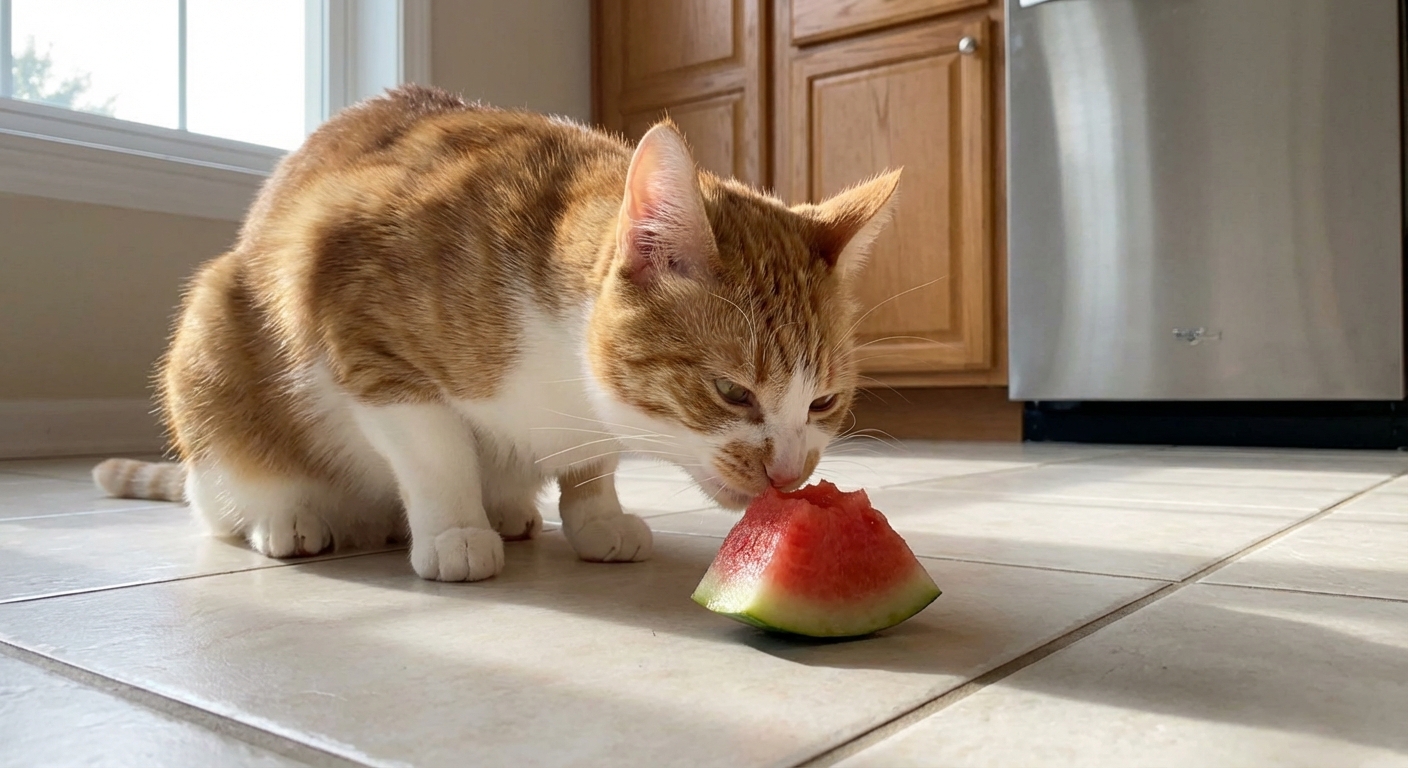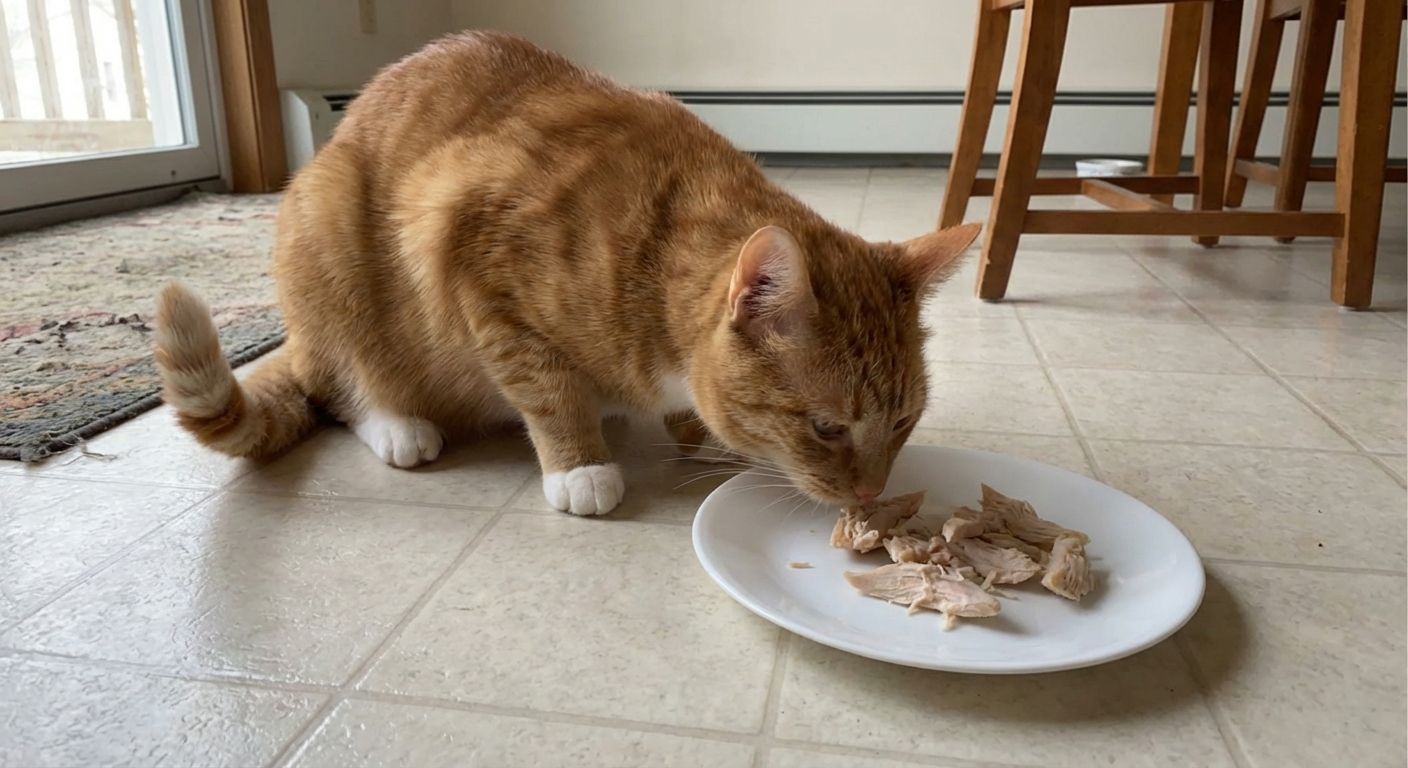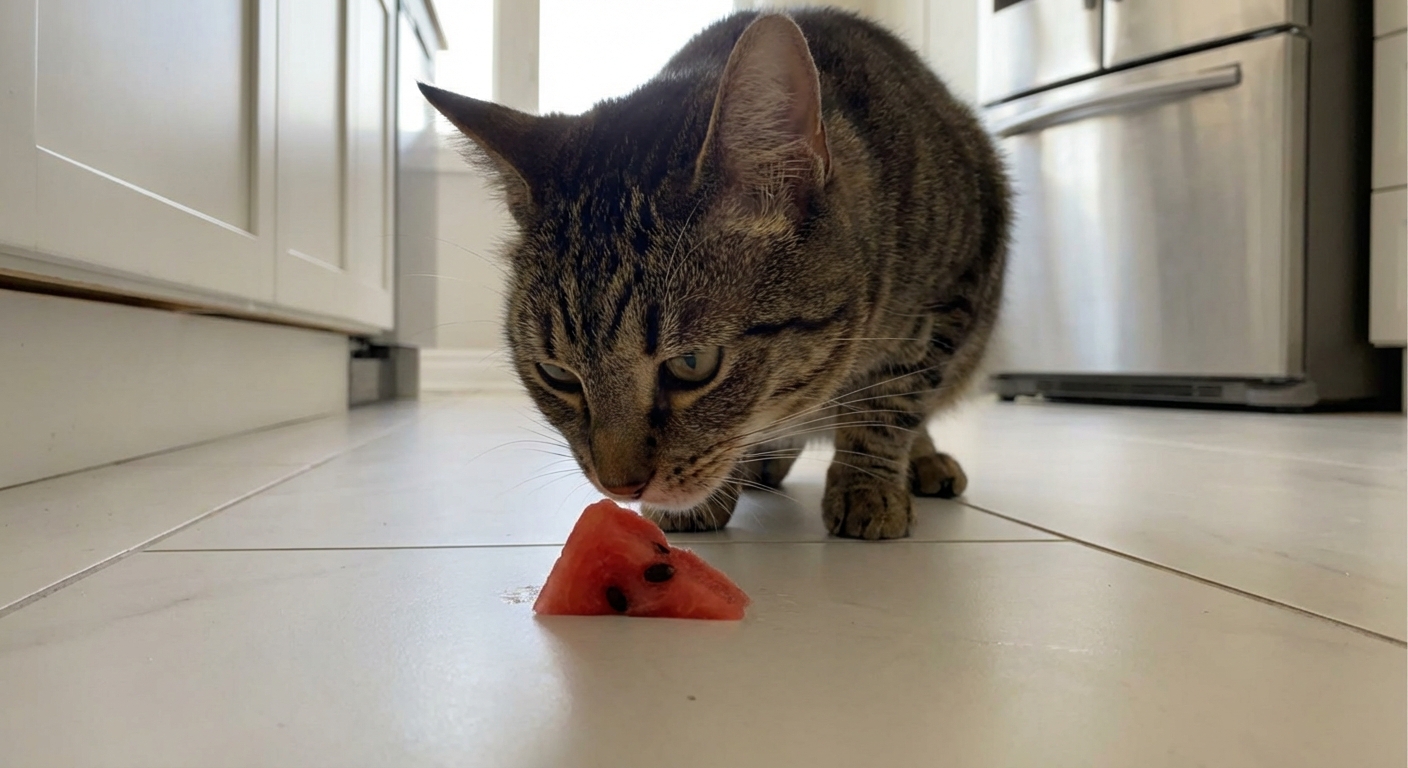
Which fruits can cats safely eat? See the most cat-approved options—watermelon, strawberries, blueberries, banana, cantaloupe, apple, and pumpkin—with ti...
Article
•
Designer Mixes
Can Cats Eat Bananas?

Shari Shidate
Designer Mixes contributor
As a veterinary assistant, I hear this question a lot because bananas feel like such a “safe” people food. The reassuring answer is yes, most cats can eat a small amount of banana as an occasional treat. The important part is that bananas are not nutritionally necessary for cats, and too much can upset their stomach or add unwanted sugar and calories. This article is general guidance, so if your cat has health conditions or is on a prescription diet, check with your veterinarian first.
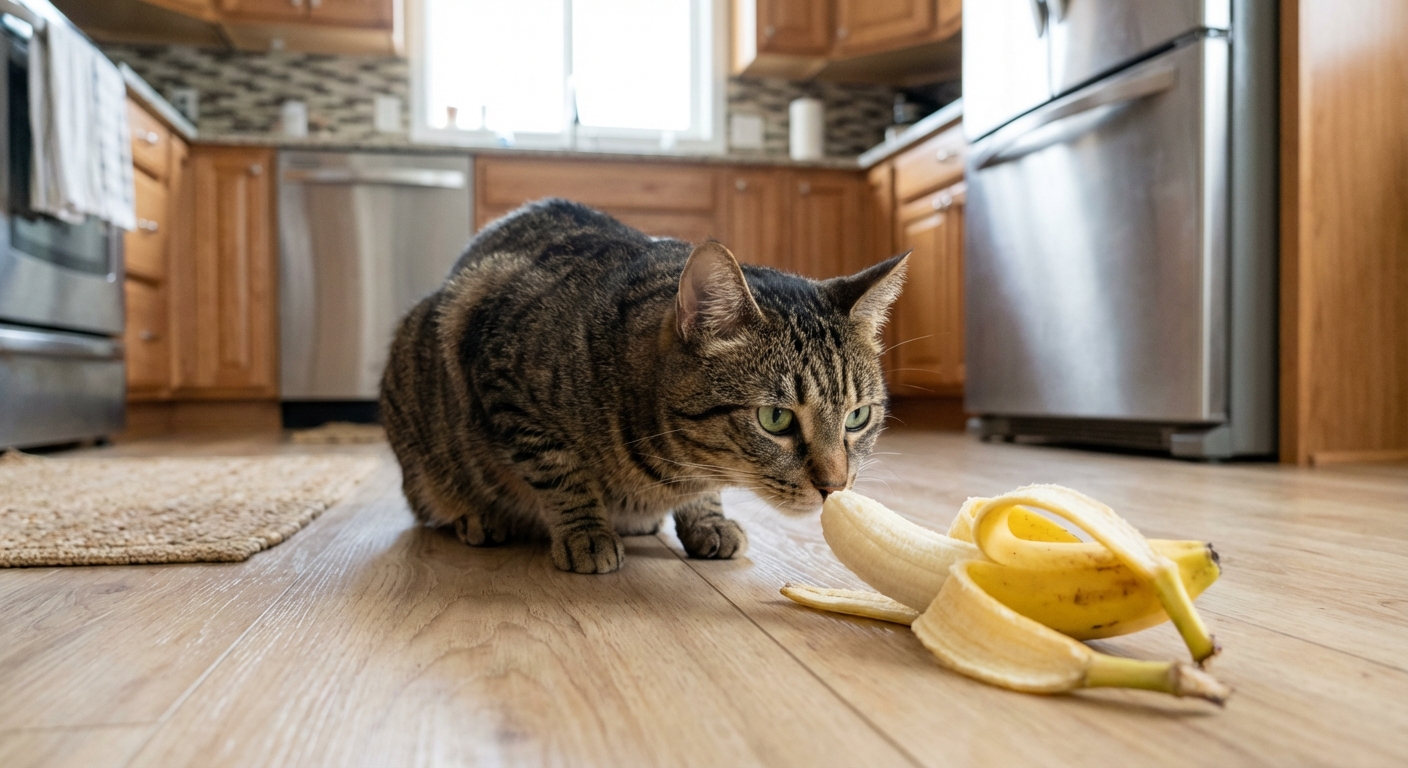
Are bananas safe for cats?
In general, banana flesh is considered non-toxic to cats. If your cat sneaks a tiny bite, it is unlikely to be harmful. Individual sensitivities vary, and the most common issue is mild gastrointestinal upset.
That said, “safe” does not always mean “good choice.” Cats are obligate carnivores , meaning their bodies are designed to thrive on animal-based protein and fat. Fruit is mostly water, fiber, and sugar (carbohydrates), and cats do not have a dietary requirement for carbs, so it should stay in the “treat” category.
Bananas: pros and cons
Possible upsides
- Fiber may help some cats with mild constipation, but it can also cause gas, loose stool, or even worsen constipation in some cats depending on hydration and the underlying cause. If constipation persists, talk with your vet.
- Potassium and vitamin B6 are present, but cats typically get what they need from a complete and balanced cat food.
- Soft texture makes it easy to offer as a tiny lick or mash for cats who like novel treats.
Why bananas are not ideal
- Sugar and calories: bananas are relatively high in natural sugar. Too many treats can contribute to weight gain, especially for indoor cats.
- Stomach upset: sudden new foods are a common cause of vomiting or diarrhea in cats.
- Diabetes concerns: if your cat is diabetic or overweight, banana is usually not a great option unless your veterinarian says otherwise.
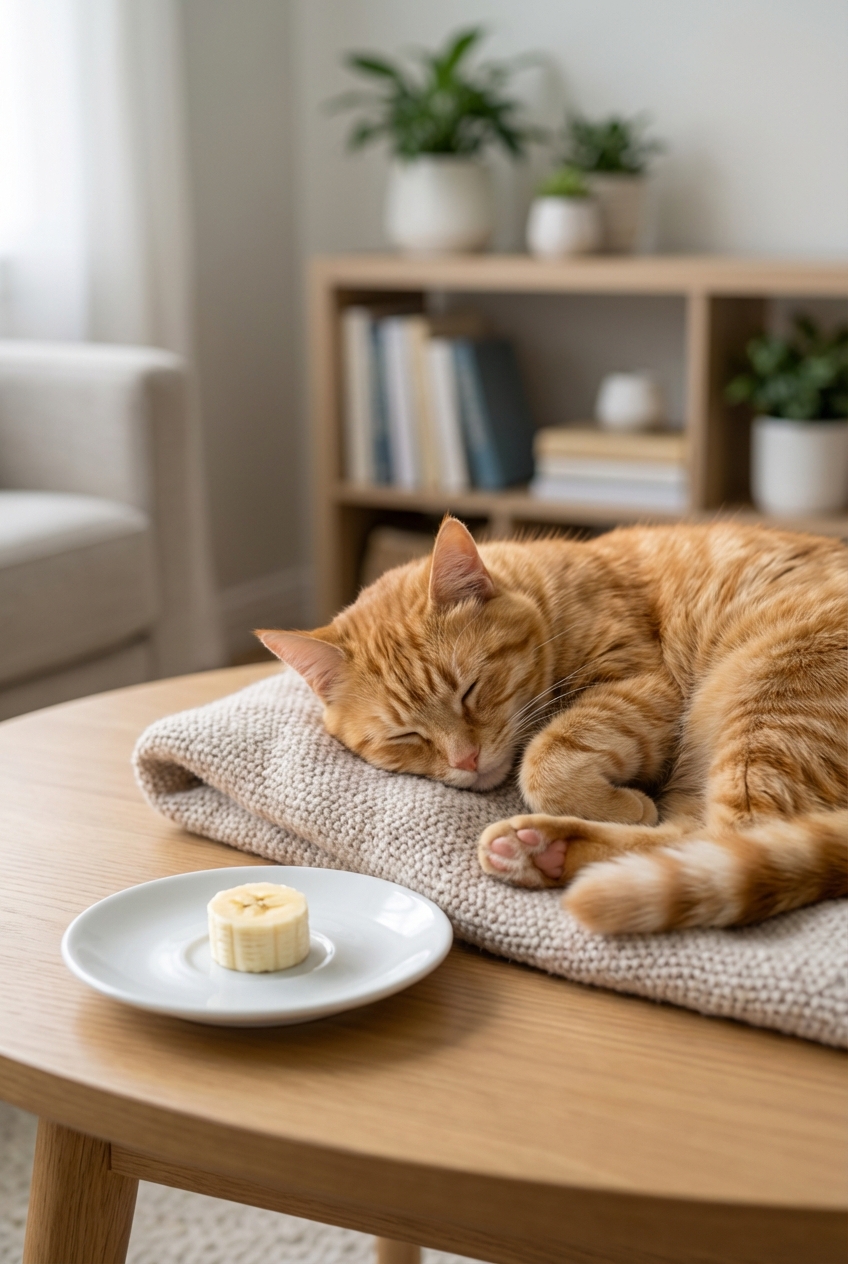
How much banana can a cat have?
Think tiny taste, not a snack.
- Start with: a piece about the size of a pea (or even a small lick of mashed banana).
- Max amount: 1 to 2 small bite-size pieces for most healthy adult cats.
- How often: no more than once or twice a week for most cats that tolerate it well.
- Treat rule of thumb: treats should make up under 10% of your cat’s daily calories.
Cut banana into very small pieces to reduce choking risk, and supervise while your cat eats. If this is your cat’s first fruit, offer it on a calm day when you can monitor appetite and the litter box for the next 24 hours. Also, many cats simply are not interested, and that is completely fine. Do not force it.
Serving tips and what to avoid
Serve it safely
- Plain, ripe banana only, peeled.
- Fresh slices or a tiny mash mixed into a teaspoon of wet food if your cat enjoys it.
- Not ice-cold since room temperature fruit is often more palatable than very cold fruit.
Avoid these
- Banana bread, muffins, pancakes, or chips: often contain sugar, butter, salt, and sometimes chocolate. Some baked goods may also contain xylitol (a sweetener that is dangerous for dogs and may be unsafe for cats), so avoid entirely.
- Peels: banana peel is not known to be chemically toxic, but it is tough and can be a choking hazard and may cause constipation or even an intestinal blockage if swallowed in larger pieces.
- Added toppings: peanut butter, honey, whipped cream, and flavored yogurt add extra sugar and fat and can trigger GI issues.
When banana is a bad idea
Skip banana and talk with your veterinarian first if your cat has:
- Diabetes or suspected diabetes
- Obesity or a weight-loss plan
- Food allergies or a history of sensitive stomach
- Chronic kidney disease or other medical conditions requiring a strict diet (CKD cats can have individualized potassium needs and diet plans, so banana should not be used to “boost potassium” without veterinary guidance)
Kittens also have more delicate digestive systems. If you want to offer a treat, stick to kitten-appropriate options recommended by your vet.
Signs your cat did not tolerate it
Most cats will either ignore banana or nibble and move on. If your cat is not tolerating it well, you may notice:
- Vomiting
- Diarrhea or very soft stool
- Gas and abdominal discomfort
- Drooling or pawing at the mouth (sometimes a “yuck” reaction, sometimes nausea)
If your cat vomits repeatedly, seems lethargic, refuses food, coughs or gags, or you suspect they ate banana peel or a baked banana product with other ingredients, call your veterinarian.
Cat-friendly fruit alternatives
If your cat enjoys a little fruit now and then, these are generally safer, low-risk options in tiny amounts:
- Blueberries: soft, easy to portion, and lower sugar than many fruits
- Watermelon: seedless and rind-free, good for hydration
- Strawberry: a small piece only, watch for tummy sensitivity
Always wash fruit, remove seeds, pits, rinds, and stems, and introduce one new item at a time.
Bottom line: A bite of banana is usually safe, but your cat does not need it. If you offer it, keep portions small and treat it like an occasional novelty, not a menu staple.