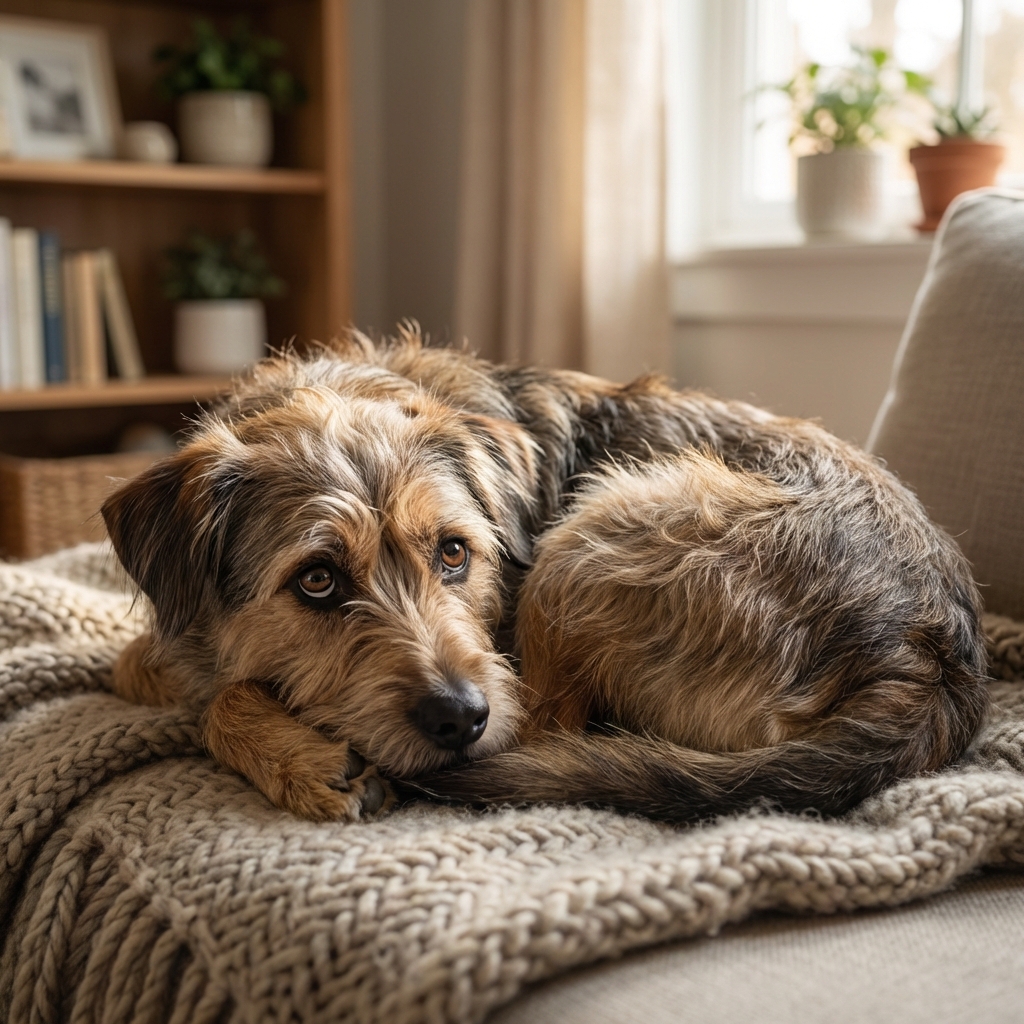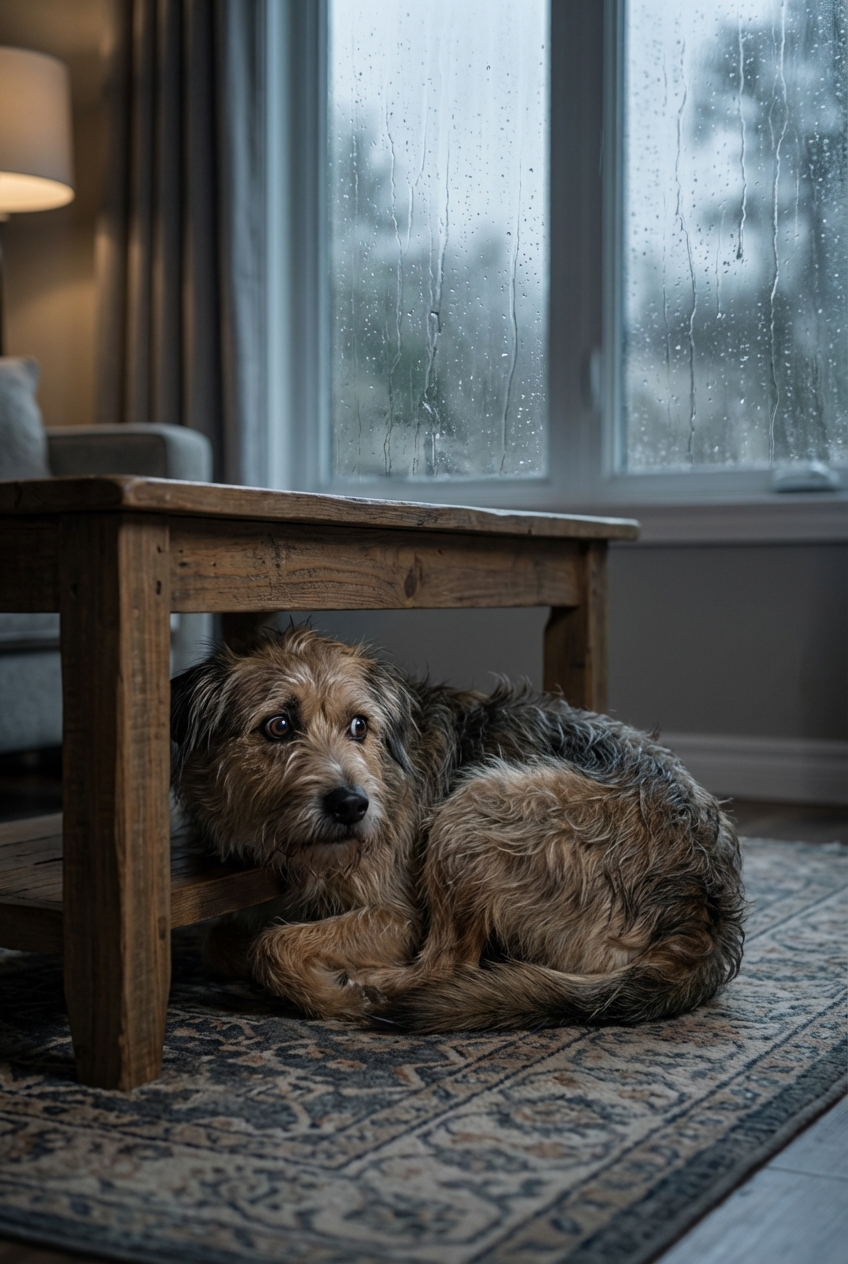
Thunderstorms can trigger shaking, hiding, and escape attempts. Learn vet-backed ways to calm your dog: storm station setup, steady sound, chews, training, w...
Article
•
Designer Mixes
Calming Your Dog During Thunderstorms

Shari Shidate
Designer Mixes contributor
Thunderstorms can feel like a full-body alarm for many dogs. The booming sound, air pressure changes, flashes of lightning, and even the smell of rain can trigger real fear, not stubbornness or “bad behavior.” As a veterinary assistant in Frisco, Texas, I can tell you this is common and treatable. The goal is simple: help your dog feel safer, reduce panic, and prevent fear from getting worse over time.
This handbook walks you through what works, what to avoid, and when to call your veterinarian. You do not have to fix this overnight. Small changes done consistently can make a big difference.
Quick note: This guide is educational and does not replace medical advice. If you are considering supplements or medication, or your dog’s fear is severe, your veterinarian is the best next step.
Why thunderstorms scare dogs
Noise is the obvious trigger, but it is not the only one. Many dogs react to storms before we hear thunder because they are picking up other cues.
- Sound sensitivity: Thunder is low-frequency and can travel through walls and floors. Some dogs feel it as vibration.
- Flashes and changes in light: Lightning and darkening skies can raise anxiety.
- Barometric pressure shifts: Some dogs seem to anticipate storms because pressure changes feel “off.”
- Static electricity: This may play a role for some dogs, but the mechanism is not fully understood. If your dog seems more distressed in dry air or on certain surfaces, it is worth mentioning to your vet.
- Learned fear: If a dog panicked once and nothing helped, the brain remembers. Each storm can reinforce the fear.
Common signs include panting, pacing, trembling, hiding, clinginess, drooling, barking, attempting to escape, or destructive behavior around doors and windows.
First priority: safety
If your dog is panicking, focus on safety before training.
- Keep your dog indoors. A frightened dog may bolt, even if they normally have great recall.
- Close doors, blinds, and curtains. Reduces sound and lightning flashes.
- Block access to dangerous spots. Garages, balconies, stairs, and glass doors are common injury risks during panic.
- Check ID. Make sure tags and microchip info are current, especially during storm season.
If your dog is chewing through crates, breaking nails trying to dig out, or injuring themselves, that is a strong sign you need veterinary support and a more robust plan.
During a storm: step-by-step
1) Set up a safe room early
Pick a spot that is quiet and interior, like a closet, bathroom, or laundry room. The best safe room is often not near windows.
- Add a comfy bed and a blanket that smells like home.
- Offer a long-lasting chew or stuffed food toy if your dog will eat.
- Keep the space available year-round so it is familiar.
2) Mask the noise
Sound management helps most dogs at least a little.
- White noise: A fan, air purifier, or white noise machine can reduce the sharpness of thunder.
- Calming music: Soft, steady music can help, especially if used regularly.
- TV: Not perfect, but better than silence for many households.
Tip: Start the sound setup before the storm is loud. Waiting until your dog is already panicking is harder.
3) Be calm and “boringly reassuring”
It is okay to comfort your dog. The old myth that you will “reward fear” by soothing them is not supported the way many people think. Fear is an emotion, not a deliberate behavior. Your calm presence can help your dog regulate.
- Use a gentle voice.
- Offer slow petting if your dog seeks touch.
- If your dog wants space, respect that. Forcing cuddles can increase stress.
4) Add gentle pressure if your dog likes it
Many dogs find gentle, consistent pressure calming.
- Anxiety wrap (example: Thundershirt): Introduce it when there is no storm so your dog does not associate the wrap with scary events.
- “Body lean” or gentle hug: Only if your dog chooses it. Watch for signs they want to move away.
5) Give a simple job
Some dogs do better when their brain has a task.
- Scatter a handful of treats in a snuffle mat or towel for a quiet “find it” game.
- Practice easy cues your dog loves, like “touch” or “sit,” using high-value treats.
If your dog refuses food, that usually means anxiety is too high. Shift back to safety and quiet support.
What not to do
- Do not punish fear behaviors. Yelling or scolding increases the association that storms are dangerous.
- Do not force exposure. Dragging a dog toward windows or outside “to show them it is fine” can worsen phobias.
- Be careful with crating. Some dogs feel safe in a crate, but dogs with severe panic can injure themselves trying to escape.
- Avoid essential oils and strong fragrances. Many dogs dislike them, and some oils can be unsafe around pets.
Prep work that helps long-term
Desensitization and counterconditioning
This is one of the most evidence-supported approaches for noise fears, especially when you can practice consistently. Many dogs still need a multi-step plan that includes management and sometimes medication.
- Desensitization: Play thunder sounds at a very low volume that does not bother your dog.
- Counterconditioning: Pair that sound with something wonderful, like tiny bits of chicken or a favorite game.
Over time, your dog learns: thunder predicts good things. If your dog shows stress, the volume was too high or the session was too long. Go slower.
A simple “do this now” plan: Find a high-quality thunder track, play it at near-inaudible volume, feed 5 to 10 tiny treats (one after another), then stop the sound. Keep sessions to 1 to 3 minutes. Repeat several days a week.
Build a daily calm routine
Dogs who have predictable enrichment and rest often cope better during scary events.
- Regular exercise appropriate for your dog’s age and health.
- Food puzzles and sniffing games.
- Enough sleep and quiet time.
Calming aids and how to choose
Not every dog needs supplements or medication, but many do. The right choice depends on severity, health conditions, and how quickly you need relief.
Non-prescription options
- Pheromone products (Adaptil): Diffusers, collars, or sprays may help some dogs feel more secure.
- Compression gear: An anxiety wrap can help some dogs with mild to moderate anxiety when introduced properly.
- Calming supplements: Ingredients like L-theanine, alpha-casozepine, or melatonin are commonly used. Always ask your veterinarian first, especially if your dog is on other medications or has liver, kidney, or endocrine issues.
Important: “Natural” does not automatically mean safe. Dosage matters, and quality varies by brand.
Prescription support
If your dog has true storm phobia, prescription anti-anxiety medication may be the kindest option, either situational (given before storms) or daily (for generalized anxiety). Your veterinarian will help you choose based on your dog’s health history.
Medication is not “cheating.” It can lower panic enough that training actually works.
Timing matters
Many tools work best when used before panic starts. Ask your veterinarian about timing for your specific dog, especially for situational medications or supplements. If storms are frequent where you live, watching the forecast and having a plan ready can make a big difference.
If you must be away
Whenever possible, do not leave a panicking dog alone during storms. If you have to be away, focus on prevention and safety.
- Set up the safe room ahead of time with bedding, water, and white noise.
- Close blinds and curtains to reduce lightning flashes.
- Consider a trusted pet sitter or neighbor who can sit with your dog if storms are likely.
- Talk with your vet ahead of storm season about situational medication options and timing.
A quick storm checklist
- Check the forecast and plan ahead.
- Set up the safe room with bedding and water.
- Close blinds and turn on white noise.
- Put on the anxiety wrap early if you use one.
- Offer a food puzzle if your dog will eat.
- Stay calm, keep your dog indoors, and focus on safety.
When to call your vet
Please seek help if you notice any of the following:
- Your dog is trying to escape through windows, doors, or crates.
- They injure themselves, break teeth, or tear nails during storms.
- They refuse food for more than 24 hours, or you notice vomiting, diarrhea, or signs of dehydration.
- The fear is spreading to other noises like fireworks, wind, or rain.
- Your current plan is not improving things after several weeks of consistent work.
If your dog’s storm fear is new or suddenly worse, it is also worth scheduling a checkup. Pain, hearing changes, cognitive decline in seniors, and other medical issues can contribute to anxiety.
For complex cases, a board-certified veterinary behaviorist or a qualified positive-reinforcement trainer can be a game-changer, especially when combined with your primary vet’s guidance.
FAQs
Should I ignore my dog when they are scared?
No. You can be a steady, calming presence. Comfort is fine. Just avoid frantic energy, and do not force contact if your dog wants distance.
Can I give Benadryl to calm my dog?
Benadryl (diphenhydramine) can make some dogs drowsy, but it does not reliably treat anxiety. Some dogs become restless instead. Always check with your veterinarian before giving any medication, including over-the-counter options, because dosing and safety depend on your dog’s weight and health.
Why is my dog scared even when the thunder is far away?
Dogs can hear frequencies we cannot, and some react to pressure changes or the subtle early cues of a storm. That is normal for noise-sensitive dogs.
Closing encouragement
If your dog struggles with thunderstorms, you are not alone. With a safe setup, thoughtful training, and veterinary support when needed, many dogs improve significantly. Start small, stay consistent, and celebrate the wins, even if today’s win is simply choosing the safe room instead of panicking in the hallway.