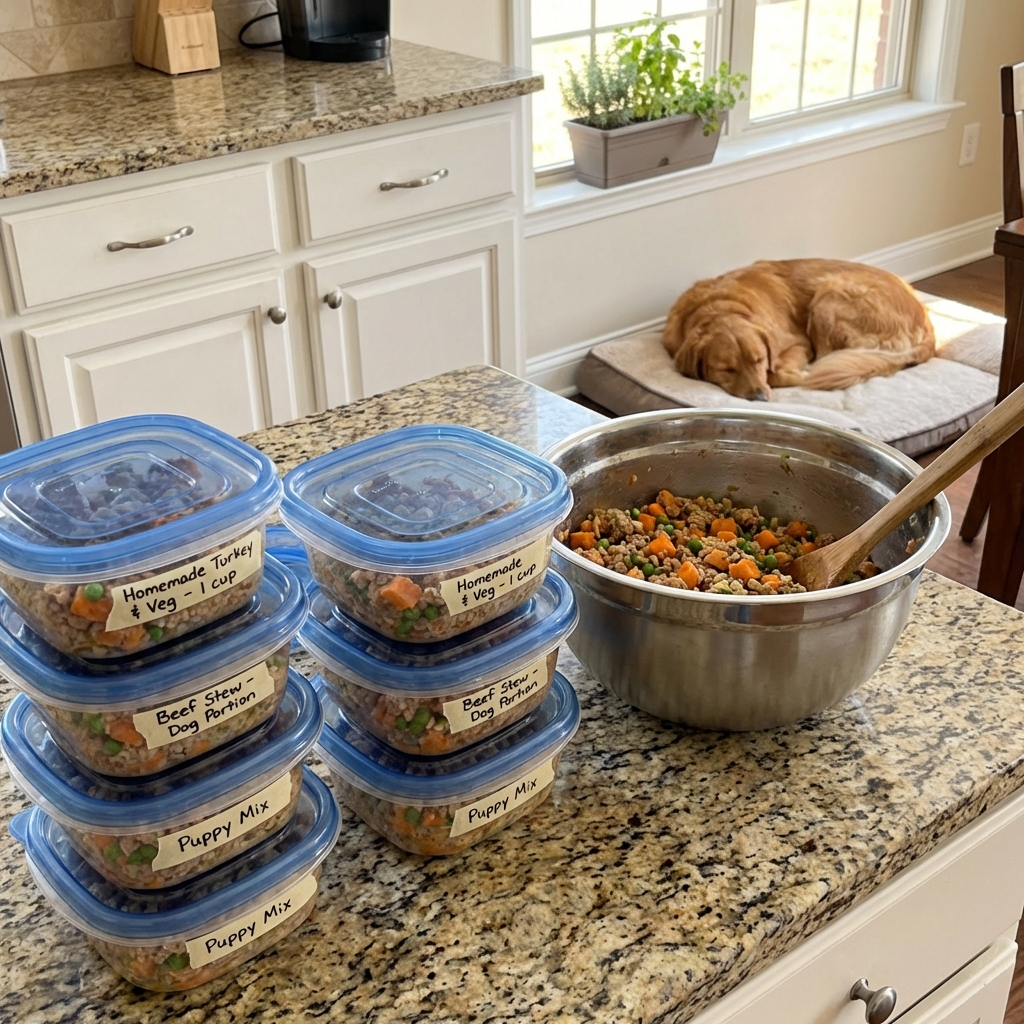
Learn a vet-assistant-approved way to transition your dog to homemade food: a 10–14 day schedule, gentle starter recipes, portion guidance, calcium basics,...
Article
•
Designer Mixes
Budget Friendly Homemade Dog Food Shopping List

Shari Shidate
Designer Mixes contributor
Homemade dog food does not have to be expensive or complicated. As a veterinary assistant here in Frisco, Texas, I have seen how small, steady improvements in diet can support healthy weight, steadier energy, and better stool quality. The key is shopping with a plan and choosing ingredients that give you the most nutrition per dollar.
Below is a budget-friendly shopping list you can use to build better homemade building blocks and batch-cook meals. A shopping list alone does not guarantee a diet is complete and balanced, but it can set you up for success when you pair it with the right recipe and supplement plan.
You can start by replacing just 25 percent of your dog’s current food with homemade and slowly increase over 7 to 14+ days (some sensitive dogs need a slower transition).
Before you shop: the simple formula
If you are new to homemade meals, think in easy buckets. This is a starting structure that works for many dogs:
- Protein as the foundation
- Cooked vegetables for fiber and micronutrients
- Healthy carbs for energy, especially for active dogs
- Fats for skin, coat, and calorie density when needed
- Calcium source if you are not feeding edible bone
Important: “Complete and balanced” has a real definition (AAFCO in the US, FEDIAF in Europe). Dogs have specific calcium, vitamin, and trace mineral needs that are hard to meet by ingredients alone. If you are feeding homemade as a primary diet long-term, talk with your veterinarian or a board-certified veterinary nutritionist, or use a veterinarian-backed recipe formulator, to ensure the recipe is complete and balanced for your dog’s age, size, and health conditions.
Budget-friendly shopping list (with smart swaps)
1) Proteins: the biggest nutrition win
Look for proteins you can buy in family packs, on sale, or frozen. Rotate options week to week for variety.
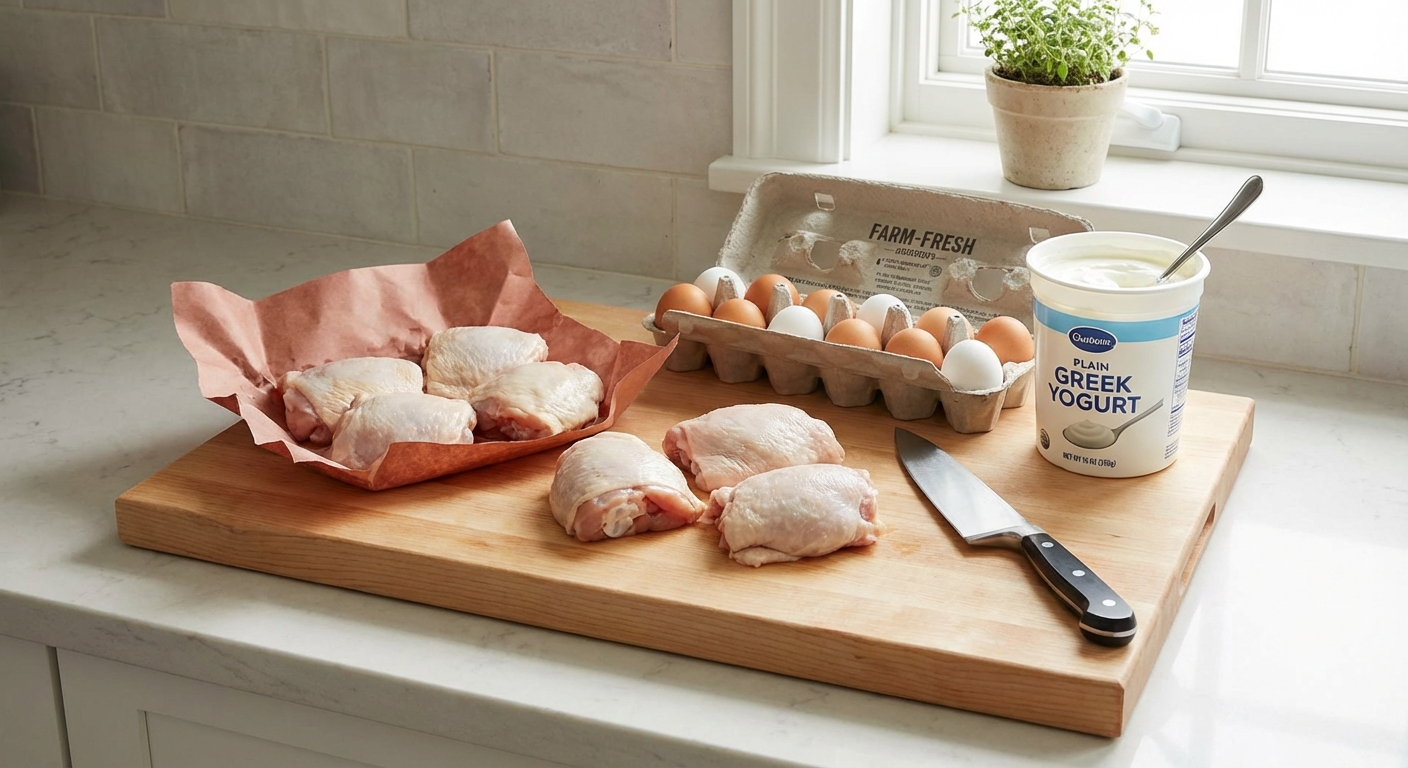
- Chicken thighs or leg quarters (often cheaper than breasts)
- Ground turkey (watch for added seasoning in pre-formed patties)
- Lean ground beef when on sale, or mix half lean with half extra-lean if fat upsets your dog’s stomach
- Canned sardines in water (no salt added if possible) for omega-3s
- Eggs as an affordable, high-quality protein booster
- Plain Greek yogurt or kefir (unsweetened) for protein and probiotic cultures that may help some dogs (benefits vary by product and strain)
Money saver: Ask the meat counter about markdowns, or buy frozen bulk poultry. If your dog tolerates it, mixing two proteins in a batch can stretch the pricier one.
2) Organ meats: small amounts, big impact
Organ meats are nutrient-dense and usually inexpensive. Use them in small portions because they are rich.
- Beef liver (freeze in small cubes for easy portioning)
- Chicken liver
- Beef heart (technically muscle meat, often budget-friendly)
Easy guideline: For many adult dogs, organ meats are often kept around 5 to 10 percent of the total food by weight, with liver only a small slice of that. Too much liver can cause digestive upset and may contribute to vitamin A excess over time. If you are not sure what amount is right for your dog, ask your vet or a veterinary nutritionist.
Tip: If your dog is new to organ meat, start tiny and increase slowly to avoid loose stool.
3) Vegetables: frozen is your best friend
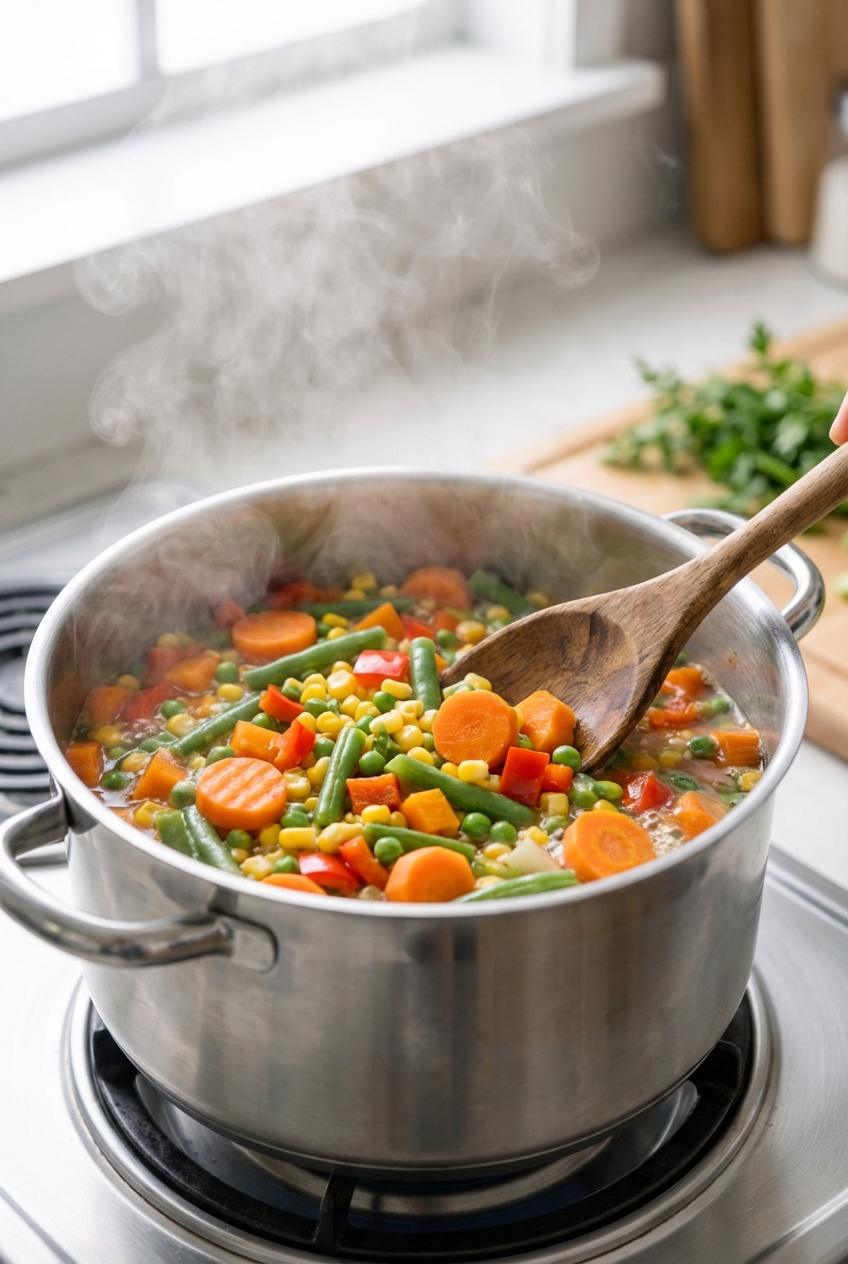
Frozen vegetables are affordable, consistent, and reduce food waste. Dogs usually digest veggies better when they are cooked. Thaw and lightly steam, or add to a hot batch so they soften.
- Frozen broccoli
- Frozen green beans
- Frozen spinach (small amounts)
- Frozen mixed vegetables without sauces
- Fresh carrots (usually inexpensive year-round)
- Zucchini when in season
- Pumpkin (plain canned pumpkin, not pie filling)
Money saver: Choose 1 to 2 vegetables per week and buy larger bags. Rotate colors across the month.
4) Carbs and grains: affordable energy sources
Grains and starchy carbs can be a helpful part of many dogs’ diets, and they are often the most budget-friendly calories in the cart.
- Brown rice or white rice (white is often gentler for sensitive stomachs)
- Oats (plain)
- Quinoa when on sale
- Sweet potatoes (bake or steam)
- Russet potatoes (cooked, never raw)
Potato safety: Avoid green potatoes and sprouts, and skip added butter, salt, and seasonings.
Tip: If your dog gains weight easily, keep carbs modest and emphasize lean protein and veggies.
5) Healthy fats and add-ins
Many dogs benefit from a little added fat, but too much can cause digestive upset in some pups. Start low and adjust.
- Fish oil (capsules or liquid formulated for pets) for EPA and DHA
- Olive oil (small amounts)
- Ground flaxseed (store in the fridge) for ALA (not a substitute for fish oil)
- Low-sodium broth to make meals more appealing
6) Calcium: a must for homemade diets
If you are not feeding edible bone, you will typically need a calcium source. Calcium is essential for bone health, nerve function, and muscle contraction, and it must be in the right balance with phosphorus.
- Eggshell powder made from baked, finely ground eggshells
- Calcium supplement recommended by your veterinarian
Do not eyeball it: Eggshell and calcium supplements need a calculated dose. The amount of calcium per teaspoon of eggshell powder can vary by grind, and the correct calcium to phosphorus balance matters.
Safety note: Do not rely on “a little yogurt” as your only calcium source for a fully homemade long-term diet. It can help, but it is rarely enough by itself.
7) Supplements often needed
Calcium is the one most people think about, but it is not the only common gap. Many homemade diets also need help with nutrients like iodine, vitamin D, zinc, copper, and manganese. The safest approach is to follow a veterinarian-formulated recipe or use a veterinary nutritionist-approved supplement plan designed to balance homemade food.
What to skip to keep it safe
- Onions and chives
- Grapes and raisins
- Xylitol (found in many sugar-free products)
- Cooked bones (splinter risk)
- Seasoned meats, spicy foods, or foods cooked with heavy garlic and onion powders
If your dog has pancreatitis, kidney disease, food allergies, or is a puppy, please check with your veterinarian before changing diets. Those situations require extra precision.
How to shop cheap without cutting corners
Buy in batches, then freeze
Batch cooking is where homemade becomes budget-friendly. Cook once, portion into containers, and freeze what you will not use in 3 to 4 days.
Shop your store’s sale cycles
Most grocery stores rotate meat sales every 1 to 2 weeks. When chicken thighs or ground turkey are discounted, stock up and freeze.
Use frozen produce to reduce waste
Frozen vegetables let you use exactly what you need without tossing leftovers from the crisper drawer.
Keep a short core list
Having a reliable core list prevents impulse buys. Try:
- Chicken thighs
- Eggs
- Brown or white rice
- Frozen green beans
- Carrots
- Canned pumpkin
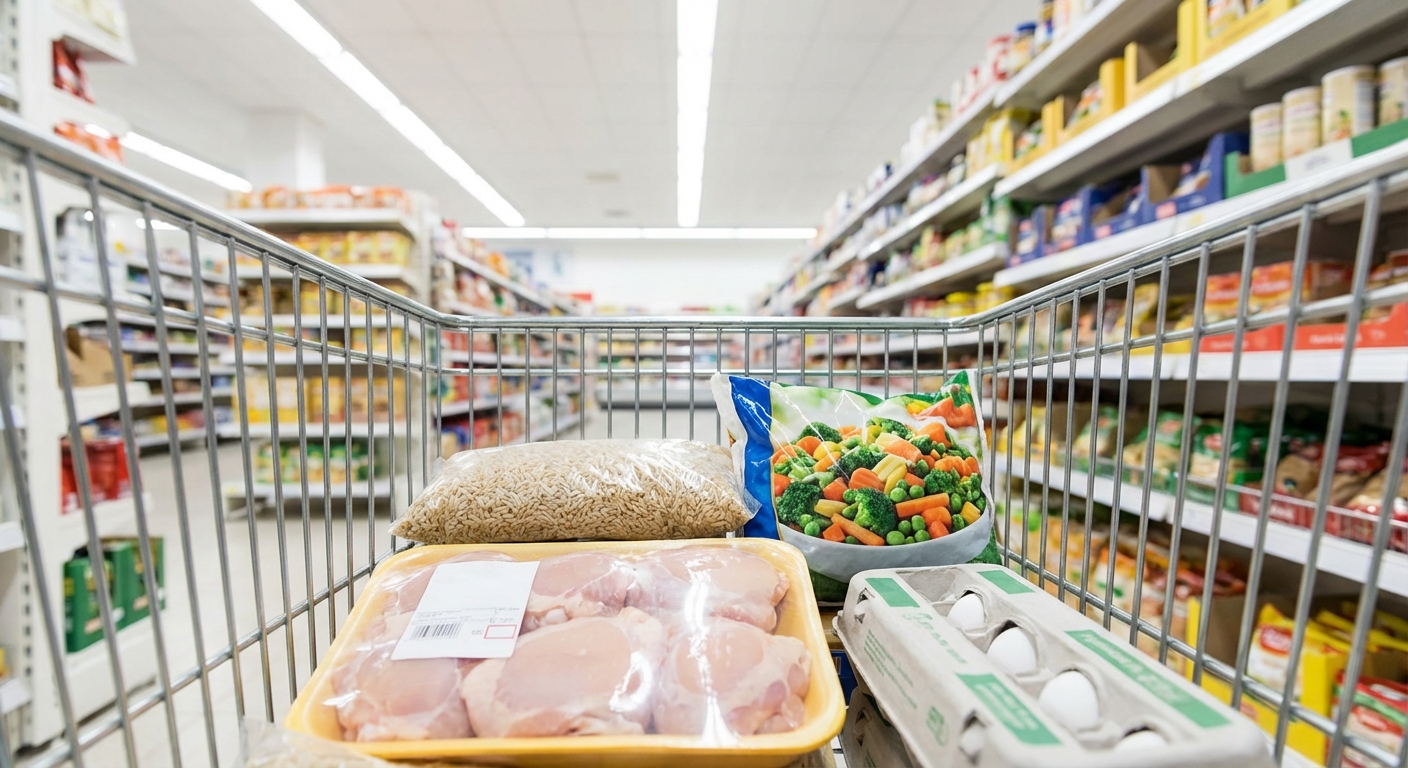
Sample budget cart
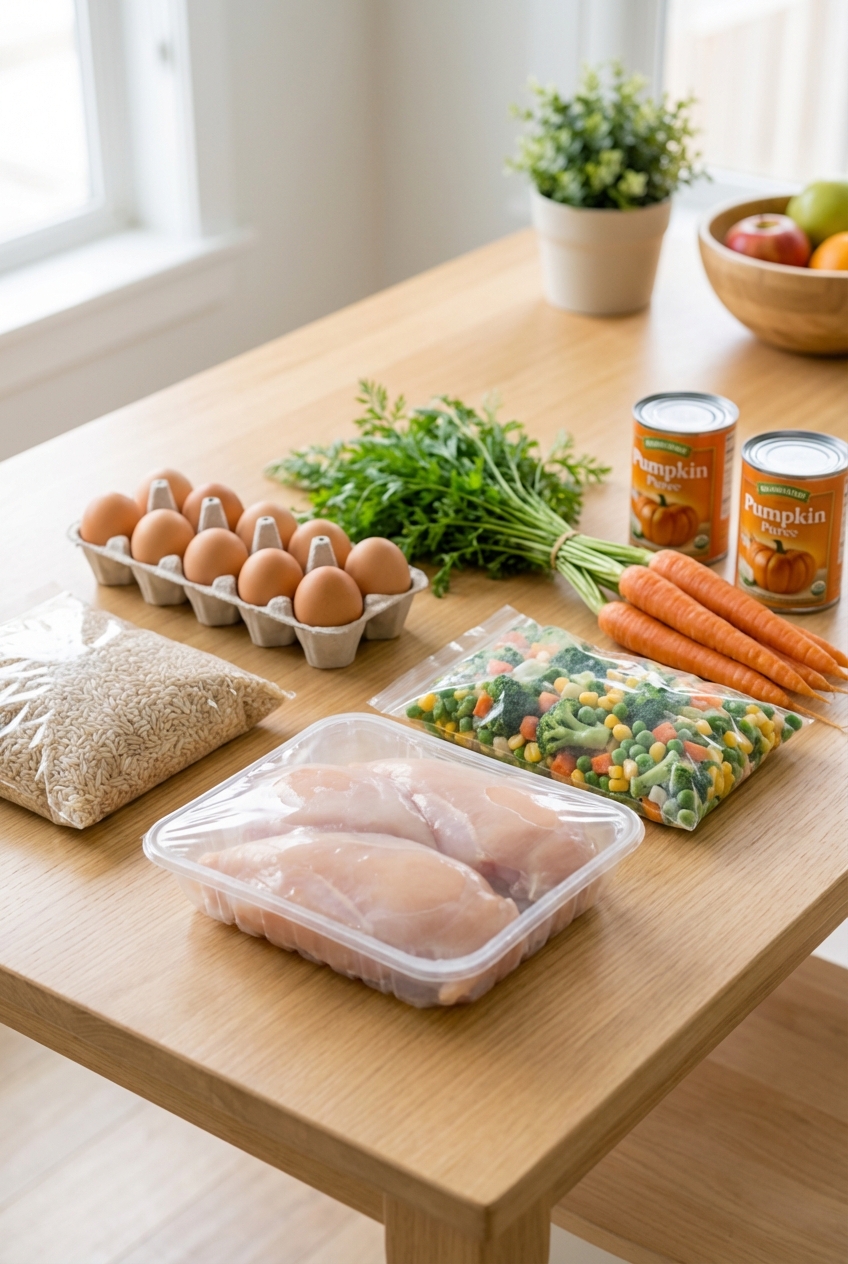
If you want a simple starting point, here is an example cart that can support multiple batches:
- 5 to 10 lb chicken leg quarters or thighs
- 2 dozen eggs
- 5 lb bag of rice or a large container of oats
- 2 large bags frozen green beans
- 1 large bag frozen broccoli or mixed vegetables
- 2 to 4 lb carrots
- 2 cans plain pumpkin
- Fish oil (pet product)
- Calcium source and balancing supplement as advised by your vet
Easy first batch recipe
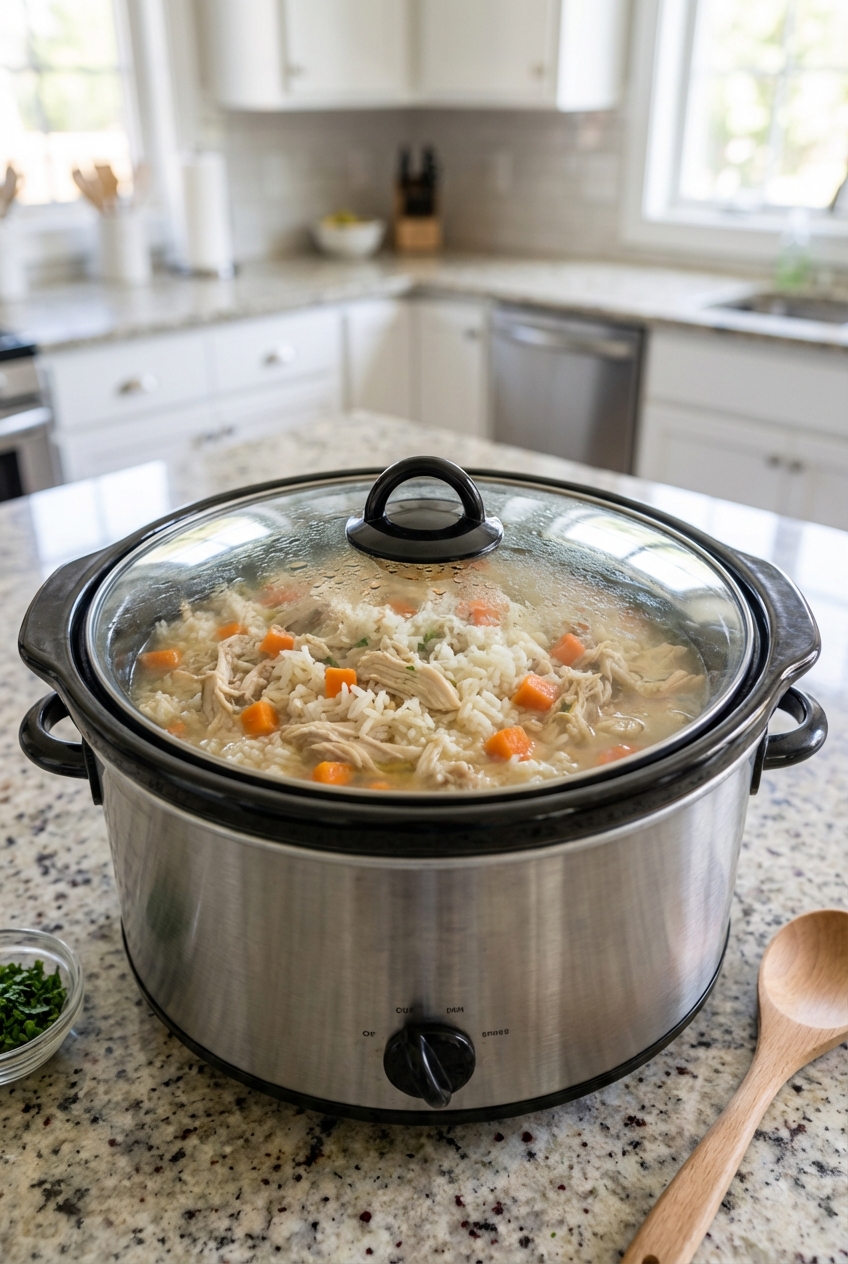
This is a gentle, budget-friendly combo many dogs tolerate well. Cook everything plainly with no seasoning.
Simple starting proportions (by volume):
- 50% cooked protein (chopped chicken thighs)
- 25% cooked veggies (steamed carrots and green beans)
- 25% cooked carb (rice)
Add-ins: You can add 1 to 2 teaspoons of plain pumpkin per meal if stool runs soft. If you are using fish oil or a supplement, use the label dose or your vet’s dose.
Do not skip the balancing step: This mix is a great starter, but it is not automatically complete and balanced for long-term feeding unless it is paired with a properly calculated calcium source and the right vitamin and mineral support.
Start by mixing a small portion into your dog’s current food and increase slowly over 7 to 14+ days. Watch appetite, energy, skin, and stool, and adjust as needed.
Food safety basics
- Cook poultry and ground meats thoroughly.
- Keep raw meat separate from cutting boards and utensils used for ready-to-eat foods.
- Refrigerate portions you will use within 3 to 4 days, and freeze the rest.
- Thaw in the fridge, not on the counter.
Quick FAQ
Is homemade always cheaper than kibble?
Not always. It depends on your dog’s size and your ingredient choices. Homemade tends to be most affordable when you batch cook, buy proteins on sale, and rely on frozen vegetables and staple grains.
Can I feed the same recipe every week?
For short periods, many dogs do fine. Long-term, rotating proteins and vegetables improves variety, but balance matters more than variety. If homemade is your dog’s main diet, work with your veterinarian for a complete plan.
What is the biggest mistake you see?
Skipping calcium, and guessing on supplement doses. Both are common, and both are preventable with the right plan.