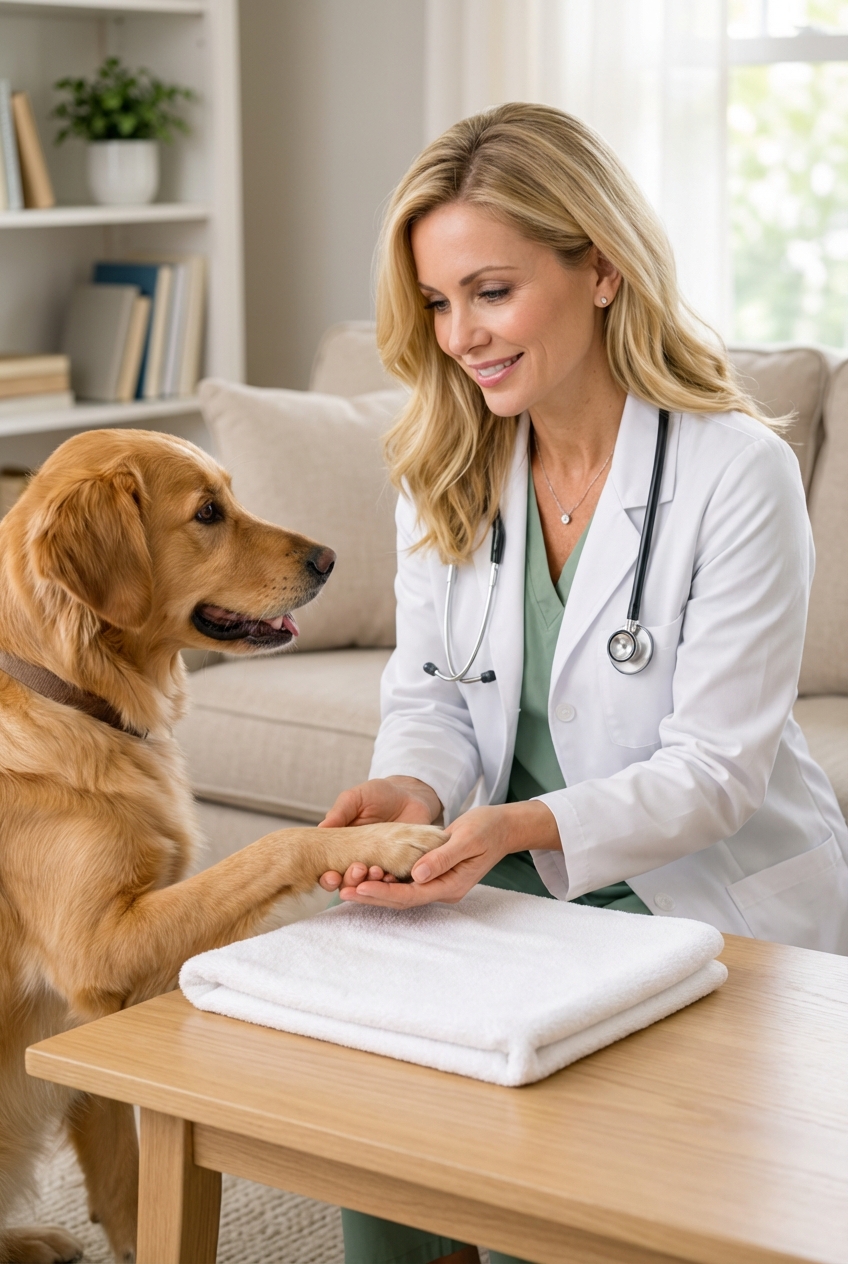
A broken dog nail can bleed a lot and hurt. Learn calm, step-by-step first aid, how to stop bleeding, prevent licking and infection, and when to see a vet fast.
Article
•
Designer Mixes
Broken Nail in Dogs: What to Do Now

Shari Shidate
Designer Mixes contributor
Few things make a dog parent’s stomach drop like spotting a broken nail. It can look dramatic, bleed a lot, and leave your dog limping or refusing to put weight on the paw. The good news is that many broken nails can be stabilized at home long enough to get to the vet safely.
Quick triage tip: A small chip at the very tip with little to no bleeding is often minor. A nail that is split, flapping, bleeding steadily, or torn into the pink center (the quick) is usually painful and needs prompt veterinary help.
Why broken nails hurt
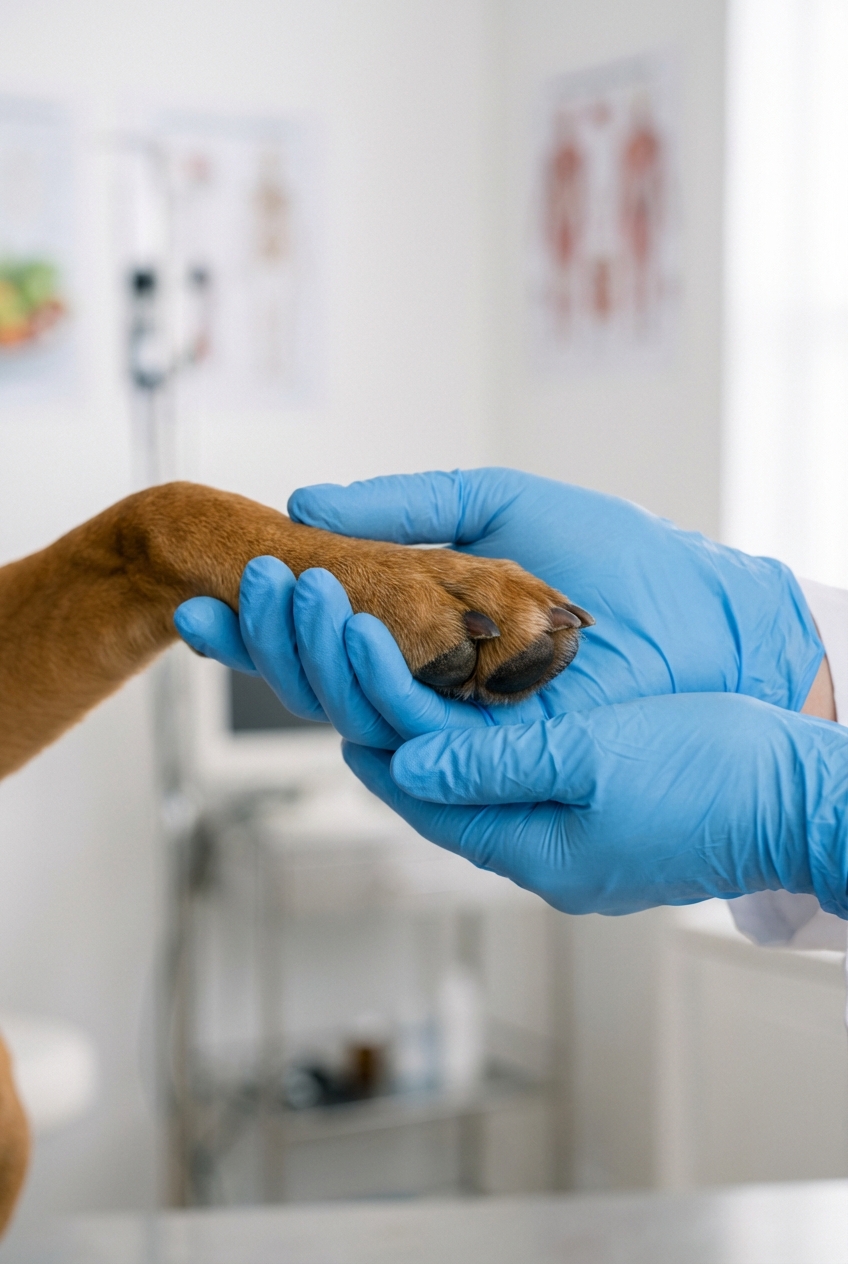
A dog’s nail is mostly hard keratin. Inside and underneath the nail is the quick, which is living tissue with blood vessels and nerves. When a nail cracks, splits, or tears, the quick can be exposed or injured, which is why broken nails can be extremely painful.
Some breaks are minor and only involve the hard outer nail. Others tear into the quick or partially detach the nail from the nail bed, which increases pain, bleeding, and infection risk.
How dogs break a nail
- Snagging a nail on carpet, blankets, or a deck board
- High-speed turns on rough surfaces or during zoomies
- Overgrown nails that leverage and split more easily
- Thin or brittle nails (sometimes from nutrition, age, allergies, or chronic licking)
- Dewclaw injuries since dewclaws can catch on things more often
Types of breaks
1) Nail tip chipped
The very end breaks off with minimal bleeding. Many dogs are only mildly uncomfortable.
2) Split nail
The nail cracks lengthwise. This can catch repeatedly and worsen if not trimmed and smoothed.
3) Partially torn nail
Part of the nail is still attached but loose or flapping. These are often very painful and frequently bleed.
4) Nail avulsion (ripped off)
This usually involves the nail bed and quick. It can be messy and painful and often needs veterinary care for pain control, cleaning, and sometimes antibiotics.
First aid: what to do now
If your dog is yelping, snapping, or panicking, your first job is safety. Pain can make even sweet dogs react. If needed, use a basket muzzle or a soft fabric muzzle and ask someone to help you hold your dog steady. If you cannot safely handle your dog, do not force it. Go to a veterinarian or emergency clinic for help.
Step 1: Stop the bleeding
- Apply firm pressure with clean gauze or a towel directly over the nail tip and toe for 5 to 10 minutes without checking constantly.
- If possible, keep the paw elevated while you hold pressure.
- If you have it, use styptic powder or a styptic pencil.
- In a pinch, you can use cornstarch or flour. Pack a small amount onto the nail tip and press.
Call a veterinarian urgently if the bleeding does not stop within about 10 to 15 minutes of steady pressure.
Step 2: Rinse gently if dirty
- Use saline or clean lukewarm water.
- Avoid hydrogen peroxide or rubbing alcohol on the nail bed. They can sting and may irritate tissue or delay healing.
Step 3: Protect the nail
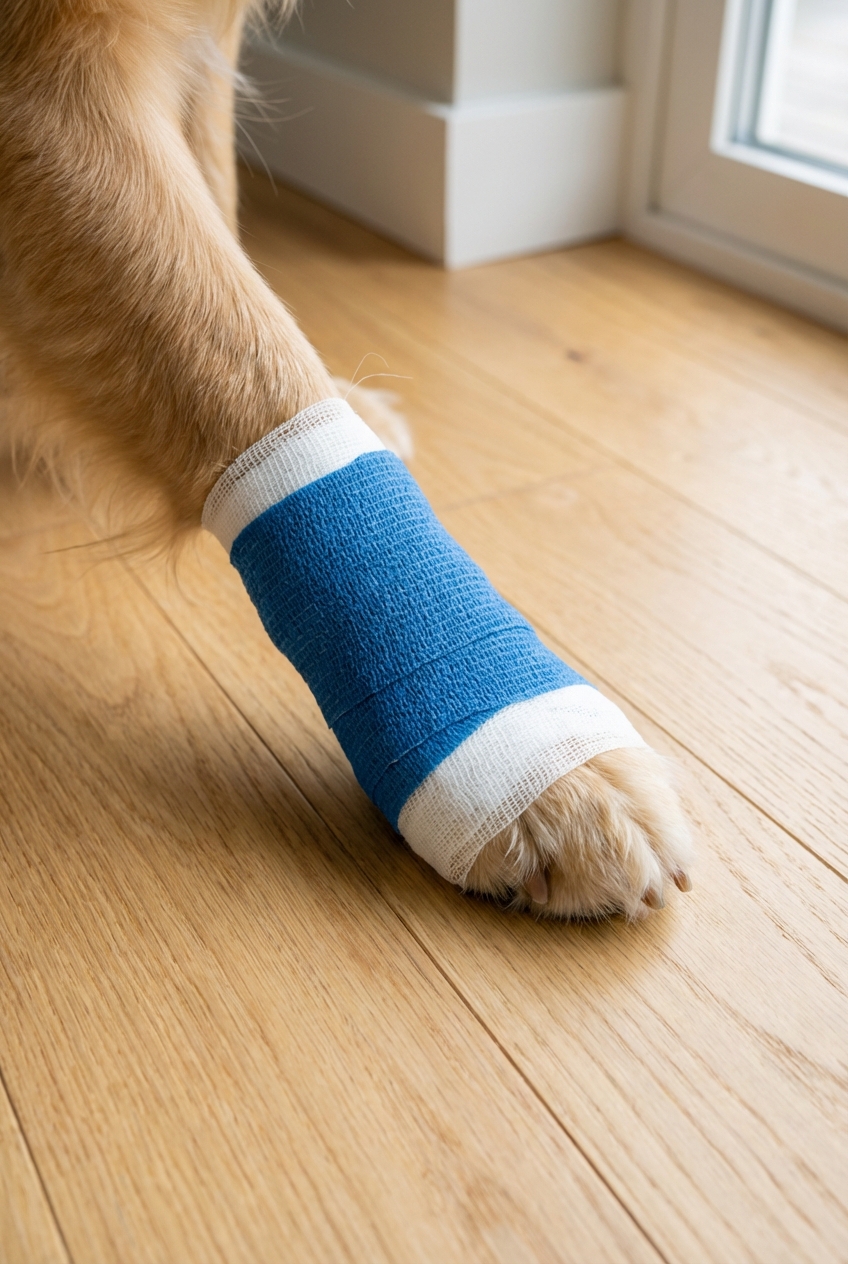
- Cover with a non-stick pad if you have one, then wrap with gauze or cohesive bandage.
- Wrap snugly but not tight. Toes should stay warm and normal colored.
- Cohesive wrap can tighten. Check the toes every 10 to 15 minutes for swelling, coolness, or color change. If anything looks off, remove the wrap and rewrap more loosely.
- This type of wrap is meant as a short-term first aid or transport bandage. In general, remove it within a few hours unless your veterinarian tells you to keep it on longer. If your vet places a bandage, follow their timeline (some injuries are bandaged for 24 to 48 hours).
After bandaging, keep your dog calm and indoors, and use a leash for potty breaks to prevent slipping and re-injury.
Step 4: Prevent licking
Licking can restart bleeding and introduce bacteria. An e-collar is often the fastest solution.
What not to do
- Do not rip off a loose nail. You can tear the nail bed and cause heavy bleeding.
- Do not cut deep into a painful, split nail without being able to clearly see what you are trimming. Cutting into the quick is painful and can worsen the injury. (This is especially tricky with dark or black nails where the quick is hard to see.)
- Do not give human pain meds like ibuprofen, naproxen, or acetaminophen unless your veterinarian specifically instructs you to. These can be dangerous for dogs.
- Do not seal the nail with glue, tape directly on the wound, or home “repair kits.” Trapping bacteria can increase infection risk.
When it is an emergency
Some nail injuries can wait for a same-day or next-day appointment, but others need urgent care.
Go to an emergency vet now if:
- Bleeding will not stop after 10 to 15 minutes of steady pressure
- The nail is hanging off or the toe looks twisted
- Your dog is non-weight-bearing or crying continuously
- You see a deep tear into the nail bed or exposed tissue
- There is significant swelling, heat, or pus
- Your dog has a history of bleeding disorders or is on blood-thinning medication
Make a prompt vet appointment if:
- The nail keeps catching and re-bleeding
- Your dog is licking obsessively or limping more than a few hours
- The nail is split up toward the base
- The dewclaw nail is damaged (these often need trimming back safely)
What your vet may do
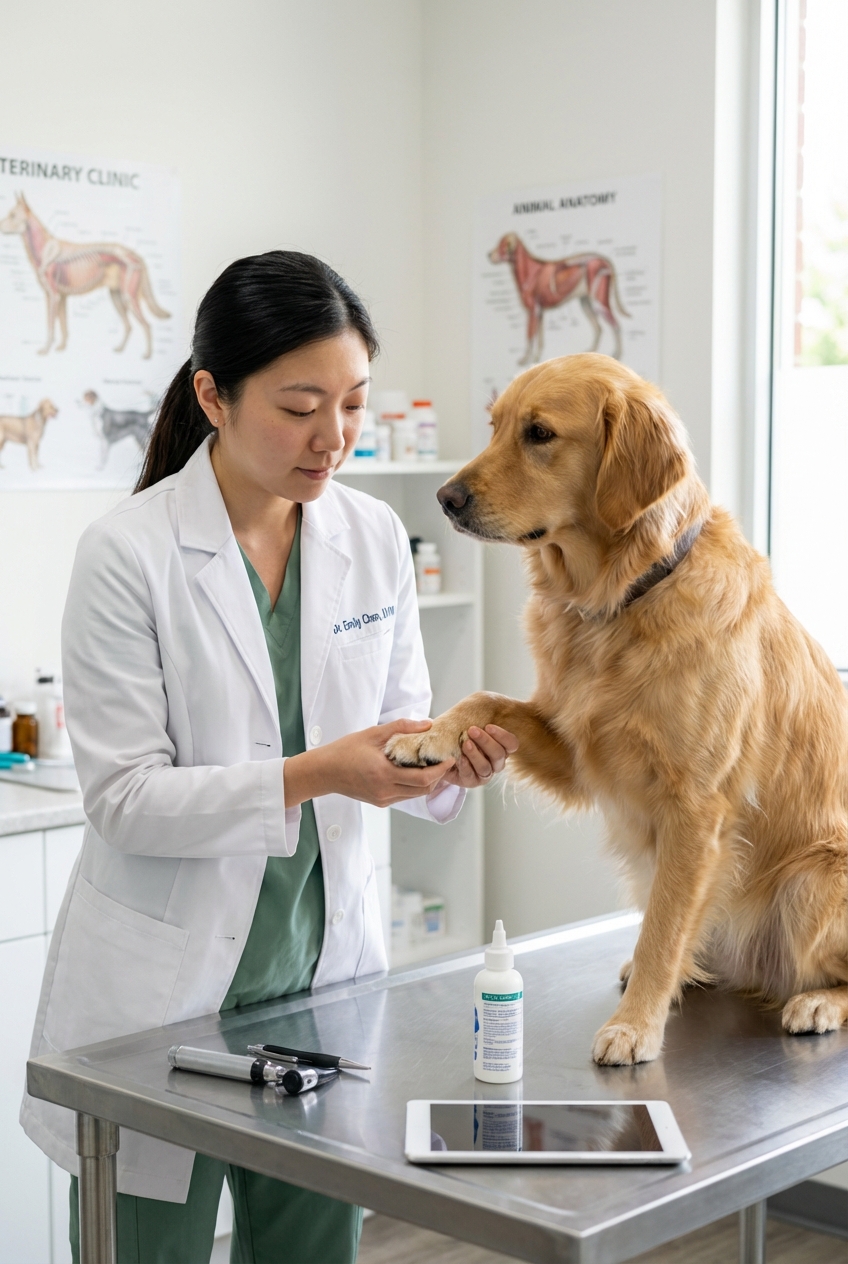
Veterinary care focuses on pain control, cleaning, and making sure no torn nail remains to keep stabbing the sensitive quick.
- Exam and paw check for additional injuries like toe fractures or foreign material
- Trim and smooth the damaged nail back to stable tissue
- Local anesthesia or light sedation for painful tears
- Bandage and instructions for home care
- Pain medication tailored for dogs
- Antibiotics if the nail bed is contaminated or infected
Home care after
Keep it clean and dry
If your vet sends your dog home with a bandage, follow their timeline for changes or removal. Outdoor potty breaks should be short, and you can use a bootie or a plastic bag over the bandage for a quick trip outside. Remove the cover immediately afterward to prevent moisture buildup.
Limit activity
No running, jumping, or rough play until your dog is comfortable and the nail is not tender. Leash walks only, and consider keeping your dog on non-slip flooring to avoid another awkward landing on the toe.
Watch for infection
- Worsening redness or swelling
- Heat in the toe
- Discharge or odor
- Increased limping after initial improvement
If you see any of these, call your vet. Nail bed infections can worsen quickly.
How long healing takes
Many dogs feel noticeably better within 24 to 72 hours once the damaged nail is stabilized and pain is treated appropriately. It can take longer with severe avulsions, nail bed trauma, or infection.
Nail regrowth is slower. A toenail may take weeks to months to fully grow out, depending on how much was damaged and your dog’s individual growth rate.
Preventing the next one
Keep nails at a healthy length
Overgrown nails are the number one setup for painful breaks. Ideally, nails should not click loudly on hard floors. If they do, it is time for a trim.
Do not forget dewclaws
Dewclaws do not always wear down naturally. They can curve, snag, and tear more easily.
Support nail strength
Nails are made largely of keratin, and overall skin and coat health often mirrors nail health. A complete, balanced diet matters. If your dog has chronically brittle nails, talk with your veterinarian about potential causes such as allergies, endocrine disease, chronic yeast, infection, immune disease, or nutrient imbalances. Some dogs benefit from omega-3 fatty acids or other targeted supplements, but it is best to personalize that plan with your vet.
Create safer surfaces
- Trim long carpet loops or repair rough deck boards
- Use traction rugs for dogs that slip on tile
- Be cautious with high-speed fetch on abrasive concrete
Home first aid kit checklist
- Gauze pads and non-stick pads
- Cohesive bandage wrap
- Styptic powder or styptic pencil
- Saline rinse
- E-collar
- Nail trimmers and a nail file (for minor chips only)
If you are ever unsure, it is completely okay to call your vet and describe what you see. A quick phone triage can save your dog pain and save you worry.
One last note from a veterinary assistant
In clinic, we see two common scenarios: a tiny nail chip that looks scary but heals fast, and a torn nail that keeps catching and bleeding until it is properly trimmed back and protected. When in doubt, err on the side of comfort and safety. A broken nail is not “just a nail” to your dog. It can be truly painful, and help is available.