Discover the British Shorthair’s calm, affectionate personality, plus practical care basics. Learn what shedding is normal, how often to brush, and key hea...
Article
•
Designer Mixes
British Shorthair Personality and Care Tips

Shari Shidate
Designer Mixes contributor
The British Shorthair is the cat-world version of a cozy, well-made sofa: calm, substantial, and quietly affectionate. If you love a companion who prefers being near you more than on you, this breed is often a wonderful fit. As a veterinary assistant, I see many families thrive with British Shorthairs because they tend to be steady-tempered, adaptable, and easy to live with when their basic needs are met.
Quick note: Breed traits are tendencies, not guarantees. Individual cats can be more cuddly, more talkative, or more energetic than the “typical” description.
Quick facts
- Size: Medium to large, solid build (adult weight varies widely by sex, genetics, and lifestyle)
- Energy: Moderate, often more “steady” than high-octane
- Affection style: Often side-by-side rather than constant lap time
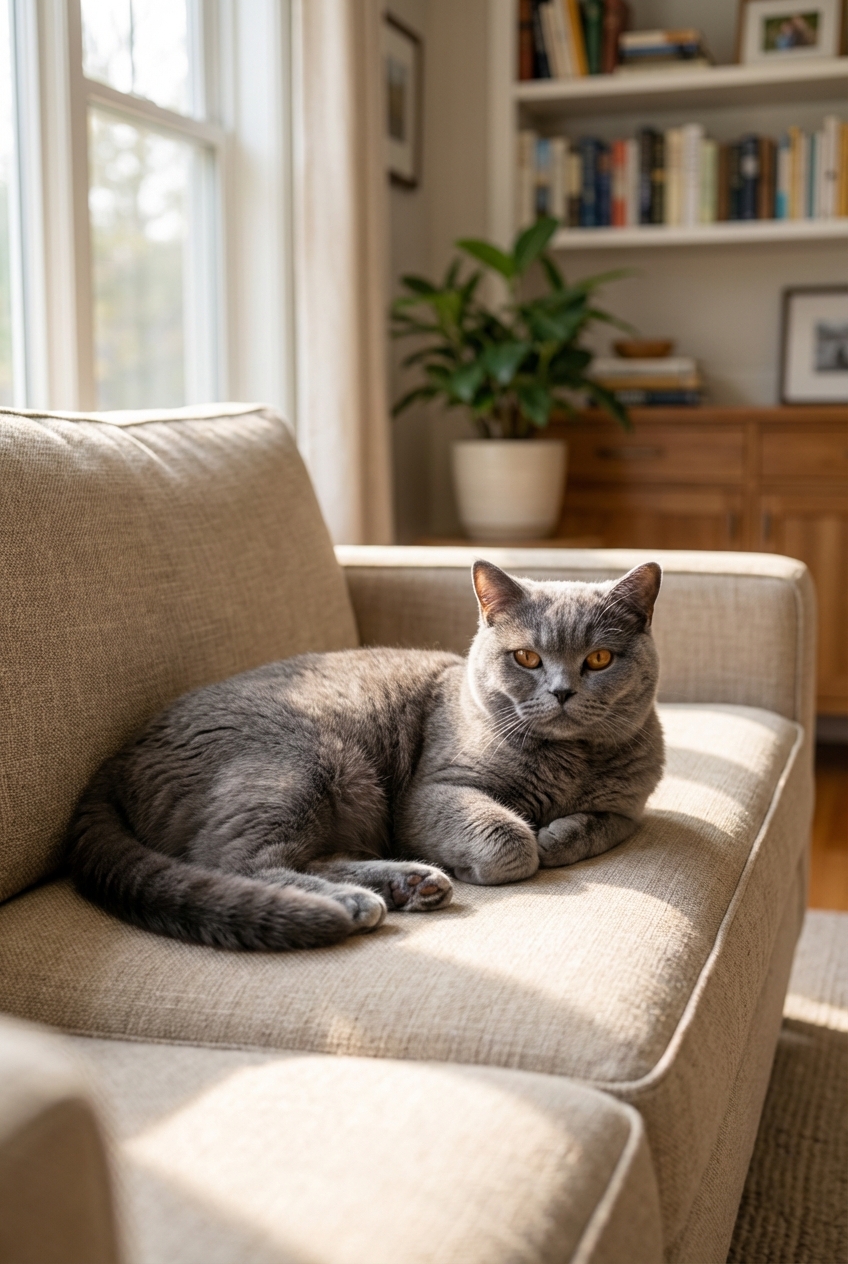
- Coat: Dense, plush, seasonal shedding is common
- Lifespan: Commonly 12 to 16+ years with good preventive care (individuals vary)
British Shorthair personality
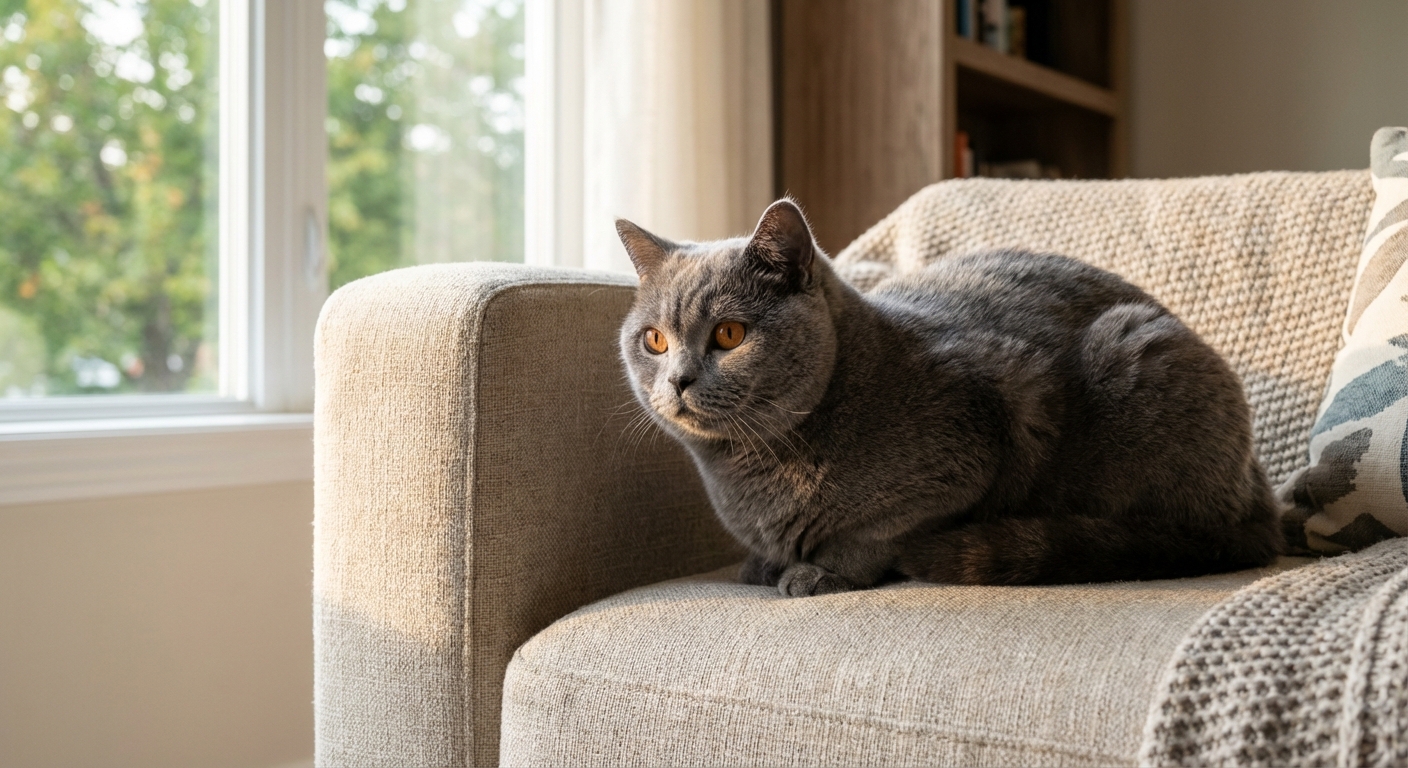
British Shorthairs are known for their round faces, plush coats, and famously unbothered vibe. Many are affectionate in a low-key way, preferring to share your space, follow you from room to room, or sit nearby while you work.
- Quietly social: Many enjoy company but do not demand constant attention.
- Not always a lap cat: Some will cuddle, but many prefer “side-by-side” affection.
- Gentle and tolerant: They are often patient with respectful children and calm households.
- Moderate energy: Many enjoy play but are not as intense as some highly athletic breeds.
- Independent streak: Many handle alone time better than clingier breeds, though they still need daily interaction.
- Handling preference: Some dislike being carried and prefer affection at floor level or from a nearby spot.
Tip: If you want a British Shorthair to be more physically affectionate, build trust with predictable routines, gentle handling, and letting your cat choose the pace of contact.
Daily care basics
Once you have a feel for their laid-back personality, the rest is mostly about steady routines: coat care, dental habits, and simple preventive maintenance.
Grooming that plush coat
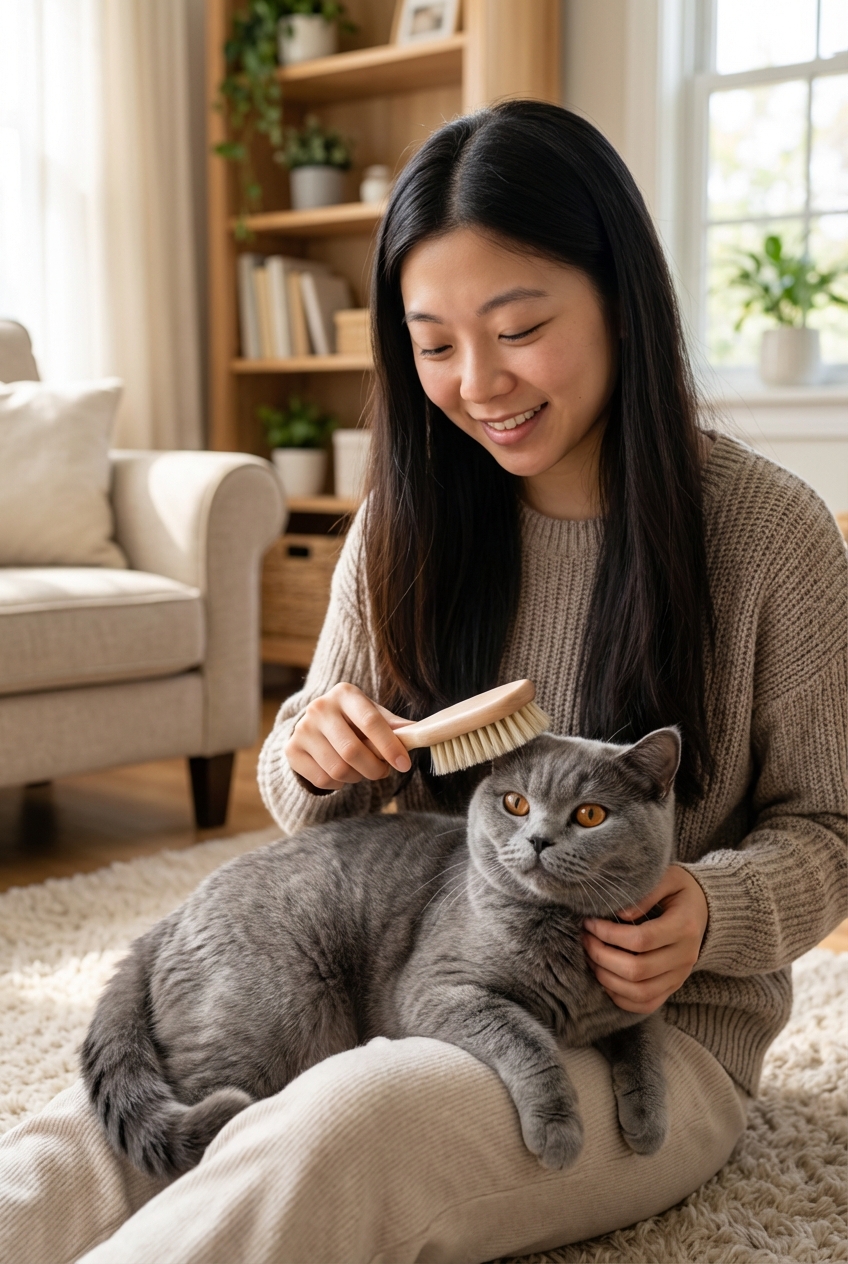
That teddy-bear coat is dense, which means it can shed more than you expect. Most British Shorthairs do well with regular brushing to reduce loose hair and hairballs.
- Brush 1 to 2 times per week with a rubber grooming mitt, soft bristle brush, or a gentle slicker if your cat tolerates it. If you use a slicker, use light pressure to avoid skin irritation.
- Increase brushing during seasonal shedding when you notice more fur on furniture.
- Watch for hairballs: An occasional hairball can be normal. If your cat is vomiting hairballs more than once or twice a month, seems constipated, stops eating, or is frequently gagging without producing anything, check in with your veterinarian.
Nail trims, teeth, and ears
- Nails: Trim every 2 to 4 weeks. Provide scratching posts to help maintain nail health and protect furniture.
- Teeth: Dental disease is very common in cats. Ideally, brush a few times per week with cat-safe toothpaste. If brushing is a no-go, ask your vet about dental diets, gels, and treats that are VOHC-accepted.
- Ears: Check weekly. Clean only if you see waxy buildup, and use a cat-safe ear cleaner.
Feeding and healthy weight
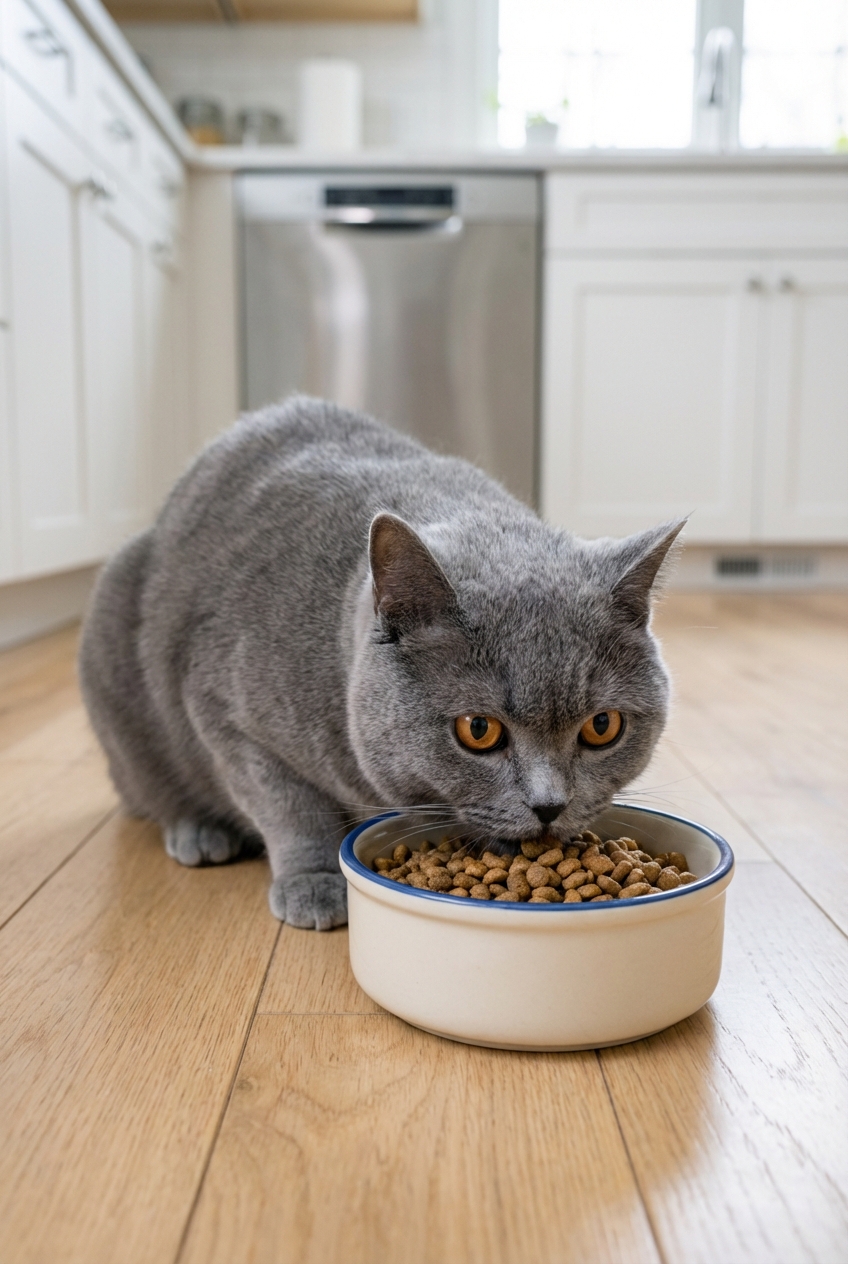
British Shorthairs are famous for being sturdy, but that can become a problem if “sturdy” turns into overweight. Extra pounds can contribute to arthritis, diabetes, and some urinary tract issues, and they can shorten a cat’s healthy years.
How to feed smart
- Measure meals: Free-feeding can be risky for this breed, especially in lower-activity adults. Use a measuring cup or kitchen scale.
- Prioritize protein: Cats are obligate carnivores and generally do best with protein-forward diets.
- Use wet food strategically: Wet food can support hydration and help some cats feel fuller with fewer calories.
- Treats in moderation: Keep treats to under 10% of daily calories when possible.
Actionable check: Ask your vet to show you how to body-condition score your cat. It is a simple hands-on way to track weight trends before they become health problems.
Exercise and enrichment
British Shorthairs are not usually hyper, but they still need daily movement for joint health, weight control, and mental wellness. Think short, consistent play sessions rather than marathon workouts.
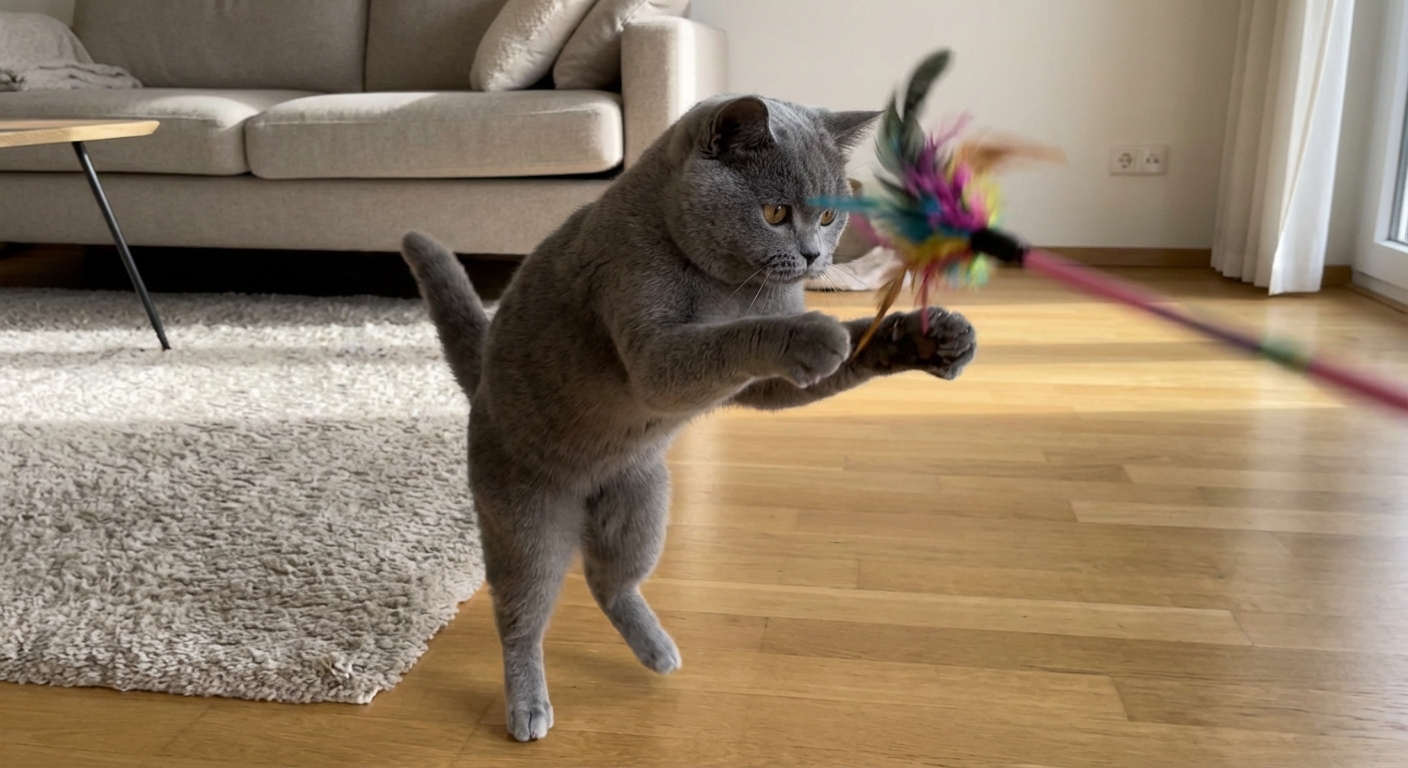
- Two play sessions daily: 5 to 10 minutes each using wand toys, soft balls, or a feather teaser.
- Encourage natural hunting behaviors: Let your cat stalk, chase, and “catch” the toy.
- Food puzzles: Great for boredom and weight management.
- Cat trees and window perches: Provide safe vertical space without requiring extreme athleticism.
Many cats gain weight not because owners overfeed on purpose, but because routines slowly drift. A little more food here, a few more treats there, and activity drops. Small, consistent habits make the biggest difference.
Common health considerations
No cat breed is completely free of health concerns. British Shorthairs are generally robust, but there are a few issues to be aware of so you can partner with your veterinarian early. Prevalence and risk vary by country, bloodline, and individual cat.
Hypertrophic cardiomyopathy (HCM)
HCM is a heart condition seen in many cat breeds. It has been reported in British Shorthairs, and risk may be higher in some lines. Many veterinarians, cardiologists, and breed-focused programs encourage screening of breeding cats with echocardiograms. For pet owners, routine wellness exams matter because vets may pick up a heart murmur or rhythm change and recommend further testing if needed.
Polycystic kidney disease (PKD)
PKD is most strongly associated with Persians. In British Shorthairs, the risk is generally lineage-dependent, particularly in lines with historical Persian ancestry. Reputable breeders may screen breeding cats using PKD1 DNA testing and, in some cases, imaging such as ultrasound. For pet owners, keep up with routine wellness care and age-appropriate lab work as recommended by your veterinarian. Increased thirst, increased urination, appetite changes, and weight loss can be signs of kidney disease and should always be checked out, whether or not PKD is the cause.
Dental disease
British Shorthairs can have the same dental risks as any cat. Bad breath, drooling, pawing at the mouth, or dropping food can be signs it is time for an exam.
Obesity and arthritis
Their stocky build can hide weight gain until it is significant. Extra weight strains joints. If your cat hesitates to jump, moves stiffly, or avoids stairs, ask your vet about pain control and weight strategies.
Important: This article is general guidance, not a substitute for veterinary care. Only your veterinarian can diagnose health conditions. If you notice appetite changes, breathing changes, lethargy, vomiting, diarrhea, or hiding behavior, schedule a visit.
Ideal home and family fit
British Shorthairs often do best in homes that appreciate calm companionship. They can thrive in apartments or larger homes as long as they have enrichment and predictable routines.
- Great match for: Busy professionals, families who want a gentle cat, seniors, and first-time cat owners.
- May not love: Very chaotic homes or constant handling. Many prefer consent-based affection.
- Other pets: Often do well with respectful dogs and other cats when introductions are slow and structured.

Choosing a cat
If you are buying from a breeder, look for transparent health testing, early socialization, and a willingness to answer questions about the parents’ temperaments. For this breed, it is reasonable to ask what screening they do for HCM and whether their lines have any Persian ancestry and PKD1 testing.
If you are adopting, you can still get a great sense of fit by asking about the cat’s activity level, handling tolerance, and how they do with other pets. A calm adult British Shorthair (or mix) can be an amazing match for many households.
New owner checklist
- Schedule a wellness visit within the first week or two, especially if adopting.
- Set up litter boxes: Aim for the “n+1” rule (one box per cat, plus one extra). For one cat, two boxes is ideal. Place them in quiet, accessible areas and scoop daily.
- Choose a measured feeding routine and track weight monthly at home.
- Brush weekly and start gentle tooth care early.
- Plan daily play and rotate toys to prevent boredom.
- Microchip and ID even for indoor cats, because accidents happen.
If you are looking for a steady, plush-coated companion who brings calm energy to your home, the British Shorthair may be exactly your kind of cat. With consistent routines, a healthy diet, and simple enrichment, they often reward you with years of quiet devotion.