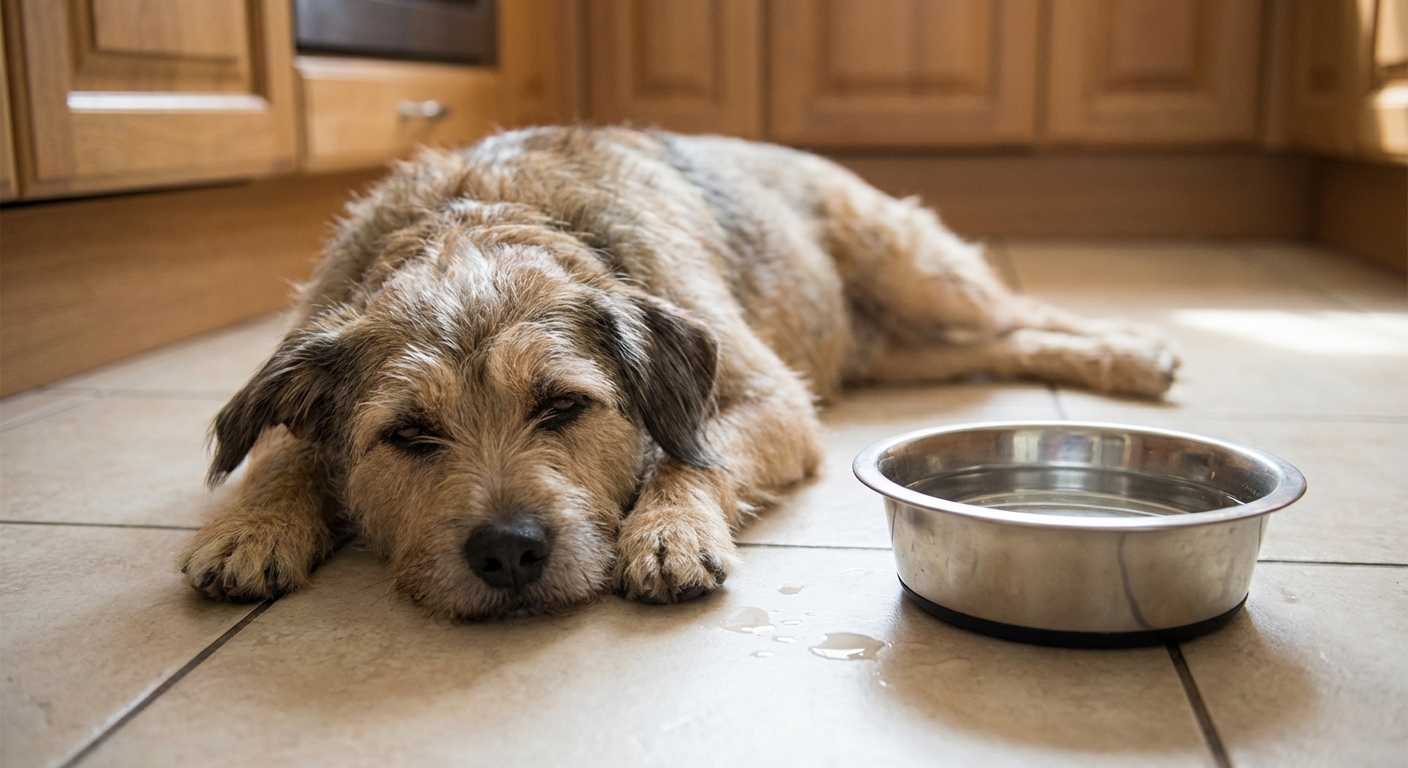
Step-by-step home care for mild dog diarrhea and vomiting: short food break, small sips of water, bland diet, pumpkin, probiotics, dehydration checks, and ur...
Article
•
Designer Mixes
Bright Yellow Dog Vomit: Family-Friendly Advice You Need

Shari Shidate
Designer Mixes contributor
Seeing bright yellow vomit on the carpet is upsetting, especially when kids are watching and asking questions. As a veterinary assistant here in Frisco, Texas, I want you to know two things can be true at once: yellow vomit is often caused by something simple, and sometimes it is a sign you should get help fast.
Bright yellow vomit is often bile, a digestive fluid made by the liver and stored and concentrated in the gallbladder (and also released into the intestines during digestion). Yellow vomit can also be partially digested food or liquid mixed with bile. When yellow shows up, it often means your dog’s stomach was empty or irritated. The goal is to figure out why it happened and whether your pup is otherwise acting normal.
Quick note: This article can help you triage and care for mild upset stomachs, but it cannot diagnose your dog. When in doubt, call your veterinarian.
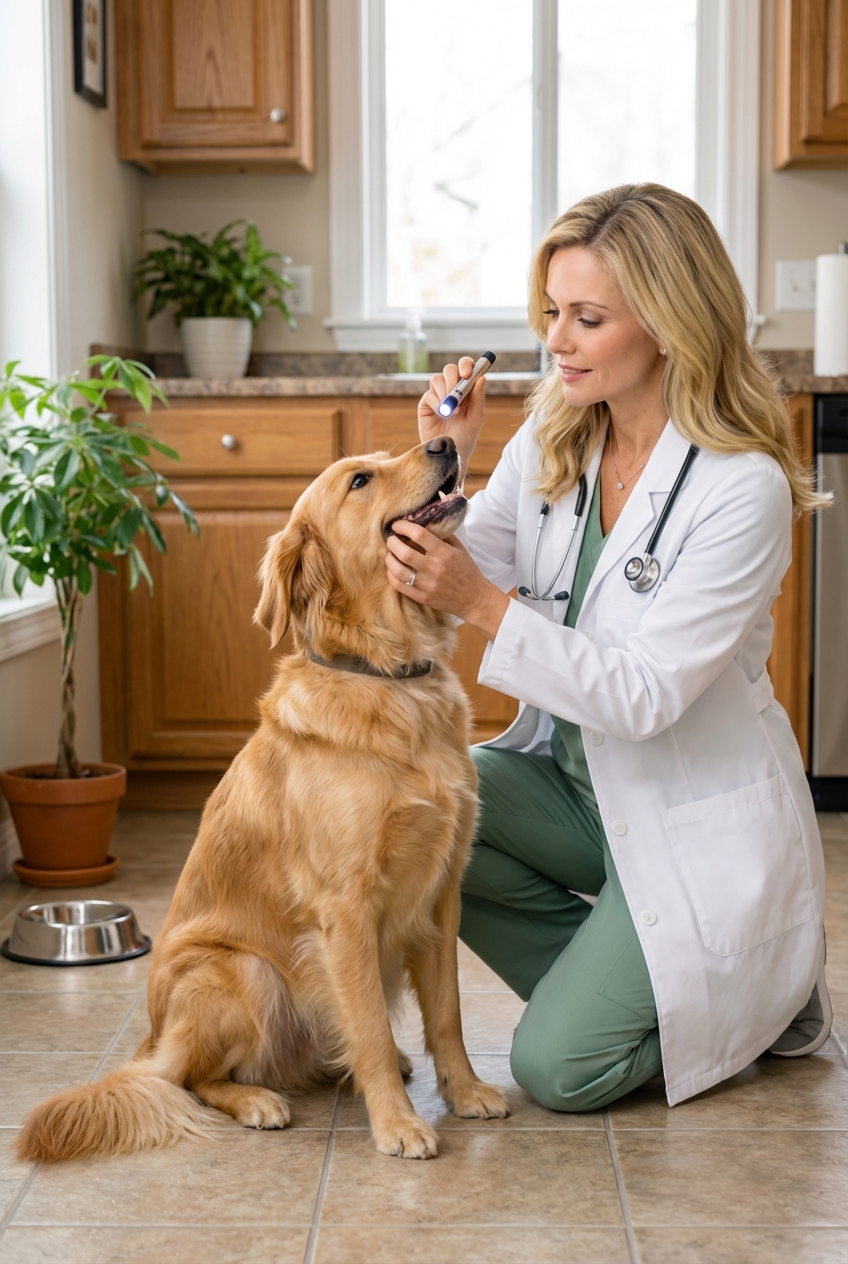
What bright yellow vomit can mean
In day-to-day life, yellow vomit most commonly points to stomach irritation plus bile. A few common, evidence-based possibilities include:
- Empty stomach vomiting: Many dogs vomit yellow foam early in the morning or late at night when their stomach is empty for a long stretch.
- Bilious vomiting syndrome: A pattern where a dog vomits bile, often in the morning, and then feels better after eating. It is seen frequently in practice and is often manageable with feeding schedule changes.
- Dietary indiscretion: Eating grass, fatty scraps, spoiled food, or raiding the trash can irritates the stomach lining.
- Sudden diet change or new treats: Even “healthy” additions can be too much, too fast.
- Motion sickness: Car rides can trigger nausea that ends in yellow vomit.
- GI upset from parasites or infection: More likely if vomiting comes with diarrhea, poor appetite, or lethargy.
Less commonly, yellow vomiting can be linked to pancreatitis, intestinal blockage, or liver and gallbladder disease. Those situations usually come with other red flags, which we will cover below.
Also helpful to know: Some owners say “vomiting” when it is actually regurgitation (food coming back up with little effort, often soon after eating). If you are not sure which is happening, your vet can help you sort it out because it changes the list of likely causes.
Fast safety check: Is this an emergency?
Use this quick checklist before you focus on cleanup. These are general rules of thumb. Smaller dogs, puppies, seniors, and medically fragile dogs can go downhill faster, so seek help earlier.
Call your veterinarian or an emergency clinic right away if any of these are true:
- Repeated vomiting (more than 2 to 3 times in a few hours) or vomiting that continues beyond 12 to 24 hours
- Blood in the vomit (red streaks or coffee-ground appearance)
- Severe lethargy, collapse, weakness, pale gums, or your dog seems “not themselves”
- Abdominal pain (tense belly, whining, “prayer position” with rear end up, reluctance to be touched)
- Bloated abdomen, unproductive retching, or excessive drooling (possible bloat in deep-chested breeds)
- Suspected toxin exposure (xylitol gum, grapes or raisins, rodent bait, human meds, THC products, cleaning chemicals)
- Possible obstruction (chewed toys, socks, corn cobs, string, bones)
- Cannot keep water down
- Puppy, senior, or medically fragile dog (diabetes, kidney disease, Addison’s disease, on NSAIDs or steroids)
Also watch for dehydration, especially if vomiting is paired with diarrhea: tacky or dry gums, sunken-looking eyes, and low energy are common clues.
If you are unsure, it is always appropriate to call your vet for guidance. A quick phone conversation can prevent a long night.
Family-friendly cleanup and kid-safe talk
When kids are involved, your job is part nurse and part calm narrator. Keep it simple and factual.
What to say to kids
Try: “Buddy’s tummy is upset. We’re going to help him rest and drink little sips of water. The vet will help us if he doesn’t feel better.”
Clean-up steps
- Wear gloves if you have them.
- Blot first, do not rub.
- Use an enzyme cleaner on carpet or upholstery (it breaks down proteins that cause lingering odor).
- Wash bedding on hot if possible.
- Keep other pets away until cleaned, since vomit can contain infectious organisms.

What you can do at home
If your dog vomited once, is bright-eyed, and wants to move around, you can often try gentle home care while staying alert.
Step 1: Let the stomach rest
Many veterinarians recommend a brief food break for adult dogs after a single vomiting episode. For many otherwise healthy adult dogs, 6 to 12 hours without food is commonly used, especially if your veterinarian has previously told you this approach is safe for your dog.
Do not fast puppies, toy breeds, or diabetic dogs without veterinary instruction.
Step 2: Offer water in small amounts
- Give small, frequent sips instead of a full bowl if your dog gulps and vomits again.
- If water triggers vomiting, call your vet.
Step 3: Reintroduce a bland meal
Once vomiting stops and water is staying down, offer a small bland meal. Typical vet-approved options include:
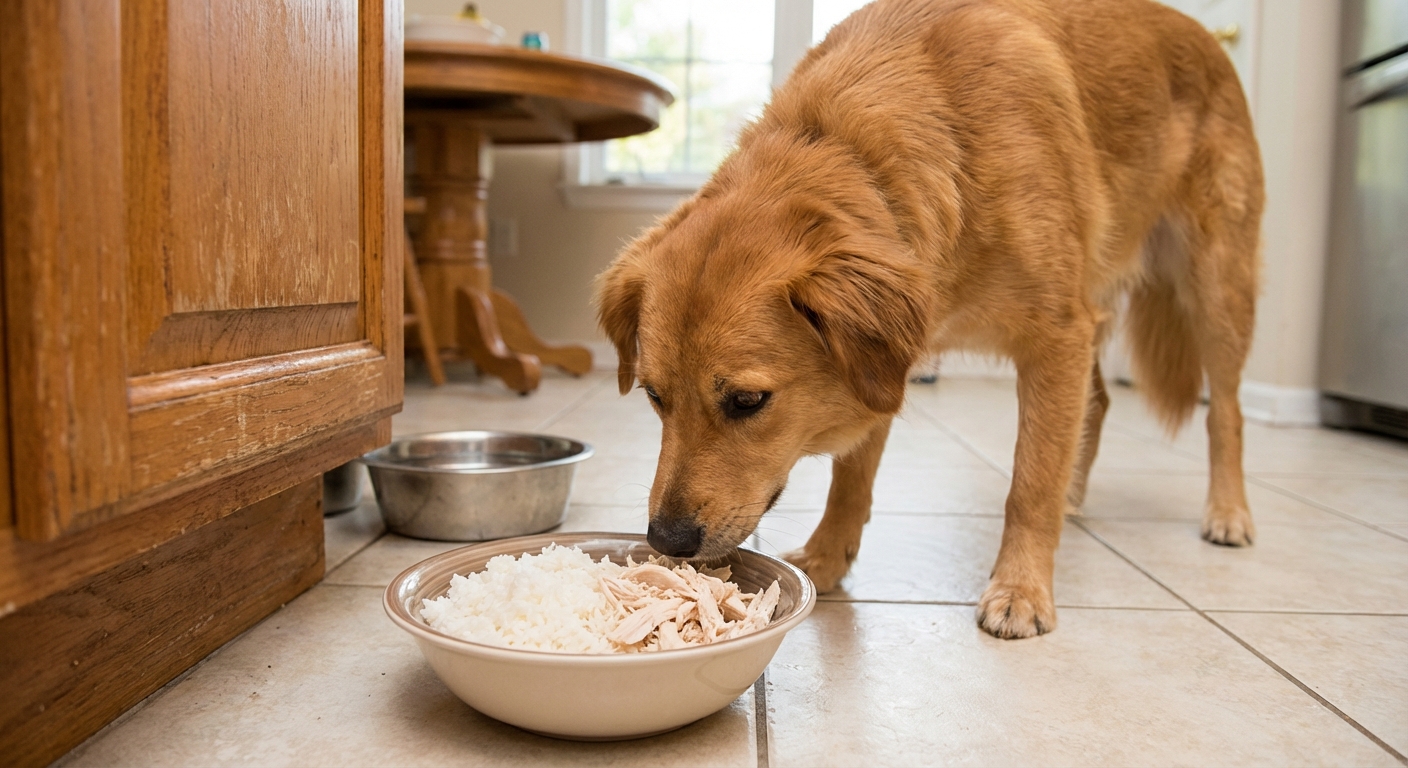
- Boiled boneless, skinless chicken breast with plain white rice
- Boiled lean ground turkey (fat drained well) or turkey breast with rice
Keep it simple: no seasoning, no butter, no oils, and trim away skin and visible fat. Feed small portions every 4 to 6 hours for the first day, then gradually transition back to regular food over 2 to 3 days. If your dog has known food sensitivities, follow your veterinarian’s guidance on the best bland option.
Step 4: Prevent empty-stomach bile vomiting
If the pattern is mostly early morning yellow foam, try these practical changes:
- Add a small bedtime snack (a few bites of regular kibble or a small bland snack).
- Split meals into 3 smaller meals instead of 2 larger ones.
- Keep treats consistent and avoid long gaps between meals.
If this becomes frequent, your veterinarian may recommend diagnostics or a short trial of anti-nausea or acid-reducing medication.
When it may be more serious
Yellow vomit is not a diagnosis, it is a clue. Watch the full picture.
Pancreatitis
Often associated with fatty foods and can cause repeated vomiting, abdominal pain, decreased appetite, and lethargy. This needs veterinary care.
Intestinal blockage
Suspect this if your dog chews toys, swallows socks, or vomits repeatedly and cannot keep food or water down. Some dogs will still try to eat, so do not rely on appetite alone.
Liver or gallbladder disease
May come with poor appetite, weight loss, diarrhea, and sometimes yellowing of the whites of the eyes or gums. Bloodwork and imaging help clarify this.
Parvovirus or infectious gastroenteritis
Especially concerning in puppies or unvaccinated dogs. Signs include vomiting, diarrhea (often severe), lethargy, and dehydration.
What your vet may ask
Having details ready makes your call more efficient. Jot down:
- How many times your dog vomited and when it started
- Color and texture (foam, liquid, food present)
- Any diarrhea, blood, or straining
- Eating and drinking behavior since the episode
- Possible exposures (trash, new treats, human food, plants, medications)
- Your dog’s age, weight, and current medications
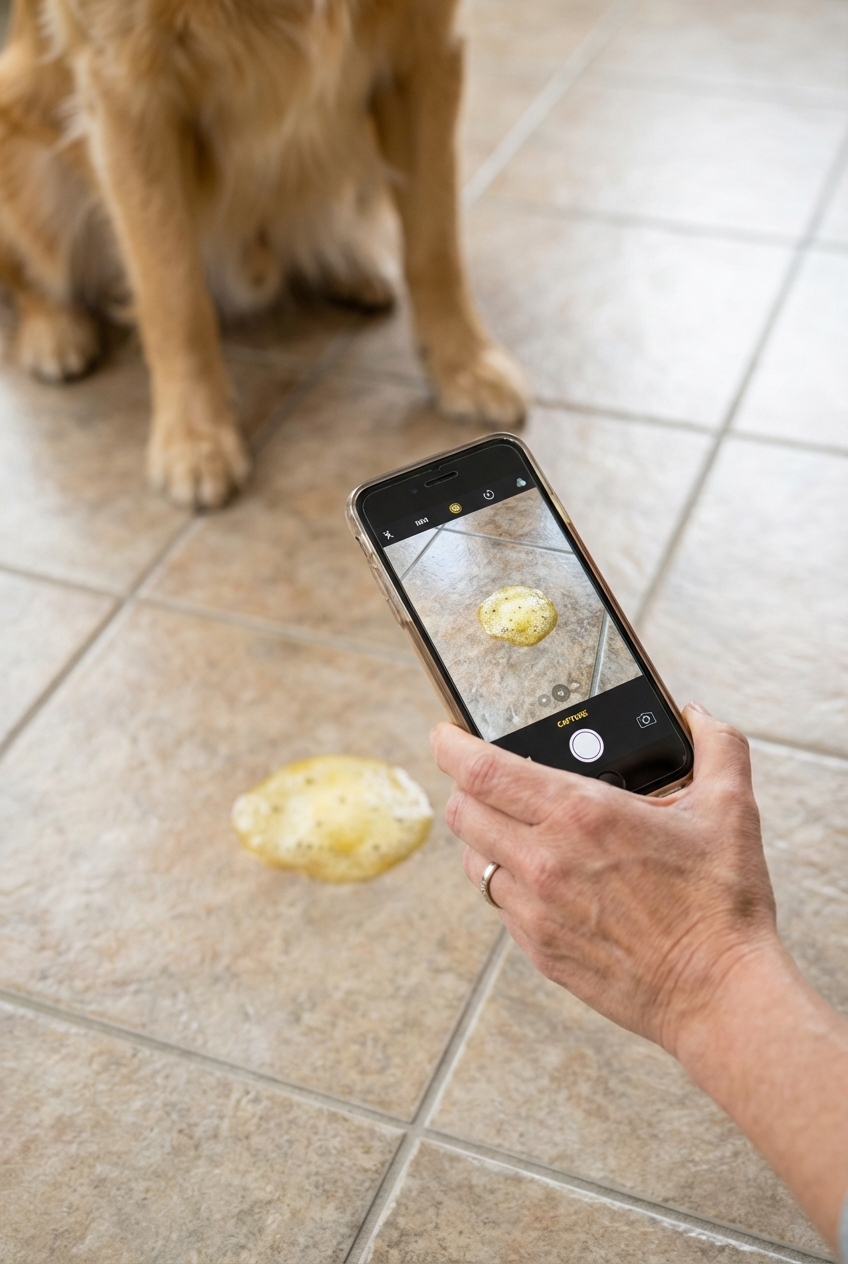
If you can safely do so, take a quick photo of the vomit for your veterinarian. It sounds gross, but it can be genuinely helpful.
How to lower the odds next time
A lot of “mystery vomit” can be prevented with simple routines that work well for busy families.
- Keep meals predictable and avoid big gaps between dinner and breakfast.
- Make diet changes slowly over 7 to 10 days.
- Use a trash can with a locking lid and keep kids’ snack wrappers out of reach.
- Choose chew toys wisely and supervise high-risk chewers.
- Limit fatty table scraps, especially around holidays.
- Keep up with parasite prevention and recommended vaccines.
And if you are transitioning toward homemade or fresh food, go slowly and prioritize balanced nutrition. Even a partial switch, done carefully, can support better digestion for many dogs.
Quick recap
Bright yellow dog vomit is often bile from an empty or irritated stomach, sometimes mixed with partially digested food or liquid. One episode in an otherwise normal dog can often be managed with rest, small sips of water, and a bland diet. Repeated vomiting, pain, lethargy, blood, toxin exposure, or inability to keep water down means it is time to call your veterinarian right away.
If you track the details above and share them with your veterinarian, it can help your clinic team triage quickly and decide what your dog needs next.