
Learn what to expect with Boxer dogs from puppyhood to senior years—temperament, exercise needs, training tips, nutrition, grooming, preventive care, and c...
Article
•
Designer Mixes
Boxer Dog Health: Cardiomyopathy and Cancer Risks

Shari Shidate
Designer Mixes contributor
Boxers are one of those breeds that steal your heart fast. They are bright, athletic, and deeply people-focused. But as a veterinary assistant here in Frisco, Texas, I have also seen a pattern: in clinical practice and in breed health discussions, Boxers show up more often than many breeds when it comes to certain heart diseases and several types of cancer.
The good news is that awareness makes a real difference. When you know what to watch for, what to ask your veterinarian, and how to support your Boxer’s overall health, you can often catch problems earlier and make more confident care decisions.

Why Boxers are higher risk
Every breed has its “known issues,” and Boxers are no exception. Two of the biggest concerns are:
- Arrhythmogenic cardiomyopathy, commonly called Boxer ARVC (Boxer arrhythmogenic right ventricular cardiomyopathy)
- Cancer, including mast cell tumors and lymphoma, among others
Genetics play a major role, but environment, body condition, parasite prevention, and routine screening can all influence outcomes. Think of risk like a weather forecast: you cannot control everything, but you can prepare and respond faster.
ARVC and other heart disease
What cardiomyopathy means
Cardiomyopathy is a disease of the heart muscle. In Boxers, the classic breed-associated form is ARVC, where the heart’s electrical rhythm becomes unstable. This often involves ventricular arrhythmias, and it can be intermittent. Some dogs can seem completely normal for years, which is one reason screening matters.
Some Boxers can also develop a dilated phenotype with reduced pumping function (sometimes described as DCM-like changes). Not every Boxer with rhythm issues has this type of structural change. That is why targeted testing is so helpful.
Signs owners notice at home
Heart disease can be sneaky. Many Boxers look totally normal until something changes. Contact your veterinarian promptly if you notice:
- Fainting or sudden collapse (even if they bounce right back)
- Weakness, especially during excitement or exercise
- Exercise intolerance (your dog quits earlier than usual)
- Coughing or increased breathing effort, especially if it is new, persistent, or getting worse (and keep in mind coughing can also be caused by non-heart issues)
- Restlessness at night, trouble getting comfortable
- “Off” episodes that are hard to describe but repeat
If your Boxer collapses, has trouble breathing, or you see blue or gray gums, treat it like an emergency.
How vets screen for ARVC
Because arrhythmias can come and go, a normal exam does not always rule out a problem. Your veterinarian may recommend:
- Auscultation (listening for murmurs and rhythm abnormalities)
- Electrocardiogram (ECG/EKG) to evaluate electrical activity
- Holter monitor (24-hour or longer recording) to catch intermittent arrhythmias
- Echocardiogram (heart ultrasound) to assess structure and pumping function
- Chest X-rays if there are signs of heart enlargement or fluid issues
If you are wondering about timing, a common approach is to talk about a baseline screen in young adulthood and then repeat testing periodically, especially if any symptoms show up or your veterinarian hears something concerning. The “right” schedule varies by dog, family history, and what your vet finds on exam.
You may also hear about genetic testing for Boxer ARVC. It can be useful information, but it does not replace clinical screening, because genetics and real-world disease do not always match up perfectly.

Treatment and daily management
Treatment depends on what your veterinarian finds. Some dogs need medication to reduce arrhythmias, support heart function, or manage fluid if heart failure develops. Lifestyle changes can also help, such as:
- Keeping a lean body condition (extra weight increases cardiac workload)
- Structured, moderate exercise instead of sudden intense bursts if your vet advises it
- Tracking episodes in a notebook: date, activity, duration, recovery
- Regular rechecks, because heart conditions can change over time
If you have pet insurance, it is worth understanding coverage early. Heart testing and ongoing medication can add up, and planning ahead reduces stress later.
Cancer risks in Boxers
Boxers are known to have a higher likelihood of developing certain cancers. That does not mean a cancer diagnosis is inevitable, but it does mean you should take lumps, bumps, and unexplained symptoms seriously.
Cancers seen more often
- Mast cell tumors (skin tumors that can look like almost anything)
- Lymphoma (cancer of lymphatic tissue, often showing as swollen lymph nodes)
- Brain tumors, particularly gliomas, are often discussed as a breed predisposition in Boxers
- Hemangiosarcoma and other cancers can also occur, especially as dogs age
Skin lumps: do not wait
One reason mast cell tumors are tricky is that they are masters of disguise. They may be small, large, firm, soft, red, ulcerated, or completely normal-looking. They can also change size quickly.
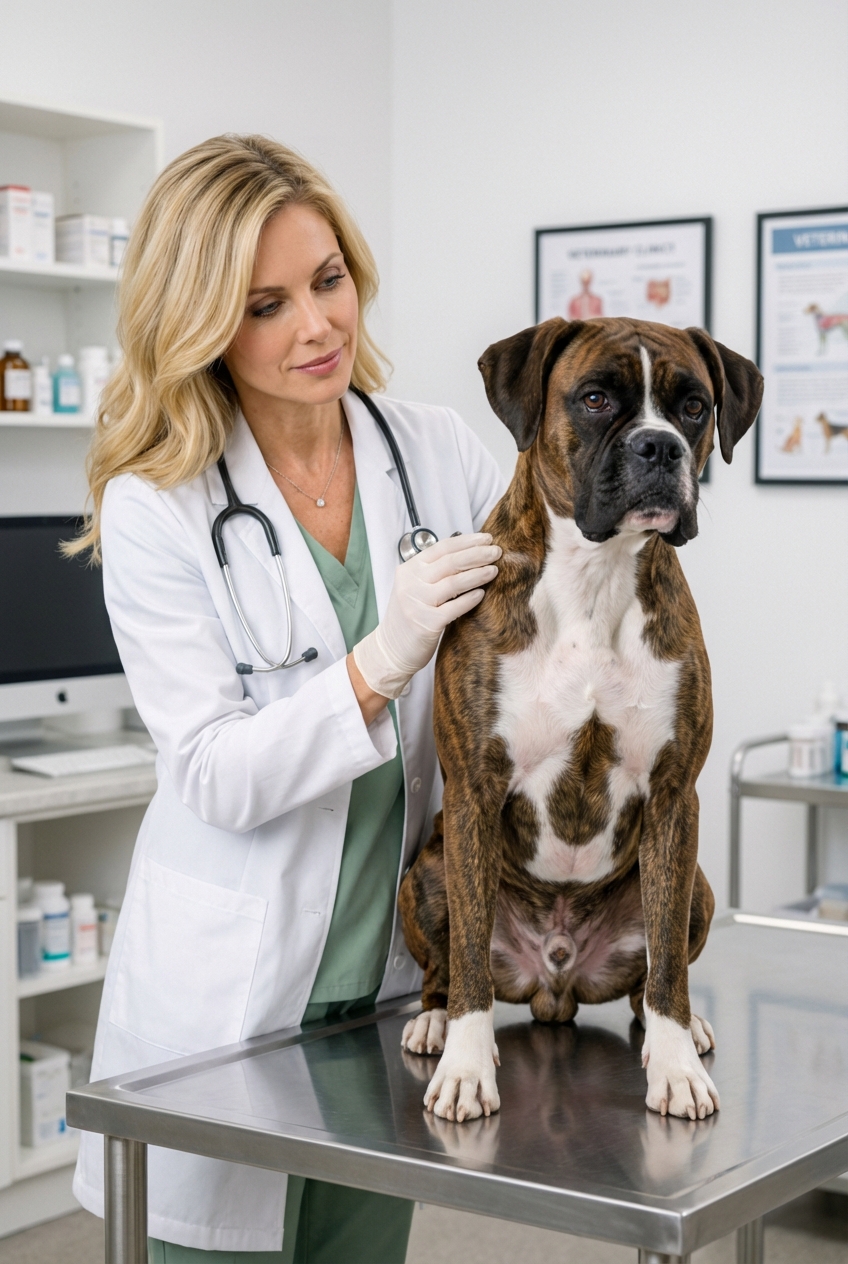
As a general rule, any new lump, especially one that changes size, should be checked sooner rather than later . The simplest first step is usually a fine needle aspirate, where your vet collects a few cells and examines them under a microscope. It is often quick and minimally invasive.
One more practical note: try not to squeeze, massage, or repeatedly poke a suspicious lump at home. And if a lump suddenly swells or your dog also seems unwell (vomiting, diarrhea, weakness, or facial swelling), contact your veterinarian right away.
Other warning signs
- Unexplained weight loss or loss of appetite
- Swollen lymph nodes (under jaw, in front of shoulders, behind knees)
- Persistent vomiting or diarrhea
- New or worsening lameness
- Bleeding from the mouth, nose, or in stool or urine
- Fatigue that is out of character
None of these automatically means cancer. But they do mean “let’s get answers.”
How cancer is diagnosed
Diagnosis can involve:
- Physical exam plus history
- Cytology (fine needle aspirate)
- Biopsy for definitive tumor typing and grading
- Bloodwork and urinalysis to evaluate overall organ function
- Imaging such as X-rays, ultrasound, CT, or MRI depending on the suspected cancer
It is okay to ask for a referral to a veterinary oncologist. Specialists can often provide clearer staging options and treatment pathways.
What prognosis can look like
Prognosis is a wide range, and it depends on the exact diagnosis, stage, and how your dog responds to treatment. Some cancers (and some heart rhythm issues) can be managed for a long time with a good quality of life. Others move quickly. That uncertainty is exactly why early evaluation matters.
Prevention and early detection
We cannot prevent every case of ARVC or cancer. But we can stack the odds in your Boxer’s favor with smart routines.
1) Keep a wellness schedule
Wellness exams are not just vaccines. They are your best chance to catch subtle changes early. For adult Boxers, many veterinarians recommend at least yearly visits, and often twice yearly as they enter their senior stage.
2) Do monthly at-home checks
This takes five minutes and can be done during cuddle time:
- Feel for new lumps on the skin and under the skin
- Check gums for healthy pink color
- Note breathing rate when asleep and relaxed (ask your vet what is normal for your dog)
- Watch stamina on walks and play sessions
3) Keep them lean
Excess weight is hard on the heart, joints, and immune system. If you cannot easily feel ribs with a light touch, ask your vet team to help you set a safe weight-loss plan.
4) Feed for long-term health
Nutrition is not a magic shield, but it matters. The most important baseline is choosing a diet that is complete and balanced (look for an AAFCO statement in the US, or FEDIAF guidelines in many other regions). Beyond that, aim for:
- Measured portions and limited high-calorie treats
- Consistent nutrition that your dog does well on
- Supplements only with veterinary guidance, especially for dogs with heart disease
If you are interested in homemade meals, please work with your veterinarian or a board-certified veterinary nutritionist to avoid nutrient gaps. Heart patients, in particular, may have special considerations with sodium and certain supplements.
5) Ask about breed-relevant screening
If you have a young adult Boxer who seems healthy, it is still worth discussing whether an ECG, echocardiogram, Holter monitoring, or genetic testing makes sense for your dog’s age and family history. Many families feel better once they have a baseline.
Questions for your vet
- Based on my Boxer’s age and history, what heart screening do you recommend?
- If we do a Holter monitor, how often should it be repeated for my dog?
- What symptoms would make you want to see my dog immediately?
- Any lump you find today: can we do a fine needle aspirate?
- Should we run baseline bloodwork this year?
- What is my dog’s ideal weight, and how many calories should they get per day?
My favorite goal for Boxer families is simple: fewer surprises. The earlier we find heart rhythm issues or suspicious lumps, the more options we usually have.
When to seek urgent care
Please do not wait for a routine appointment if your Boxer has:
- Collapse or fainting
- Labored breathing, open-mouth breathing at rest, or a suddenly distended belly
- Pale gums, blue or gray gums, or extreme weakness
- Uncontrolled bleeding from a mass
These signs can indicate life-threatening problems, including serious arrhythmias, fluid buildup, internal bleeding, or advanced disease.
Bottom line
Boxers bring a huge amount of joy, and they also deserve proactive health care. ARVC and cancer are two of the biggest medical risks in this breed, but you are not powerless. With consistent veterinary care, smart screening, and quick attention to changes at home, you can protect your dog’s quality of life and make informed decisions if problems arise.
If you are ever unsure, call your veterinary clinic and describe what you are seeing. I would rather see a Boxer for “maybe nothing” than miss the early stages of something serious.