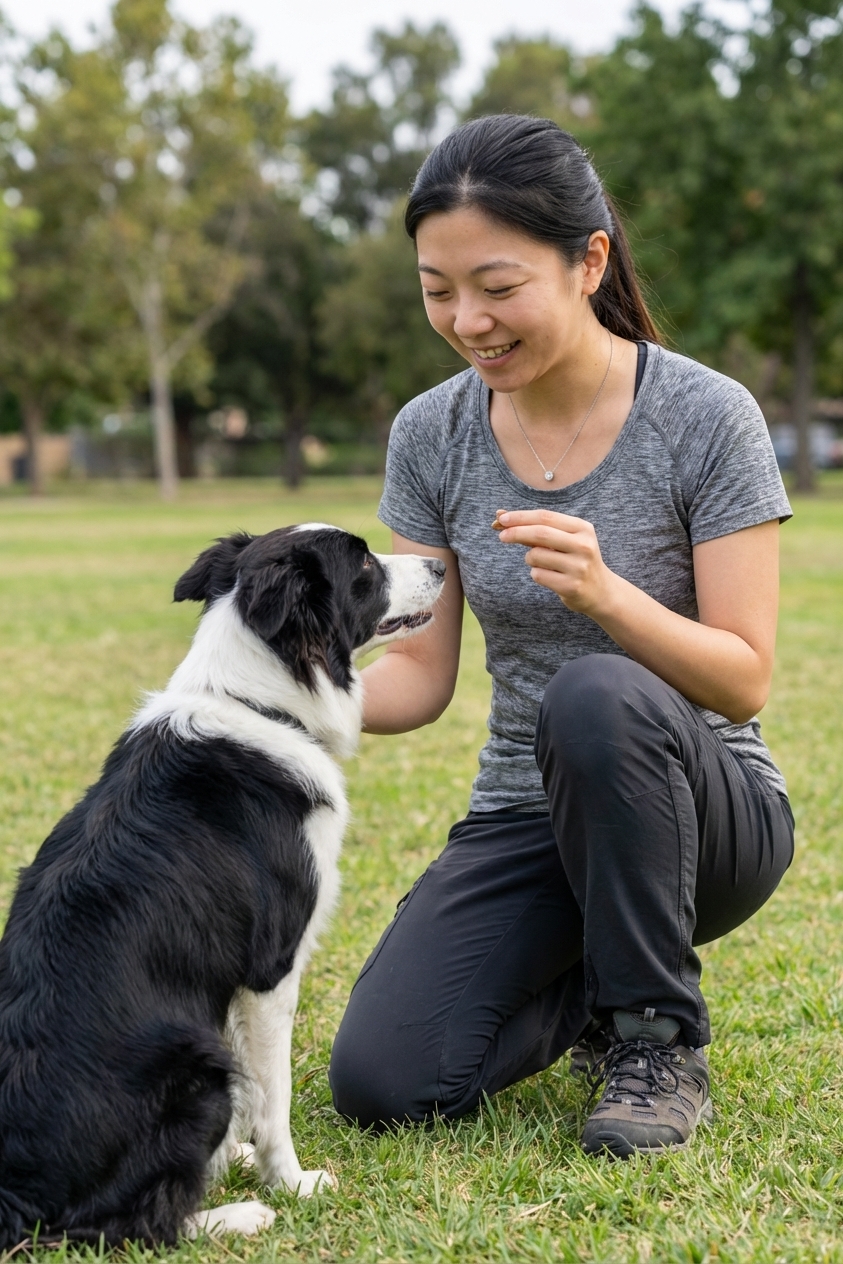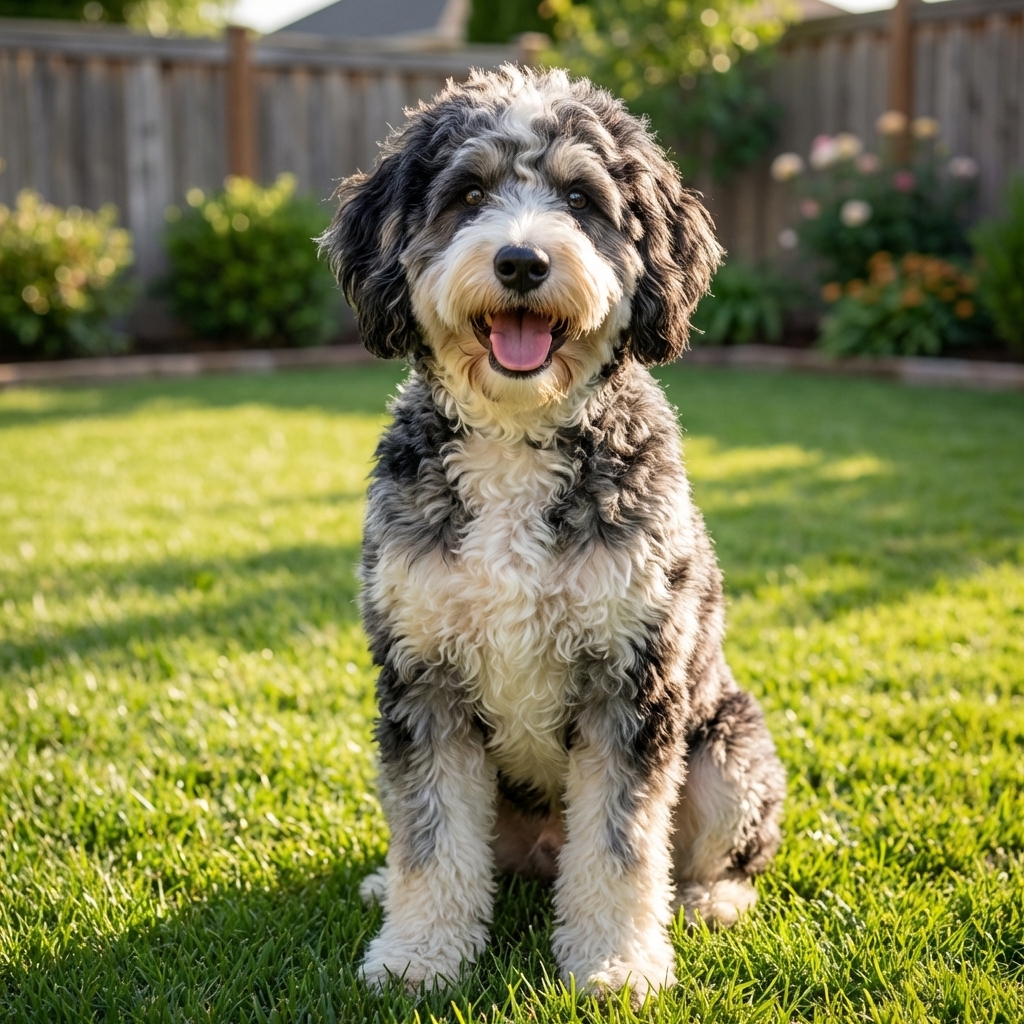
A vet assistant’s guide to the Aussiedoodle: adult size ranges, personality, exercise needs, training and socialization, grooming and shedding, plus key he...
Article
•
Designer Mixes
Bordoodle Temperament, Size, and Care

Shari Shidate
Designer Mixes contributor
Bordoodles are a Border Collie Poodle mix known for big brains, big energy, and a strong desire to be involved in everything you do. When they are well matched with an active home and given consistent training, they can be incredible companions. When they are under-exercised or under-stimulated, they can become anxious, vocal, or destructive. This breed mix is not “too much dog” for the right family, but it does require intention.
Temperament and personality
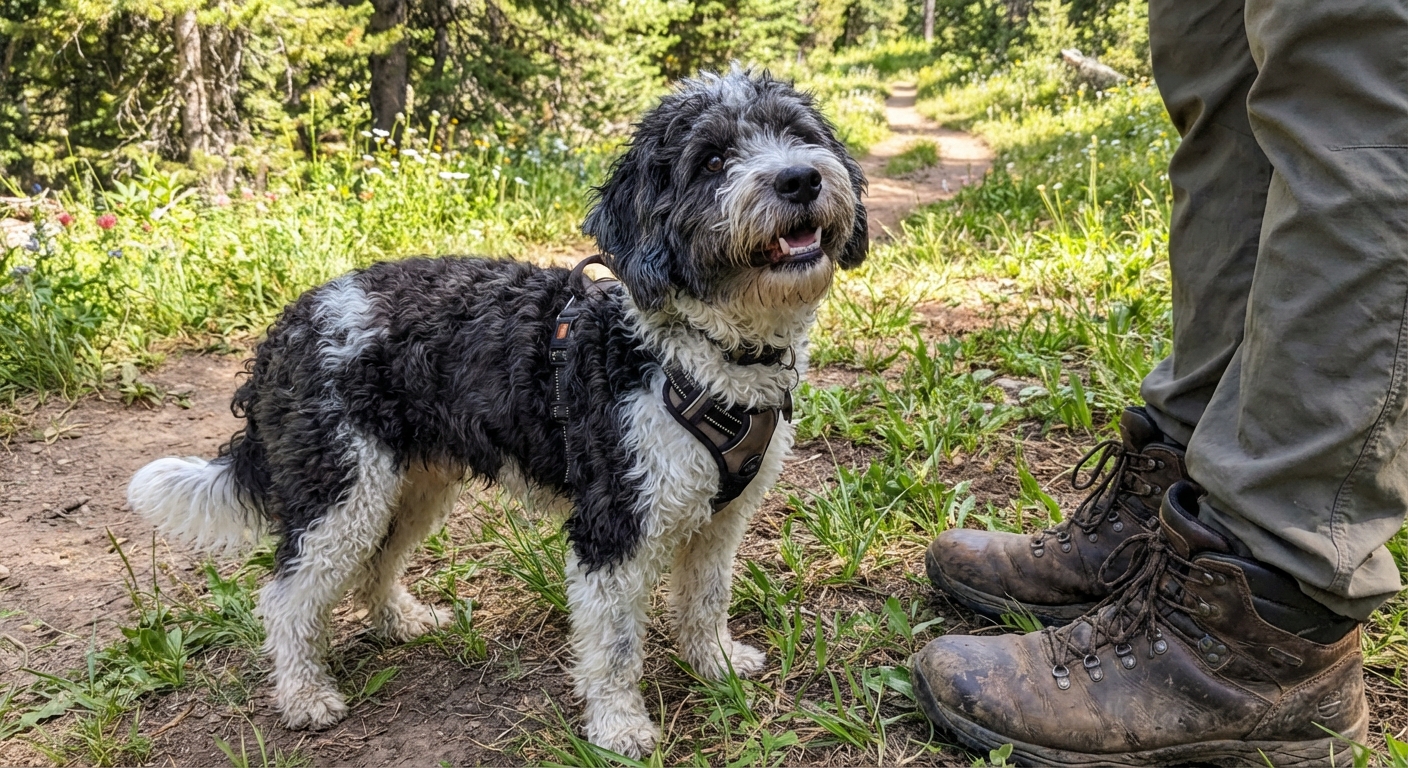
Most Bordoodles inherit a blend of the Border Collie’s work ethic and sensitivity with the Poodle’s people-focused intelligence. The result is often a dog who is affectionate, highly trainable, and always scanning their environment for the next “job.”
Typical Bordoodle traits
- Extremely intelligent: They learn quickly, including bad habits, so consistency matters.
- High drive: Many have strong herding instincts. Some will try to herd kids, cats, or other dogs by circling or nipping at heels.
- Velcro tendencies: They often prefer to be near you and can be prone to separation stress if left alone for long stretches.
- Sensitive and responsive: They usually do best with calm, reward-based training rather than harsh corrections.
- Friendly but selective: Socialization is key. Some are naturally outgoing, while others lean cautious with strangers.
Because both parent breeds are so smart, Bordoodles thrive in homes where mental exercise is treated as a daily need, not an occasional bonus.
Lifespan
Most Bordoodles live about 12 to 15 years, with some falling outside that range depending on size, genetics, and overall health. A lean body condition, regular preventive care, and appropriate daily exercise go a long way in supporting longevity.
Intelligence
Border Collies are widely recognized for exceptional working intelligence, and Poodles are among the most trainable companion breeds. Put together, you often get a dog who picks up cues in just a few repetitions and starts anticipating patterns in your routine.
What that intelligence looks like
- They can learn advanced skills like off-leash heelwork, agility sequences, scent games, and service-style tasks.
- They may become bored with repetitive drills. Short sessions with variety work best.
- They need clear boundaries. If you accidentally reward jumping, barking, or door-dashing, they will repeat it.
Tip: a “smart” dog is not automatically an “easy” dog. Bordoodles do best when training is part of your lifestyle.
Energy and exercise needs
Bordoodles are typically high-energy dogs. Many need more than a couple of neighborhood walks to feel settled. Exercise is important for fitness, but it is just as important for behavior. A bored Bordoodle often invents their own entertainment, and you might not love their choices.
Daily activity goals
- Physical exercise: Often 60 to 120 minutes per day, depending on age and individual drive.
- Mental exercise: 10 to 20 minutes of training games, puzzle feeders, scent work, or trick training.
- Off-leash time: Only in safe, legal areas and after solid recall training. Their prey drive and herding instincts can be strong.
Great outlets
- Agility, flyball, rally obedience
- Canicross or jogging with an adult runner (once growth plates have closed)
- Fetch with rules, such as “sit” and “drop” to prevent obsessive patterns
- Scent work games like “find it” with treats or toys

Puppy safety note: Avoid long-distance running, repetitive high jumps, or intense stair work in young puppies. Growing joints need protection, especially in mixes that can be prone to hip issues.
Size and weight
Because Poodles come in different sizes, Bordoodles vary a lot. Breeders often use Standard Poodles for standard Bordoodles, and Miniature Poodles for mini Bordoodles. Even within the same litter, size can vary.
Standard Bordoodle size range
- Height: about 18 to 24 inches at the shoulder
- Weight: about 35 to 65 pounds
Mini Bordoodle size range
- Height: about 12 to 18 inches at the shoulder
- Weight: about 15 to 35 pounds
Ask for parent heights and weights, and if possible, photos of previous litters at maturity. It is the most practical way to estimate where your puppy may land.
Coat, shedding, and grooming
Bordoodle coats can be anywhere from Border Collie-like (medium, straight to wavy) to Poodle-like (curly). Many are wavy and plush. Shedding and allergy-friendliness are not guaranteed, even with a Poodle parent.
Common coat types
- Wavy fleece: Often moderate shedding to low shedding, tends to mat if not brushed.
- Curly: Usually lower shedding, higher grooming needs, matting risk is high without routine care.
- Straighter double coat: More likely to shed seasonally, typically easier to brush but may still tangle.
Grooming routine
- Brush: 3 to 5 times per week for wavy or curly coats. Daily during mat-prone phases like coat changes.
- Bath: about every 4 to 6 weeks, or as needed. Use a dog-specific shampoo and fully dry the coat.
- Professional grooming: usually every 6 to 10 weeks for trims, face and sanitary tidy, and nail care.
- Ears: Check weekly. Poodle-type ears can trap moisture and increase the risk of ear infections.
- Teeth: Brush several times a week, ideally daily. Dental disease is extremely common in dogs.

Matting warning: Mats can pull on the skin and hide irritation. If you cannot get a metal comb through the coat down to the skin, it is time for a professional groom and a reset of the routine.
Health
Mixed-breed dogs can be very healthy, but they can also inherit risks from either parent breed. The best protection is thoughtful breeding, routine veterinary care, healthy body weight, and early attention to subtle signs.
Hip dysplasia
Hip dysplasia is a developmental condition where the hip joint does not fit together as well as it should. Over time, this can lead to arthritis and pain.
- Signs to watch: bunny-hopping gait, stiffness after rest, reluctance to jump or climb stairs, decreased endurance.
- Prevention support: keep your dog lean, avoid excessive high-impact exercise during growth, and ask your vet about joint-support strategies.
- Breeder check: ask whether the parents have hip evaluations (such as OFA or PennHIP).
Eye problems
Border Collies and Poodles can be associated with inherited eye conditions, including progressive retinal atrophy and other issues that affect vision over time.
- Signs to watch: bumping into objects in dim light, hesitant stair navigation, abnormal eye appearance, squinting, tearing.
- What helps: routine veterinary exams and prompt evaluation if you notice changes.
- Breeder check: ask about eye testing or ophthalmology screenings in the breeding dogs.
Other concerns
- Ear infections: especially with fluffier ear hair and water exposure.
- Allergies and skin irritation: can show up as itching, paw-licking, recurrent ear issues, or hotspots.
- Epilepsy: can occur in Border Collie lines and may appear in mixes.
If you are choosing a puppy, look for breeders who prioritize health testing, stable temperament, and early socialization. If you are adopting, ask the rescue what they have observed about energy level, comfort with handling, and any medical history.
Training and socialization
Bordoodles are usually training superstars, but they need structure. Early socialization helps prevent fearfulness, reactivity, and herding-related nuisance behaviors.
What to focus on in the first year
- Calmness skills: settle on a mat, relaxation protocols, and rewarding quiet behavior.
- Impulse control: wait at doors, leave it, drop it, polite greetings.
- Recall: start early and make coming back to you the best thing in their day.
- Handling tolerance: paws, ears, mouth, and brushing practice with treats to support grooming and vet visits.
A positive-reinforcement group class can be a wonderful investment. It provides skill-building plus controlled exposure to people and dogs.
Good fit for your family?
Bordoodles can be amazing for active households who enjoy training and daily activity. They are often loyal, affectionate, and fun-loving, but they are rarely content as a low-key couch dog.
Often a great match if you...
- Want a dog to hike, run, train, and learn with you
- Have time for daily mental enrichment and consistent routines
- Enjoy grooming and coat care, or can budget for professional grooming
Consider a different mix if you...
- Need a dog who is satisfied with short walks only
- Are gone for long hours most days without a plan for exercise and companionship
- Do not want to manage grooming or potential matting

Quick care checklist
- Exercise: plan for daily activity plus brain work
- Grooming: brushing several times a week, professional grooming every 6 to 10 weeks for many coats
- Training: short, frequent sessions with positive reinforcement
- Preventive care: routine vet visits, parasite prevention, dental care
- Health awareness: watch for hip discomfort and eye changes, especially as your dog matures
If you give a Bordoodle a job, a routine, and plenty of connection, you will often get the best of both worlds: the Border Collie’s focus and the Poodle’s charm, wrapped into one very capable companion.