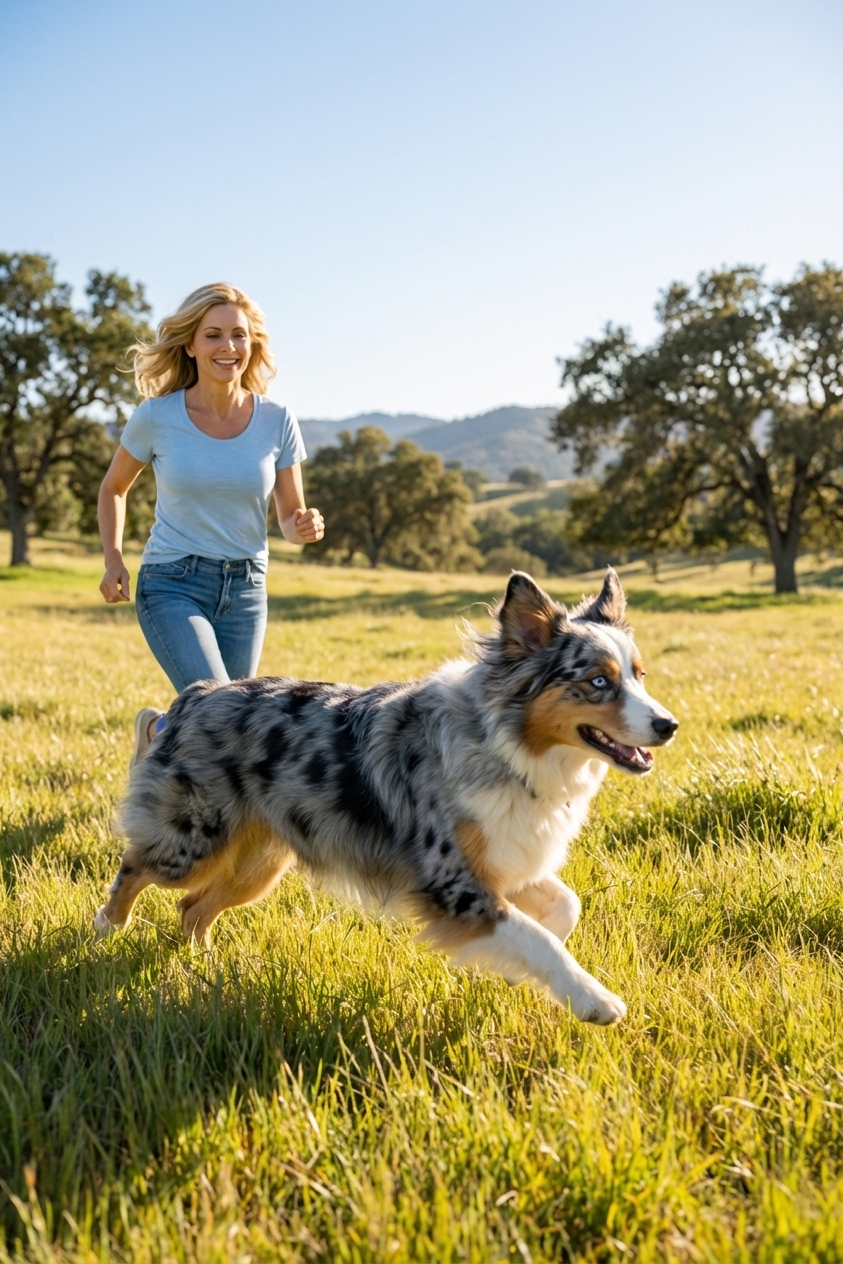
Border Collies are famous for being brilliant, athletic, and intensely focused. They are also one of the most misunderstood breeds. In the clinic, I see many Border Collies who are not “bad” or “too much.” They are simply under-employed and under-supported.
This page is your complete starting point: temperament, training, daily care, grooming, and health. (If you are looking for a deeper dive on workouts and schedules, our site also has an exercise-focused Border Collie article so you can match your dog’s needs without guesswork.)
Quick note: This is general educational information, not a substitute for veterinary care. If you have concerns about your dog’s behavior or health, talk with your veterinarian and, when needed, a qualified trainer or veterinary behaviorist.
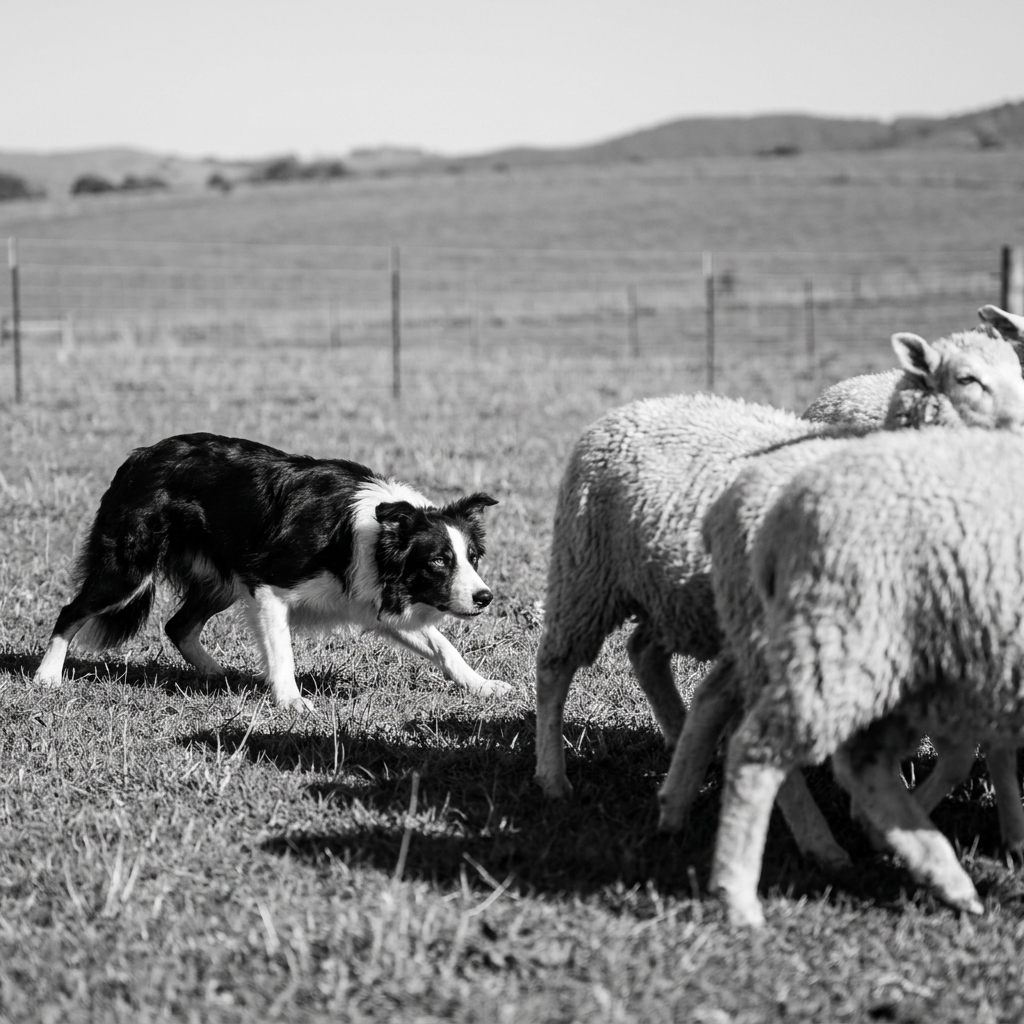
Breed snapshot
- Height: about 18 to 22 inches
- Weight: often 30 to 55 pounds (varies by build and line)
- Lifespan: commonly 12 to 15 years
- Coat: smooth or rough, typically double-coated
- Energy and drive: high; most need daily physical exercise plus mental work
- Daily time commitment: plan on at least 60 to 120 minutes total of walks, training, play, and enrichment for many adults (some need more, some less)
Border Collie temperament
A well-bred, well-raised Border Collie is typically:
- Highly intelligent and quick to learn
- Work-driven, often happiest when given a job
- Sensitive to tone, body language, and household stress
- Alert and watchful, sometimes reserved with strangers
- Movement-oriented, meaning they notice and react to motion quickly
That movement sensitivity is part of what makes them elite herding dogs. It can also show up as chasing bikes, nipping at heels, or trying to “manage” kids and other pets if their instincts are not redirected.
Are Border Collies good family dogs?
They can be wonderful family dogs in the right home. The best match is a family that enjoys training, routines, and structured activities. A Border Collie is less ideal for a household that wants a laid-back companion who is content with a short walk and a cuddle.
Do Border Collies bark a lot?
Some are vocal, especially when overstimulated or when they have learned that barking makes exciting things happen (like being let outside to chase squirrels). Barking is often a sign you need more predictable outlets, better calm training, and fewer accidental rewards.
What Border Collies were bred to do
Border Collies were developed to herd livestock with an intense “eye,” quick responsiveness, and endurance. That heritage matters. If you do not give that brain and body something appropriate to do, they will invent their own job.
Common “self-assigned jobs” include:
- Shadowing family members from room to room
- Policing windows and fences
- Chasing moving objects, including cars
- Fixating on lights, shadows, or reflections
If any of these show up, please do not assume your dog is being stubborn. Think of it as unmet needs plus a very capable mind.
Training priorities for Border Collies
Border Collies learn fast. That is a gift, and it also means they can learn the “wrong” lesson just as quickly. Consistency matters.
1) Teach an off switch
Many Border Collies struggle more with relaxing than with performing. Build calm skills daily:
- Mat training: reward settling on a bed while life happens
- Capturing calm: quietly mark and reward relaxed choices
- Pattern games for predictability in exciting environments (for example, “1-2-3 walking” or a simple “up-down” treat pattern)
- Short, structured training blocks instead of constant stimulation
If your Border Collie is always “on,” adding more and more intense exercise can backfire by creating a canine endurance athlete who still cannot settle.
A realistic “off switch” day can look like this: a structured walk with sniff breaks, a short training session, a food puzzle, then a planned nap on a mat while you work. Repeat in small blocks rather than trying to keep your dog entertained all day.
2) Rock-solid recall and impulse control
Because they are fast and movement-triggered, a reliable recall is a safety skill. Practice in stages: indoors, fenced yard, long line in a quiet area, then gradually add distractions. Pair recall work with impulse control cues like leave it, wait, and stay.
3) Socialization that supports confidence
For Border Collies, socialization is not “meet everyone.” It is learning that the world is safe and predictable. Focus on:
- Neutral exposure to people, dogs, bikes, carts, and noises
- Rewarding calm observation
- Allowing choice and distance
- Avoiding forced greetings
4) Mouthiness and herding behaviors
Heel-nipping is an instinct for many herding breeds. Address it early:
- Teach a compatible behavior like targeting your hand or bringing a toy
- Reinforce four paws on the floor around kids
- Use gates and leashes to prevent rehearsals
- Reward calm, not chasing
If your dog is already nipping, work with a qualified trainer who uses reward-based methods. Early support makes a big difference.
Best activities and jobs
Border Collies thrive when their outlets are both physical and mental. Many do best with a daily mix of training, movement, and sniffing.
Great outlets
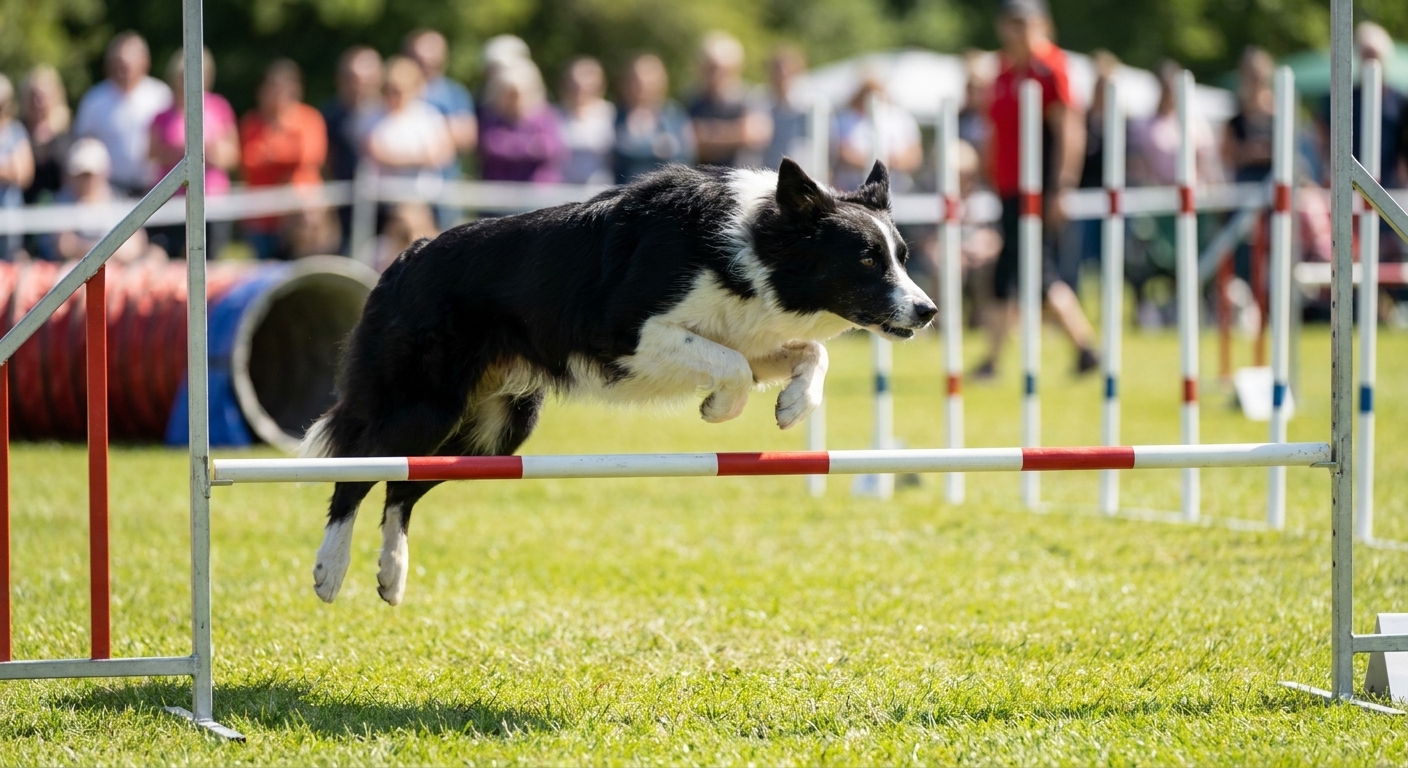
- Agility (excellent for handler teamwork)
- Herding lessons with a reputable instructor
- Obedience or rally
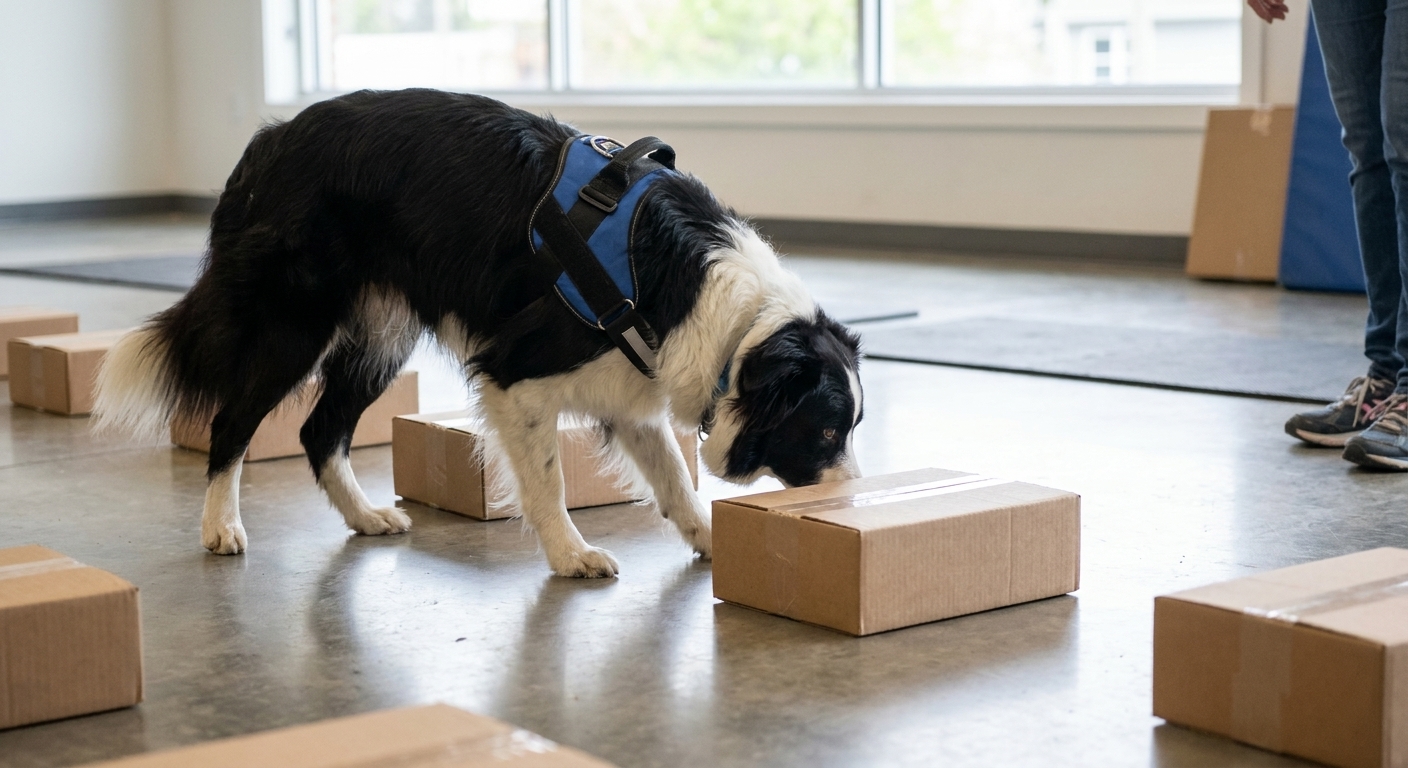
- Nose work and scent games (surprisingly calming for many dogs)
- Trick training and shaping games
- Fetch with rules (start-stop cues, drops, and breaks)
Use caution with laser pointers and shadow chasing
In veterinary behavior, light and shadow fixation can become compulsive and difficult to treat. If your Border Collie is already chasing reflections or shadows, skip laser games and talk with your veterinarian or a veterinary behaviorist for a plan.
Household fit
Before you bring home a Border Collie, it helps to be honest about your lifestyle. This breed does best with people who enjoy active training and structure.
Often a great match if you:
- Want a trainable dog for sports or advanced obedience
- Enjoy daily routines and mental enrichment
- Can provide safe outlets for high drive
- Like a dog that pays attention and wants to partner with you
Consider another breed if you:
- Prefer a low-energy companion
- Are gone long hours without enrichment support
- Cannot commit to training beyond basic manners
- Have a very busy home with lots of uncontrolled running and squealing (unless you can manage carefully)
Border Collies and kids
Many Border Collies adore children, but supervision and training are essential. Running, shrieking, and fast games can trigger herding behavior. Use baby gates, teach kids to avoid chase games, and build calm routines that set everyone up for success.
Alone time and crate skills
Many Border Collies form strong attachments and can struggle when the house suddenly goes quiet. Alone-time training is not just for puppies, it is a life skill.
- Start with short, predictable absences and build slowly
- Pair departures with a long-lasting chew or food toy
- Practice calm crating or “place” time when you are home, not only when you leave
- Avoid making arrivals and departures emotionally intense
If you see panic signs (drooling, destruction at exits, self-injury, nonstop vocalizing), involve your veterinarian early. Separation-related anxiety is treatable, and early help prevents it from becoming entrenched.
Grooming and coat care
Border Collies commonly have either a rough (medium-long) coat or a smooth (shorter) coat. Both are typically double-coated, meaning they shed seasonally and need basic coat maintenance.
Brushing
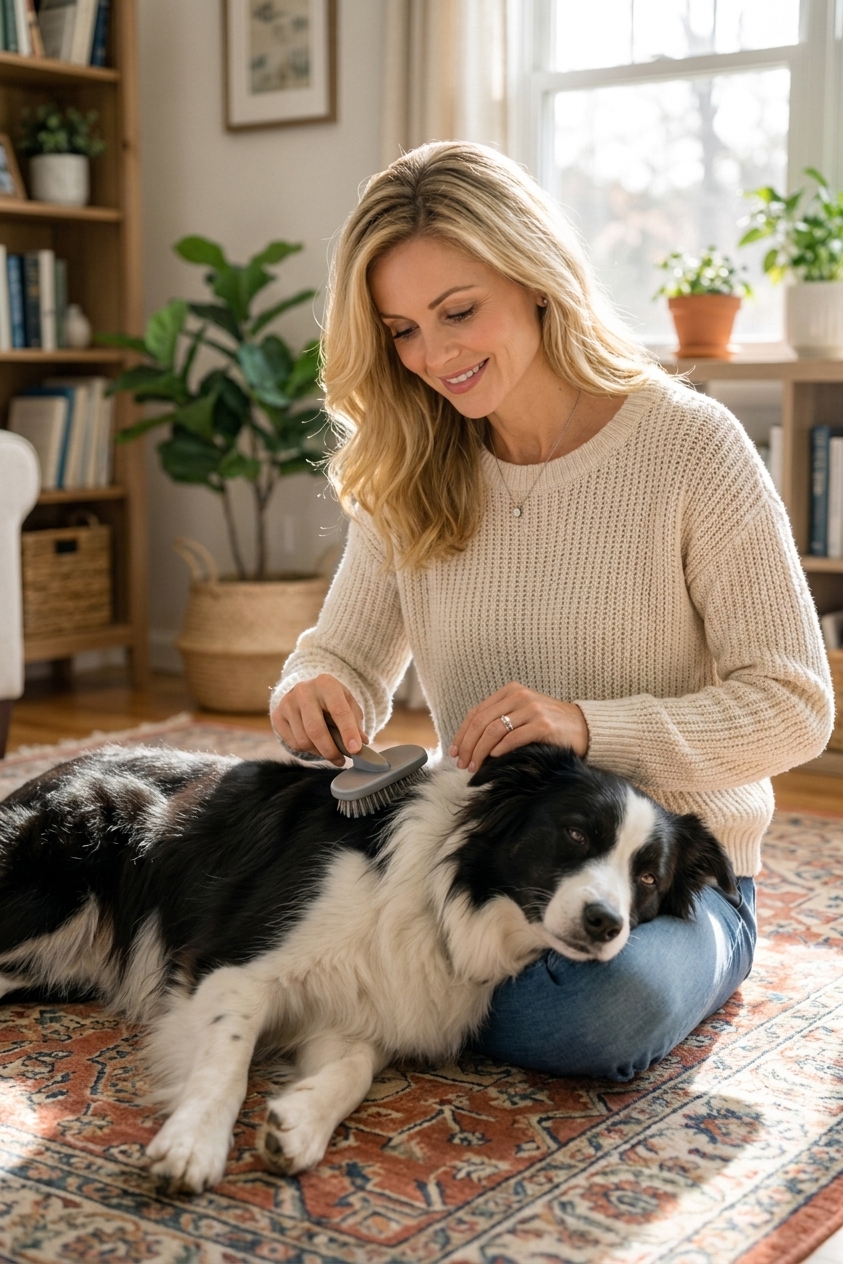
- 1 to 3 times per week is typical
- During heavy shedding, brief daily brushing helps
- Focus on feathering areas where mats can form: behind ears, chest, legs, and tail
Bathing
Bathe as needed. Many do well with a bath about every 4 to 8 weeks, or after muddy adventures. Over-bathing can dry out skin, so use a gentle dog shampoo and rinse thoroughly.
Nails, ears, and teeth
- Nails: trim every 2 to 4 weeks for comfortable movement
- Ears: check weekly for odor, redness, or debris
- Teeth: brush regularly and ask your vet about dental checkups
Nutrition and healthy weight
Border Collies are athletic, but they can still gain weight if calories exceed output, especially after spay or neuter or with age. A lean body supports joint health and performance.
Simple, evidence-based nutrition tips
- Choose a complete and balanced diet that fits your dog’s life stage
- Measure meals and adjust based on body condition, not the bag’s chart alone
- Keep treats to about 10 percent of daily calories
- Use training rewards strategically: tiny treats, or part of the meal kibble if appropriate
If you are interested in adding fresh foods, do it slowly and thoughtfully. Simple toppers like cooked lean meats or steamed vegetables can be helpful for picky eaters, but balance matters over time. If you want to feed a homemade diet, partner with your veterinarian or a board-certified veterinary nutritionist to avoid nutrient gaps.
Health concerns
Border Collies are generally hardy, but every breed has patterns. Good breeding and preventive care make a huge difference.
Commonly discussed conditions
- Hip dysplasia and other orthopedic issues
- Epilepsy (seen in some lines)
- Collie Eye Anomaly (CEA) and other inherited eye conditions
- Progressive retinal atrophy (PRA)
- Osteochondritis dissecans (OCD) in young, growing dogs
- Exercise-related injuries in high-impact sports
- Deafness (a concern some people ask about, especially in merle lines)
- MDR1 drug sensitivity (less common than in some related breeds, but worth discussing if your dog is a carrier)
- Hypothyroidism (debated prevalence, but still a common reason for vet visits in many breeds)
Border Collie Collapse (BCC)
Some Border Collies experience episodes of weakness or collapse during intense exercise, especially in heat or high arousal. If your dog seems disoriented, uncoordinated, or collapses during activity, stop exercise immediately and contact your veterinarian. BCC is only one possible explanation. Other causes like heat illness, cardiac problems, metabolic issues, seizure disorders, and toxin exposures must be ruled out.
Wellness care that pays off
- Annual exams, or twice yearly for seniors
- Routine dental care
- Parasite prevention appropriate for your region
- Joint support planning for sport dogs, including conditioning and rest days

Choosing a breeder or rescue
If you want a Border Collie, how you source the dog matters as much as training. You are not just picking a puppy, you are often selecting a genetic and early-development package.
What to look for in a breeder
- Health testing you can verify, not just verbal assurances
- Stable, confident temperaments in the parents
- Puppies raised with thoughtful socialization and recovery time, not constant stimulation
- A willingness to match puppies to homes, especially for drive level
Health testing to ask about
- Hips (OFA or PennHIP)
- Eyes (current exam by a veterinary ophthalmologist)
- Breed-relevant DNA screening (commonly includes CEA and PRA; your breeder may also test for other line-specific concerns)
If you are adopting through rescue, ask what they have observed in foster care: noise sensitivity, dog sociability, ability to settle, and any signs of shadow chasing or obsessive play. A good rescue will tell you what they know, and what they do not.
Puppy tips
Border Collie puppies are adorable and busy. Early choices shape adult behavior.
Focus on these foundations
- Short training sessions: 3 to 5 minutes, several times daily
- Reward calm: naps and quiet time are skills, not accidents
- Gentle socialization: many sights and sounds at a comfortable distance
- Prevent obsessive play: limit nonstop fetch and high arousal games
- Teach cooperative handling: paws, ears, brushing, and vet-style touches
- Build alone-time skills: very short absences that gradually lengthen
If you plan to do dog sports, ask your vet about safe growth and joint protection. For puppies, too much repetitive jumping or forced running can increase injury risk.
Senior care
Many Border Collies stay mentally young even as their bodies age. Senior care is about comfort, mobility, and maintaining purpose.
- Switch to lower-impact activities like sniff walks and nose work
- Add rugs or runners on slippery floors
- Watch for subtle pain signs: hesitation on stairs, irritability, reduced play
- Discuss mobility supplements or medications with your vet when needed
Quick checklist
- Temperament: intelligent, sensitive, driven, observant
- Training musts: off switch, recall, impulse control, confidence building
- Best outlets: agility, obedience, herding, scent work, structured fetch
- Grooming: brush 1 to 3 times weekly, check nails, ears, teeth
- Health watch: hips, eyes, epilepsy, sport injuries, possible exercise collapse
- Home reality: daily mental work matters as much as exercise
If you meet the Border Collie’s needs, you get one of the most responsive, capable companions on the planet. The secret is not just “more exercise.” It is the right mix of training, enrichment, rest, and a job that makes sense for your dog.
When to talk to your vet or trainer
Please reach out for professional support if you notice:
- Sudden behavior changes (irritability, withdrawal, increased reactivity)
- Persistent limping or stiffness after activity
- Collapse, wobbliness, or confusion during exercise
- Compulsive behaviors (shadow or light chasing, nonstop spinning)
- Escalating nipping or guarding behaviors
- Separation-related distress when left alone
Early help is kind help. Many issues improve quickly when pain, stress, and unmet needs are addressed together.