A step-by-step guide to running with your dog: readiness checks, safer gear, core cues, a beginner 2-week run-walk schedule, and warning signs for paws, join...
Article
•
Designer Mixes
Border Collie Energy: Exercise Needs for Herding Breeds

Shari Shidate
Designer Mixes contributor
Border Collies are famously bright, athletic, and intensely driven. That energy is a wonderful gift when it is channeled well. But when it is not, you may see pacing, barking, chewing, fence-running, nipping, or a dog who simply cannot settle. As a veterinary assistant, I have seen it many times: the dog is not “bad,” they are under-employed.
The good news is that you do not need to run a marathon every day to have a happy herding breed. What you do need is a balanced plan that includes daily movement, mental work, and recovery.
Why herding breeds feel nonstop
Border Collies were developed to work long days, often in challenging weather and terrain, making quick decisions while staying tuned in to their handler. That heritage shows up in modern homes as:
- High stamina and a strong desire to move
- Fast learning, including learning habits you did not intend to teach
- Motion sensitivity that can turn bicycles, joggers, kids, and cars into “things to control”
- Problem solving that becomes mischief when boredom sets in
Think of exercise for Border Collies as “meeting a working dog’s needs,” not “burning off a crazy dog.” When we only chase exhaustion, we often create an even fitter athlete who needs more and more to feel satisfied.
Note: Even within the broader herding group, individuals vary a lot. Working-line dogs and adolescents often need more structure and outlets than a laid-back adult, while seniors and dogs with injuries may need modified plans.
How much exercise do they need?
Many healthy adult Border Collies do best with about 60 to 120 minutes of total daily activity, split into multiple sessions. “Activity” can include brisk walks, training walks, play, hiking, and skill work, not just high-intensity running. Many also benefit from about 15 to 30 minutes of structured mental work daily as a starting point.
Your individual dog may need more or less depending on age, health, temperament, and lifestyle. Working-line dogs and dogs in sports may exceed these ranges.
Guide by life stage
- Puppies: Several short play and training sessions each day. Keep sessions age-appropriate, avoid forced repetitive running, and limit high-impact jumping while growth plates are developing. When in doubt, ask your veterinarian what is appropriate for your puppy’s size and breed mix.
- Adults: A mix of cardio, skill work, sniffing, and training. They thrive on variety.
- Seniors: Still need daily movement and brain work, but with lower impact. Many seniors enjoy sniff walks, gentle hikes, and trick training.
Vet note: If your dog is slowing down suddenly, limping, panting excessively, or reluctant to jump or climb stairs, check in with your veterinarian before increasing exercise.
What good exercise looks like
The best routine includes four buckets: aerobic movement, strength and body awareness, mental work, and decompression. When you hit all four, many Border Collies become calmer at home because their needs are truly met.
1) Aerobic movement
- Brisk walks with training built in (sits at corners, name response, loose leash practice)
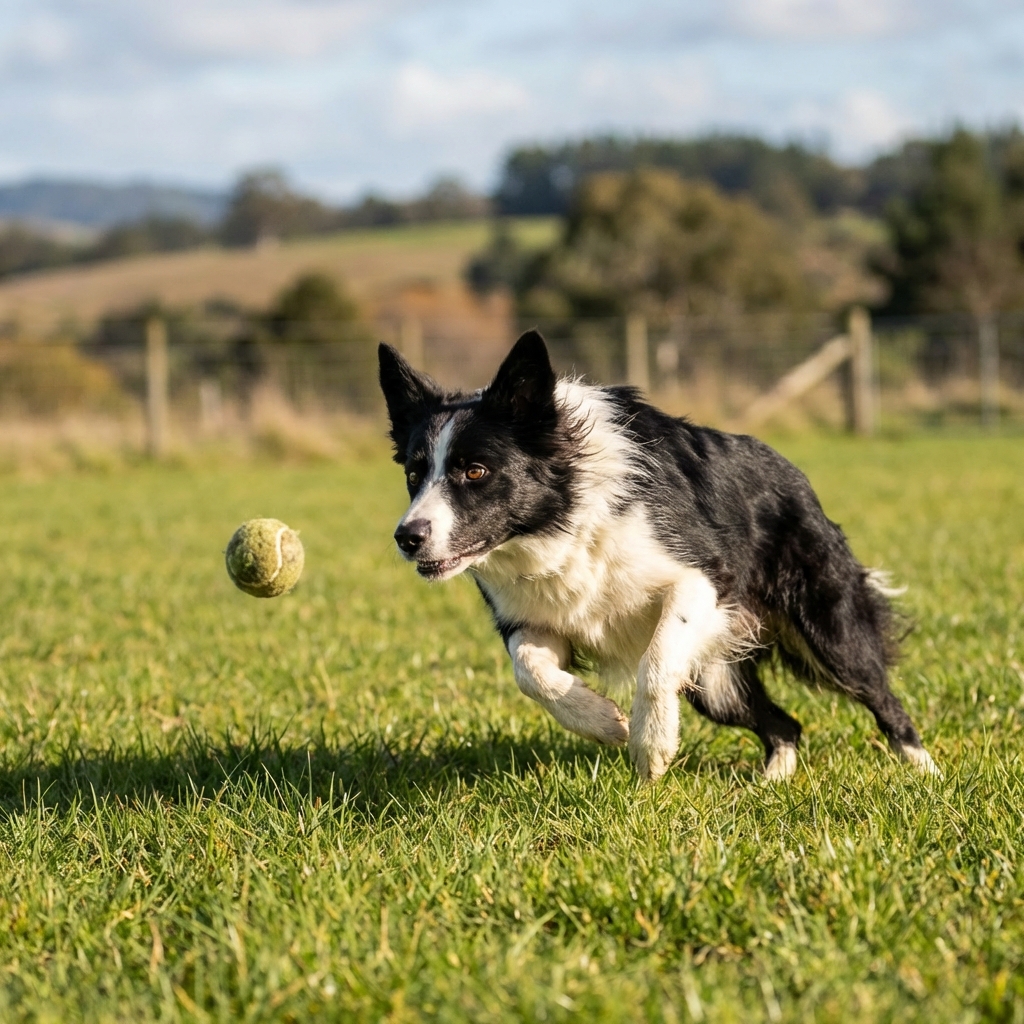
- Fetch with rules: short sets, breaks, and a cue to end the game
- Flirt pole used carefully on grass, keeping turns wide to protect joints
- Hiking on varied terrain for conditioning
- Swimming for dogs who enjoy it, which can be joint-friendly
2) Strength and injury prevention
Herding breeds are agile, but that also means they can be prone to strains if all they do is sprint and slam on the brakes.
- Slow uphill walks for rear-end strength
- Cavaletti poles or stepping over broomsticks laid on the ground (supervised)
- Backing up a few steps on cue
- Controlled transitions (stand to sit, sit to stand), done calmly for about 3 to 5 reps
Clinical note: If your dog is doing agility, disc, or other high-speed sports, or has a prior injury, consider a check-in with your veterinarian or a canine rehab or sports medicine professional to tailor conditioning and reduce injury risk.
3) Mental work
Studies in animal behavior consistently support what owners notice daily: mental enrichment can reduce stress-related behaviors and improve welfare. For Border Collies, even a few minutes of focused training can feel very satisfying for some dogs.
- Short training sessions (2 to 8 minutes) throughout the day
- Food puzzles and slow feeders
- Scent games like “find it” with treats or a favorite toy
- Trick training (spin, bow, paws up, tidy toys, weave through legs)
4) Decompression and sniff time
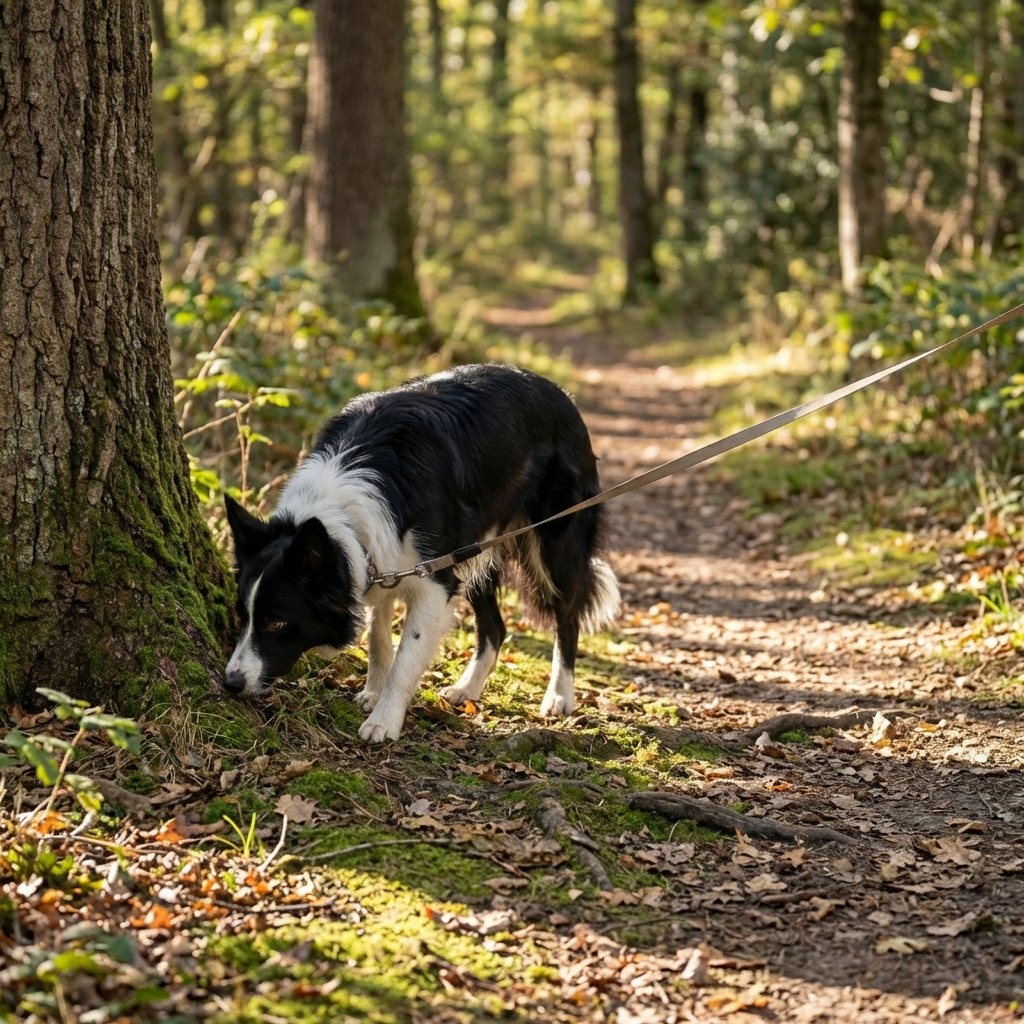
This is the gentle exercise that helps a dog’s nervous system settle. A sniffari often helps lower arousal and supports relaxation.
- Leashed walks where your dog can sniff and explore at their pace
- Quiet time in a yard on a long line, supervised
- Scatter feeding in grass (if safe and pesticide-free)
Recovery and the off-switch
Recovery is not optional for high-drive dogs. Many adult dogs sleep or rest roughly 12 to 14 hours per day, and puppies and adolescents often need even more. If your Border Collie is always on the go, they can become overtired and more reactive, not “better exercised.”
- Schedule real downtime after intense play or training
- Use chewing and licking (approved chew, lick mat) to help your dog settle
- Practice mat work or “place” as a daily skill, not only when guests arrive
A sample daily routine
You can adapt this to your schedule and your dog’s age. The goal is consistency and balance, not perfection.
- Morning (20 to 30 minutes): brisk walk plus 5 minutes of basic cues
- Midday (10 minutes): puzzle feeder or scent game indoors
- Afternoon (20 to 40 minutes): fetch in short sets or a hike, then a calm cooldown
- Evening (10 to 15 minutes): trick training or leash skills, then a chew or lick mat to settle
If you work long hours, consider a dog walker who understands herding breeds, a reputable daycare with rest breaks, or structured playdates. Many Border Collies do not do well with nonstop chaotic play all day, so ask how rest is handled.
Avoid over-exercising
It is easy to accidentally teach a Border Collie that being “amped up” is the only way life happens. If your dog never learns to settle, you will feel like you are always trying to outrun their energy.
Signs the plan is backfiring
- Your dog gets more frantic the more you throw the ball
- They struggle to nap, pace indoors, or seem restless even after activity
- They fixate on toys, shadows, or movement
- You see repetitive, high-impact play with lots of sharp turns daily
Better approach
- Use short intervals of intense play, then calm breaks
- Add training between throws or during walks
- Teach an “all done” cue and reward calm behavior afterward
- Prioritize sniffing and problem-solving, not just sprinting
Activities they often love
When possible, give a herding breed a “job.” It does not have to involve livestock to be fulfilling.
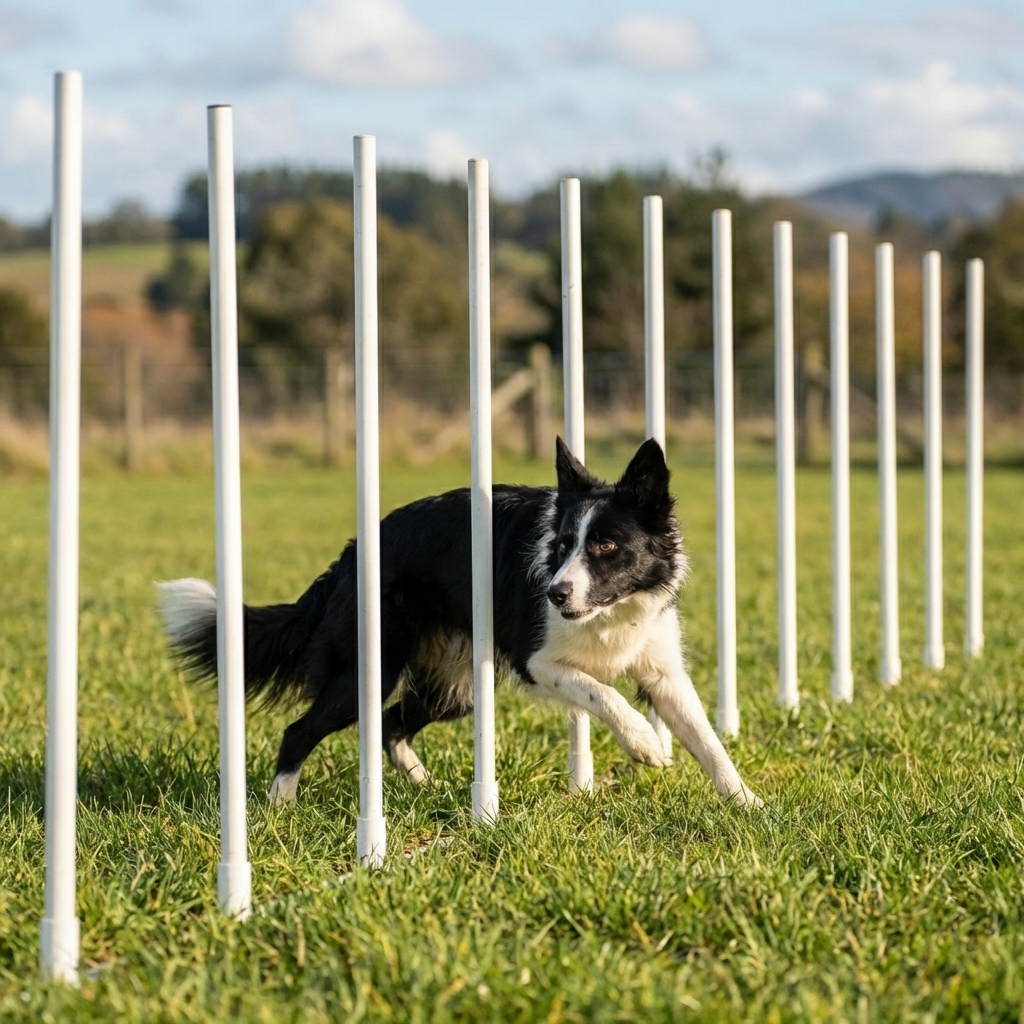
- Agility (great for teamwork and focus)
- Obedience or rally
- Nosework classes
- Herding lessons with a qualified trainer
- Disc with safe technique and warmups
- Canicross or jogging for adult dogs with veterinary clearance
Behavior tips
Teach calm on purpose
Calmness is a skill. Reward your dog for choosing to lie down, relax on a mat, or settle after play. Many owners accidentally only reward the busy behavior.
Manage motion triggers
If your Border Collie wants to chase cars, bikes, or kids, do not rely on more exercise alone. Work with a trainer who uses humane, evidence-based methods and start with distance, rewards, and controlled exposure.
Build routine and choice
Simple routines reduce stress. Consistent meal times, predictable walks, and clear cues help herding dogs feel more secure, which often reduces frantic behavior.
Safety first
- Warm up before intense play: 5 to 10 minutes of walking
- Cool down after: easy walking and water, then rest
- Watch summer heat, especially in hot climates. Early morning and late evening are your friends.
- Protect paws from hot pavement and rough surfaces
- Avoid repetitive impact in puppies and dogs with orthopedic issues
If your dog is panting hard and cannot recover within a few minutes of rest, or you notice very red gums, pale or white gums, blue or gray gums, heavy drooling, vomiting, wobbliness, or collapse, treat that as urgent and contact a veterinarian.
When to ask for help
If you have a Border Collie who cannot settle, seems anxious, or is showing intense chasing, nipping, or compulsive behaviors, it is smart to get support early. Start with your veterinarian to rule out pain or medical contributors, then consider a certified trainer who focuses on reward-based methods.
Meeting a herding dog’s needs is not about exhausting them. It is about giving them healthy outlets, mental work, and enough calm time to actually recharge.