Noticing blood in your dog’s poop? Learn the difference between bright red blood and black tarry stool, likely causes, safe home steps, and urgent signs to...
Article
•
Designer Mixes
Blood in Dog Stool: Stress Colitis or Emergency?

Shari Shidate
Designer Mixes contributor
Seeing blood in your dog’s poop can make your stomach drop. As a veterinary assistant, I want you to know two things can be true at the same time: some cases are urgent, and some are common and very treatable, especially stress colitis.
This guide will help you sort out what you are seeing, what it might mean, and when to call your vet now.
What “blood in stool” can look like
Blood can show up in a few different ways, and the pattern matters.
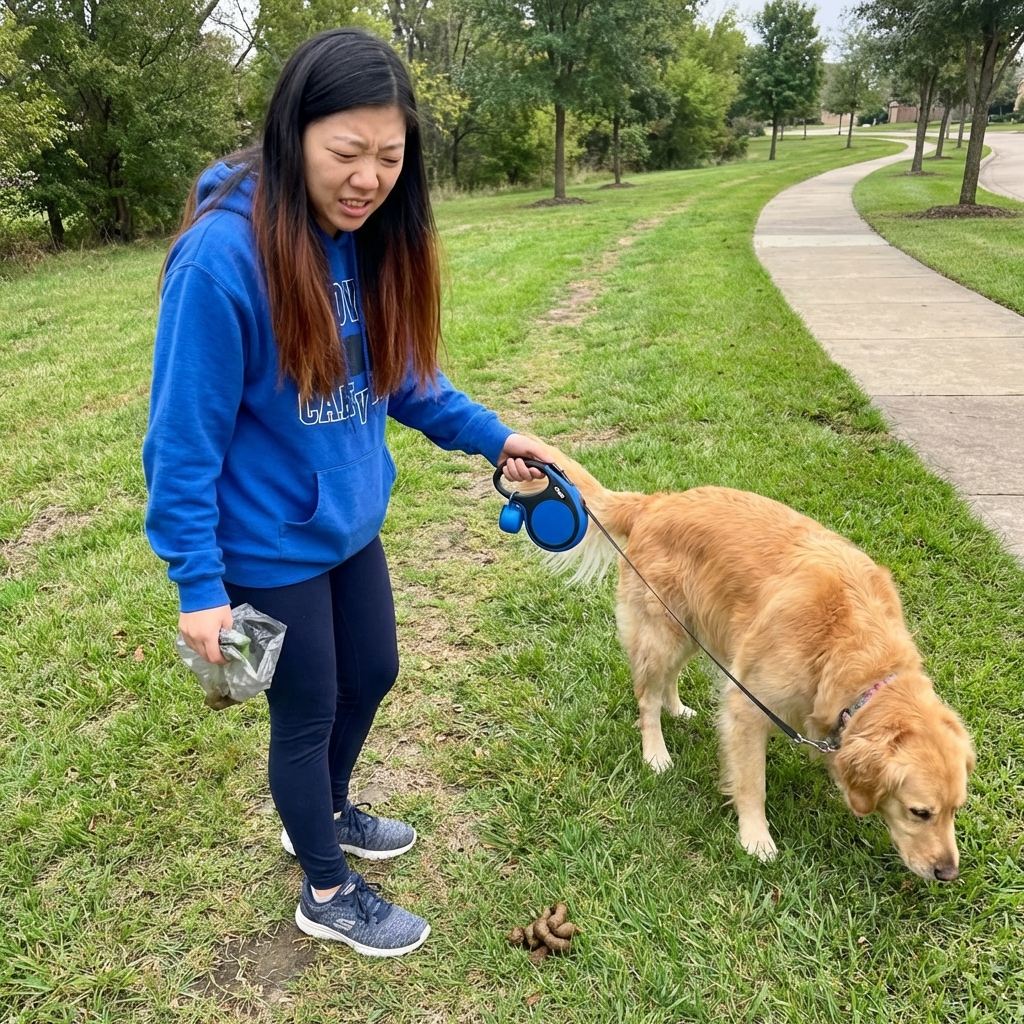
- Bright red blood (fresh): Often from the lower GI tract (colon and rectum). It may look like streaks on the stool, drops at the end, or red-tinged mucus.
- Dark, tarry stool (black): Often suggests digested blood from higher up in the GI tract (stomach or small intestine). This is called melena and is more concerning. Important caveat: black stool can also happen with swallowed blood (from a nosebleed or mouth bleeding) or from some medications and supplements (such as bismuth products or iron). When in doubt, treat black stool as urgent and call a vet.
- Mucus or “jelly-like” coating: Common with colitis, including stress colitis.
- Loose stool with red swirls: Can happen with inflammation of the colon. It still warrants a vet call if it continues, worsens, or comes with other symptoms.
If you can safely do it, take a clear photo in good lighting and note the time, frequency, and any recent changes in diet, treats, boarding, or stressful events. That information helps your veterinary team a lot.
Stress colitis
Stress colitis is inflammation of the large intestine triggered by stress. The colon’s job is to absorb water and form stool. When it becomes inflamed, stool moves through too quickly, causing frequent small bowel movements, mucus, and often bright red blood.
Common triggers
- Boarding, daycare, grooming, or travel
- Moving homes or visitors staying over
- New pets or changes in household routine
- Thunderstorms, fireworks, construction noise
- Separation anxiety or a change in work schedule
Typical signs
- Sudden diarrhea, often overnight or within a day of the stressor
- Frequent trips outside, passing small amounts
- Mucus on stool
- Bright red blood, usually small amounts
- Straining or urgency
- Often still fairly bright, alert, and interested in food
Many mild cases improve within 24 to 72 hours with veterinary guidance and supportive care, but it is still important to check in with your vet, especially if it is your dog’s first episode.
When it is an emergency
Blood can also signal more serious problems. Use this section as your “trust your gut” checklist.
Go to an emergency vet now if you notice:
- Black, tarry stool or vomit that looks like coffee grounds
- Large amounts of bright red blood or blood that continues to increase
- Repeated vomiting or inability to keep water down
- Weakness, collapse, pale gums, or rapid breathing
- Severe abdominal pain, bloating, or a “praying” posture
- Suspected toxin exposure (rat poison, human medications, xylitol, grapes or raisins, etc.)
- Known foreign body risk (toy pieces, socks, bones, corn cobs)
- Very young puppies or dogs who are elderly or medically fragile
- Bleeding from multiple sites (nosebleeds, bruising, bloody urine)
If your dog looks “off” and the blood is not a tiny smear, I would rather you call and be told it can wait than delay and regret it.
Other common causes
Stress colitis is common, but it is not the only explanation. Your veterinarian may consider:
- Dietary indiscretion: Getting into garbage, rich treats, greasy food, or sudden diet changes.
- Parasites: Giardia, hookworms, whipworms, coccidia. Many monthly heartworm, flea, and tick preventives do not reliably prevent these intestinal parasites unless your dog is on a specific deworming protocol, so parasites can still be possible.
- Parvovirus: Especially in puppies or unvaccinated dogs. Often causes severe, foul diarrhea, lethargy, vomiting.
- Acute hemorrhagic diarrhea syndrome (AHDS): Formerly called HGE. Sudden bloody diarrhea that can look like raspberry jam. This can become serious quickly due to dehydration, and the cause is often multifactorial.
- Food sensitivities or inflammatory bowel disease: Recurrent episodes, sometimes with weight loss.
- Anal gland issues or rectal irritation: Blood on the outside of formed stool, scooting, licking.
- Pancreatitis: Often vomiting, abdominal pain, decreased appetite.
- Bleeding disorders: Especially if bruising or gum bleeding is present.
- Masses or polyps: More common in older dogs, can cause intermittent blood.
Stress colitis vs urgent bleed
No internet checklist is perfect, but these patterns are helpful.
More like stress colitis
- Bright red blood with mucus
- Frequent small stools, urgency, straining
- Started after a clear stressor (boarding, travel)
- Dog is mostly acting normal
- No repeated vomiting
More concerning
- Black, tarry stool
- Large volume bleeding
- Profound lethargy, weakness, pale gums
- Significant vomiting, dehydration
- Painful belly, bloating
- Puppy, senior, or dog with chronic illness
What you can do at home (while contacting your vet)
Always call your veterinarian first if there is blood. Still, these steps can be supportive in mild cases when your dog is otherwise stable and your vet agrees it is appropriate.
1) Pause and assess
- Is your dog bright and responsive?
- Any vomiting?
- Is the blood a smear, streaks, or a lot?
- How many episodes in the last 6 to 12 hours?
- Is this a one-time tiny streak, or is it happening again and again?
If it is a one-time tiny streak and your dog is acting normal, your vet may have you monitor and check in during business hours. If it is recurring, worsening, or your dog seems unwell, escalate and call right away.
2) Hydration is priority
Offer fresh water. If your dog is drinking and not vomiting, that is a good sign. Dehydration can sneak up quickly with diarrhea.
3) Feed gently (do not fast puppies)
For many dogs, small, frequent bland meals are preferred over fasting. Some adult dogs may be told to pause food briefly in specific situations, but that should be vet-directed. Puppies and tiny dogs can become hypoglycemic, so do not fast them unless your vet specifically instructs you to.
If your vet recommends a bland diet, common options include:
- Boiled skinless chicken breast with white rice
- Boiled turkey with white rice
- Veterinary GI prescription diet
Avoid fatty foods, dairy, and new treats until things normalize.
4) Ask about probiotics and fiber
Many vets recommend a canine-specific probiotic for acute diarrhea. For colitis, some dogs also benefit from gentle fiber support. The key is the right amount for your dog, so get guidance before adding supplements.
Important: Do not give human medications (including Pepto-Bismol, iron supplements, or anti-diarrheals like loperamide) unless your veterinarian tells you to. Loperamide can be risky for some dogs, especially herding breeds and dogs with the MDR1 gene mutation.
5) Reduce stress
Keep the environment quiet, maintain a predictable routine, and take calm, short leash walks. If your dog just boarded or traveled, give them a decompression day.
What your vet may do
Your veterinarian will tailor the plan to your dog’s age, vaccine status, health history, and how sick they look. Common steps include:
- Fecal testing for parasites and Giardia
- Parvo test for puppies or at-risk dogs
- Bloodwork to check hydration status, anemia, infection, and organ values
- Pancreatitis testing when indicated (often a canine pancreatic lipase test, such as cPL)
- X-rays or ultrasound if a foreign body or other internal issue is suspected
- Fluids for dehydration
- GI protectants or medications to reduce intestinal inflammation
- Diet change short-term, and sometimes longer-term for recurring cases
If stress colitis is the likely cause, your vet may also discuss anxiety reduction strategies for future triggers.
Preventing stress colitis
If your dog seems prone to stress-related tummy trouble, prevention is possible.
Before boarding or travel
- Do a trial run at daycare or the boarding facility for a short visit
- Keep diet consistent for at least 1 to 2 weeks before the event
- Ask your vet about a preventive plan, including probiotics or a GI diet for the transition
- Send familiar bedding that smells like home
At home
- Stick to a predictable routine for meals and potty breaks
- Use slow introductions for new pets and visitors
- Consider enrichment: sniff walks, puzzle feeders, training sessions
- If anxiety is significant, talk to your vet about behavior support and safe medication options
Quick call script
If you feel flustered, here is a simple way to communicate what matters:
“My dog is a [age]-year-old [breed], about [weight] pounds. Since [time], they have had [number] episodes of diarrhea or stool with [bright red blood or mucus or black stool]. They are [eating or not], [vomiting or not], energy is [normal or low]. No known toxins, but they did [board or travel or get into trash or new treats]. Can you advise if this needs ER today?”
The bottom line
Stress colitis is a common cause of bright red blood and mucus in dog stool, especially after a stressful event, and many dogs recover quickly with the right support.
But if you see black stool, large amounts of blood, or your dog is acting sick, it is safest to treat it like an emergency and get veterinary help right away.
You know your dog best. If something feels wrong, trust that instinct and call your veterinarian.