Vet-informed guide to blood in cat poop: what bright red vs black stool can mean, common causes in kittens/adults/seniors, safe home care, and when to seek e...
Article
•
Designer Mixes
Blood in Cat Stool Answers

Shari Shidate
Designer Mixes contributor
Seeing blood in your cat’s stool can stop you in your tracks. As a veterinary assistant here in Frisco, Texas, I’ve talked with many worried pet parents about this exact thing. The good news is that some causes are mild and fixable. The not-so-good news is that blood can also be an early warning sign of serious illness.
This guide will help you understand what you’re seeing, what it may mean, what you can safely do at home, and when it’s time to get to the vet quickly. I cannot diagnose your cat here, but I can help you know what information matters and what red flags to watch for.
What does the blood look like?
The appearance of blood gives clues about where it’s coming from in the digestive tract. If you can, take a quick photo for your vet and note any other changes you see.
Bright red blood (fresh)
Bright red blood is often called hematochezia. It typically suggests bleeding from the lower digestive tract (colon, rectum, or anus). You might see:
- Red streaks on the outside of the stool
- Small drops of blood in the litter box
- Mucus on or around the stool
Common causes include constipation and straining, colitis (inflammation of the colon), parasites, stress-related digestive upset, food intolerance, or irritation around the anus.
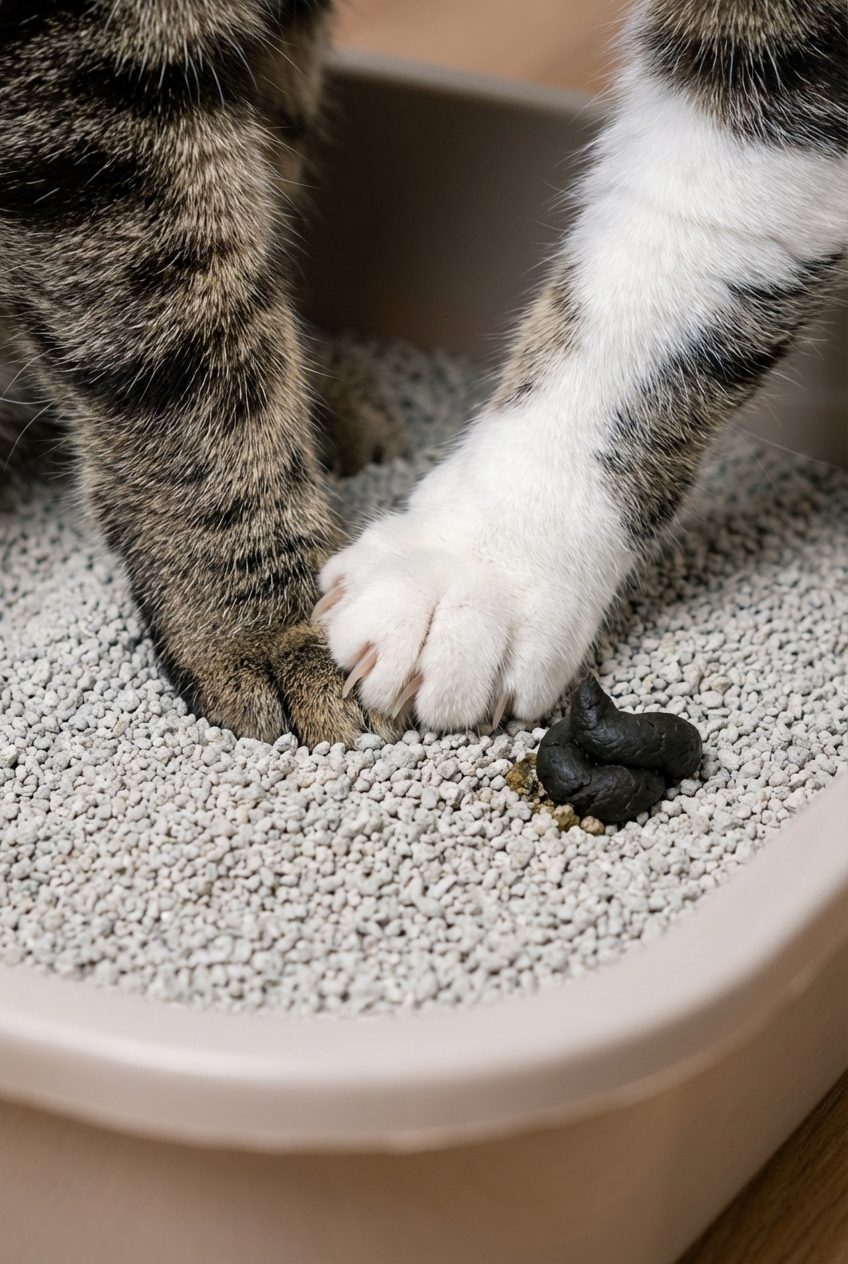
Dark, tarry stool (black)
Black, sticky, tar-like stool is called melena. This often indicates digested blood from higher up in the digestive tract (stomach or small intestine). Melena can be more urgent because it may be tied to ulcers, toxins, tumors, severe infection, or bleeding disorders.
If your cat’s stool looks black and tarry, seek urgent veterinary care the same day.
Blood mixed throughout the stool
Blood blended into the stool rather than on the surface can occur with inflammation, infection, parasites, or more significant intestinal disease. Your vet may want fecal testing and, depending on symptoms, bloodwork or imaging.
Could it be something else?
Less commonly, stool can look red or darker due to non-blood causes (for example, certain foods or dyes). Some medications can also darken stool. This is one reason I recommend calling your vet instead of trying at-home meds to “see what happens.”
Top reasons cats get blood in stool
Here are the most common causes we see in everyday practice, starting with the more likely and moving into the more serious possibilities.
1) Constipation and straining
Hard stool can cause tiny tears or irritation, leading to bright red streaks. Constipation can happen with dehydration, pain (arthritis), obesity, megacolon, stress, or litter box issues.
2) Colitis (inflamed colon)
Colitis often causes small amounts of bright red blood and mucus, plus frequent trips to the litter box with small stools and urgency. Triggers include sudden diet changes, stress, parasites, infections, and inflammatory bowel disease.
3) Parasites
Intestinal parasites like roundworms, hookworms, Giardia, and tapeworms can cause digestive upset, mucus, or weight loss, and sometimes blood. Even indoor cats can be exposed through shared environments, new pets with unknown histories, or by ingesting infected fleas (a common route for tapeworms).
4) Food intolerance or dietary indiscretion
Cats can react to certain proteins, treats, rich foods, or sudden diet changes. This can inflame the gut and lead to blood or mucus in stool. If your cat got into trash, human food, or a new treat, tell your vet.
5) Infections
Bacterial, viral, or protozoal intestinal infections can irritate the digestive tract. Your vet may recommend fecal testing to look for infectious causes, especially if diarrhea is present.
6) Inflammatory bowel disease (IBD)
IBD is a chronic inflammatory condition that can cause intermittent diarrhea, vomiting, weight loss, appetite changes, and sometimes blood. Diagnosis often involves ruling out other causes first.
7) Anal or rectal problems
Small tears, inflammation, or masses near the rectum can cause bright red blood. Cats can also have anal gland issues, although it’s more common in dogs.
8) More serious causes
While less common, it’s important to mention: intestinal tumors, polyps, foreign bodies, toxin exposure (including rodenticides), and bleeding disorders can cause bloody stool. These are more likely if your cat is lethargic, pale, vomiting repeatedly, losing weight, or producing black tarry stool.
Questions vets ask and why
If you call your clinic, you’ll usually be asked a few detailed questions. Having these answers ready can speed up care.
- Is the blood bright red or black? This helps localize where bleeding may be coming from.
- Is it diarrhea, normal, or hard stool? Constipation and colitis can look very different.
- How much blood? A streak is different from a puddle.
- How is your cat acting? Appetite, energy, hiding, vomiting, or pain change the urgency.
- Any recent diet changes? New foods and treats are common triggers.
- Any parasite prevention? Parasite risk depends on lifestyle and preventatives.
- Any toxin risk? Access to rodent poison, certain human medications, lilies, or garbage matters a lot.
- Age and medical history? Kittens, seniors, and cats with chronic disease have different risks.

When it is an emergency
Please seek urgent veterinary care (same day, often ER) if you notice any of the following:
- Black, tarry stool or large amounts of blood
- Repeated vomiting, especially with blood
- Lethargy, weakness, collapse, or pale gums
- Severe diarrhea or diarrhea that will not stop
- Straining without producing stool (possible obstruction or severe constipation)
- Suspected toxin exposure (rodent bait, human meds, plants)
- Kittens with blood in stool, because dehydration can happen fast
Important: Straining in the litter box is sometimes mistaken for constipation when it is actually a urinary blockage, especially in male cats. If your cat is straining and producing little or no urine, crying out, or repeatedly going in and out of the box, treat it as an emergency.
If your gut says “this is not my cat’s normal,” trust that instinct and call.
What you can do at home
For a bright red streak once, with a cat who is acting normal, eating, drinking, and not vomiting, it may be reasonable to monitor closely for 24 hours while you set up a non-urgent appointment.
Do this
- Take a photo of the stool and note the date and time.
- Check litter box habits and watch for straining or repeated trips.
- Offer extra hydration by feeding wet food, adding a little water to meals, and providing fresh bowls.
- Keep meals simple and avoid rich treats and sudden diet changes.
- Reduce stress if possible: quiet space, clean litter box, predictable routine.
Avoid this
- Do not give human medications like ibuprofen, aspirin, bismuth products (such as Pepto-Bismol), or anti-diarrheals unless your vet specifically directs you. Many are dangerous for cats, and some can also change stool color in confusing ways.
- Do not start random supplements to “stop bleeding.” You could mask symptoms and delay needed care.
- Do not fast cats unless your veterinarian instructs it. Cats can develop serious metabolic complications if they stop eating.
If blood repeats, your cat develops diarrhea or vomiting, or your cat’s behavior changes, move from home monitoring to a vet visit quickly.
What the vet may test
Veterinary teams try to find the cause quickly while keeping your cat comfortable. Depending on your cat’s symptoms, your vet may recommend:
- Fecal testing for parasites (including Giardia) and other common intestinal causes
- Fecal PCR panel (in some clinics) to screen for specific infectious pathogens such as certain bacteria and protozoa
- Fecal cytology or smear which may provide clues (for example, certain parasite forms, bacterial overgrowth patterns, or inflammatory debris), but is not always definitive
- Bloodwork to check hydration, anemia, infection, liver and kidney values, and clotting concerns
- Abdominal X-rays if constipation, obstruction, or foreign body is suspected
- Ultrasound to assess intestinal thickness, masses, lymph nodes, and organs
- Diet trial using a veterinary elimination or hydrolyzed protein diet if food sensitivity or IBD is suspected
Common treatment options
Treatment depends on the cause, but these are common tools veterinarians use:
- Deworming medication even if parasites are not seen, when suspicion is high
- Probiotics formulated for cats to support gut balance
- Fluids for dehydration and constipation support
- Prescription diets for digestive support or food sensitivity trials
- Anti-nausea meds and stomach protectants if vomiting or upper digestive irritation is present
- Pain control when straining or inflammation is causing discomfort
- Antibiotics only when truly indicated, because overuse can worsen gut imbalance
Your vet may also recommend follow-up testing if symptoms recur, because chronic blood in stool should not be brushed off as “normal.”
Prevention tips
Not every episode can be prevented, but these habits make a real difference.
- Keep parasite prevention current, especially if your cat goes outdoors or you have other pets.
- Feed consistent, high-quality nutrition and transition slowly when changing foods.
- Prioritize hydration with wet food and multiple water stations.
- Maintain a low-stress environment with routine and enough litter boxes (a common guideline is one per cat plus one extra).
- Schedule wellness visits, especially for seniors. Subtle digestive changes can be the first clue of a bigger problem.
If you take nothing else from this article, take this: a small streak of bright red blood can be minor, but repeated blood, black stool, or any signs of illness should be checked by a veterinarian promptly.
Appointment checklist
- Photo of the stool and litter box
- When it started and how many times it happened
- Stool consistency (hard, normal, soft, watery)
- Vomiting yes or no, and how often
- Diet, treats, and any recent changes
- Current medications and supplements
- Any possible toxin exposure
- Indoor or outdoor lifestyle
- Any flea exposure or recent flea treatment (helpful when tapeworms are possible)
You’re doing the right thing by paying attention. Cats are masters at hiding discomfort, and litter box details are one of the best windows into what’s going on inside.
Disclaimer
This article is for education and is not a substitute for veterinary diagnosis and treatment. If you are concerned about your cat’s health, contact your veterinarian or an emergency clinic.