Vet-informed guide to blood in cat poop: what bright red vs black stool can mean, common causes in kittens/adults/seniors, safe home care, and when to seek e...
Article
•
Designer Mixes
Blood in Cat Poop: Facts and Help

Shari Shidate
Designer Mixes contributor
Seeing blood in your cat’s poop can be scary. As a veterinary assistant here in Frisco, Texas, I want you to know two things: (1) there are several common, treatable reasons this happens, and (2) sometimes it is an urgent warning sign. The key is learning what you are seeing and what to do next.
Quick note: This article offers general, evidence-based guidance, but it cannot diagnose your cat. If you are worried, trust your instincts and call your veterinarian.
What blood in cat poop can look like
The color, placement, and pattern of blood are helpful clues. If you can, take a clear photo for your vet and note when you first saw it.
Bright red blood (fresh)
Bright red streaks on the outside of the stool, or drops in the litter box, often suggest bleeding from the lower intestinal tract (colon, rectum) or from the anal area. This is called hematochezia.
If the bright red blood looks mixed throughout the stool or the stool is very loose, that can still be lower GI bleeding, but it can point more toward inflammation in the colon (like colitis) rather than a small surface tear.
Black, tarry stool
Very dark, sticky, tar-like stool can indicate digested blood from higher up in the gastrointestinal tract (stomach or small intestine). This is called melena and can be more concerning.
Mucus with blood
Jelly-like mucus mixed with blood commonly points to irritation or inflammation in the colon, such as colitis.
Common causes (and what they usually come with)
There is no single cause of bloody stool. These are some of the most common reasons we see in everyday practice, along with symptoms that may show up alongside the blood.
1) Stress or diet changes
Cats can develop colon inflammation from stress (new pet, move, loud construction, routine disruptions) or a sudden food switch. You might see frequent small poops, urgency, mucus, and a little bright red blood.
2) Dietary indiscretion
Getting into trash, people food, rich treats, or something unusual can irritate the GI tract. This can cause diarrhea, mucus, and sometimes streaks of bright red blood, especially if the colon gets inflamed.
3) Constipation and straining
Hard, dry stools can cause tiny tears and irritation. You may notice your cat spending a long time in the litter box, producing small hard stools, or crying out.
4) Parasites
Intestinal parasites like roundworms, hookworms, coccidia, or giardia can lead to diarrhea, mucus, and sometimes blood. Even indoor cats can be exposed through contaminated feces or litter, contaminated soil tracked in on shoes, shared spaces (like shelters or boarding), or a new pet in the home. Fleas are especially linked to tapeworm transmission.
5) Food sensitivity or IBD
Some cats react to certain proteins or ingredients. Signs can include chronic loose stool, vomiting, weight changes, poor coat, or intermittent blood and mucus.
6) Anal gland or rectal irritation
Scooting, licking the rear end, and bright red blood on stool can occur with irritation around the anus or infected or impacted anal glands (less common in cats than dogs, but it happens).
7) Infections
Bacterial or viral infections can cause diarrhea with blood. Kittens and unvaccinated cats are at higher risk.
8) Toxins or medications
Some human medications (especially NSAIDs like ibuprofen), poisons, and certain drugs can irritate the GI tract or affect clotting. Always tell your vet what your cat may have gotten into.
9) Foreign material or sharp objects
Swallowed string, bone fragments, or other non-food items can injure the GI tract or cause a blockage. This can become an emergency quickly, especially with vomiting or lack of appetite.
10) Polyps, tumors, or other structural disease
More likely in older cats, and often paired with weight loss, changes in appetite, chronic diarrhea, or persistent blood.
11) Trauma near the rectum
Small wounds, bites, abscesses, or irritation around the anus can leave bright red blood in the litter box that looks like it came from the stool. Your vet can help you sort out the source.
When it is an emergency
Please seek urgent veterinary care if you notice any of the following:
- Black, tarry stool or large amounts of blood
- Repeated vomiting, especially with lethargy
- Weakness, collapse, pale gums, or trouble breathing
- Straining with little or no stool (possible blockage or severe constipation)
- Straining in the litter box and you are not sure if your cat is trying to pee or poop (possible urinary blockage, especially in male cats)
- Not eating for 12 to 24 hours depending on age and health (sooner for kittens, seniors, diabetics, and cats with prior liver issues)
- Dehydration (tacky or sticky gums, low energy, skin tenting) or severe watery diarrhea
- Known toxin exposure (rodent bait, lilies, human meds)
- Kittens with diarrhea or blood (they can decline fast)
If it is after hours, call an emergency clinic and describe the stool color, how much blood you see, and any other symptoms.
What to do at home (safe steps while you call your vet)
If your cat is bright, alert, eating, and you see a small amount of bright red blood one time, you can take these practical steps while you arrange guidance.
Step 1: Document what you are seeing
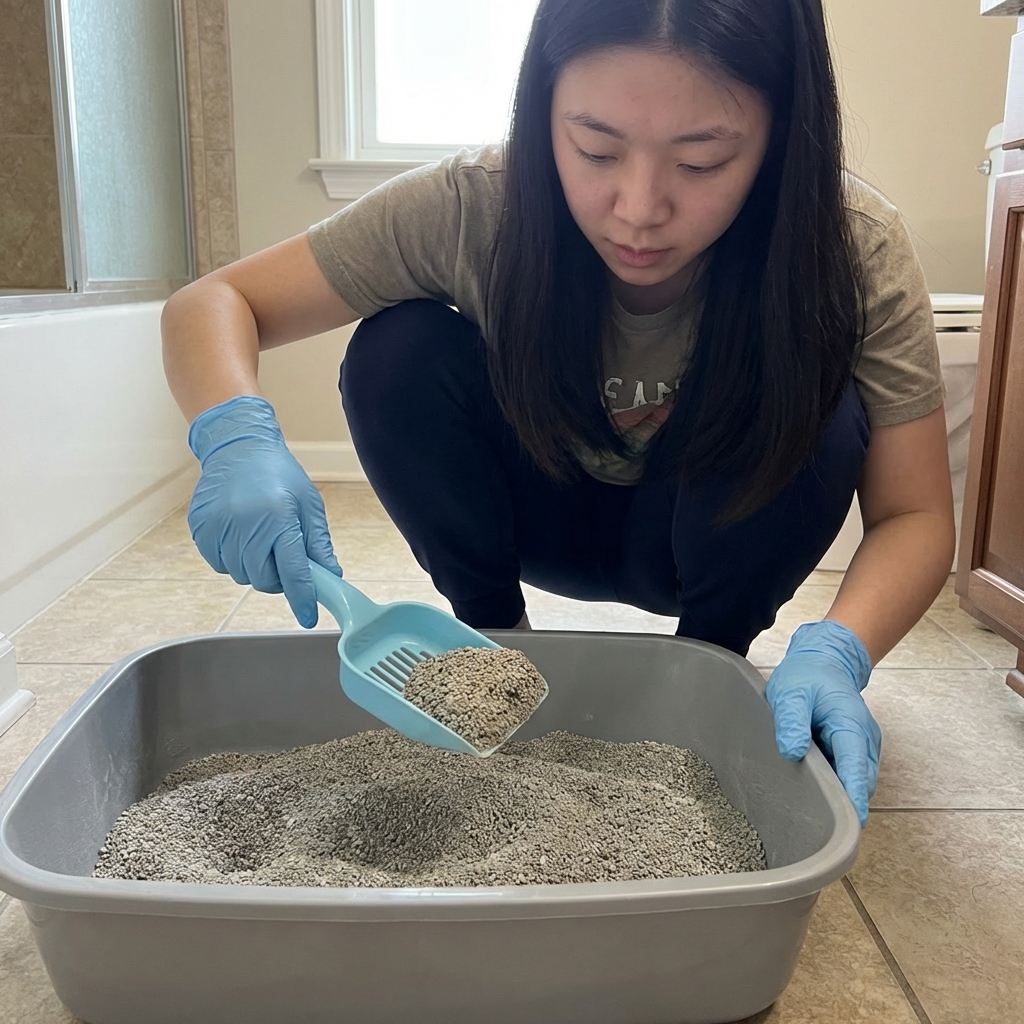
- Take a photo of the stool in the litter box.
- Write down: frequency, stool consistency, any vomiting, appetite changes, and energy level.
- Note recent changes: new food, treats, table scraps, trash access, new litter, travel, boarding, new pets, or stress.
Step 2: Prevent dehydration
Encourage water intake. Many cats drink more from fountains. If your cat eats wet food, that can help hydration too.
Step 3: Avoid common mistakes
- Do not give human medications like Pepto-Bismol, ibuprofen, naproxen, or aspirin unless your veterinarian specifically directs you. Many are dangerous for cats.
- Do not fast your cat without veterinary advice. Cats are not small dogs, and prolonged fasting can be risky, especially for overweight cats.
- Do not deworm “just in case” with random products. The right medication depends on the parasite, and incorrect dosing can be harmful.
- Do not rely on pumpkin, fiber, or diet hacks if there is blood plus vomiting, lethargy, worsening diarrhea, or poor appetite. Those are signs you should be seen, not signs to wait out.
Step 4: Call your veterinarian
Even if it seems mild, a quick phone consult is worthwhile. Your clinic may recommend a fecal test, diet trial, probiotic, parasite treatment, or an exam depending on the full picture.
How your vet will check
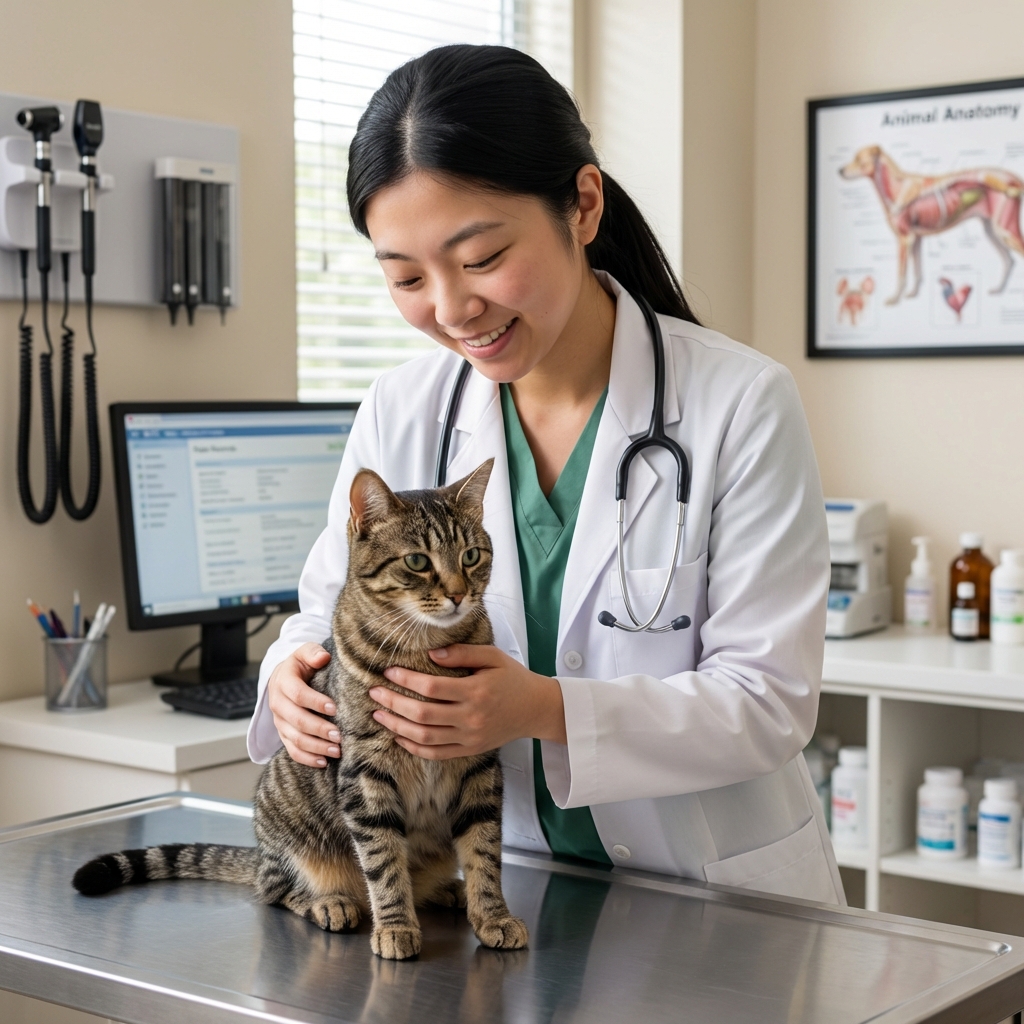
Most cases start with a good history and a physical exam, then targeted testing. You may see some of these recommendations:
- Fecal testing for parasites and protozoa
- Bloodwork to check hydration, anemia, inflammation, organ function
- Urinalysis if dehydration or systemic illness is suspected, or if there is any concern your cat may be straining to urinate
- X-rays or ultrasound if obstruction, constipation, or intestinal disease is possible
- Diet trial for suspected food sensitivity or IBD
- Additional tests if chronic or severe symptoms persist
Bring a fresh stool sample if your clinic requests one. If you are not sure how to collect it, call ahead and they will walk you through it.
Prevention tips
You cannot prevent every cause of bloody stool, but you can reduce risk in meaningful ways.
Go slow with food changes
If you need to switch foods, transition over 7 to 10 days whenever possible. Sudden changes can trigger diarrhea and colitis.
Parasite and flea prevention
Use veterinarian-recommended preventives and keep routine fecal checks on your schedule, especially for kittens and multi-pet homes.
Support healthy stools
Hydration, stress reduction, and appropriate fiber can all help. Ask your vet whether a cat-safe probiotic or a specific GI diet makes sense for your cat’s history.
Lower stress at home
Many cats benefit from predictable routines, multiple litter boxes in multi-cat households, and quiet resting spots. Stress is a very real gut trigger for cats.
FAQs
Can a small amount of blood be normal?
A one-time tiny streak of bright red blood can happen with mild irritation or straining, but it is not something to ignore. If it repeats, increases, or comes with other symptoms, your cat needs an exam.
What if my cat acts totally fine?
That is a good sign, but “acting normal” does not rule out parasites, early GI inflammation, or developing constipation. A quick vet call plus a fecal test is often the smartest next step.
Is blood in the poop always cancer?
No. Cancer is only one possible cause and is more common in older cats with persistent symptoms like weight loss, decreased appetite, or chronic diarrhea.
Should I change food right away?
Not without guidance. Switching too fast can worsen diarrhea. If diet is suspected, your vet may recommend a specific GI-friendly plan and a gradual transition.
The bottom line
Blood in your cat’s poop is a sign that something in the digestive tract or anal area is irritated, inflamed, or injured. Sometimes it is mild and temporary. Sometimes it is urgent. The best approach is simple: observe carefully, document what you see, and loop your veterinarian in early. You are not overreacting. You are being a good cat parent.