Blood in your cat’s poop can be scary. Learn what bright red vs black, tarry stool may mean, common causes, safe at-home steps, and when to see a vet today.
Article
•
Designer Mixes
Blood in Cat Poop

Shari Shidate
Designer Mixes contributor
Seeing blood in your cat’s poop can stop you in your tracks. I get it. In the clinic, we see everything from mild irritation that clears up with simple steps to true emergencies that need same-day care. The key is to look at what the blood looks like, where it appears, how your cat is acting, and how long it’s been happening.
This guide walks you through proven, vet-informed next steps for kittens, adults, and seniors, plus when to call your veterinarian right away.
First, what does the blood look like?
The appearance of blood gives helpful clues about where it may be coming from in the digestive tract. If you can, also note whether it is on the outside of the stool, mixed into the stool, or dripping after. That detail can help your vet narrow down the source.
Bright red blood (fresh)
This can point to bleeding in the lower GI tract, like the colon, rectum, or anus. You may see:
- Red streaks on the outside of the stool
- Red spots in the litter box
- Blood with mucus
Common causes include constipation and straining, diarrhea that irritates the colon, parasites, or inflammation (colitis). If the blood is mostly on the outside of the stool or you notice blood when your cat licks their rear end, irritation around the anus (including wounds, swelling, or occasionally anal sac area problems) can also be involved.
Dark, tarry stool (black)
Black, sticky, tar-like stool (called melena) can mean digested blood from higher up, like the stomach or small intestine. This is more concerning and should be treated as urgent, especially if your cat is weak, not eating, or vomiting.
Important caveat: Some things can also darken stool, including iron supplements and bismuth-containing products. Cats should not receive bismuth products unless a veterinarian specifically directs it. Even if you suspect a supplement is the reason, it is still worth a prompt vet call to be safe.
Blood with mucus
Mucus is often a sign the lower gut is irritated. Small amounts can happen with stress colitis, diet changes, parasites, inflammatory bowel disease, or infections.
Quick triage: go now vs. monitor
Go to an emergency vet today if you notice any of these
- Black or tarry stool
- Large amounts of bright red blood or blood pooling in the litter
- Repeated vomiting or vomiting with blood
- Lethargy, collapse, pale gums, or trouble breathing
- Straining with little or no stool (possible obstruction, severe constipation, or another urgent issue)
- Suspected toxin exposure (for example, rodent bait, human medications like ibuprofen, or lilies)
- Known clotting disorder or your cat is on medications that can increase bleeding risk (for example, certain pain medications, steroids, or drugs that can irritate the stomach)
- Kittens with any blood in stool plus diarrhea or poor appetite
Note on rodent bait: Some anticoagulant rodenticides can cause delayed bleeding, so do not wait for symptoms if exposure is possible.
Call your vet within 24 to 48 hours
- Small streaks of bright red blood that happen more than once
- Diarrhea lasting over 24 hours
- Constipation or frequent straining
- Blood plus weight loss, increased thirst, or appetite changes
- Senior cats with new GI signs, even if mild
- Cats with a history of GI disease, heart disease, or cats currently on NSAIDs or steroids who develop any blood in stool
Monitor at home for 24 hours only if all are true
- Cat is acting normal (energy, appetite, drinking)
- Only a tiny streak of bright red blood one time
- No vomiting
- No ongoing diarrhea
- No straining or crying in the litter box
If it happens again, move up to calling your vet. Repeated blood is your sign to investigate, not just wait it out.
Most common causes by age
Kittens
In kittens, blood in stool is often linked to:
- Intestinal parasites (roundworms, hookworms, coccidia, giardia)
- Diet changes and sensitive digestion during weaning
- Viral or bacterial infections, especially with diarrhea
Kittens can dehydrate quickly. If your kitten has blood in stool plus diarrhea, weakness, or not eating, it is safest to be seen promptly. If diarrhea is severe or your kitten is very quiet, not eating, or vomiting, your vet may also be concerned about serious illnesses like panleukopenia, which needs immediate care.
Adult cats
In healthy adults, the most common triggers include:
- Dietary indiscretion (new treats, human food, sudden food switch)
- Stress colitis (moves, visitors, new pets, boarding)
- Constipation (low water intake, hairballs, pain)
- Parasites, even indoor cats occasionally get them
- Inflammatory bowel disease or food sensitivities
Senior cats
In seniors, we think about the same causes as adults, plus:
- Chronic kidney disease contributing to dehydration and constipation
- Hyperthyroidism sometimes linked with diarrhea and weight loss
- GI tumors or polyps
- Medication side effects (some pain medications, steroids, or other prescriptions)
If your senior cat has blood in stool, especially with weight loss, vomiting, or appetite changes, a vet visit is a smart move sooner rather than later.
What it might not be
Not every “bloody poop” report is actually blood mixed into stool. A few common look-alikes:
- Red-tinged urine in the litter box can look like blood in stool. Straining in the box can also be a urinary issue, including a potentially life-threatening blockage in male cats.
- Blood from the anus or skin (a small cut, inflammation, or swelling) can leave streaks on otherwise normal stool.
- Dyes or unusual foods can change stool color. This does not rule out a problem, but it is helpful context for your vet.
What you can do at home (safe steps)
Home care is only appropriate for mild cases and only while you are actively watching your cat. Here are practical, vet-safe steps you can start today.
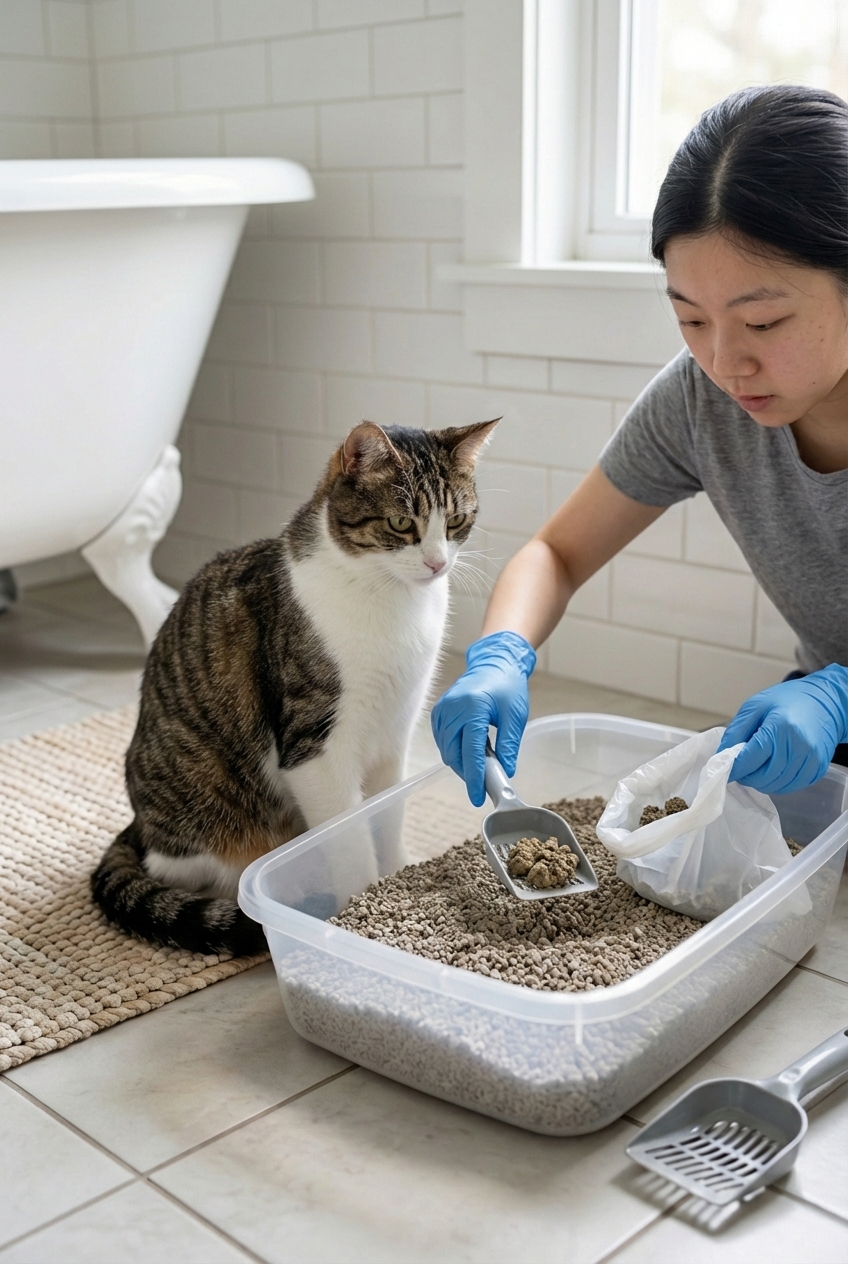
1) Take a clear photo and note the details
- Color: bright red vs. dark
- Location: on the outside vs. mixed in vs. dripping after
- Stool form: normal, soft, watery, pebble-like
- Frequency: once vs. repeated
- Any straining, crying, or licking the rear end
This helps your vet tremendously, and it speeds up decision-making.
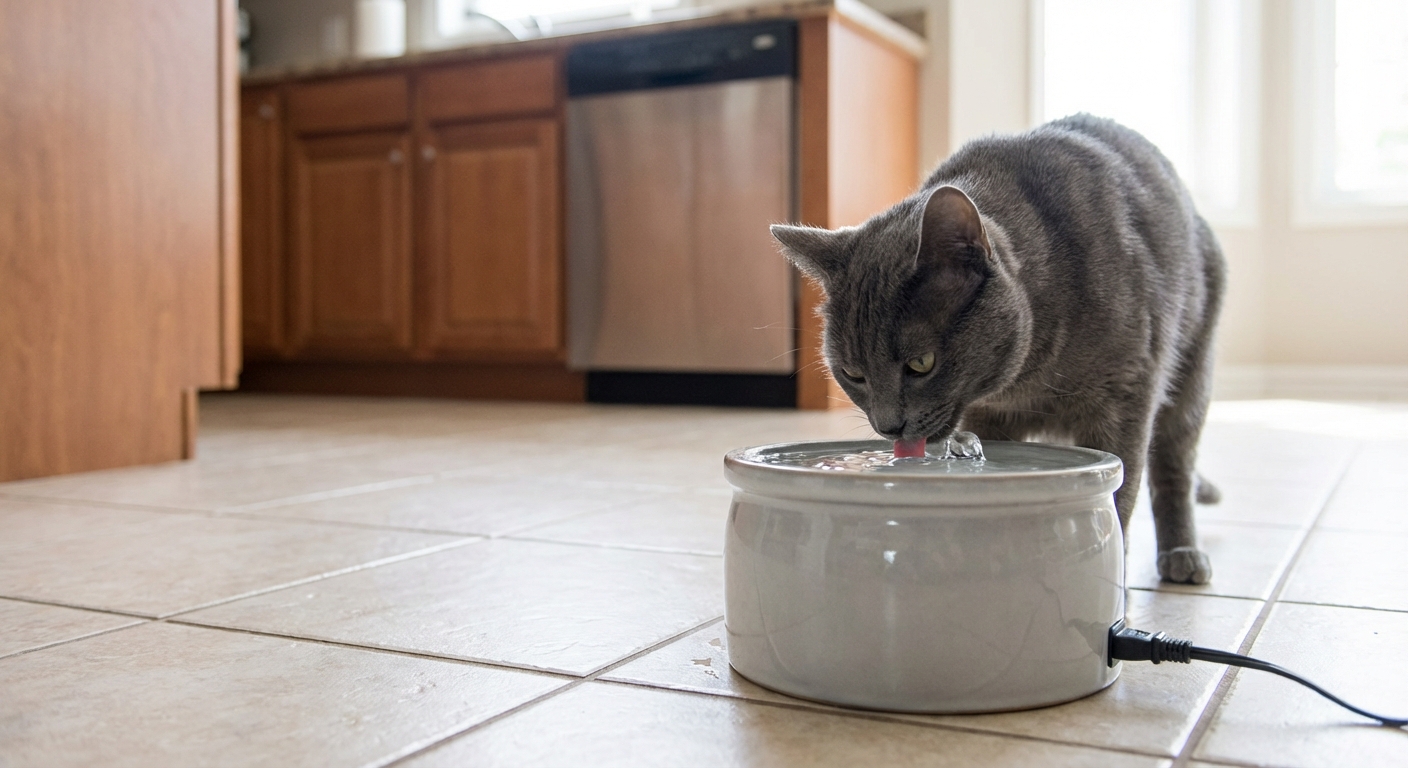
2) Support hydration
Dehydration worsens constipation and can aggravate GI upset.
- Offer fresh water in multiple bowls
- Try a pet fountain if your cat prefers running water
- If your vet has said it is OK for your cat, increase wet food for extra moisture
3) Avoid sudden diet changes
If you just switched foods, your cat’s gut may be reacting. Do not keep rotating brands daily. Pick one complete and balanced diet and transition slowly over 7 to 10 days.
4) Do not give human medications
Please skip Pepto-Bismol, ibuprofen, aspirin, and leftover antibiotics. Some are toxic to cats, and others can mask symptoms or worsen bleeding.
5) If constipation is suspected, do not force laxatives
Straining can look like constipation, but cats can also strain from diarrhea, urinary issues, or obstruction. If your cat is repeatedly squatting with little output, that is a same-day vet visit situation.
6) If your vet wants a stool sample, collect it the right way
Clinic policies vary, but in general:
- Collect a fresh sample (ideally the same day) in a clean, sealed container or bag.
- If you cannot bring it in right away, refrigerate it and bring it within 24 hours.
- Do not freeze it unless your clinic tells you to.
What your vet may recommend (and why)
A good workup is not about running every test. It is about matching the diagnostics to your cat’s age, symptoms, and risk factors.
History and physical exam
Your veterinarian will ask about diet changes, stress, toxin exposure, deworming history, and litter box habits. They will check hydration, abdominal pain, body condition, and gum color.
Fecal testing
Many parasites and protozoa are invisible to the naked eye. A fecal exam can detect common culprits like giardia and coccidia.
Bloodwork and urine testing
Especially important for seniors or cats who seem “off.” It can reveal anemia, infection, kidney disease, thyroid problems, and more.
Imaging
X-rays or ultrasound may be needed if your veterinarian suspects obstruction, severe constipation, masses, or thickened intestines.
Treatment options
- Deworming based on risk and testing
- Probiotics designed for pets to support the gut microbiome
- Diet trials for suspected food sensitivity
- Anti-inflammatory or GI medications when appropriate
- Fluids if dehydrated
Special situations
Blood plus straining
Straining can be constipation, but it can also be colitis or even a urinary emergency. If your cat is frequently in and out of the box with little output, call a vet the same day.
Blood after antibiotics
Antibiotics can disrupt normal gut bacteria and cause diarrhea. If you see blood after starting an antibiotic, do not assume it is a simple side effect. Contact your veterinarian promptly so they can decide whether to adjust the medication, add a probiotic, or look for another cause.
Blood with weight loss
Weight loss plus GI bleeding is a red flag for chronic disease like IBD, hyperthyroidism, or cancer. This needs a medical workup.
Indoor cats can still get parasites
Fleas, contaminated soil on shoes, and hunting bugs or lizards indoors can all bring exposure. “Indoor only” lowers risk, but it does not eliminate it.
Prevention you can start this week
- Keep diet steady and transition foods slowly.
- Prioritize hydration with wet food and water access.
- Routine parasite prevention based on your vet’s guidance and your cat’s lifestyle.
- Reduce stress with predictable routines, litter box hygiene, and safe hiding spots.
- Schedule wellness checks, especially for seniors, to catch issues early.
Bottom line: One tiny streak of bright red blood can be mild, but repeated blood, black stool, or a cat that seems unwell deserves prompt veterinary attention.
What to tell your vet (copy and paste)
If you are calling your clinic, here is a quick script you can use:
My cat is [age] and I noticed blood in the stool starting [today/yesterday].
The blood looks [bright red/dark]. It appears [on the outside/mixed in/drips after]. Stool is [normal/soft/diarrhea/constipated].
Appetite is [normal/reduced], energy is [normal/reduced].
Vomiting [yes/no]. Straining [yes/no].
Diet change in the last 2 weeks [yes/no].
Parasite prevention and last deworming: [details].
Current medications (if any): [list].
This information helps your veterinarian decide whether to schedule an urgent visit, run a fecal test first, or direct you to emergency care.