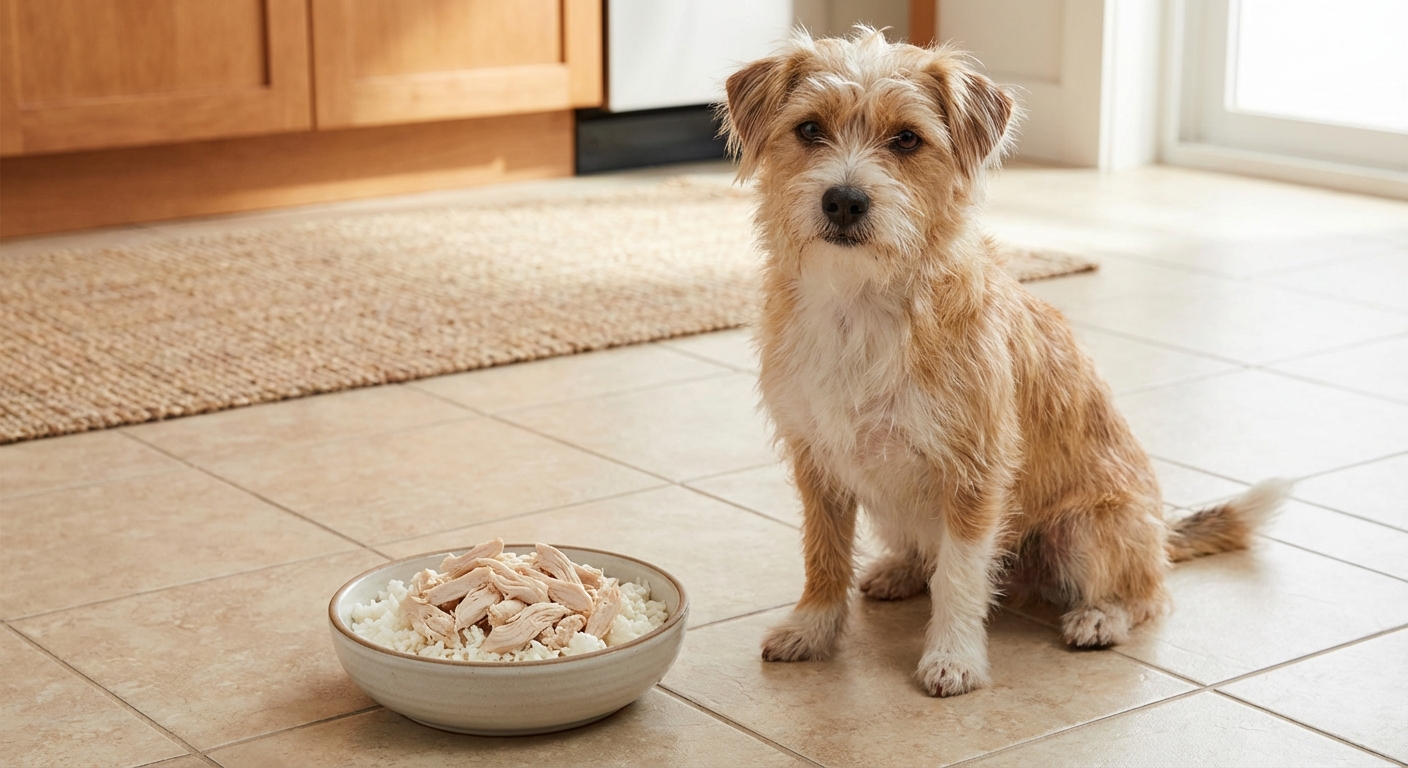
Vet-informed guide to a short-term bland diet for dogs: chicken and rice 1:2 ratio, daily cup ranges by weight, how many meals to split into, and red flags t...
Article
•
Designer Mixes
Bland Diet for Dogs: How Long to Feed It

Shari Shidate
Designer Mixes contributor
If your dog has vomiting, diarrhea, or an upset tummy, your veterinarian may recommend a bland diet for a short time. As a veterinary assistant in Frisco, Texas, I can tell you this is one of the most common at-home steps we use to help the GI tract settle while you watch closely for red flags.
But the big question is always the same: how long should you keep feeding it? The answer depends on your dog’s symptoms, how quickly they improve, and whether there is an underlying problem that needs treatment.
Quick safety note: A bland diet is best for mild stomach upset when your dog is still fairly bright, can keep water down, and is not showing signs of severe pain. If your dog has repeated vomiting, seems very weak, has blood in vomit or stool, has a bloated belly, or is a very young puppy, skip home care and call your vet the same day.
What a bland diet is (and why it helps)
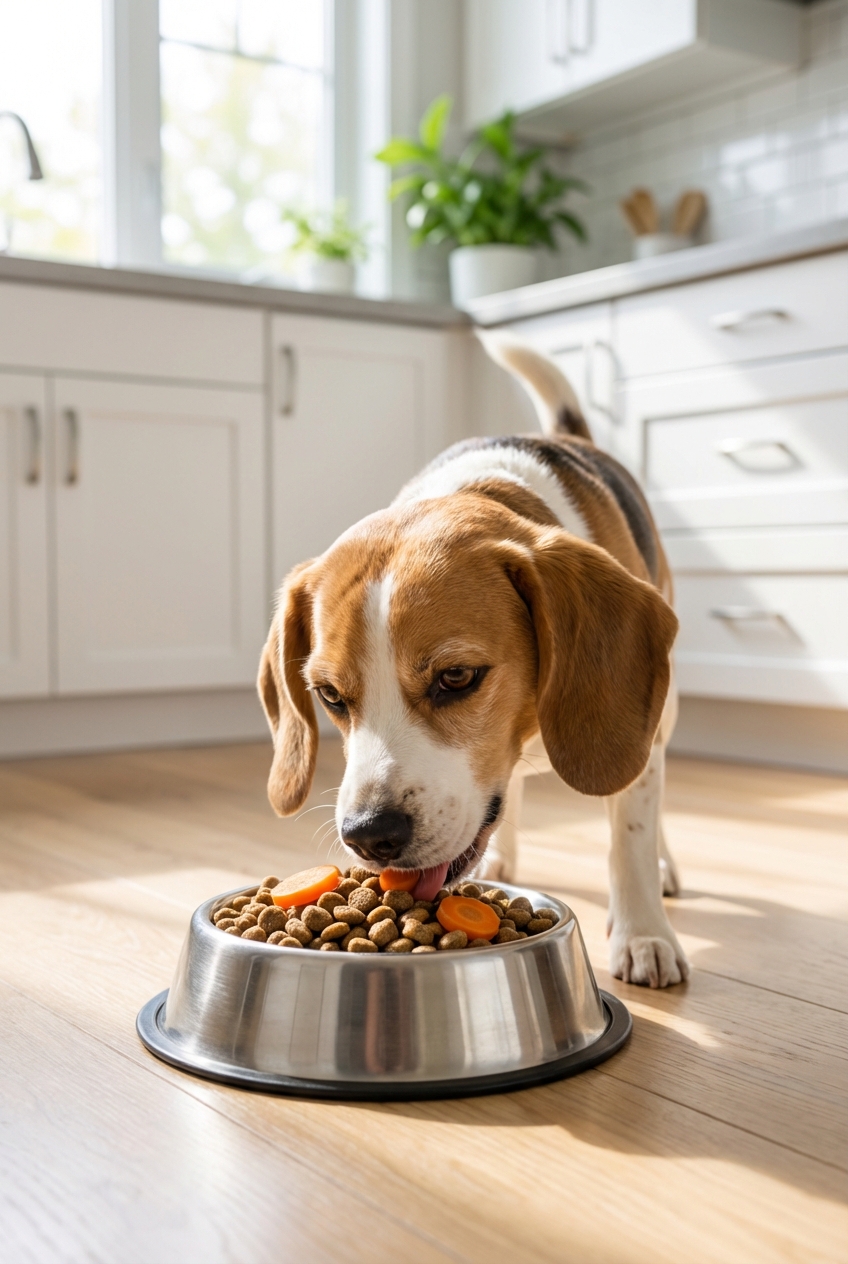
A bland diet is a temporary, easy-to-digest meal plan that is low in fat and gentle on the stomach and intestines. The goal is to:
- Give the GI tract a break
- Reduce irritation and help stools firm up
- Use simple, digestible ingredients that are easier to tolerate
- Help you clearly track whether your dog is improving
It is not meant to be a complete, long-term diet. Most home bland diet recipes are missing key nutrients (especially calcium, essential fatty acids, and certain vitamins). For a few days, this is usually fine, but longer-term feeding should be guided by your veterinarian, often with a prescription GI diet or a properly balanced home-cooked plan.
How long should a dog stay on a bland diet?
Typical timeframe: 2 to 5 days
Many veterinarians recommend about 2 to 5 days for mild stomach upset. You are usually looking for:
- No vomiting
- Diarrhea improving or resolved
- Stool becoming more formed
- Appetite and energy returning to normal
Sometimes longer: up to 7 to 10 days (with vet guidance)
If your dog had more significant diarrhea, stress colitis, or is recovering from a GI infection, your vet may have you continue bland food for 7 to 10 days before transitioning back to regular food. In these cases, your veterinarian may also recommend a probiotic, deworming, or medications depending on the cause.
Not improving in 24 to 48 hours? Call your vet
If your dog is not clearly improving within 24 to 48 hours on a bland diet, it is time to check in with your veterinarian. A bland diet can support recovery, but it does not replace diagnostics and treatment when something more serious is going on.
Also reach out sooner if signs keep coming back. Chronic or recurrent vomiting or diarrhea often needs a workup for issues like parasites, food intolerance, pancreatitis, or inflammatory bowel disease.
Should I pause food after vomiting?
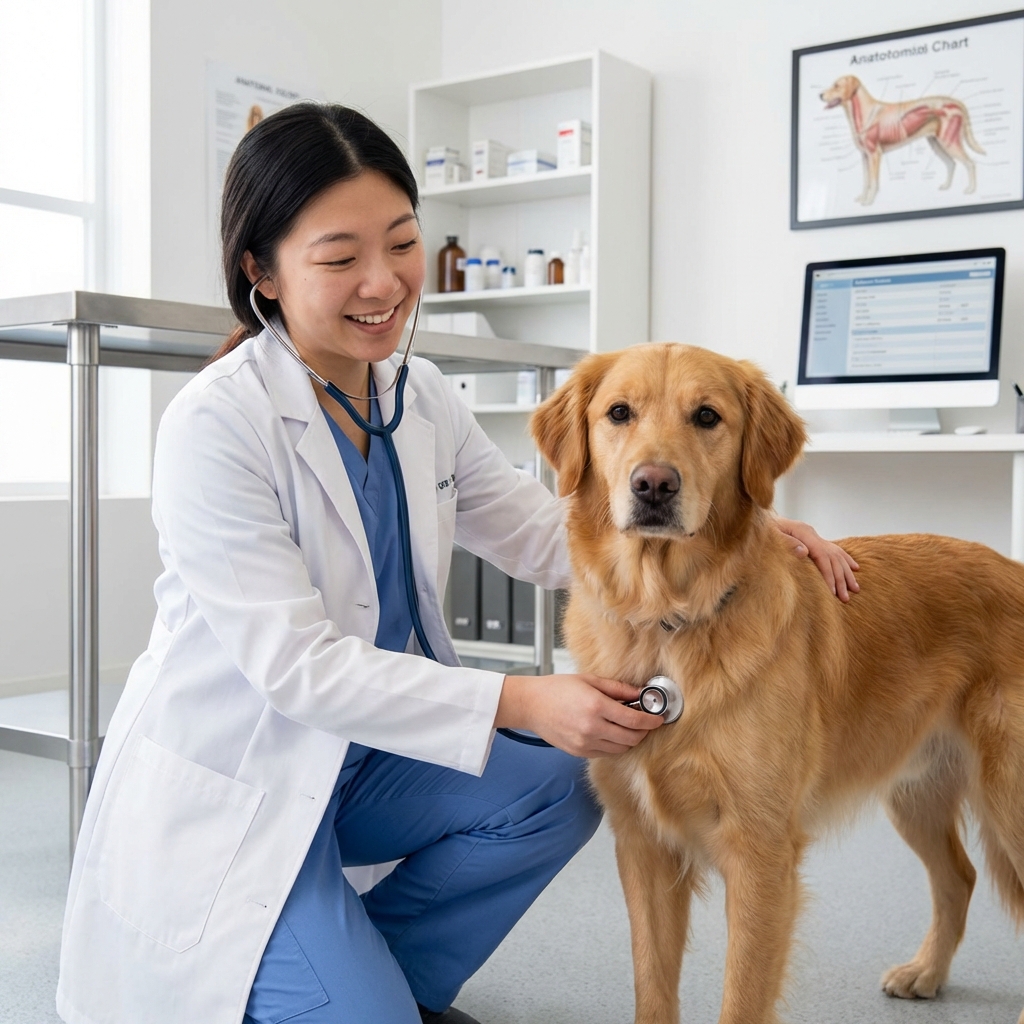
Some vets recommend a short food break after vomiting, then restarting with small bland meals. This is very individual, so follow your veterinarian’s direction. In general, if your adult dog vomits once and then seems comfortable, your vet may have you:
- Offer small amounts of water first (or ice chips)
- Then try a small bland meal a few hours later if no more vomiting occurs
Do not fast puppies, toy breeds, seniors, or dogs with diabetes without specific veterinary guidance. These dogs can become dehydrated or have dangerous blood sugar changes faster.
When to stop the bland diet
In most cases, you can begin transitioning off the bland diet when your dog has:
- Normal appetite
- No vomiting for at least 24 to 48 hours
- Stool that is mostly formed for 1 to 2 days
- Normal energy and hydration
If stools are still pudding-soft or your dog is straining, you can stay bland a bit longer, but do not let it drag on without your vet’s input.
How to transition back to regular food
Even if your dog is acting normal, the gut may still be sensitive. A slow transition helps prevent a relapse.
A simple 3 to 4 day transition
- Day 1: 75% bland diet, 25% regular food
- Day 2: 50% bland diet, 50% regular food
- Day 3: 25% bland diet, 75% regular food
- Day 4: 100% regular food
If symptoms return at any point, go back to the last ratio your dog tolerated and contact your veterinarian.
Best bland diet options (and what to avoid)
Common vet-approved bland foods
Always follow your veterinarian’s instructions first, especially if your dog has pancreatitis risk, kidney disease, diabetes, or food allergies. That said, these are common go-to options for many dogs:
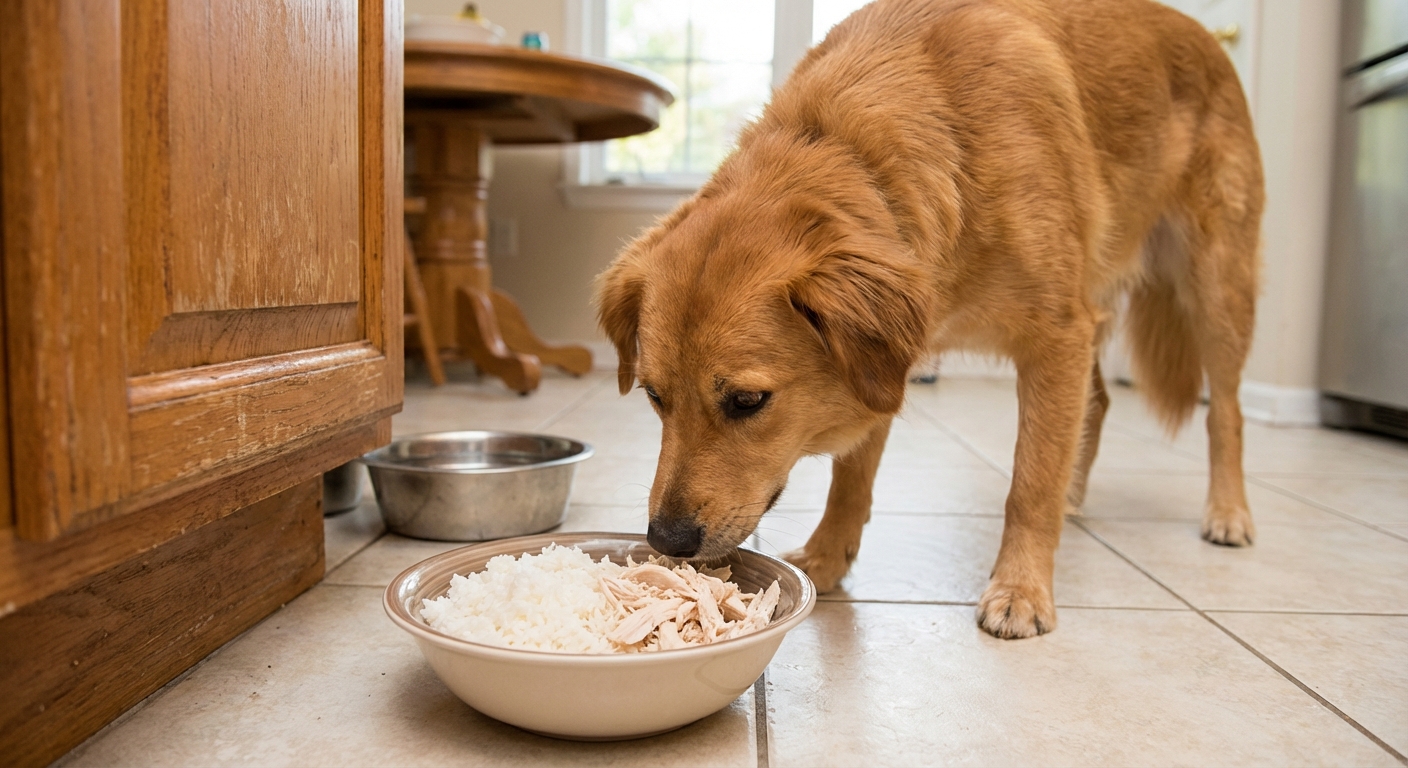
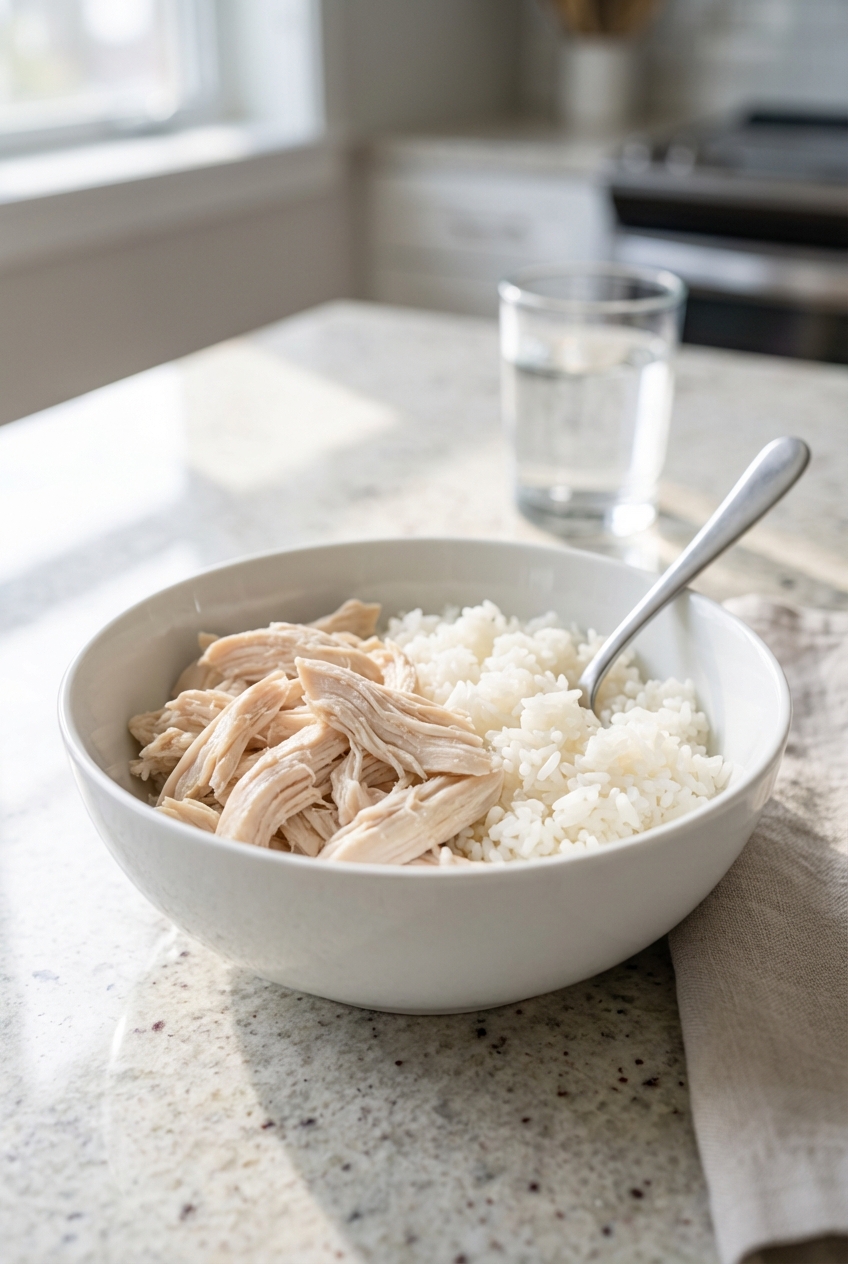
- Boiled skinless chicken breast with white rice
- Lean ground turkey (well-cooked and drained) with white rice
- Plain canned pumpkin (not pie filling) in small amounts for fiber support
- Prescription GI diets from your veterinarian (often the easiest and most balanced short-term option)
Pumpkin tip: A little can help some dogs, but too much can worsen diarrhea or cause gas. If you want a general guide, many clinics suggest starting around 1 teaspoon for small dogs, 1 tablespoon for medium dogs, and 1 to 2 tablespoons for large dogs, mixed into food once or twice daily. When in doubt, ask your vet for the right amount for your dog.
Avoid these during stomach upset
- High-fat foods (bacon, greasy meats, rich treats)
- Dairy (many dogs become temporarily lactose-sensitive during GI upset)
- Spicy foods or heavy seasonings
- Raw diets while actively vomiting or having diarrhea (higher risk of bacterial complications and may be harder to tolerate during active GI upset)
- Cooked bones (splinter risk and GI obstruction risk)
- Over-the-counter medications unless your vet specifically approves them
How much to feed and how often
Smaller meals are often easier on an irritated stomach. A common approach is to feed 3 to 6 small meals per day for the first day or two.
General tips:
- Offer small portions, then gradually increase if your dog keeps it down.
- Make sure fresh water is available at all times.
- If your dog gulps water and vomits, offer smaller, more frequent sips.
If your dog is very small, very young, elderly, or has other medical conditions, talk to your vet sooner. These dogs can become dehydrated or low in blood sugar faster.
Red flags: when a bland diet is not enough
Please seek veterinary care promptly if you notice any of the following:
- Repeated vomiting or unable to keep water down
- Blood in vomit or stool (bright red or black, tarry stool)
- Severe lethargy, collapse, or signs of pain
- Bloated abdomen or unproductive retching
- Signs of dehydration (tacky gums, sunken eyes, weakness)
- Diarrhea lasting more than 24 to 48 hours, especially in puppies
- Suspected toxin exposure (for example: xylitol, grapes or raisins, chocolate) or foreign body (toy, sock, bones)
A bland diet is a helpful tool, but it should never delay care when your dog is getting worse or not improving.
Frequently asked questions
Can I feed a bland diet for two weeks?
It is usually not recommended to feed a home bland diet for two weeks without veterinary guidance because it is not nutritionally complete. If your dog needs longer-term GI support, ask your veterinarian about a balanced prescription GI diet or a properly formulated home-cooked plan.
What if my dog seems hungry and wants more?
That is common once they start feeling better. Increase portions gradually while keeping meals small and frequent until stools are consistently normal.
Does pumpkin cure diarrhea?
Pumpkin can help some dogs because it provides soluble fiber, but it is not a cure for infections, parasites, pancreatitis, dietary intolerance, or foreign bodies. Also, too much pumpkin can backfire and worsen loose stools in some dogs. If diarrhea is persistent or severe, your vet should evaluate the cause.