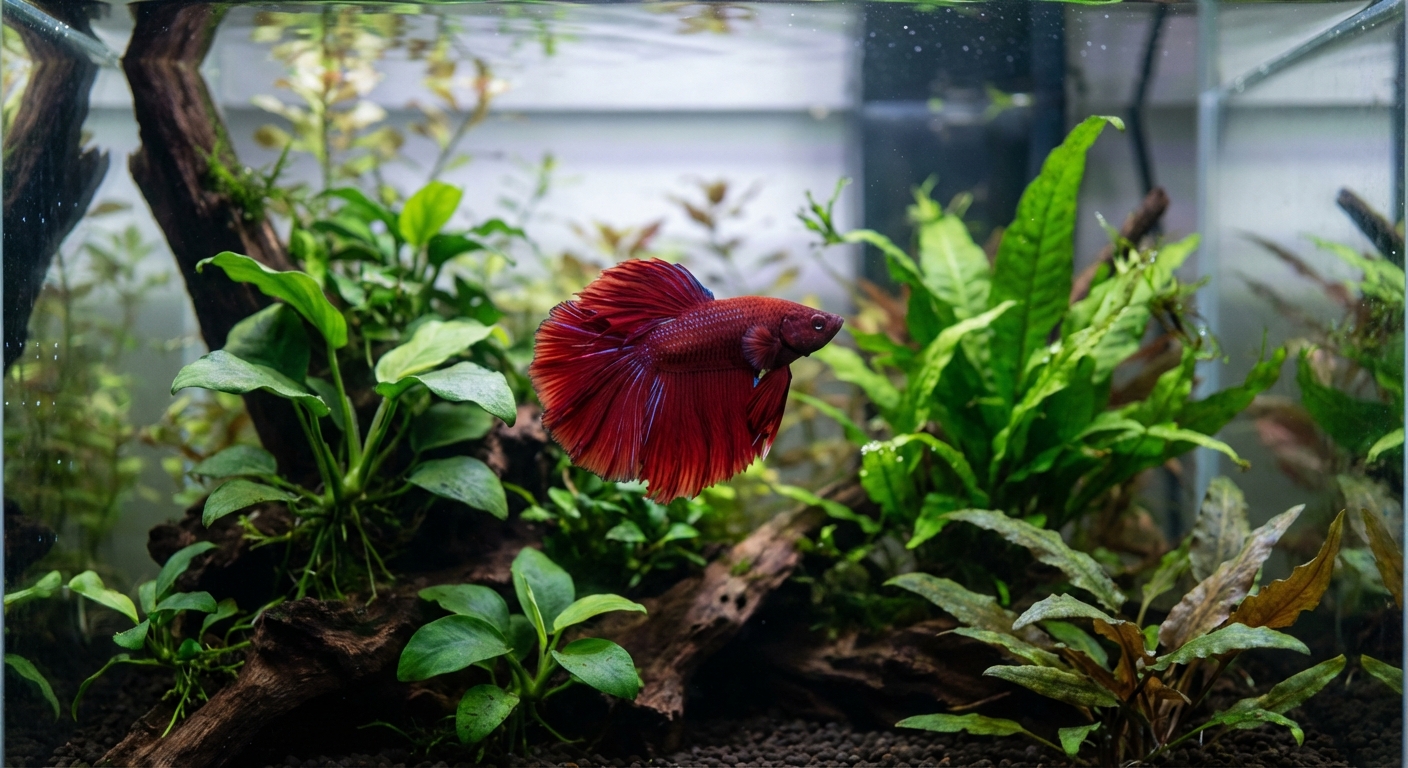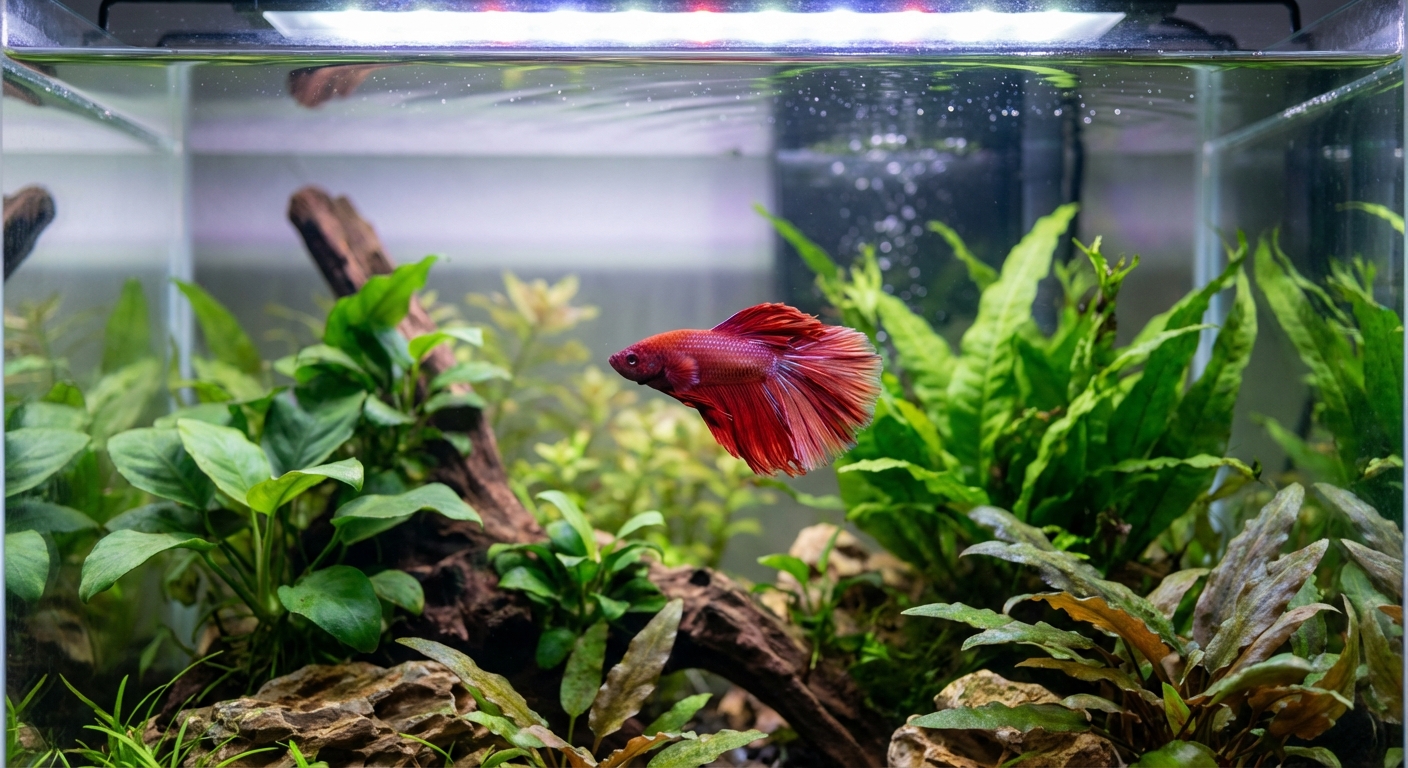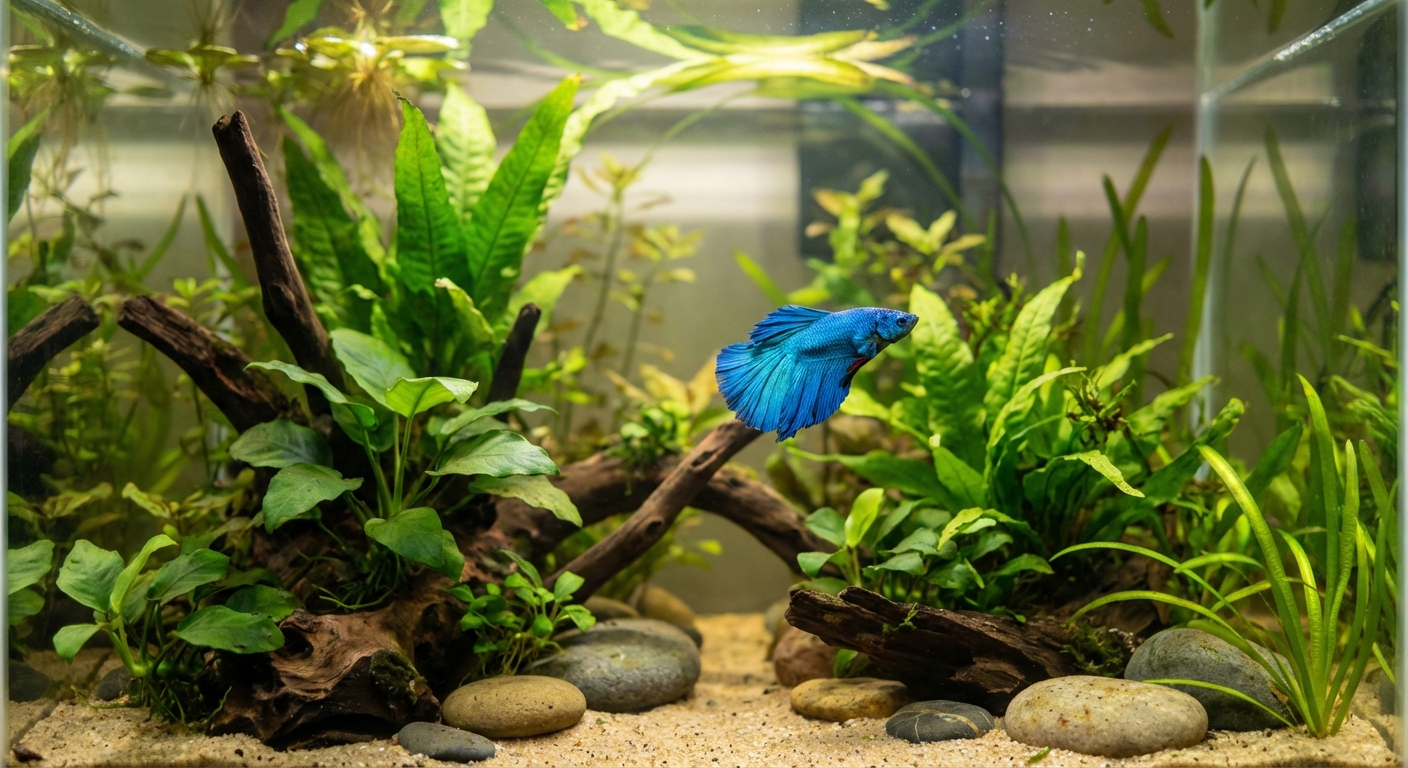
Discover the best betta tankmates, ideal tank sizes, and proven setup tips. Includes fish to avoid, non-fish options like nerite snails, and safe introductio...
Article
•
Designer Mixes
Betta Fish Tank Mates: Safe Picks and Red Flags

Shari Shidate
Designer Mixes contributor
Bettas are famous for their personality, their color, and yes, their attitude. As a veterinary assistant in Frisco, Texas, I love animals that keep us on our toes, and bettas definitely qualify. The good news is that many bettas can live peacefully with carefully chosen tank mates when you set them up for success.
This guide walks you through the safest tank mates, the biggest red flags, and the practical steps that prevent stress and fin damage. (Quick note: this is general guidance, not a substitute for species-specific research or veterinary advice if your fish is ill.)
Before You Choose Tank Mates
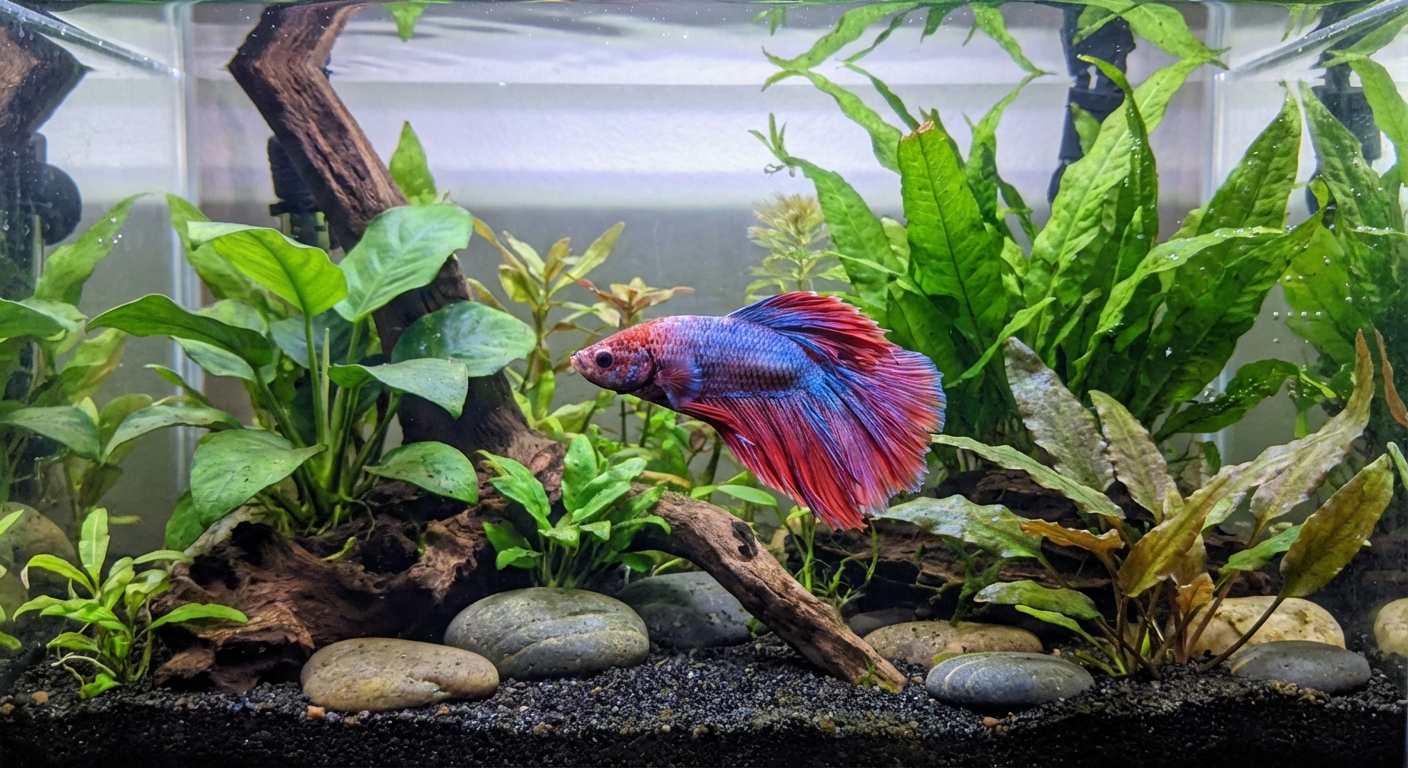
Most “betta problems” are really setup problems. Bettas are territorial, but their behavior is usually more manageable when their environment meets their needs.
Start with the non-negotiables
- Tank size: 10 gallons can be a workable minimum for a betta plus very low-drama tank mates (like a snail). For a true community with schooling fish, 15 to 20 gallons or larger is more consistently successful because it gives everyone room to spread out.
- Temperature: Aim for 78 to 80°F.
- Water quality: Use a fully cycled tank whenever possible. You want 0 ammonia, 0 nitrite, and nitrate kept under control with water changes. Poor water quality can make even “nice” fish act off.
- Water parameters: Match pH and hardness needs as closely as you can. Most common community fish overlap fine in typical, stable tap water, but stability matters more than chasing a perfect number.
- Filtration and flow: Gentle flow is best. Strong currents can cause chronic stress and contribute to fin tearing over time, especially in long-finned bettas.
- Plant cover and hides: Live plants or dense silk plants create visual breaks. Add caves, driftwood, and shaded spots so fish can get out of each other’s face.
- Decor safety: Skip sharp plastic plants and rough ornaments. If it can snag pantyhose, it can snag fins.
- One betta per tank: Do not keep two male bettas together. Female groups (sororities) are advanced, and even experienced keepers see failures, so I do not recommend them for most homes.
Quick compatibility checklist
- Cycled and stable: 0 ammonia, 0 nitrite, steady temperature
- Right size match: Avoid fish small enough to be eaten and fish big or pushy enough to bully
- Temperament match: Calm, not flashy, not nippy
- Schooling fish: Keep proper group sizes so they do not redirect stress into fin nipping
- Hiding places: Line-of-sight breaks in every zone of the tank
- Backup plan: Divider or spare tank ready before you mix species
Personality still matters
Some bettas are calm, others are spicy. Even “safe” tank mates can fail if your individual betta is highly territorial. Plan for a backup option, like a spare tank or a divider, before you mix species.
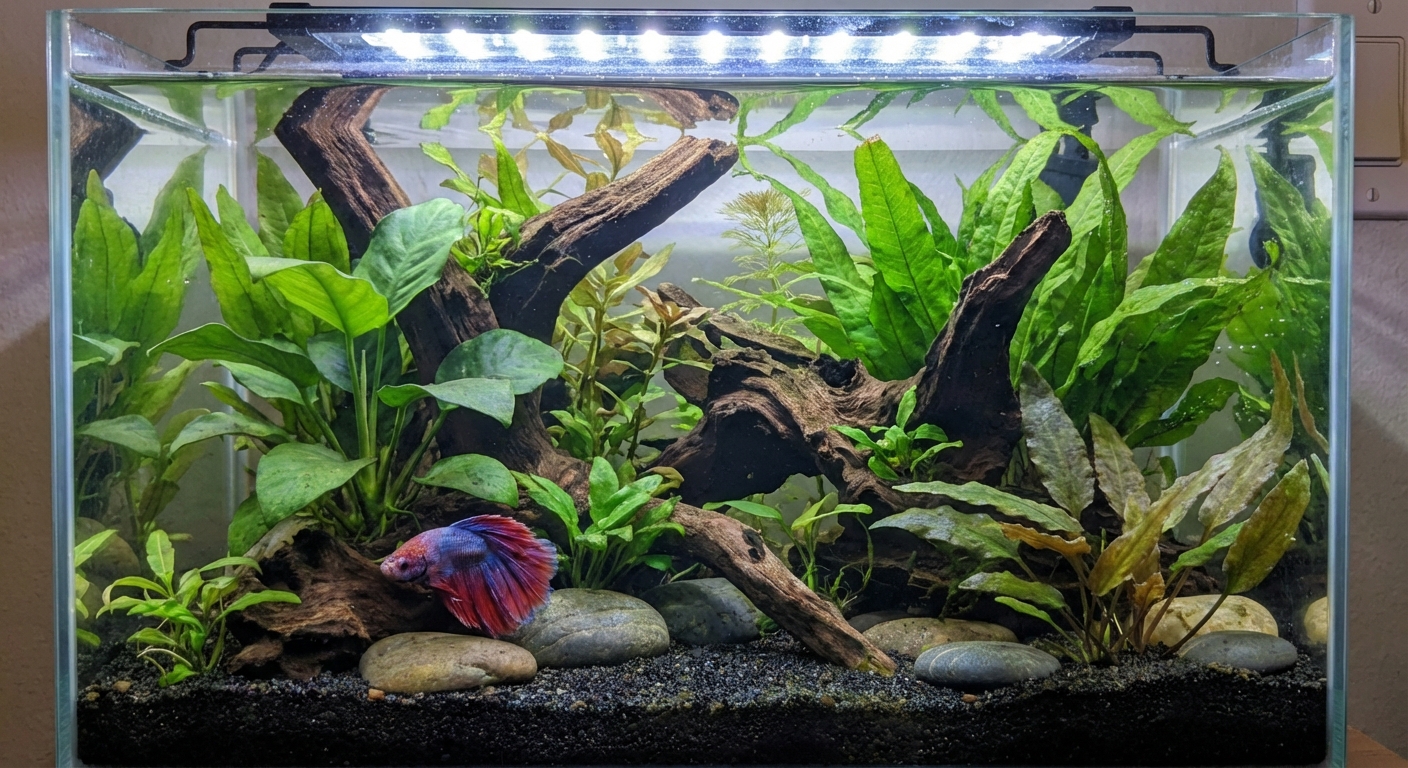
Green-Light Tank Mates
These companions tend to work well because they are peaceful, not flashy, and not interested in a betta’s fins.
Snails
- Nerite snails: Great algae grazers, do not reproduce in freshwater. Their hard shell offers protection if a betta gets curious.
- Mystery snails: Fun to watch and generally sturdy, but require stable water parameters and enough calcium for shell health.
Watch for: A betta repeatedly pecking at antennae. If that happens, separate.
Shrimp (realistic expectations)
- Amano shrimp: Often the best bet because they are larger and excellent cleaners.
- Cherry shrimp: Can work, but many bettas will hunt them, especially in small tanks or sparse decor.
Tip: If you try shrimp, use a mature, heavily planted tank with moss and caves so shrimp can disappear when needed.
Bottom-dwellers (best in bigger tanks)
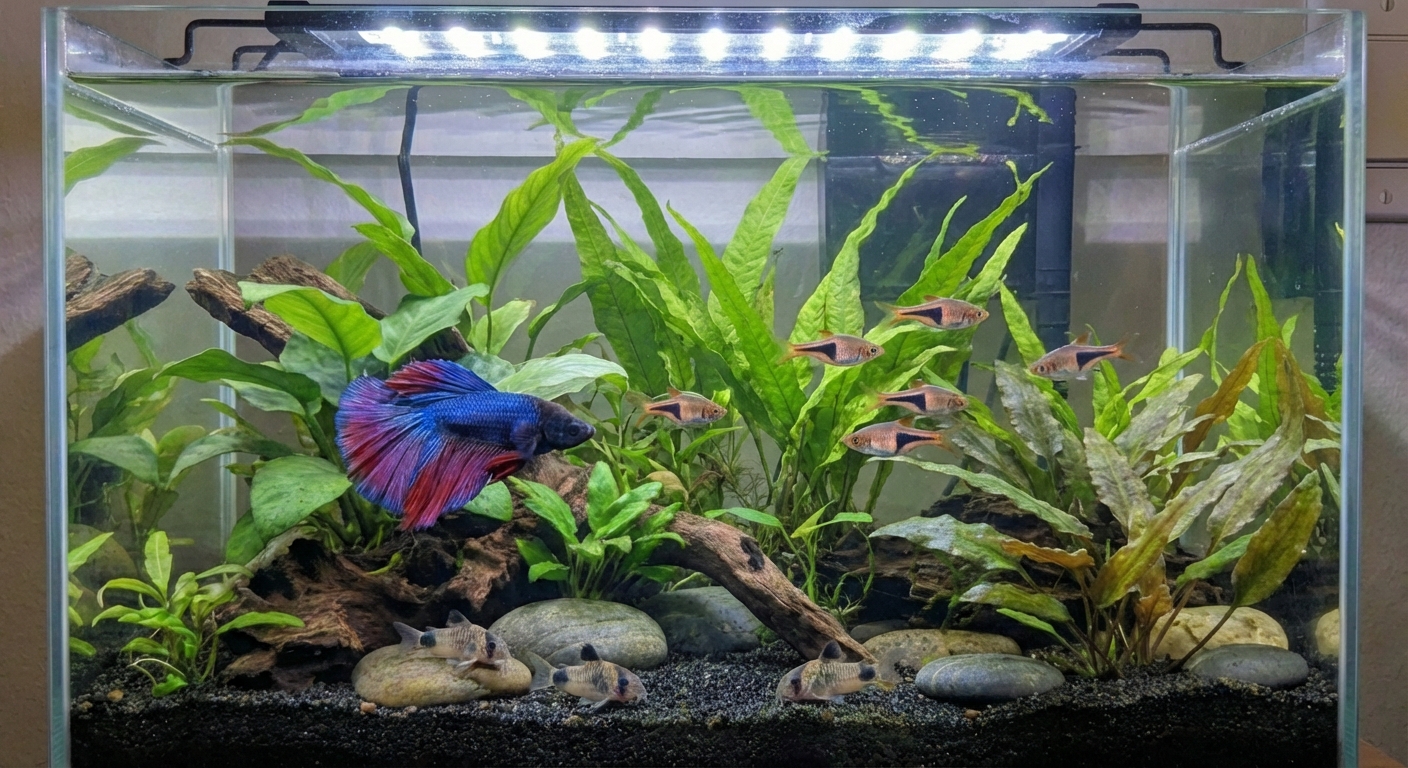
- Corydoras catfish: Peaceful, social, and focused on the bottom. Keep them in groups (generally 6 or more) and give sand or smooth substrate to protect barbels. Smaller species like pygmy corys (C. pygmaeus, habrosus) can be a better fit in 15 to 20 gallons; larger cory species are usually happiest in 20 gallons and up.
- Kuhli loaches: Shy, eel-like, and mostly nocturnal. Do best in groups with lots of hiding places. While some keepers manage them in smaller setups, 20 gallons and up is the more reliable starting point for a comfortable group.
Tank size note: These combinations are typically most successful in 15 to 20 gallons and up, where everyone has space.
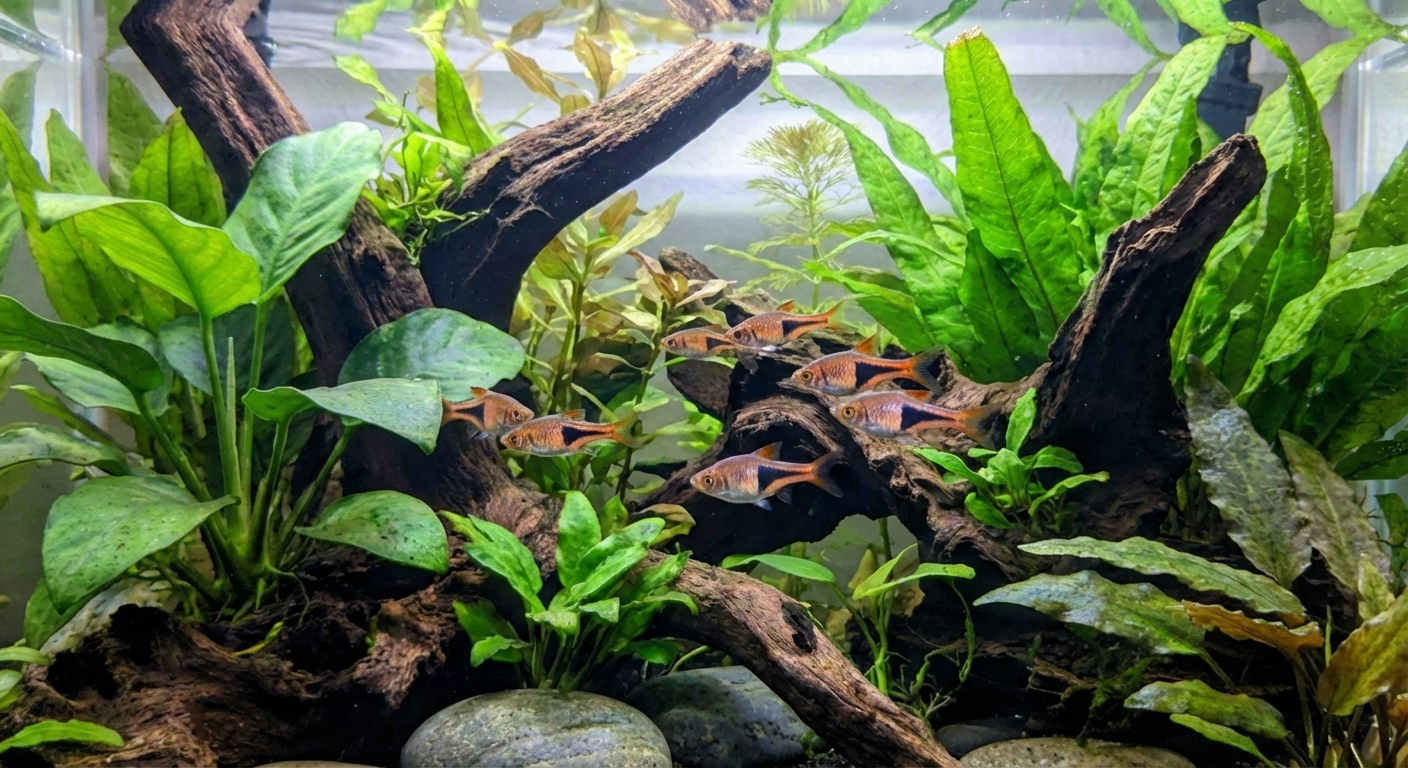
Calm rasboras
- Harlequin rasboras: One of the more reliable choices. They are active but not nippy in most well-sized setups.
Why school size matters: Understocked schools get anxious and may redirect that stress into fin nipping.
Yellow-Light Choices
These can work, but they are the “it depends” category. If you are new to fishkeeping, it is okay to skip these and stick with the green-light list.
Otocinclus catfish
Otos are peaceful algae eaters, but they are sensitive and need stable, mature aquariums with natural biofilm. They should be in groups and need supplemental feeding once algae runs low. Many are wild-caught and can arrive underfed, so buy from reputable sources and be prepared to offer blanched vegetables and algae wafers.
Small tetras (including ember tetras)
Some tetra species have a reputation for fin nipping. Ember tetras are often peaceful, but they are still small tetras, so I keep them in the caution category. Behavior varies by tank size, school size, and individual temperament. If you try them, go bigger on the tank and bigger on the school, with lots of plants.
Guppies and other flowing-finned fish
These fish can trigger a betta’s “rival response” because their fins look like another betta. Sometimes the betta attacks them. Sometimes the guppies nip the betta. Either way, it can turn stressful fast.
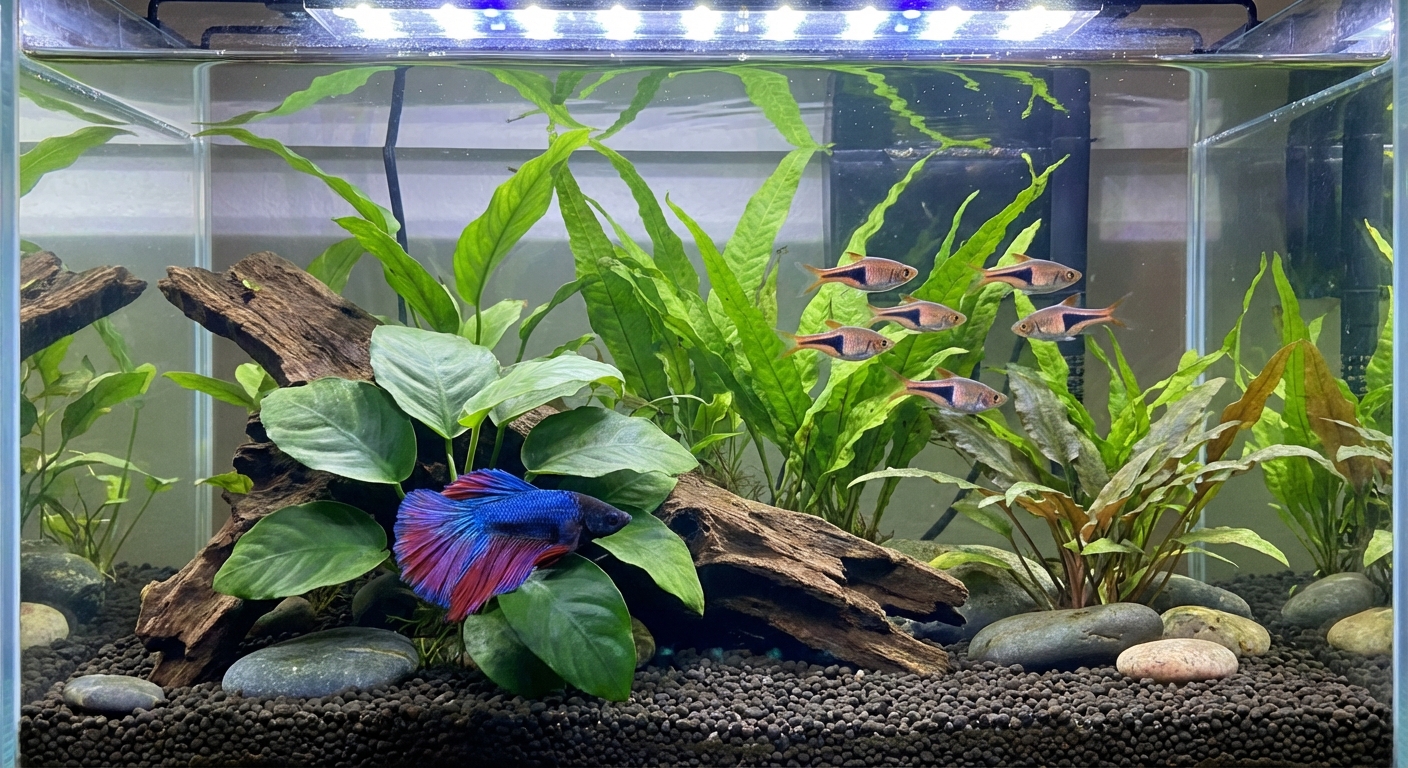
Red Flags to Avoid
If you remember one thing, remember this: avoid anything that looks like a betta, acts like a bully, or treats fins like a snack.
Fin nippers and chaos energy
- Tiger barbs: Classic fin nippers, especially in smaller groups.
- Serpae tetras: Often nippy and pushy.
- Some danios: Very fast, can outcompete a betta at feeding time and create constant stress.
Similar-looking fish
- Other bettas: Two males is a near-certain fight. Male and female can also go badly without proper breeding protocols and a plan to separate.
- Gouramis: Can be territorial and may antagonize bettas or be targeted by them.
Aggressive fish
- Cichlids (most types): Too intense for a betta community.
- Large predatory fish: Anything that can fit a betta in its mouth is not a tank mate.
Goldfish
Goldfish need cooler water, heavy filtration, and very different care. Warm betta temps are not ideal for goldfish, and goldfish tanks are usually not suited to bettas.
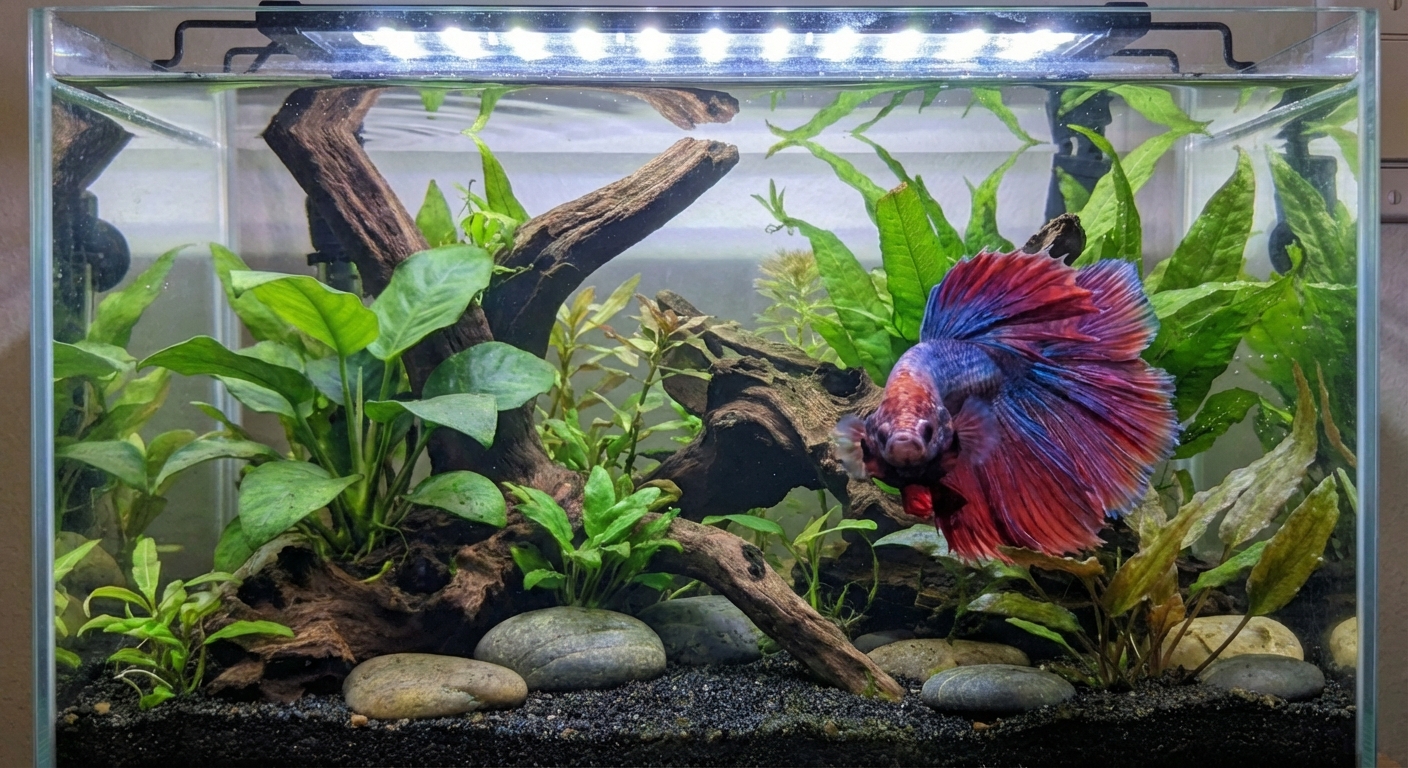
Safe Introductions
Slow, thoughtful introductions protect your fish and your budget.
Step-by-step
- Quarantine new arrivals when possible. Many common fish illnesses enter the home through new fish.
- Rearrange decor before adding tank mates so the betta feels like the territory is “new” for everyone.
- Add tank mates first, betta last in a new community tank. This prevents the betta from claiming the whole aquarium immediately.
- Dim the lights during introduction. Lower lighting often reduces chasing.
- Feed before mixing so your betta is less motivated to chase.
Feeding without drama
- Prevent food bullying: Fast schooling fish can steal meals. Use a feeding ring or feed on opposite sides of the tank.
- Target feed the betta: Offer pellets one at a time near their preferred area so they actually eat.
- Watch the bottom crew: Make sure corys and loaches get sinking foods after lights dim.
What success looks like
- Curiosity, a short chase, then moving on
- Betta returning to normal activities like exploring, resting, and eating
- No torn fins and no fish hiding constantly
Separate right away
- Repeated attacks that do not improve within a day
- Ripped fins, missing scales, or clamped fins
- One fish pinned in a corner or hiding nonstop
- Refusal to eat for more than 24 to 48 hours after introduction
Stress and Illness Signs
Stress is not just emotional for fish. It can weaken immune function and make infections more likely.
Common warning signs
- Clamped fins: Fins held tight to the body
- Color fading: Especially in the body and fins
- Hiding constantly: A betta that never comes out is not “shy,” it is often stressed
- Frayed fins: Could be nipping, rough decor, strong flow, or fin rot
- Gasping at the surface: Check ammonia, nitrite, and oxygenation
If you see these signs, test your water first. Water quality issues can mimic or worsen almost any behavior problem.
Simple Setups
10-gallon, low-drama
- 1 male betta
- 1 nerite snail (or 1 mystery snail)
- Optional: a few Amano shrimp if your betta is calm and the tank is heavily planted
Note: In 10 gallons, keep tank mates limited. Think “betta plus helpers,” not a full fish community.
20-gallon, peaceful community
- 1 male betta
- 8 to 12 harlequin rasboras
- 6 corydoras catfish (choose a species that fits your footprint and adult size)
- 1 to 2 nerite snails
Keep stocking conservative, stay on top of weekly maintenance, and you will usually see the best behavior from everyone.
Bottom Line
A betta can absolutely thrive with tank mates, but only when you respect three things: space, temperament, and tank design. Start with the safest picks like snails and calm bottom-dwellers, avoid fin nippers and flashy rivals, and always have a backup plan. Your betta is telling you how they feel every day. When you listen early, you prevent the stressful situations that lead to injuries and illness.