A practical, reward-based puppy training guide: week-one routine, house and crate training, nipping help, loose-leash basics, socialization, and the 5 cues t...
Article
•
Designer Mixes
Best Way to Train a Puppy

Shari Shidate
Designer Mixes contributor
Bringing home a puppy is exciting, messy, and honestly a little overwhelming. As a veterinary assistant here in Frisco, Texas, I see the same pattern in clinic again and again: the puppies who thrive are not the ones with “perfect” owners. They are the ones whose families use simple routines, clear communication, and kind, consistent training.
The best way to train a puppy is to reward what you want, prevent what you do not want, and practice in tiny, daily sessions. You do not need to be loud or harsh to be effective. You just need a plan.
Start with your puppy’s needs
Puppies learn fastest when their basic needs are met. Before a training session, check these three boxes:
- Potty first: A puppy who needs to go outside cannot focus.
- Movement: A short sniff walk or gentle play helps them settle.
- Right-sized hunger: Many puppies work best right before a meal when treats are motivating.
Quick reality check: Many puppies can focus for 30 to 90 seconds at a time, especially when they are young or distracted. That is normal. Several mini sessions sprinkled throughout the day beat one long session every time.
The method that works best
Positive reinforcement
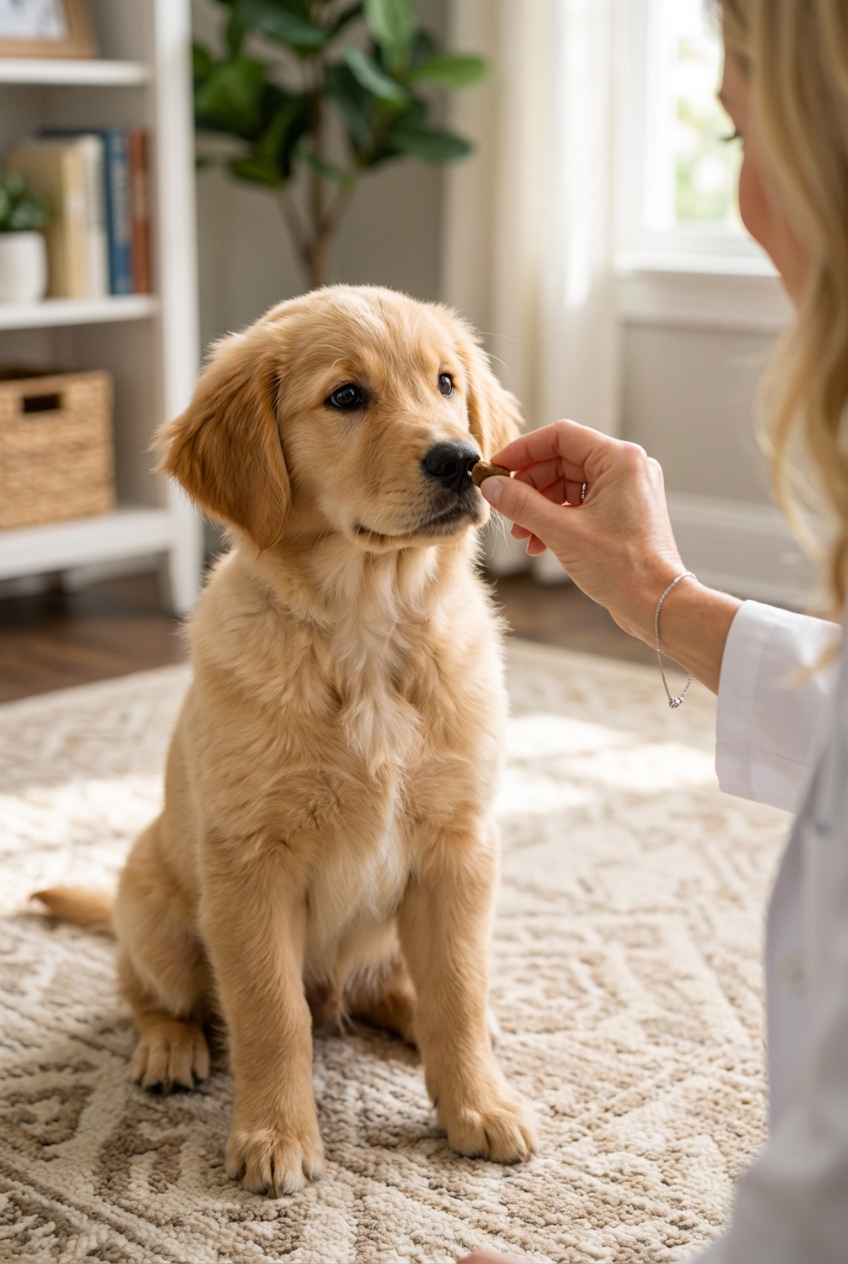
Positive reinforcement simply means you add something your puppy loves right after a behavior you want to see again. That “something” can be a tiny treat, praise, a toy, or permission to go sniff.
Studies on reward-based training consistently show better learning outcomes and lower fear and aggression risk compared with punishment-based methods. In plain language: puppies who feel safe learn faster.
Management and prevention
Training is not just what you do when your puppy is “being bad.” It is also how you set up the environment so bad choices are harder to make.
- Use baby gates and closed doors to limit access.
- Crate or pen when you cannot supervise.
- Keep shoes, kids’ toys, and trash out of reach.
- Leash indoors temporarily if your puppy is getting into everything.
Prevention matters because every time a puppy practices an unwanted behavior, it becomes more likely to happen again.
Now that the basics are set, here is what I recommend focusing on during the first couple of weeks.
Your first 2 weeks
1) Potty training
Potty training is less about “teaching” and more about timing and consistency. The goal is to help your puppy succeed so often that going outside becomes the habit.
- Take them out: after waking (and after naps), after eating or drinking, after play or excitement, and at least every 1 to 2 hours for young puppies.
- Go to the same spot: the smell helps cue the behavior.
- Reward immediately: treat within 1 to 2 seconds of finishing.
- Supervise indoors: if you cannot watch, use a crate or pen.
If there is an accident, clean with an enzymatic cleaner. Do not punish. Punishment often teaches puppies to hide and potty behind furniture, not to hold it.
2) Crate training
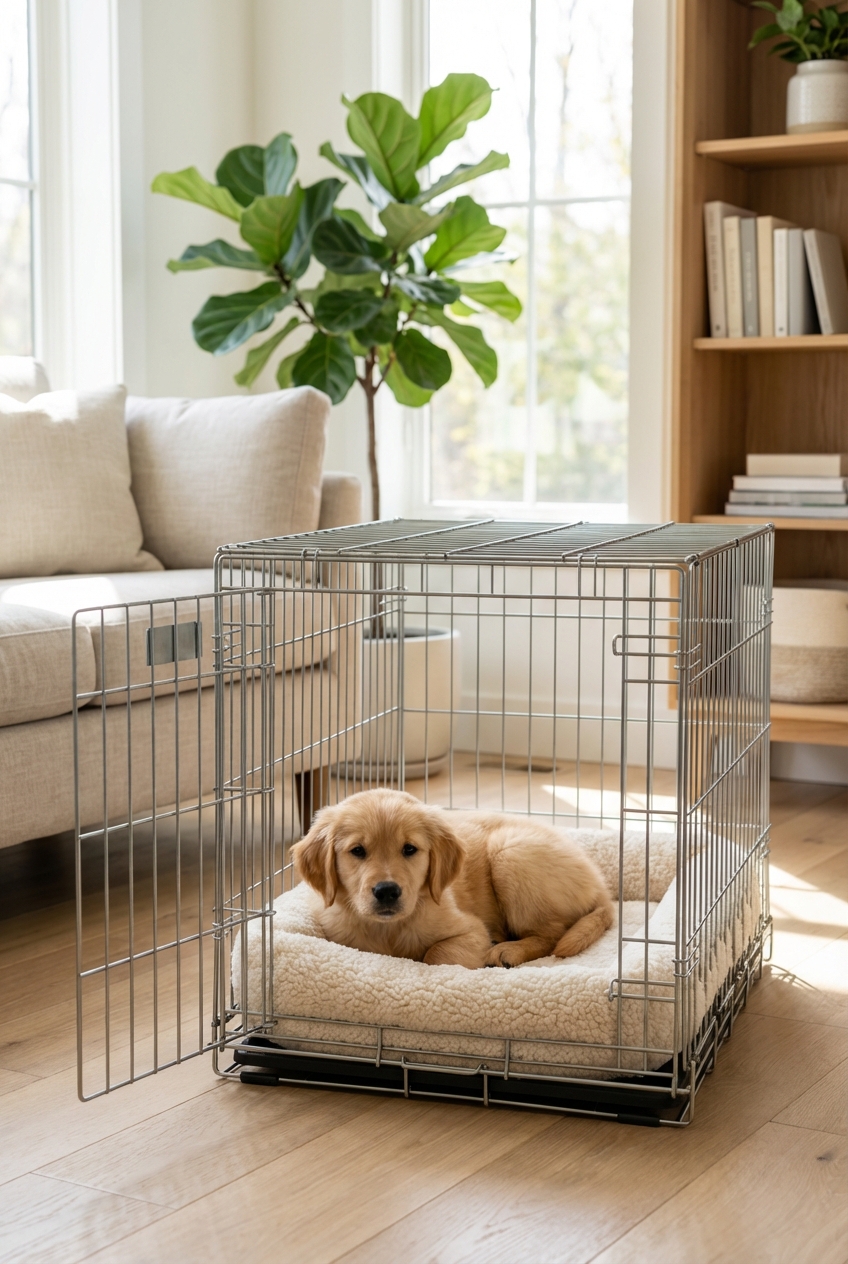
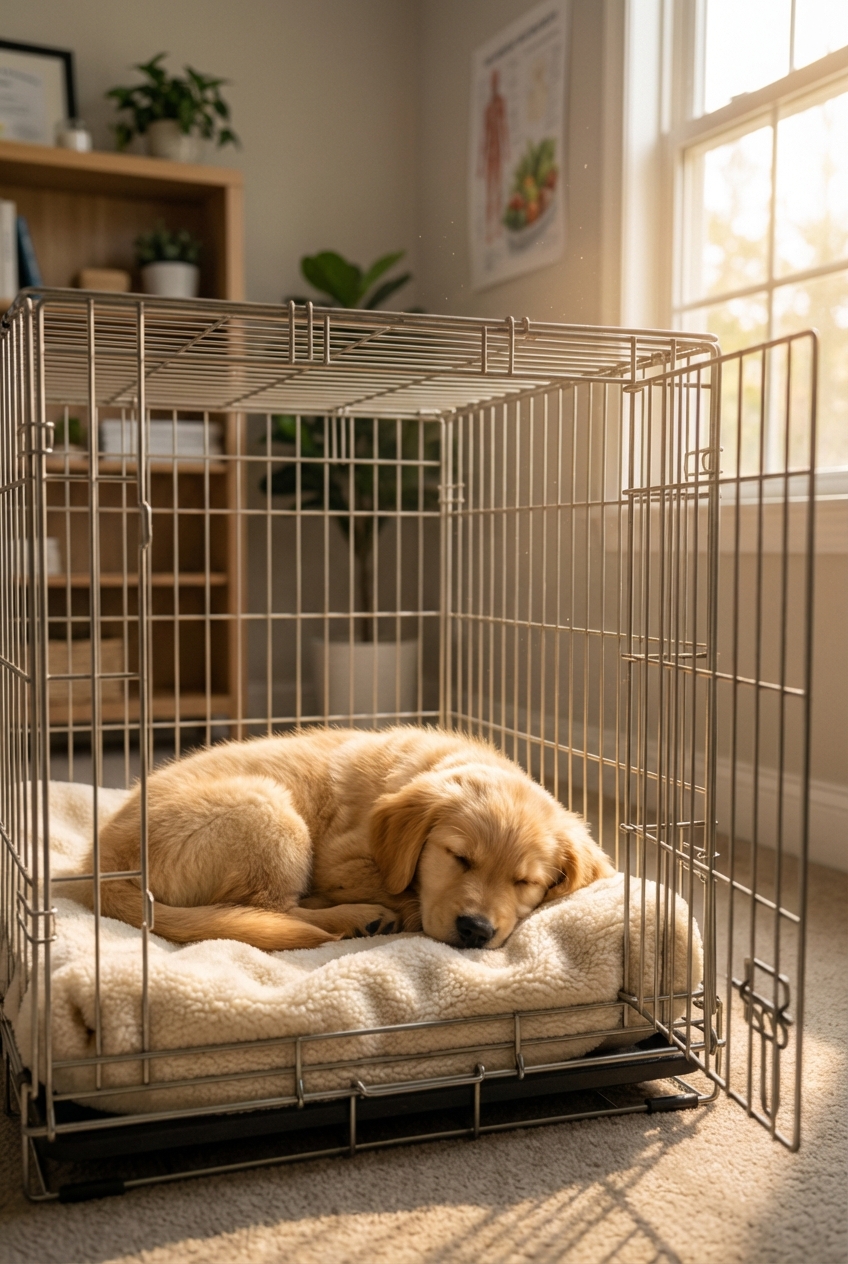
A crate should feel like a safe bedroom, not a penalty box. Done correctly, crate training supports potty training, travel safety, and calm downtime.
- Feed meals in the crate with the door open at first.
- Add a chew or stuffed food toy for positive association.
- Build duration slowly: seconds to minutes to short naps.
- Keep the crate in a social area during the day and near you at night if possible.
If your puppy panics, that is information. Slow down, shorten the time, and pair the crate with something wonderful.
3) Socialization
Socialization is not just meeting lots of dogs. It is calm, positive exposure to the world: people, surfaces, sounds, handling, car rides, and everyday life. The sensitive window is strongest roughly from 3 to 14 (sometimes up to 16) weeks, but you can continue building confidence well beyond that.
Safety note: Talk with your veterinarian about parvo risk and what is appropriate in your area while your puppy is still finishing vaccines.
Confidence rule: Give your puppy distance and choice. Let them observe, then opt in. Do not force greetings.
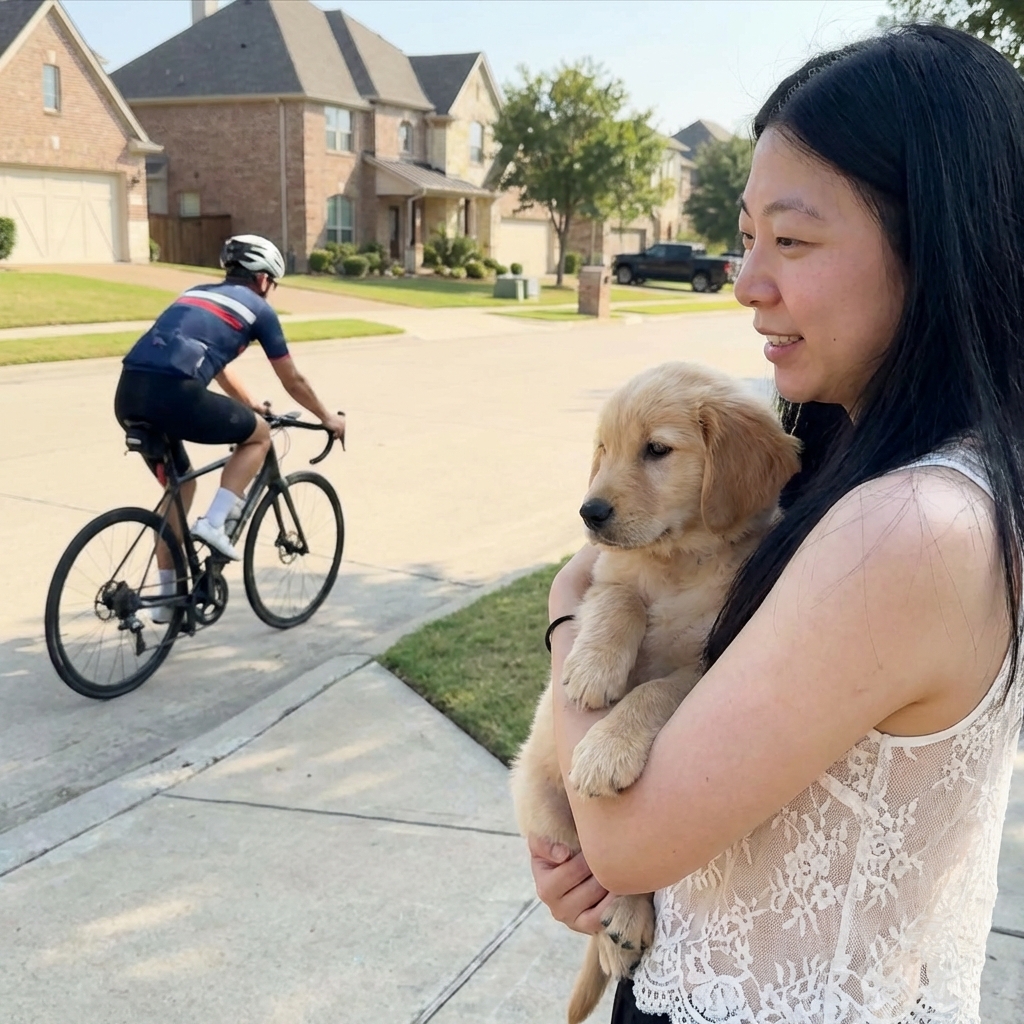
- Carry your puppy at a busy shopping area and reward calm looking.
- Introduce friendly, healthy adult dogs you trust.
- Practice gentle handling: paws, ears, mouth, and brushing with treats.
- Play sound recordings (thunder, fireworks) at low volume during meals.
Teach core skills
Name game
Say your puppy’s name once. When they look at you, mark it with “Yes” and reward. This becomes your foundation for attention.
Sit
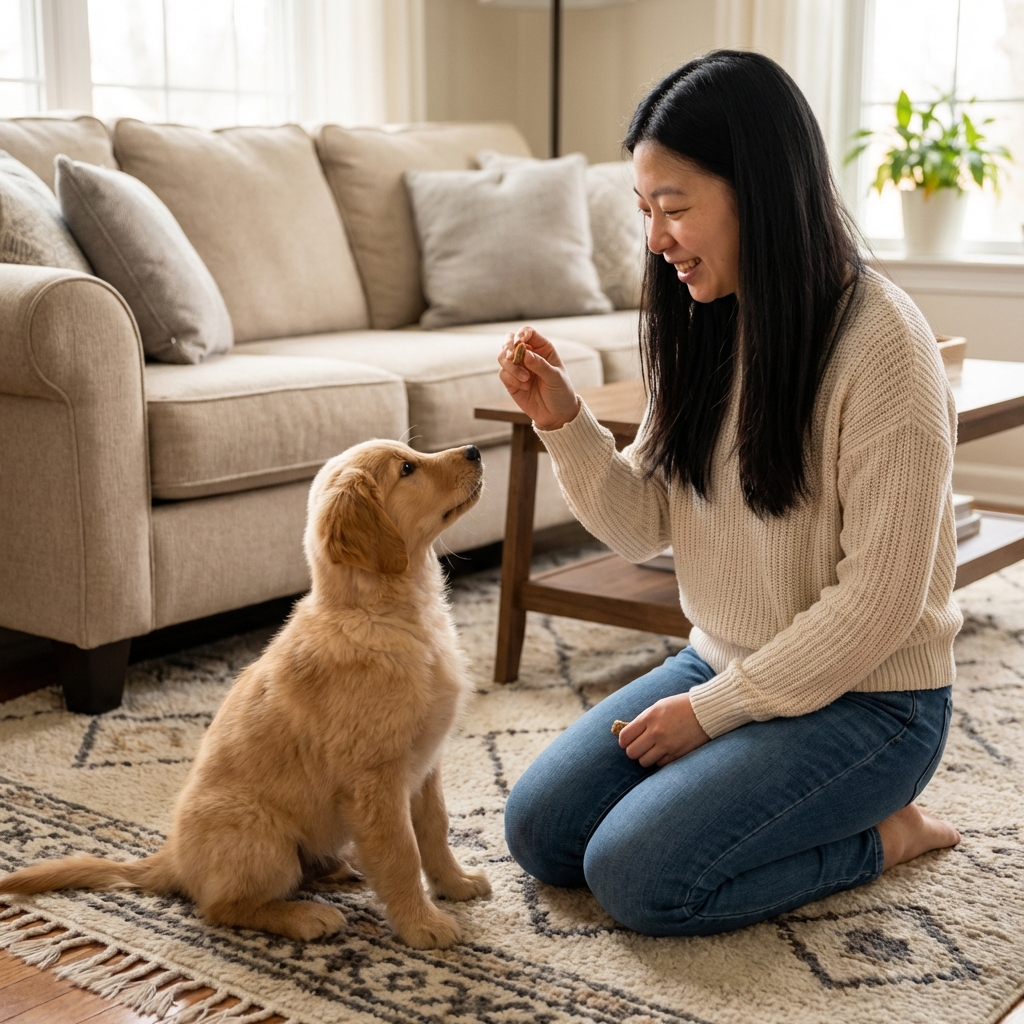
Lure with a treat from nose to forehead. The moment the butt hits the floor, say “Yes” and reward. Keep it easy and cheerful.
Come
Start indoors. Say “Puppy, come!” in a happy tone and back up a step. Reward heavily when they reach you. Do not call your puppy to do something they dislike, like nail trims, until your recall is very strong.
When you move outside, use a long line for safety and do “jackpot” rewards (several treats in a row) for fast, happy responses.
Leave it
Hold a treat in a closed fist. Let your puppy sniff. The moment they pull away, say “Yes” and give a different treat from your other hand. This builds impulse control without conflict.
Loose leash basics
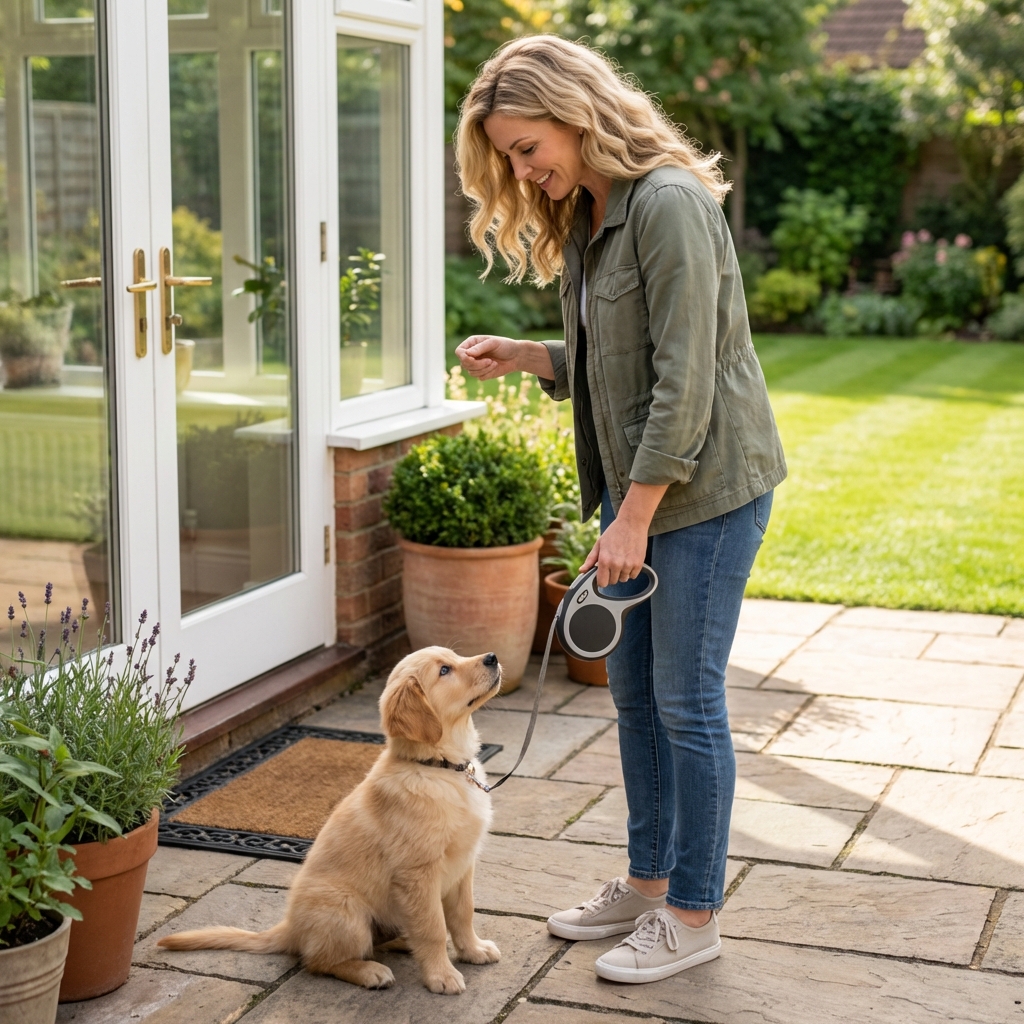
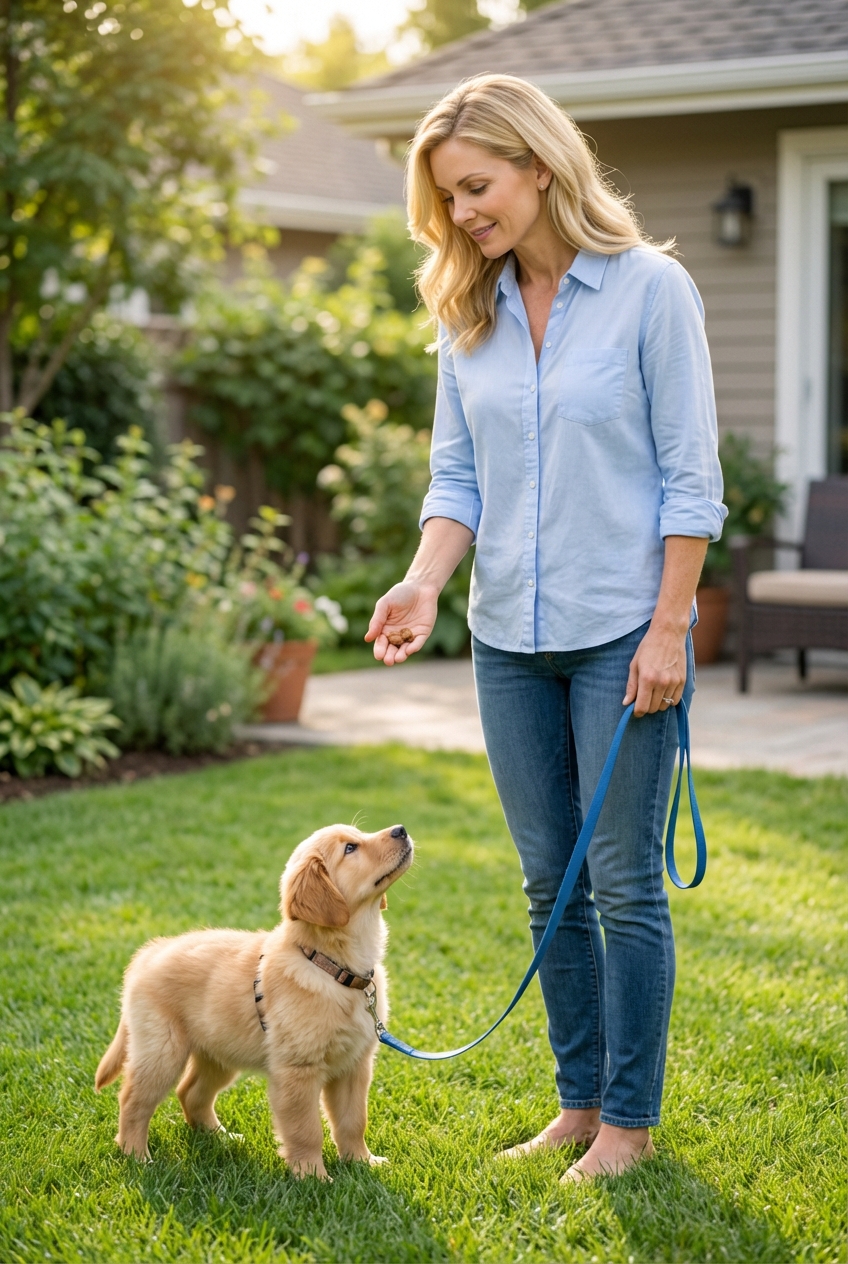
For puppies, leash walking starts with one simple goal: the leash stays loose. Reward often for walking near you. If they pull, stop and wait for slack, then move again. It is boring, but it works.
No jumping
Jumping is usually just excitement. Teach your puppy that four paws on the floor makes good things happen.
- Reward the floor: treat when your puppy approaches without jumping, or the moment their paws hit the ground.
- Step away if they jump: turn your body slightly and pause. Then reward as soon as they are grounded.
- Ask for an easy cue: “sit” can be a great default greeting once your puppy understands it.
Nipping and chewing
Mouthing is normal puppy behavior, especially during teething. Your job is to teach what is acceptable to bite and how to calm down.
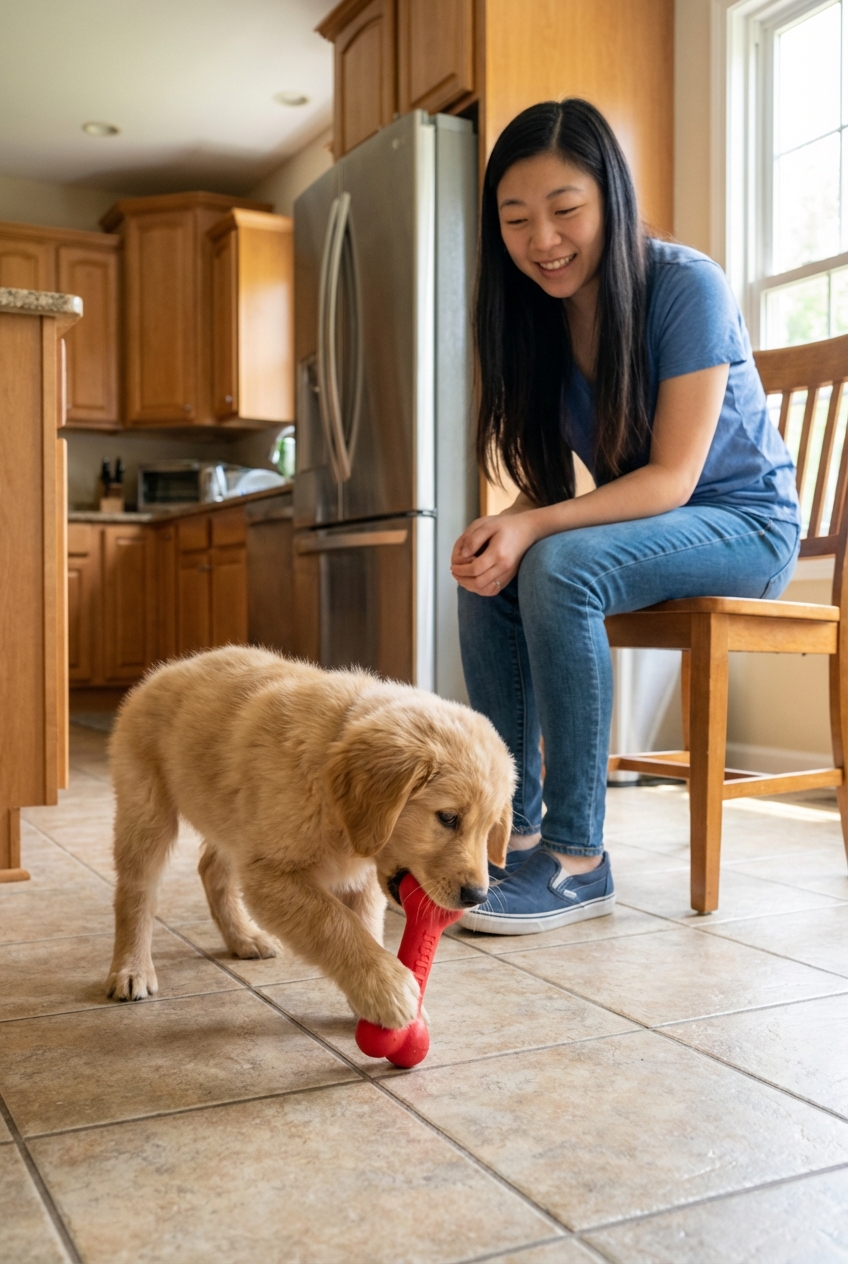
- Provide safe chew options: rubber toys, vet-approved chews, frozen damp washcloths.
- Redirect early: when teeth touch skin, offer a toy immediately.
- End play briefly if needed: stand up, arms crossed, pause for 10 to 20 seconds, then re-engage when calm.
- Increase naps: overtired puppies bite more.
Chew safety: choose size-appropriate toys, supervise chews, and avoid items that splinter or can be swallowed in chunks (like cooked bones). If you are ever unsure, ask your veterinarian.
Quick tip from the clinic: If your puppy is suddenly much mouthier, check for sore gums or a loose baby tooth. Discomfort, including stomach upset, can also lower patience fast. If you are concerned or you see vomiting, diarrhea, or poor appetite, pause training and call your veterinarian.
A simple daily schedule
Puppies do best with predictable rhythms. Here is an example you can adapt:
- Morning: potty, breakfast as training rewards, short play, potty, nap
- Midday: potty, 3-minute training session, gentle walk or sniff time, potty, nap
- Afternoon: potty, chew time in pen, handling practice (30 seconds), potty, nap
- Evening: potty, dinner, calm family time, potty, bedtime routine
Expect lots of sleep. Many puppies, especially younger puppies, often need 16 to 20 hours of rest per day. A well-rested puppy is a trainable puppy.
Common mistakes
- Too much freedom too soon: Use gates, pens, and leashes indoors. Freedom is earned.
- Repeating cues: Say “sit” once. If it does not happen, make it easier, lure, or reset.
- Training only when things go wrong: Practice when your puppy is calm and set up to succeed.
- Inconsistent rules: Everyone in the household should agree on basics like couch access, begging, and jumping.
- Skipping reinforcement: Praise is great, but many puppies need frequent treats at first to learn quickly.
Puppy care basics
Nutrition and treats
Choose a complete and balanced puppy diet and keep treats small. If your puppy has a sensitive stomach, use part of their regular kibble as training rewards and reserve richer treats for harder distractions.
Sleep and downtime
Many “behavior problems” improve with scheduled naps. If your puppy gets wild and bitey in the evening, try an earlier nap and a calmer routine.
Vet care basics
Keep your puppy on a vaccine and parasite prevention plan recommended by your veterinarian. Preventing problems like parvo and intestinal parasites keeps training on track, because a sick puppy cannot learn well.
Handling practice
Practice gentle body handling daily for a few seconds at a time, paired with treats. This supports easier exams, nail trims, and grooming for life.
Alone-time practice
You do not have to wait for separation issues to show up. A little practice early can make a big difference.
- Start tiny: step out of sight for 5 to 15 seconds, then return before your puppy panics.
- Pair with something good: give a stuffed food toy or chew, then pick it up when you return.
- Practice often: several short repetitions are better than one long one.
If your puppy escalates beyond mild whining or cannot settle, talk with your veterinarian and a qualified trainer.
When to get extra help
Ask your veterinarian and consider working with a certified trainer if you notice:
- Growling, snapping, or guarding food or toys
- Extreme fear, shaking, or hiding around normal life sounds
- Persistent accidents despite good management
- Separation distress that escalates beyond mild whining
When you are looking for help, seek a reward-based professional with reputable credentials (for example CPDT-KA, KPA, or IAABC) and a clear commitment to humane, fear-free methods.
Early support can prevent small issues from becoming lifelong challenges.
Kind, consistent training builds trust. And trust is the real secret to a well-behaved dog.