Stop the flea cycle with a proven plan: confirm fleas, use cat-safe vet-recommended treatments, treat every pet, and clean your home with vacuuming, laundry,...
Article
•
Designer Mixes
Best Way to Get Rid of Fleas on Cats

Shari Shidate
Designer Mixes contributor
If your cat has fleas, I know how overwhelming it can feel. Fleas multiply fast. They make cats miserable, and they do not live only on your pet. The best way to get rid of fleas on cats is a three-part plan: treat your cat with a proven vet-grade product, treat every pet in the home at the same time, and clean your environment long enough to break the flea life cycle.
As a veterinary assistant, I want you to feel confident and calm. You can absolutely win this, but consistency matters more than “the strongest” spray. This article is educational and not a substitute for your veterinarian’s advice for your specific cat.
One quick expectation-setting note: seeing a few fleas after you start treatment does not always mean it failed. Pupae can keep emerging for a while, and those newly emerged adults still have to bite before they die on a properly treated pet.
Why fleas are hard to eliminate
Only a portion of fleas are actually on your cat at any given time. Most are in your home as eggs, larvae, and pupae. Many references describe this as roughly 5 percent adults on the pet and about 95 percent immature stages in the environment, though real numbers vary by home. That is why you can bathe and comb your cat today, see improvement, and then feel like fleas “came back” later.
The flea life cycle
- Adults live on your cat and feed on blood.
- Eggs fall off into bedding, carpets, and cracks in flooring.
- Larvae hatch and hide in dark places (under furniture, along baseboards).
- Pupae form cocoons that can wait weeks (sometimes longer) before emerging when they sense warmth and vibration.
This is why a one-time treatment rarely works. You are targeting multiple stages over time.
Step 1: Treat your cat safely
For most households, the “best” flea treatment is a cat-specific monthly preventive recommended by your veterinarian. These products are designed to kill adult fleas and, depending on the product, disrupt reproduction.
If your cat is indoor-only, flea prevention can still matter. Fleas can ride in on dogs, on visitors’ clothing, or through shared hallways and patios in apartments.
Do-this-first checklist
- Use a cat-labeled flea product only. Never use dog products on cats.
- Treat every cat and dog in the home the same day, even if only one pet is itchy.
- Stick to the schedule for at least 3 months to fully break the cycle.
What many vets recommend first
Common evidence-based options include:
- Topical monthly treatments (applied to the skin at the back of the neck).
- Oral flea medications (in some regions there are prescription-only options; in others, options vary. Your vet will tell you what is appropriate for your cat).
- Prescription products when fleas are heavy or resistant in your area.
Your veterinarian will help pick the safest option based on your cat’s age, weight, other medications, and health conditions.
Kittens and nursing cats
If you have a kitten (especially under 8 weeks or under the minimum weight listed on the label), a pregnant cat, or a nursing cat, pause and call your vet before applying anything. Many over-the-counter products are not safe for very young kittens, and dosing and product choice can be different in pregnancy and lactation.
Can I bathe my cat?
You can, but bathing alone will not solve a flea problem. If your cat tolerates it, a gentle bath can remove some adult fleas. The real fix is consistent, long-acting medication. If you do bathe, ask your vet what shampoo is appropriate and when it is safe to apply a topical afterward, since timing matters.
Step 2: Confirm it is fleas
If you are not 100 percent sure it is fleas, here are two quick, reliable checks.
Signs that point to fleas
- Itching and over-grooming, especially near the neck and base of the tail
- Small scabs or crusts (often along the back)
- Seeing tiny, fast-moving insects in the fur
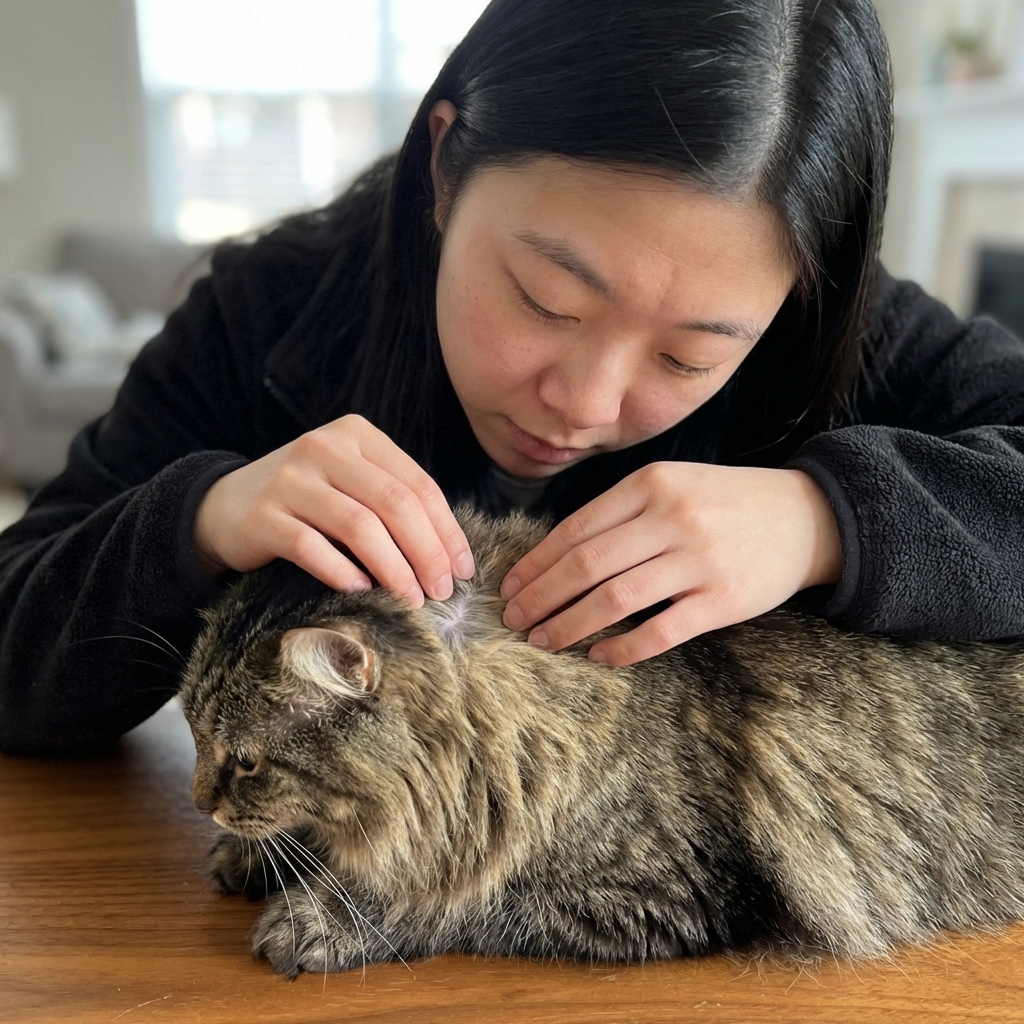
- Seeing “flea dirt” (black pepper-like specks)
Flea dirt test
- Use a flea comb or your fingers to collect a few black specks from the coat onto a white paper towel.
- Add a drop of water.
- If the specks dissolve into a reddish-brown stain, that is digested blood and is very consistent with flea dirt.
Step 3: Remove fleas you can see
While the monthly preventive is doing its job, you can make your cat more comfortable immediately.
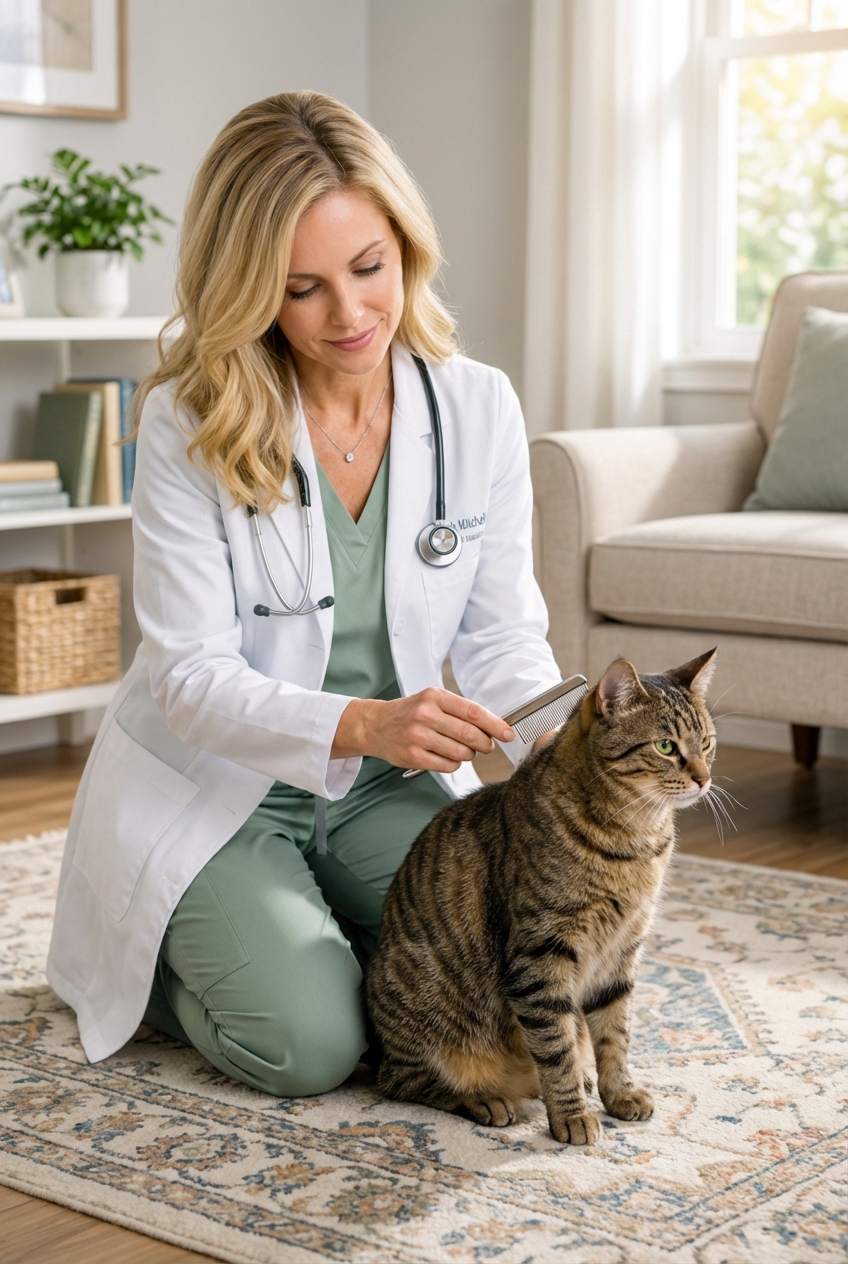
Flea comb routine
- Use a metal flea comb and comb from head to tail, focusing on the neck and base of the tail.
- Keep a bowl of warm water with a little dish soap nearby and dip the comb to drown fleas.
- Do this once or twice daily for the first week if your cat allows it.
Support itchy skin
Fleas can trigger intense itching and inflammation, and some cats develop flea allergy dermatitis, meaning even a few bites can cause big reactions. Talk to your vet if you see scabs, hair loss, open sores, or redness. Your cat may need anti-itch medication or treatment for a secondary skin infection.
Step 4: Treat your home
Fleas thrive in soft surfaces. Your goal is to remove eggs and larvae, and to keep emerging adults from finding a meal.
Home plan (3 to 4 weeks minimum)
Do this for 3 to 4 weeks minimum. In heavy infestations, you may need 6 to 8 weeks of diligent cleaning because pupae can keep emerging over time.
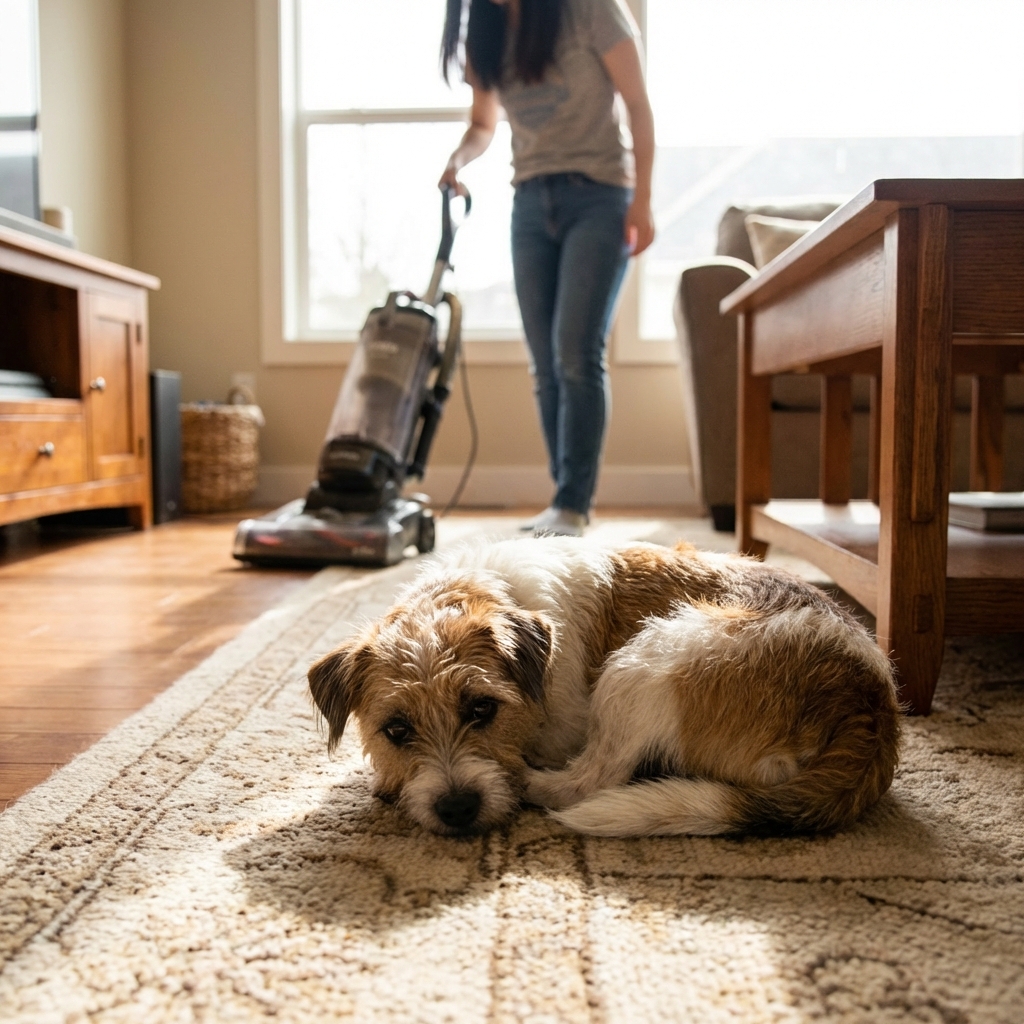
- Vacuum thoroughly 2 to 4 times per week at first. Focus on rugs, baseboards, under furniture, and pet nap zones.
- Empty the vacuum immediately (outside if possible). Seal the contents in a bag before trashing.
- Wash bedding (pet bedding, blankets, throw covers) weekly in hot water and dry on high heat if the fabric allows.
- Reduce clutter where larvae hide (especially under beds and couches).
Do I need a flea spray or fogger?
Sometimes, but not always. In many homes, consistent pet treatment plus vacuuming and laundry is enough. If you use a home spray, look for one that targets eggs and larvae (often labeled as an insect growth regulator). Always follow label instructions exactly and keep cats away until the product is fully dry and the area is ventilated.
Try to avoid heavy pesticide use if you can, especially with cats. Some ingredients are particularly risky for cats, and cats groom frequently. Always follow feline-specific labels and your veterinarian’s guidance.
Outdoor and yard tips
If your cat goes outdoors, or if dogs track fleas in from a yard frequented by wildlife, fleas can keep reappearing. Talk to your vet about year-round prevention in warm climates like Texas, where fleas can be active for long stretches.
Simple outdoor tips
- Keep grass trimmed and remove organic debris where fleas can hide.
- Discourage wildlife that can carry fleas (opossums, stray cats) from lounging near your home.
- If you use yard treatments, choose pet-safe options and follow re-entry times strictly.
What not to do
- Do not use dog flea products on cats. Products containing permethrin can be dangerously toxic to cats.
- Do not rely on “natural” remedies alone when fleas are established. Some may help a little, but most do not reliably break the life cycle.
- Do not stop after one month because you “don’t see fleas.” Eggs and pupae can still be waiting to emerge.
- Do not treat only one pet in a multi-pet home.
When to call your veterinarian
Please reach out to your vet promptly if you notice any of the following:
- Your cat is a kitten (especially under 8 weeks) or very small. Treatment choices are different.
- Pale gums, lethargy, or weakness (fleas can contribute to anemia, especially in kittens).
- Tapeworm segments in stool or around the rear (fleas can transmit tapeworms).
- Severe skin sores, swelling, or nonstop itching.
- Any sign of a reaction after applying a product (drooling, tremors, vomiting).
If fleas are persistent despite correct monthly treatment, your vet can help you switch products, confirm dosing, and address any underlying skin issues that may be compounding the itching.
A quick note on tapeworms
If you see rice-like segments, ask your veterinarian about deworming. Controlling fleas helps prevent reinfection, but tapeworm treatment is usually a separate medication.
A realistic 14-day reset
This 14-day plan is a jump-start to get momentum and relief. Full control usually still takes several weeks, and staying on monthly prevention for at least 3 months is what helps you truly break the cycle.
Day 1
- Start vet-recommended flea prevention on all pets.
- Wash pet bedding.
- Vacuum thoroughly and empty the canister or bag right away.
Days 2 to 7
- Flea comb daily if your cat tolerates it.
- Vacuum every other day.
- Wash blankets your cat sleeps on at least once.
Week 2
- Continue vacuuming 2 times per week.
- Re-wash bedding.
- Monitor itch level and skin condition, and call your vet if it is not improving.
Then stay consistent with monthly prevention. It is the best maintenance plan there is.