Most cats don’t need regular baths—but skunks, fleas, sticky messes, or seniors may. Follow a quick, low-stress, vet-assistant guide to prep, bathe, dry,...
Article
•
Designer Mixes
Best Way to Bathe a Cat

Shari Shidate
Designer Mixes contributor
Most cats do a fantastic job grooming themselves, so a bath is usually an occasional “helping hand” rather than a routine. But when your cat gets into something sticky, smelly, or potentially irritating to the skin, a gentle, well-planned bath can make a big difference in comfort and coat health.
As a veterinary assistant in Frisco, Texas, I have seen that the best way to bathe a cat is not about wrestling. It’s about preparation, calm handling, and using cat-safe products that protect the skin barrier.
When a cat truly needs a bath
Before you bathe, it helps to ask: is bathing the safest choice right now? Many messes can be solved with targeted cleaning.
Common reasons a bath is helpful
- Sticky or oily substances on the coat (grease, syrup, certain food spills)
- Skunk spray (often needs a specific approach, not just shampoo)
- Flea dirt or allergens when your veterinarian recommends bathing as part of treatment
- Medical grooming needs for senior cats or cats with obesity or arthritis who cannot groom well
When to skip the bath and call your vet
- Exposure to chemicals (paint thinner, motor oil, pesticides): call your vet or a pet poison hotline first
- Open wounds, severe skin redness, or suspected infection
- Breathing trouble, lethargy, collapse, tremors, or vomiting
- A cat that is extremely fearful or aggressive (safety comes first)
Set up first (this is the real secret)
The biggest factor in a successful cat bath is having everything ready so you can move efficiently. Cats are smart, fast, and not impressed by last-minute searching for towels.
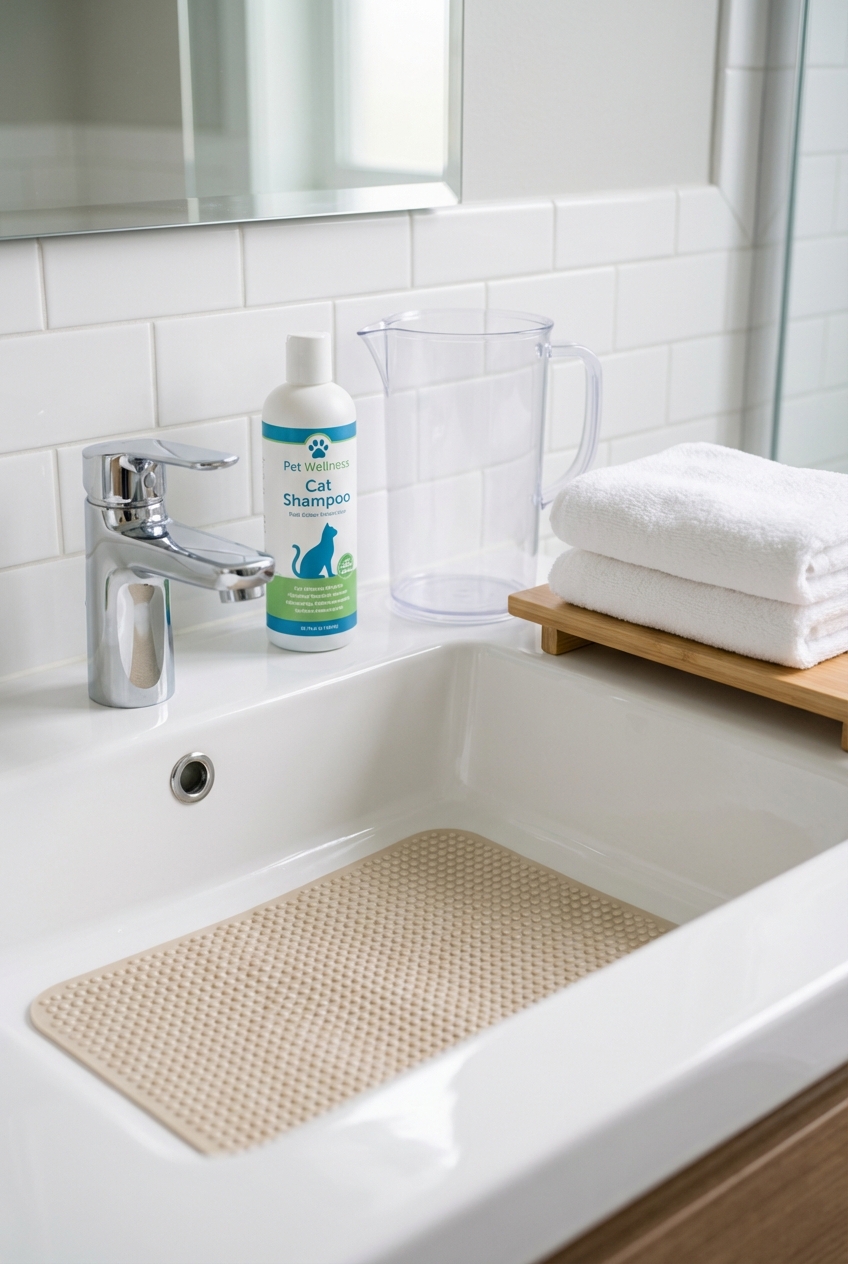
What you need
- 2 to 3 large towels (one for the counter, one for drying, one as backup)
- Cat shampoo only (fragrance-free is often best)
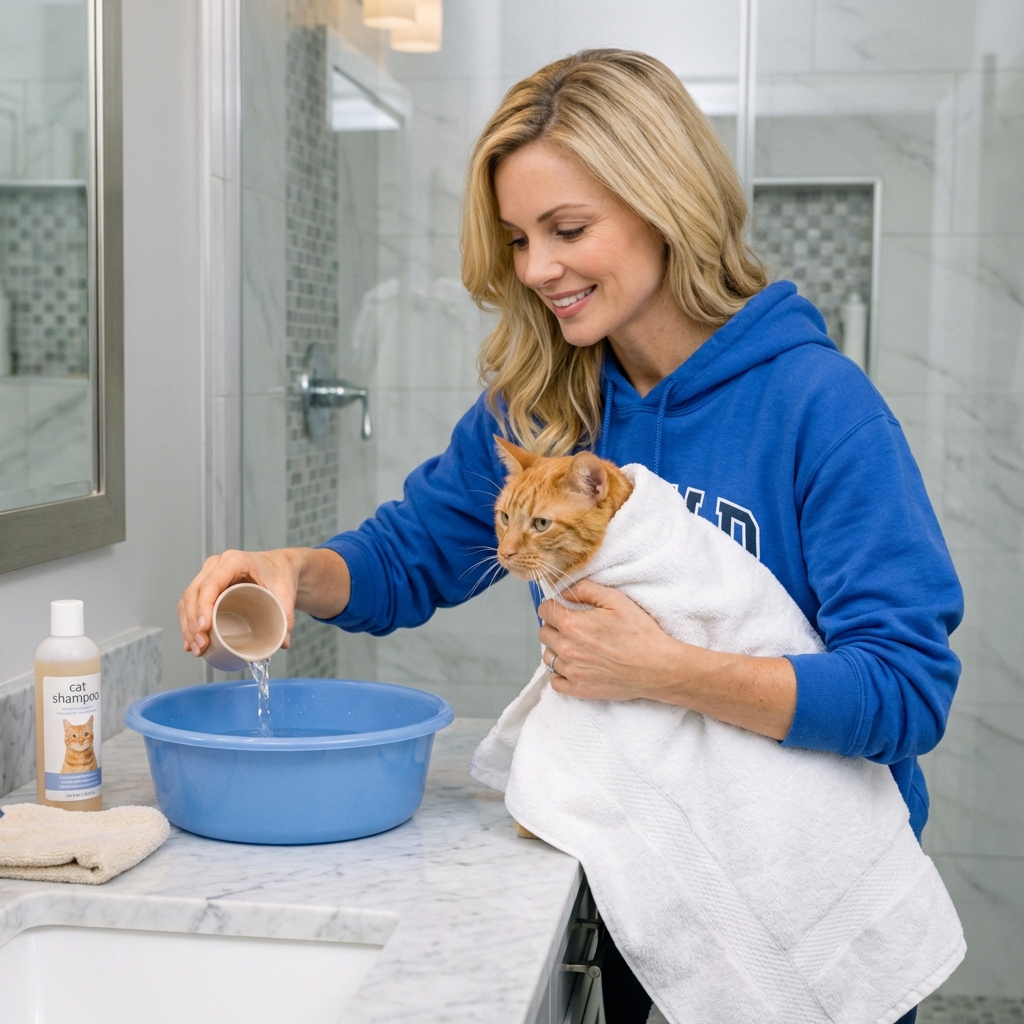
- A cup or small pitcher for rinsing, or a gentle sprayer on low
- Non-slip mat in the sink or tub
- Brush or comb
- Cotton balls (optional, placed gently at the opening of the ear canal, but not pushed deep, and removed right after)
- Treats: small, high-value, and easy to chew
Important: Do not use human shampoo, essential oils, or dog shampoo unless your veterinarian specifically directs it. Also avoid using dish soap as a routine cleanser. Some veterinarians or groomers may recommend a very diluted Dawn-type dish soap for specific situations (like heavy grease), but it can dry out the skin and should be used only with clear guidance.
Step-by-step: The best way to bathe a cat
1) Trim nails if possible
If your cat tolerates it, trim the sharp tips of the nails the day before. If nail trims are stressful, skip it and focus on safer handling. You can also wear a long-sleeve shirt for protection.
2) Brush first, always
Brush out loose hair and small tangles before any water touches the coat. Water tightens mats, making them harder to remove and more uncomfortable.
3) Keep the water shallow and warm
Fill the sink or tub with just a few inches of warm water, roughly the temperature you would use for a baby bath. Loud running water can spike anxiety, so it is usually easier to fill first, then bring the cat in.
4) Start with calm containment
Place your cat gently onto the non-slip mat. Keep one hand on the chest or shoulders for security. Many cats feel steadier when their feet can grip.
If you have a second person available, this is the time to use them. One person can calmly support the chest and keep the cat facing forward while the other shampoos and rinses. Avoid forceful restraint. It escalates fear fast.
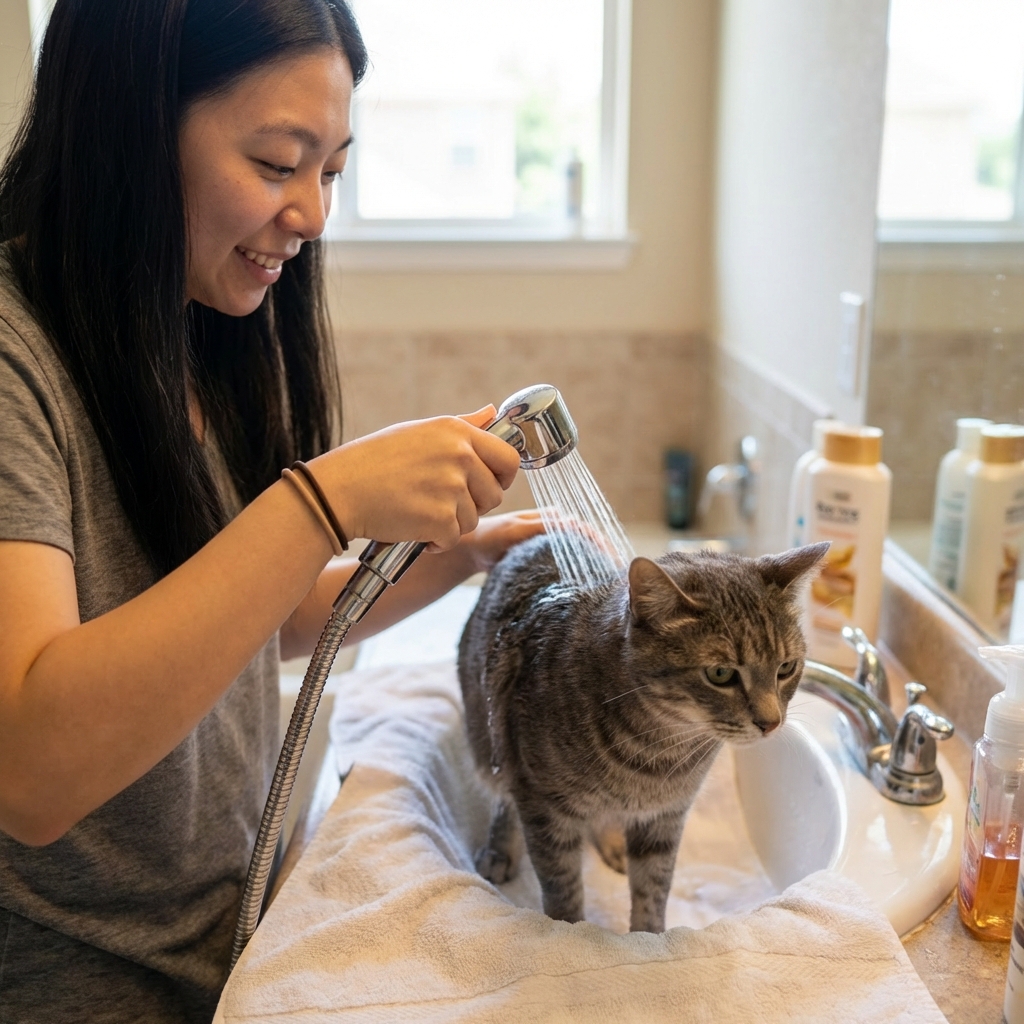
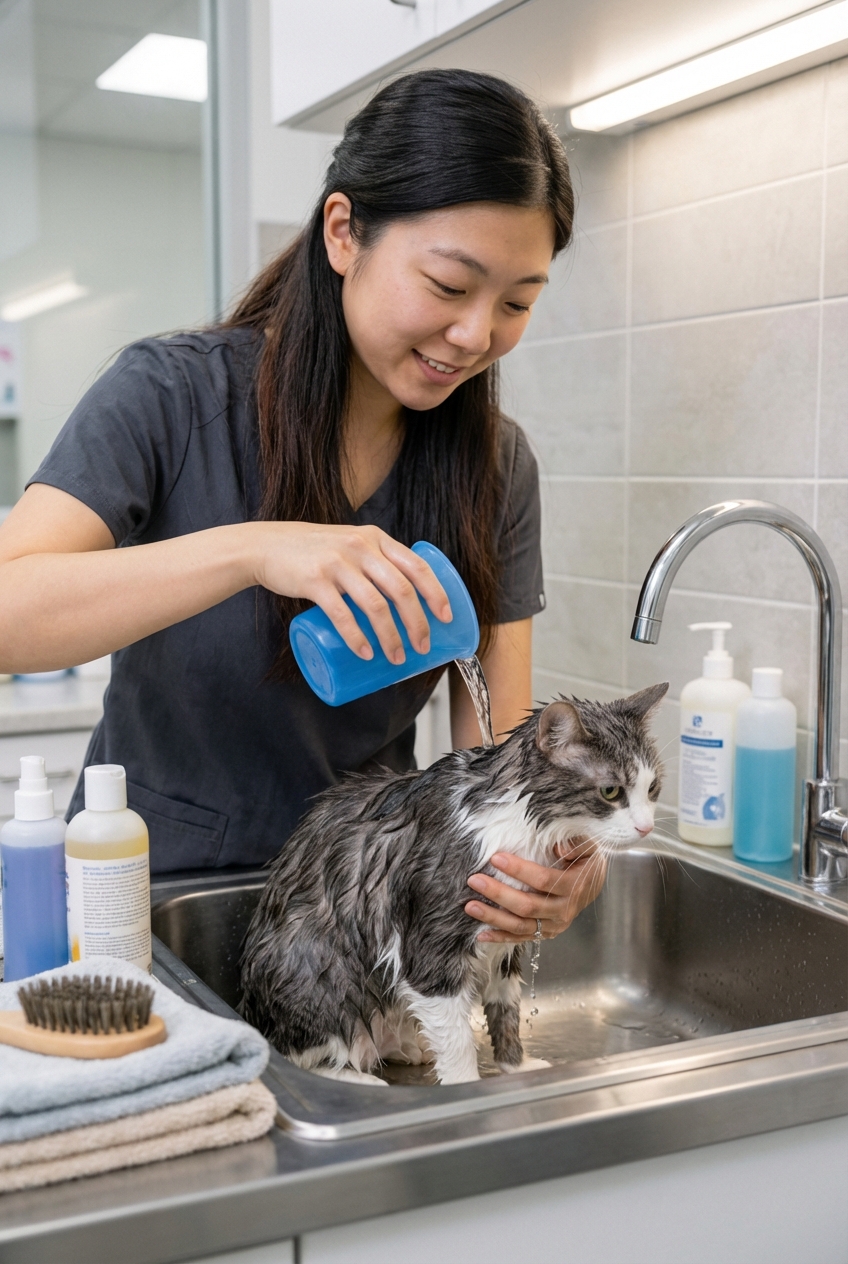
5) Wet the body gradually (avoid face and ears)
Use a cup or low sprayer and wet from the neck down. Avoid directly spraying the head. Most cats dislike facial water, and getting water into the ears can increase the risk of irritation and ear infections.
6) Shampoo lightly and work fast
Use a small amount of cat shampoo, lather gently, and focus on the areas that actually need cleaning. You do not need a huge foam bath. Gentle fingertip massage is better than scrubbing.
7) Rinse longer than you think
Leftover shampoo is a top reason for post-bath itchiness. Rinse until the water runs clear and the coat no longer feels slippery, then do one more quick pass.
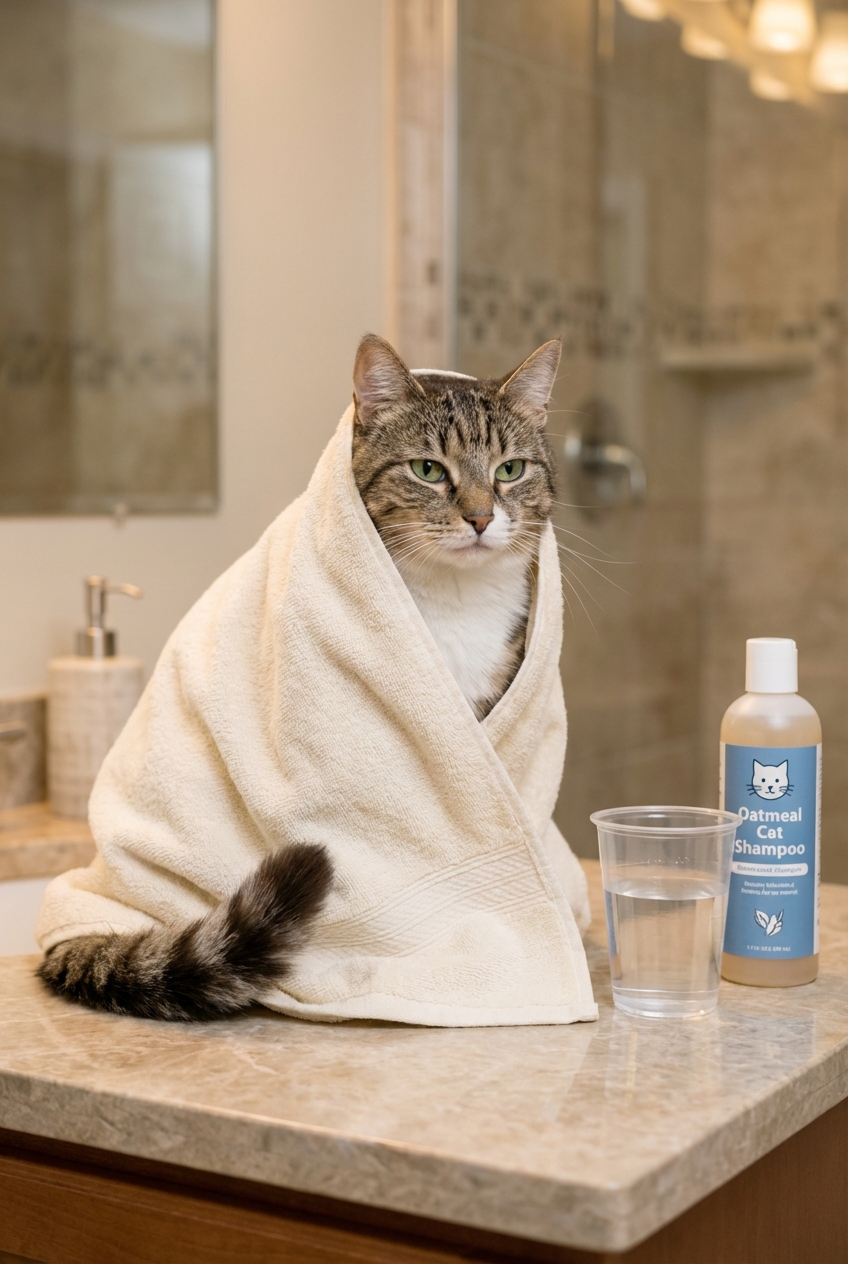
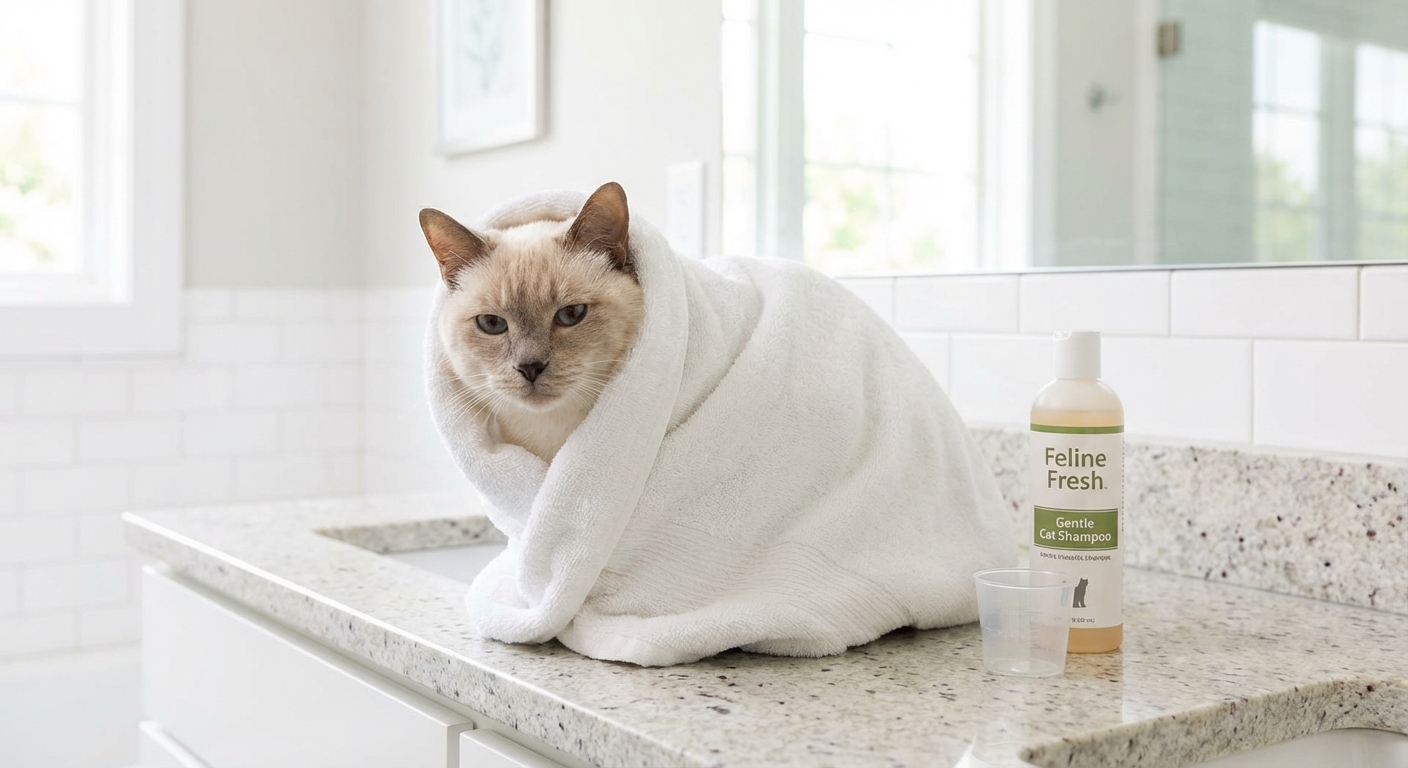
8) Wrap immediately for drying
Lift your cat into a towel “burrito” and press, blot, and squeeze. Rubbing can tangle fur and stress the skin. Switch towels when the first one gets soaked.
9) Keep them warm and contained while they finish drying
A warm, quiet room is ideal. Some cats tolerate a blow dryer on the lowest heat and lowest airflow, held far away. Many do not. If your cat startles easily, skip the dryer and towel-dry well instead.
Skunk spray: what to do
If your cat was sprayed by a skunk, regular shampoo alone often does not fix the odor. If your cat was sprayed in the face, is drooling, squinting, or seems distressed, contact your veterinarian.
For many cats, the safest plan is to call your vet or a professional groomer for instructions before you start, especially if your cat is panicky or the smell is intense. Skunk odor formulas and protocols vary, and you want one that is cat-safe and realistic for your setup.
How to wash a cat’s face safely
For most cats, the face is best cleaned without a full bath.
- Use a slightly damp, warm washcloth.
- Wipe from the inner corner of the eyes outward, using a clean part of the cloth each pass.
- Avoid getting water into the nose and ears.
- Never use essential oils or scented wipes near the face.
If you notice chronic tear staining, heavy discharge, squinting, or redness, it’s worth checking with your veterinarian. Those can be signs of infection, allergies, or blocked tear ducts.
How often should you bathe a cat?
For most healthy cats, bathing is infrequent.
- Short-haired cats: usually only when dirty or as directed by a veterinarian
- Long-haired cats: occasional baths may help if they struggle with grooming, but brushing is still the main tool
- Skin conditions: your vet may prescribe a medicated shampoo schedule
If you are bathing frequently, that is a sign to ask why. Over-bathing can dry out the skin and worsen dandruff or itch.
Special cases: Kittens, hairless breeds (like Sphynx), and cats with known dermatitis often need different bathing frequency and products. When in doubt, follow your veterinarian’s plan.
Aftercare: what to watch for
- Shivering or trouble staying warm after the bath
- Redness, hives, or intense itching that does not settle within a few hours
- Head shaking, ear scratching, or ear sensitivity (possible ear irritation)
- Hiding longer than usual or acting painful or “off”
If any of these signs are severe, or if they persist into the next day, call your veterinarian. Also, never use sedatives at home unless they are prescribed and dosed by your vet for your specific cat.
Make it easier next time (gentle training)
You can help your cat build tolerance with small, positive steps.
- Let your cat explore the bathroom with treats when there is no bath happening.
- Practice “towel burrito” wraps for a few seconds, reward, then release.
- Try a paw dip or a damp cloth wipe as a first step instead of a full bath.
- Keep bath days short and predictable: prep first, then in and out.
If your cat panics, stop. A fearful cat can injure you and themselves. There is no shame in asking your groomer or veterinary clinic for help.
Common mistakes to avoid
- Using cold water or a loud sprayer
- Skipping the rinse and leaving residue behind
- Bathing a matted coat (mats often need professional handling)
- Using dog products or anything with essential oils
- Chasing your cat around the house first (it raises stress before you even start)
Quick checklist
- Brush first
- Warm, shallow water
- Cat shampoo only
- Rinse thoroughly
- Towel burrito and warm room for drying
- Reward and let them decompress
If your cat has a unique situation like skunk spray, heavy grease, chronic dandruff, or severe matting, your veterinarian or a cat-experienced groomer can help you choose the safest plan and products.