Make meals more tempting and nutritious with simple dog food toppers: bone broth, cooked eggs, sardines, pumpkin, and steamed veggies—plus portions, storag...
Article
•
Designer Mixes
Best Vegetables for Dogs

Shari Shidate
Designer Mixes contributor
As a veterinary assistant in Frisco, Texas, one of the most common questions I hear is, “Which vegetables are actually good for my dog?” The encouraging answer is: many veggies can be a wonderful add-on when you choose dog-safe options and serve them the right way.
Vegetables are not meant to replace a balanced diet built around quality protein, but they can add fiber, hydration, antioxidants, and helpful micronutrients. For many dogs, adding veggies a few times a week may support digestion, weight goals, and a little more variety in the bowl.
Quick safety basics
Cooked often beats raw
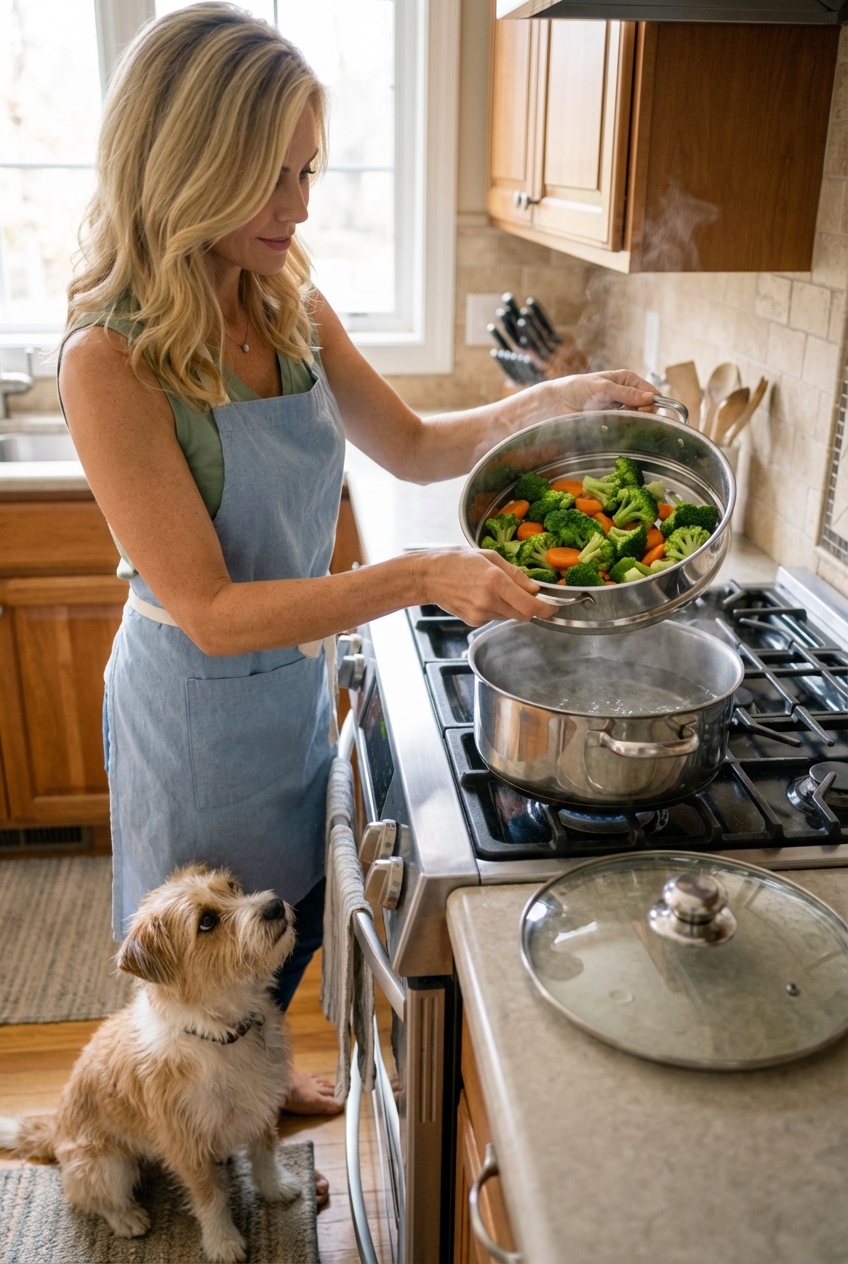
Many dogs do fine with certain vegetables raw, but lightly cooking can improve digestibility and may increase nutrient availability for some veggies. If your dog tends to get gassy or has a sensitive stomach, try steaming, microwaving, roasting, or lightly sautéing in water or a splash of unsalted broth. Finely chopping or pureeing also helps, especially for small dogs and seniors.
Plain is best
Skip butter, heavy oils, salt, onion powder, garlic powder, and spicy seasonings. Many seasonings can irritate a dog’s stomach, and allium plants (like onions and garlic) are unsafe for dogs.
Go slow
Introduce one new veggie at a time and start with a small amount. Too much fiber too fast can cause gas or loose stool, and adding one at a time makes it easier to pinpoint what did not agree with your dog.
Add-on, not main course
For most healthy adult dogs, vegetables are a helpful supplement, not the bulk of the diet. If your dog eats a complete and balanced commercial food, aim to keep veggie add-ons and other extras at about 10% of daily calories (or less) so you do not dilute key nutrients, especially in small dogs.
Top dog-friendly vegetables
Here are some great vegetable choices for many dogs, along with practical serving notes. Every dog is unique, so if your pup has a medical condition like kidney disease, bladder stones, diabetes, pancreatitis, heart disease, or chronic GI issues, check with your veterinarian before making changes.
Carrots
Carrots are a classic for a reason. They are crunchy, low calorie, and a great source of beta-carotene (a precursor to vitamin A) and fiber.
- Best for: crunchy snacks, weight management support
- How to serve: raw sticks for careful chewers, or lightly steamed and chopped for seniors
- Safety tip: cut into safe sizes for your dog, and consider shredding or steaming for small dogs and gulpers to reduce choking risk
Green beans
Green beans are filling and gentle for many dogs, with fiber and useful vitamins like C and K.
- Best for: “bulk” for dogs who act hungry on a weight plan
- How to serve: steamed, or canned no-salt-added
- Tip: avoid seasoned green beans or those with onion or garlic
- Canned note: if you cannot find no-salt-added, rinse canned green beans to reduce sodium
Broccoli (limit)
Broccoli is nutrient-dense, but it can cause gas in some dogs, especially in larger portions.
- Best for: antioxidant support in tiny servings
- How to serve: lightly steamed florets, chopped
- Portion note: keep it to a few bites, not a bowlful
Cauliflower (limit)
Like broccoli, cauliflower has helpful nutrients, but it can be gassy for sensitive pups.
- Best for: variety, low-calorie add-on
- How to serve: steamed and chopped, plain
Zucchini
Zucchini is mild, hydrating, and often well tolerated, making it a favorite starter veggie for picky dogs.
- Best for: sensitive stomachs, hydration support
- How to serve: steamed, cooked in a tiny bit of water or unsalted broth, or grated and lightly cooked
Cucumber
Cucumber is mostly water, which makes it a refreshing snack, especially for dogs who like crisp textures.
- Best for: low-calorie treats, hot Texas days
- How to serve: peeled if the skin seems hard to digest, cut into small pieces
- Safety tip: for enthusiastic gulpers, slice thin or dice small to reduce choking risk
Sweet potato (measured)
Sweet potato provides soluble fiber and nutrients, but it is more starchy than many other vegetables, so portion size matters.
- Best for: gentle fiber in small servings, occasional higher-energy add-in for active dogs
- How to serve: baked or steamed, mashed, plain
- Tip: skip sweet potato treats with added sugar, salt, or other additives if your dog is sensitive
- Caution: for overweight dogs and dogs with diabetes, keep portions small and ask your veterinarian what fits your plan
Pumpkin (plain)
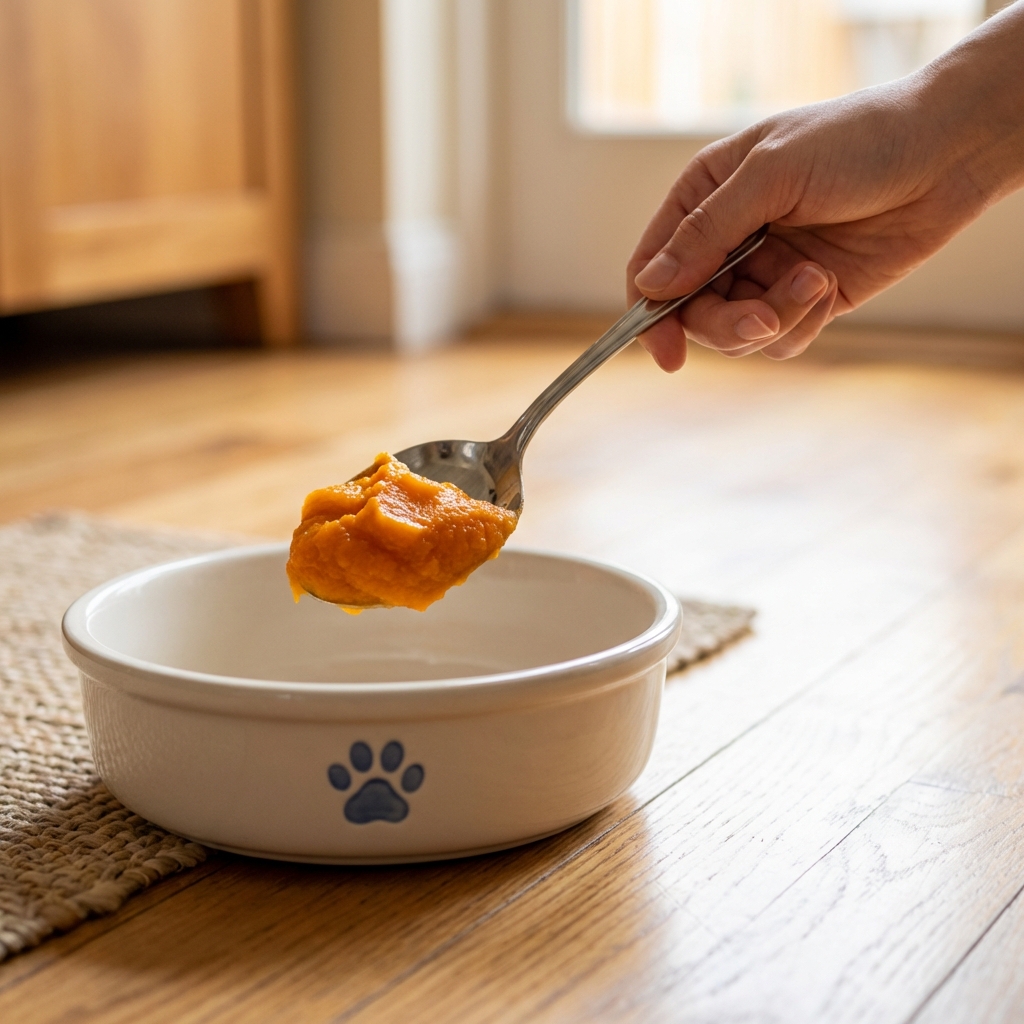
Plain pumpkin is one of the most useful toolbox foods for dog digestion because of its fiber content.
- Best for: occasional loose stool or mild constipation support
- How to serve: plain canned pumpkin (not pumpkin pie mix)
- Tip: start with a small spoonful and adjust based on stool quality
Spinach (limit)
Spinach offers vitamins and antioxidants, but it contains oxalates. For most healthy dogs, small amounts are fine, but dogs with certain urinary issues may need to avoid it.
- Best for: nutrient variety in small servings
- How to serve: lightly cooked and chopped
- Caution: ask your veterinarian if your dog has a history of calcium oxalate stones
Kale (limit)
Kale is nutrient-dense, but some dogs do not tolerate large amounts of leafy greens well.
- Best for: occasional micronutrient boost
- How to serve: lightly cooked, chopped, mixed into a meal
Peas (moderation)
Peas provide fiber and some plant protein. They are fine for many dogs as part of a varied diet.
- Best for: mix-ins for variety
- How to serve: steamed peas or thawed frozen peas
- Note: there is ongoing research into diet-associated dilated cardiomyopathy (DCM) and some legume-heavy diets. This does not mean peas are “bad,” but if your dog has heart disease concerns or you are considering a legume-heavy food, talk with your veterinarian before making diet changes.
Bell peppers
Bell peppers are rich in antioxidants. Red peppers tend to have higher levels of certain nutrients.
- Best for: antioxidant variety
- How to serve: remove seeds and stems, slice thin, serve lightly cooked or raw in small amounts
White potato (cooked only, moderation)
Plain cooked white potato can be okay in small amounts, but it is starchy and easy to overdo.
- Best for: occasional variety for active dogs
- How to serve: fully cooked, plain, peeled or well-scrubbed
- Avoid: raw potato, green potato skin, sprouts, and any fried or heavily seasoned potatoes (solanine risk plus GI upset)
Vegetables to limit
These can still be used sometimes, but portion and preparation matter.
- Gas-prone veggies (broccoli, cauliflower, Brussels sprouts, cabbage): nutritious but can cause gas. Start small and watch stool and comfort.
- Starchy veggies (sweet potato, potato, peas, corn): higher in calories and carbs. Helpful for active dogs, but easy to overdo for couch potatoes.
- Leafy greens (spinach, kale): great nutrients, but too much can irritate digestion in some dogs. Keep servings modest.
Vegetables to avoid
Some vegetables and related plants are risky or toxic for dogs. When in doubt, skip it and choose a safer option.
- Onions (all forms): toxic, can damage red blood cells
- Garlic (all forms): part of the allium family and can also damage red blood cells, so it is best to avoid
- Leeks, chives, scallions: same family as onions, also unsafe
- Wild mushrooms: can be deadly
Store-bought mushrooms: Plain, cooked button or portobello mushrooms are generally tolerated by many dogs in small amounts, but they are not necessary. Skip any mushrooms cooked with butter, oil, garlic, onions, or heavy seasoning.
If you suspect your dog ate an unsafe food, contact your veterinarian or an animal poison control service right away.
Prep and serving tips
Best methods
- Steaming: keeps nutrients and softens fiber
- Microwaving with a splash of water: fast and effective
- Roasting: fine if plain; avoid oil-heavy and salty pans
- Pureeing: helpful for picky eaters or dogs with dental issues
Chop for safety
Cut vegetables into bite-size pieces, especially for small dogs and enthusiastic gulpers. Shredding or grating crunchy veggies (like carrots) can also help reduce choking risk.
Avoid these add-ins
- Butter and heavy fats (can trigger GI upset, especially in pancreatitis-prone dogs)
- Salt, sugar, and seasoning blends
- Onion or garlic powder
- Spicy peppers
Watch canned and packaged veggies
Choose plain options. Avoid canned vegetables with added salt, sugar, sauces, or seasoning. If you use canned veggies, look for no-salt-added and consider rinsing when needed.
How much to feed
For many healthy dogs eating a complete and balanced diet, vegetables can be a great mix-in, but keep the total of add-ons (including veggies, toppers, and treats) at about 10% of daily calories or less. Going higher can dilute the nutrition in a complete diet, particularly for small dogs.
Here is an easy way to start:
- Small dogs: 1 to 2 teaspoons once daily or a few times a week
- Medium dogs: 1 to 2 tablespoons once daily or a few times a week
- Large dogs: 2 to 4 tablespoons once daily or a few times a week
Those are general ranges. Your best guide is your dog’s body condition, energy, and poop quality. If stools get soft, back down and try a gentler veggie like zucchini or green beans.
Easy mix-in ideas
Two-ingredient topper
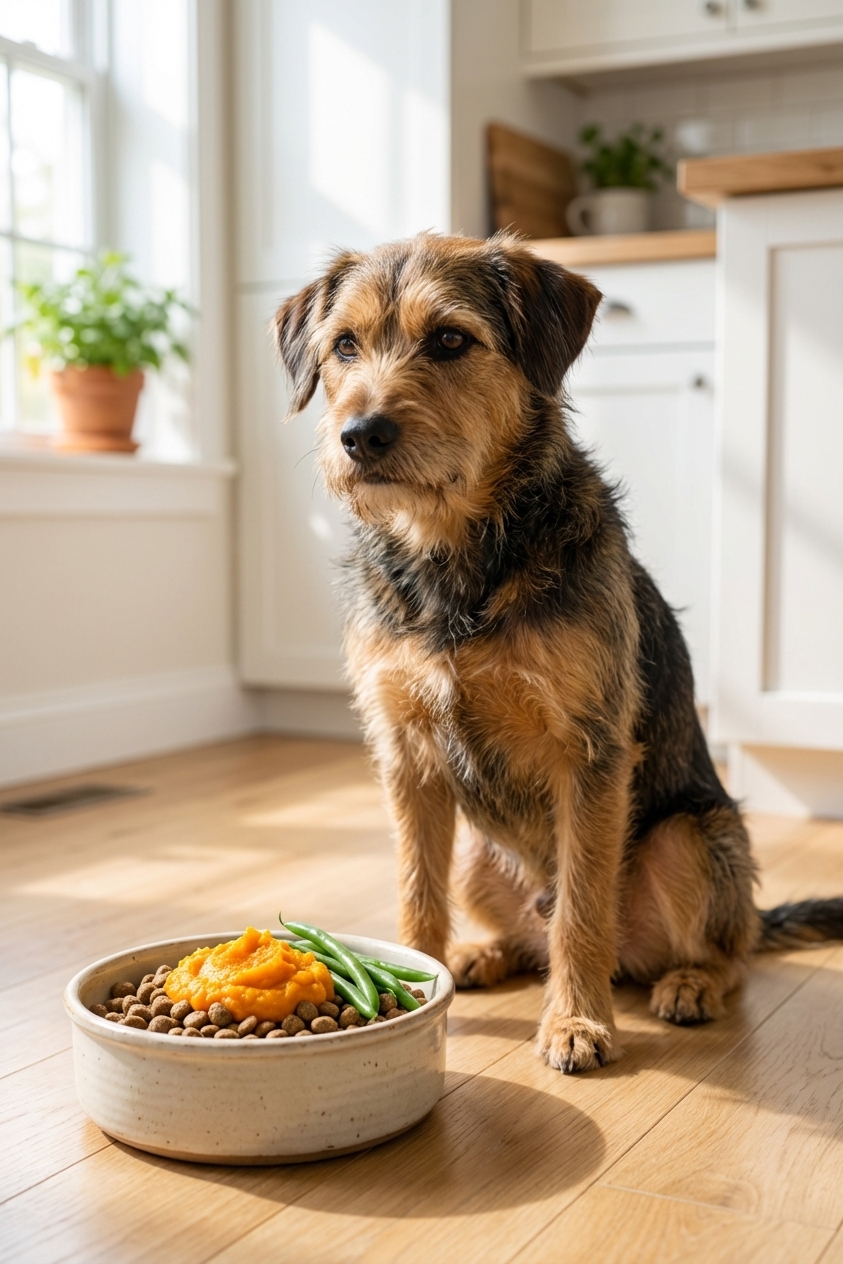
Steamed green beans + a spoonful of plain pumpkin, mixed into your dog’s regular food.
Gentle rainbow add-on
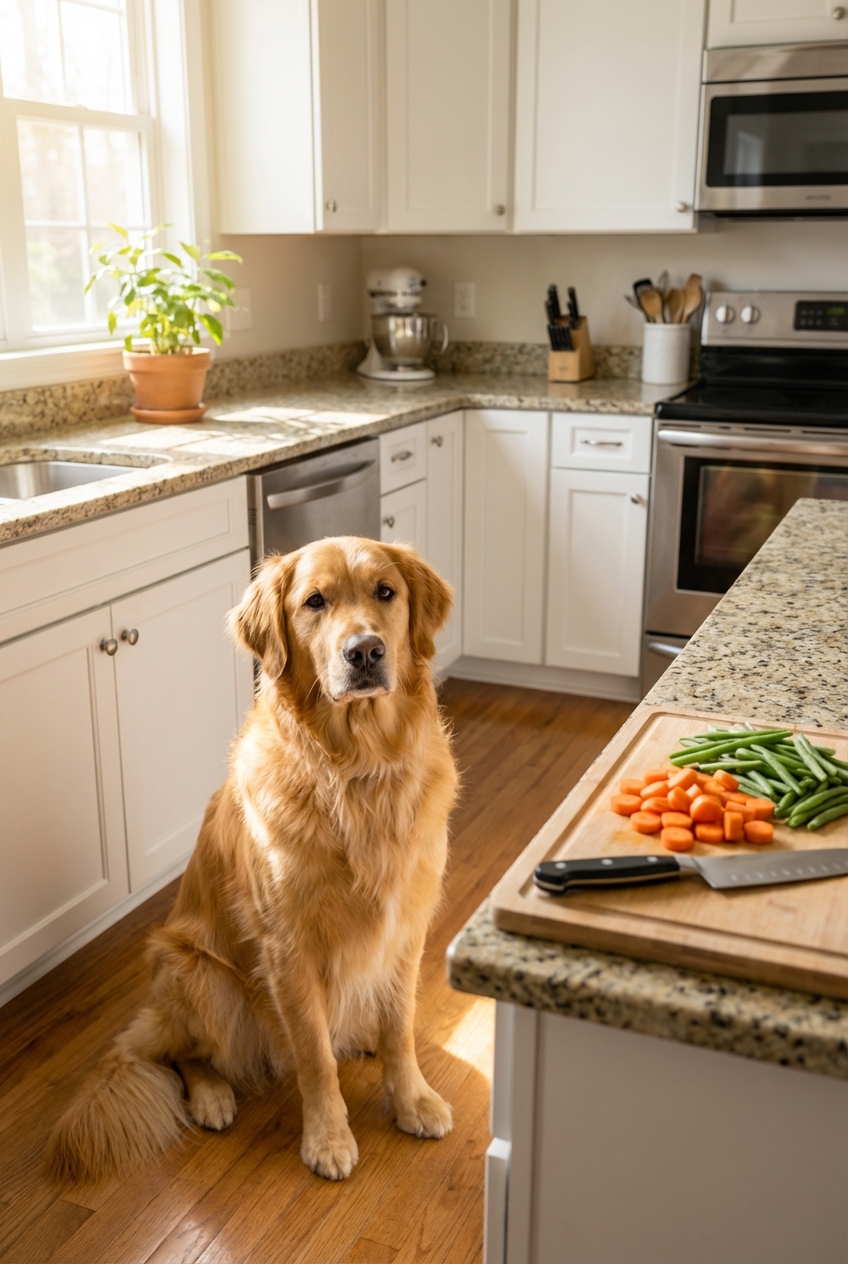
Finely chopped steamed carrots + zucchini, tossed with a splash of unsalted broth for aroma.
Frozen treat for hot Texas days
Blend cucumber with a little water, pour into an ice cube tray, and freeze. Offer one cube as a supervised treat.
Ask your vet first
Please check in with your veterinarian before increasing vegetables if your dog has:
- Diabetes or weight-loss plans that require precise calories
- Kidney disease or heart disease
- A history of pancreatitis
- Chronic diarrhea, IBD, or frequent vomiting
- Urinary crystals or bladder stones
- Food allergies or suspected sensitivities
Vegetables can be wonderful, but the best choice is always the one that fits your dog’s medical history and digestive comfort.
Bottom line: start small, keep it plain, introduce one veggie at a time, and watch your dog’s stool and energy. A little vegetable variety can go a long way.