Stop play biting without punishment. Learn why it happens, how to redirect to toys, end play when teeth touch skin, prevent ankle ambushes, and know when to ...
Article
•
Designer Mixes
Best Toys to Prevent Cat Boredom and Biting

Shari Shidate
Designer Mixes contributor
As a veterinary assistant, one of the most common things I hear from cat parents is, “My cat is sweet… until they bite.” The good news is that boredom and unmet play needs are a very common contributor to nipping, ankle attacks, and “hand hunting” (stalking or pouncing on hands). Cats are built to stalk, chase, grab, and kick. When that need is not met, your hands and feet can start looking like prey.
That said, biting is multifactorial. Play is a big piece, but fear, pain, overstimulation during petting, territorial stress, and redirected aggression can also be involved. The right toys do two important jobs: they burn off predatory energy and they teach your cat what is okay to bite (toys) and what is not (people). Let’s walk through the most effective toy types, how to use them, and what to avoid.
Why cats bite
Cat biting is not always “aggression.” Often, it is normal feline behavior pointed at the wrong target. Common reasons include:
- Play predation: Your cat is practicing hunting and needs something to chase and capture.
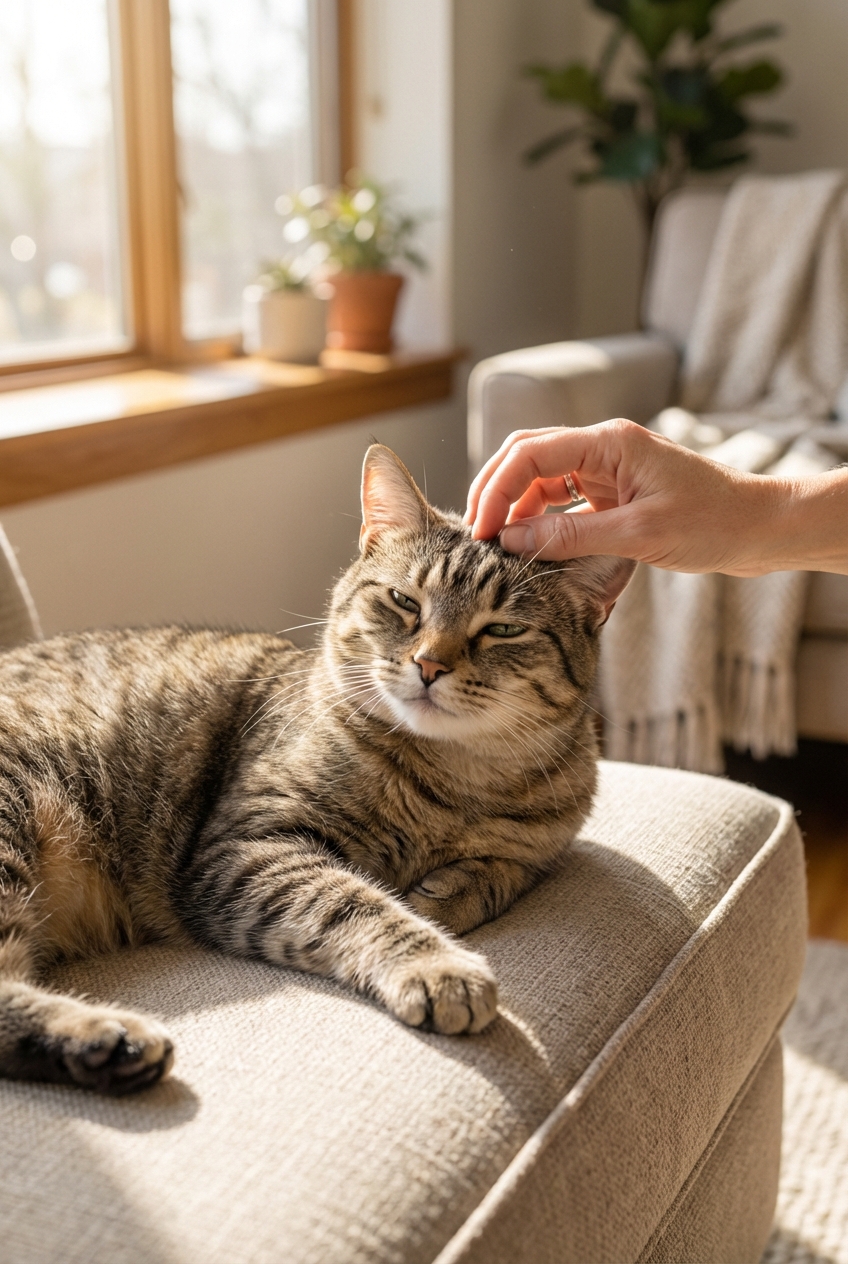
- Overstimulation: Petting feels good until it suddenly does not. Cats with unmet play needs may also be more reactive.
- Attention-seeking: If biting makes you react, your cat may repeat it because it works.
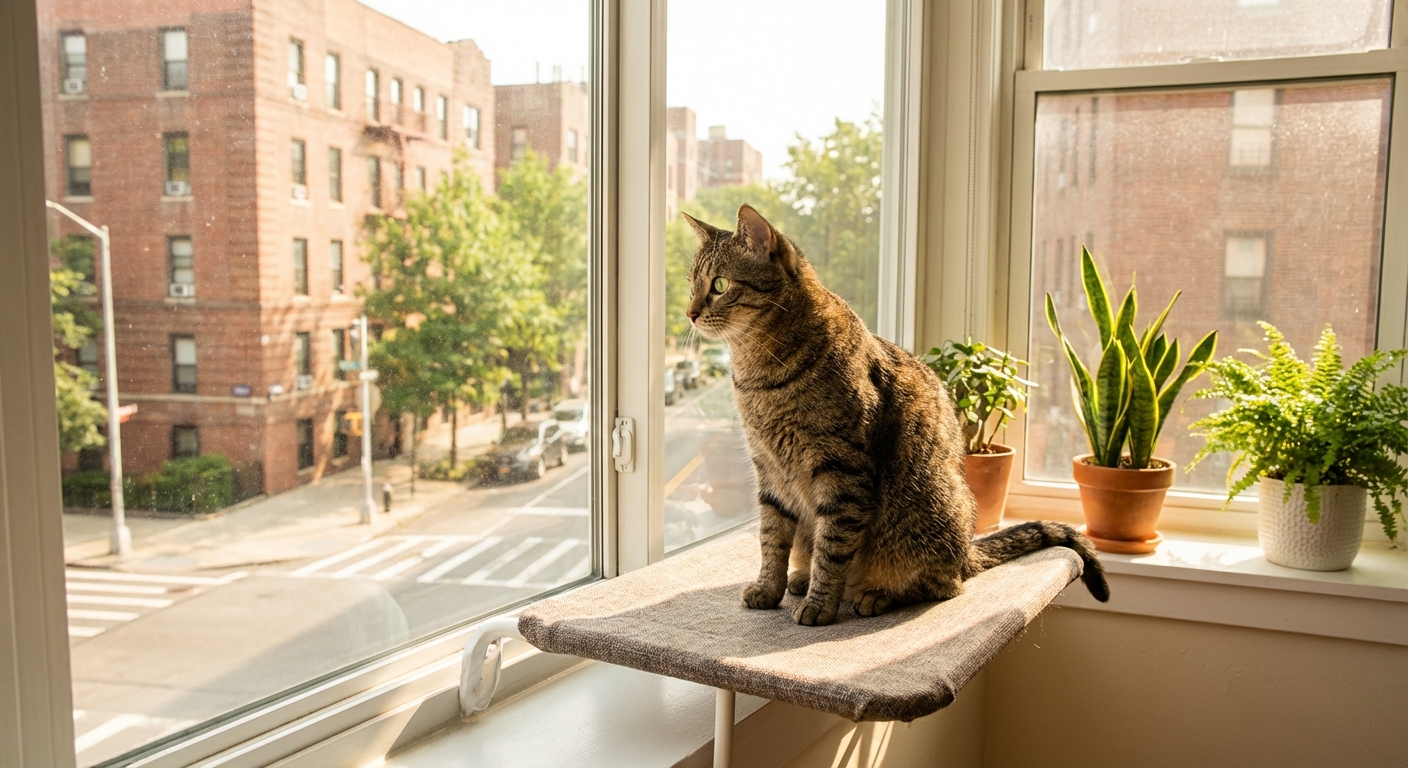
- Lack of environmental enrichment: Not enough climbing, hiding, perching, or novelty.
Quick clue: Play biting usually comes with loose body language and play behaviors (stalking, pouncing, quick dashes). Fear or defensive biting is more likely with tense posture, pinned ears, growling, hard staring, or a puffed tail. If you are seeing fear signals, slow down and give space.
If biting is new, intense, or paired with hiding, limping, vocalizing, or changes in eating or litter box habits, schedule a veterinary visit. Pain, dental disease, arthritis, and skin irritation can all lower tolerance.
The best toy types
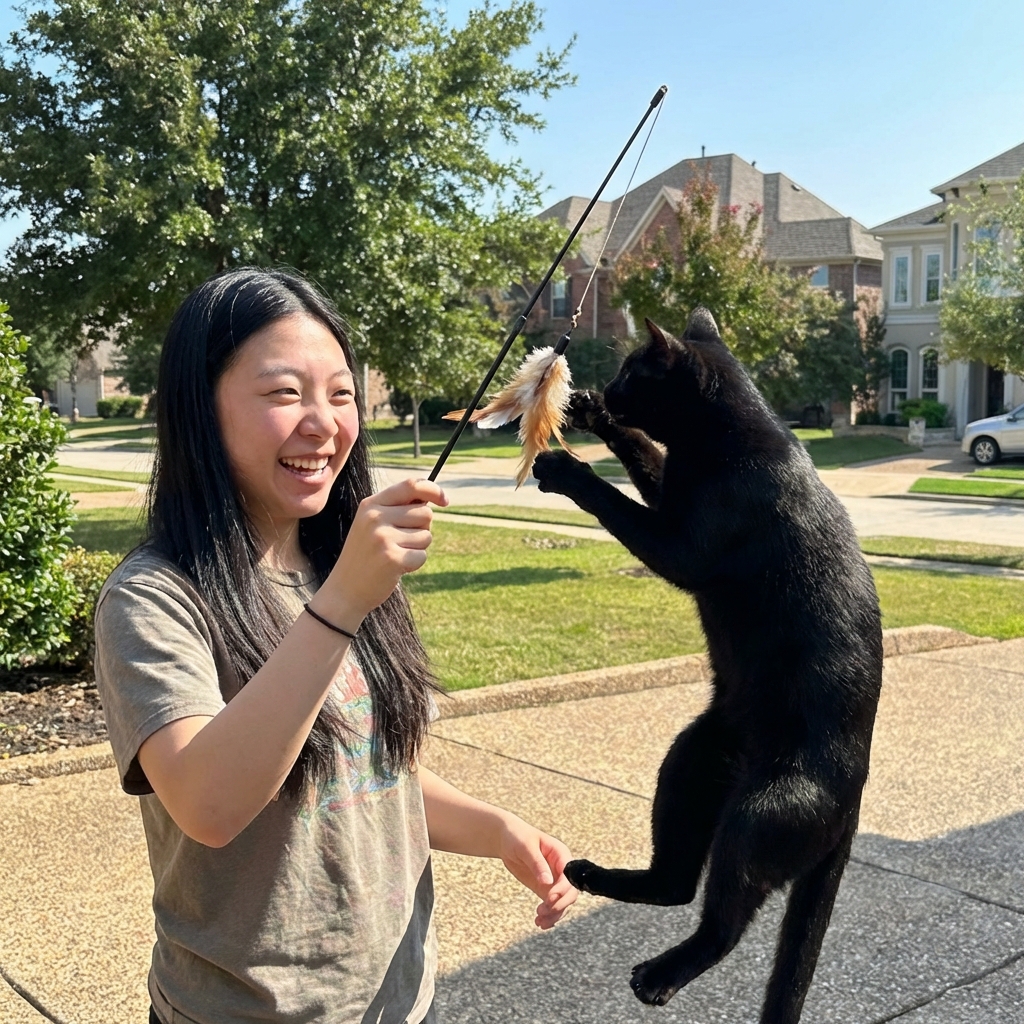
1) Interactive wand toys (the gold standard)
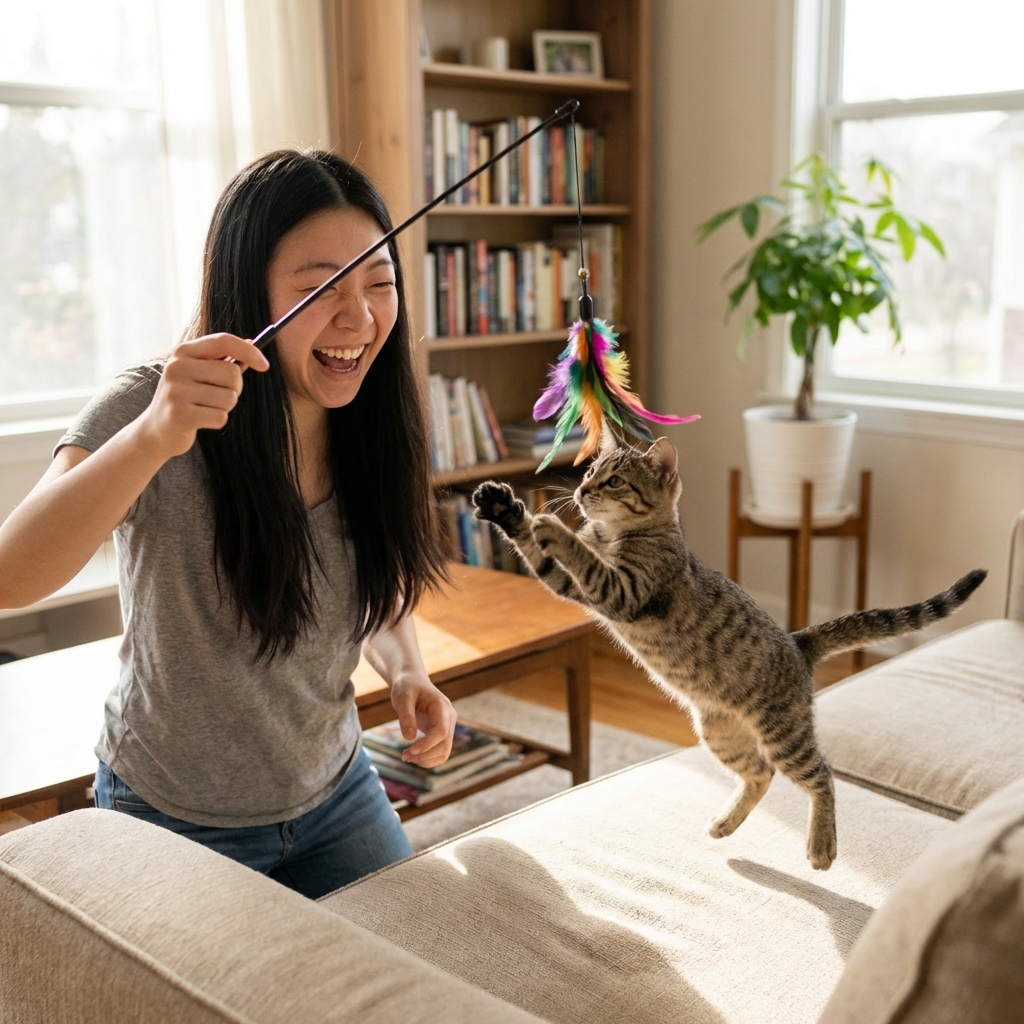
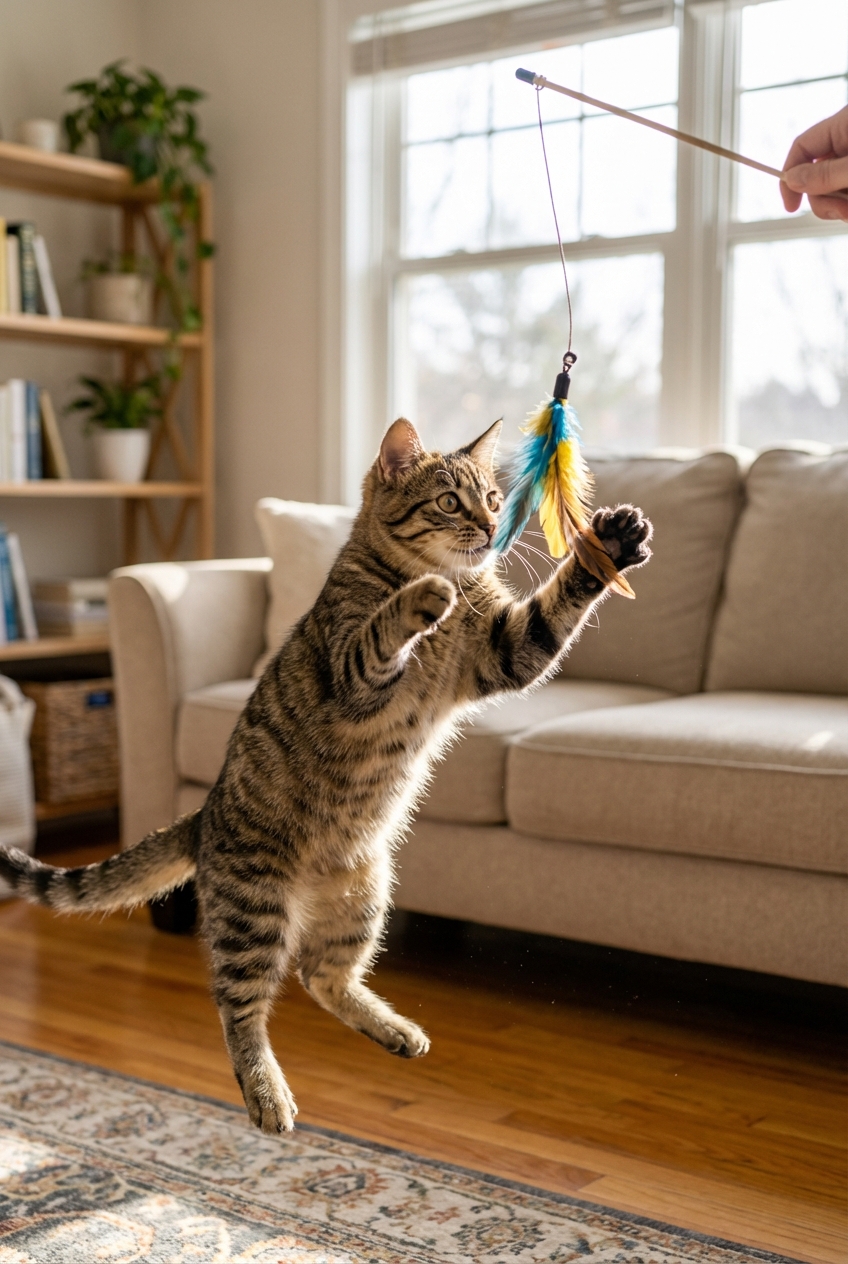
Wand toys help you direct hunting behavior away from hands and toward a safe target. They are also fantastic for building a predictable routine.
- Best for: Cats that stalk, pounce, and ambush ankles.
- Look for: A sturdy wand, a long string, and replaceable attachments (feathers, faux fur, ribbon).
- How to use: Keep the “prey” moving like a real animal: hide behind furniture, pause, dart, then let your cat catch it occasionally.
Safety note: Put wand toys away after play. String can be dangerous if swallowed.
2) Food puzzle toys and treat dispensers
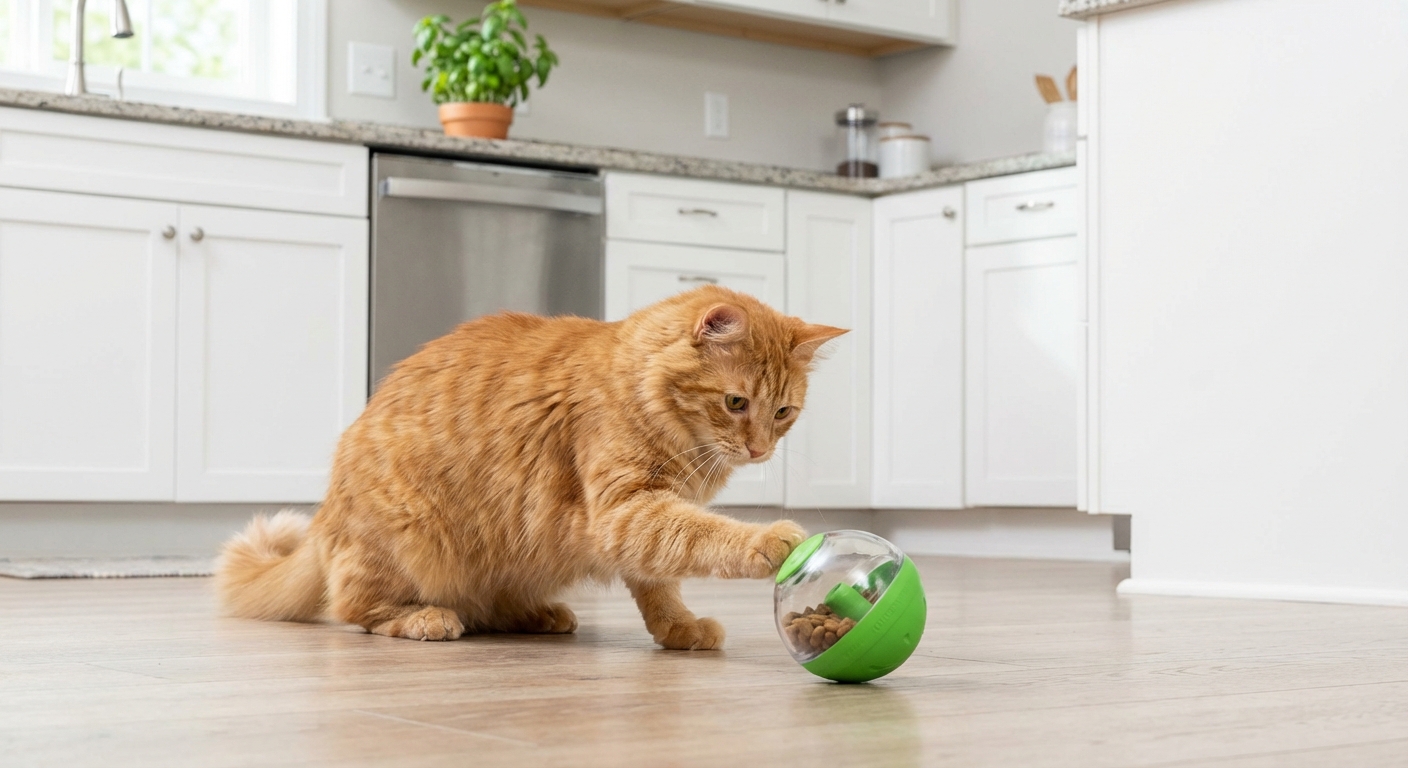
In the clinic, I often explain this as “feeding the hunter.” Puzzle feeding turns meals into mental work, which is a powerful boredom buster. It can also reduce biting that happens around meal times.
- Best for: Food-motivated cats, indoor-only cats, cats who wake you up early.
- Look for: Adjustable difficulty, easy-to-clean materials, and a stable base.
- How to start: Begin easy so your cat wins quickly, then increase difficulty gradually.
3) Kicker toys (for safe biting and bunny-kicking)
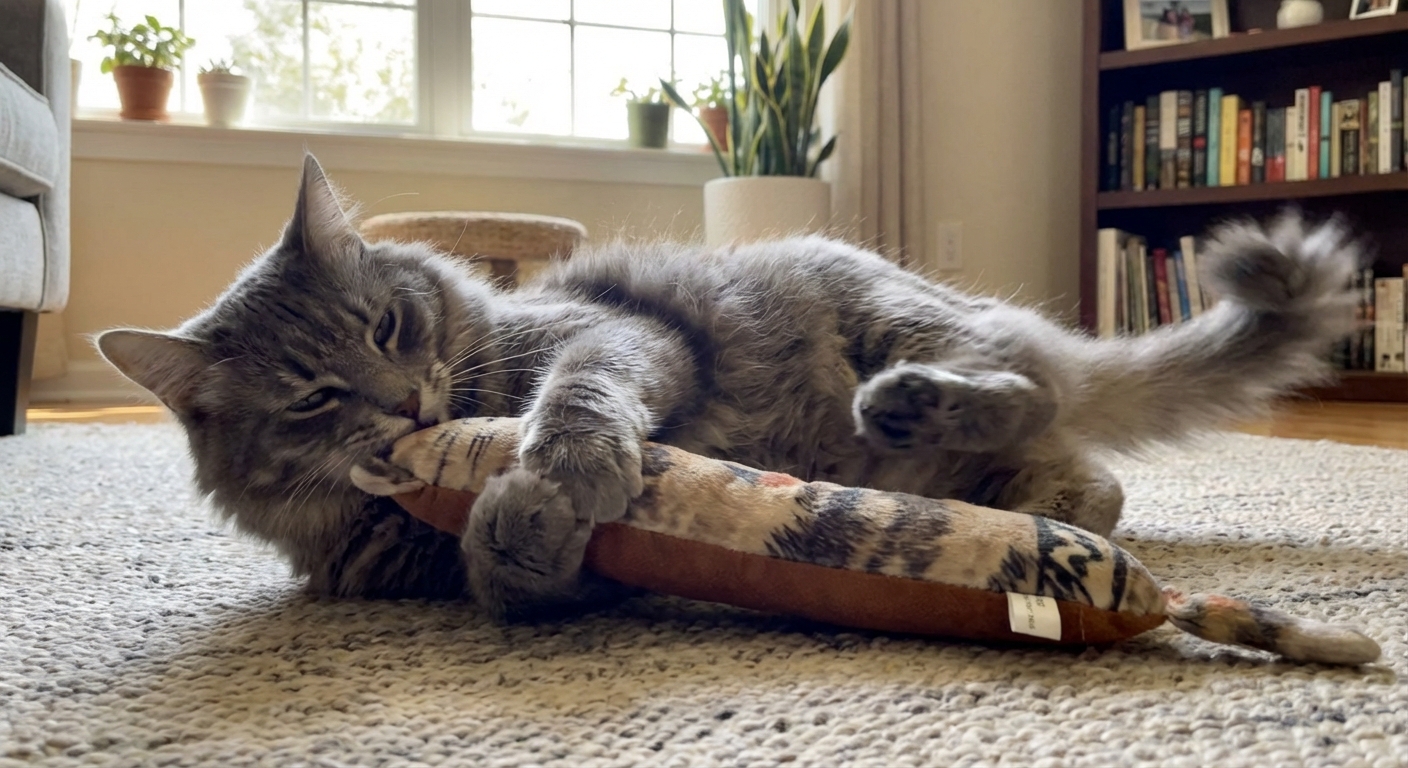
If your cat grabs your arm and kicks with the back feet, that is a normal grab-and-kick wrestling move in cat play. Give them something appropriate to wrestle.
- Best for: Cats that latch on and kick, “rough players,” young cats.
- Look for: Long, firm toys that your cat can hug, with durable fabric.
- Bonus: Some cats love catnip or silvervine inside.
Tip: If your cat goes for your hand, calmly place the kicker toy between you and redirect the bite to the toy.
4) Automatic motion toys (great support)
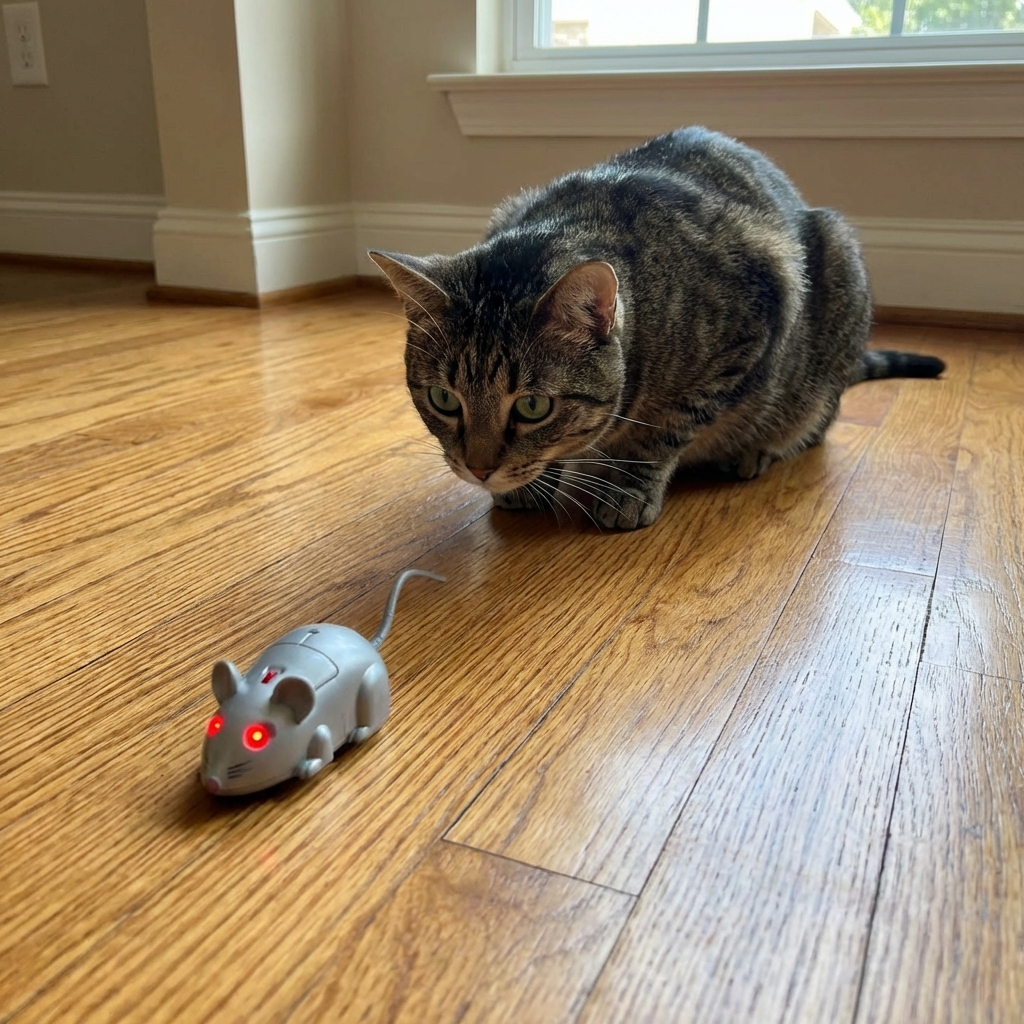
Battery-powered toys that move unpredictably can help when you are busy, but they work best as part of a rotation. Many cats lose interest if the pattern is repetitive.
- Best for: Cats home alone, high-energy cats, multi-cat households (with supervision).
- Look for: Auto shut-off, quiet motor, sturdy build, and a safe design without easy-to-chew parts.
- Use it well: Bring it out for short sessions, then put it away so it stays novel.
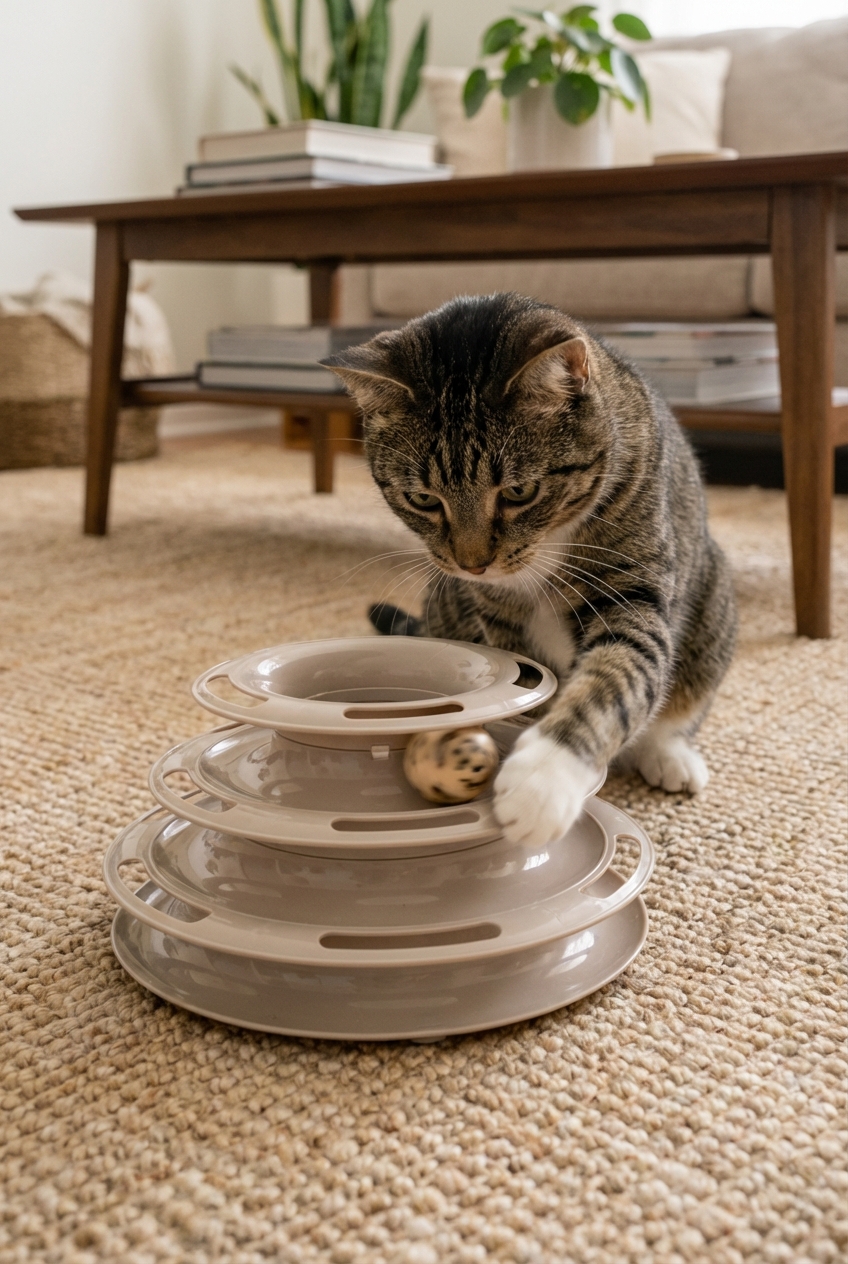
5) Track ball and chase toys
Track toys, ball towers, and chase circles are simple, low-maintenance options that encourage batting and chasing. They are also nice for cats who are hesitant about wand toys at first.
- Best for: Solo play, shy cats, cats who like to bat objects around.
- Look for: Non-slip base and a ball that cannot pop out easily.
- Tip: If your cat is active at night, a quiet track toy can be a good option to leave out for safe, low-noise play.
6) Plush prey and crinkle toys (for “kill bites”)
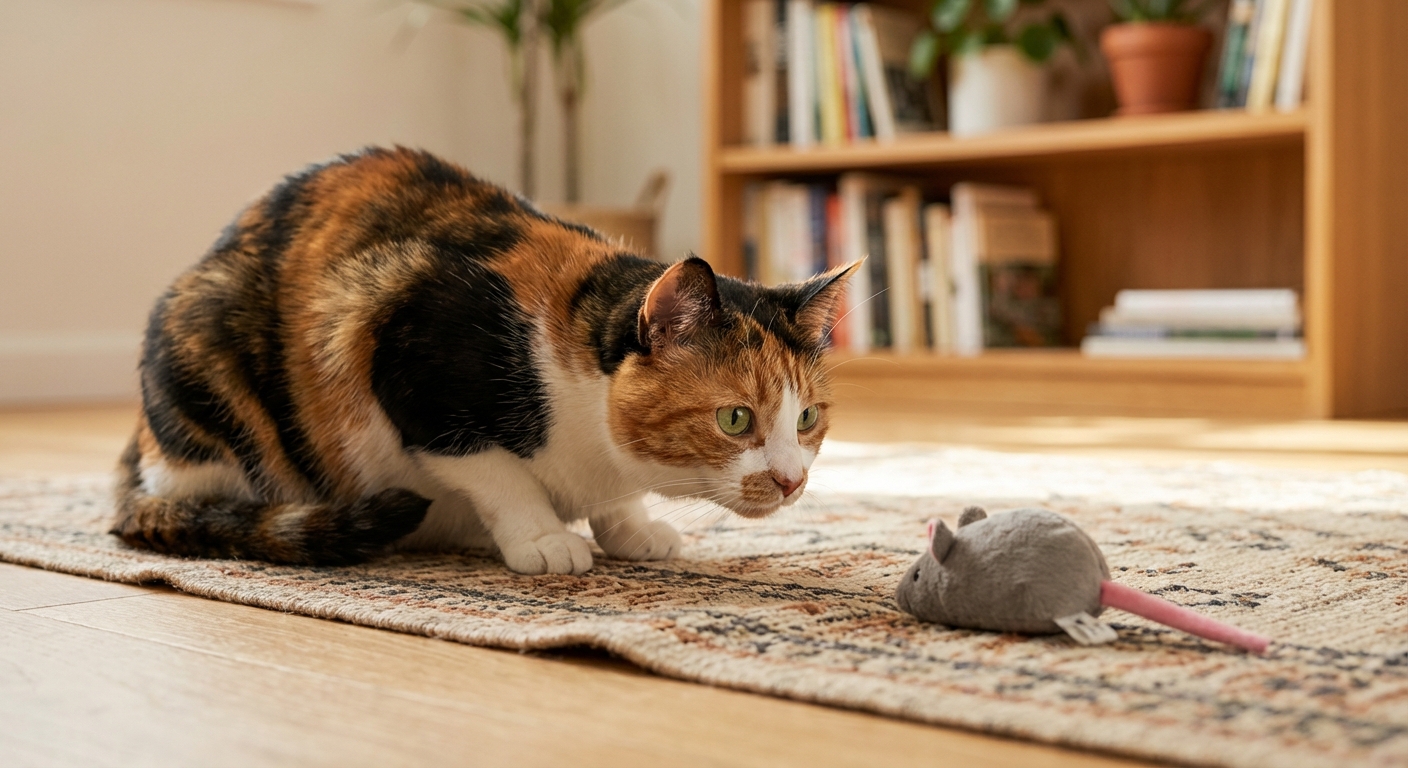
Some cats need the satisfaction of biting down and carrying “prey.” Small plush mice, crinkle toys, and faux fur toys can meet that need.
- Best for: Cats that mouth hands, cats that love to carry toys.
- Look for: Minimal loose parts, reinforced seams.
- Rotation matters: Keep most toys in a drawer and rotate 2 to 4 every few days.
A simple daily play plan
You do not need hours. You need consistency and the right sequence.
- Twice daily play: 10 to 15 minutes with a wand toy.
- End with a win: Let your cat catch the toy a few times.
- Then offer food: A small meal or a few treats after play completes the hunt cycle (hunt, catch, eat, groom, sleep).
- Add one brain game: Use a puzzle feeder for one meal or part of a meal.
If your cat is biting during petting, try “play first, pet later.” A tired cat is usually a gentler cat.
Petting: read the signs
Overstimulation bites are very common. If you see these signals, pause and give your cat a break:
- Tail swishing or thumping
- Skin rippling along the back
- Ears turning back or flattening
- Sudden stillness or a quick head turn toward your hand
Quick consent test: Pet for a few seconds, then stop. If your cat leans in or follows your hand, continue. If they freeze, flick the tail, or move away, respect that “no.”
What to do if your cat bites
In the moment, the goal is to end the “game” and redirect, not escalate.
- Freeze: Avoid jerking your hand away fast, which can trigger more chasing.
- Go neutral: No yelling, no hitting, no rough handling. Punishment tends to increase fear and can worsen biting.
- Disengage: Calmly stand up or step away, and give a brief time-out (30 to 60 seconds).
- Redirect: Offer a kicker toy or toss a plush prey toy away from your body.
- Do not reward attention bites: If biting reliably makes you talk, chase, or pick them up, they may learn to use teeth as a “button.” Save attention for calm behavior.
What to avoid
- Hand play: Wrestling with hands teaches your cat that skin is a toy.
- Laser pointers without a “catch”: Some cats seem to get frustrated. If you use a laser, finish by tossing a treat or offering a toy they can grab.
- Unsupervised string: Yarn, ribbon, and loose string can cause dangerous intestinal blockage if swallowed.
- Too much catnip for some cats: Some cats get overstimulated and bite more. If that happens, skip it and try silvervine or no herb at all.
Match toys to play style
If you match the toy to the behavior, you will get better results fast.
- Ankle ambusher: Wand toys plus a hallway “chase” session before your busiest times of day.
- Gentle but mouthy: Plush prey and kicker toys, plus puzzle feeding.
- High-energy kitten: Multiple short wand sessions, track toys, and safe climbing options.
- Shy or easily startled: Quieter toys, slower wand movement, play behind furniture for security.
- Senior or arthritic cat: Shorter, more frequent sessions; ground-level wand play; puzzle feeders that do not require lots of jumping.
Multi-cat homes
If you have more than one cat, boredom is not the only factor. Competition can raise arousal and increase biting.
- Spread out resources: Multiple food stations, water bowls, litter boxes, and resting spots.
- Play separately if needed: Especially if one cat guards toys or escalates quickly.
When to get extra help
If your cat’s biting breaks skin frequently, seems truly unprovoked, or escalates suddenly, loop in your veterinarian and consider a qualified cat behavior professional. Behavior change is absolutely possible, especially when you combine play, predictable routines, and a calm response.
Simple start this week: Pick 1 wand toy, 1 puzzle feeder, and 1 kicker toy, then commit to two short play sessions a day for two weeks. Most families notice a real difference when the “hunt” has a healthy outlet.