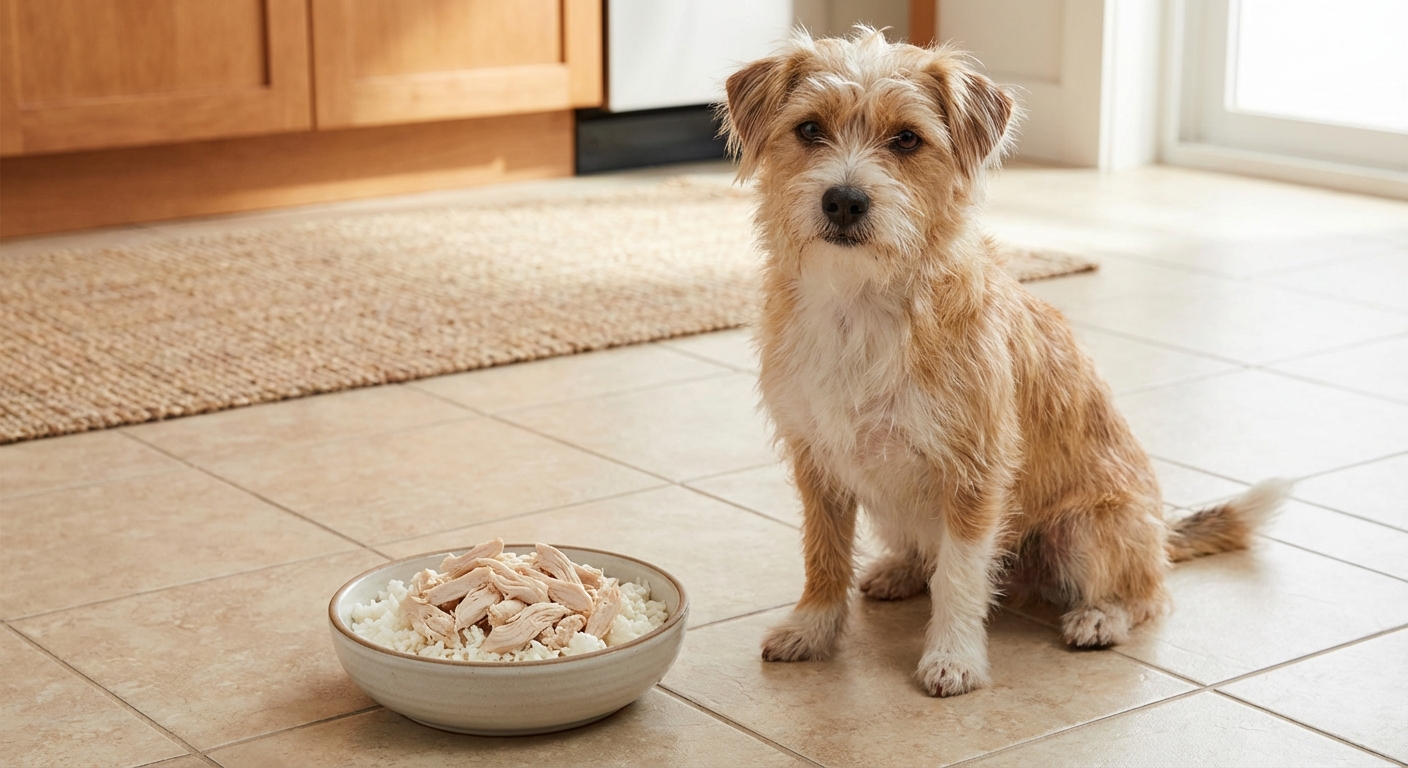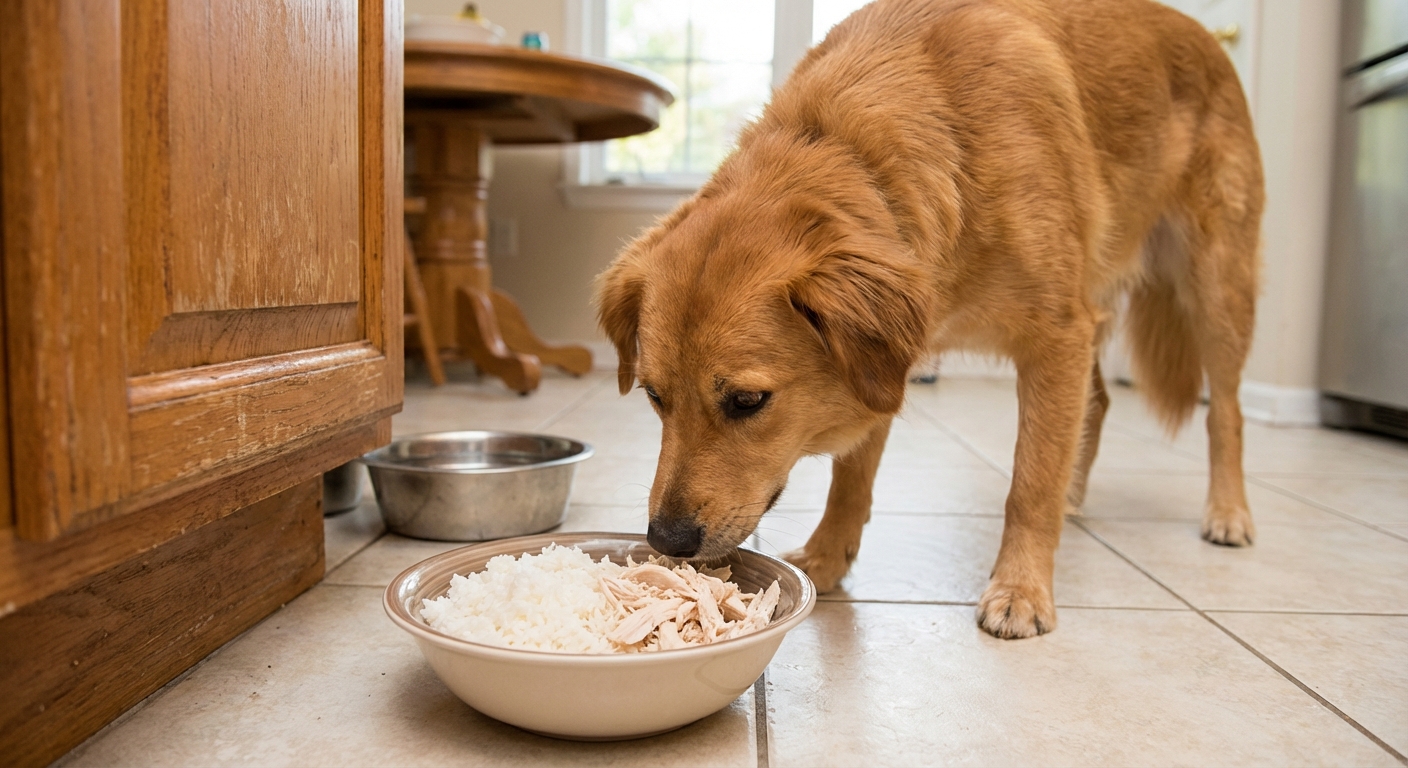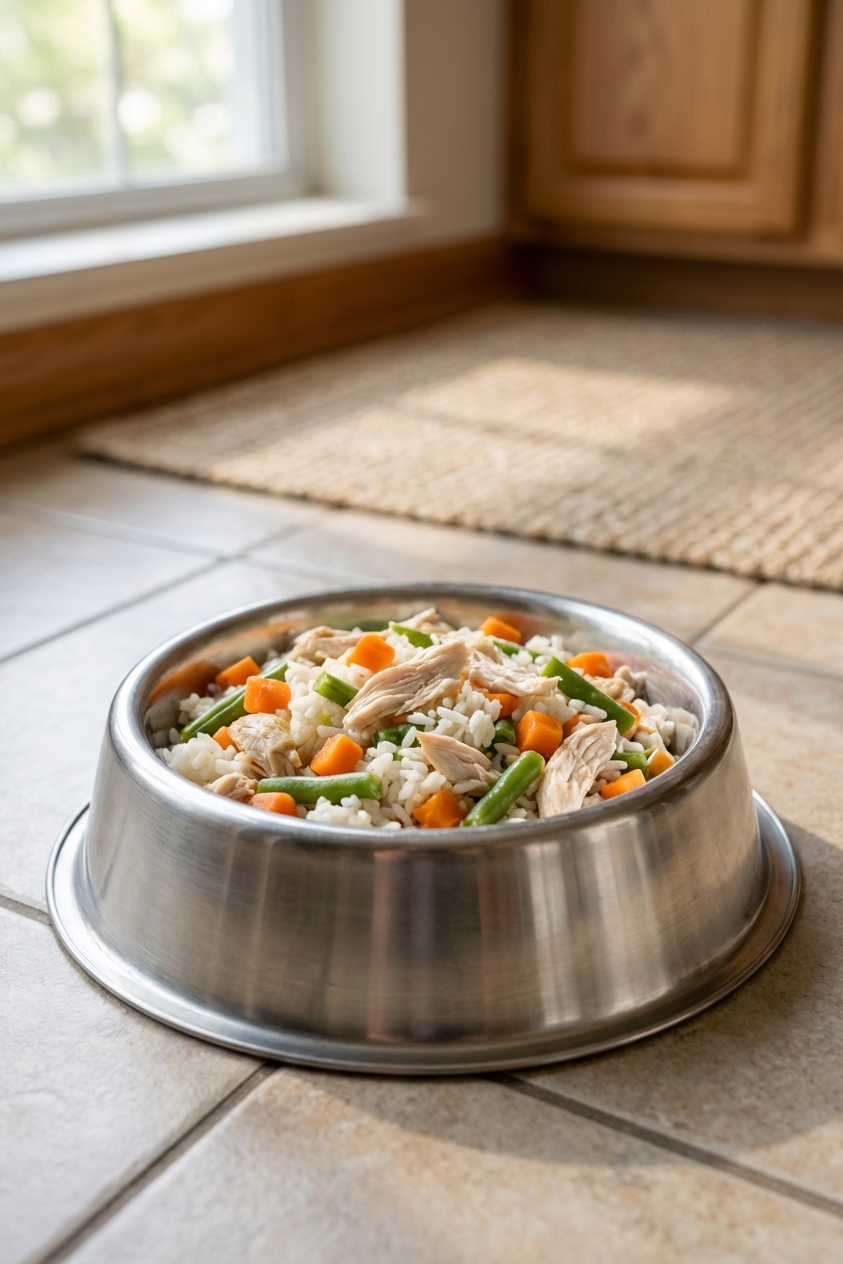
Turn chicken and rice into a more balanced homemade dog meal with veggies, calcium carbonate, and omega-3s. Includes gram weights, portion guidance, swaps, a...
Article
•
Designer Mixes
Best Remedy for Dog Diarrhea: Family-Friendly Help and Care

Shari Shidate
Designer Mixes contributor
As a veterinary assistant here in Frisco, Texas, I know how stressful diarrhea can be for the whole family. Your dog feels crummy, you are doing laundry, and everyone is worried. The good news is that most mild diarrhea improves with simple, safe at-home care. The key is knowing what to do first, what to avoid, and when to call your veterinarian.
Quick note: This article is general education, not a substitute for a veterinary exam or diagnosis. When in doubt, call.
First, check for emergency red flags
Before you try home remedies, do a quick safety check. Diarrhea can be a minor stomach upset, but it can also be a sign of dehydration, toxins, pancreatitis, parasites, intestinal blockage, or serious infection.
Call your veterinarian or an emergency clinic now if your dog has:
- Blood in the stool (bright red or black and tarry)
- Repeated vomiting or cannot keep water down
- Severe lethargy, collapse, pale gums, or belly pain
- Signs of dehydration (sticky gums, sunken eyes, weakness)
- A distended abdomen or unproductive retching (possible bloat in large breeds)
- Diarrhea lasting more than 24 to 48 hours in an adult dog, or sooner if it is worsening
- Any diarrhea in a puppy, senior dog, pregnant dog, or dog with chronic illness (especially diabetes, kidney disease, Addison’s disease, or dogs on steroids)
- Possible toxin exposure (xylitol gum, grapes or raisins, chocolate, rodent bait, human meds, marijuana products)
- Suspected foreign body (toy pieces, socks, bones, corn cobs)
Trust your instincts. If your dog is not acting like themselves, it is always okay to call.
The best family-friendly remedy: fluids plus a bland reset
If your dog is bright, alert, and only has mild diarrhea, the most helpful and safest first remedy is simple: protect hydration and keep meals small and easy to digest for a short period, then transition back slowly.
When I say “reset,” I mean no treats, no rich foods, and smaller bland meals. I do not recommend a universal fast at home. Some dogs, especially puppies, toy breeds, and diabetic dogs, can get into trouble with fasting. If you are considering withholding food, check with your veterinarian first.
1) Hydration comes first
Diarrhea pulls water and electrolytes out of the body. Dehydration is what makes dogs feel weak and can turn a mild case into an urgent one.
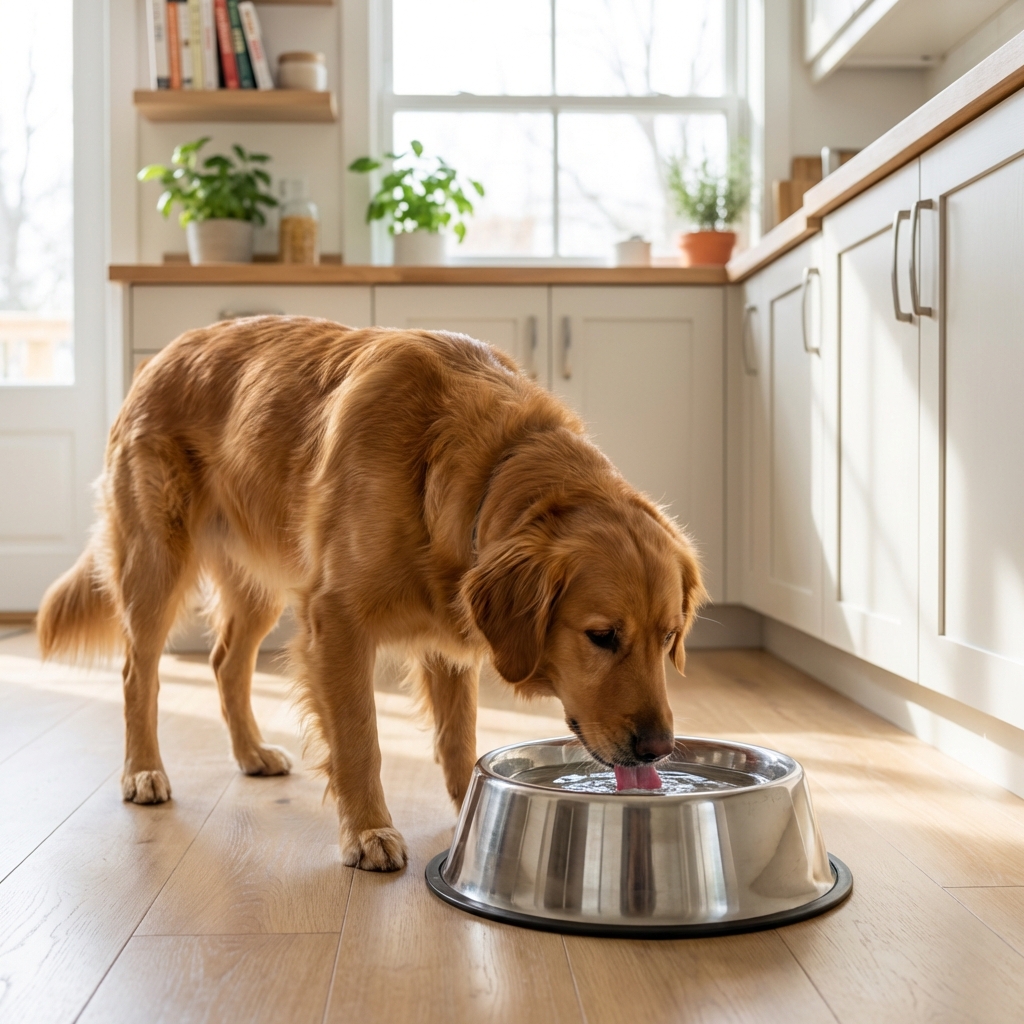
- Offer fresh water at all times.
- Encourage small, frequent drinks if your dog guzzles then vomits. You can also try offering ice chips.
- Add water to meals once your dog is eating again to boost fluid intake.
- Ask your veterinarian whether a dog-safe oral electrolyte solution is appropriate. Some human sports drinks are too sugary and can worsen diarrhea.
- Do not force water. If your dog refuses water or cannot keep it down, call your veterinarian.
Gentle food options that actually help
Food choices can either calm the gut or keep it irritated. For many dogs, a short bland diet helps stool firm up while the intestinal lining heals.
Option A: A short bland diet (the classic)
For 1 to 3 days, feed small meals of:
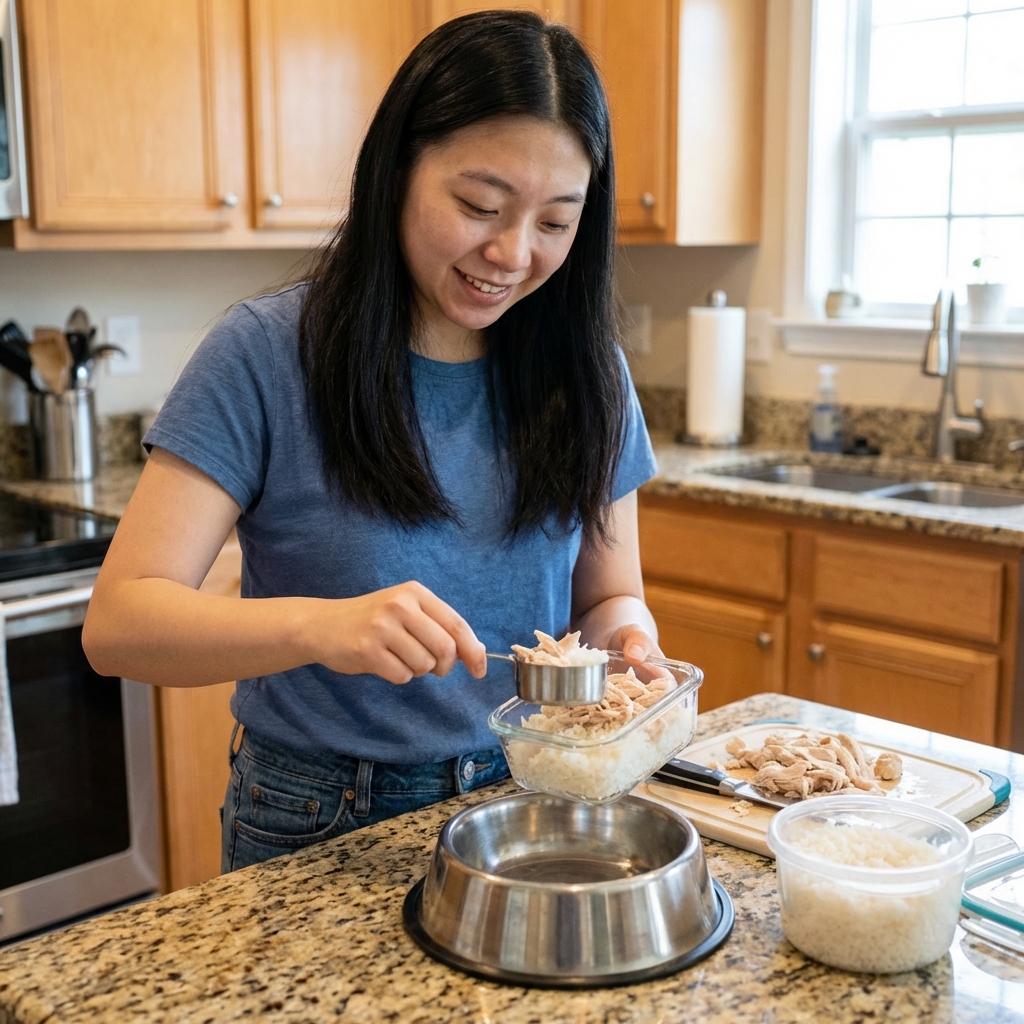
- Boiled skinless chicken breast (or lean turkey)
- Plain white rice
A common starting point is roughly 1 part protein to 2 parts rice, then adjust based on your dog’s stool and appetite. Keep portions smaller than usual and feed more frequently.
Option B: Pumpkin for fiber support
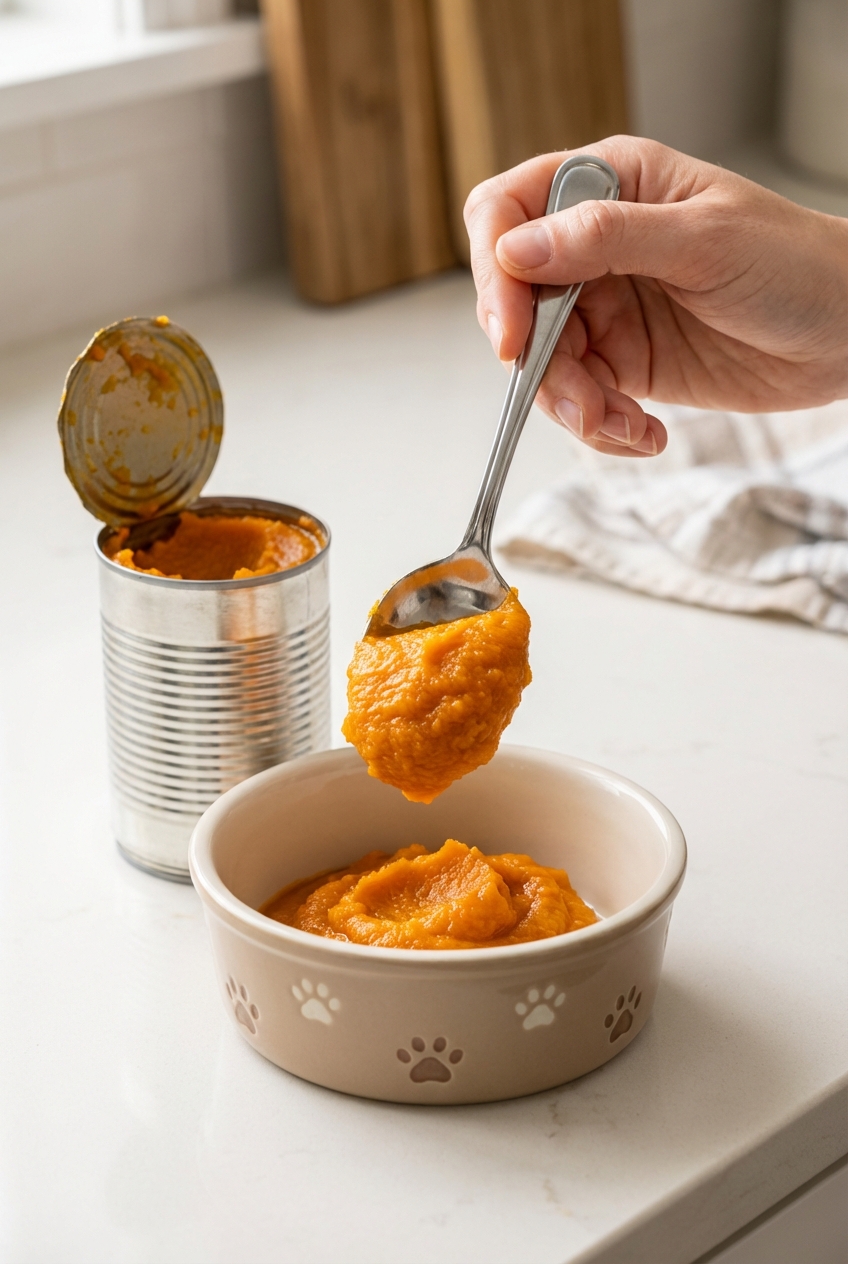
Plain canned pumpkin (not pumpkin pie filling) can help some dogs by adding soluble fiber that absorbs water and supports more formed stool. Evidence is mixed, and too much fiber can worsen gas or diarrhea, so start small.
- Small dogs: start with 1 teaspoon (up to 1 tablespoon if it helps)
- Medium dogs: start with 1 tablespoon (up to 2 tablespoons if it helps)
- Large dogs: start with 1 to 2 tablespoons (up to 3 to 4 tablespoons if it helps)
If pumpkin seems to worsen symptoms, stop and go back to the bland diet and hydration. If your dog has diabetes or needs strict calorie control, check with your veterinarian before using pumpkin routinely.
Probiotics: a smart add-on for many dogs
The gut microbiome plays a big role in stool quality. When diarrhea hits, beneficial bacteria can get disrupted. Many veterinarians recommend a dog-specific probiotic during and after a diarrhea episode.
- Choose a product made for dogs with clear dosing instructions. If you are not sure, ask your veterinarian for a veterinary probiotic they trust (common clinic favorites include brands like Purina Pro Plan FortiFlora or Nutramax Proviable).
- Use it for several days after stools normalize.
- If your dog is immunocompromised or on chemotherapy, ask your veterinarian before starting any supplement.
In veterinary medicine, probiotics can be helpful for certain types of acute diarrhea, especially stress-related or antibiotic-associated cases.
What to avoid (these can make diarrhea worse)
When you are tired and worried, it is tempting to try everything. A few common choices can backfire.
- High-fat foods (bacon, greasy leftovers): can trigger pancreatitis and worsen diarrhea.
- Milk and lots of dairy: many dogs are lactose intolerant.
- Raw diets during diarrhea: harder to digest and higher pathogen risk for dogs and people in the home.
- Spicy foods and heavy seasoning: irritate the gut.
- Bone broth with onion or garlic: onion and garlic are toxic to dogs. Always confirm ingredients.
- Human anti-diarrheal meds (like loperamide) without veterinary guidance: it can be unsafe for some breeds (especially herding breeds like Collies, Aussies, and Shelties that may have an MDR1 mutation) and can hide serious disease. Never use it if there is blood in the stool, significant lethargy, suspected toxin exposure, or possible foreign body.
- Other human meds like bismuth subsalicylate (Pepto-Bismol), NSAIDs, or leftover antibiotics: these can be risky or make diagnosis harder. Check with your veterinarian first.
A simple 24-hour home care plan
Here is a practical plan many families can follow for mild cases, assuming your dog has no red flags.
Step 1: Document and observe
- Take a quick photo of the stool.
- Note frequency, any mucus, and whether there is blood.
- Monitor energy level, appetite, and vomiting.
Step 2: Focus on fluids
- Water available at all times.
- Short leash walks to prevent scavenging and to track bowel movements.
Step 3: Feed small bland meals
- Skip treats and table scraps.
- Start with a small portion of chicken and rice once your dog is interested in food.
- Repeat small meals every 6 to 8 hours.
- Add a dog probiotic if you have one.
Step 4: Transition back slowly
When stools start forming, transition back to your regular food over 2 to 3 days:
- Day 1: 75% bland, 25% regular
- Day 2: 50% bland, 50% regular
- Day 3: 25% bland, 75% regular
- Day 4: 100% regular (if stools remain normal)
Why dogs get diarrhea in the first place
Understanding the cause helps you prevent the next episode. Common triggers include:
- Dietary indiscretion (trash, new treats, rich table scraps)
- Sudden food changes
- Stress (travel, boarding, new baby, houseguests)
- Parasites (especially in puppies or dogs who visit dog parks)
- Infections (viral, bacterial)
- Food sensitivities
- Pancreatitis (often after fatty foods)
If diarrhea is recurring, do not just keep repeating bland diets. That is a sign to work with your veterinarian on a plan. Common next steps may include:
- Fecal testing (including giardia screening when appropriate)
- Diet trial or prescription gastrointestinal diet
- Bloodwork to check hydration and organ function
- Additional testing or imaging if a blockage, pancreatitis, or chronic disease is suspected
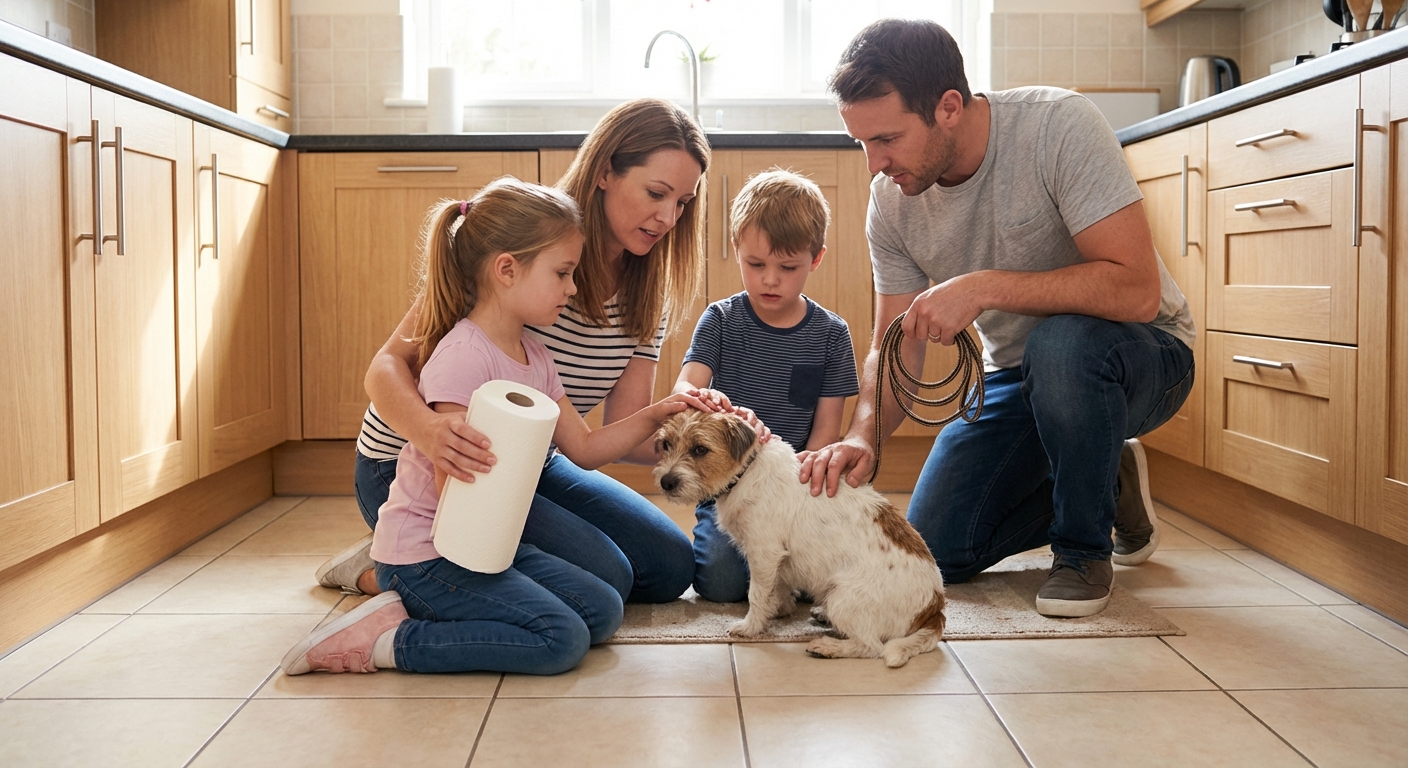
Kid-safe and pet-safe cleanup tips
Diarrhea can spread germs, especially if parasites like giardia are involved. Keeping everyone safe is part of good care.
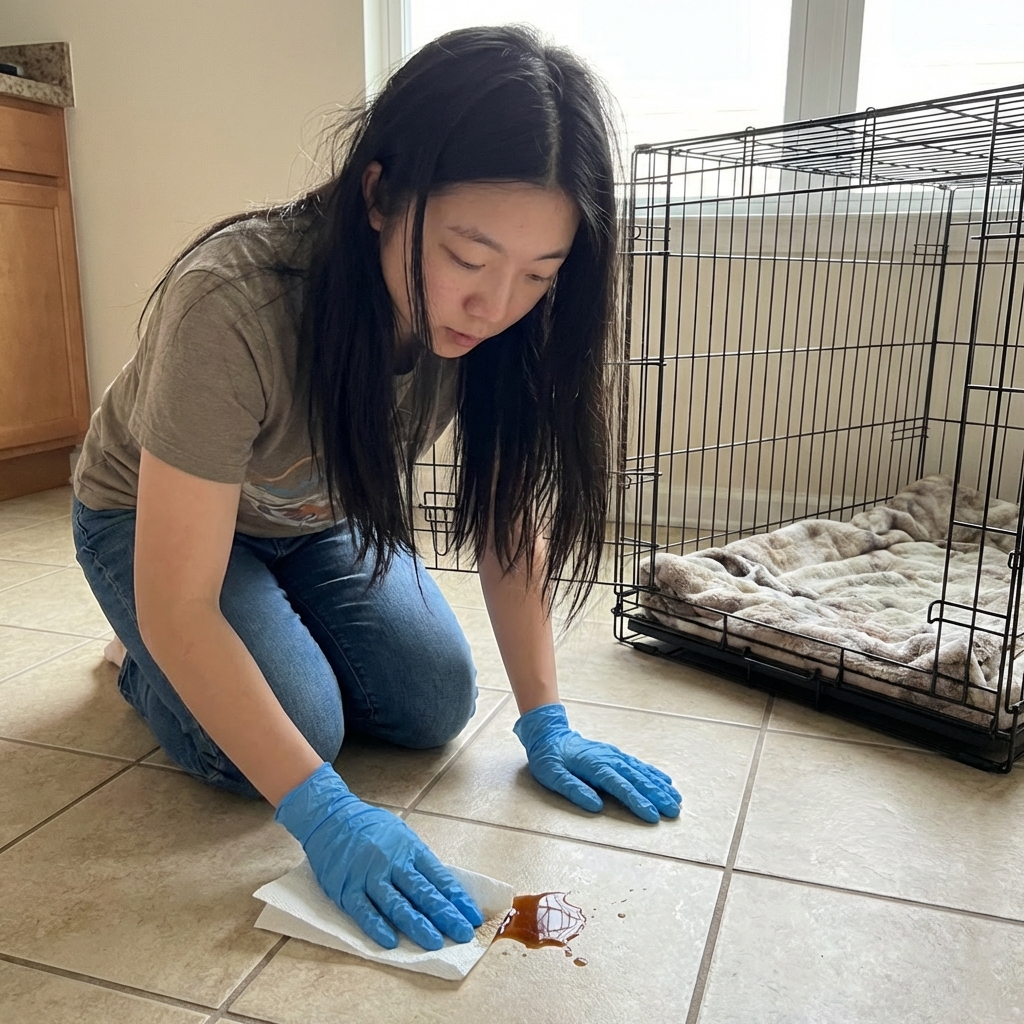
- Use gloves for cleanup if possible.
- Wash hands with soap and water after every cleanup and after handling poop bags.
- Clean hard surfaces with an appropriate disinfectant and follow label contact times. For giardia concerns, ask your veterinarian what to use. In many cases, a diluted bleach solution on bleach-safe surfaces with proper contact time is recommended, but not every surface can tolerate bleach.
- Keep kids away from the soiled area until it is cleaned and dry.
- Pick up yard stool promptly to reduce reinfection and spread.
- If your dog has suspected giardia, consider wiping paws and the rear end after potty breaks to reduce re-exposure, and wash bedding regularly.
When to bring a stool sample
If diarrhea lasts longer than 24 to 48 hours, comes back frequently, or your dog goes to daycare or dog parks, ask your veterinarian if you should bring a stool sample. Parasites are common, and they are very treatable once identified.
Tip: Place a fresh sample in a sealed bag or container and refrigerate it if you cannot get to the clinic right away.
The bottom line
For most mild cases, the best remedy is not a fancy supplement. It is hydration, a short bland-diet reset, and a calm routine, plus smart observation. If symptoms escalate, last too long, or include blood or vomiting, your veterinarian is your best next step. You are not overreacting by calling. You are being a good pet parent.