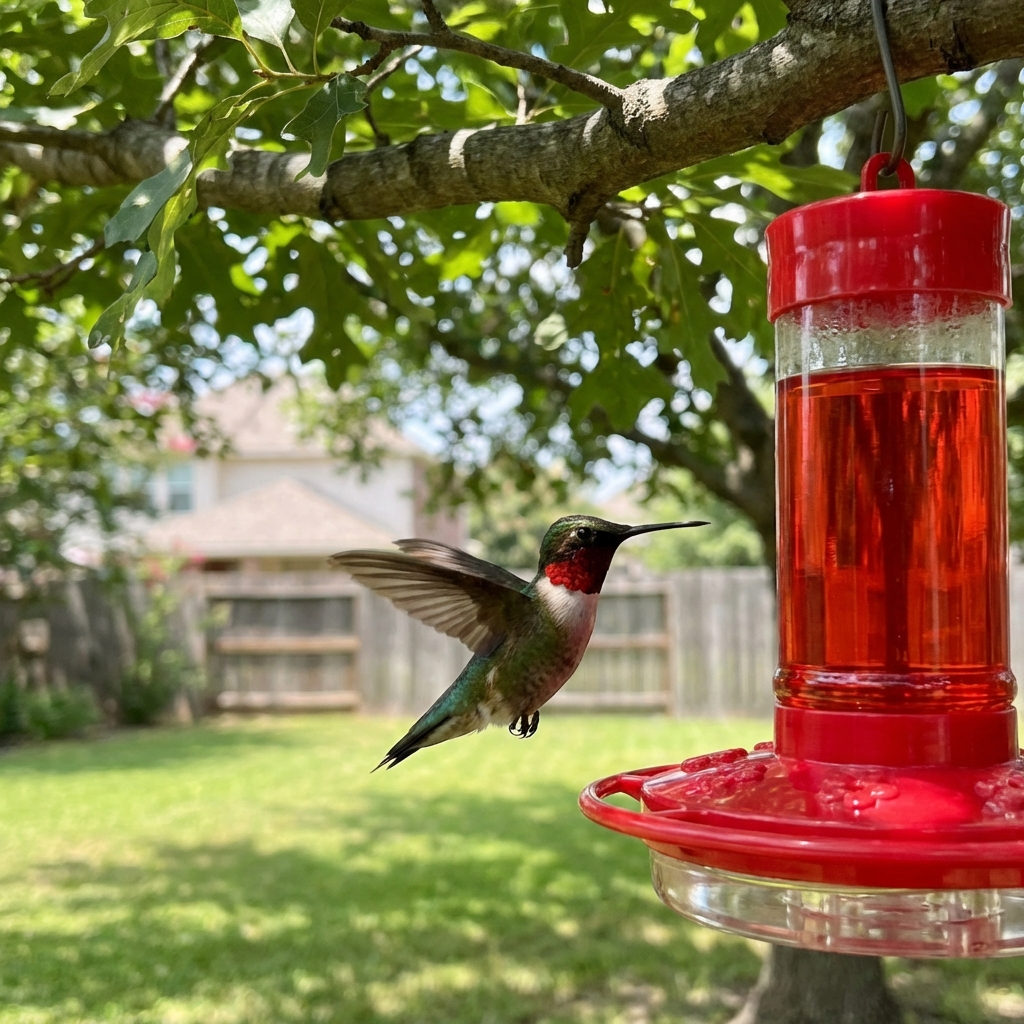
Place your hummingbird feeder for maximum visits: part shade, 4–6 ft high, near cover (but away from cats), and safely close to or far from windows. Includ...
Article
•
Designer Mixes
Best Hummingbird Feeder Location

Shari Shidate
Designer Mixes contributor
If you have ever hung up a hummingbird feeder and wondered, “Why is nobody visiting?” you are not alone. Hummingbirds are tiny, but they are picky about safety, comfort, and easy access to food. The good news is that a few simple placement tweaks can turn a quiet feeder into a daily show.
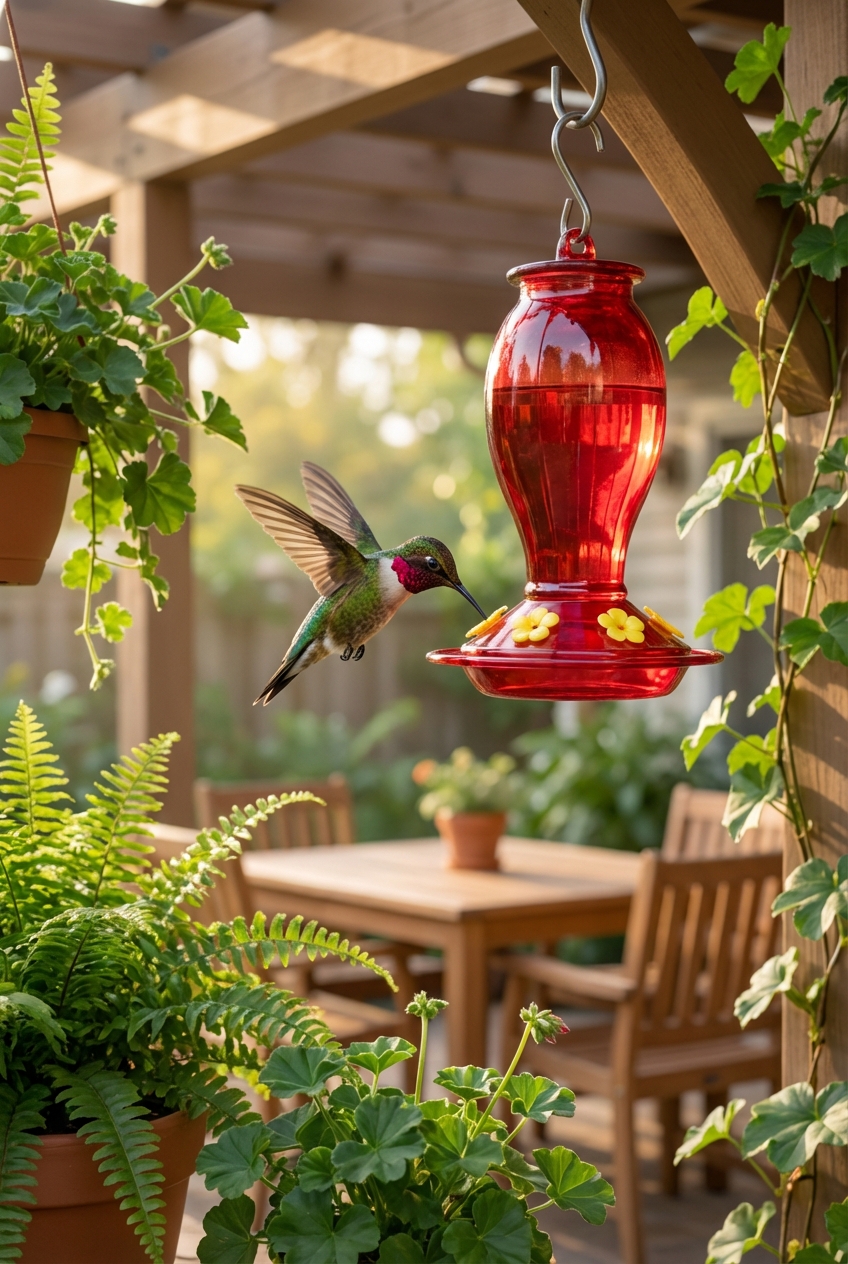
What hummingbirds look for
Hummingbirds are built for speed and efficiency. They want a nectar source that feels safe, is easy to spot, and does not force them to burn more calories than they gain. In nature, they feed frequently throughout the day, so your feeder’s location can make a real difference in how often they visit.
- Safety: good visibility to watch for predators
- Resting spots: nearby perches like small branches or wires
- Comfort: protection from extreme heat and wind
- Reliability: consistent food source in a familiar spot
The best location for a hummingbird feeder
The “best” spot is usually a balance between shade, visibility, and safety.
1) Aim for bright shade
Choose a location that gets morning sun and afternoon shade when possible. Heat can spoil nectar faster, especially in warm climates.
- Hang the feeder under a tree canopy, patio cover, or near an awning.
- If your yard is full sun, place the feeder where it gets a few hours of sun early, then shade later in the day.
2) Place it near flowers, not hidden in them
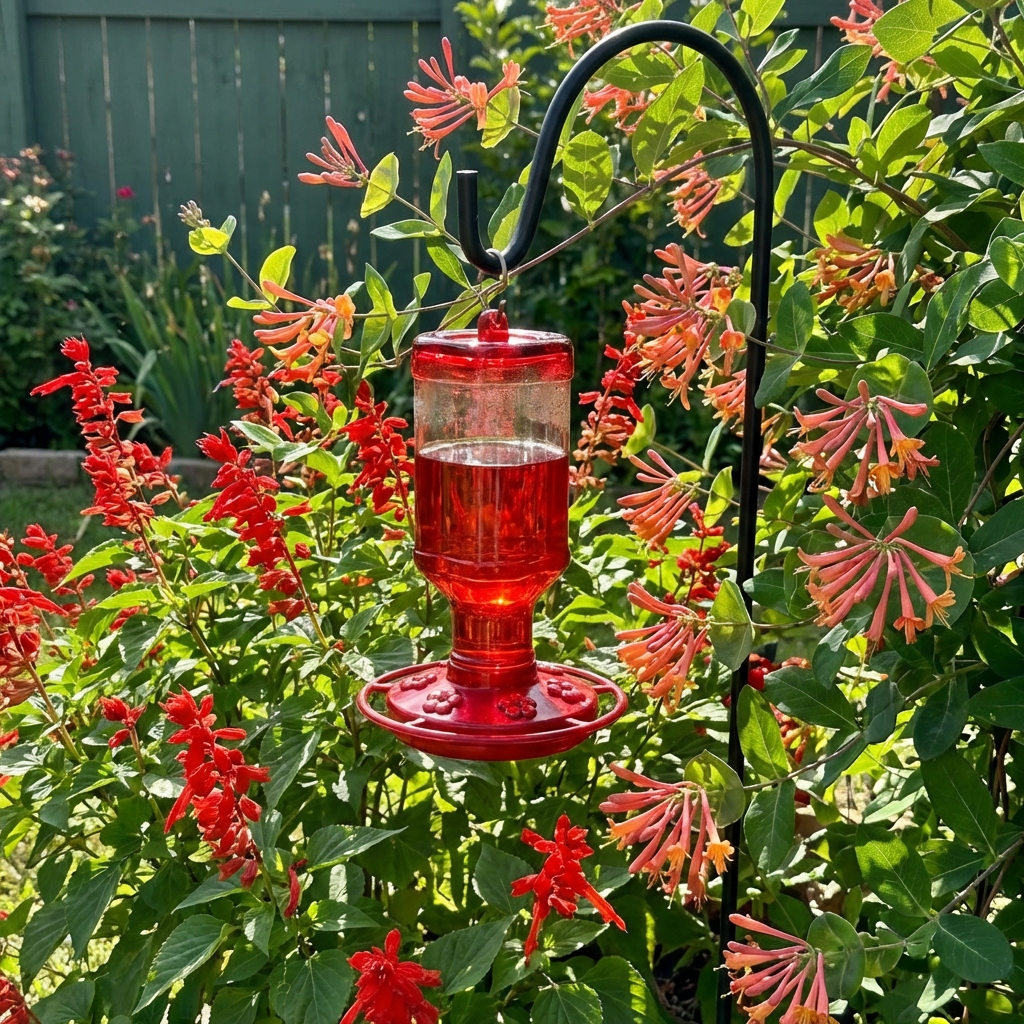
Hummingbirds find food by sight and memory. Put the feeder near a garden bed or flowering shrubs, but avoid burying it inside dense foliage where it is harder to see and easier for predators to ambush.
3) Place it within 10 to 15 feet of safe cover
They like a quick escape route, but they also want to see danger coming. A helpful starting point is to hang the feeder within about 10 to 15 feet of shrubs or small trees so they can zip to shelter quickly, while keeping the immediate area around the feeder more open so predators cannot hide right under it.
4) Hang it at the right height
A great everyday target is about 4 to 6 feet off the ground. This keeps it easy for you to clean and refill, while still feeling natural to the birds.
5) Reduce window collisions
If you hang a feeder near a window for viewing, do it thoughtfully. Birds can strike glass if they see reflections of sky or plants.
- Many bird-safety groups recommend placing a feeder within about 3 feet of a window, where birds cannot build up as much speed.
- Or place it more than about 30 feet away, so the feeder is less likely to pull birds into the “reflection zone.”
- Even with good placement, external window treatments (decals, screens, or other glass markers) are often the most reliable way to reduce strikes if you notice close calls.
Predator-proofing
Outdoor hazards add up quickly, and cats are a major threat to songbirds and hummingbirds. Your feeder placement can help protect them.
- Keep feeders away from fences and low shrubs where cats can launch upward.
- Avoid placing feeders right over railings that can act like a runway for predators.
- Choose open sightlines so hummingbirds can scan the area before feeding.
If you have outdoor cats in the neighborhood, consider placing your feeder in a more open area and adding a second feeder elsewhere to reduce competition and stress.
Fun hummingbird facts you can share at the feeder
- They remember locations. Once a hummingbird learns your feeder is reliable, it often returns and may even defend it.
- They eat more than nectar. They also hunt tiny insects and spiders for protein.
- They are energy managers. They can enter a state called torpor at night to conserve energy when temperatures drop.
- Territorial behavior is normal. That feisty “chasing” you see is often a hummingbird guarding a food source.
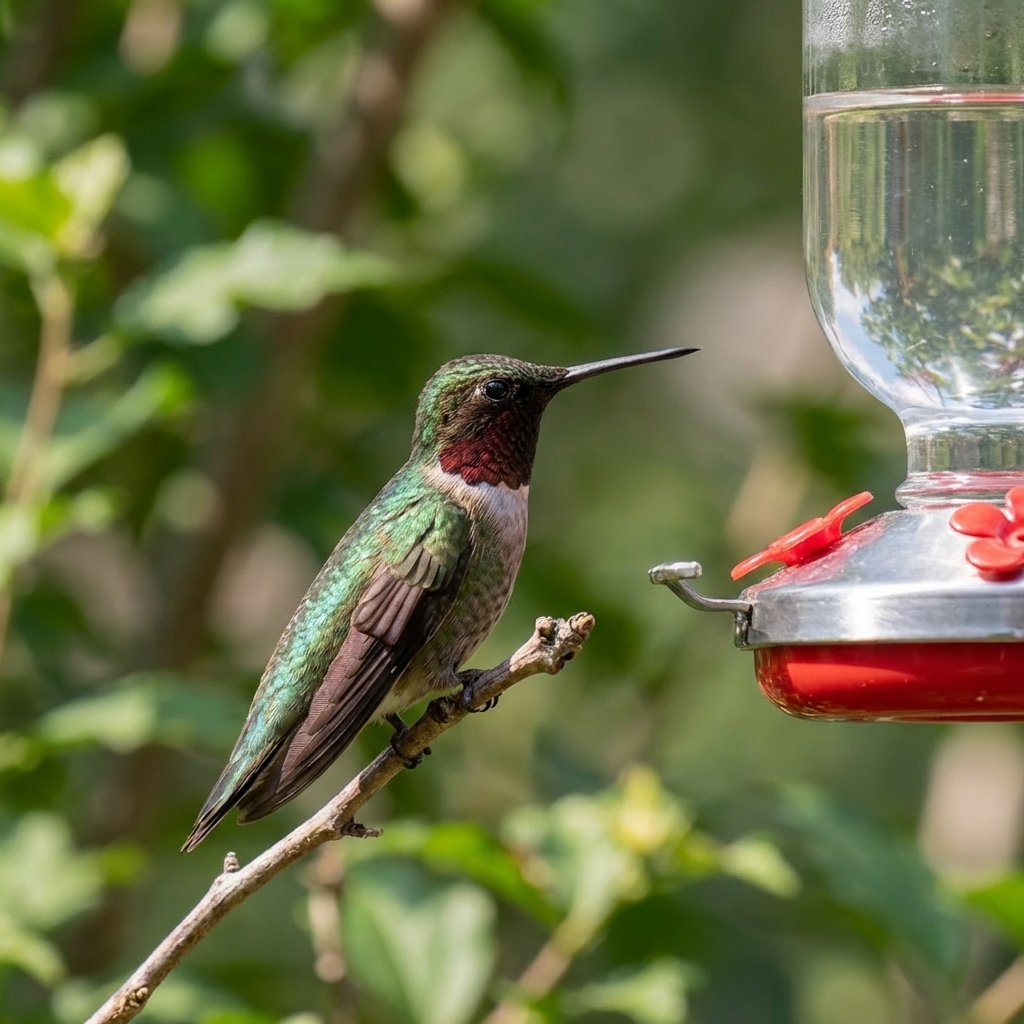
Nectar basics
Feeder location matters, but fresh nectar matters just as much. Even the perfect spot will not help if the nectar is old or starting to spoil. A safe standard recipe is:
- 1 part white granulated sugar
- 4 parts water
Bring water to a boil, dissolve the sugar, cool completely, then fill your feeder.
- Do not use honey (it can ferment quickly).
- Do not use red dye. Most feeders already have red parts that attract birds.
- Do not use brown sugar or artificial sweeteners.
How often to change nectar
Warm weather speeds up spoilage. A practical schedule many backyard birders use:
- Hot weather: change every 1 to 2 days
- Mild weather: change every 2 to 3 days
- Cool weather: change every 3 to 5 days
Sun exposure, humidity, and how clean the feeder is can change the math. Use your eyes and nose. If the nectar looks cloudy, smells “off,” or has debris, swap it out right away. When in doubt, change it sooner.
Cleaning tips that make birds come back
Spoiled nectar and mold can sicken birds and can also reduce visits over time. A quick rinse is not always enough.
- Clean with hot water and a bottle brush.
- If you need extra help, use a mild vinegar and water solution, then rinse thoroughly.
- Skip scented soaps when possible, since residues can linger.
Check feeding ports for black spots or slime. Those are signs it is time for a deeper clean.
Common feeder problems
Ants and bees
A busy feeder can attract more than hummingbirds. To keep insects from taking over:
- Use an ant moat above the feeder, or move the feeder slightly if ants keep finding it.
- Choose feeders with bee guards, and avoid letting nectar drip or pool.
- Avoid pesticides near feeders. Focus on physical barriers and consistent cleaning instead.
Seasonal timing
Put feeders up when hummingbirds typically arrive in your area, or a week or two early. Leaving a feeder up in late season does not prevent migration, and it can help late travelers and young birds fuel up.
Troubleshooting: why they might not be coming
Your feeder is too new
It can take time for hummingbirds to notice and trust a new feeder. Keep it clean and consistent, and try adding native flowers nearby.
The nectar is too strong or too weak
Stick with the 1:4 sugar-to-water recipe. Stronger mixes can be harder for birds to process and they often spoil and ferment faster.
It is in harsh sun
If nectar is overheating, move the feeder into brighter shade and shorten your change schedule.
There is too much competition
If one bird guards the feeder, add a second feeder on the other side of the yard. For best results, place multiple feeders out of line of sight from each other so one bully bird cannot defend them all.
A simple “best spot” checklist
- Bright shade, especially in the afternoon
- Within 10 to 15 feet of safe cover, but not hidden in dense foliage
- Open enough to spot predators
- About 4 to 6 feet high
- Placed with window safety in mind
- Easy for you to reach for frequent cleaning
Once you find that sweet spot, keep it consistent. Hummingbirds love routines, and you will start noticing familiar visitors day after day.