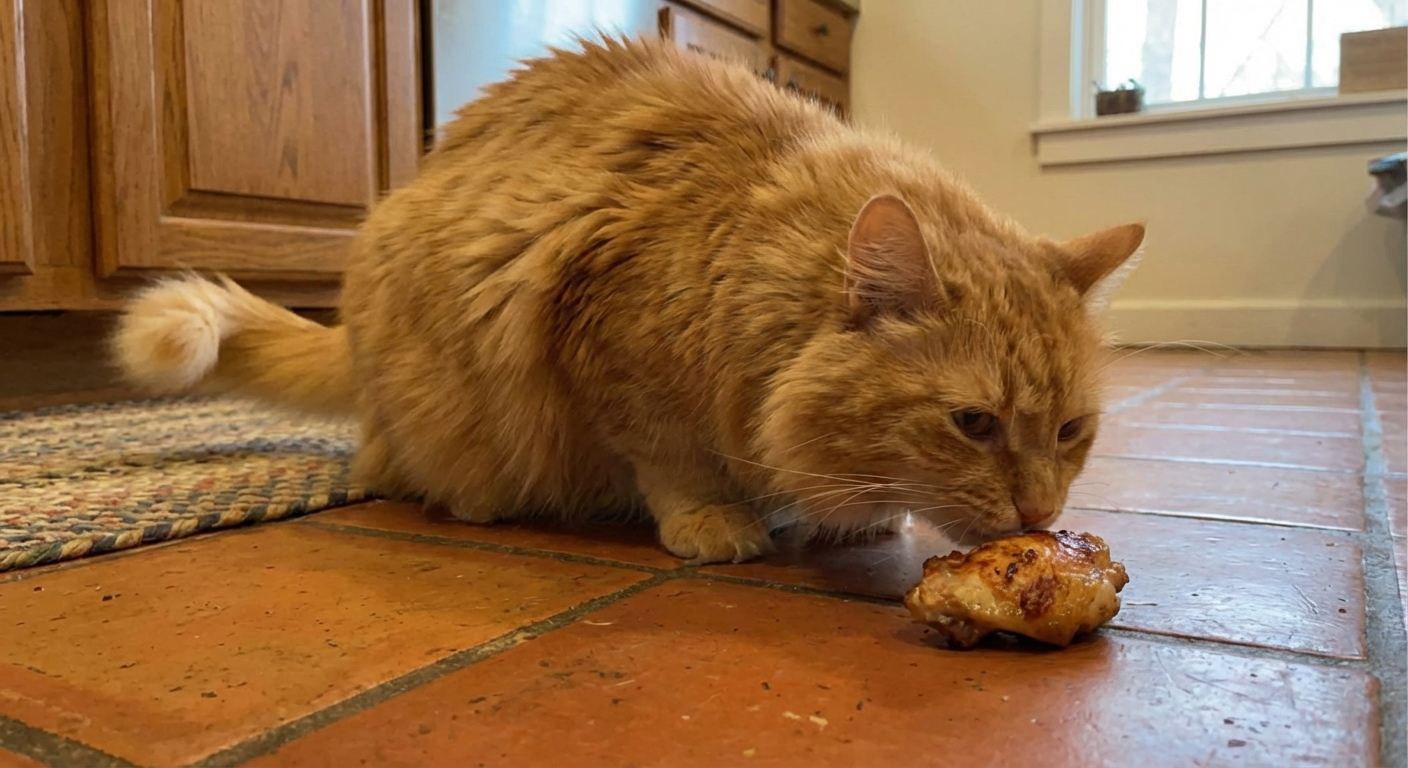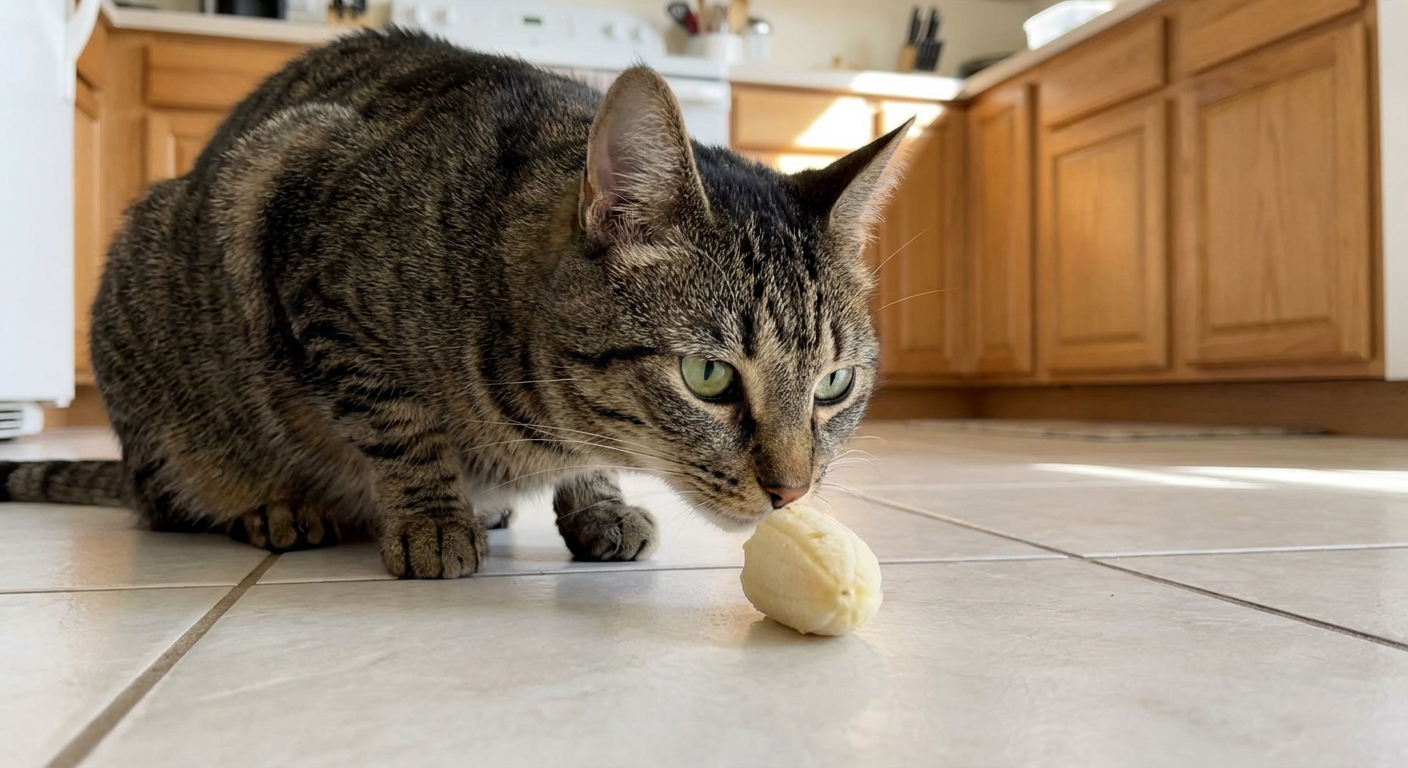
Cats don’t need carbs, so fruit should be a tiny, occasional treat. See cat-safe fruits with exact portions, sugar-risk tiers, serving tips, and fruits to ...
Article
•
Designer Mixes
Best Fruits for Cats That Like Them

Shari Shidate
Designer Mixes contributor
Cats are famously picky, so when a cat shows interest in fruit it can feel like winning the lottery. The good news is that a few fruits can be a safe, fun, occasional treat for many cats. The key words are small and occasional. Cats are obligate carnivores, which means their nutrition is built around animal protein. Fruit is not a dietary need, but the right fruit in the right amount can add variety and a refreshing, high-water texture, and for some cats it can be a motivating treat for training or enrichment.
Important: Fruit should never replace a complete and balanced cat diet.
Before you share fruit
As a veterinary assistant, I always start with safety basics. Most fruit-related problems I see are not from the fruit itself, but from portion size, seeds and pits, and sugary add-ons.
- Keep it tiny: Think pea-sized to blueberry-sized pieces. For most cats, 1 to 3 small bites is plenty. A “tiny cube” is about 1/2 inch (1 cm) or smaller.
- Plain only: No syrup, whipped cream, chocolate, xylitol, or spices. Skip canned fruit packed in sugar. Also skip fruit yogurt or dairy pairings, since many cats are lactose intolerant.
- Remove hazards: Always remove pits, large seeds, rinds, peels, and tough skins. These can cause choking or GI blockage.
- Introduce slowly: Offer a tiny taste and watch for vomiting, diarrhea, or itchiness over the next 24 hours.
- Health conditions matter: If your cat has diabetes, obesity, inflammatory bowel disease, pancreatitis, or urinary issues, ask your veterinarian before offering fruit.
Rule of thumb: Treats, including fruit, should stay under about 10% of your cat’s daily calories. For many cats, that means fruit should be a rare nibble, not a daily snack.
Fruits many cats enjoy
Not every cat will care about fruit, and that is completely normal. But these options tend to be the most accepted in real homes because of their smell, moisture, and texture.
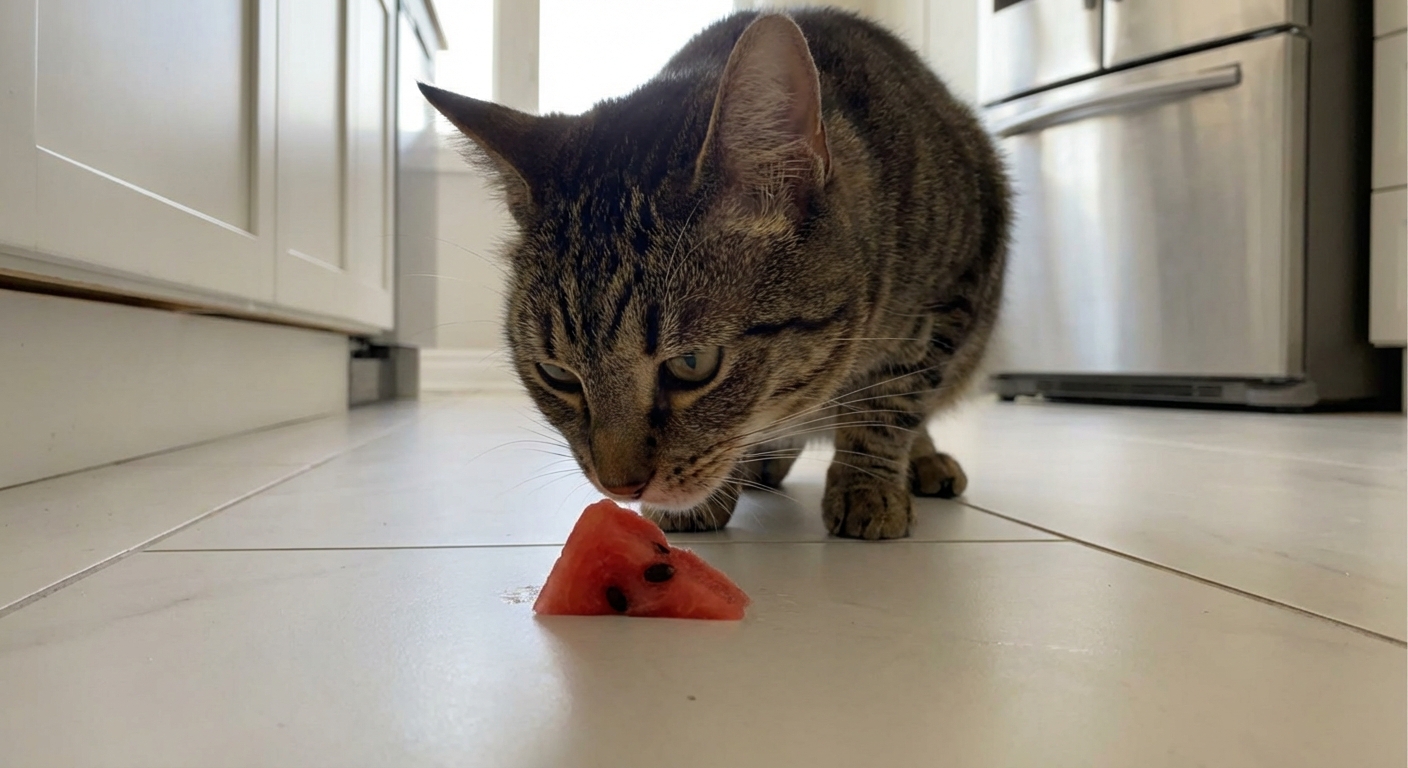
1) Watermelon (seedless)
Watermelon has a cool, juicy texture that some cats enjoy, especially in warmer months. It is high in water, but a couple of bites is mainly about refreshing texture, not a meaningful hydration boost.
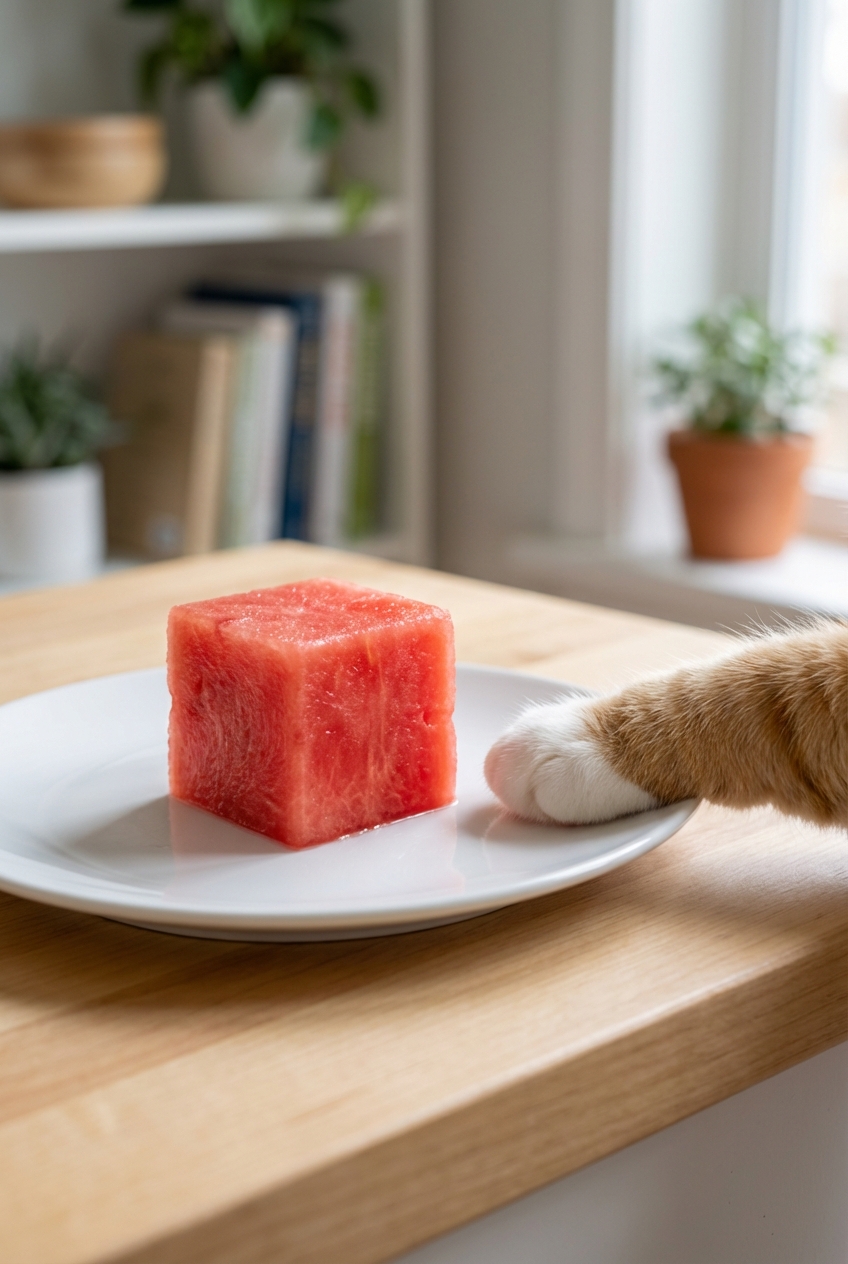
- Serve: 1 to 2 tiny cubes (about 1/2 inch or smaller), seedless, with the rind removed.
- Why it works: Mild flavor and high-water bite.
- Tip: Chill it for a refreshing summer treat, but keep portions small.
2) Strawberries
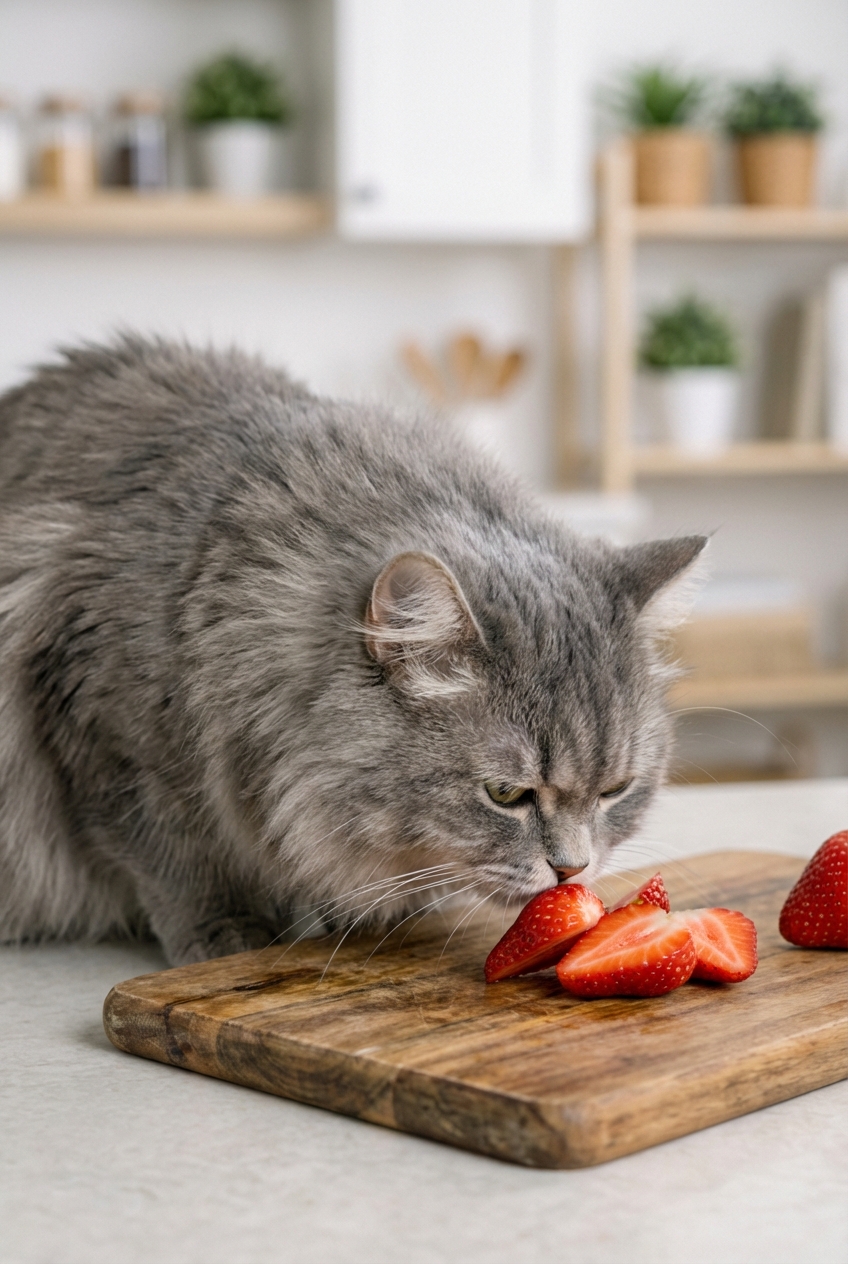
Some cats love the sweet smell of strawberries. Others will sniff and walk away. Either way, it is a safe option when prepared correctly.
- Serve: A small sliver or two, washed well, leafy top removed.
- Why it works: Bright aroma and soft texture.
- Tip: Mash a tiny bit and offer from a spoon if your cat prefers licking.
3) Blueberries
Blueberries are easy to portion and can be a fun “bat-it-around” enrichment treat.
- Serve: 1 blueberry cut in half for smaller cats, or 1 to 2 whole for larger cats that chew well.
- Why it works: Bite-sized and easy to control.
- Tip: If your cat gulps food, always cut blueberries to reduce choking risk.
4) Bananas
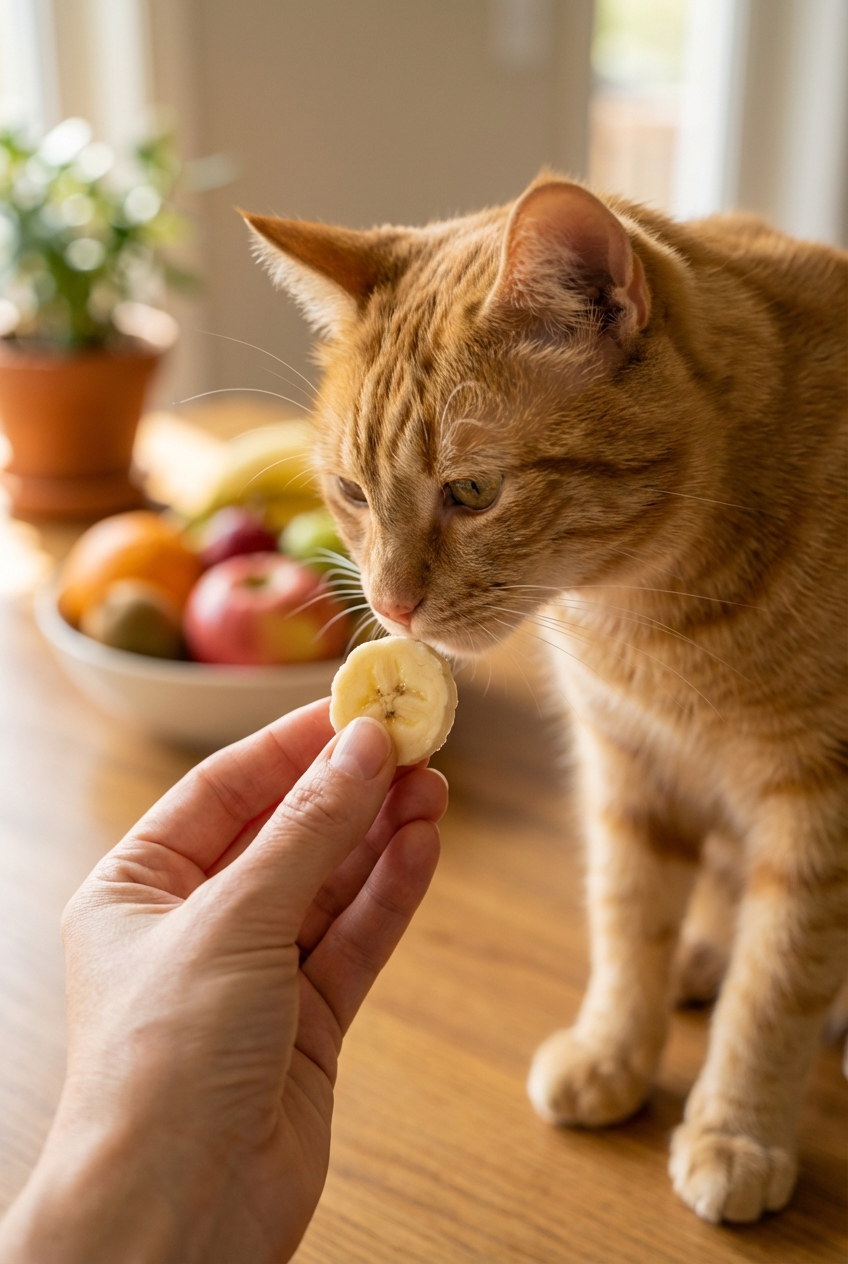
Banana is one of those fruits cats either adore or ignore. The soft texture can be appealing.
- Serve: A thin coin or a fingertip-sized mash.
- Why it works: Soft, fragrant, and easy to offer in tiny portions.
- Note: Banana is higher in sugar and calories than many other fruits, so keep it very occasional.
5) Cantaloupe (and sometimes honeydew)
Cantaloupe is famous in cat circles for a reason. Some cats are drawn to its aroma and will come running.
- Serve: A tiny cube (about 1/2 inch or smaller), rind removed, seeds removed.
- Why it works: Strong aroma and juicy bite.
- Tip: Offer a tiny amount first. Too much melon can lead to loose stool.
6) Apple (peeled, no seeds)
Apple can be a crunchy treat for cats that like texture. Preparation matters here.
- Serve: A very small peeled piece, no core, no seeds.
- Why it works: Crunchy, mild sweetness.
- Important: Apple seeds contain cyanogenic compounds, so be meticulous about removing them.
7) Pumpkin (technically a fruit)
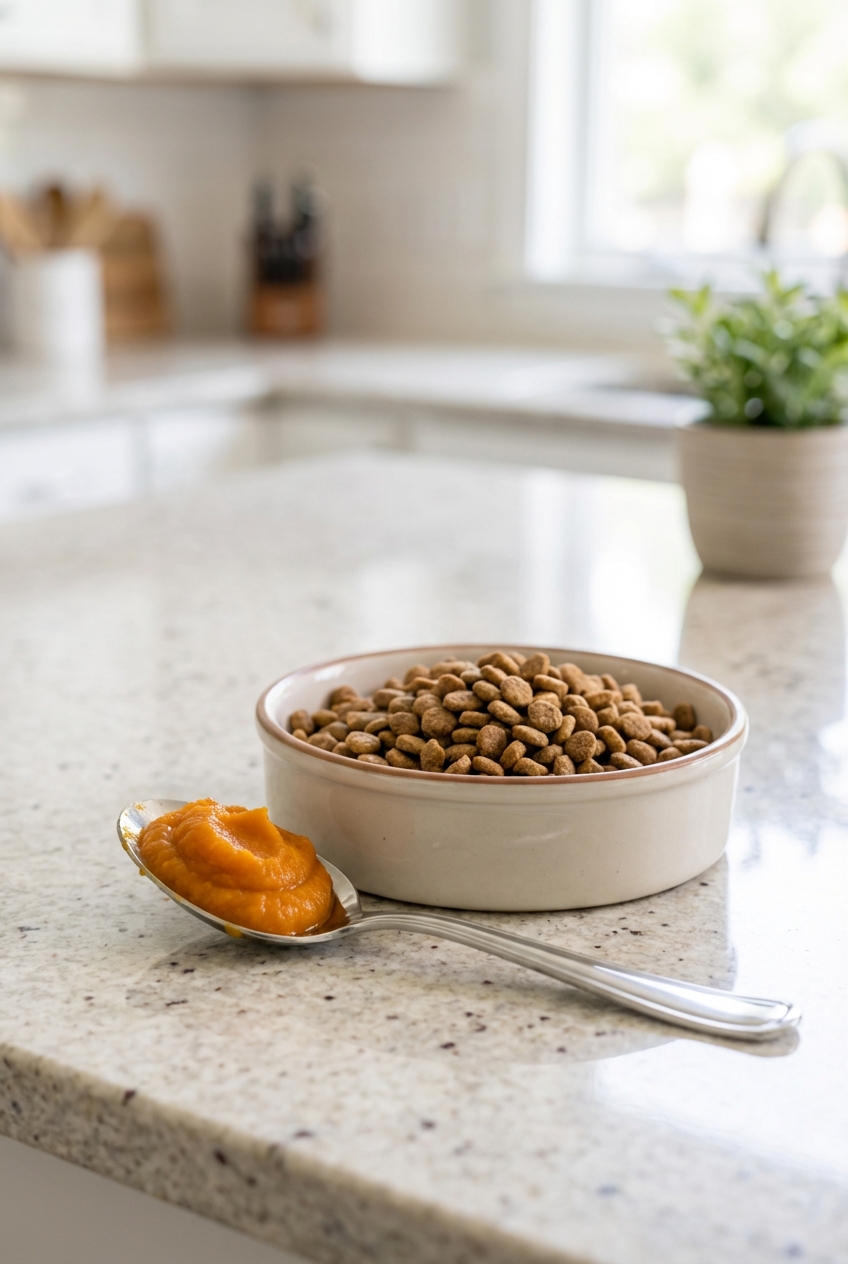
When a cat likes pumpkin, it can be a helpful add-in for some cats. Plain pumpkin is commonly recommended by veterinarians for mild constipation or mild diarrhea because of its fiber, but responses vary from cat to cat.
- Serve: 1/2 teaspoon of plain canned pumpkin (not pumpkin pie filling).
- Why it works: Gentle fiber, mild flavor, easy to mix into food.
- Tip: If stool worsens or symptoms last more than a day, stop and check in with your veterinarian.
Fruits to avoid
Some fruits are unsafe for cats, and others are safe but commonly served in risky ways.
- Grapes and raisins: Avoid entirely. They are associated with kidney failure in dogs, and toxicity in cats is uncertain but concerning.
- Citrus (orange, lemon, lime, grapefruit): Many cats dislike the smell. The peel, essential oils, and plant compounds are more likely to cause GI upset than a tiny taste of flesh, so it is simplest to avoid.
- Cherries: Avoid due to pits and plant parts that can contain cyanogenic compounds, plus choking risk.
- Peaches, plums, apricots: The flesh is not the main issue, the pit is. Pits are choking hazards and contain cyanogenic compounds.
- Avocado: Best avoided. It is fatty and can cause GI upset, and persin is a potential concern with limited species-specific data.
- Dried fruit: Too concentrated in sugar and easy to overfeed.
Also avoid: Fruit snacks, fruit gummies, baked goods, and any “sugar-free” fruit products. Xylitol is dangerous for pets and should never be offered.
What your cat will eat
If your cat has ever turned down an expensive treat with full attitude, you are in good company. Here are a few tried-and-true ways to test fruit interest without wasting a whole carton.
- Offer a sniff sample first: Hold a tiny piece a few inches away. If your cat turns away, do not push it.
- Try different textures: Some cats prefer crunchy (apple), others prefer juicy (melon), and others prefer lickable (mashed strawberry).
- Make it interactive: Put a blueberry in a shallow dish and let your cat bat it around. Supervised play only.
- Use fruit as a topper, not a bowlful: A few mashed strawberry smears on a lick mat can be more appealing than chunks.
Portion guide
For most healthy adult cats, start here. If your cat has a sensitive stomach, go even smaller.
- Watermelon or cantaloupe: 1 to 2 tiny cubes (about 1/2 inch or smaller)
- Strawberry: 1 small sliver
- Blueberry: 1 to 2 (cut in half if your cat gulps)
- Banana: 1 thin coin
- Apple: 1 tiny peeled piece, no seeds
- Pumpkin: 1/4 to 1/2 teaspoon plain
If your cat develops vomiting, diarrhea, drooling, or stops eating after trying a new fruit, discontinue and contact your veterinarian for guidance.
Simple fruit treat ideas
Chilled watermelon bites
Cut seedless watermelon into tiny cubes (about 1/2 inch or smaller), remove all rind, chill, and offer one cube as a reward after playtime.
Two-ingredient lick mat
Mix a pea-sized amount of mashed banana with a teaspoon of plain, unsweetened canned pumpkin. Spread a very thin layer on a lick mat and supervise.
Blueberry “hunt” game
Place one halved blueberry in a clean shallow dish and let your cat “find it” after a short wand-toy session. If your cat tries to swallow whole without chewing, skip this one.
When fruit is not ideal
Sometimes a cat wants a treat, but fruit is not the right fit. If your cat is overweight, diabetic, or on a prescription urinary or kidney diet, talk with your veterinarian about better treat options. Often, the safest “treat” is simply a small portion of their regular wet food, a single-ingredient freeze-dried meat treat, or extra playtime with you.
Your cat does not need fruit to be healthy. If they enjoy it, think of it as enrichment. Small tastes, simple ingredients, and careful prep are what keep it safe.