A practical daily plan for feline pancreatitis: recognize subtle flare-up signs, keep hydration up, manage nausea and pain, support safe nutrition, and watch...
Article
•
Designer Mixes
Best Foods for Cats With Pancreatitis

Shari Shidate
Designer Mixes contributor
When a cat has pancreatitis, the pancreas becomes inflamed and digestive upset can escalate quickly. As a veterinary assistant here in Frisco, Texas, I have seen how fast cats can go from “a little off” to not eating at all. The good news is that the right foods, the right texture, and a gentle feeding plan can make recovery smoother and help prevent relapses.
Important: Pancreatitis in cats often overlaps with other conditions like inflammatory bowel disease (IBD), cholangitis, diabetes, or hepatic lipidosis risk if they stop eating. So while diet helps a lot, it needs to match your cat’s full medical picture. Always follow your veterinarian’s treatment plan, especially if your cat is on appetite stimulants, anti-nausea meds, pain control, or has a feeding tube.
What to feed during a flare
For years, pancreatitis advice often leaned heavily toward “low-fat.” In cats, the bigger priorities are usually:
- Getting calories in safely to prevent starvation and reduce hepatic lipidosis risk.
- Highly digestible protein that is gentle on the GI tract.
- Consistent hydration, because dehydration can worsen nausea and weakness.
- A texture your cat will actually eat, because food refusal is the biggest enemy during recovery.
It is also worth saying out loud that the evidence for strict low-fat diets in cats is not as clear-cut as it is in dogs. Many clinicians still prefer moderate-to-lower fat, highly digestible diets during recovery, especially when there are other issues involved (for example, certain GI diseases or abnormal blood lipids). Fat tolerance can be very individual, so guidance is often based on your cat’s response and comorbidities.
In practice, very high-fat foods can trigger vomiting or diarrhea in some cats during recovery. The “best” food is the one that meets your veterinary team’s targets and that your cat reliably eats.
What to look for in a diet
- High moisture (canned, pouch, or rehydrated) to support hydration.
- Highly digestible formulas designed for sensitive stomachs.
- Moderate fat unless your clinician specifically requests lower-fat.
- Simple ingredient profile if food sensitivities are suspected.
- Soft texture (pâté or mousse) for cats with nausea.
Wet vs dry food
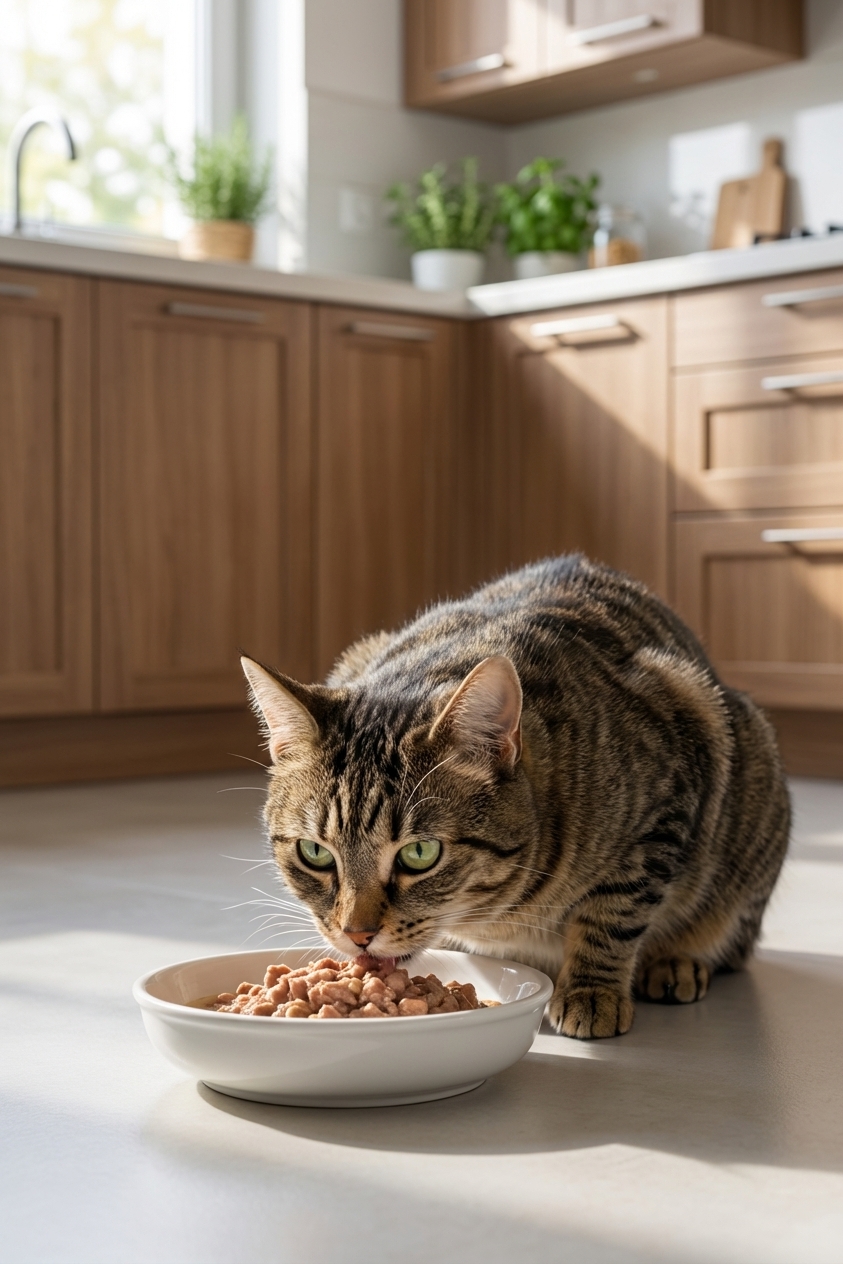
If I could pick one general rule that helps most pancreatitis cats, it is this: prioritize moisture.
Why wet food often helps
- Hydration support: Cats naturally drink less than dogs, and dehydration can sneak up quickly.
- Often easier to eat: Softer texture can be more appealing when a cat feels nauseated.
- Easier to warm and boost aroma: Warming wet food slightly can increase interest.
When dry food is still OK
Some cats will only eat dry food, and an eating cat is always better than a fasting cat. If dry is the only thing your cat will accept, ask your veterinary team about:
- Adding water gradually (or offering a wet “sidecar” meal).
- Choosing a sensitive-stomach or GI formula that is more digestible.
- Monitoring stool quality and hydration closely.
Prescription diet options
Prescription diets are not “magic,” but they are designed to be consistent, digestible, and nutritionally complete, which matters when the GI tract is inflamed.
Your veterinarian may recommend a prescription gastrointestinal diet such as:
- Highly digestible GI formulas (often labeled Gastrointestinal, i/d, EN, or similar).
- Hydrolyzed protein diets if pancreatitis overlaps with food intolerance or IBD signs.
- Novel protein diets if your cat has suspected allergies and needs a limited ingredient approach.
If your clinic allows brand examples, you may hear options like Hill’s i/d, Royal Canin Gastrointestinal, or Purina EN. The right pick depends on your cat’s medical goals, not the label alone.
Ask which matters most right now: fat level, digestibility, protein type, fiber level, or calorie density. That answer usually determines the best choice.
Lower-fat food ideas
Here is the gentle, practical way I recommend thinking about “low-fat” for cats: do not chase extremes without guidance. Cats are obligate carnivores and need enough protein and calories, and some fat is normal and necessary.
Instead, look for foods that are:
- Clinician-approved for GI sensitivity
- Moderate fat compared with very rich, calorie-dense “all life stages” or kitten foods
- Not heavy in oils or very fatty fish as the main ingredient (unless your veterinarian says it is fine for your cat)
If you are shopping over-the-counter, bring your veterinarian the exact product name and the guaranteed analysis panel. If fat control is important, your clinic can help interpret it on a calorie basis, not just as-fed percentages.
Do not fast cats
This is a big one. Unless your veterinarian specifically instructs otherwise, do not intentionally fast a cat with suspected or confirmed pancreatitis. In cats, not eating can quickly become a problem of its own, including hepatic lipidosis risk.
If your cat is nauseated, painful, or refusing food, the solution is usually supportive care to get them eating again, not “waiting it out.” That is where anti-nausea medication, pain control, appetite stimulants, and in some cases assisted feeding or a feeding tube can be truly lifesaving.
Hydration helps more than you think
Hydration supports circulation, digestion, and recovery. It can also make constipation less likely, which is common when cats eat less and move less.
Easy ways to increase fluids
- Feed wet food as the main diet during recovery.
- Add warm water to wet food to make a stew-like consistency.
- Offer broth carefully (no onion or garlic). Avoid high-sodium human broths and double-check all ingredients, then confirm with your veterinary team if you are unsure.
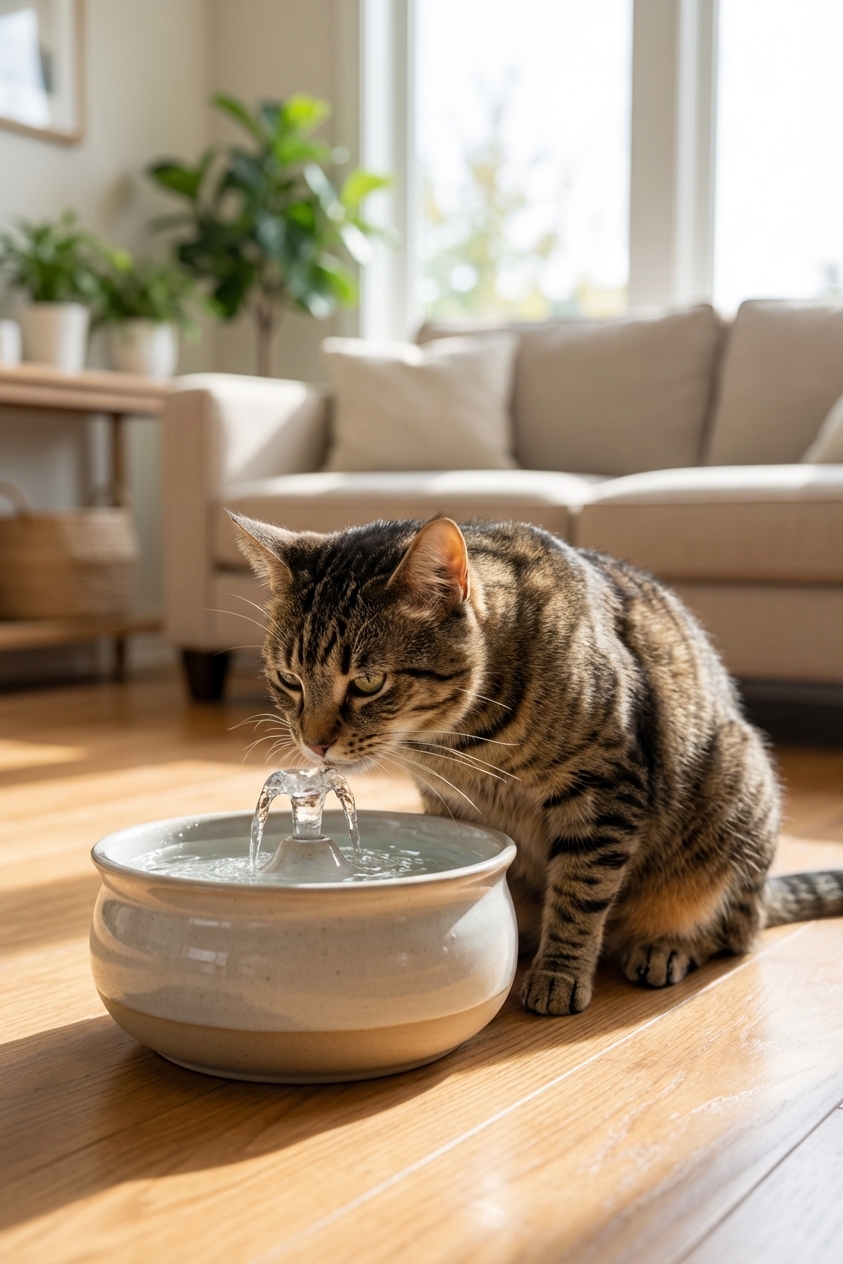
- Use a water fountain if your cat prefers running water.
If your cat is not keeping water down, seems weak, has tacky gums, or is hiding and refusing food, call your vet promptly. Some cats need subcutaneous fluids or hospitalization for IV fluids during a flare.
Foods to avoid
During and after pancreatitis, it is smart to avoid foods that are fatty, highly seasoned, or risky for cats in general.
Avoid these foods
- Fatty table scraps: bacon, sausage, ham, fried foods, greasy meat drippings
- Dairy (many cats are lactose intolerant), especially cream, cheese, butter
- Oily fish or fish packed in oil unless your veterinarian says it is appropriate
- Rich treats and high-fat lickable treats
- Onion, garlic, chives in any form (toxic to cats)
- Grapes and raisins (potential toxicity risk, safest to avoid)
- Alcohol, xylitol, chocolate, caffeine (toxic)
- Raw diets during recovery, due to bacterial risk and digestion challenges
- Bones and chewy fatty meat trimmings that can trigger vomiting or GI upset
If you want to offer “something special,” ask your veterinary team for pancreatitis-safe treat ideas that match your cat’s plan. Many cats do best with tiny portions of their regular diet as treats during recovery.
Feeding schedule (sample)
Most pancreatitis cats do better with small, frequent meals instead of one or two large meals. This can reduce nausea and helps steady calorie intake.
Important: This sample schedule is for a stable cat recovering at home who has already been evaluated by a veterinarian. Exact calorie targets should be individualized based on factors like body weight, body condition score, and any other medical conditions. If your cat is vomiting repeatedly, not eating, or seems painful, do not “wait it out.”
Days 1 to 3
- Goal: Encourage eating and hydration.
- Meals: 5 to 6 mini-meals per day (every 3 to 4 hours while awake).
- Portion size: 1 to 2 teaspoons at a time to start, then slowly increase if tolerated.
- Food: Clinician-recommended GI wet food (pâté or mousse). Add warm water for extra moisture if your cat accepts it.
Days 4 to 7
- Meals: 4 to 5 meals per day.
- Portion size: Increase toward normal daily calories as appetite returns.
- Food: Continue the same diet for consistency. Avoid switching proteins or brands during this window unless your veterinarian tells you to.
Weeks 2 to 4
- Meals: 3 to 4 meals per day (many cats stay on multiple small meals long term).
- Food: Your veterinarian may keep your cat on a GI prescription diet, or transition to a maintenance wet food that better fits your cat’s needs (especially if IBD, allergies, or diabetes are part of the picture).
- Treats: Keep treats under 10 percent of daily calories, and use pancreatitis-safe options only.
If your cat relapses when you add treats, switch flavors, or increase portion size quickly, that is valuable information. Go back to the last “safe” step and call your clinic for a targeted plan.
Tips to get them eating
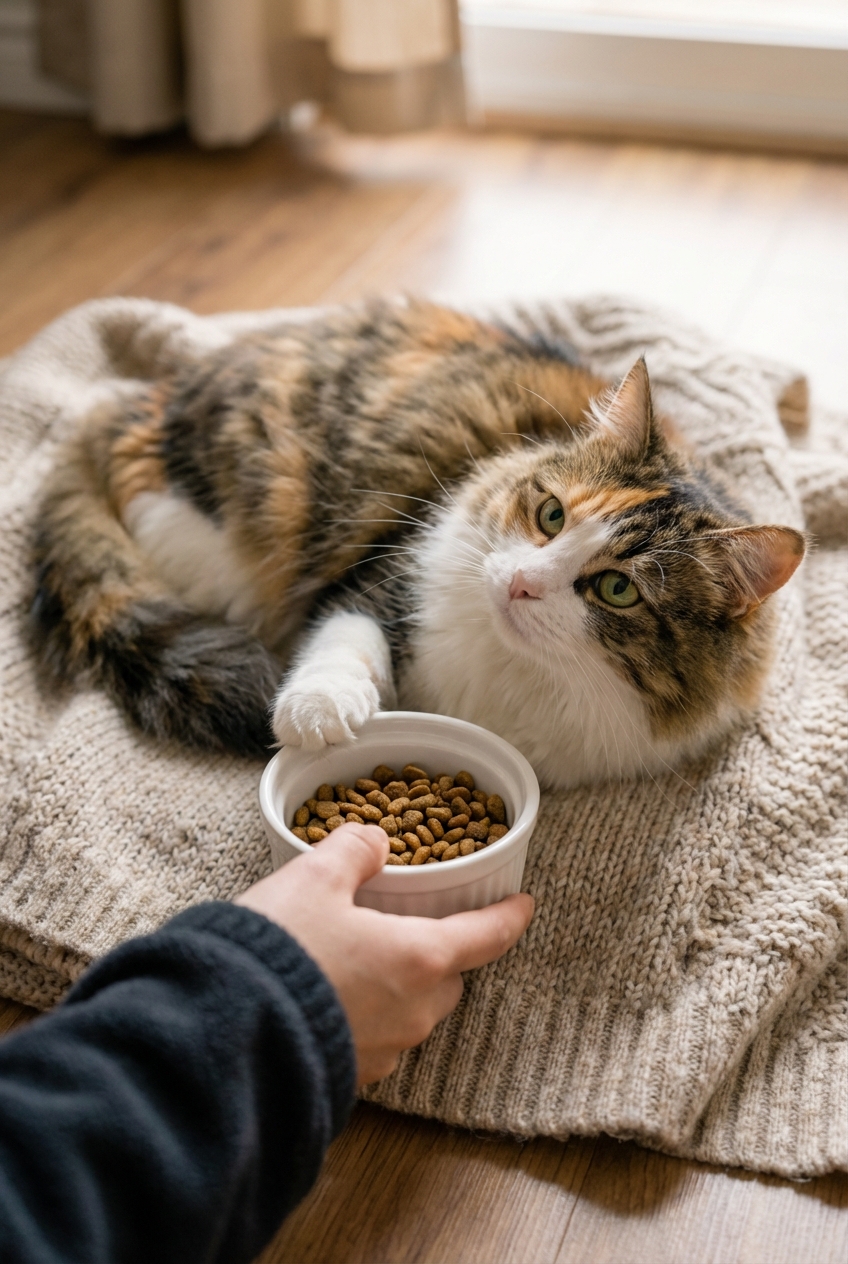
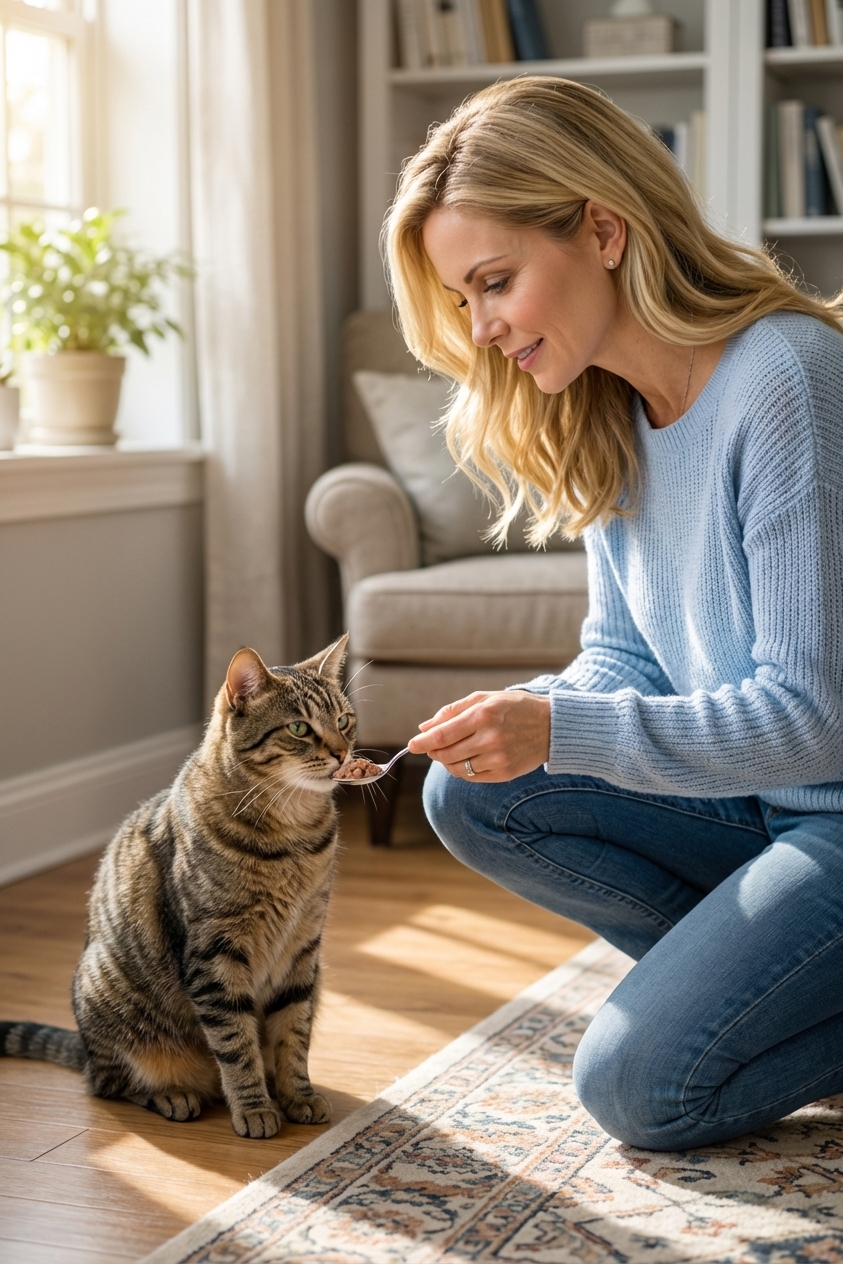
Pancreatitis often causes nausea, and nausea causes food refusal. These strategies can help, but do not syringe-feed or force-feed a resistant cat unless your veterinarian has specifically shown you how and instructed you to do so. It can create food aversion and can be unsafe in some situations.
- Warm the food slightly (a few seconds) to boost aroma. It should be lukewarm, not hot.
- Offer a quiet feeding spot away from other pets.
- Try a different texture (pâté vs shreds), but keep the formula consistent when possible.
- Use small plates so the smell is not overwhelming.
- Ask about nausea control and pain relief, because appetite often improves when nausea and pain are treated.
Transitioning foods
Once your cat is stable and eating well, ask your veterinary team whether you should stay on the recovery diet long-term or transition to a maintenance plan.
If you are switching foods, a slow transition helps many cats. A common approach is 5 to 7 days, gradually increasing the new food while decreasing the old. If vomiting or diarrhea returns, pause and contact your clinic before making more changes.
When diet is not enough
Please call your veterinarian urgently if you notice any of the following:
- No food intake for 24 hours. Call sooner (often 12 to 24 hours) if your cat is overweight, already sick, elderly, or has other medical conditions.
- Repeated vomiting or vomiting with blood
- Severe lethargy, hiding, collapse, or obvious abdominal pain
- Dehydration signs: tacky gums, sunken eyes, very low urine output
- Yellow tint to gums or eyes (possible liver involvement)
Some cats need assisted feeding, feeding tubes, vitamin B12 support, pain control, and additional workup for triaditis or other underlying conditions. Getting help early often shortens the overall recovery.
Bottom line
For most cats with pancreatitis, the best foods are the ones that are high moisture, highly digestible, nutritionally complete, and consistently eaten. Wet GI diets are often the easiest place to start, hydration matters more than most people realize, and avoiding fatty table foods can help prevent setbacks.
If you tell your veterinary team what your cat will reliably eat, you can build a plan that is both medically sound and realistic at home. Slow, steady progress is still progress.