
Best Flea and Tick Prevention for Cats

Flea and tick prevention for cats is not just about comfort. It is about safety, too. As a veterinary assistant, I have seen well-meaning pet parents accidentally use a dog product on a cat and create a true emergency. Cats metabolize certain insecticides very differently than dogs, and some ingredients that are common in dog flea control can be toxic or even life-threatening to cats.
This guide compares the most common cat-safe options, including topicals like Revolution, Advantage II, and Frontline, plus oral products and flea collars. We will also talk about indoor-only cats, kittens, and multi-cat homes so you can choose prevention that fits your real life.
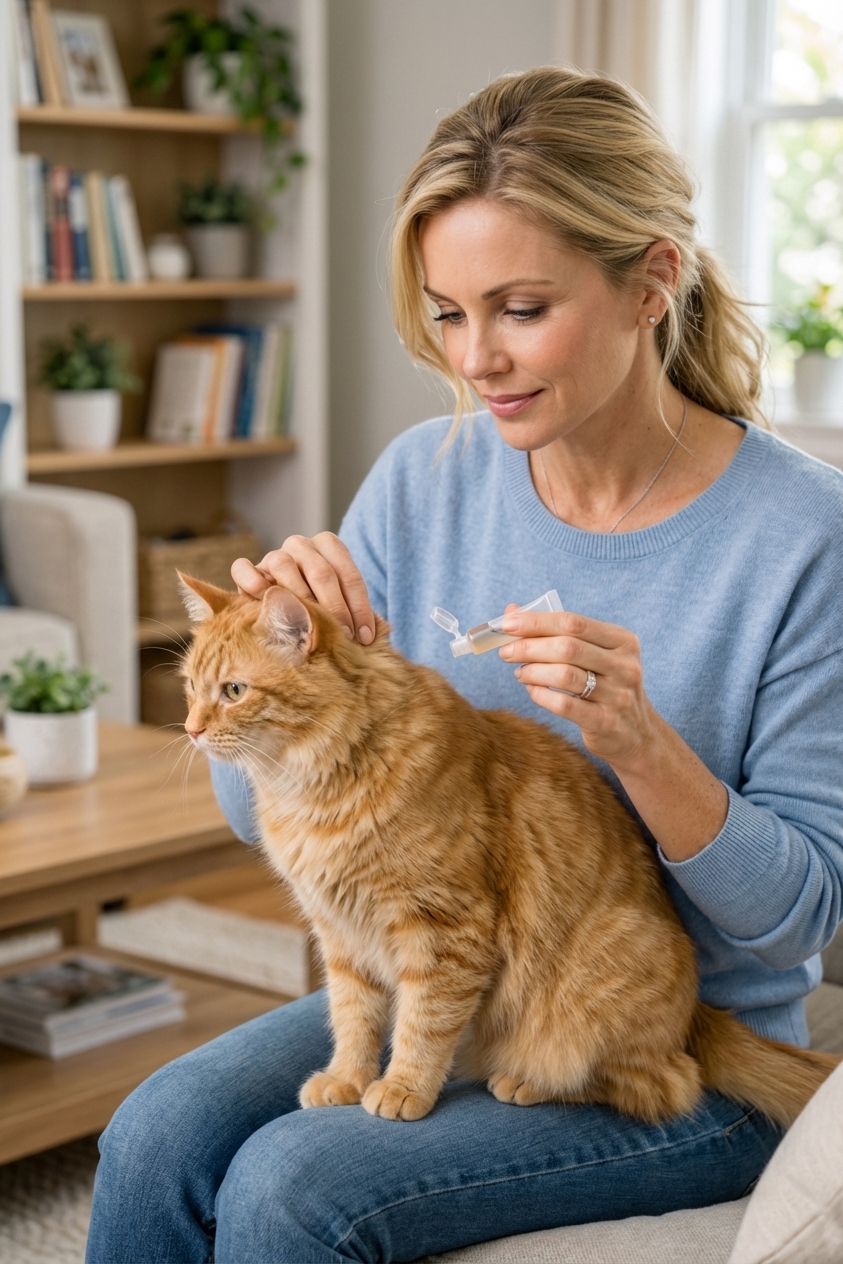
First, the safety rule that saves lives
Never use dog flea and tick products on cats
The biggest danger is permethrin and related pyrethroids that are common in dog spot-on products and some dog shampoos. Cats are especially sensitive, and exposure can cause drooling, vomiting, tremors, seizures, and dangerously high body temperature.
Concrete example: many “K9 Advantix-type” dog topicals contain permethrin. Cats must never be treated with them, and they should not be allowed to lick or cuddle a dog until the product is fully dry.
- Read the species label every time. It should clearly say “for cats” and list a cat weight range.
- Separate pets after applying any topical. A cat can be poisoned by licking a freshly treated dog or grooming another cat’s application site.
- Call your vet or pet poison helpline immediately if you suspect exposure. Do not wait for symptoms to worsen.
Talk to your vet if your cat has health conditions
Cats with a history of seizures, liver disease, very low body weight, or those on certain medications may need a specific product choice. If your cat is elderly, pregnant, or nursing, your veterinarian should guide you.
Topicals compared
Topicals are popular because they are easy to use and provide steady prevention. You apply them to the skin at the back of the neck once a month (most products). Let the product dry fully, and prevent grooming between pets until it is dry.
Revolution and Revolution Plus (selamectin; Plus adds sarolaner)
Why many vets like it: Revolution is known for broad parasite coverage beyond fleas. Revolution Plus keeps the selamectin benefits and adds sarolaner, which provides tick coverage and expanded ectoparasite claims compared with Revolution.
- Best for: Cats who need flea control plus added parasite protection. Many households like the “all-in-one” approach.
- Coverage (high level): Revolution covers fleas and certain internal parasites. Revolution Plus adds tick coverage and additional external parasite protection compared with Revolution.
- Notes: This is prescription in many areas, so your vet can help match it to your cat’s lifestyle and local parasite risks.
Advantage II for Cats (imidacloprid + pyriproxyfen)
Why it is popular: It is a strong flea-focused topical that targets adult fleas and breaks the life cycle by affecting eggs and larvae.
- Best for: Flea-heavy environments, indoor infestations, and multi-pet homes where fleas keep reappearing.
- Ticks: Not a primary tick solution in most areas. If ticks are part of your cat’s risk, choose a product that specifically includes tick control.
- Notes: Apply carefully and plan for no grooming contact until it is dry, especially in homes where cats groom each other.
Frontline Plus for Cats (fipronil + (S)-methoprene)
Why people choose it: It is widely available and has a long history of use for flea control.
- Best for: Cats needing a commonly used, established monthly topical.
- Ticks: Frontline Plus is labeled for fleas and ticks. Real-world performance can vary by location and local parasite pressure.
- Notes: If you are seeing “breakthrough fleas” despite correct dosing and application, talk to your vet. In some areas, fipronil resistance (or reduced sensitivity) is part of the conversation, along with missed doses and an untreated home environment.
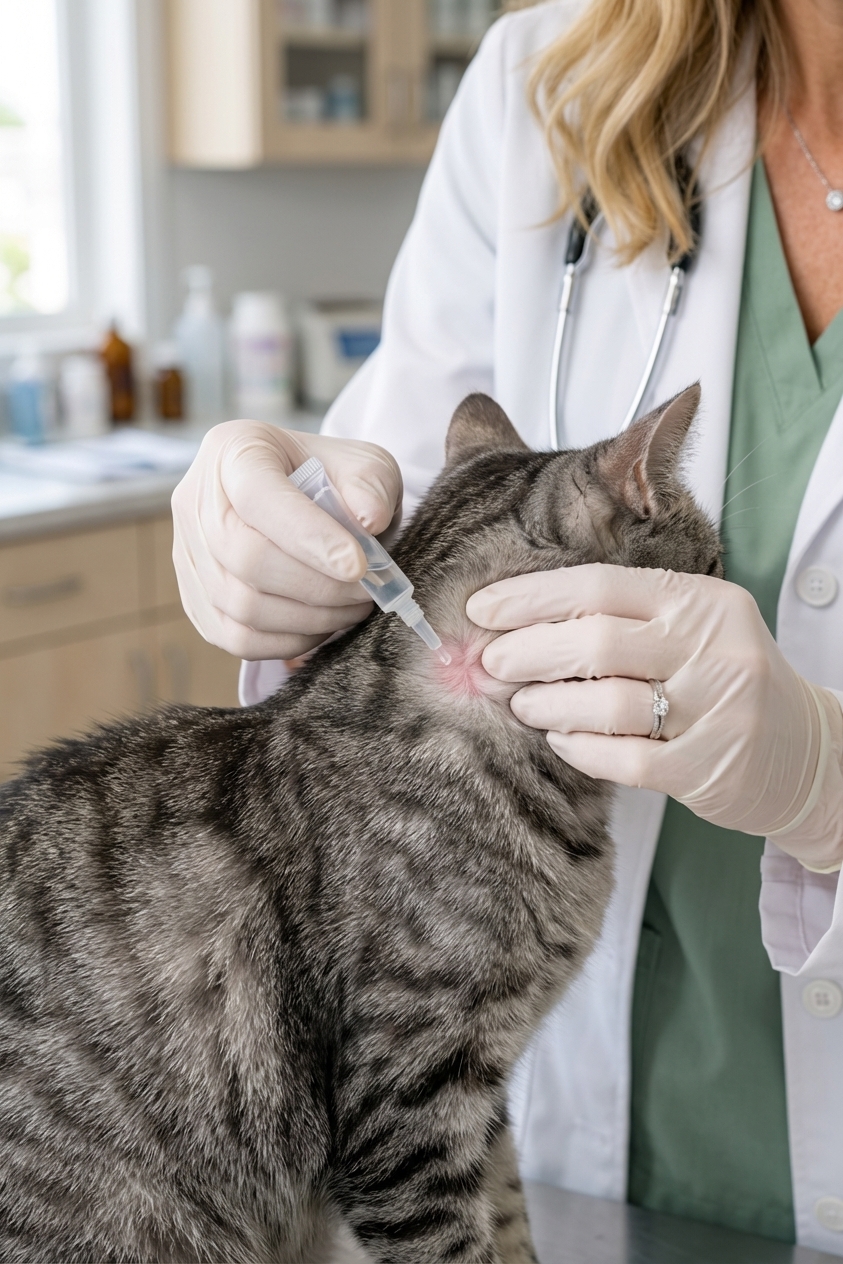
How to apply topicals correctly
- Apply to skin, not just fur. Part the hair until you see skin.
- Choose the right weight range for your cat.
- Use a simple rule: apply, then separate. Keep pets apart until the application site is fully dry.
- Mark your calendar. Missing doses is one of the main reasons fleas return.
- Avoid bathing right before or after application unless your product label says it is fine.
Oral options
Oral products for cats exist, but the options are more limited than for dogs and are often prescription-only. The biggest advantage is that you avoid product residue on fur, which is helpful for cats who groom themselves or live in close contact with other pets and children.
Examples to ask about
- Capstar (nitenpyram): fast, short-acting flea adulticide that can help knock down live fleas. It is not a monthly preventative on its own.
- Credelio for Cats (lotilaner): monthly oral option in some markets. Ask your vet whether it covers fleas only or fleas plus ticks where you live, since labeling and availability vary by country.
When oral options can be a good fit
- Topical sensitivity: Some cats get skin irritation or excessive drooling if they lick a topical before it dries.
- Multi-cat grooming: Cats that constantly groom each other may do better with a non-topical approach.
- Heavy flea infestations: Your vet may use an oral treatment as part of a multi-step plan to knock fleas down quickly, then maintain prevention.
What to ask your veterinarian
- Does this product cover ticks in my area, or is it flea-only for cats?
- What is the minimum age and weight for this medication?
- Should I give it with food to reduce stomach upset?
Tip from the clinic: if your cat is hard to medicate, ask your vet about flavored formulations, pill pockets made for cats, or whether a topical is the safer choice for your household.
Flea collars for cats
Cat flea collars can be a helpful tool, but quality varies widely. If you use a collar, choose one made specifically for cats and make sure it is a breakaway collar for safety.
A collar many vets trust
Seresto is one of the most commonly vet-recommended flea and tick collars for cats in many regions. Counterfeits exist online, so buy from a reputable retailer and confirm packaging and labeling.
Pros
- Longer duration than many monthly products, depending on the collar.
- Less mess than topical liquids.
Cons
- Some cats get skin irritation under collars.
- Effectiveness depends on collar quality and proper fit.
- They are not always enough for severe infestations without treating the environment.

Collar safety checklist
- Must be labeled for cats and fit your cat’s weight range.
- Must be breakaway for cats who climb or go outdoors.
- Fit should allow two fingers under the collar.
- Watch for hair loss, redness, or scratching at the neck and remove if irritation occurs.
Indoor-only cats can still get fleas
Indoor cats get fleas more often than many people expect. Fleas can ride in on shoes, pant legs, visitors, or on a dog that goes outside. In apartments and shared buildings, fleas can also move between units.
When indoor cats should be on prevention
- You have a dog that goes outside.
- You foster, board, or frequently visit grooming or veterinary clinics.
- You have had fleas in the home before.
- You see wildlife near doors, patios, or windows such as stray cats, raccoons, or opossums.
If your cat is truly low-risk
Some indoor-only cats in low-exposure homes may do fine with seasonal prevention. This is a great conversation to have with your veterinarian based on your region, climate, and your home’s risk factors.
Outdoor cats
If your cat spends time outdoors, consistent monthly prevention is usually the safest plan. Outdoor cats face higher exposure not just to fleas and ticks, but also to mites and internal parasites that can be carried by insects.
- Ticks common in your area: Ask your vet which products have strong tick coverage locally.
- Hunting behavior: Cats who catch prey may face additional parasite risk.
- High flea pressure neighborhoods: Combine pet treatment with home and yard strategies.
Kittens
Kittens are more sensitive to medications because of their small size. Always follow the label’s minimum age and weight, and never “split” a larger dose meant for a bigger cat unless your veterinarian specifically instructs you.
Kitten-safe best practices
- Confirm your kitten’s current weight before buying any product.
- Use only products labeled for kittens at your kitten’s age.
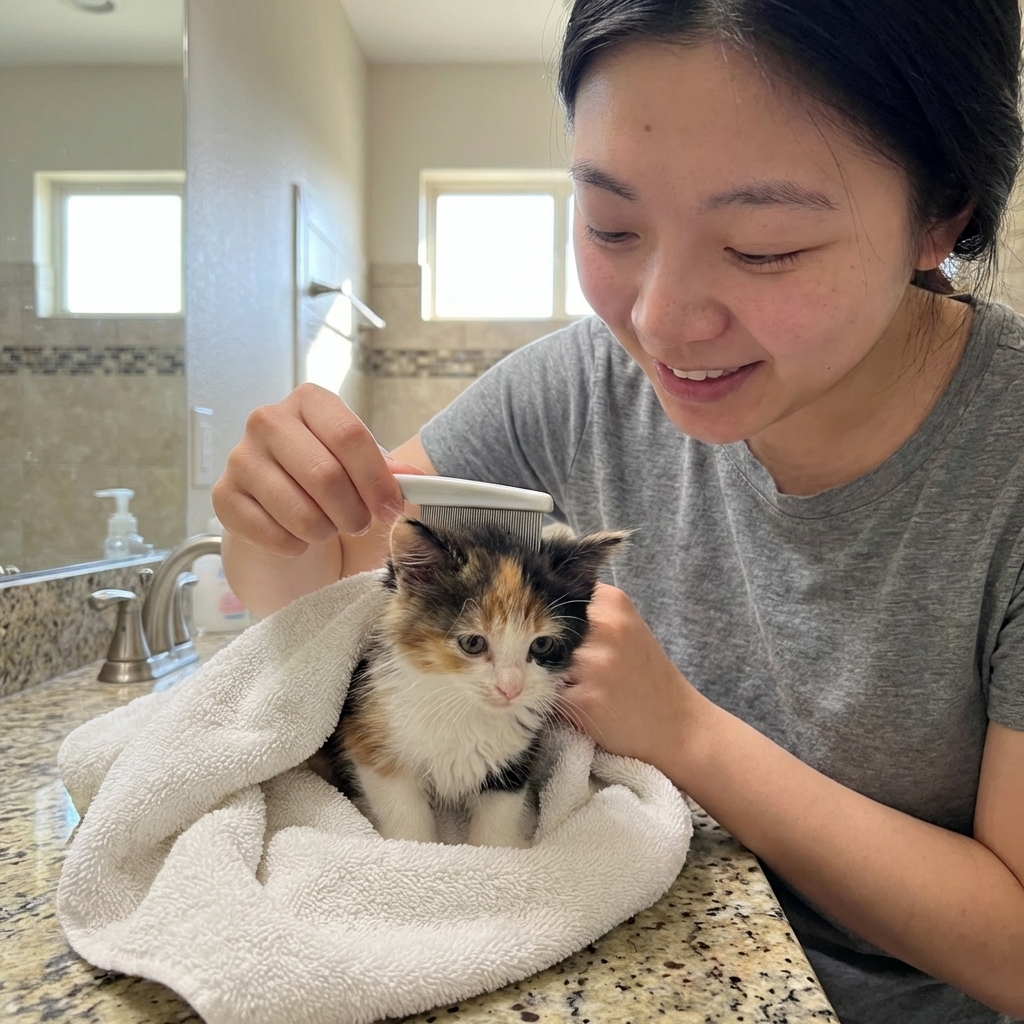
- If you find fleas on a very young kitten, call your vet. Gentle flea combing and safe bathing guidance may be needed before any medication.
Multi-cat homes
In multi-cat homes, fleas rarely live on just one cat. They live in the environment and keep re-infesting everyone. The most effective plan is simple, but it requires consistency.
What works
- Treat every pet in the home at the same time, including dogs, using species-appropriate products.
- Stay on schedule for at least 3 months to interrupt the flea life cycle.
- Prevent grooming exposure by separating pets until topicals are fully dry.
- Vacuum frequently and wash bedding on hot during an active infestation.
Home and yard control
Monthly prevention protects your cat, but your home may still need attention if fleas have already moved in. Focus on where pets sleep, because flea eggs and larvae collect there.
- Vacuum carpets, rugs, and baseboards often, then empty the vacuum container outside.
- Wash bedding on hot and dry on high heat.
- Consider an IGR product (insect growth regulator) for the home during active infestations, if recommended by your veterinarian or a licensed pest professional.
- Cat safety note: Be careful with household insecticides and sprays. Some ingredients are not cat-friendly, and cats can absorb chemicals through grooming. When in doubt, ask your vet before using a home treatment.
Common side effects
Most cats do well on flea prevention, but mild reactions can happen.
- Topicals: temporary hair loss or dandruff at the application site, mild redness, or drooling if a cat licks wet product.
- Orals: occasional stomach upset or decreased appetite.
- Collars: neck irritation or scratching.
Call your vet promptly if you see ongoing vomiting, severe lethargy, facial swelling, trouble breathing, tremors, wobbliness, or seizures.
Skip “natural” flea remedies
I know the label sounds gentler, but many “natural” flea remedies can be risky for cats. Essential oils (including tea tree oil) and some herbal products can be toxic, and they can also delay effective treatment during an infestation. If you want a lower-mess option, ask your vet about a collar or an oral medication instead of DIY remedies.
How to choose
Here is a practical way to decide.
- If you want broad coverage and vet guidance: Ask about prescription topicals like Revolution or Revolution Plus.
- If your main issue is fleas indoors: A flea-focused topical like Advantage II can be a strong choice.
- If ticks are part of your risk: Choose a product with proven tick coverage in your region and confirm with your veterinarian.
- If your cats constantly groom each other: Ask your vet about oral options, or plan to separate pets until topicals are fully dry.
- If you prefer a collar: Choose a cat-specific breakaway collar from a reputable brand (Seresto is a common vet pick in many areas), and monitor skin closely.
My favorite prevention plan is the one you can actually keep up with. Consistency is what stops fleas, not perfection.
When to call the vet
- You see fleas but prevention is being used correctly and on schedule.
- Your cat has hair loss, scabs, or intense itching, especially around the neck and tail base.
- Your cat seems weak or pale, especially a kitten. Heavy flea loads can contribute to anemia.
- You suspect exposure to a dog product or you notice drooling, wobbliness, tremors, or seizures.
Bring your cat’s age, weight, indoor or outdoor lifestyle, and other pets in the home to your next vet visit. Those details help your veterinarian match a product to your cat and your local flea and tick risks.